Practical Travel
Toyama to Tateyama Station: Riding the Toyama Chiho Railway
By Dynamic Japan Travel Editorial Team—Supervised by P-HAM Co., Ltd. (Licensed Travel Agency, Aichi No. 3-1590)
Updated 28 August 2026Editorial policy
Contents
Toyama to Tateyama Station: Riding the Toyama Chiho Railway
Connecting Tateyama Station — the Toyama Prefecture gateway to the Tateyama Kurobe Alpine Route — with central Toyama is the Tateyama Line of the private Toyama Chiho Railway (known locally as Chitetsu). The bottom line first: it runs direct to Dentetsu-Toyama Station in about 1 hour, 1,420 yen one way, with roughly one train per hour during the day. Be careful: neither IC cards such as Suica nor the Japan Rail Pass can be used. Be sure to bring cash.
This article is based on my own ride: after crossing the Alpine Route and coming down to Tateyama Station, I boarded this very train on the spot. From how to buy a ticket to what the train is like inside, I'll walk you through it with photos I actually took. For planning the full traverse, see the parent article.

At a Glance: Key Numbers and Things to Know
The company's name is the Toyama Chiho Railway — not "Toyama Railway" — a private line that locals simply call "Chitetsu." Tateyama Station is the terminus of the Tateyama Line, with direct trains to Dentetsu-Toyama Station in central Toyama (some services require a transfer along the way, such as at Terada Station).
Here's the big picture if you're coming from overseas: from Tokyo, take the Hokuriku Shinkansen to Toyama Station (a little over 2 hours). The JR Toyama Station where the Shinkansen arrives and Chitetsu's Dentetsu-Toyama Station are right next to each other, a few minutes' walk apart. From there, this Tateyama Line takes you to Tateyama Station.
The direct trip takes about 1 hour (roughly 34 km). The fare is 1,420 yen for adults and half price for children (rounded up to the nearest 10 yen). Trains run roughly once an hour during the day — about 15 departures a day toward Dentetsu-Toyama on weekdays. Miss one and the next is about an hour away, so check the departure time first thing when you arrive at Tateyama Station.
First, what you can't use. Nationwide transit IC cards such as Suica and ICOCA are not accepted (this is clearly stated on the official website). The Japan Rail Pass and Hokuriku-area passes are not valid either — Chitetsu is not part of JR. Be sure to have cash ready. It's safest to assume you can't count on credit cards, either.
Buying Tickets at Tateyama Station (3 Steps)
1. Check Your Destination and Fare on the Fare Chart
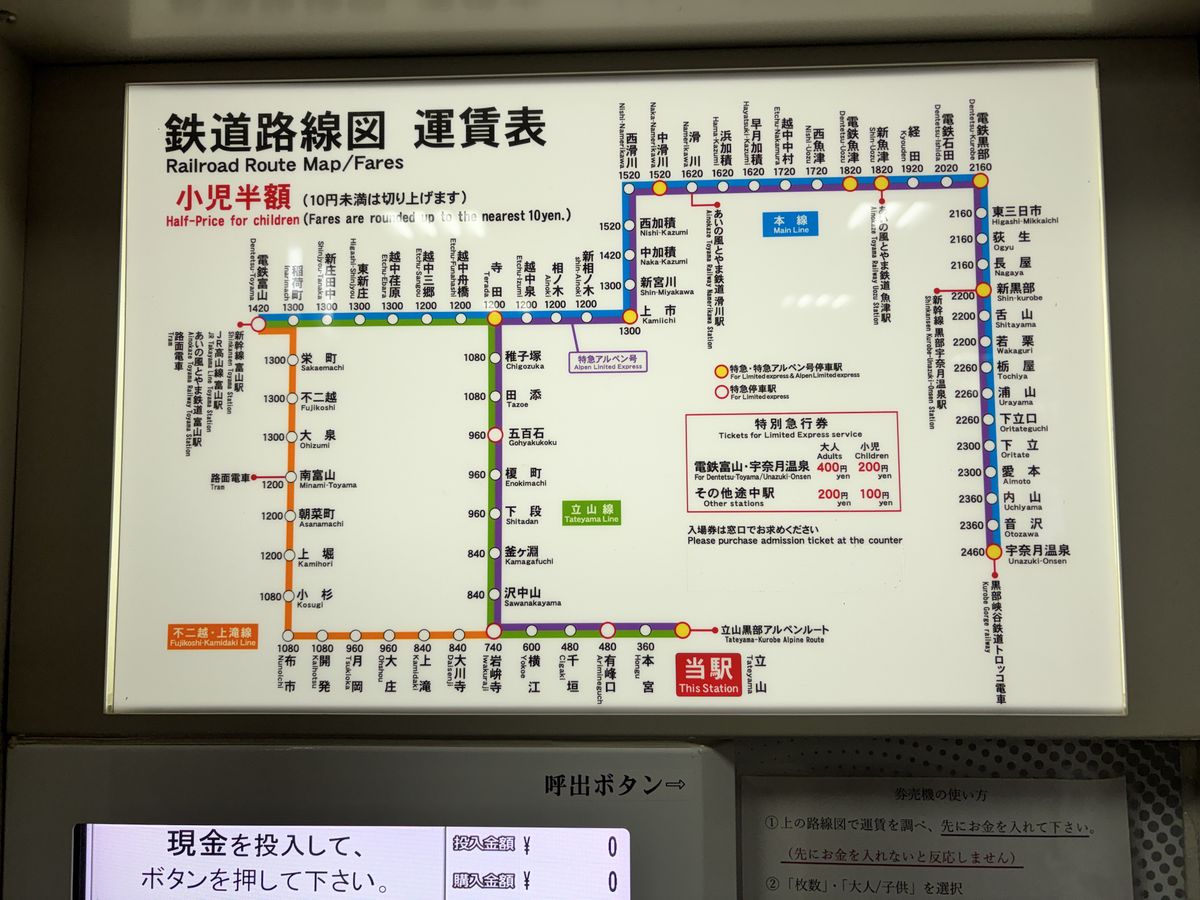
Above the ticket machines hang a railway route map and a fare chart. The "Dentetsu-Toyama" column reads 1,420 yen. For central Toyama, riding to this terminus is the standard move.
2. Put Cash into the Ticket Machine and Buy Your Ticket
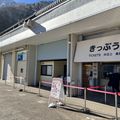
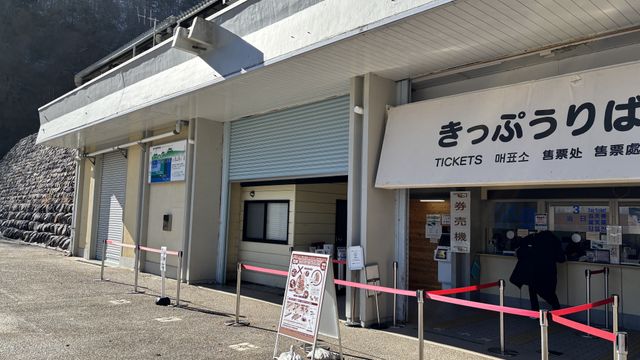
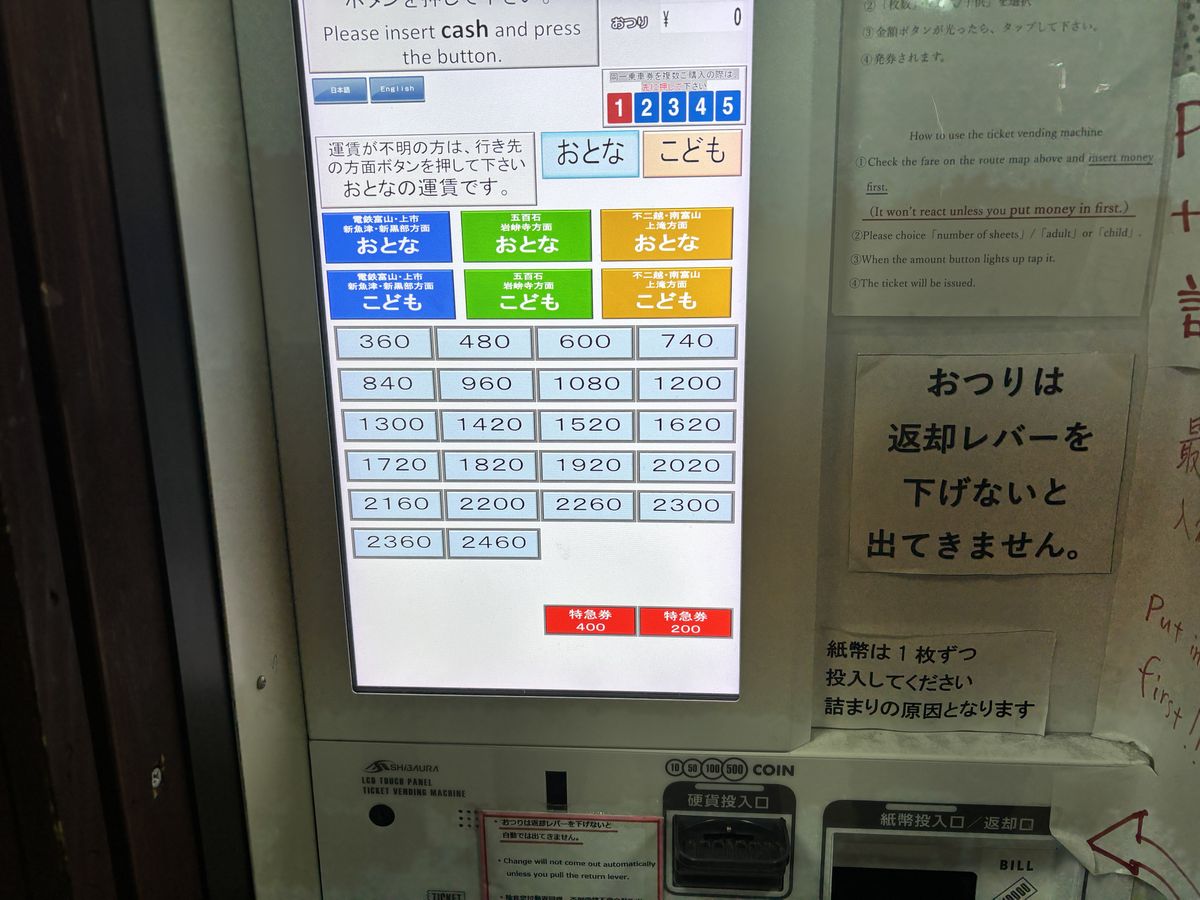
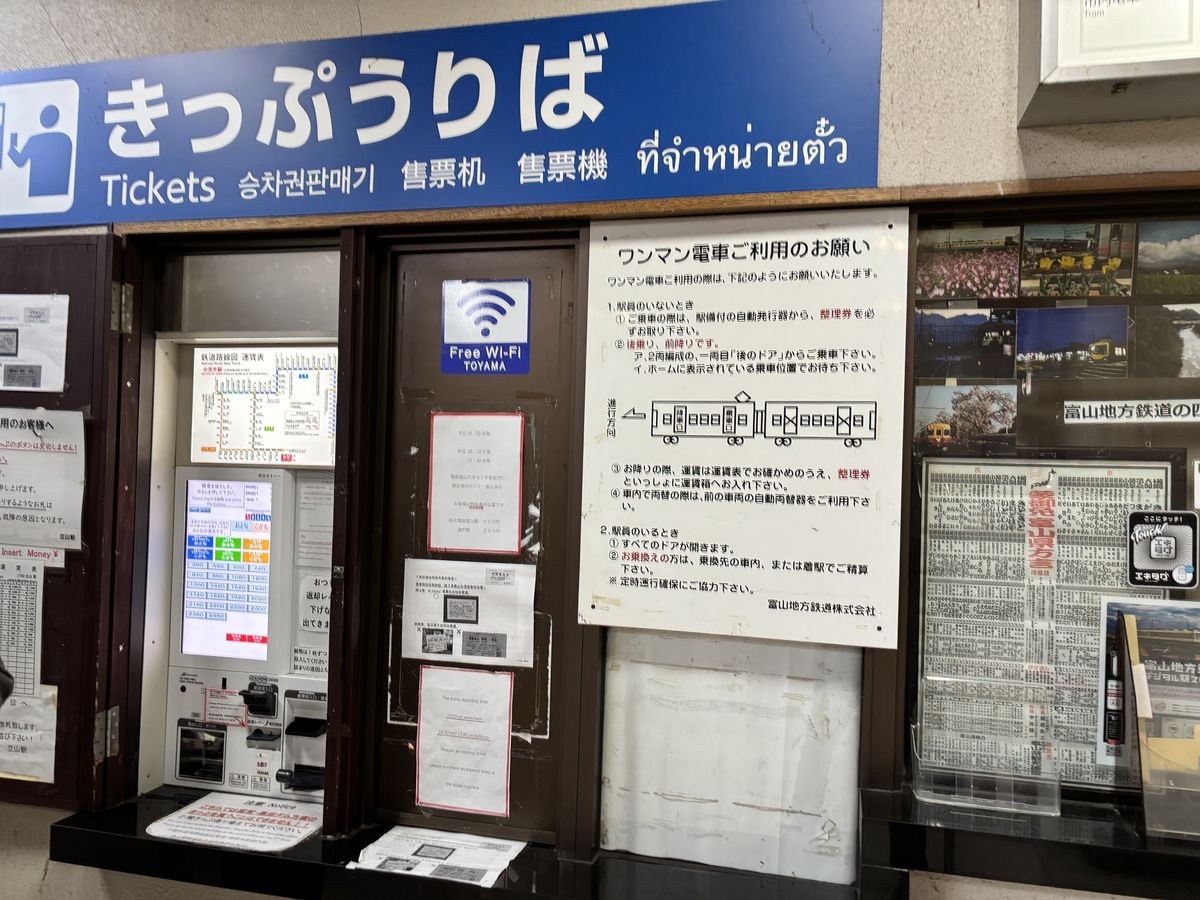
The ticket machines work by inserting your money first, then pressing the fare button (there's even a handwritten notice taped to the machine). The trick is to insert banknotes one at a time. What comes out is an old-fashioned paper ticket, and credit cards are not accepted. If you get stuck, you can also buy tickets at the staffed counter, marked 'Kippu-uriba' (ticket office).
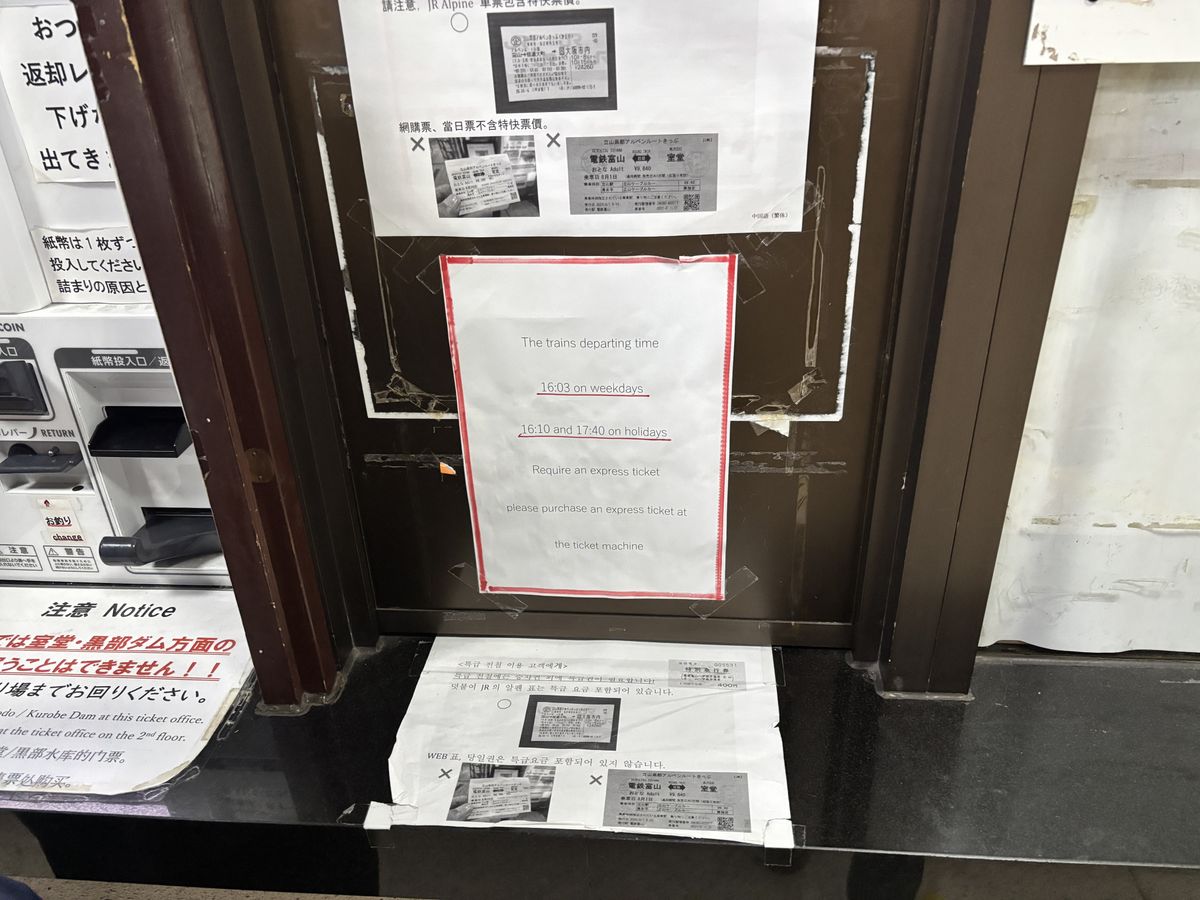
One caution: at Tateyama Station, there are both the ticket office for the Alpine Route (toward Murodo and Kurobe Dam) and Chitetsu's ticket machines. Tickets for central Toyama are bought at the Chitetsu machines described on this page — around the machines you'll also see multilingual signs saying 'Tickets for Murodo / Kurobe Dam are not sold here.'
3. Riding a Limited Express? Buy a Limited Express Ticket Too
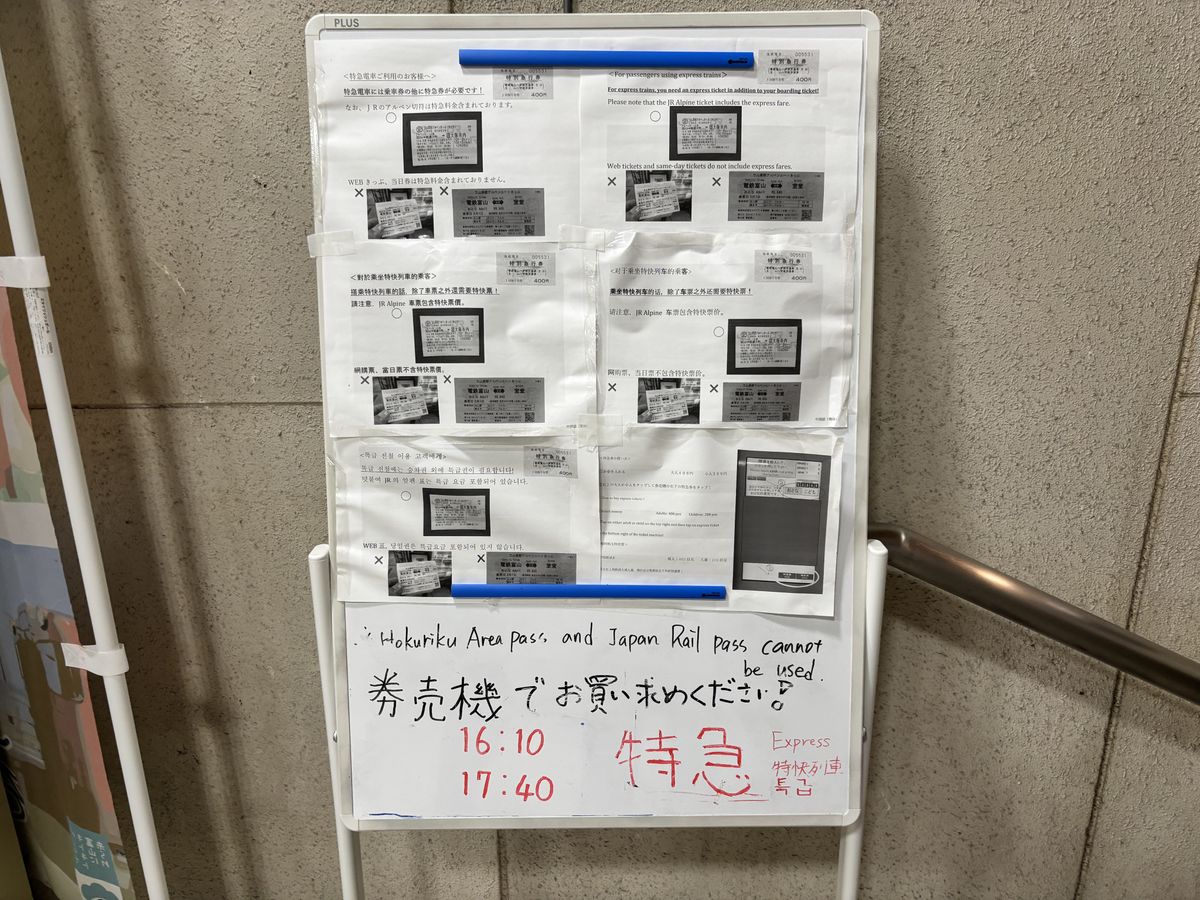
Some trains run as limited expresses, which require a limited express ticket in addition to the regular fare ticket (Dentetsu-Toyama ⇔ Tateyama costs 600 yen for adults as of this writing; fares are subject to revision). Limited express tickets can also be bought at the machines and the counter. Note that the JR-issued 'Tateyama Kurobe Alpine Ticket' includes Chitetsu's limited express fare, while the Alpine Route's web tickets and same-day tickets do not — this is also posted in multiple languages at the station.
How Do You Tell If Your Train Is an Express?
Telling them apart is simple: check the departure board on the platform. Limited expresses show a red '特急 (Express)' label, local trains show '普通 (LOCAL)', with English displayed alongside. The day's limited express departure times are also written out on the notices and whiteboard around the ticket machines. If you're still unsure, asking 'Local? Express?' at the counter is the surest way. If you're taking a limited express, buy your limited express ticket before the ticket gate opens.
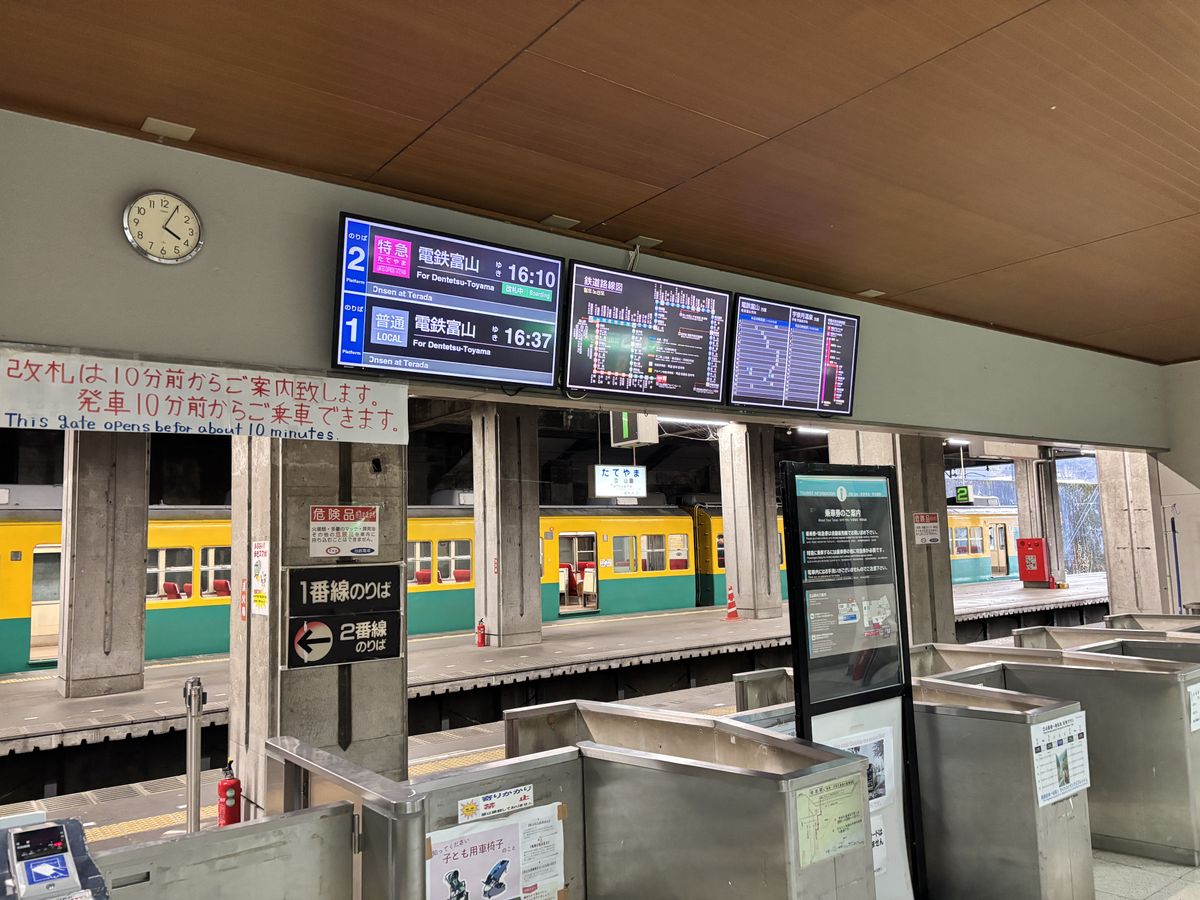
To the Platform: From Ticket to Train
Once you have your ticket, head to the gate. Ticket gates open about 10 minutes before departure (there's an English notice at the station, too). Out on the platform, check the departure board to confirm the train is bound for 'Dentetsu-Toyama', then wait.
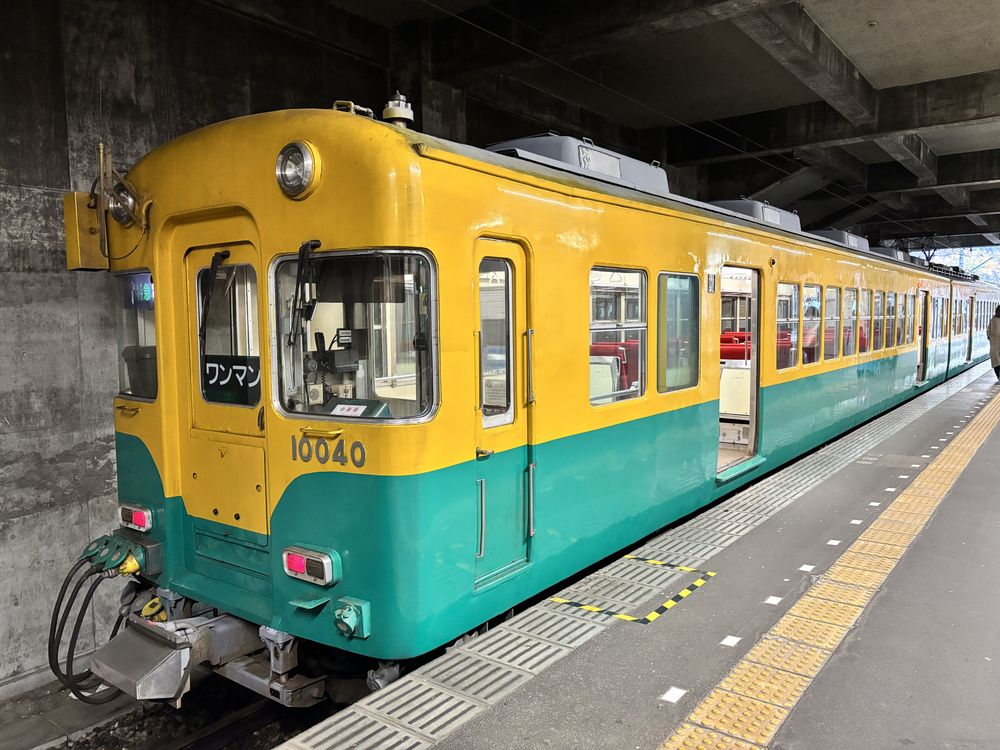
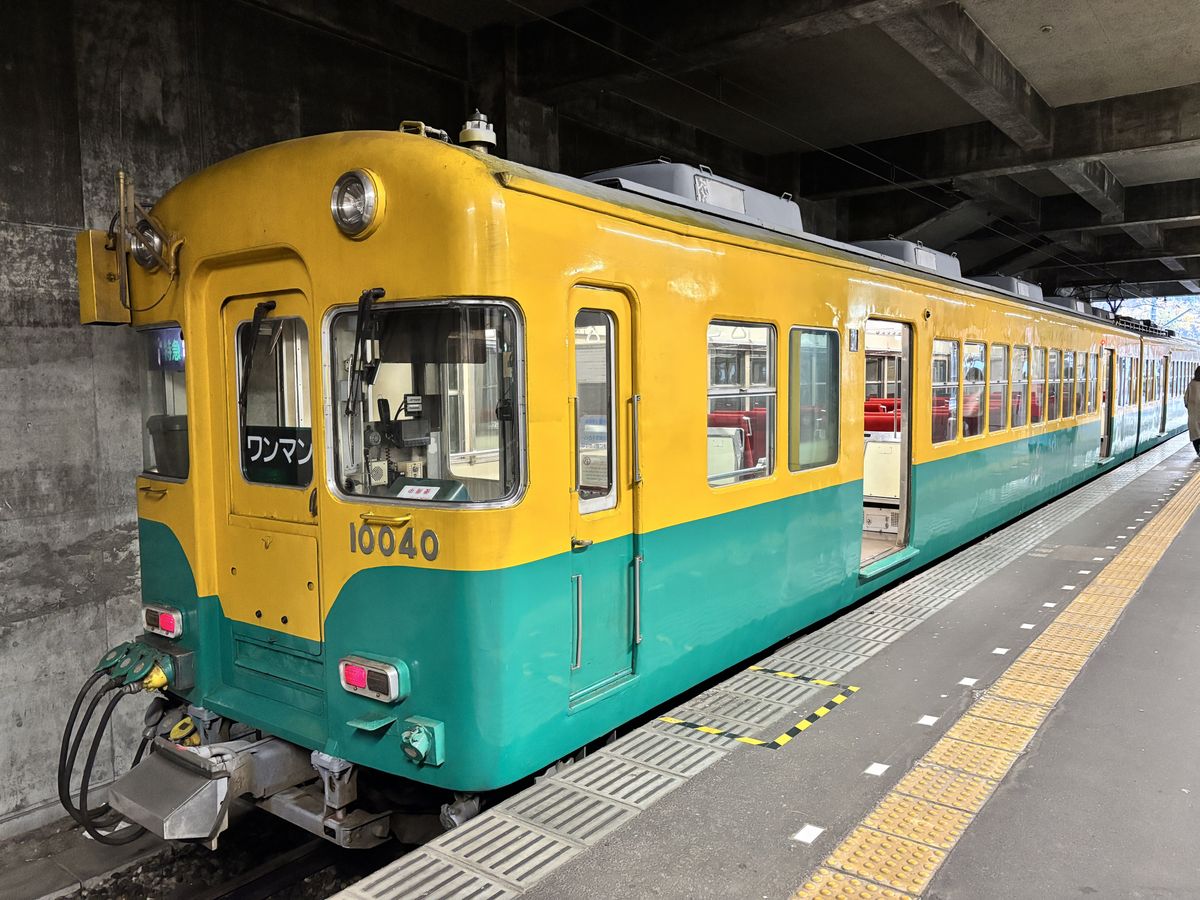
What pulls in is a short train in a yellow-and-green two-tone livery. Some trains are one-man operated (driver only), but Tateyama Station has staff on hand, so there is nothing tricky about boarding. Put large suitcases beside your seat or in the open space at the ends of the car.
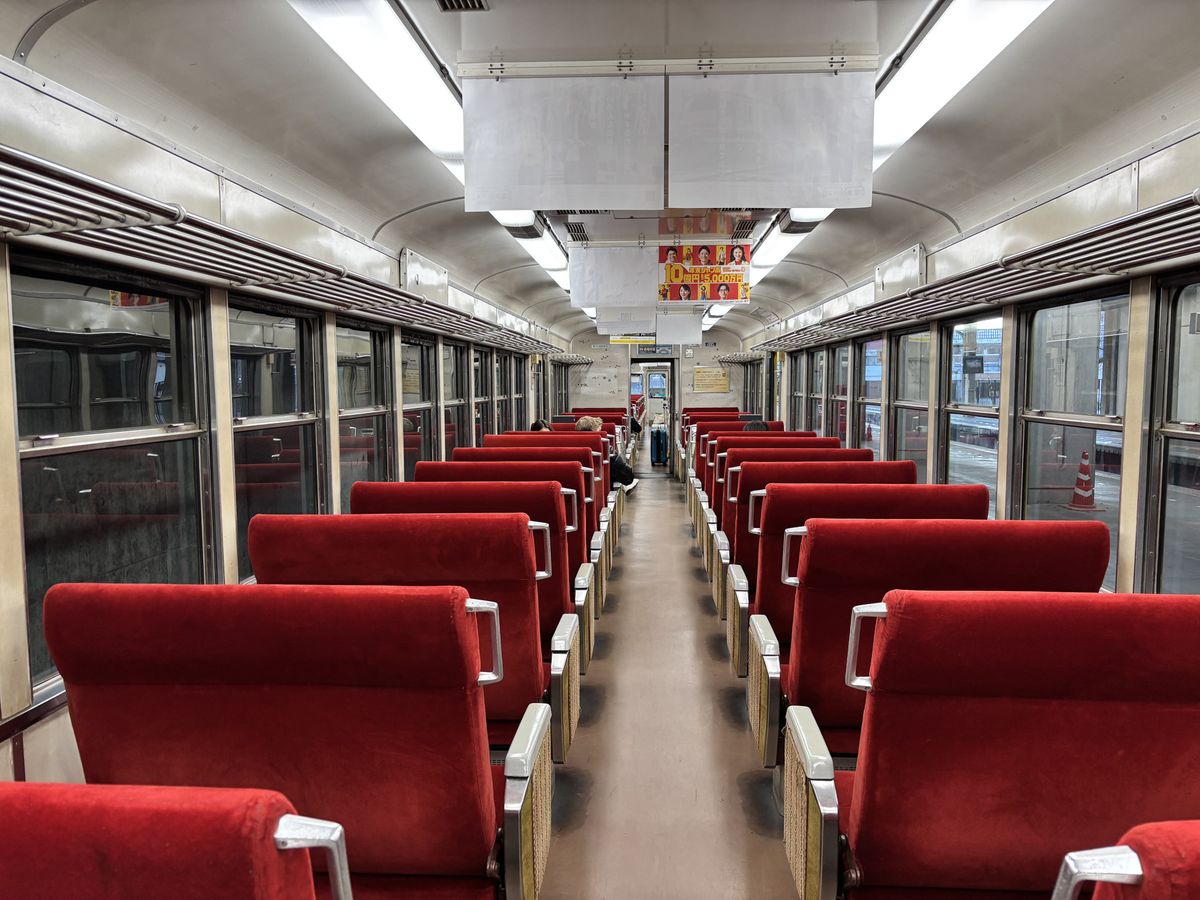
Inside, rows of flip-over seats give the train a pleasantly nostalgic feel. Depending on the run, you may even land a former limited express car fitted with plush red seats.
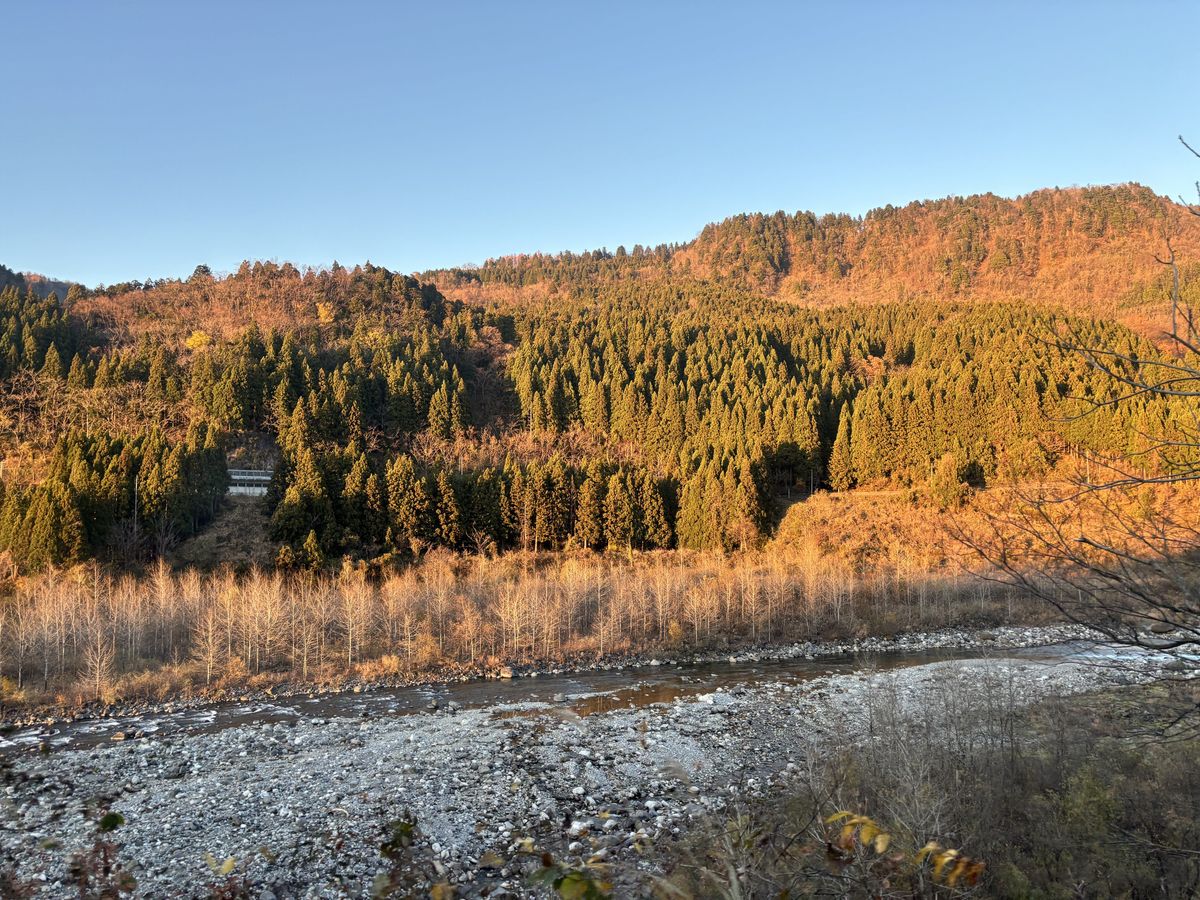
Once underway, the train descends the mountains along the Joganji River valley. On an evening run, the fading light over the river and peaks makes a fitting finale to the traverse.
Arriving at Dentetsu-Toyama Station
The terminus, Dentetsu-Toyama Station, is right next to the south exit of Toyama Station, which serves JR and the Shinkansen. Toyama Station is a Hokuriku Shinkansen stop, so once you hand in your ticket at the gate and exit, transferring to the Shinkansen takes just a few minutes on foot. Tokyo is a little over 2 hours away on the 'Kagayaki', and Kanazawa about 25 minutes.
The Other Direction: Entering the Alpine Route from Toyama
Trains from Dentetsu-Toyama to Tateyama likewise run roughly once an hour during the day. To start the Alpine Route in the morning, take the earliest train you can to Tateyama Station — from there the cable car connects to Bijodaira, and the traverse begins beyond it. How to approach from the Tokyo side and which tickets to choose are covered in the companion article.


This Train Runs in Winter Too
While the Alpine Route itself closes entirely from December to mid-April each year, the Chitetsu Tateyama Line runs all year round. In winter the area around Tateyama Station becomes a quiet mountain village, and the snowy scenery from the window is a pleasure unique to this line. Schedules do change by season and time of day, though, so check the latest timetable on the Toyama Chiho Railway official website.