Practical Travel
Atami Station Guide Walking Directions After Exiting the Ticket Gate, Coin Lockers, Foot Baths, Shopping Streets, Bus Stops
Updated 9 November 2026By Dynamic Japan Travel editorsEditorial policy
Contents
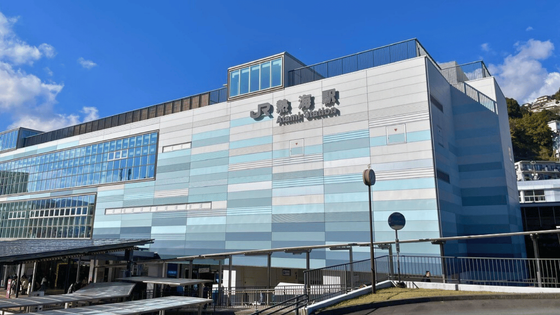
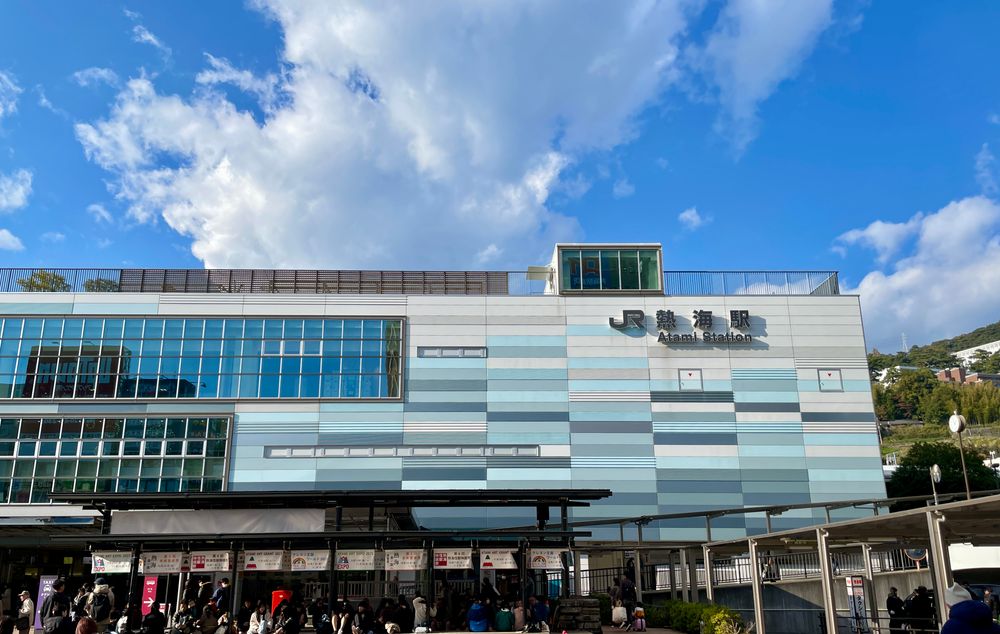
Atami Station is the gateway to the onsen (hot spring) and seaside town of Atami in Shizuoka Prefecture. The Tokaido Shinkansen's Hikari and Kodama trains stop here, taking about 40-50 minutes from Tokyo Station. The station is compact, with coin lockers and the Midori no Madoguchi on the left after exiting the ticket gates, the "Lusca Atami" station building and tourist information on the right, and bus and taxi stands straight ahead. Remembering this will help you avoid getting lost.
Our JPWander team has visited Atami Station multiple times for research. Each time, we consider three things: "Where to store our suitcase," "Whether to stop by the footbath," and "Whether to walk or take a bus to the sea." This article will guide you through the station and its surroundings in order, so you won't be confused upon arrival.
What is Atami Station Like? Shinkansen and Local Lines
Atami Station is located in Atami City, Shizuoka Prefecture. Atami is not in Tokyo; it's a town in the easternmost part of Shizuoka Prefecture, next to Kanagawa Prefecture. Despite this, it's known as a convenient onsen (hot spring) and seaside town, accessible from Tokyo in about 40-50 minutes by Shinkansen (unreserved seat 3,740 yen). For directions and fare comparisons, see How to Get to Atami from Tokyo.
Three lines stop at Atami Station:
- Tokaido Shinkansen
- Hikari and Kodama trains stop here, but Nozomi does not.
- JR Tokaido Line
- This local line connects Tokyo, Shinagawa, and Yokohama with Numazu and Shizuoka.
- JR Ito Line
- This line heads towards Ito and the Izu area. Kinomiya Station, near Kinomiya Shrine and Atami Plum Garden, is the next stop from Atami Station.
The Shinkansen ticket gates are separate from the local line gates. From either exit, the station square is just a short walk away.

After Exiting the Ticket Gate: Remember Left, Right, and Straight
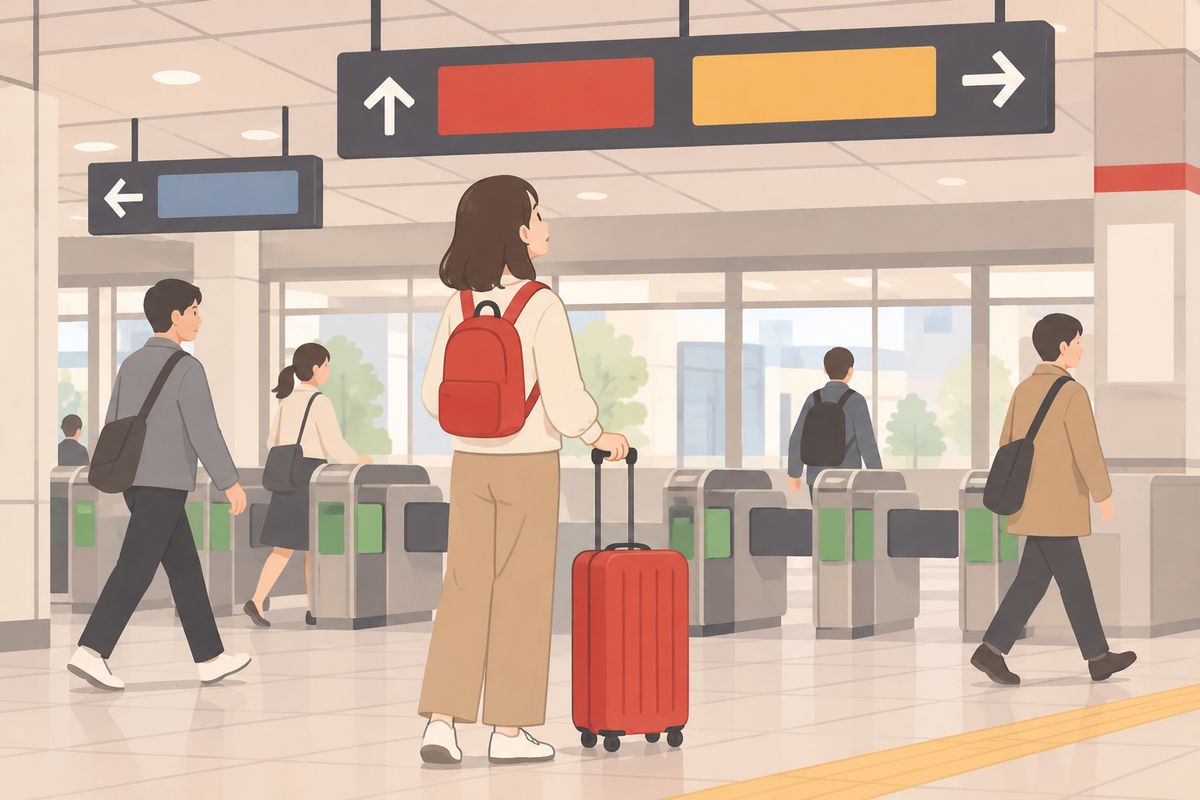
There is only one main ticket gate for the local train line. Above the exit, there is a signboard displaying directions for buses, taxis, and coin lockers in both Japanese and English. Before you start walking, be sure to look up at this signboard. It will help you avoid getting lost.

How to
How to Navigate After Exiting the Ticket Gate
This is the order seen from exiting the local train ticket gate.
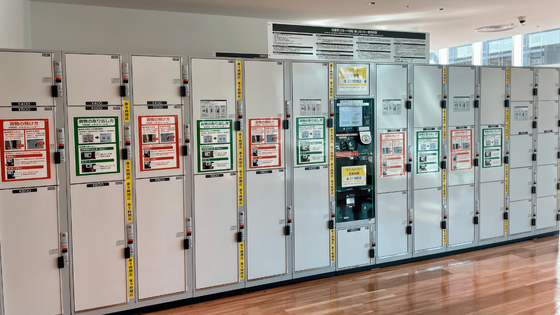
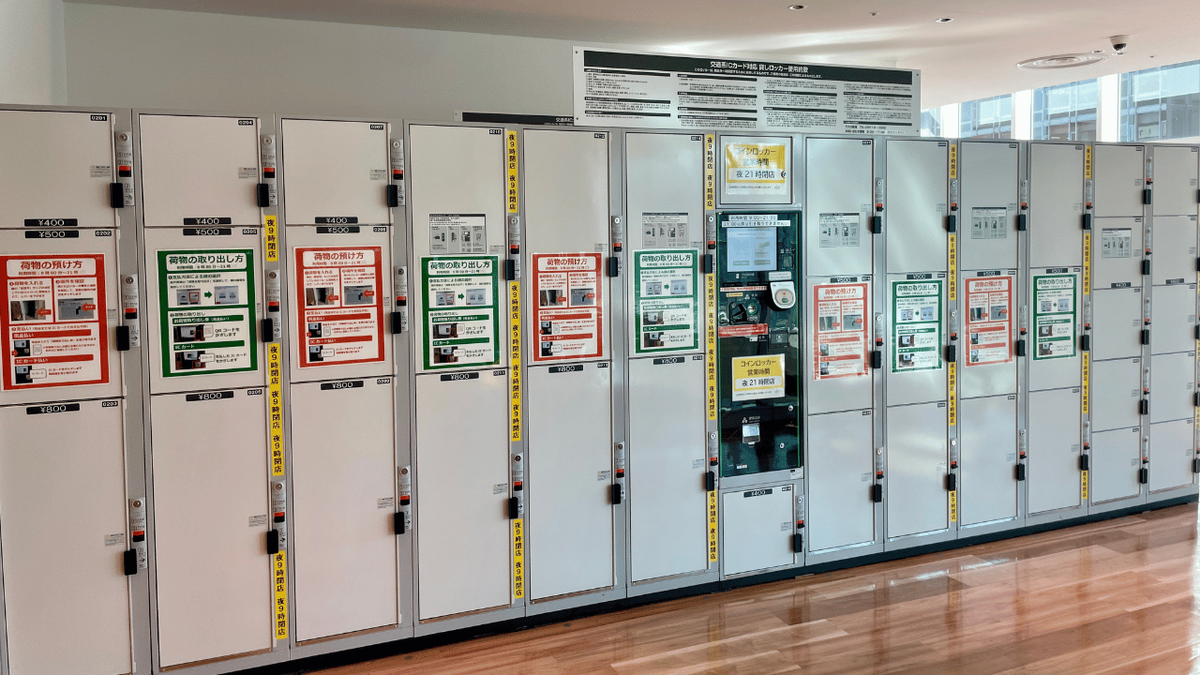
To the left: Coin lockers and Midori no Madoguchi (ticket office) Next to the ticket vending machines and the JR ticket office (Midori no Madoguchi), you'll find the largest coin lockers in the station. They are available 24 hours a day.
To the right: Station building "Lusca Atami" A station building with souvenirs, dining, and cafes. The first floor has a tourist information center where you can get free maps and brochures. There are also coin lockers on the third floor.
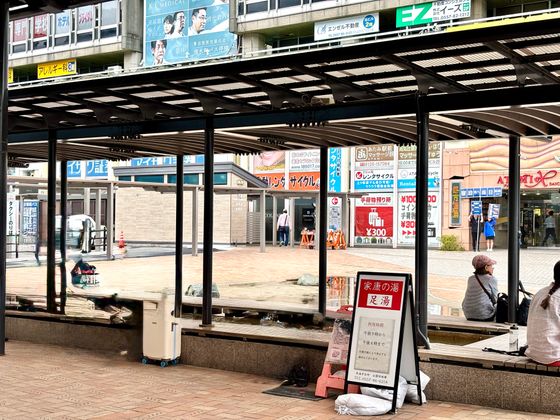
To the Front: Station Square The bus stop and taxi stand are side by side, and within the plaza, there is a free foot bath called "Ieyasu's Bath."
Beyond the Plaza: Shopping Street and Luggage Storage Across the square, there is a luggage storage service at "Atami Station Front First Building (ATAMIX)." Beyond that, two shopping streets extend toward the sea.
Luggage Storage: 3 Locations Near the Station
Atami is a hilly town. Walking with a suitcase can quickly tire you out. It's best to leave your luggage first before exploring. Here are three convenient places near the station:
- Coin lockers to the left after exiting the ticket gate: The largest at the station, available 24 hours. Prices range from 300 to 800 yen depending on size. Popular, so large lockers may be full in the afternoon.
- 3rd floor of LUSCA Atami: Inside the station building to the right after exiting the ticket gate. Plenty of lockers and relatively less crowded. Available only during station building hours.
- Luggage storage on the 1st floor of Atami Station Front First Building (ATAMIX): Attractive for its low fees. Closes early in the evening, so be mindful of pickup times.
Most lockers require cash (100 yen coins). Some machines accept transportation IC cards like Suica. Credit cards are not accepted. For detailed information on locations and fees, check How to Find Coin Lockers Around Atami Station with photos.


Footbath "Ieyasu no Yu" and Public Bath at the Station
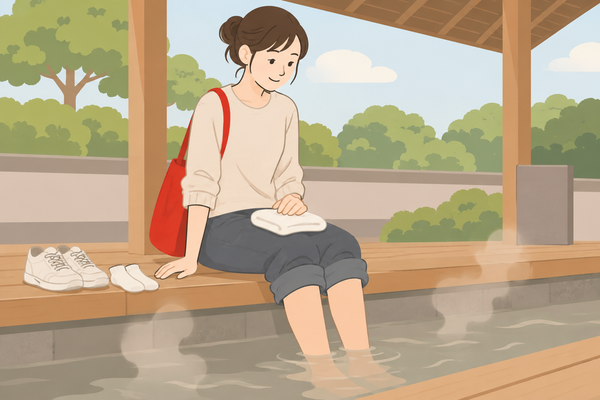
After dropping off your luggage, stop by the footbath "Ieyasu no Yu" in the square in front of the station. It's free and available from 9:00 to 16:00. Just sit under the roof and soak your feet in the warm water. This simple act will warm up your body chilled from the train ride. Start your visit to Atami by warming your feet here. This is our recommended way to begin your Atami experience.

No worries if you forget a towel. There's a towel vending machine right next to the foot bath.

Etiquette
Foot Bath Etiquette
Since it's a foot bath shared by everyone, just keep these three things in mind.
Do not put towels in the hot water.
Roll up your pants to the knees and place the towel on or beside your knees.
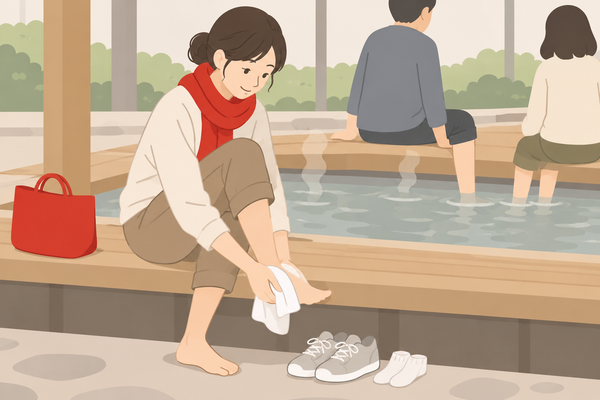
Wipe your feet before putting on your shoes.
After getting out, dry your feet with your own towel to avoid wetting the surroundings.
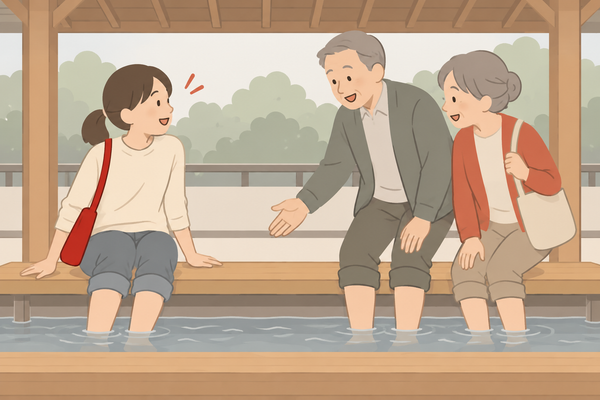
Yield when it gets crowded.
When it gets crowded, avoid sitting for too long and offer your seat to those who arrive later.
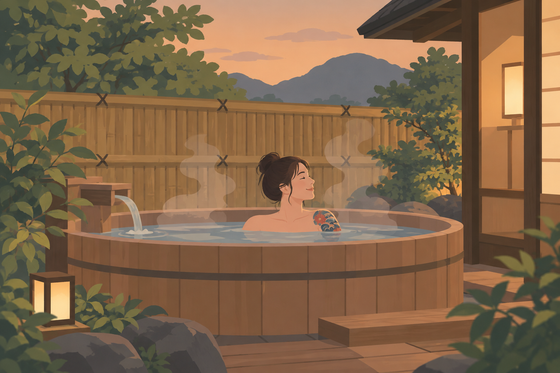
Illustration for Explanation (AI-generated)
If you want to warm up your whole body, there's the public bath "Atami Ekimae Onsen Bathhouse" (500 yen), about a 2-minute walk from the station. If you prefer a soak with an ocean view, you can choose the day-use onsen "Ocean Spa Fuua," about a 10-minute free shuttle bus ride from the station. For how to enjoy and choose, refer to the Atami Onsen Guide, and for enjoying with tattoos, see the Onsen Guide for Those with Tattoos. Footbaths can be used even if you have tattoos.
Lusca Atami and Shopping Streets: Eat & Shop
If you're looking for food or souvenirs at the station, head to the right after exiting the ticket gate to the station building "Lusca Atami." It houses souvenir shops, restaurants, and cafes, allowing you to explore without getting wet on rainy days. It's also recommended to pick up a map at the tourist information center on the first floor and decide your destination before setting off.

If you're up for a short walk, head towards the two shopping streets extending from the station square towards the sea. These are the "Nakamise Shopping Street" with an arcade and the adjacent "Heiwa Street Shopping Street." Both are short streets, about 200-250 meters long, lined with shops selling dried fish, manju and sweets, and diners. It's a great spot to pick up dried fish or sweets as souvenirs before catching your return train. It gets very crowded on weekends, so if you prefer a leisurely stroll, weekdays or early hours are best.
Some small shops only accept cash, so it's wise to carry some 1,000 yen bills and coins for peace of mind.
From the Station: Bus, Taxi, or Walking - Beware of Hills
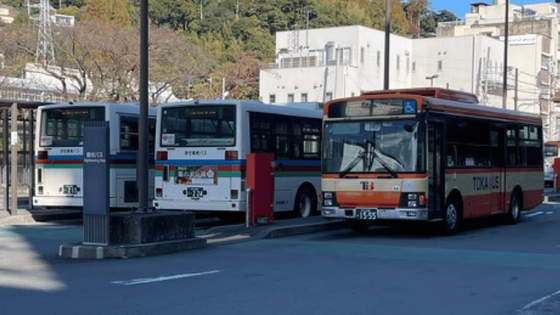
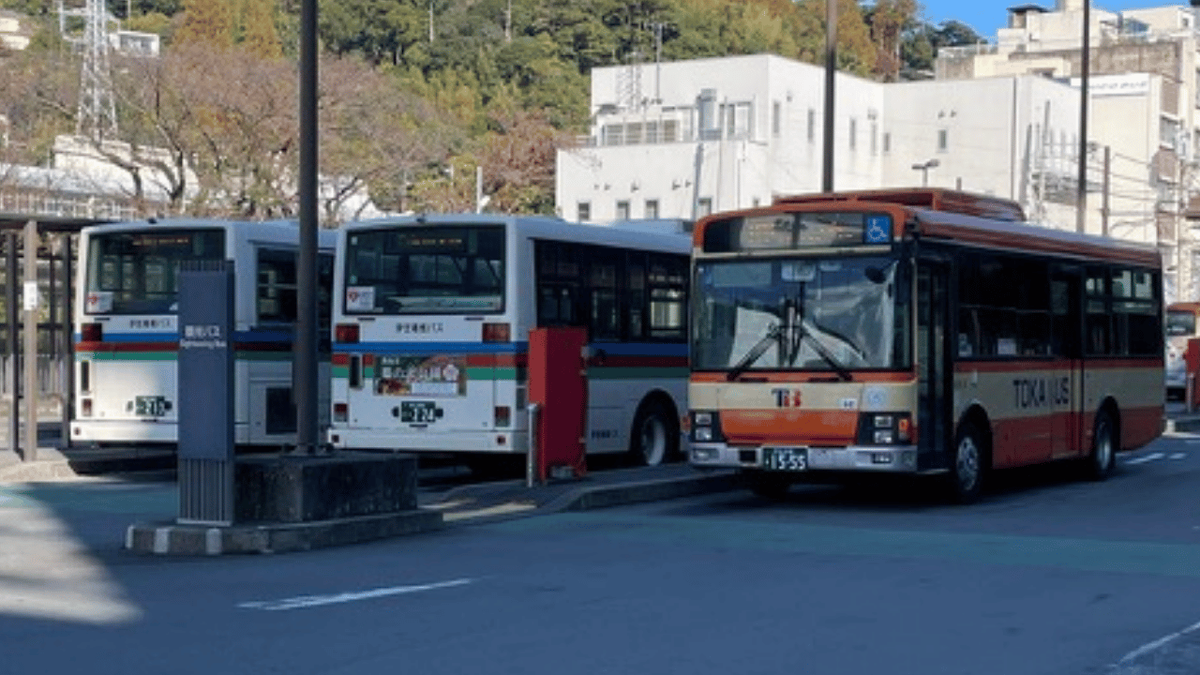
The bus stop is directly in front of the station plaza. Two companies operate the local buses in Atami: Tokai Bus and Izu Hakone Bus. Tickets like the one-day pass cannot be used interchangeably between the two. However, transportation IC cards like Suica are accepted by both, making it easiest to use an IC card. How to ride and pay is explained in the Atami Bus Travel Guide.
For example, to get to Atami Plum Garden, take bus number 1 from the station and get off at "Plum Garden." A taxi takes about 5 minutes and costs around 1,000 yen. Information on the best viewing times and entrance fees is compiled in the Atami Plum Garden Guide. A free shuttle bus is available to Ocean Spa Fuua. Other attractions are listed in the Atami Sightseeing Spots.
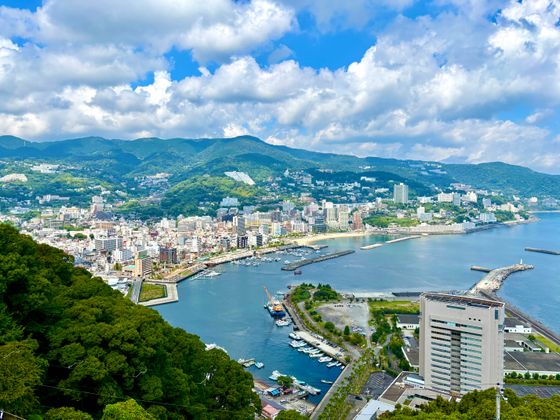
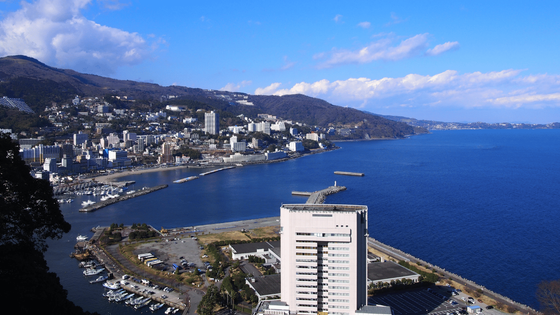
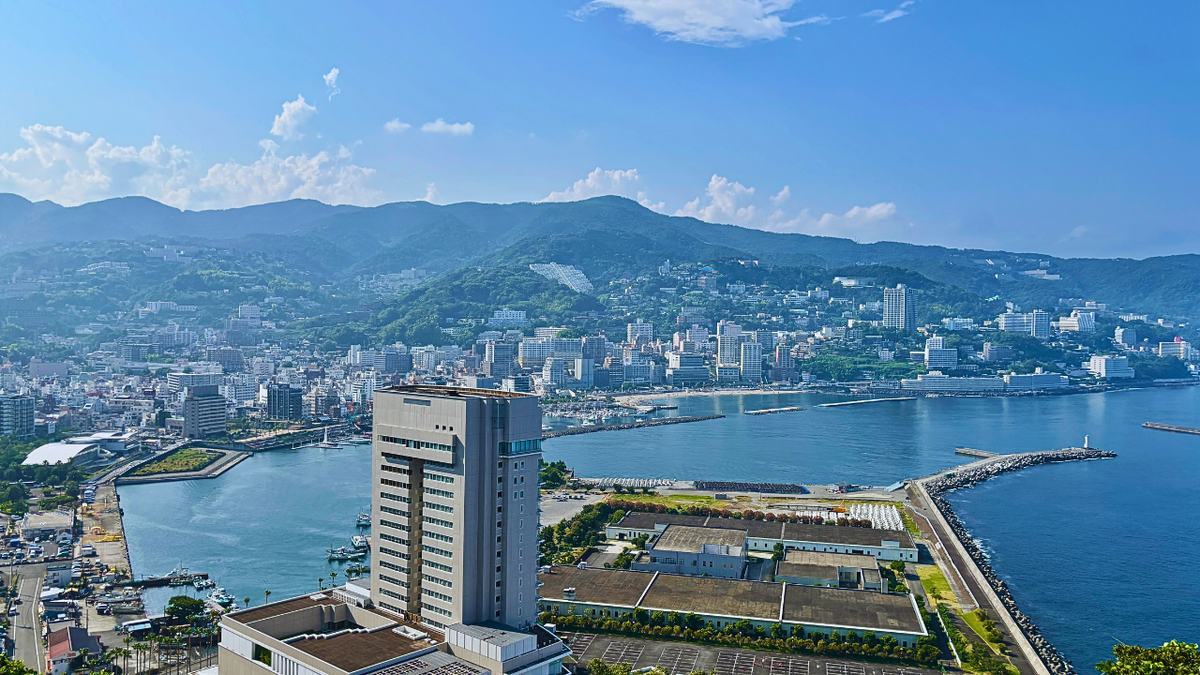
Many people walk towards the sea. However, Atami Station is located on a hillside. It's downhill from the station to the sea, and uphill on the way back. You can enjoy a leisurely stroll down through the shopping street. The uphill return can be more tiring than expected. Our recommendation is to "walk there, return by bus or taxi." It's much easier if you drop off your luggage before walking.

Cash, Suica, English: Navigating Atami Station with Ease
The area around Atami Station is easy for international travelers to navigate. The station signs are in English, and locker screens can be switched to English. However, some places still only accept cash. For example, the entrance fee for the historic villa Kiunkaku is cash only.

What to bring
Things to Prepare Before Arriving at Atami Station
Something that would have been helpful for us, who have walked through Atami Station many times.

- Transportation IC Cards (like Suica)You can use it on trains, buses, and some coin lockers. Smartphone Suica is also accepted.
- 100 yen coin and 1,000 yen billUse it at cash-only lockers, small shops, and facilities with entrance fees that accept only cash.
- Small towelYou can use it to dry your feet at the footbath in front of the station. If you forget, you can purchase one from the vending machine next to the footbath.
- Comfortable Walking ShoesEssential if you're walking the slope from the station to the sea.
- Smartphone MapThe roads are intricate, so having a map app is reassuring. Paper maps from the tourist information center are also helpful.
If you don't have a Suica yet, check out how to use Suica on your smartphone to avoid any hassle at Atami Station or on the bus.
Day Trip or Overnight from Atami Station?
Close to Tokyo, Atami is perfect for a day trip. Even just enjoying the foot bath at the station, shopping street, and a stroll along the coast gives you a sense of "being in Atami." However, to fully experience the onsen town atmosphere, an overnight stay is recommended. You can enjoy the hot springs both at night and in the morning.
Compare
Comparing Day Trips and Overnight Stays
Casually
Day trip
- It's about 40-50 minutes by Shinkansen from Tokyo, making it possible to leave in the morning and return by evening.
- You can store your luggage in a station locker and walk around freely.
- You can explore the footbath in front of the station, the shopping street, and take a walk along the coast in half a day.
- You can enjoy onsen (hot spring) at day-use onsen facilities or public baths.
Slowly
One night stay
- You can enjoy the onsen (hot spring) both at night and in the morning.
- You can enjoy the evening sea, and on event days, fireworks over the water.
- You won't have to worry about the uphill return or carrying luggage.
- You can extend your trip to Ito or Izu the next day.
For choosing areas and types of accommodations, refer to How to Choose Ryokans and Hotels in Atami. If you want a private onsen (hot spring) experience with family or a group, consider the rental villa Atami Villa Moon and Sun, located about 20 minutes by car from Atami Station on a hill. You can reach it by taking a shuttle bus to Atami Nature Village (5 times a day) or by taxi from the station.

Q&A
Frequently Asked Questions about Atami Station
- Is Atami Station a Shinkansen station?
- Yes. The Tokaido Shinkansen's Hikari and Kodama trains stop here. The Nozomi does not. It's about 40 to 50 minutes from Tokyo Station. The JR Tokaido Line and JR Ito Line also pass through.
- No, Atami is not in Tokyo. It is a city located in Shizuoka Prefecture.
- No, Atami is a town in Shizuoka Prefecture. It's about 40-50 minutes by Shinkansen from Tokyo Station, making it a popular short trip destination from Tokyo.
- How long does it take and how much does it cost to travel from Tokyo Station to Atami Station?
- By Shinkansen, it's about 40-50 minutes and costs 3,740 yen for an unreserved seat. By JR Tokaido Line local train, it's about 1 hour and 50 minutes and costs 2,090 yen. For a comparison, see the article "How to Get from Tokyo to Atami."
- Are there coin lockers at Atami Station?
- There are three convenient options: the coin lockers to the left after exiting the ticket gate (available 24 hours), the third floor of the station building "Lusca Atami," and the luggage storage at Atami Station Front First Building (ATAMIX). Larger lockers tend to fill up in the afternoon, so it's best to store suitcases early.
- Can you walk from Atami Station to the sea?
- You can walk. From the station to the sea, it's downhill and you can stroll through the shopping street. On the way back, it's uphill, so taking a bus or taxi is easier.
- Is Atami worth a day trip?
- There is a footbath in front of the station, street food in the shopping district, and a walk along the coast, all enjoyable even in half a day. If you want to leisurely enjoy the onsen (hot spring), an overnight stay is recommended.