Practical Travel Tateyama Kurobe Alpine Route, Toyama
Alpine Route Tickets and How to Ride: The Complete Guide
Updated 22 October 2026Dynamic Japan Travel editors, checked by a licensed travel agency (Aichi No. 3‑1590)Editorial policy
Contents
How to Buy Tickets and Ride the Tateyama Kurobe Alpine Route: The Complete Guide
The Tateyama Kurobe Alpine Route is a mountain sightseeing route that crosses from Ogizawa on the Nagano side to Tateyama Station on the Toyama side, linking together electric buses, cable cars, a ropeway, and highland buses along the way. With so many connections, first-timers often find it hard to picture where and how to buy tickets, and what to do at each transfer — and for overseas visitors, that uncertainty tends to be the biggest worry of all.
Drawing on an actual crossing made in late November 2025, this article walks through only how to buy tickets and how to board each ride, one step at a time. For the highlights of the route as a whole, see the full picture of the Tateyama Kurobe Alpine Route; for getting there from Tokyo, see how to reach the Alpine Route.
Note that the entire Alpine Route closes for the winter; it operates from spring until the end of November (exact dates vary from year to year).
Here is the bottom line up front. If your dates are fixed, buy a WEB ticket; if you are deciding on the day, head for the ticket window at Ogizawa. Keep your ticket on you until you exit at Tateyama Station (or Ogizawa), and send large luggage ahead with the forwarding service—stick to those two rules and the transfers go remarkably smoothly.
First, the basics: a ticket is a combination of section, one-way or round-trip, and how you buy it
The trick to choosing without confusion is to settle these three points in order.
1. Where you get on and where you get off — a through ticket covering the entire route (for example, Ogizawa to Tateyama Station), or a section ticket that stops partway (for example, as far as the Kurobe Dam).
2. One-way or round-trip — one-way if you are coming out the other side, round-trip if you are returning to where you started.
3. When you buy — a Web Ticket purchased online in advance, or a ticket bought on the day at the counter or a vending machine.
2. One-way or round-trip — one-way if you are coming out the other side, round-trip if you are returning to where you started.
3. When you buy — a Web Ticket purchased online in advance, or a ticket bought on the day at the counter or a vending machine.
| Ticket | What it covers | Who it suits |
|---|---|---|
| Through ticket, one-way | Ogizawa to Tateyama Station, riding every connection end to end | Anyone crossing the whole route (the standard case in this article) |
| Section ticket | As far as an intermediate stop such as the Kurobe Dam or Murodo | Visitors who only want to see the dam, or day-trippers returning the way they came |
| Round-trip ticket | Out and back over the same section | Anyone returning to a base hotel (check which sections are offered) |
| Web Ticket | Bought online in advance and collected from the dedicated machine at Ogizawa | Travelers with fixed dates who want to skip the morning queue |
| Same-day ticket | Bought on the spot at the counter or a vending machine | Travelers deciding by the weather on the day, and anyone buying a section ticket |
|---|---|---|
| Through ticket, one-way | Ogizawa to Tateyama Station, riding every connection end to end | Anyone crossing the whole route (the standard case in this article) |
| Section ticket | As far as an intermediate stop such as the Kurobe Dam or Murodo | Visitors who only want to see the dam, or day-trippers returning the way they came |
| Round-trip ticket | Out and back over the same section | Anyone returning to a base hotel (check which sections are offered) |
| Web Ticket | Bought online in advance and collected from the dedicated machine at Ogizawa | Travelers with fixed dates who want to skip the morning queue |
| Same-day ticket | Bought on the spot at the counter or a vending machine | Travelers deciding by the weather on the day, and anyone buying a section ticket |
Buying a Web Ticket online in advance, step by step
On busy mornings, a queue forms at the ticket office that is separate from the line waiting to board. If your dates are already set, buying in advance is the safer bet.
Step 1 — Buy online before you set out. Purchase through the official online sales page, specifying your travel date and section. Be sure to check the sales window and the terms for changes and refunds at the time of purchase.
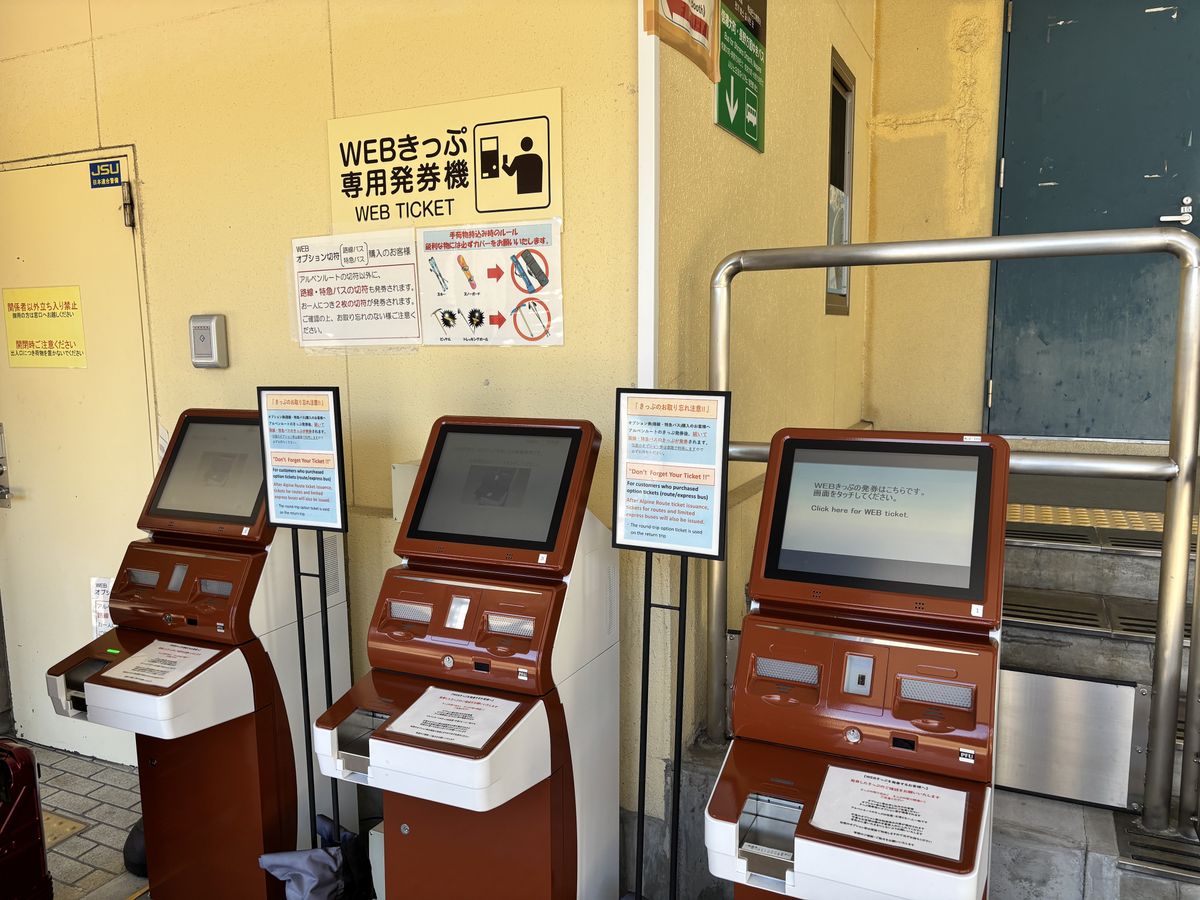
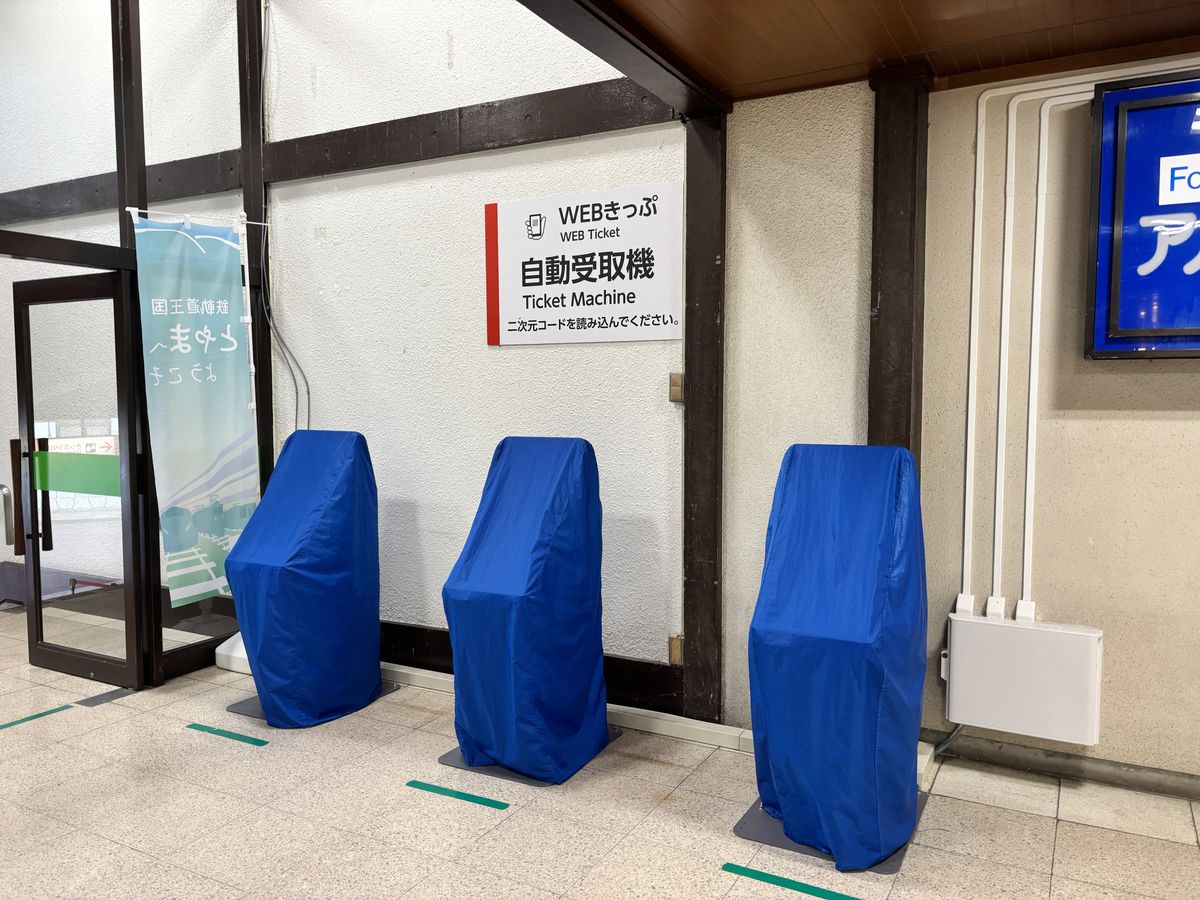
Step 2 — Collect it on the day from the dedicated machine at Ogizawa Station. With a Web Ticket you skip the counter queue and exchange your booking for a paper ticket at a dedicated machine. Having the confirmation details you received at purchase (such as the confirmation email) ready to show makes this quick.
Step 3 — Take your printed ticket to the gate. Once you have it in hand, the rest is exactly the same as for anyone who bought on the day.
Buying on the day, step by step
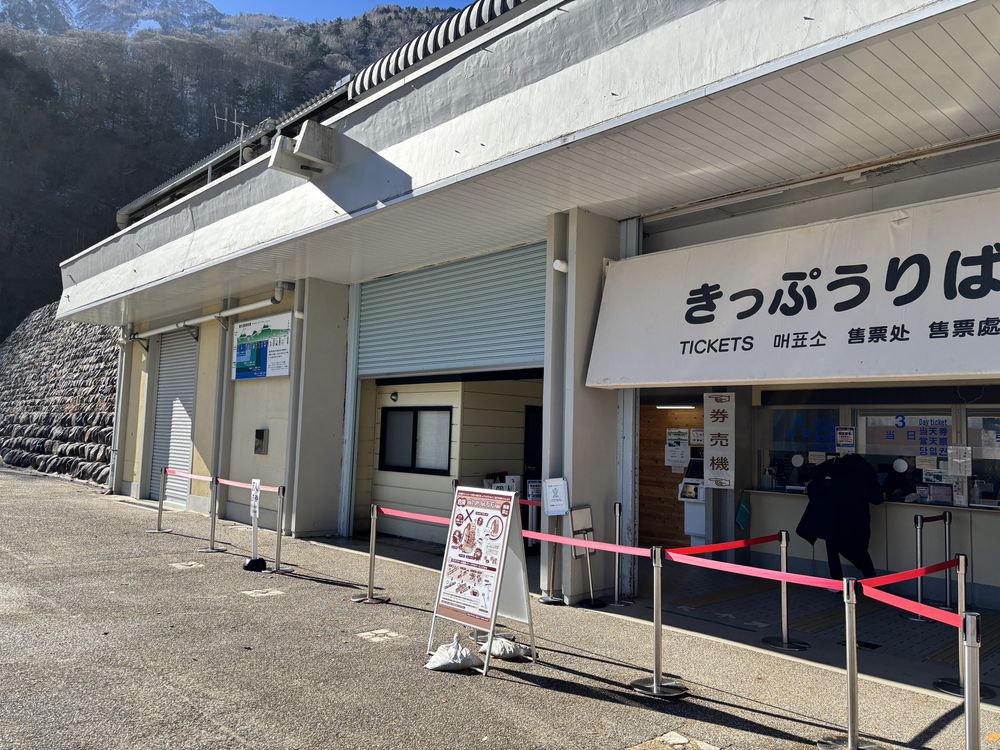
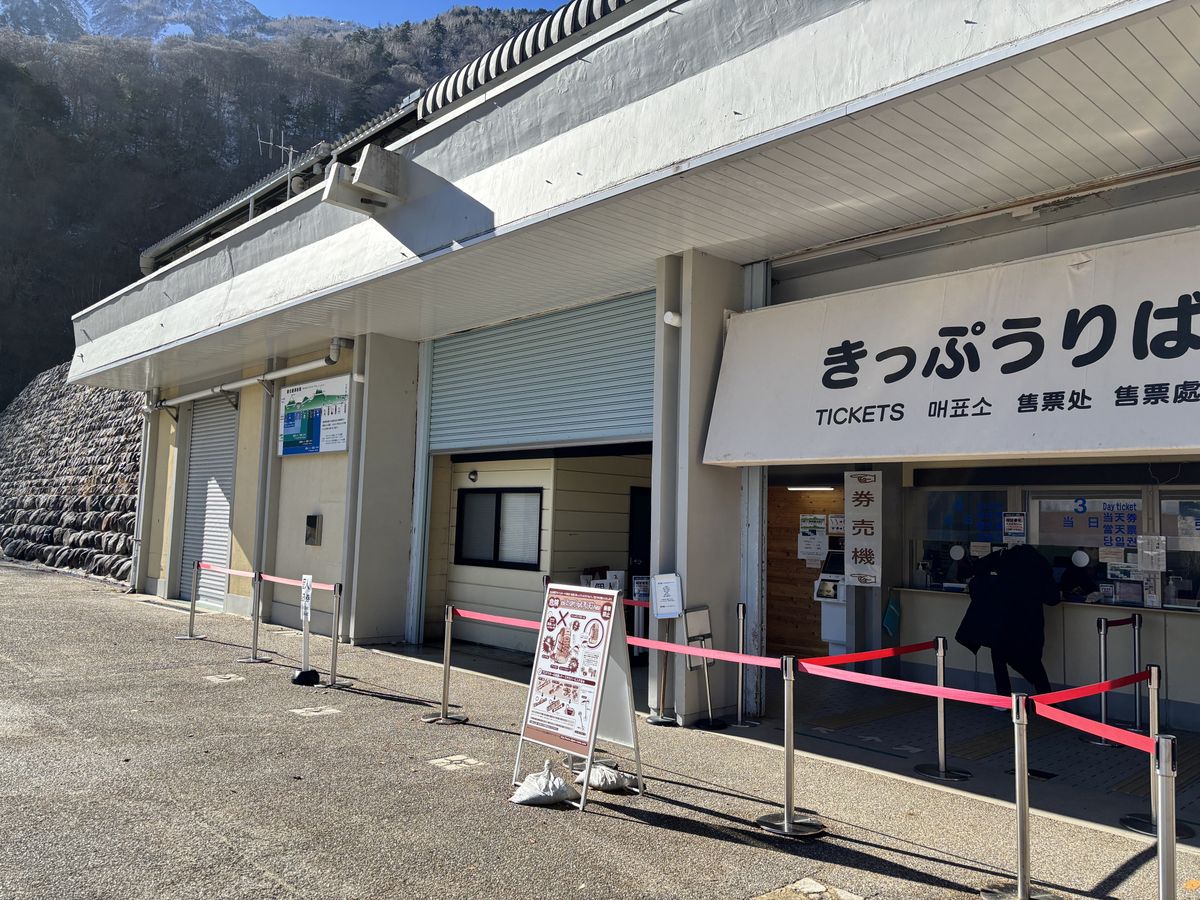
Step 1 — Head to the ticket office. Ogizawa Station has both a staffed ticket office and vending machines. Lines grow long around the first departure of the morning, so allow yourself plenty of time.
Step 2 — Check the fare for your destination on the fare board. The fare board posted near the ticket office lists one-way and round-trip fares for every station. For a through ticket, look at the row for the far end of the route — Tateyama Station if you are starting from Ogizawa.
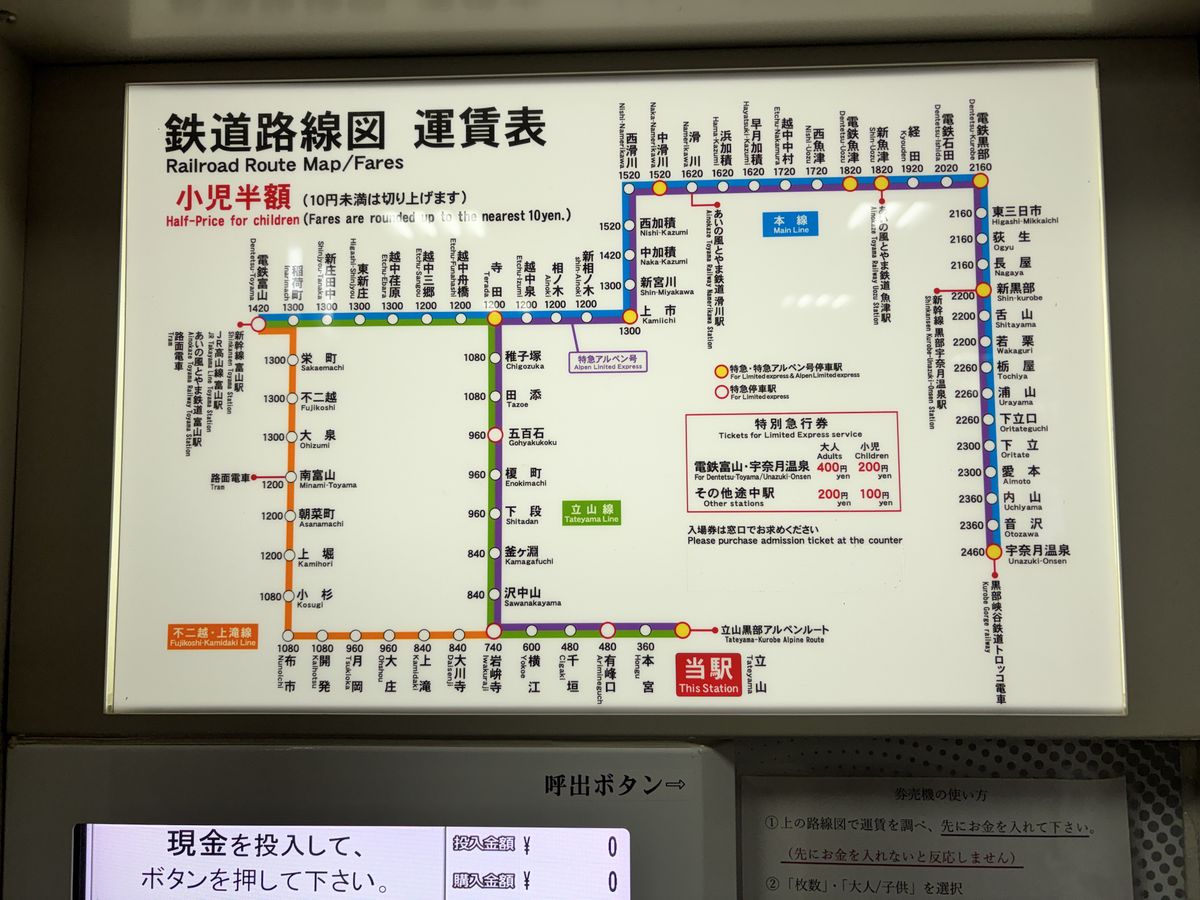
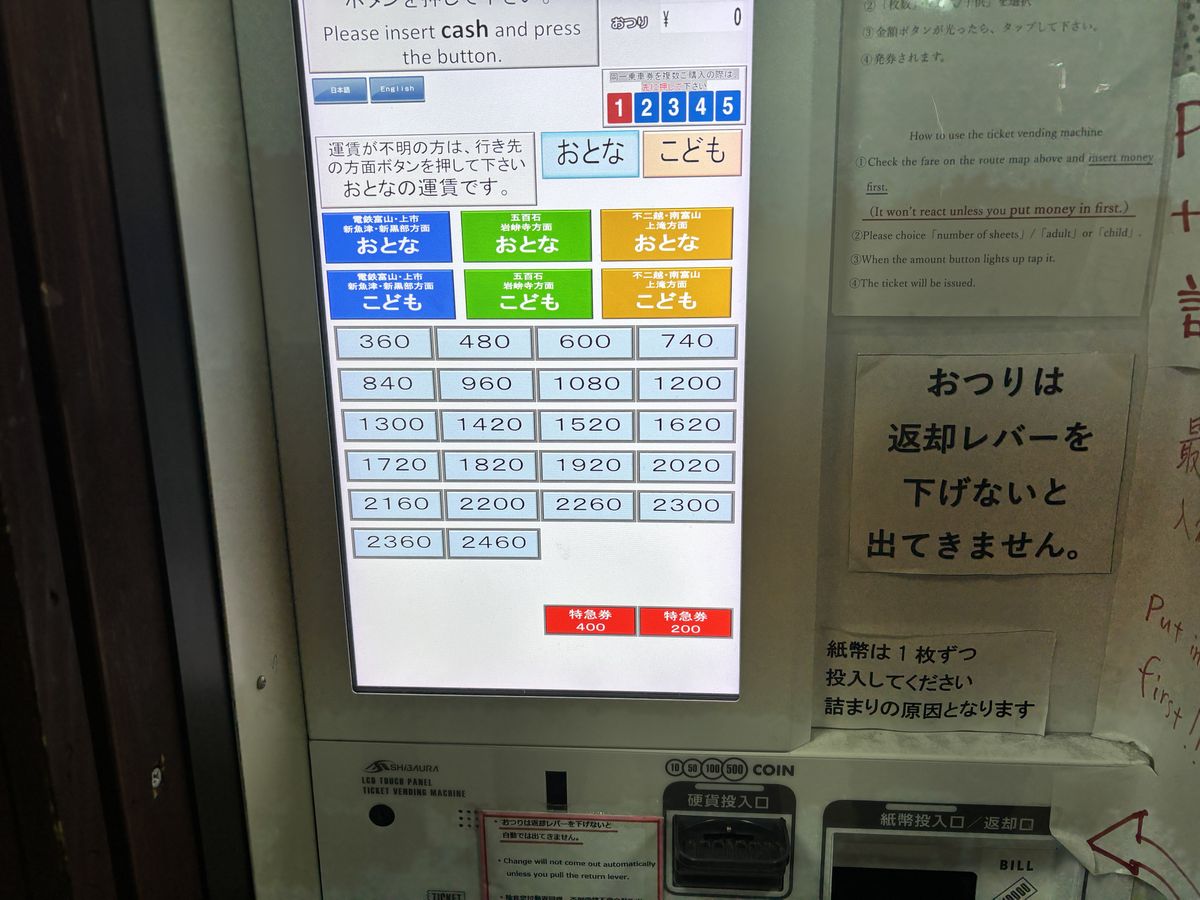
Step 3 — Pay. At the counter, state your destination, whether you want one-way or round-trip, and how many people, then pay. Card acceptance may differ between counters and vending machines, so it is worth carrying a reasonable amount of cash in Japanese yen as well.
How boarding works: gate, then line up, then ride
Once you have your ticket, the routine is essentially the same for every ride.
1. The gate — gates open in line with the departure time. Show your ticket to a staff member (or run it through the gate machine) and head to the boarding area.
2. Lining up — join the queue at the boarding area. The closer to the front you are, the more choice you have over your seat or a window spot.
3. Boarding — board as directed by the staff. Rather than dashing for a departure that is about to leave, it is safer to wait for the next one.
2. Lining up — join the queue at the boarding area. The closer to the front you are, the more choice you have over your seat or a window spot.
3. Boarding — board as directed by the staff. Rather than dashing for a departure that is about to leave, it is safer to wait for the next one.
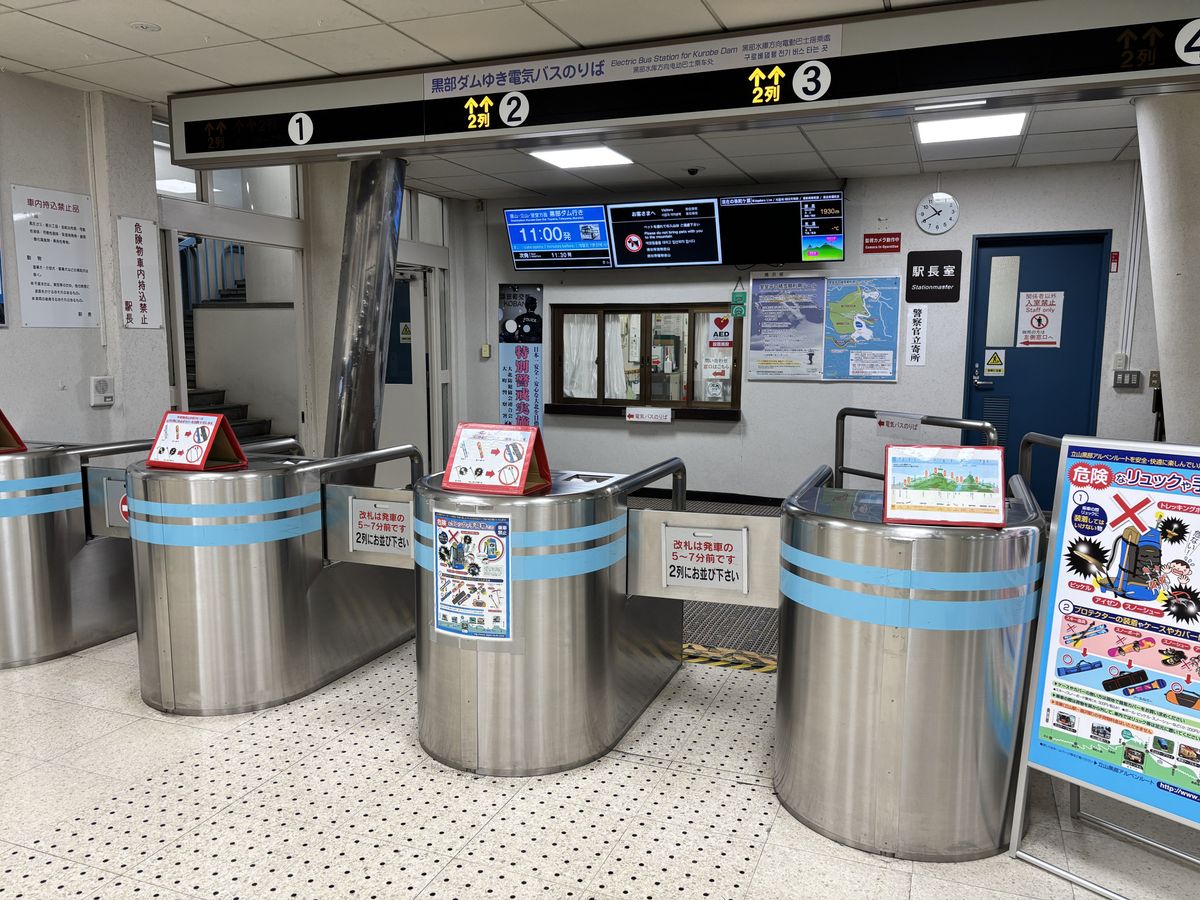
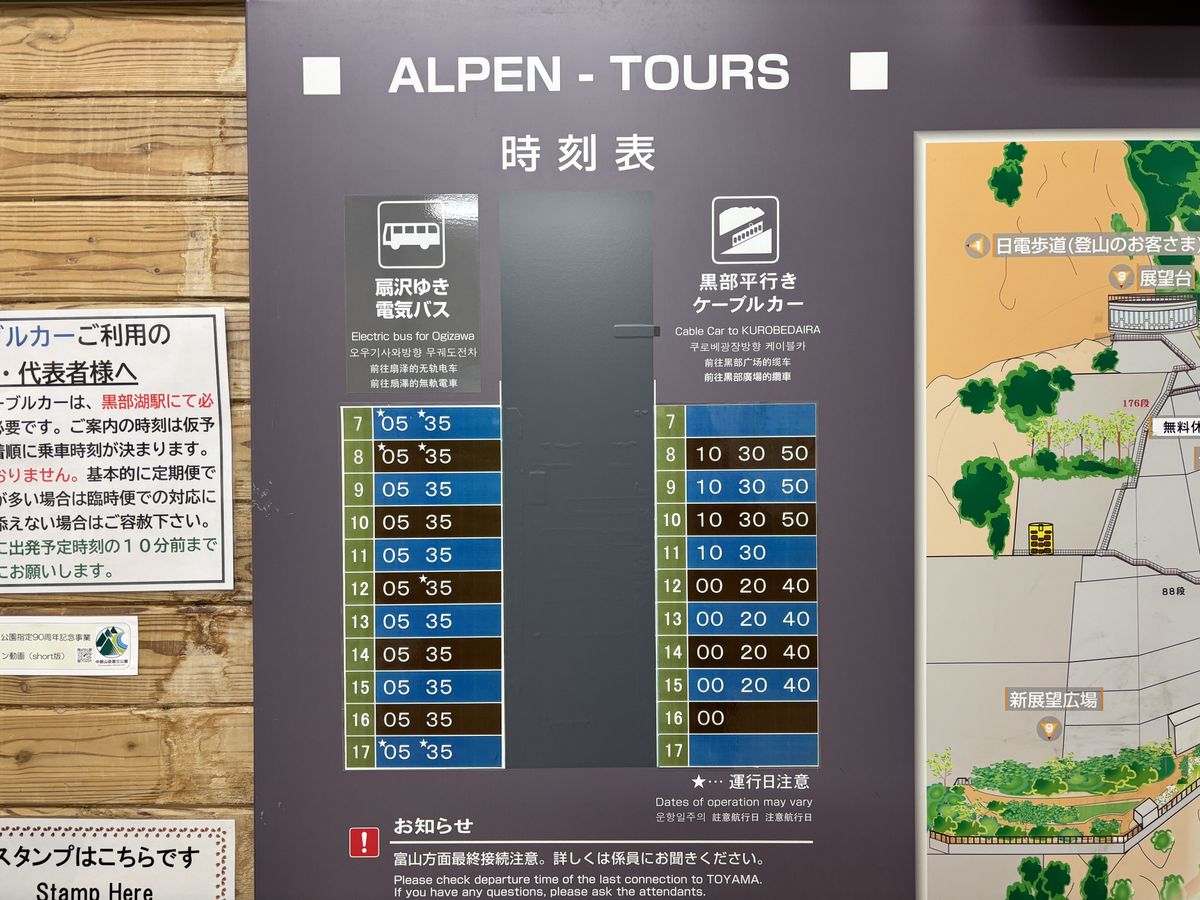
Keep hold of your ticket the whole way. A through ticket is the same single ticket used at every transfer. The trick is to keep it somewhere you can produce it instantly each time, such as a pocket or a pass holder.
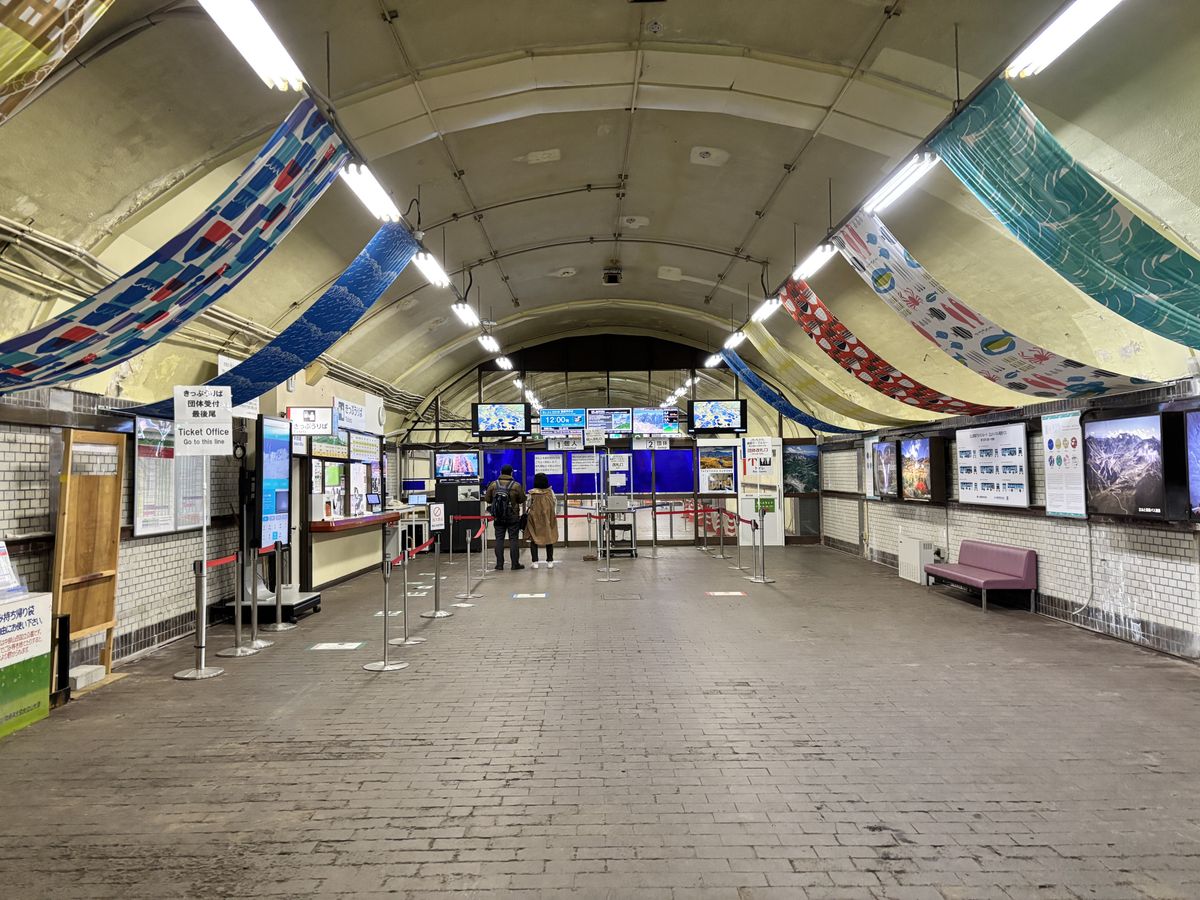
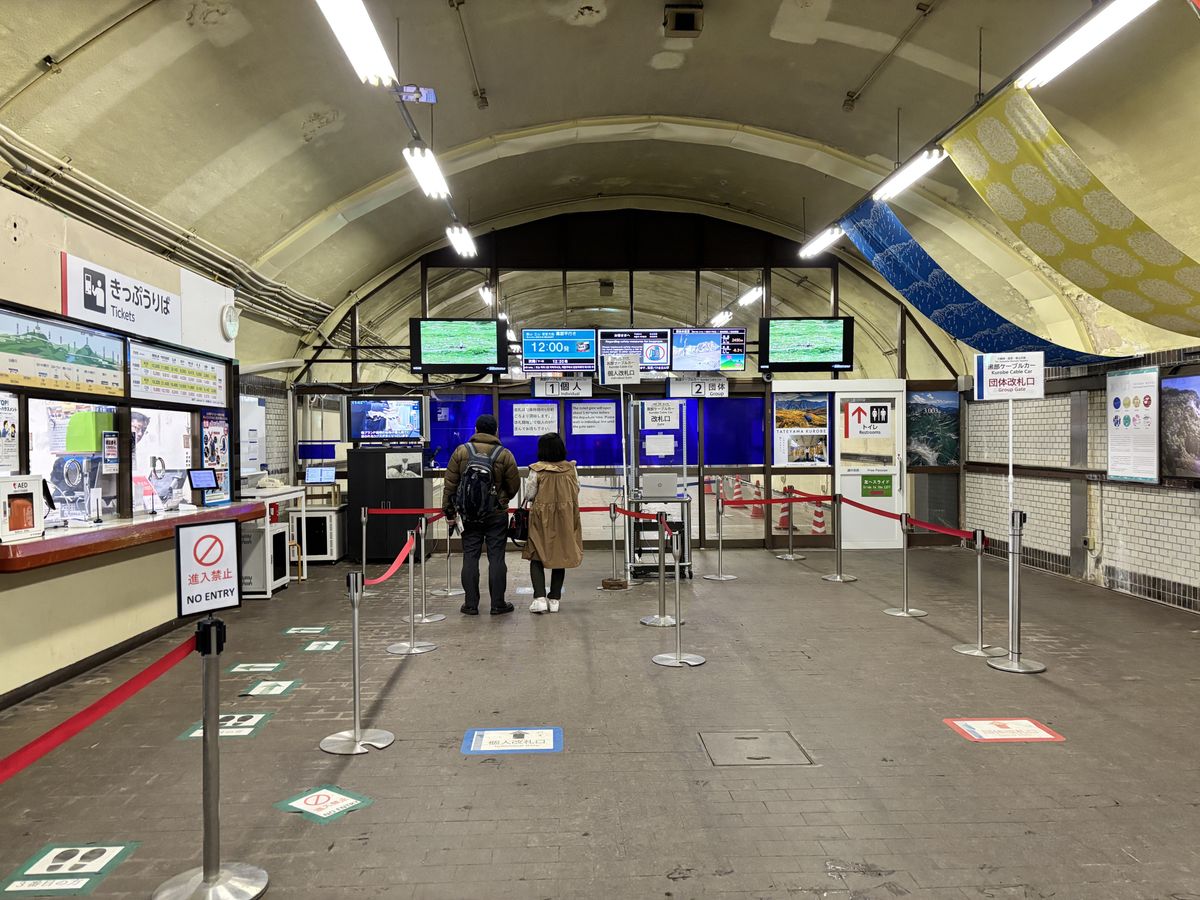
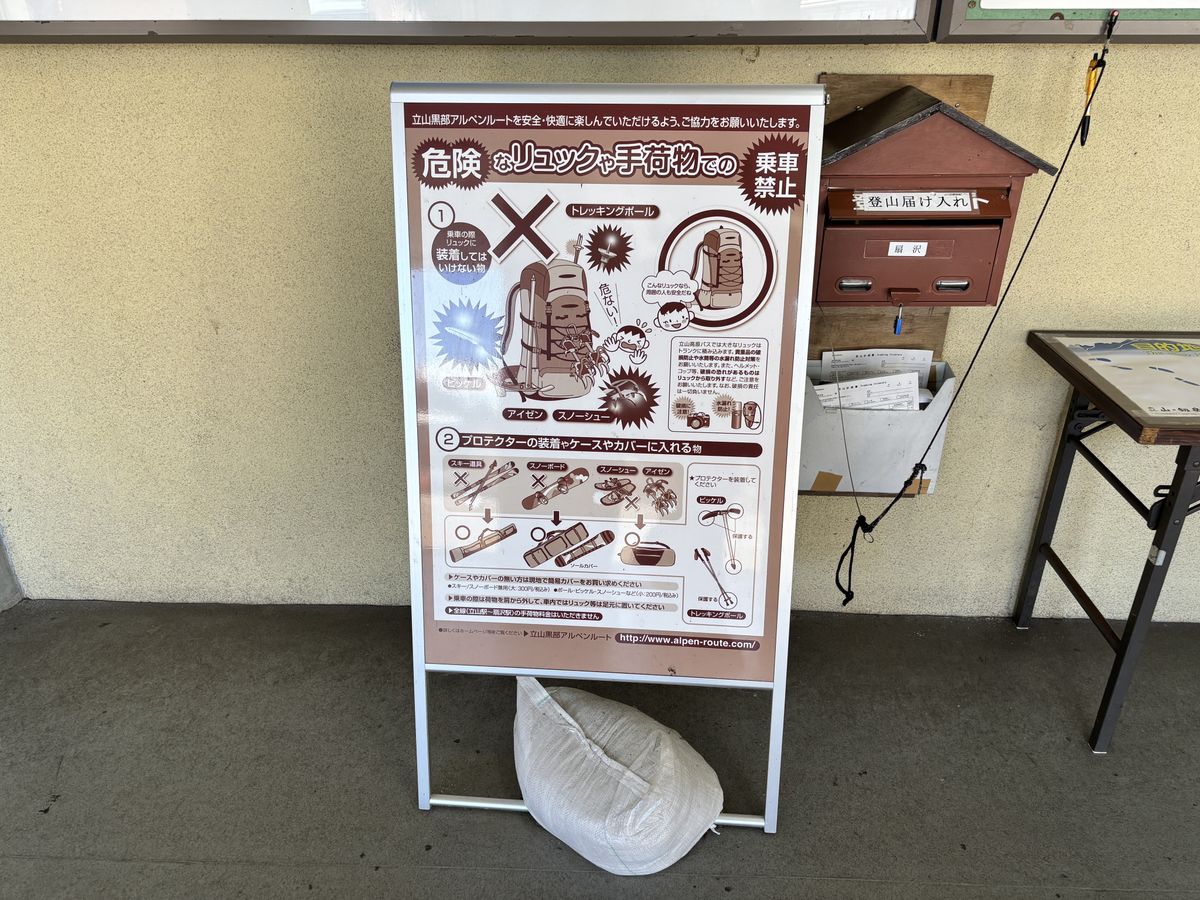
Luggage rules: most of these vehicles are compact and built around their seating, so follow the rules posted on board — holding a backpack in front of you when it is crowded, for instance. Large suitcases can be difficult to bring aboard at times, so consider the luggage forwarding service that sends your bags ahead between Ogizawa and Tateyama Station (check drop-off points, fees, and hours). Traveling light makes the whole chain of transfers far more comfortable.
Can you use the Japan Rail Pass?
Not on the Alpine Route itself, between Ogizawa and Tateyama Station. None of the rides on this stretch are JR lines, so they fall outside the Japan Rail Pass. The pass covers you only as far as the JR sections leading toward Ogizawa or Tateyama Station. For the full access details, see how to reach the Alpine Route.

Ride-by-ride tips, in order from Ogizawa to Tateyama Station
- Kanden electric bus through the Kanden Tunnel (Ogizawa to Kurobe Dam): almost the entire ride is inside the tunnel. Rather than the view, the priority here is lining up early to secure a seat.
- Kurobe Dam (the walking section): not a ride as such, but a transfer leg where you walk across the top of the dam to the next station. Wear comfortable shoes.
- Kurobe Cable Car (Kurobeko to Kurobedaira): it runs through a tunnel, so don't count on the view; standing near the doors makes the next transfer smoother.
- Tateyama Ropeway (Kurobedaira to Daikanbo): the windows on the valley side, looking down on Lake Kurobe, are the best seats in the house. Line up toward the front to claim a window.
- Tateyama Tunnel electric bus (Daikanbo to Murodo): entirely inside a tunnel, with no views at all. Again, prioritize getting a seat.
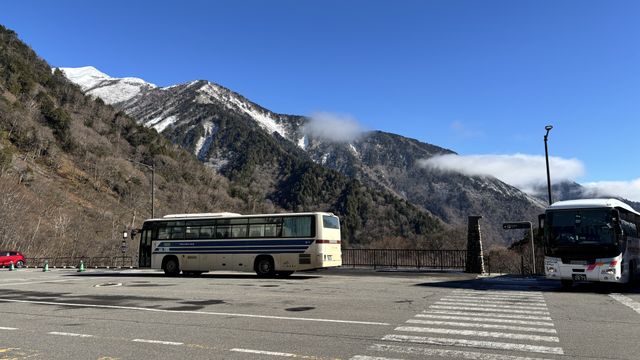
- Tateyama Highland Bus (Murodo to Bijodaira): here the scenery is the main event, and the further forward you sit, the more open the view.
- Tateyama Cable Car (Bijodaira to Tateyama Station): the last ride of the day. The interior is stepped to match the steep gradient, so watch your footing as you get on and off.