Practical Travel
9 Recommended Gourmet Dishes in Nagano Taste of Shinshu by Town
Updated 17 November 2026By Dynamic Japan Travel editorsEditorial policy
Contents
At the gate of Zenkoji, enjoy a warm oyaki. In the post town of Kiso, take a break with freshly grilled gohei mochi. Traveling through Nagano, each town offers a different culinary delight. Whether deciding on lunch or feeling peckish during a stroll, choose a specialty from the town you're visiting next.
Key Points of This Article
For those visiting Nagano Prefecture for the first time and unsure of what to eat in the towns you visit.
- Select local specialties to try in the area you visit.
- Learn about the ingredients, flavors, and how they have been enjoyed in Nagano.
- Find out which restaurants offer them and the names to look for on menus or in stores.
Choosing Local Specialties in Nagano by Destination
| Area Example | Specialty |
|---|---|
| Nagano City (around Zenkoji, Togakushi, etc.) | Shinshu soba, oyaki |
| Obuse | Obuse chestnut sweets |
| Nozawa Onsen | Nozawana pickles |
| Iiyama | Iiyama sasa sushi |
| Matsumoto/Shiojiri | Sanzoku-yaki |
| Kiso | Gohei mochi |
| Komagane | Komagane sauce katsudon |
| Ina | Ina ramen |
Shinshu Soba
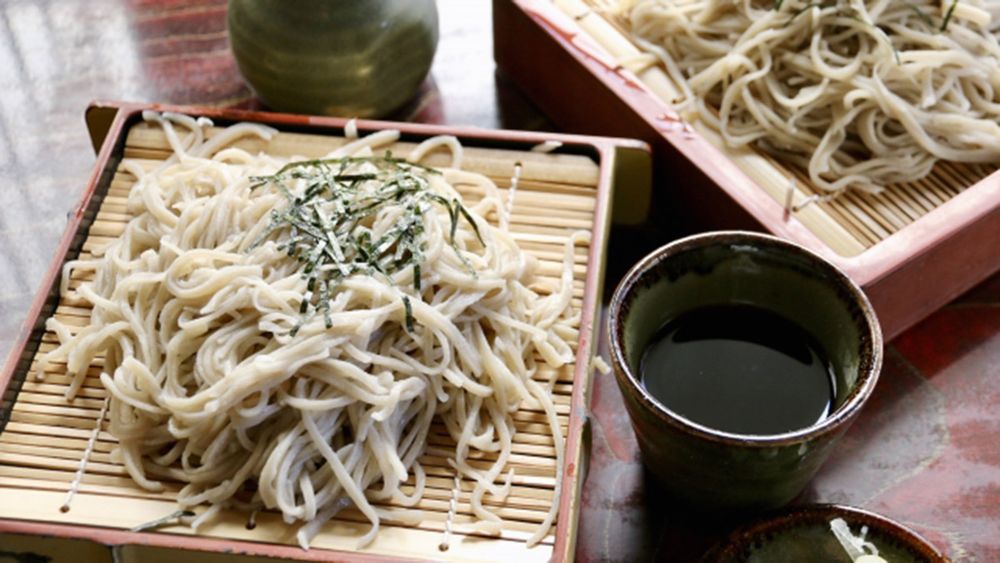
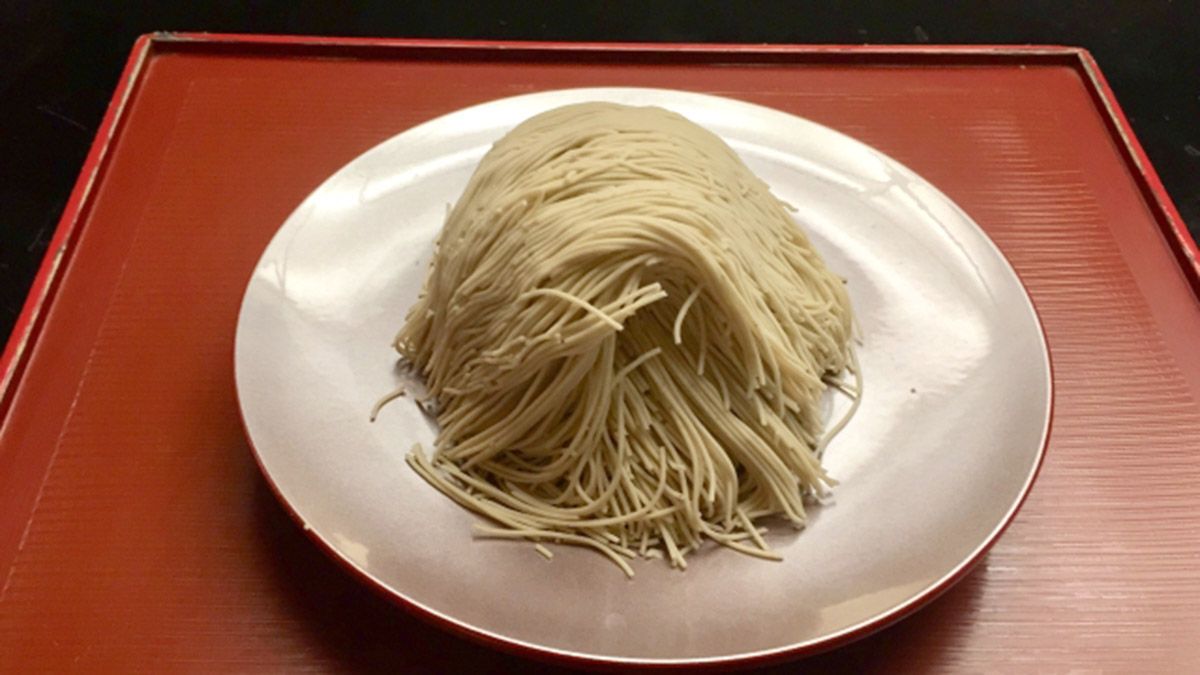
What kind of food is it? Shinshu soba is a noodle dish from Nagano Prefecture made with buckwheat flour ground from buckwheat seeds. The flour is kneaded with water, rolled thin, and cut into noodles. Sometimes wheat flour is mixed in. The aroma of buckwheat spreads when chewed, and the texture and smoothness vary depending on the flour blend and noodle thickness.
Origin & History Shinshu is the old name for Nagano Prefecture. In Nagano's cool mountainous regions, buckwheat, which grows well in areas unsuitable for rice, has been a dietary staple. There are dishes like "sobagaki," where buckwheat flour is kneaded with hot water, and noodles known as "soba-kiri." A 16th-century document from a temple in Kiso also mentions "soba-kiri." In Togakushi, the craft of weaving baskets from locally sourced nemagaritake bamboo has been passed down through generations.
Easy-to-find locations while traveling: Enjoy at soba shops throughout the prefecture.
Names to look for on the menu: "Zaru Soba," "Kake Soba."
Compare
Choosing Between Zaru Soba and Kake Soba
When you want to enjoy the aroma of soba
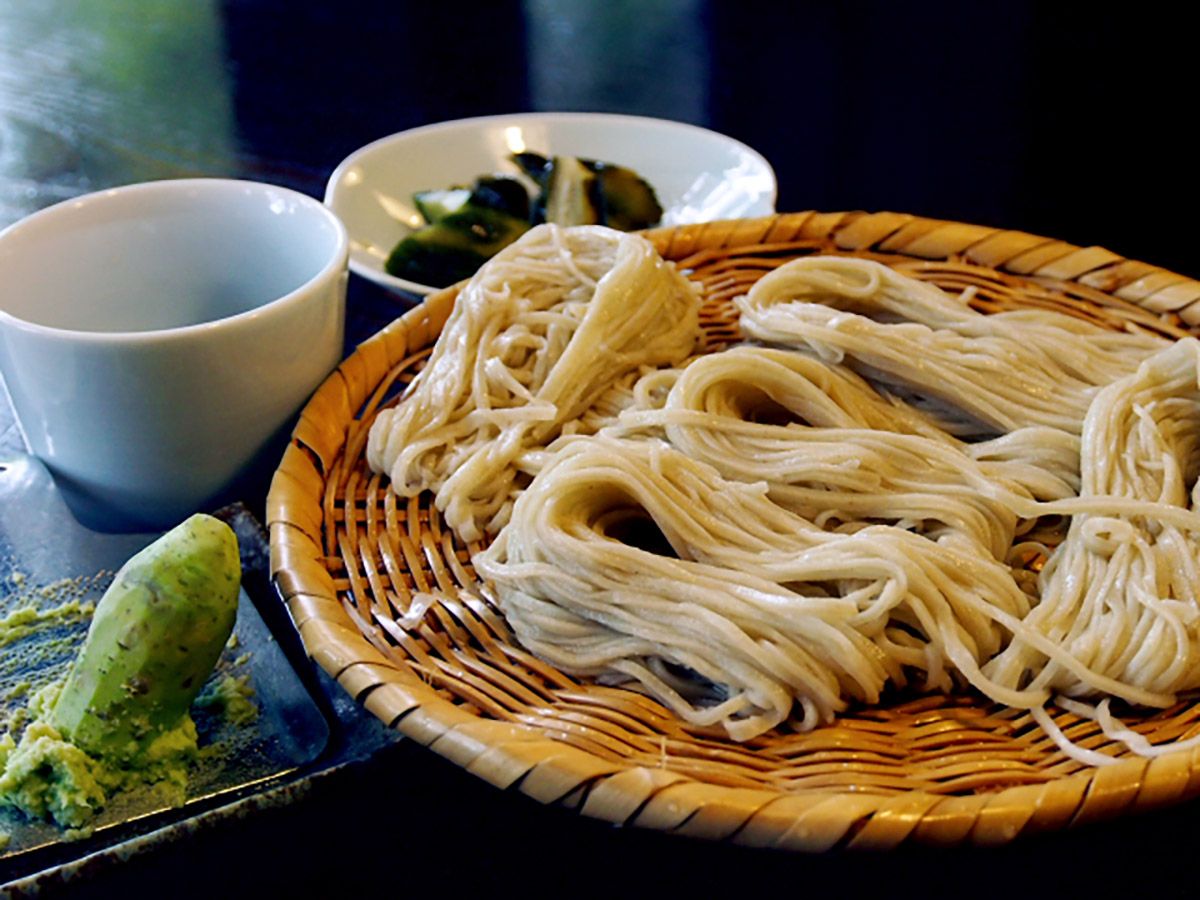
Cold zaru soba
- Boil the noodles, cool them in cold water, and dip them in the accompanying sauce before eating.
- In Togakushi, you can also encounter "Bocchi Mori."
When you want to warm up your body
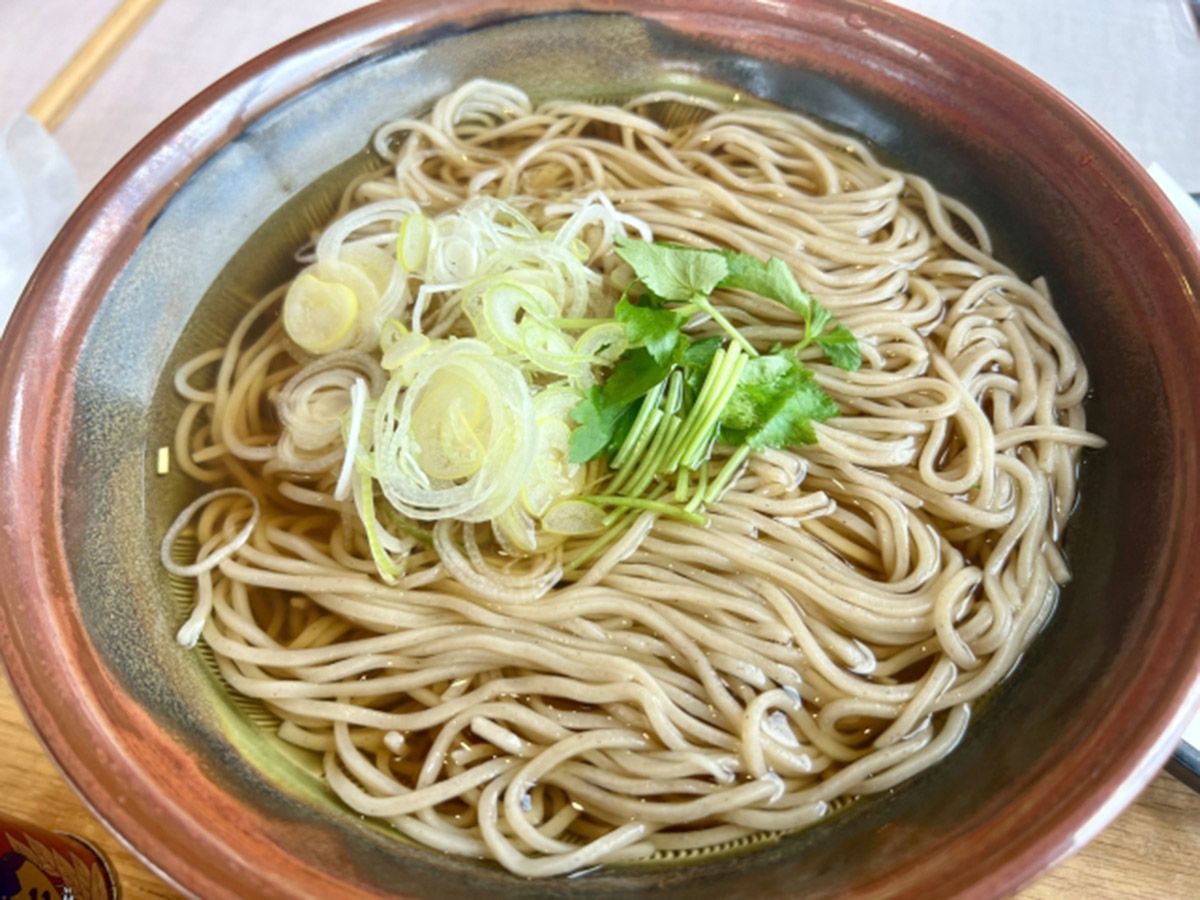
Warm kake soba
- Enjoy the noodles in warm broth together with the broth.
- For a cold day or after a walk outside, enjoy lunch here.
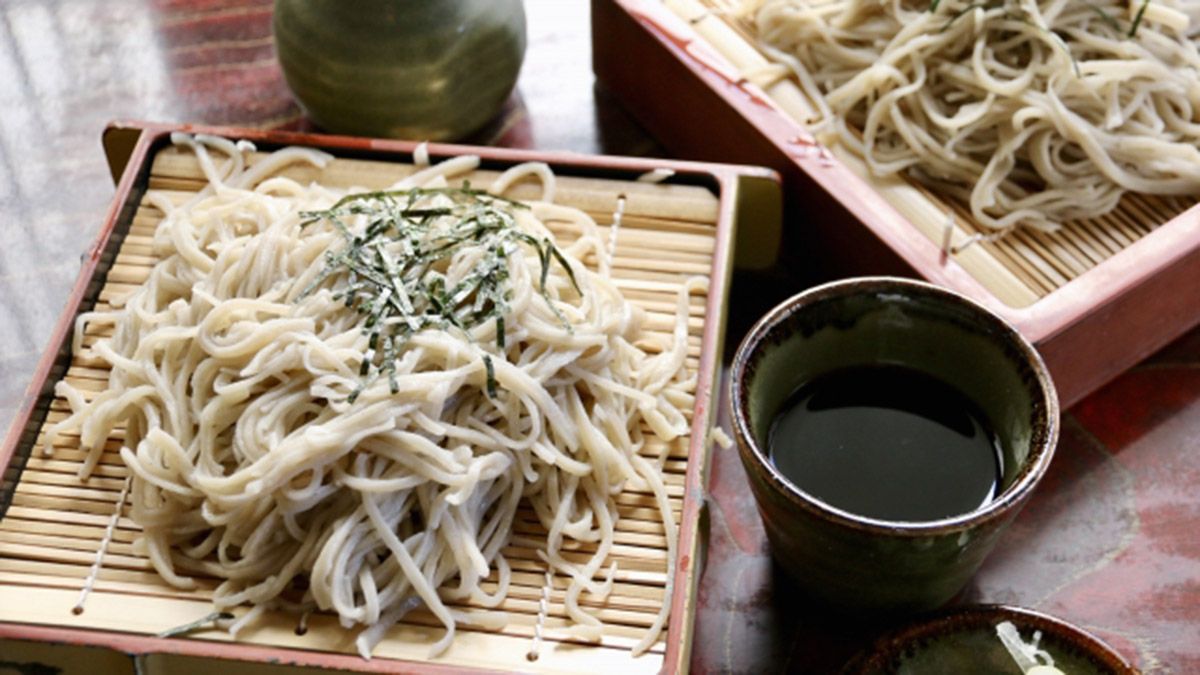
In Togakushi, cold soba is sometimes served in a style called "bocchi mori," where small bundles of noodles are arranged on a bamboo tray. When the soba is brought to you, take a moment to appreciate the presentation and the dishware.
Oyaki (Japanese dumplings)
What kind of food is it? Oyaki is a dish where dough made from flour is filled with vegetables or sweet bean paste, then steamed or grilled. Steamed ones have a soft skin, while grilled ones have a crispy surface. For your first try, nozawana with its salty greens is recommended. There are also options filled with miso-seasoned eggplant or sweet azuki bean paste.
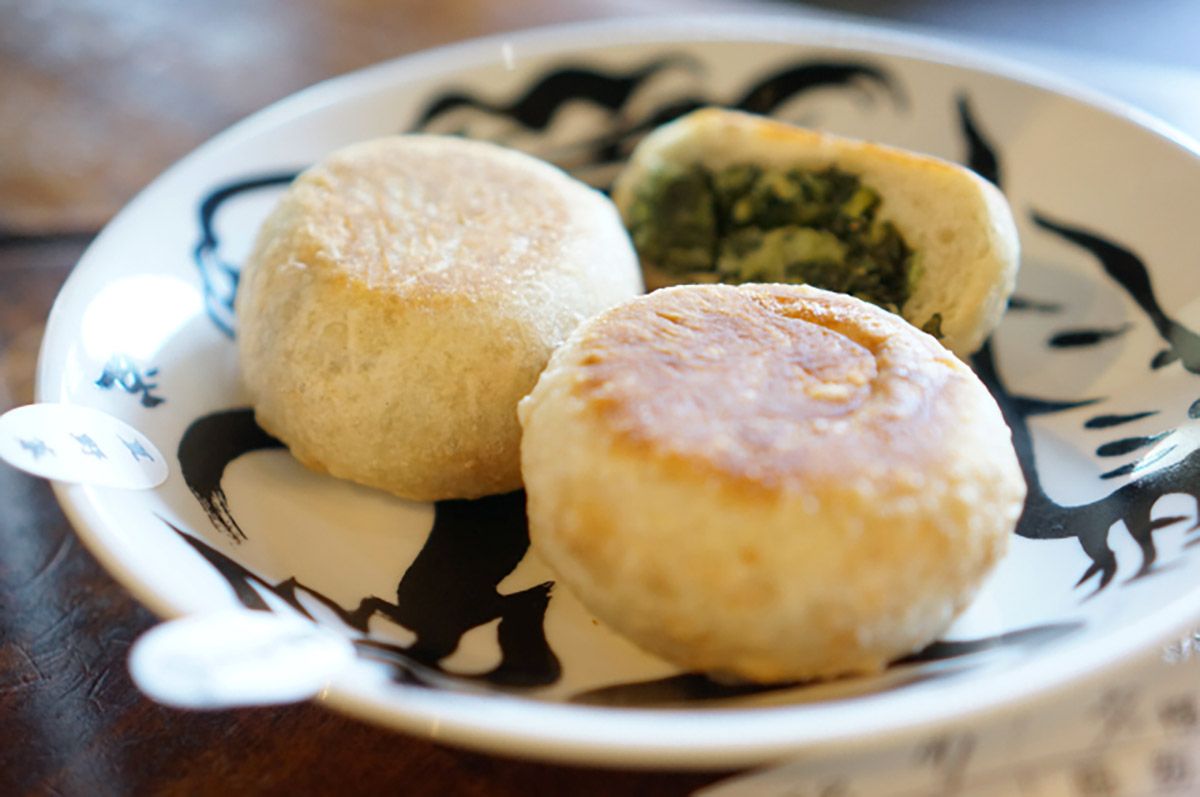
Origin and History In the mountainous region of Hokushin, where rice cultivation is challenging, wheat and buckwheat have been grown, and local vegetables wrapped for everyday meals. In the Nishiyama area, the traditional "Haiyaki" involves roasting the surface and then steaming it in the ash of a hearth set in the floor. With tourism, it spread throughout the prefecture and has now become a snack enjoyed during travel.
Easy-to-find spots while traveling can be seen at specialty shops and stalls throughout the prefecture. Around Zenkoji Temple, they can be enjoyed as a snack between visits.
Name to look for at the stalls is "Nozawana" on the ingredient tag. If you want to eat it while strolling, you can order it to-go.
Chestnut Sweets in Obuse
What kind of food? Obuse's chestnut sweets are appealing for their smooth chestnut paste and sweetly simmered chestnuts. Chestnut yokan features smooth chestnut paste set with agar. Kurikanoko combines chestnut paste with sweetened chestnuts, offering a delightful chestnut texture. At cafes, you can enjoy Mont Blanc with finely piped chestnut cream. Nowadays, you can choose between traditional Japanese sweets and Western-style pastries in the same town.
Origin & History In Obuse, chestnut cultivation flourished on land formed by sediment carried by the Matsukawa River. During the Edo period, chestnuts were offered to the shogunate, and by the late Edo period, sweets like chestnut yokan and chestnut rakugan were being made.
Easy-to-find spots while traveling: Tea rooms and cafes in the center of Obuse's chestnut confectionery district.
- Take a break at a tea room
- Enjoy "Mont Blanc" with tea.
- Takeaway & Souvenirs
- Purchase "chestnut yokan" and "chestnut monaka" at the confectionery shop.
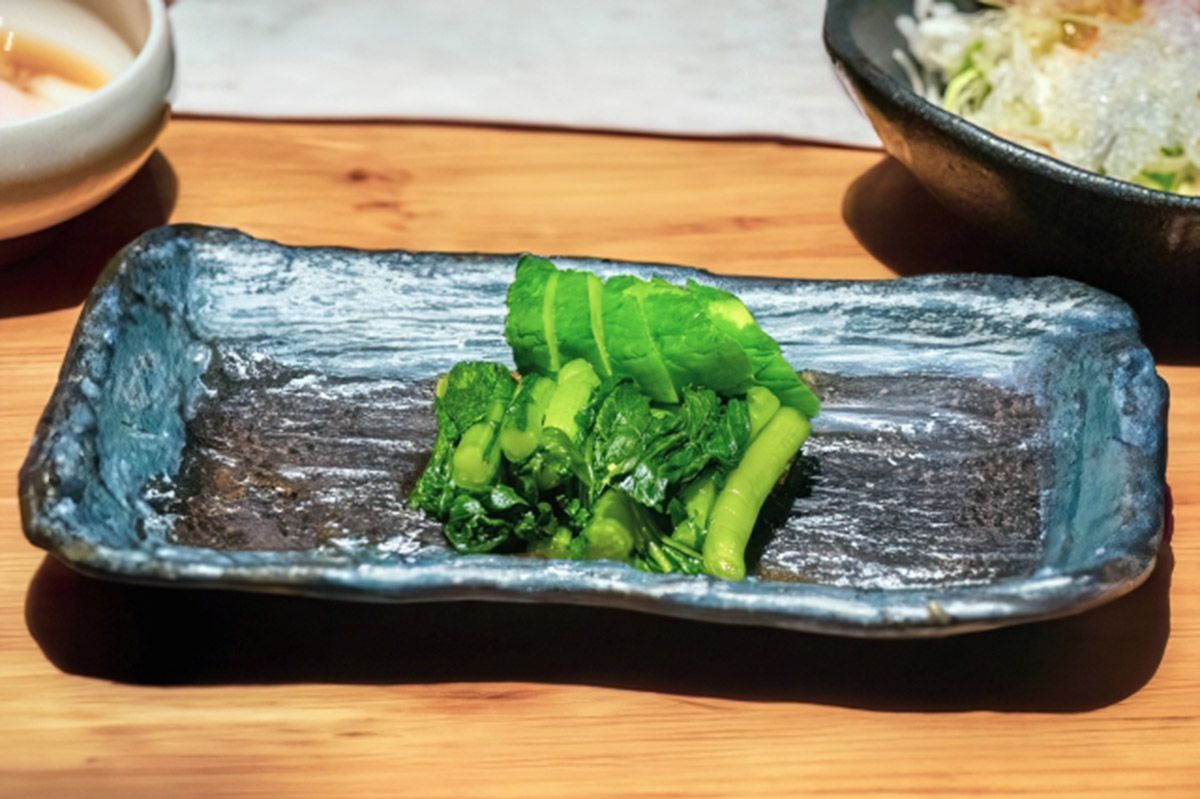
Nozawana pickles
What kind of food is it? Nozawana pickles are a preserved food made by salting long-stemmed, large-leafed nozawana greens. Lightly pickled ones are bright green with crisp stems. Aged pickles, which have undergone lactic acid fermentation, turn brownish and develop a tangy flavor. They are often served with white rice or used as filling for oyaki dumplings.
Origin & History In Shinshu, it was a traditional practice to pickle greens in late autumn to prepare for the snowy winter. In Nozawa Onsen, there's a tradition of washing harvested leaves in the onsen water, known as "vegetable washing." The origin of Nozawana is said to trace back to the Edo period when a local temple priest brought turnip seeds from Kyoto. After the war, it spread beyond the prefecture through ski visitors and onsen guests.
Easy-to-find locations while traveling You can buy them at souvenir shops and supermarkets throughout the prefecture. In Nozawa Onsen, they are sometimes served with meals at inns and restaurants.
Names to look for at stores At souvenir shops in the hot spring town or roadside stations, look for "Nozawana pickles." When taking them home, be sure to check the storage instructions on the package.
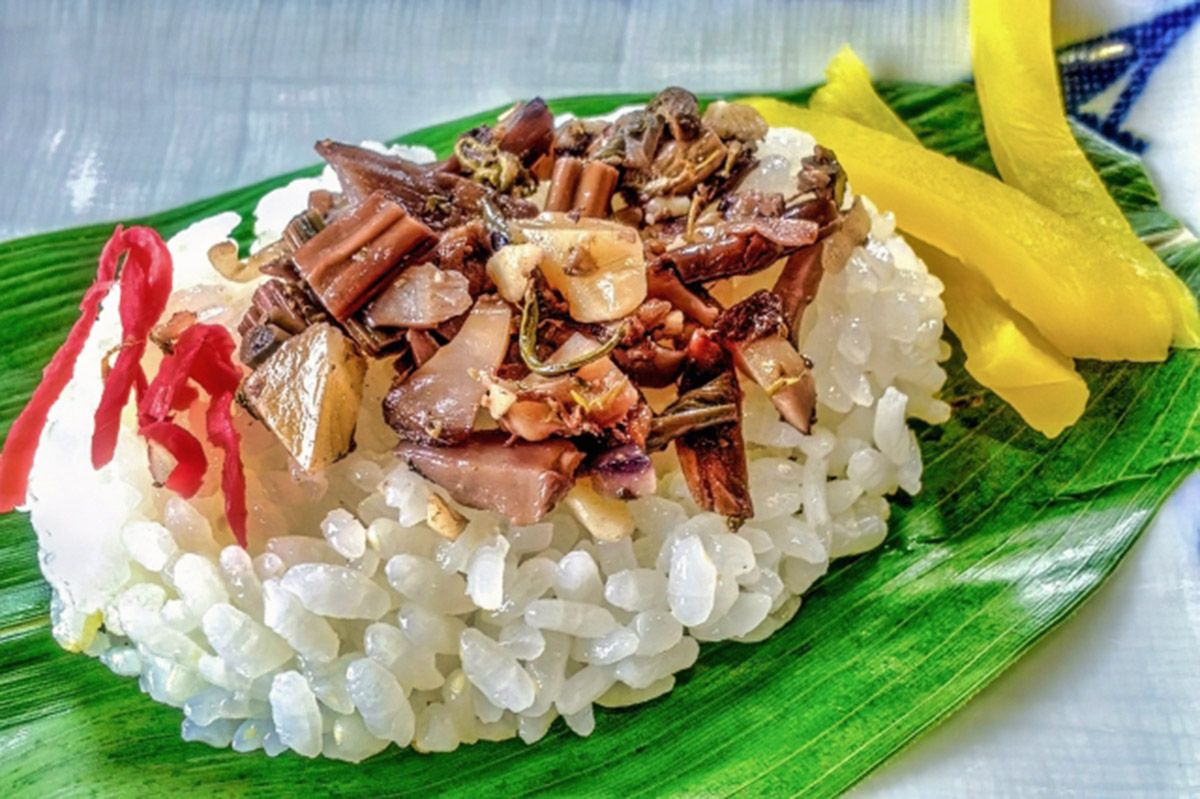
Sasazushi of Iiyama
What kind of food? Sasa-zushi, a traditional dish from Iiyama, is sushi made by placing vinegared rice on bamboo leaves and topping it with mountain vegetables like zenmai, shiitake mushrooms, and walnuts. The toppings vary by household and maker, sometimes including thinly sliced omelet or pickled ginger. Enjoy the subtle acidity of the vinegared rice and the varied textures of the toppings like mountain vegetables and walnuts. The bamboo leaf serves as a small plate; hold the leaf and eat the rice and toppings from the top.
Origin and History In Tomikura, it was a delicacy prepared for celebrations, festivals, and the Obon season. There is a legend that during the Sengoku period, when the warlord Uesugi Kenshin passed through Tomikura, villagers served rice and mountain vegetables on bamboo leaves. In Iiyama, it is also called "Kenshin Sushi," named after this story.
Easy-to-find spots while traveling: Local cuisine restaurants in Iiyama city and soba shops in the Tomikura area.
Name to look for on the menu: "Sasa-zushi." If you venture to Tomikura, it's recommended to enjoy it alongside Tomikura soba.
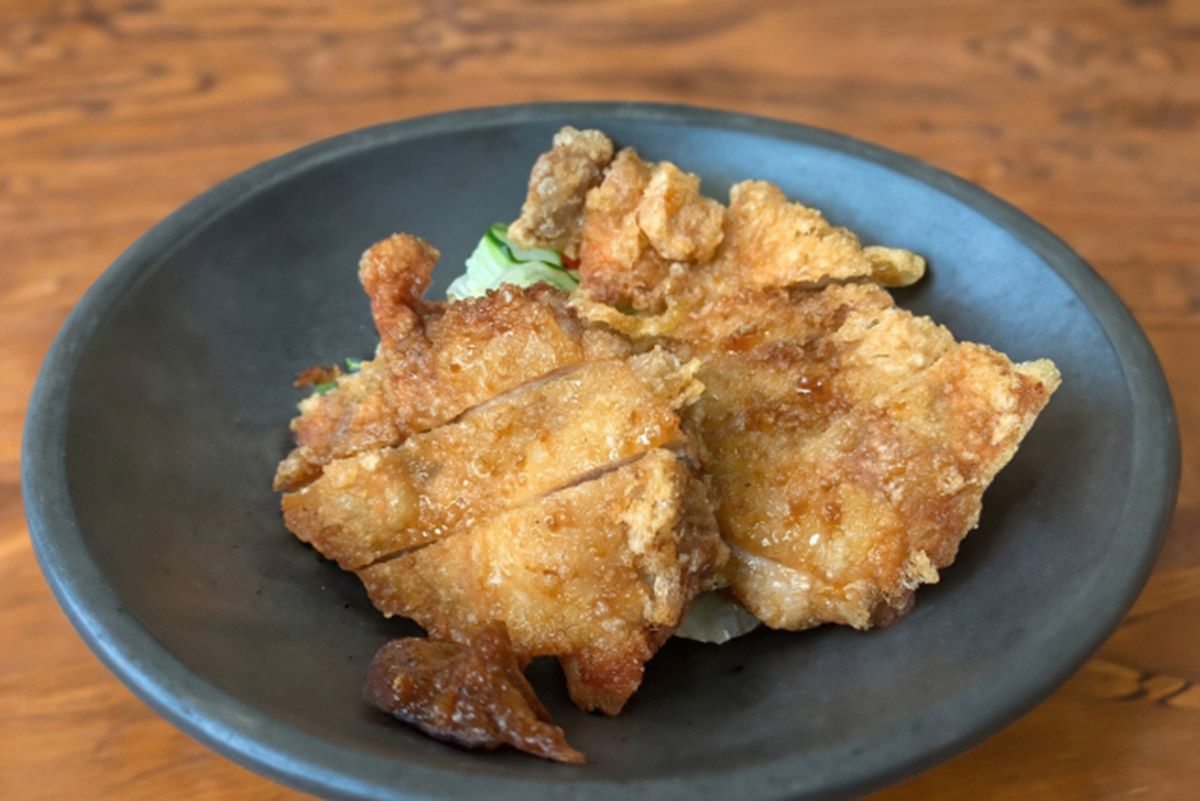
Sanzoku-yaki (Mountain Bandit Chicken)
What kind of food is it? Sanzoku-yaki is a dish made by marinating a whole piece of chicken thigh or breast in a soy sauce marinade with garlic and ginger, coating it with potato starch, and frying it. The thickness unique to a whole piece of meat allows you to enjoy the crispy coating and the savory flavor of the meat. It pairs well with rice, as the aroma of the soy sauce and garlic complements it nicely.
Origin & History In Shiojiri, it is said that this dish originated in a local restaurant, with the restaurant's name becoming the dish's name. In Matsumoto, there's a theory that the name plays on the words for "taking away" and "frying chicken," referencing bandits taking things away. In Matsumoto, it's a familiar dish that even appears in school lunches.
Easy-to-find spots while traveling: Easily found in diners and izakayas in Matsumoto and Shiojiri.
Names to look for on the menu: If paired with rice, it's "Sanzoku-yaki Set Meal." If sharing with other dishes, order "Sanzoku-yaki" à la carte.
Gohei Mochi
What is it? Gohei-mochi is a dish made by cooking regular rice (uruchi rice), mashing it slightly to leave some grains, skewering it, and grilling it with a sauce. The sweet and savory sauce, made with miso or soy sauce, may also include walnuts or sesame seeds. Its appeal lies in the aroma of the grilled sauce and the texture of the rice grains. The shape varies by region, ranging from flat oval shapes to round dumplings.
Origin & History Passed down in the mountainous regions of the Chubu area, it was a delicacy for special occasions when rice was precious. The name is said to derive from its resemblance to the ritual tool "Gohei" offered to deities, or from a person named Gohei.
Easy-to-find spots while traveling In Nagano Prefecture, you can find these flavors in Kiso and Ina. In Narai-juku and Tsumago-juku, look for them at tea shops, snack bars, and soba restaurants.
Names to look for on signs and menus "Gohei mochi." Some sauces use walnuts or sesame, so if you have ingredients to avoid, check with the shop before ordering.

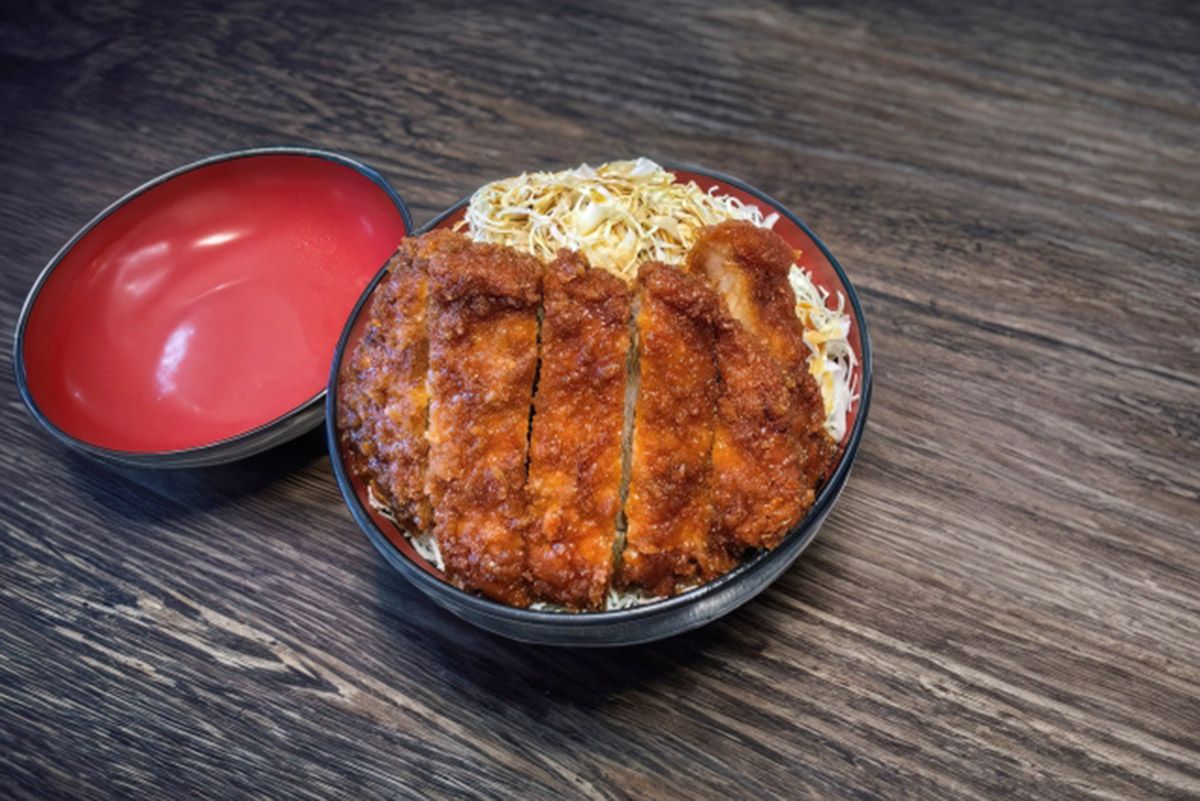
Katsudon with Sauce from Komagane
What kind of food is it? Komagane sauce katsudon is a bowl of rice topped with shredded cabbage and freshly fried pork cutlet dipped in a sweet and savory sauce. The combination of hot cutlet and cold cabbage offers a delightful contrast, with the sauce-soaked coating and the crunch of the cabbage. Each restaurant has its unique sauce flavor, varying in the use of soy sauce and mirin.
Origin and History In Komagane, this way of eating is said to have started in the early Showa era. Locally, "katsudon" refers to a bowl with sauce flavor, and it has become so established that enthusiastic restaurant owners have promoted it as a town specialty through maps listing offering establishments and events.
Easy-to-find spots while traveling: Diners and eateries in Komagane City.
Name to look for on the menu: "Sauce Katsu-don." Perfect for lunch on a day trip to Komagane Highlands.
Ramen of Ina
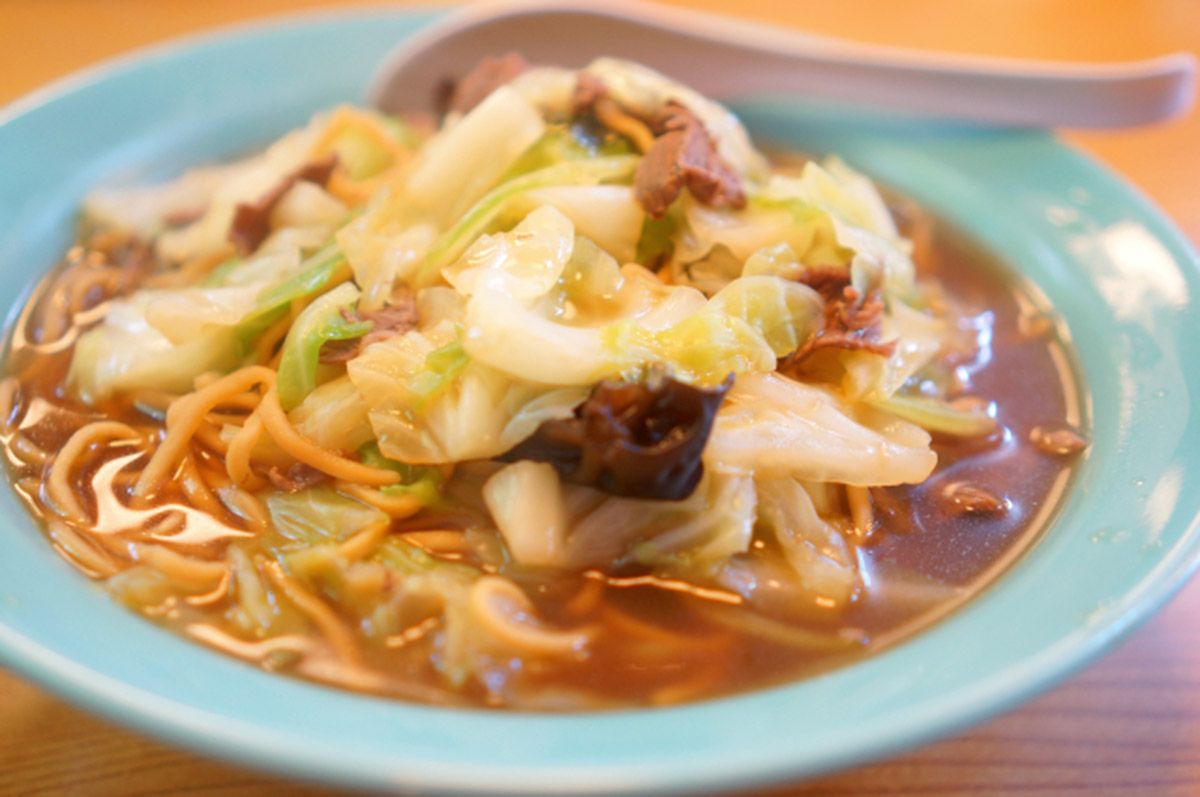
What kind of food is it? Ramen is a noodle dish from Ina, made with steamed Chinese noodles combined with mutton, known as sheep meat, and cabbage. The steamed noodles have a firm texture that pairs well with the flavors of the meat and vegetables. You can enjoy adjusting the taste by adding vinegar, sesame oil, or sauce at the table. Some restaurants use pork instead.
Origin & History Around 1955, a dish combining steamed noodles with mutton, cabbage, and garlic was created in Ina. Initially called "Chao Rou Mian," it later became affectionately known as "Romen" after dropping the "Chao." It then spread to restaurants in Ina.
Easy-to-find spots while traveling: Ramen specialty shops and izakayas in Ina City.
Name to look for on the menu: "Ramen." There are soup-style and yakisoba-style options, varying by restaurant.
- Soup-style
- Steamed noodles and ingredients served with warm broth.
- Yakisoba-style
- A dish with noodles and ingredients coated in sauce.