Practical TravelTokyo
How to Ride Tokyo's City Buses The fare is a flat rate of 210 yen, paid in advance with Suica or cash; credit cards are not accepted.
Updated 14 November 2026By Dynamic Japan Travel editorsEditorial policy
Contents
The fare for Toei buses in Tokyo's 23 wards is a flat rate of 210 yen for adults. Whether you get off at the next stop or ride to the end, it's the same. You can pay with IC cards like Suica or PASMO, or with cash, but credit cards are not accepted. No special app or reservation is needed to board the bus. Simply wait at the bus stop and get on the bus when it arrives.
Riding the bus is not difficult. Board through the front door, pay when you get on, and exit through the rear door. When we took the Toei bus around Asakusa and Ueno, there were no stairs to climb, and the onboard screens displayed information in English. This page will guide you step-by-step from boarding to alighting, using photos taken during our ride.
Payment can be made with IC cards or cash. Credit cards are not accepted.
Here's what you need to know before boarding, specifically for Toei buses in Tokyo's 23 wards.
| Item | Answer | Remember |
|---|---|---|
| IC Card (Suica, PASMO, etc.) | Accepted | Just touch it once on the fare box when boarding. It's the easiest way |
| Cash | Accepted | Coins and 1,000 yen bills are accepted, and change is given. 5,000 and 10,000 yen bills are not accepted |
| Credit Card | Not accepted | Contactless payment by card is also not available inside the bus |
| App/Reservation | Not needed | If you have an IC card or cash, just wait at the bus stop and board |
| Fare | Flat rate of 210 yen for adults | Does not change with distance |
Since the fare is flat, there's no need to inform the driver of your destination or read a fare chart. If you don't have Japanese currency yet or plan to travel using only a credit card, please prepare an IC card in advance. How to set up Suica is introduced in How to Use Suica on Your Smartphone.
You only need to remember three things to ride Tokyo buses.
Board from the front door
In Tokyo's 23 wards, the front door with the driver's seat is the entrance, and the rear door is the exit.
Pay when boarding
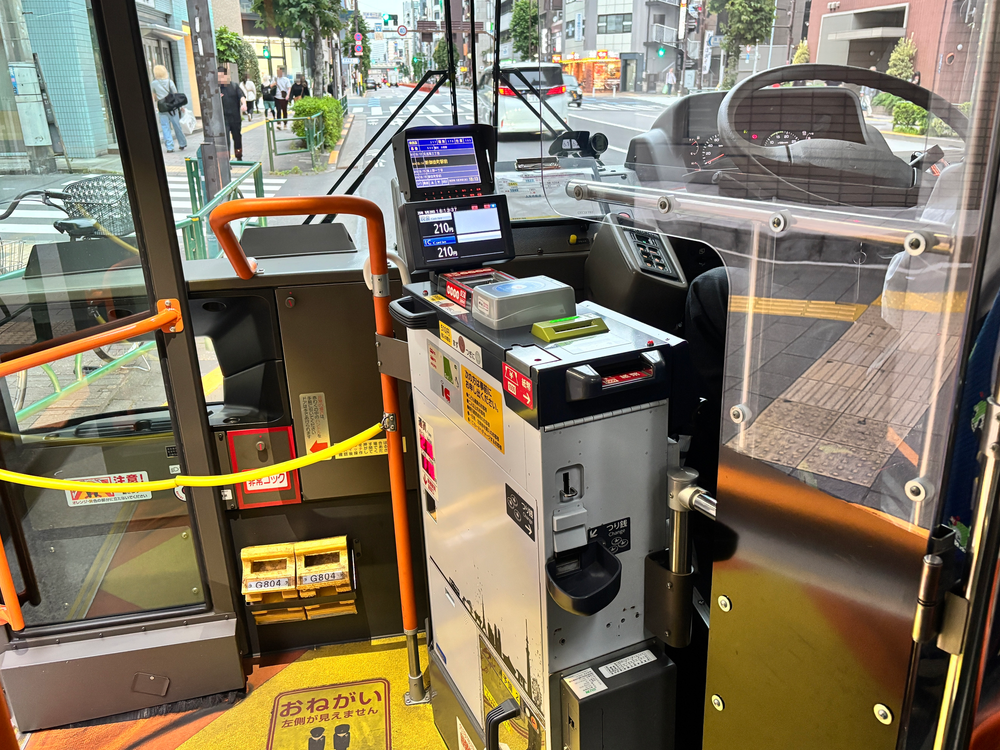
Fares are paid on the spot. Tap your IC card once on the fare box, or insert cash into the fare box.
Exit through the rear door.
Press the stop button when your desired stop is announced, and exit through the rear door once the bus has stopped. No payment is required when getting off.
While trains and subways are convenient in Tokyo, buses are useful when traveling to places a bit away from stations or when you want to avoid stairs. The Toei Bus we took was a non-step bus with a low entrance step.
Differences Between Toei Buses and Private Buses
Buses in Tokyo are not operated by a single company. In addition to the Toei Bus run by the Tokyo Metropolitan Government, private companies such as Keihin Kyuko Bus, Tokyu Bus, Odakyu Bus, Keio Bus, Seibu Bus, Tobu Bus, Kanto Bus, Kokusai Kogyo Bus, and Keisei Bus have routes in different areas.
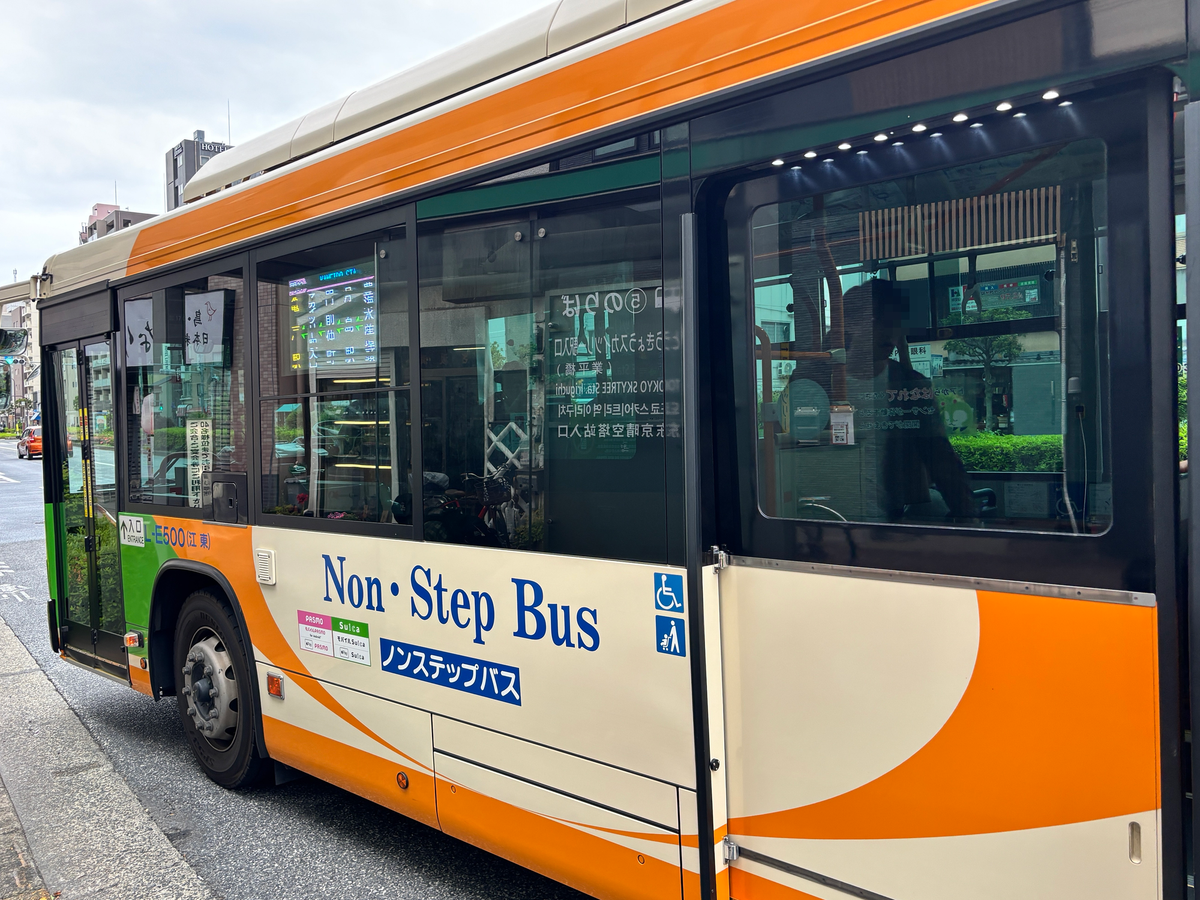
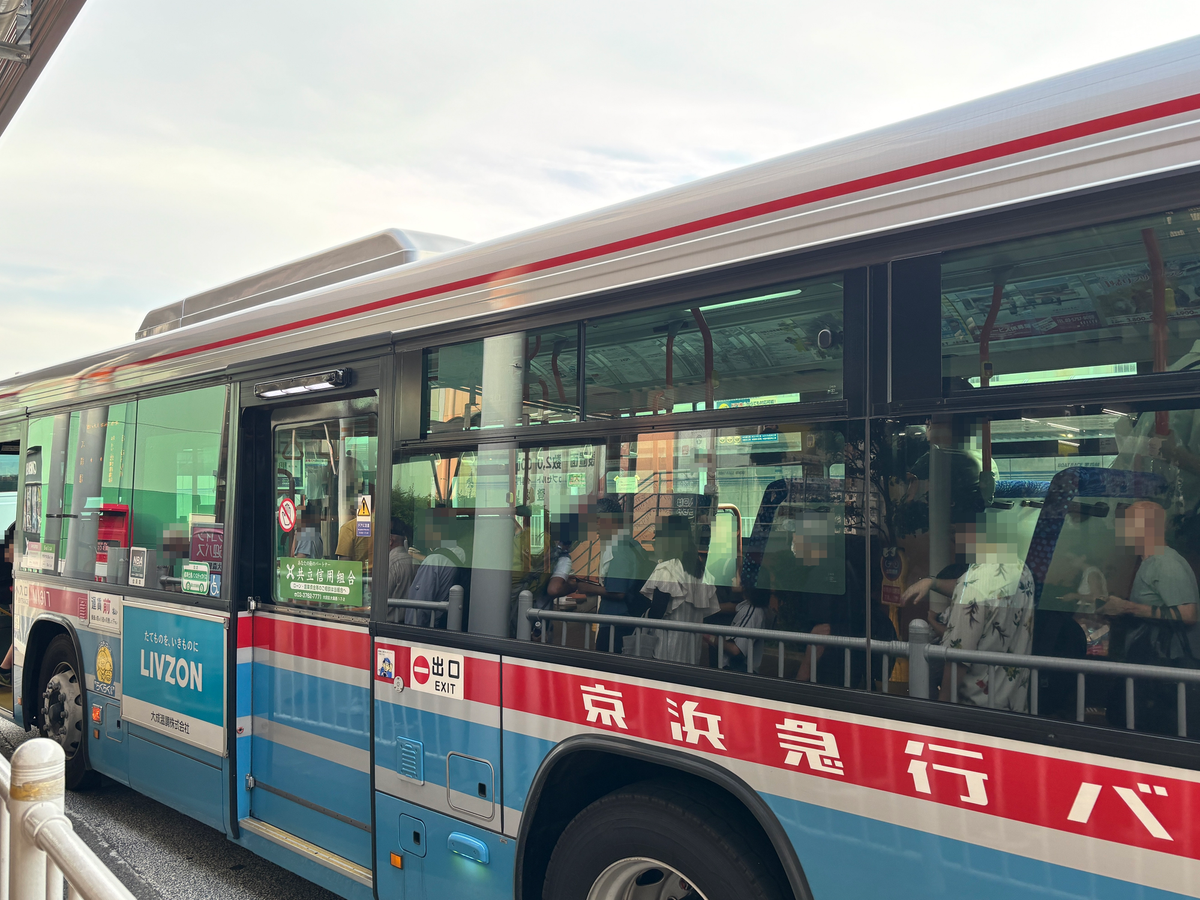
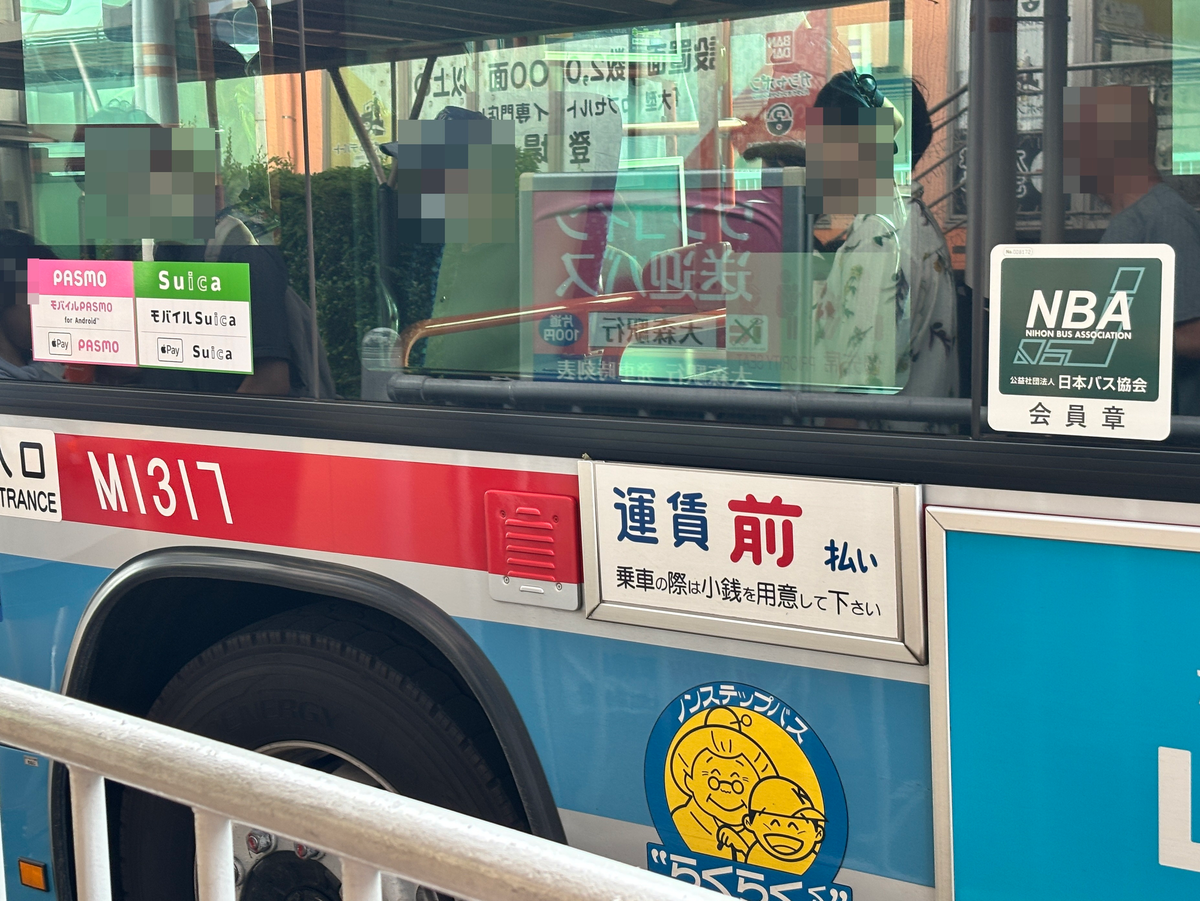
However, travelers don't have much to remember. The first photo below shows a Toei Bus, and the second shows a privately operated Keihin Kyuko Bus. Although the bus colors differ, both require boarding from the front and paying first within Tokyo. There's no need to download separate apps for each company. You can use the same IC card for both.
Compare
Comparing Toei Bus and Keikyu Bus
We compare the two companies we actually observed.
Public営
Toei Bus
- Operated by the Tokyo Metropolitan Bureau of Transportation
- The vehicle marked by green and orange stripes is the landmark.
- In Tokyo's 23 wards, board from the front door and pay first.
- The fare within the 23 wards of Tokyo is a flat rate of 210 yen for adults.
- Pay with an IC card or cash.
Privately operated
Keihin Kyuko Bus
- Operated by a company within the Keikyu Group.
- The blue body with red and silver lines is the distinguishing feature.
- In Tokyo, board from the front door and pay first.
- The fare is set by Keihin Kyuko Bus and is displayed on the fare box screen when you board.
- Pay with an IC card or cash.
Fares for private buses are set by each company. Please check the amount displayed on the fare box screen when boarding.
Whether you pay the bus fare in advance can be determined by the sign next to the entrance. The Keihin Kyuko Bus we saw at Heiwajima had "Fare Paid in Advance" written next to the entrance, with stickers of accepted IC cards above it.
How to Ride the Toei Bus (Tokyo 23 Wards)
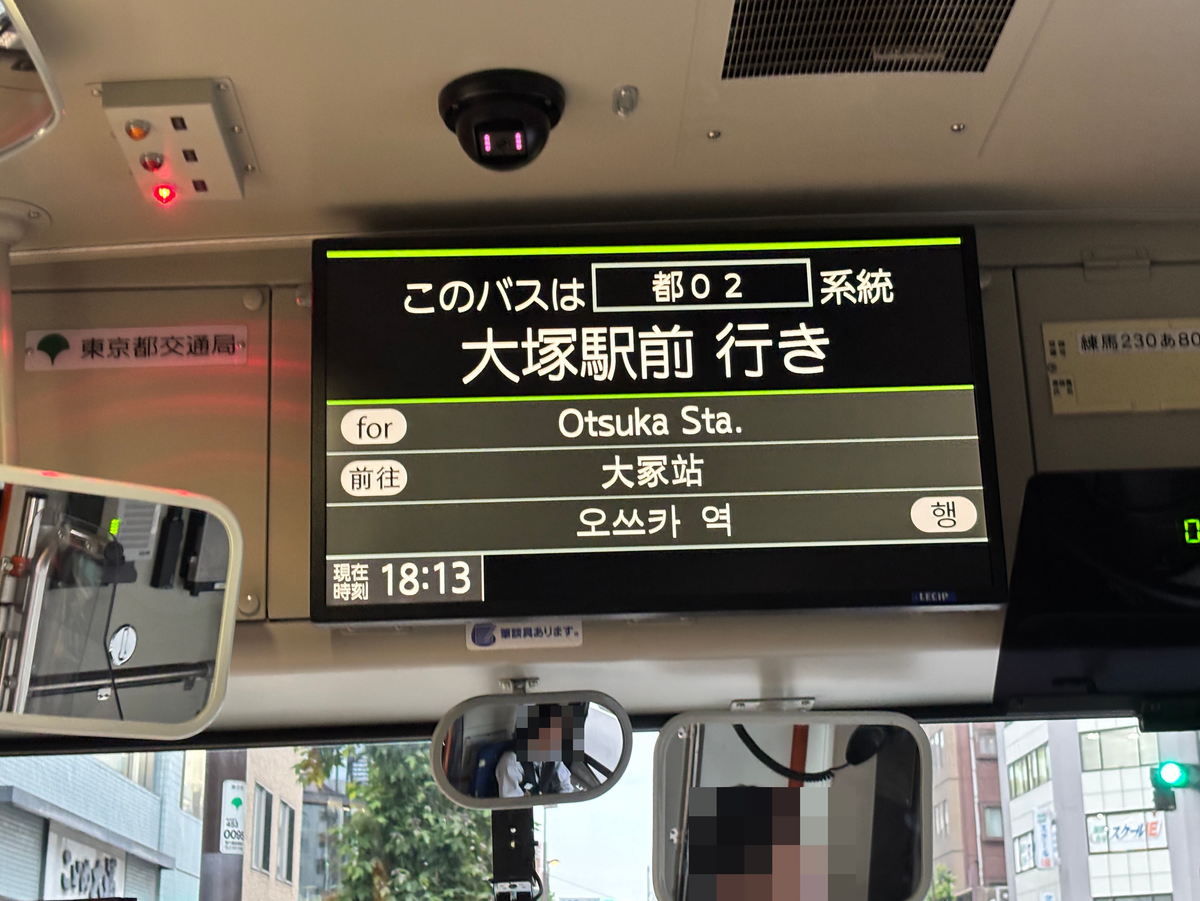
We will introduce the process from boarding to alighting in 7 steps. The photos are from when we took the To-02 line bound for Otsuka Station.
1. Wait in line at the bus stop
Stand near the bus stop and wait. No reservation is needed, and you don't have to signal by raising your hand. When the bus arrives, check the route number and destination displayed on the front and side. Some buses take different routes to the same destination, so if you're unsure, tell the driver where you want to go.
2. Board from the front door
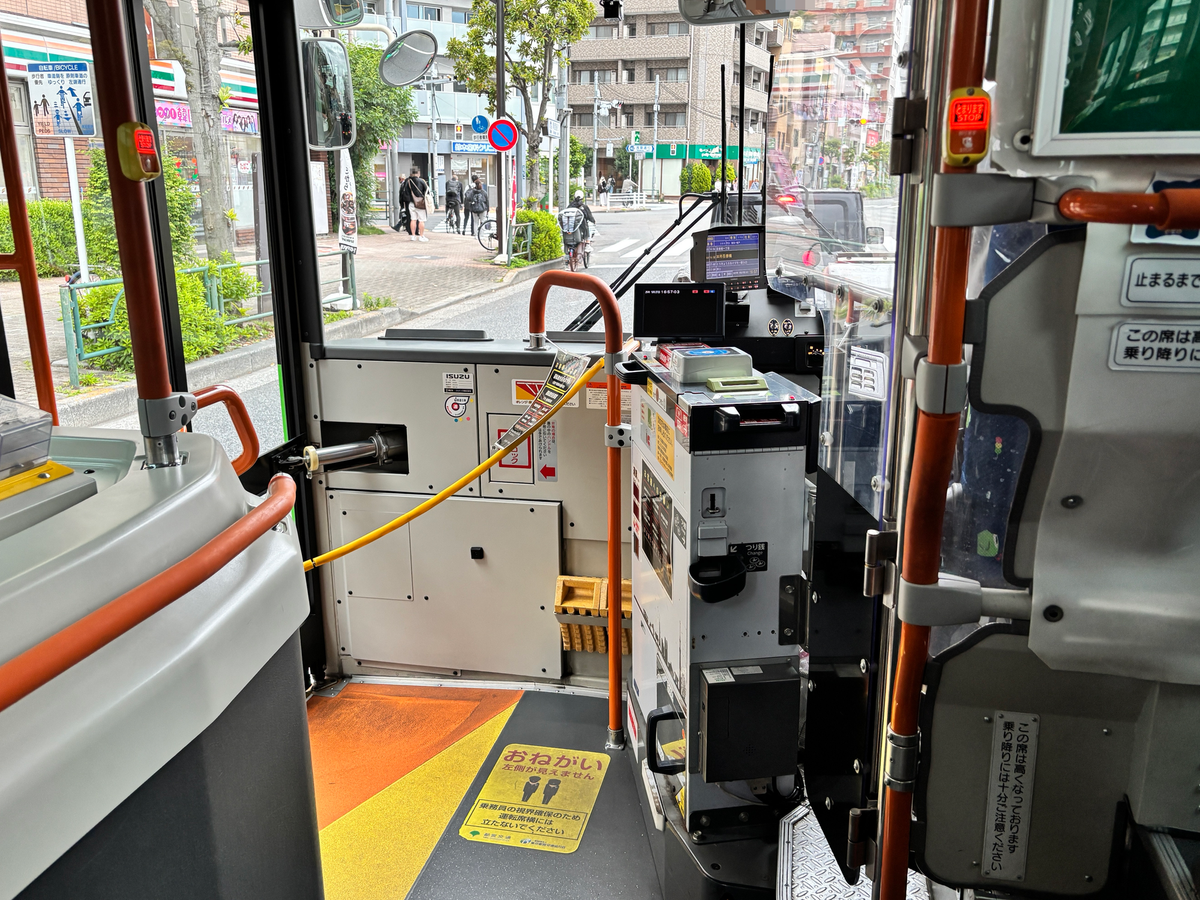
Enter through the front door near the driver's seat. The fare box is right next to the driver's seat.
3. Pay the fare on the spot
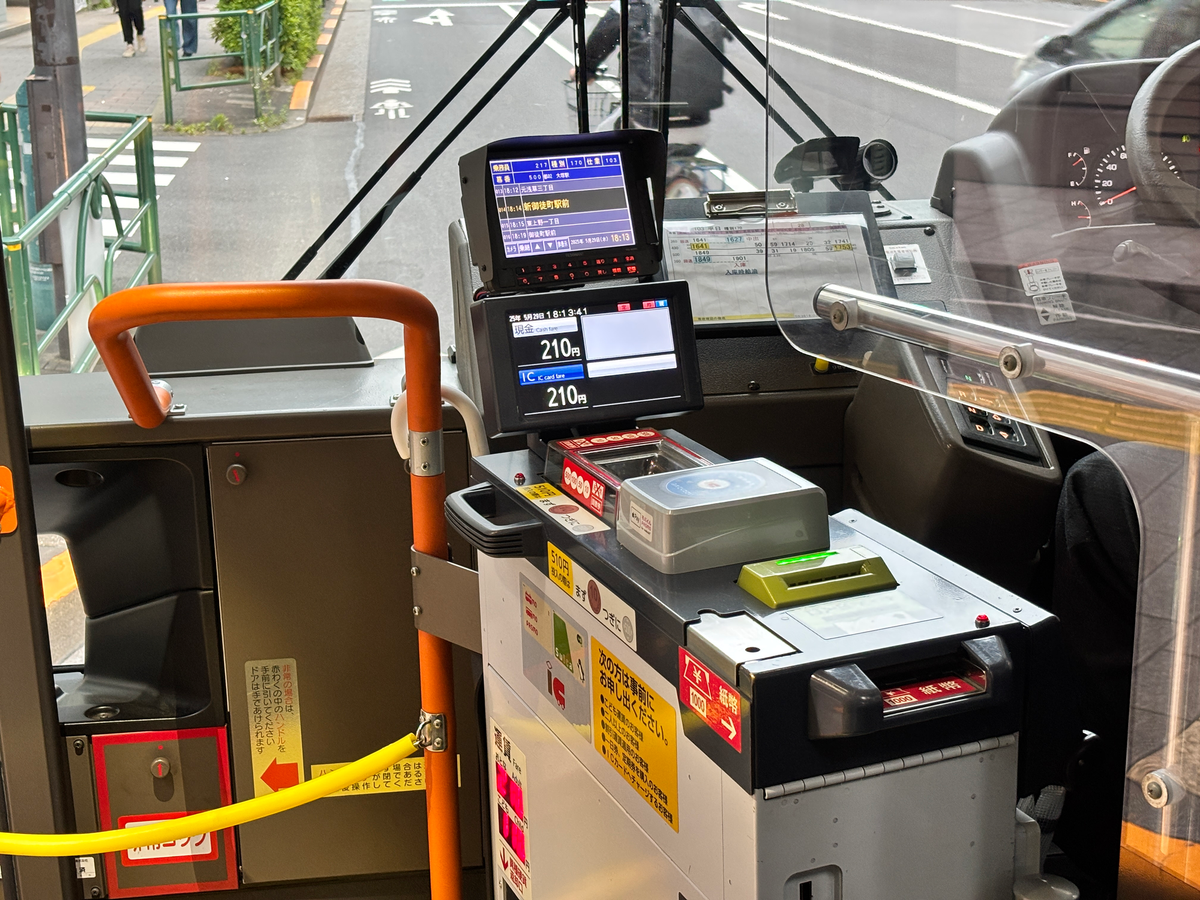
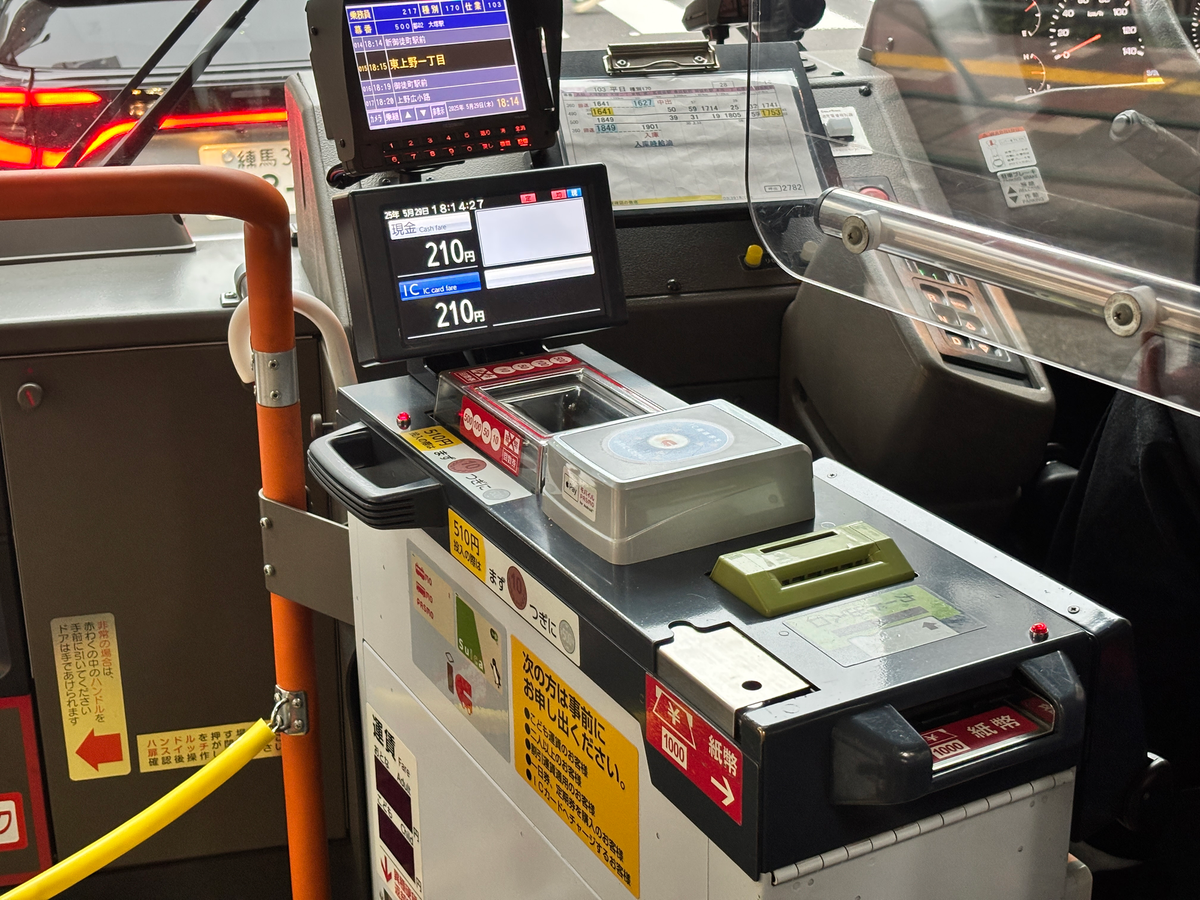
Touch your IC card once on the reader above the fare box. A "beep" indicates payment is complete. Insert cash into the fare box slot. Credit cards are not accepted here.
4. Sit down or hold onto the handrail
Take a seat if available. When standing, hold onto a strap or handrail. It's dangerous to stand while holding luggage in both hands, so keep one hand free.
5. Check the next stop on the screen
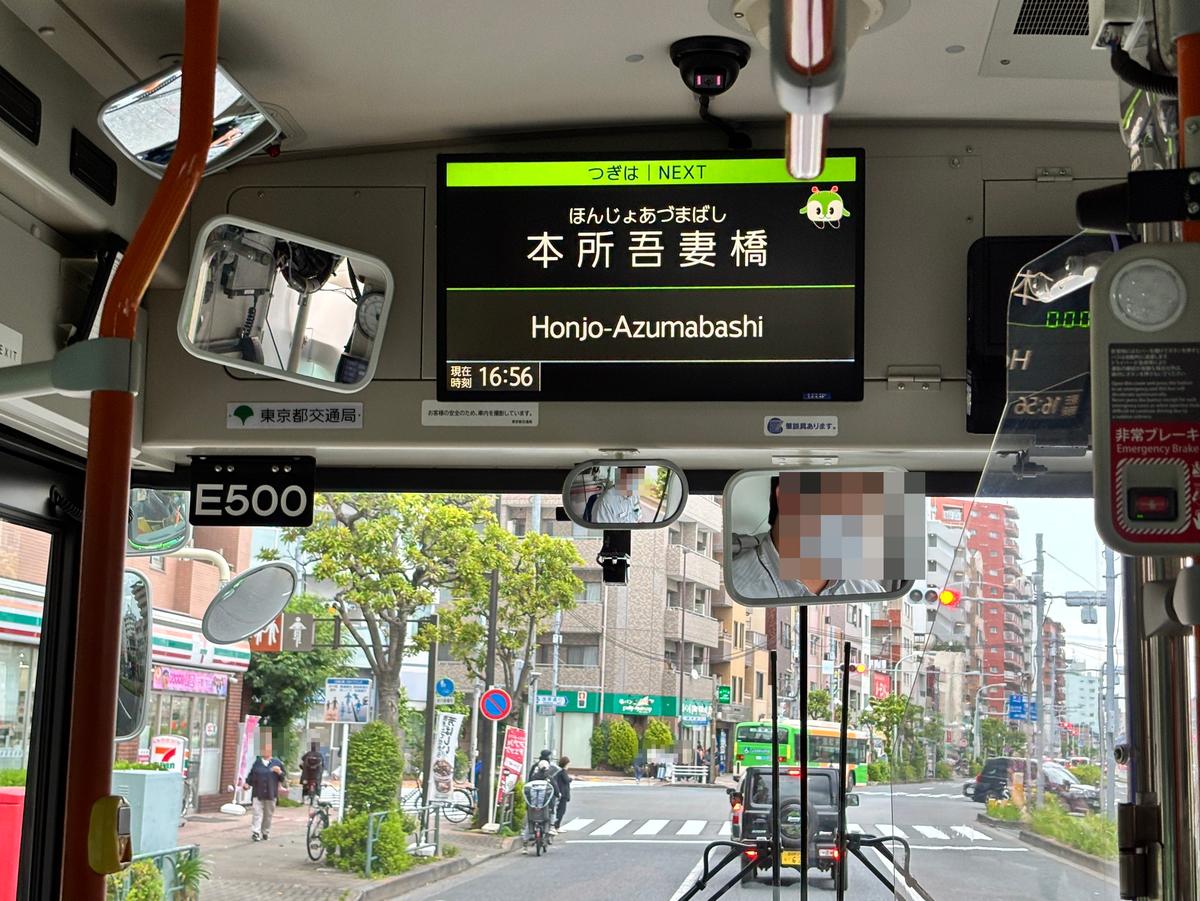
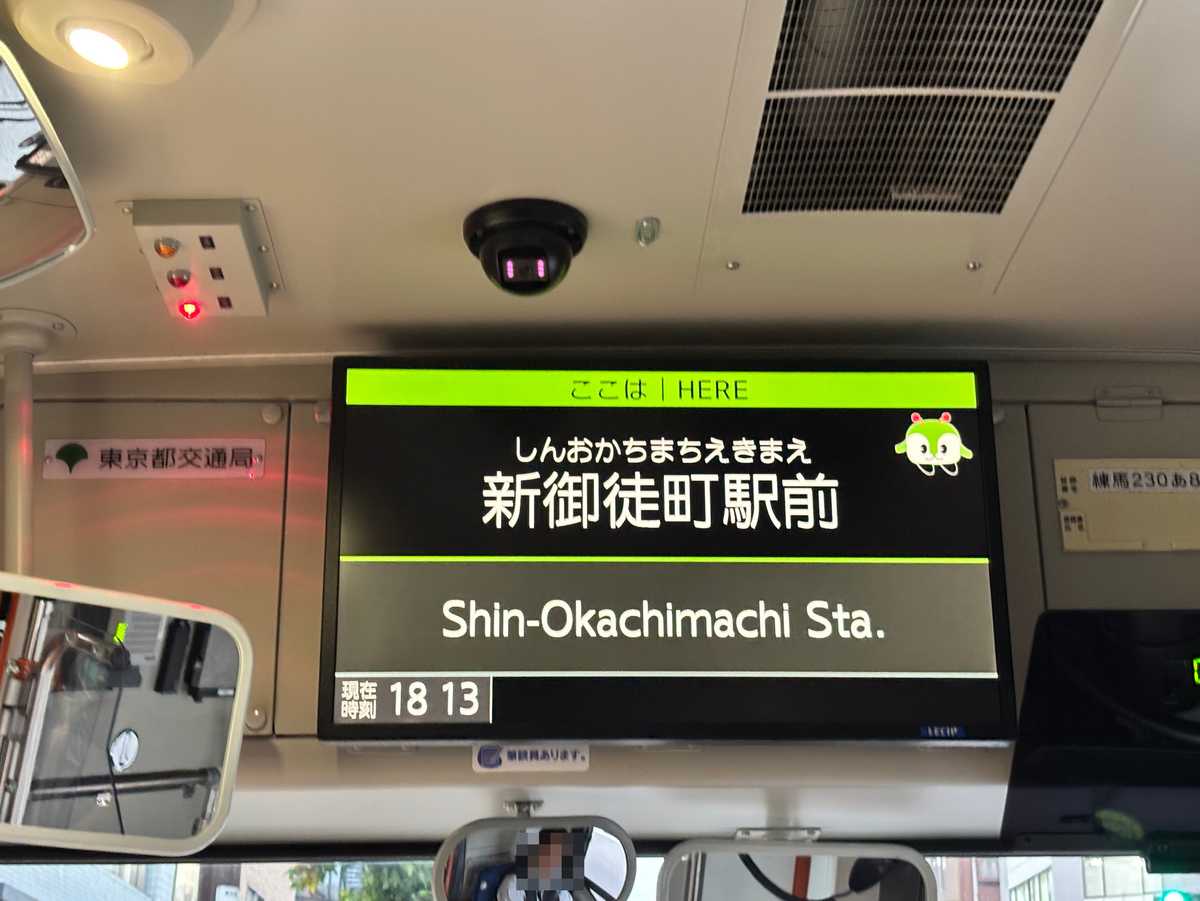
The screen at the front of the bus displays the destination and the next stop. On the bus we took, it was shown in Japanese, English, Chinese, and Korean. There is also an audio announcement.
6. Press the stop button
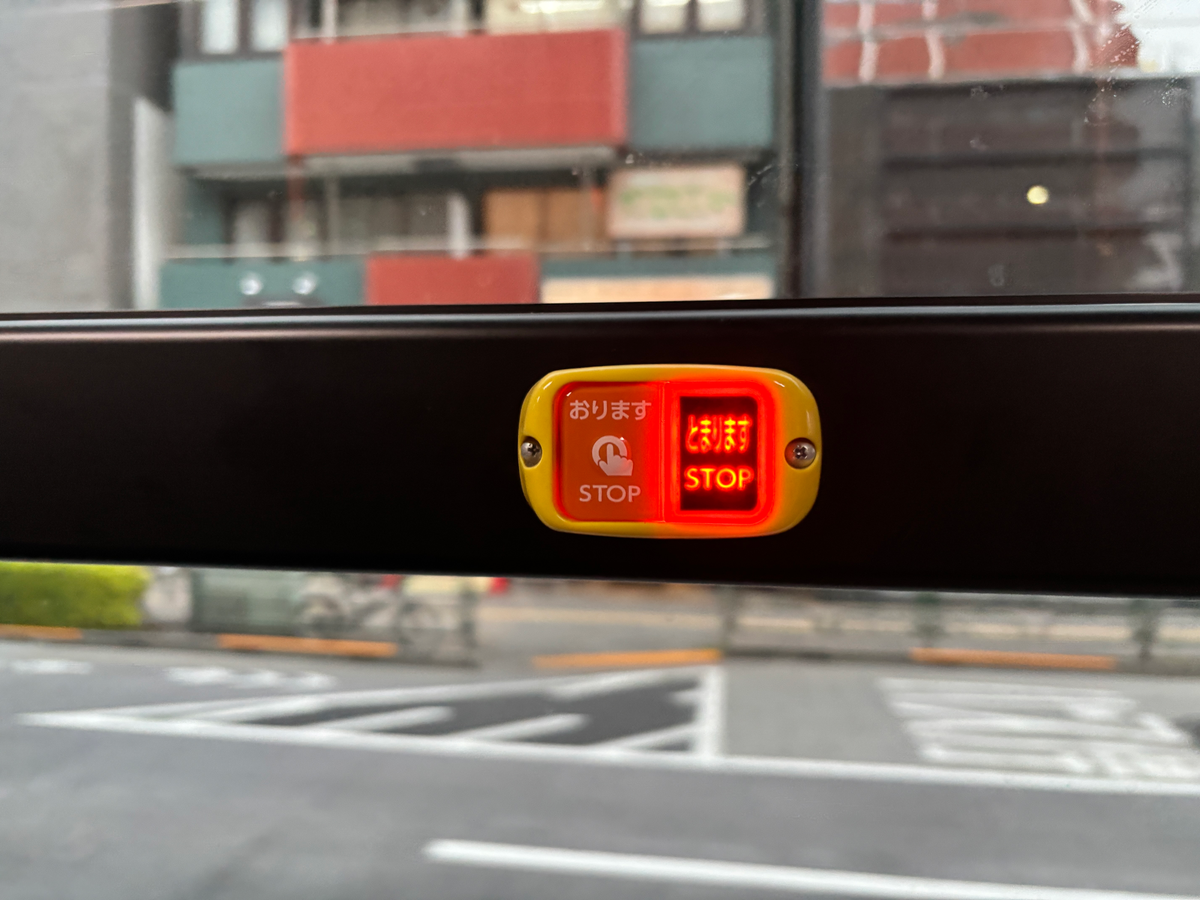
When your stop is announced, press the nearby stop button. If it lights up red with "Stopping," the driver has been notified. If you don't press the button, the bus may pass the stop assuming no one needs to get off.
7. Exit through the rear door
Stand up after the bus comes to a complete stop and exit through the rear door. Since the fare is paid when boarding, there's nothing you need to do when getting off.
Fares and Payment Methods
The fare for Toei buses within Tokyo's 23 wards is fixed, regardless of the distance traveled. As of November 2026, the fares are as follows:
| Category | Cash | IC Card |
|---|---|---|
| Adult (12 years and older, from junior high school) | 210 yen | 210 yen |
| Child (6–11 years, elementary school) | 110 yen | 105 yen |
| Toddler (1–5 years) | Free for up to two per adult or child | Same |
| Under 1 year | Free | Free |
Some routes, such as those for students, have different fares. Please check the fare displayed on the screen of the fare box when boarding.
Pay with IC card
With just one IC card, you can ride without needing coins. Nationwide transportation IC cards like Suica, PASMO, ICOCA, manaca, TOICA, Kitaca, PiTaPa, SUGOCA, nimoca, and Hayakaken are usable. You can use them the same way whether it's a card or Suica/PASMO on your smartphone.
If you don't have a Suica yet, refer to the following two pages. For purchasing the traveler-friendly "Welcome Suica," check Japan Train Guide, and for using it on an iPhone, see How to Use Suica on a Smartphone.
On Toei buses within Tokyo's 23 wards, you only need to tap once when boarding. Since the fare is fixed, there's no need to tap when alighting. Avoid errors by tapping only the card you intend to use, not multiple cards at once.
If your balance is insufficient, you can recharge with a 1,000 yen bill inside the bus. Inform the driver before tapping. Only 1,000 yen bills are accepted for recharging on the bus; coins, 5,000 yen bills, 10,000 yen bills, and credit cards are not accepted.
Pay in cash
You can ride without an IC card by using cash. Insert coins or a 1,000 yen bill into the fare box. If you insert more than the fare, change will be given automatically. Insert smaller coins first to avoid receiving small change.
- Only 1,000 yen bills are accepted. 5,000 yen and 10,000 yen bills cannot be used.
- If paying for multiple people, inform the driver of the number of adults and children before inserting money.
If you only have a 10,000 yen bill, it's best to break it at a store before boarding.
Credit cards are not accepted.
On Toei buses, you can pay the fare with cash or a transportation IC card. Credit cards are not accepted.
In Tokyo, credit card tap payments are now available at train gates, including Toei Subway. This might lead you to think "I can use the same card for buses," but this service is only for trains and does not include Toei buses. Keikyu Bus routes also accept only cash and transportation IC cards as payment methods.
When taking a bus in Tokyo, always carry either an IC card or 1,000 yen bills and coins. The exception is a one-day pass, which can be purchased via a smartphone app using a credit card. This will be introduced in the next section.
A one-day pass pays off after three rides.
The Toei Bus offers a Toei Bus One-Day Pass for unlimited rides within Tokyo's 23 wards. It costs 500 yen for adults and 250 yen for children. Since a single ride is 210 yen, taking three rides in a day covers the cost.
- Load onto an IC card
- Deduct 500 yen from your Suica or PASMO balance to load the one-day pass onto the card. Be sure to tell the driver "One-day pass, please" before tapping. If you tap first, the regular fare will be deducted. No app is needed.
- Buy with a smartphone
- Use the "RYDE PASS" app to purchase with a credit card, Apple Pay, or Google Pay. Show the ticket screen to the driver when boarding. This method is for those who wish to use a credit card for Toei Bus rides. The app is only required for this purchase method.
- Paper ticket
- Available for cash purchase on board, but sales will end on March 31, 2027.
It is valid only on Toei Buses within Tokyo's 23 wards. It cannot be used on private buses or subways.
How to Research Destinations and In-Car Screens
It's best to check which bus to take on your smartphone before boarding. You can find Toei Bus information on the official service "tobus.jp." Keikyu Bus also offers a timetable and route search in English, Chinese, and Korean on their official website. Both are websites, so you can access them via a browser without needing an app.
Once on board, just watch the screen at the front of the bus. On the bus we took, the screen displayed the name of the next stop, the current stop, and available transfer lines.
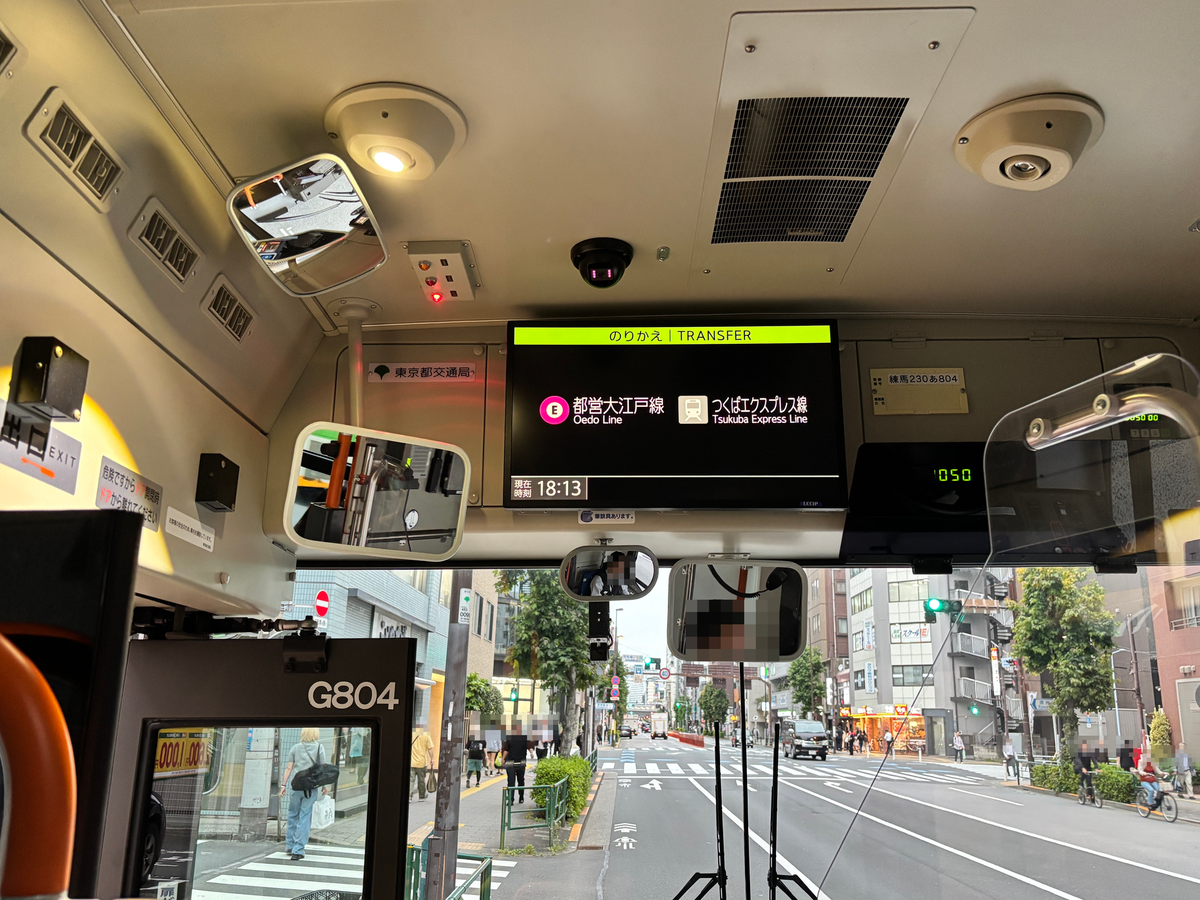
Can I bring a suitcase?
You can bring luggage on Toei buses if the total dimensions are within 250 cm and the weight is under 30 kg. However, you must be able to hold all your luggage with one hand while using the other to hold onto a strap or handrail.
Even if your luggage meets the size requirements, you may be asked to refrain from bringing it during crowded times. On days when you have two large suitcases, sending your luggage to the hotel in advance allows you to move more freely.
Suburban and regional buses require payment upon exiting.
The flat fare and boarding method described so far apply to Tokyo's 23 wards. In the Tama region, such as Ome, the same Toei buses use a system where you board from the rear door and pay at the front when alighting, with fares varying by distance traveled. If using an IC card, tap twice—once when boarding and once when alighting. If paying in cash, take a boarding ticket when you get on.
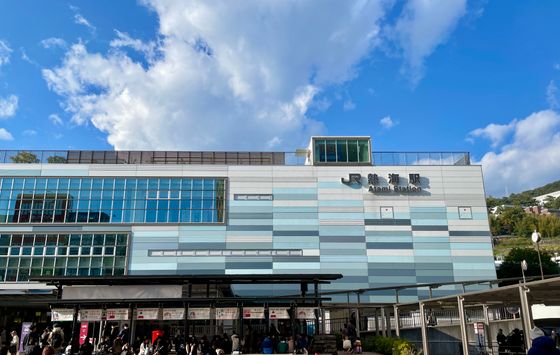
Even in tourist destinations outside Tokyo, you may encounter buses where fares vary by distance and are paid upon alighting. The buses in Atami are an example, and the boarding method is introduced in the Atami Bus Travel Guide.
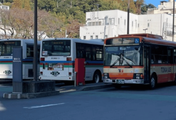
The airport bus has a different boarding procedure.
The airport buses connecting Haneda Airport with Tokyo and nearby prefectures differ in boarding and payment methods from city buses. For Keikyu Bus airport buses, when boarding from Haneda Airport, you first select your destination and departure time at the ticket machine and purchase a ticket. This machine accepts cash, transportation IC cards, and credit cards. The buses have a fixed seating capacity, and large suitcases that cannot be brought onboard can be placed in the underfloor trunk room.
When we observed at Haneda Airport, the Keikyu Bus ticket machines were lined up next to the Limousine Bus ticket machines, and the Limousine Bus machines allowed destination area selection on an English screen.
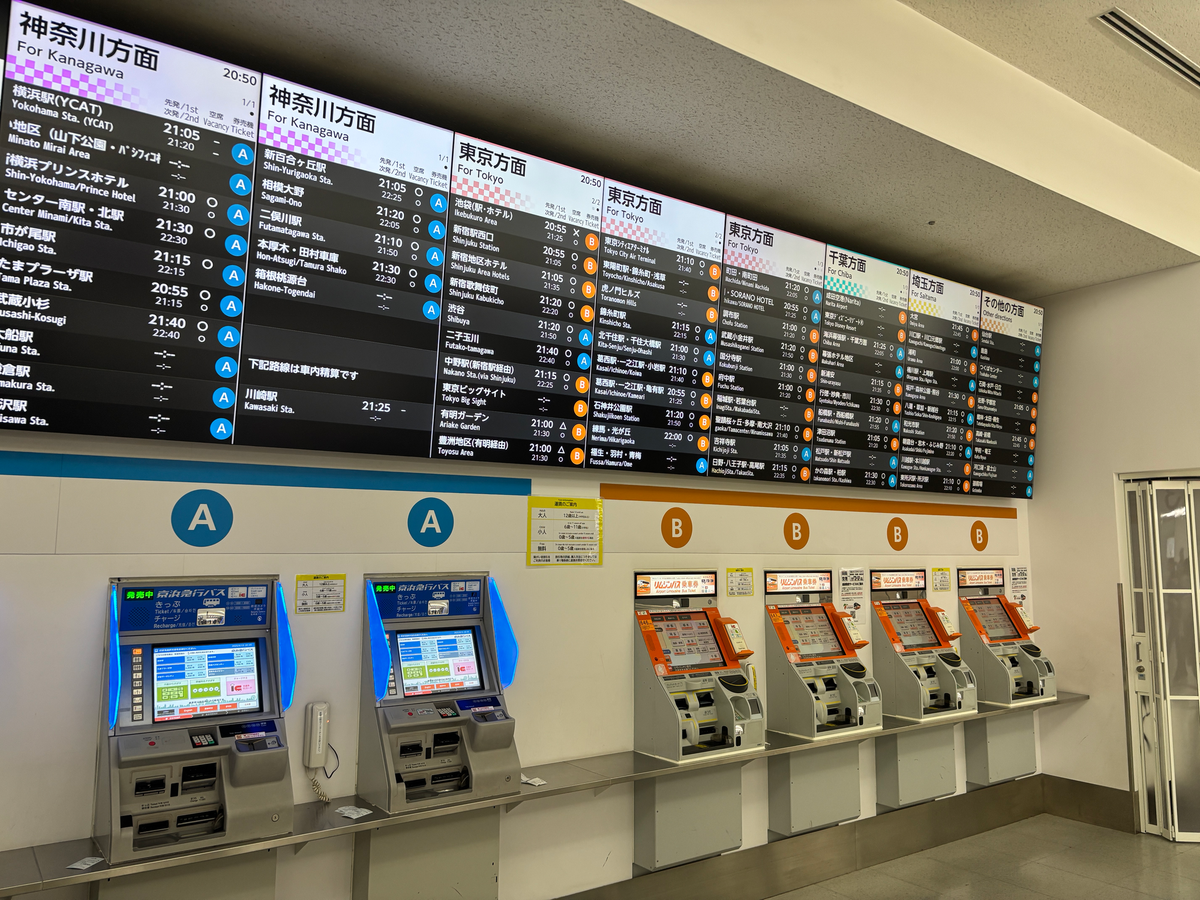
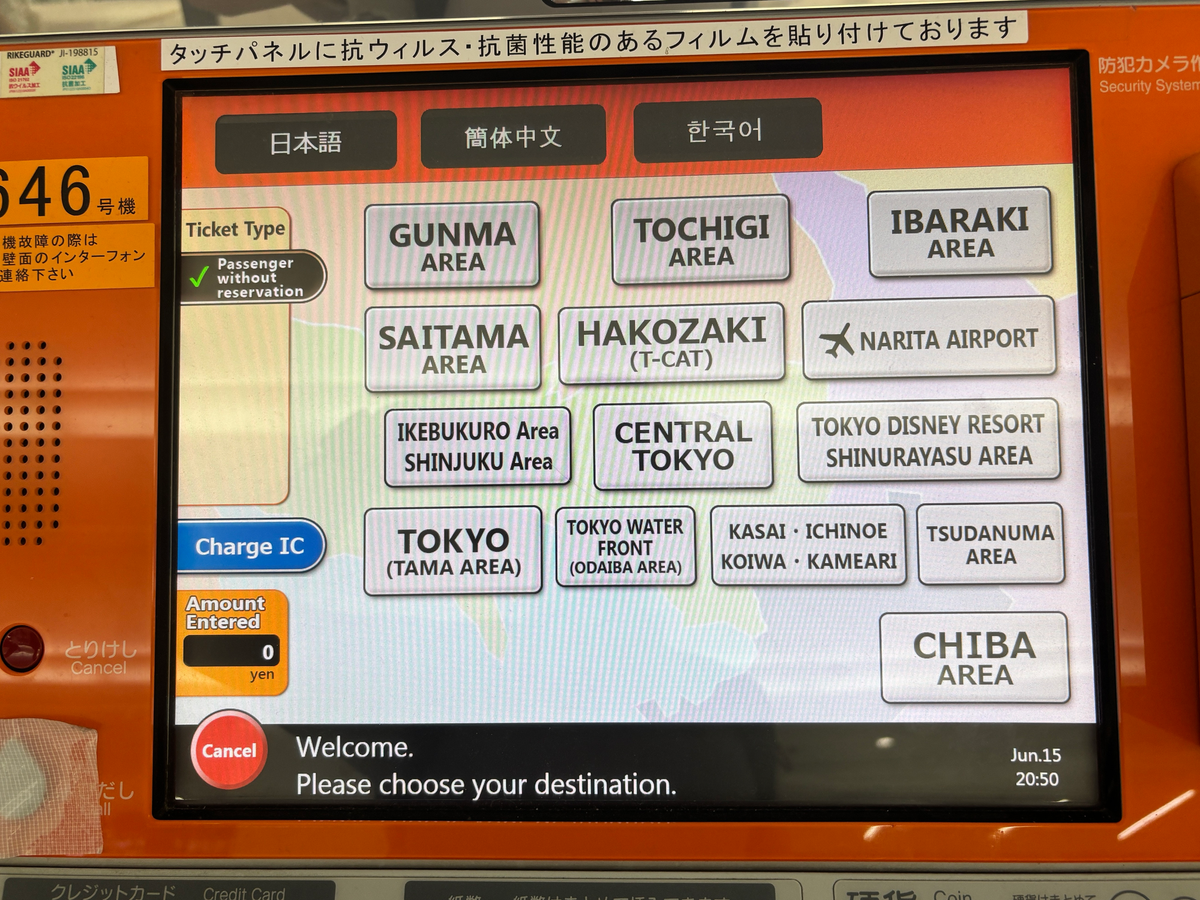
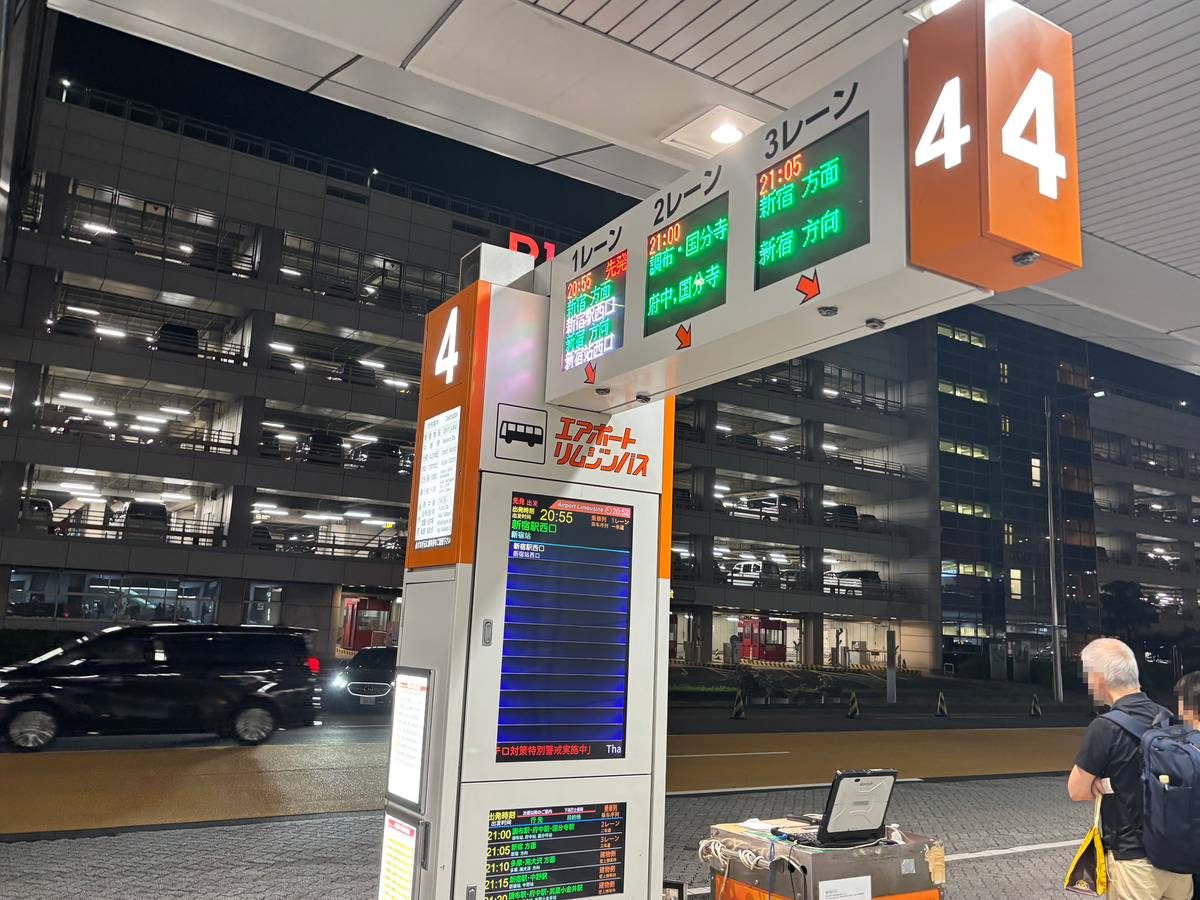
In addition to airport buses, regular route buses also operate at Haneda Airport. According to Keihin Kyuko Bus information, when boarding a route bus at Haneda Airport, passengers should inform the driver of their destination stop.
For details on traveling to the city center by train, see how to access Tokyo from Haneda Airport by train.

Q&A
Frequently Asked Questions
- Do I need an app or reservation to take the bus?
- No reservation is needed. You can board the bus directly at the stop without booking. You don't need a special app for payment; an IC card or cash is sufficient. The app is only used if you want to purchase a one-day pass for Toei buses on your smartphone.
- Can I use contactless credit card payment to ride the bus?
- You cannot use contactless payment on Toei buses. Onboard, only cash and IC cards are accepted. The touch payment available at train gates, such as on the Toei Subway, is for trains only and does not include Toei buses. Please prepare a Suica or PASMO card, or bring 1,000 yen bills and coins.
- Does the fare change based on the distance traveled?
- Toei buses within the 23 wards of Tokyo have a flat fare of 210 yen for adults, regardless of whether you travel to the next stop or the final destination. In the Tama area, Toei bus fares vary based on the distance traveled.
- Do you raise your hand to stop the bus at the bus stop?
- No, you don't need to raise your hand. Just stand near the bus stop and wait, and the bus will stop for you. Please wait in line by the bus stop, not away from it.
- Do I need to tap the IC card when getting off?
- In the 23 wards of Tokyo, you only need to tap once when boarding a Toei bus. Since the fare is fixed, there's no need to tap when alighting. On routes in the Tama area where fares vary by distance, you tap twice: once when boarding and once when alighting.
- Is it cheaper to pay with Suica than with cash?
- In Tokyo's 23 wards, Toei Bus fares for adults are 210 yen, whether using an IC card or cash. For children, the IC card fare is 105 yen, while cash is 110 yen, making the card slightly cheaper. The advantage of an IC card is not needing to prepare small change.
- I only have a 10,000 yen bill. Can I still ride?
- Only 1,000 yen bills can be used on board. Please break larger bills at a store or charge your IC card at the station before boarding.
- What should you do if you forget to press the stop button?
- Press the button as soon as you notice, and get off at the next stop. In the Tokyo 23 wards, the Toei Bus fare is fixed, so there's no additional charge if you miss your stop.
- Can the Toei Bus one-day pass be used on the subway as well?
- You cannot ride. The Toei Bus One-Day Pass is only valid for Toei buses within the 23 wards of Tokyo.
If you don't have a Suica or PASMO yet, it's convenient to get one in advance, allowing you to simply tap to ride buses and trains.