Regional Highlights
Top 10 Tourist Spots in Atami Day Trip Itinerary and Enjoying an Overnight Stay
Updated 17 November 2026By Dynamic Japan Travel editorsEditorial policy
Contents

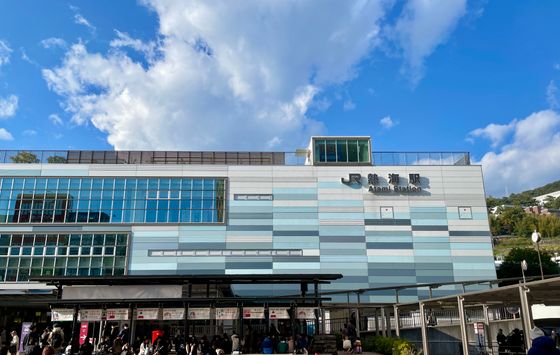
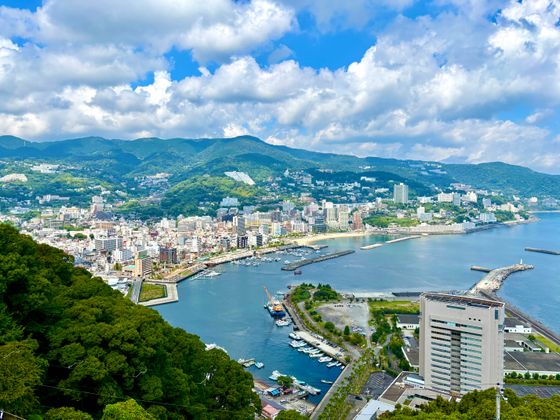
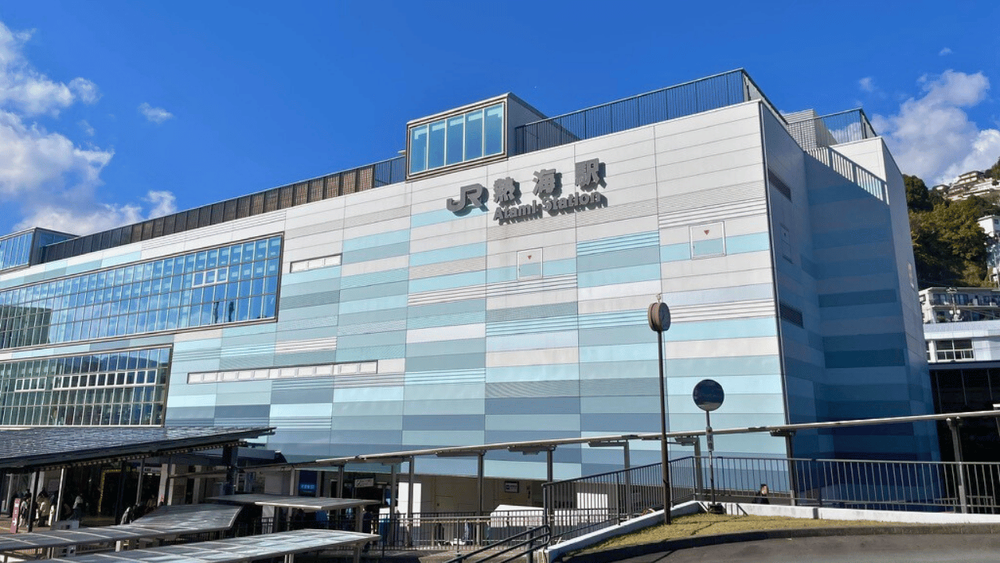
Atami is a hot spring town about 40 minutes by Shinkansen or just under two hours by regular train from Tokyo. The mountains rise immediately behind the town, and a short climb up the hills offers beautiful sea views. In addition to onsen (hot springs), attractions such as beaches, shrines, gardens, and observation decks are concentrated in a compact area. While the main spots can be visited on a day trip, an overnight stay is recommended to enjoy fireworks and nighttime onsen.
We have visited Atami multiple times, personally exploring and photographing the locations introduced here. This article is aimed at first-time travelers to Japan, highlighting recommended spots in Atami by area, suggesting a day-trip itinerary, and offering tips for enjoying an overnight stay.
What Kind of Town is Atami? A Hot Spring and Sea Town Perfect for a Day Trip from Tokyo
Atami is a well-known onsen (hot spring) destination for over 1,000 years, popular among Tokyo residents for vacations. Even today, onsen springs up throughout the town, and there's a free foot bath in front of the station. Along the coast, you'll find sandy beaches and a port, while the mountainside retains old villas and shrines. In just half a day, you can enjoy the trio of "onsen, sea, and history."
From Tokyo, it takes about 40 minutes by Shinkansen Hikari or Kodama, and about 1 hour and 50 minutes by regular JR Tokaido Line train. Note that Nozomi does not stop at Atami. For details on ticket purchasing and fares, see How to Get from Tokyo to Atami.
Recommended Attractions in Atami
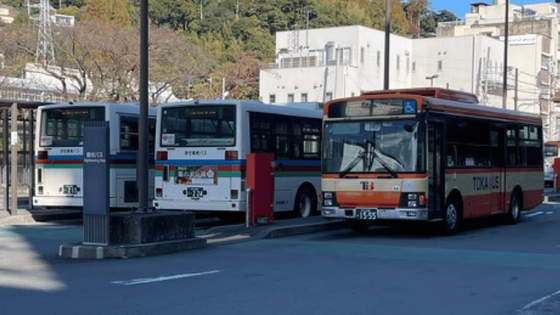
Atami's attractions are divided into five main areas. Since Atami has many steep slopes, it's recommended to travel between areas by bus or taxi. The places introduced here are all close to bus stops.
- Around Atami Station
- Footbath, Shopping Street
- Kinomiya Area
- Atami Plum Garden, Kinomiya Shrine
- Seaside and Mountain Top
- Kiunkaku, Atami Sun Beach, Atami Ropeway, Atami Castle
- Izusan Area
- Hashiriyu, Izusan Shrine
- A Little South
- Akao Forest
For information on how to ride the bus and use a Suica card, see How to Ride the Bus in Atami.
Around Atami Station
Foot Bath in Front of Atami Station
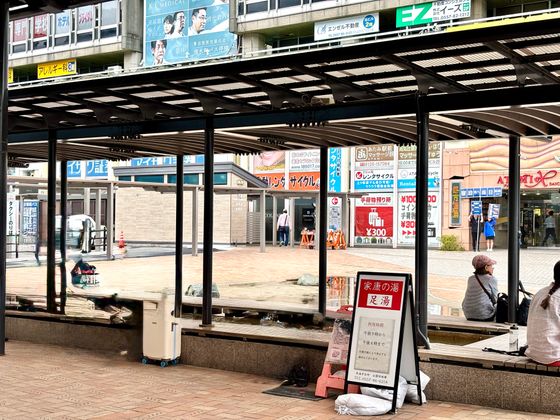
Right outside Atami Station, there's a free public foot bath called "Ieyasu no Yu." This foot bath uses natural onsen (hot spring) water and is perfect for resting your feet between exploring the town or while waiting for a train. You can enjoy an authentic onsen experience without visiting a full-fledged onsen facility.
- Open: Daily (may close for cleaning)
- Hours: 9:00 AM - 4:00 PM
- Admission: Free


Here, you can also buy small towels. There's a towel vending machine next to the footbath, so you don't need to worry if you don't have a towel.

In front of the station, there's a shopping street lined with shops selling dried fish and onsen manju. You can take a break while enjoying some street food. For directions from the station and details about the shops, refer to the Atami Station Guide.
Kinomiya Area: Atami Plum Garden and Kinomiya Shrine
Atami Baien (Atami Plum Garden)
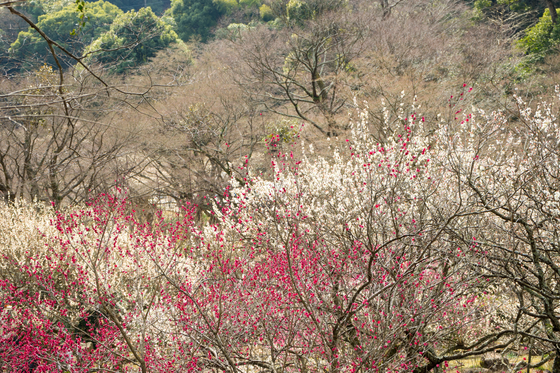
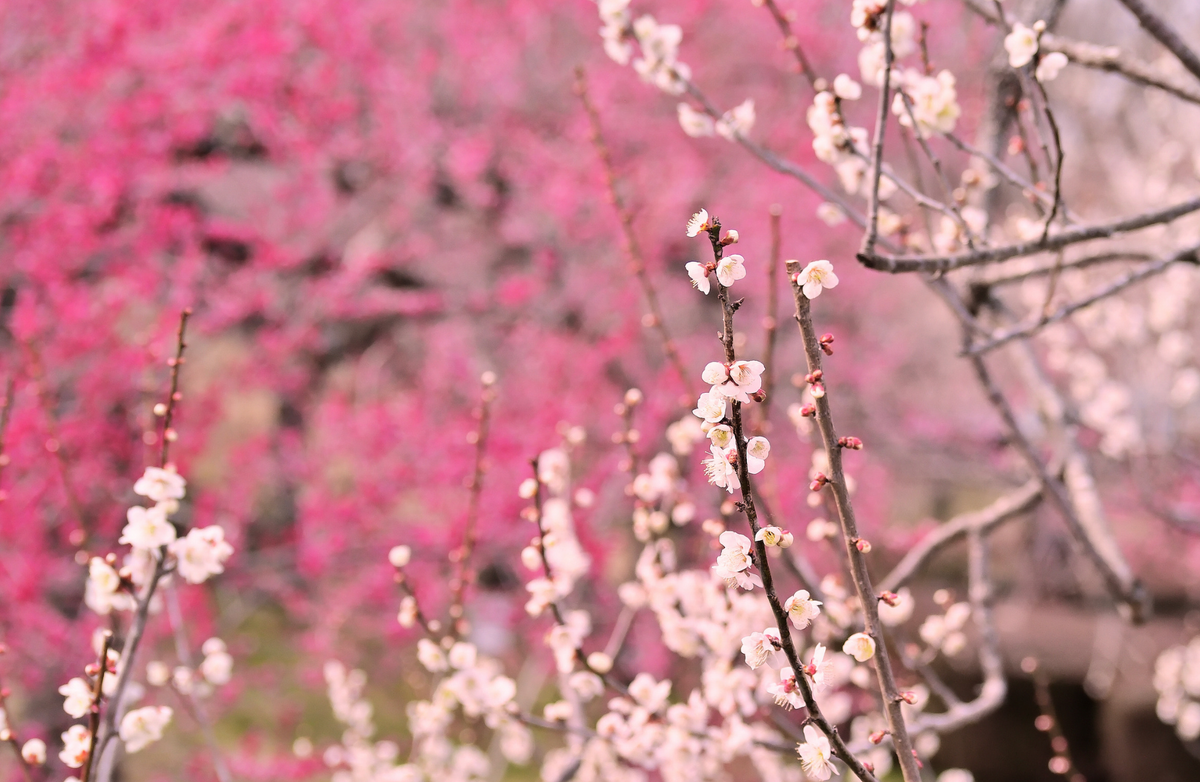
Atami Plum Garden is said to be the earliest plum garden to bloom in Japan. With many varieties, the flowers bloom at different times from early to late, allowing for an extended viewing period. The 2027 "Plum Festival" is scheduled from January 9 to March 7, during which the area is lively with stalls and events.
During the Plum Festival, an admission fee is required, but entry is free at other times. For peak viewing times, admission fees, and how to navigate the park, refer to the Atami Plum Garden Guide.
- Open: Daily
- Hours: 24/7
- Admission: Paid only during the Plum Festival from 8:30 AM to 4:00 PM (300 yen for adults in 2026). Free at other times.

Autumn Visit with Beautiful Autumn Leaves
Atami Plum Garden is not only a highlight during plum season but also in autumn when the foliage is stunning. The photo below was taken during our visit on December 2. The garden is spacious and takes about an hour to explore fully. There are many attractions like rivers and bridges. It's the perfect place to enjoy a peaceful nature walk!


Access to Atami Plum Garden
You can reach Atami Plum Garden by bus, train, or taxi.
By bus: From bus stop number 1 in front of Atami Station, take the bus bound for "Baien, Ainohara Housing, Shimizu Town Loop" and get off at "Baien."

By Train: The nearest station is Kinomiya Station, the next stop after Atami Station on the JR Ito Line. JR Pass and IC cards like Suica are accepted.

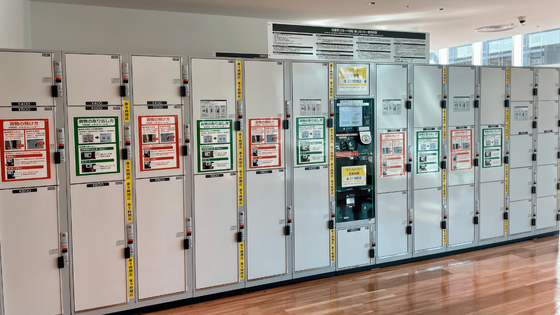
Kinomiya Station has a luggage storage and coin lockers, but the number of lockers is limited. Atami Plum Garden also has coin lockers, but they only accept cash. If you plan to visit several places, it's recommended to store your luggage in the lockers at Atami Station before heading out. Location and fees are summarized in How to Find Coin Lockers at Atami Station.

By taxi: About 5 minutes from Atami Station, costing around 1,000 yen.
Kinomiya Shrine
Kinomiya Shrine is one of Atami's iconic shrines, popular as a place to gain strength. The main attraction is a massive camphor tree over 2,000 years old, designated as a national natural monument. The shrine grounds also feature a café where you can enjoy tea and sweets while admiring the sacred tree. It's a short walk from Kinomiya Station, making it a recommended stop along with Atami Plum Garden.
- Open: Daily
- Visiting Hours: The grounds are open for visits anytime (the office handling amulets is open from 9:00 to 17:00)
- Admission: Free


How to Perform Temizu (Purification Ritual)
Before visiting a shrine, purify your hands and mouth at the temizuya (water pavilion). In Japanese, this is called "temizu." The steps are as follows:
- Give a slight bow.
- Use the ladle to scoop water and wash your left hand.
- Next, wash your right hand.
- Rinse your mouth with water from your left hand (do not swallow, quietly rinse and spit out).
- Wash your left hand again.
- Finally, bow once more.

A 2,000-Year-Old Great Camphor Tree
There is a legend that walking around this tree once will extend your life by a year, and another that your wish will come true if you walk around it while thinking of your wish.
Originally, the tree was split into two from the base, but about 50 years ago, one trunk was lost in a typhoon. Yet, the tree still stands strong today, attracting many visitors who come to witness its resilience.

Kiunkaku
Kiunkaku is a building that opens a villa built in 1919 to the public. It features a blend of Japanese and Western design, with highlights such as stained glass and a tiled Roman bath. The tranquil garden is ideal for strolling and photography. Later converted into a ryokan, it is known for hosting many famous writers, offering a glimpse into traditional Japanese life and culture. It is walkable from Atami Station, but taking a bus is advisable in summer due to the hill.
- Open: Every day except Wednesdays and year-end (December 26-30)
- Hours: 9:00 AM - 5:00 PM (Last entry at 4:30 PM)
- Admission: Adults 610 yen, Junior and Senior High School Students 360 yen, Free for Elementary School Students and younger


Details on how to get there and explore the facility are thoroughly covered in the Kiunkaku article.
By the Sea and on the Mountain: Sun Beach, Ropeway, Atami Castle
Atami Sun Beach
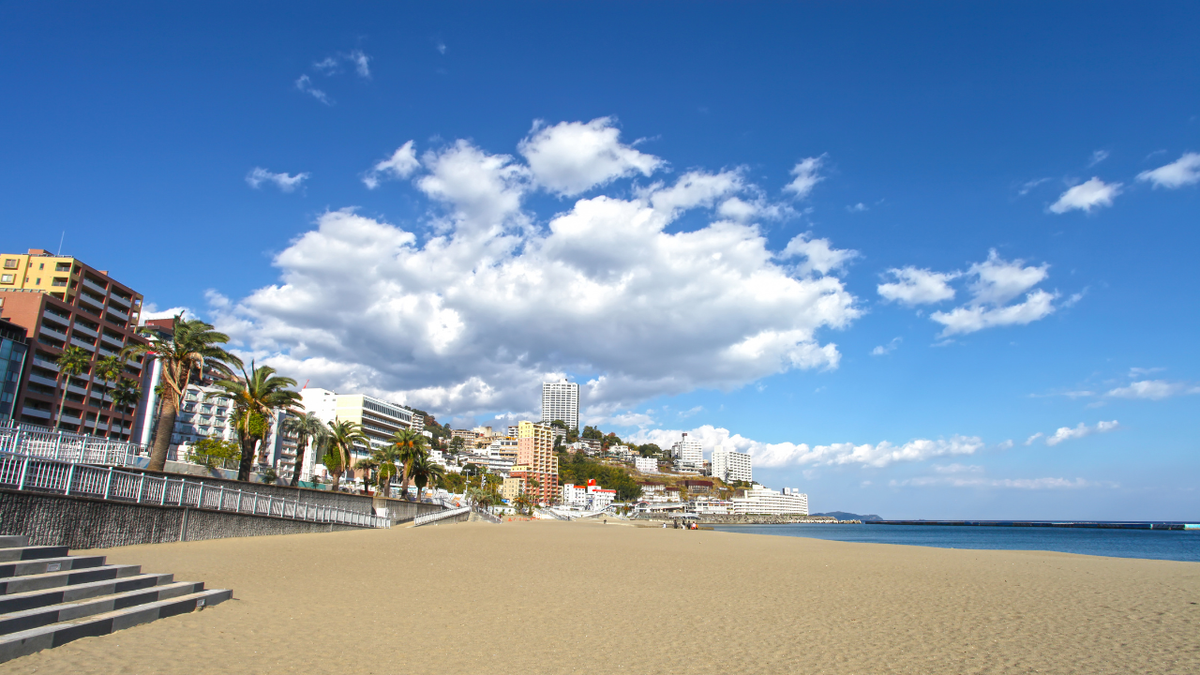
Atami Sun Beach is a 400-meter sandy beach lined with palm trees and is the most popular beach in Atami. It is illuminated at night, offering beautiful views year-round. It is open as a swimming area only during summer, and showing tattoos is prohibited while swimming, so please be aware. Even in winter, it's perfect for a stroll and a relaxing break while enjoying the sea view.
- Open Days: Daily
- Hours: Open anytime (operates as a beach only in summer)
- Admission: Free

Atami Ropeway
The Atami Ropeway takes about 3.5 minutes to reach the mountaintop observatory from the boarding point, which is about a 10-minute bus ride from Atami Station. From the observatory, you can enjoy a panoramic view of the Atami coastline, and there's also a café available.
- Operating Days: Daily (Closed for maintenance and bad weather)
- Operating Hours: First ascent at 9:30, last ascent at 17:00, last descent at 17:30
- Fares: One-way for adults 500 yen, round-trip 900 yen (One-way for ages 4 to elementary school 300 yen, round-trip 500 yen)
- Service Interval: Approximately every 10 minutes (Ride time is about 3.5 minutes)


Boarding Point of the Ropeway
Check the map below for the boarding location. When we boarded, fares could be paid in cash or by credit card. After paying the fare, proceed to the boarding area and follow the instructions to board the gondola.


The observation deck cafe offered sweets like soft serve ice cream and beverages.

Atami Castle
Just a short walk from the ropeway's summit station is Atami Castle. Although not an original historic castle, it was built in 1959 for tourism. The view from the observatory is stunning. There are areas where you can take photos in samurai armor or kimono, and a foot bath with a sea view, making it popular with families. For information on fees and activities on each floor, please see the Atami Castle article.
- Open: Daily
- Hours: 9:00 AM - 5:00 PM (Last entry at 4:30 PM)
- Admission: Adults 1,200 yen, Elementary and Junior High School Students 650 yen

ACAO Forest
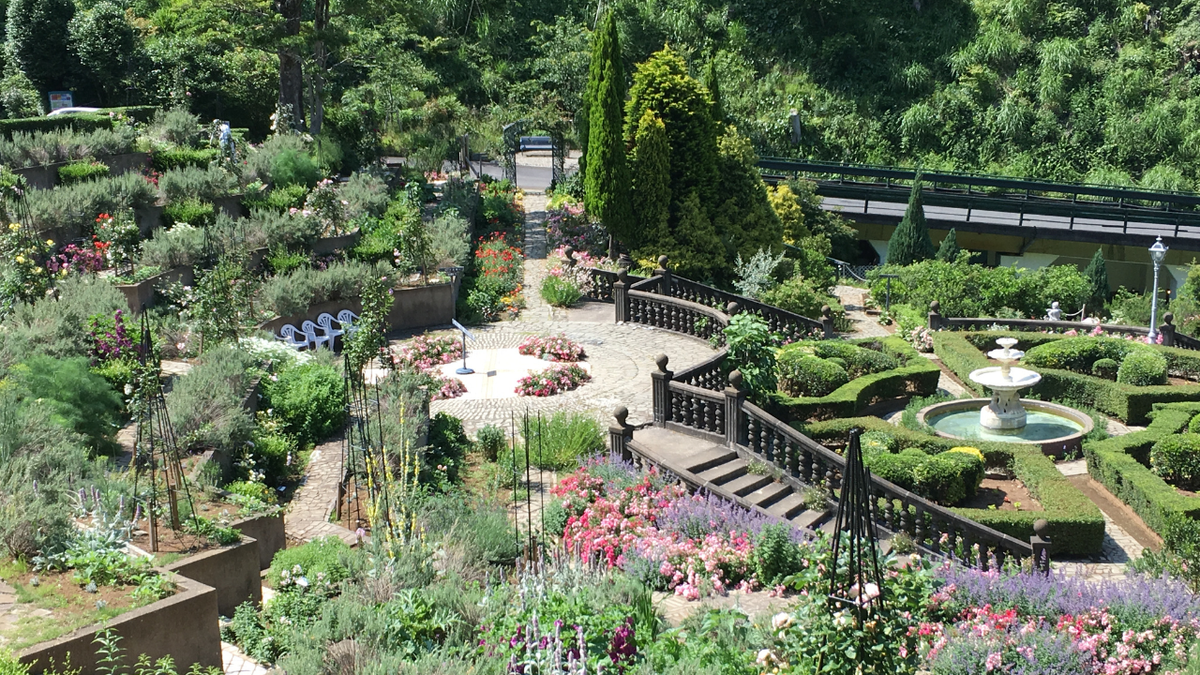
If you have extra time, Akaho Forest Garden, located slightly south of central Atami on a hill overlooking the sea, is also recommended. With seasonal flowers like roses and herbs, you can take photos against the backdrop of the blue sea and sky on sunny days. You can reach it by bus or taxi from Atami Station.
- Open: Daily
- Hours: 9:00 AM - 5:00 PM
- Admission: Varies by day (2,500 yen for adults in mid-November 2026)
Izu-san Area: Hashiriyu and Izu-san Shrine
Atami Hashiriyu
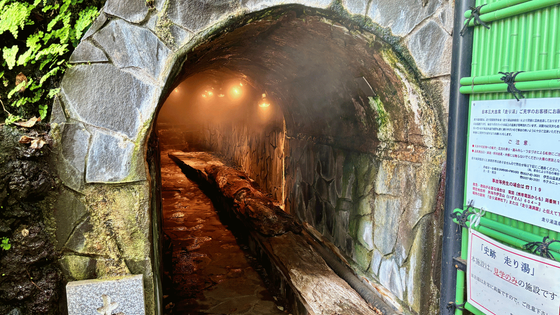
One of Atami's hidden gems is the unique hot spring source "Hashiriyu," where onsen (hot spring) water flows sideways from the depths of a cave. Although you can't bathe in it, you can visit for free, and it takes about 10 minutes. The cave is filled with steam, clearly showcasing Atami as a hot spring town.
- Open: Daily
- Visiting Hours: Recommended during daylight
- Admission: Free

The mechanism and directions are summarized in the Hashiriyu article.
Izusan Shrine
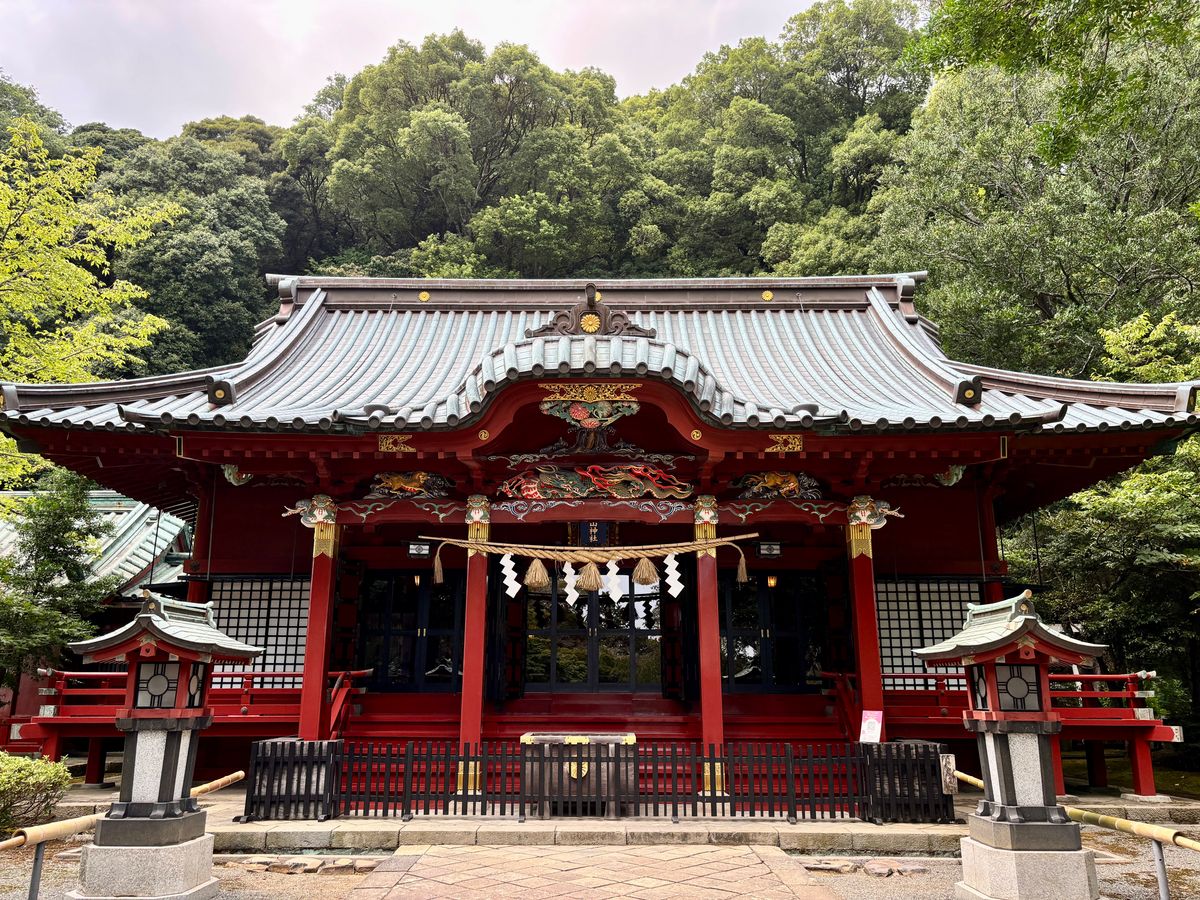
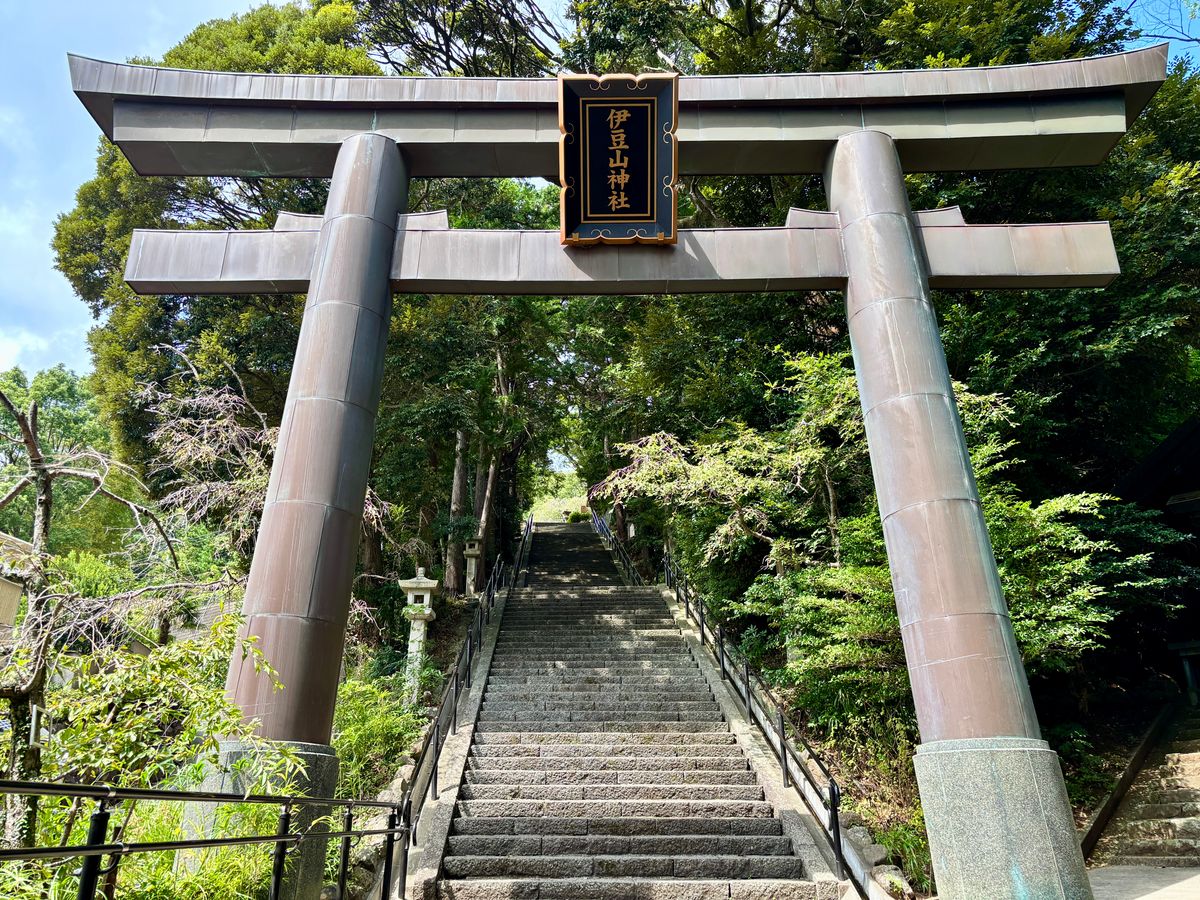
At the top of a long stone staircase from Hashiriyu lies Izusan Shrine. Known for matchmaking, the tranquil grounds surrounded by forest feature a vermilion main hall and a heart-shaped torii gate. With 837 steps, the climb from Hashiriyu is suited for the fit. Others can take a bus from Atami Station directly to the shrine for convenience. More details are available in the Izusan Shrine article.
- Open: Daily
- Visiting Hours: The grounds are open for visits anytime (Office hours: 9:00 AM - 4:00 PM)
- Admission: Free
Day Trip Itinerary
Itinerary
How to Enjoy Atami in One Day
Here's an example itinerary for taking the morning Shinkansen from Tokyo and returning in the evening. Since there are many hills, it's recommended to use a combination of buses and taxis for transportation.
About 20 min
Arrive at Atami Station, store your luggage, and head to the foot bath.
Store large luggage in the station's coin lockers. Take a break at the free foot bath in front of the station.
About 45 min
Take the JR to Kinomiya Station and visit Kinomiya Shrine.
One stop from Atami Station. It's recommended to take a walk around the giant camphor tree and relax at the café on the temple grounds.
About 1 hr
Strolling Through Atami Plum Garden
Plum blossoms are best viewed from January to early March, while autumn leaves are at their peak around early December.
About 1 hr
Lunch at the Shopping Street in Front of the Station
You can also enjoy food tours with dried fish, seafood bowls, and onsen (hot spring) buns.
About 1 hr
Tour the Historic Villa at Kiunkaku
The facility is closed on Wednesdays, so consider taking a walk on Sun Beach that day.
About 1 hr
Take the Ropeway to the Observatory, Visit Atami Castle Too
End your day enjoying the view overlooking the sea and city. The last ascent is at 17:00. For those staying overnight, relax in the onsen (hot spring) at your accommodation afterward.
Times are approximate. In winter, the sun sets early, so visit scenic spots earlier. On rainy days, focus on covered places like Kiunkaku and Atami Castle for an enjoyable experience.
A Night and Morning in Atami: Expanding Your Enjoyment with an Overnight Stay
While Atami can be enjoyed as a day trip, staying overnight adds the excitement of evening and morning activities. One highlight is the Atami Sea Fireworks Festival. In Atami, fireworks are displayed not only in summer but also in spring, autumn, and winter over the sea. Since the fireworks start after 8 PM, day-trippers might have to watch while keeping an eye on train schedules. Staying overnight allows you to enjoy the show at your leisure. The dates are listed in the Atami Sea Fireworks Festival article.

Another highlight is the onsen (hot spring) at night and in the morning. After a day of exploring the city, you can relax your tired feet in the inn's onsen. For day-use onsen options, refer to the Atami Onsen Guide, and for choosing accommodation areas, see How to Choose Ryokan and Hotels in Atami.
For those with tattoos who find it difficult to enter public baths, or groups wanting a private onsen experience, renting an entire villa is an option. For example, the villa "Moon and Sun" located on a hill in Atami offers private onsen and sauna for each building, allowing guests with tattoos to enjoy the onsen. It's about a 20-minute drive or taxi ride from Atami Station.
Itinerary
For a 2-day, 1-night trip, spend the morning of the second day like this
The quiet morning hours are best enjoyed in the Izusan area.
Morning
Depart after enjoying the onsen (hot spring) at the inn.
Enjoying another dip in the onsen (hot spring) before or after breakfast is a special treat reserved for guests.
MorningAbout 40 min
By Bus to Izusan Shrine
Take a bus from Atami Station to the front of the shrine, then visit the shrine grounds nestled in the forest.
After thatAbout 30 min
Descend the steps to Hashiri-yu
The 837 stone steps are tough going up, but easy on the way down. Visit the onsen (hot spring) emerging from the cave.
Late morning
Lunch and Souvenirs at Atami Station
If you have time in the afternoon, visit Akao Forest or places you couldn't go the previous day.
Times are approximate. Please check bus schedules before you leave.
Atami's Seasonal Highlights
- Winter to Early Spring (January to Early March): Plum blossoms at Atami Plum Garden and early-blooming "Atami Cherry Blossoms" along the Itokawa River. The 2027 Plum Festival is scheduled for January 9 to March 7, and the Atami Cherry Blossom Festival along Itokawa is planned for January 9 to February 7.
- Spring to Summer (March to August): Flowers at Akao Forest, swimming at Sun Beach, and summer fireworks.
- Autumn to Winter (September to December): Autumn leaves at Atami Plum Garden (around early December) and fireworks from autumn to winter.
Things to Know for Your First Time in Atami
- Many hills
- Even if it looks close on the map, there are steep hills and stairs. Wear comfortable shoes and use buses or taxis if you get tired.
- Store luggage at the station
- Walking with a suitcase on hills is tough. Leave it at the coin lockers at Atami Station before heading out.
- Carry some cash
- Some places, like the lockers at Atami Plum Garden, only accept cash. You can use IC cards like Suica on local buses.
- People with tattoos
- Tattoos cannot be shown at beaches and many public baths. Check the onsen guide for those with tattoos for places you can enter.
- Information around the station
- Directions after exiting the gates, shopping streets, and bus stops are summarized in the Atami Station Guide.
Q&A
Frequently Asked Questions About Atami Tourism
- Can you tour Atami without a car?
- All the places introduced in this article are accessible by train, local bus, or taxi. You can use IC cards like Suica on local buses.
- How much time is needed for sightseeing in Atami?
- If you're only visiting the main spots, a day trip (6-7 hours) is sufficient. For enjoying fireworks or exploring the Izu-san area, a 2-day, 1-night stay is recommended.
- Do I need cash?
- While many places accept cards and IC cards, some locations, like the lockers at Atami Plum Garden, only accept cash. It's reassuring to carry a little cash with you.