Tattoo-Friendly Onsen Guide|Reasons for Refusal, Hiding with Stickers, Choosing Private Baths
Updated 5 November 2026Dynamic Japan Travel editors, checked by a licensed travel agency (Aichi No. 3‑1590)Editorial policy
Enjoying Japanese Onsen with Tattoos: A Guide
Contents
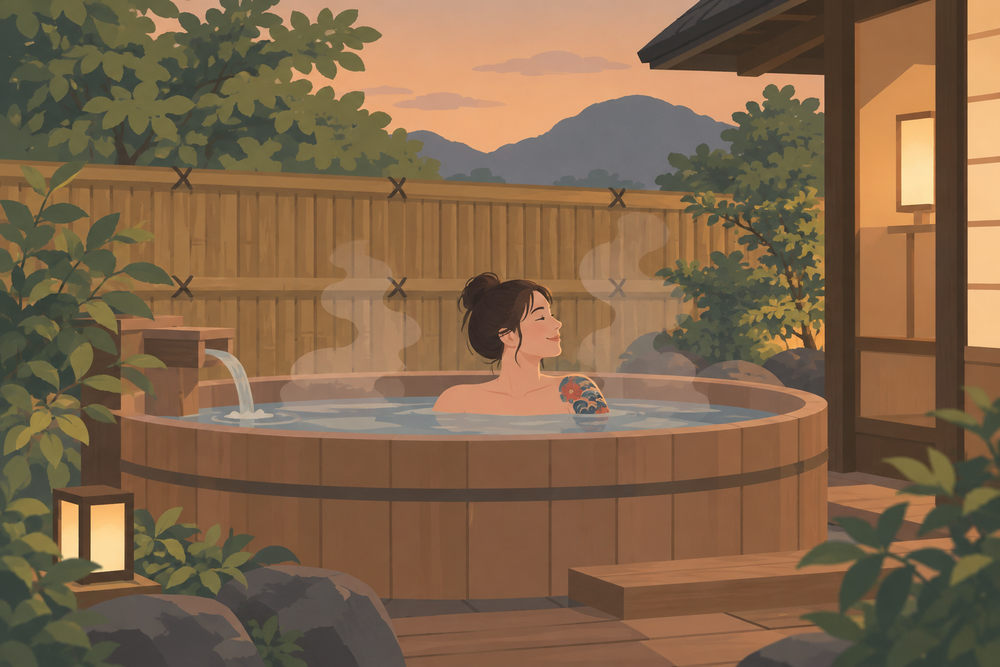
Even with tattoos, you can enjoy Japan's onsen (hot springs). However, in public baths like day-use onsen or hotel public baths, you may often be refused entry if you have tattoos. To ensure entry, choosing from foot baths, private baths, guest rooms with open-air baths, or facilities that don't refuse tattoos is the quickest way.
This article first explains why entry is refused and whether covering with a sticker allows access. Then, it introduces four methods and the steps to check the rules before visiting, concluding with specific examples in Atami.
Can't Enter an Onsen with Tattoos?
The answer is "it depends on the facility." According to a survey conducted by Japan's tourism authorities in 2015, about 56% of hotels and ryokans refused entry to people with tattoos, about 31% did not refuse, and about 13% allowed entry under conditions such as covering tattoos with stickers.
In 2016, Japan's tourism authorities advised that it is not appropriate to refuse entry to foreign travelers with tattoos solely because of their tattoos. They suggested measures such as covering tattoos with stickers, guiding visitors during less crowded times, or directing them to private baths. However, the final decision rests with each facility. Even now, many day-use onsen and public baths still state "those with tattoos are not allowed."
Reasons for Rejection
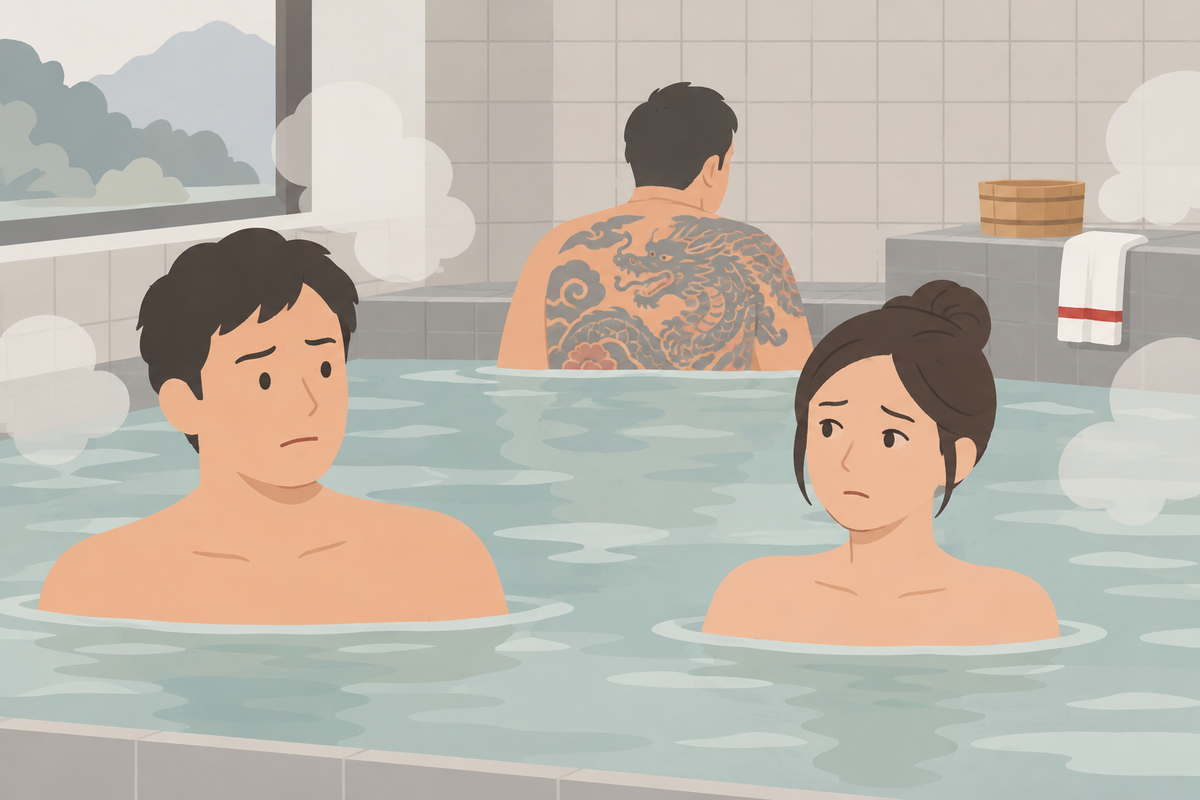
In Japan, tattoos have long been associated with anti-social organizations. As a result, many facilities refuse entry out of concern that other guests, such as families with children or the elderly, might feel scared or uncomfortable. It's not prohibited by law, and in the survey mentioned above, many facilities made this decision independently.
Whether it's a fashionable tattoo or a foreign traveler, the treatment is often the same. While it may seem unfair, it's best to be aware of the rules in advance to avoid any awkward situations at the entrance.
Can you enter if you cover it with a sticker?
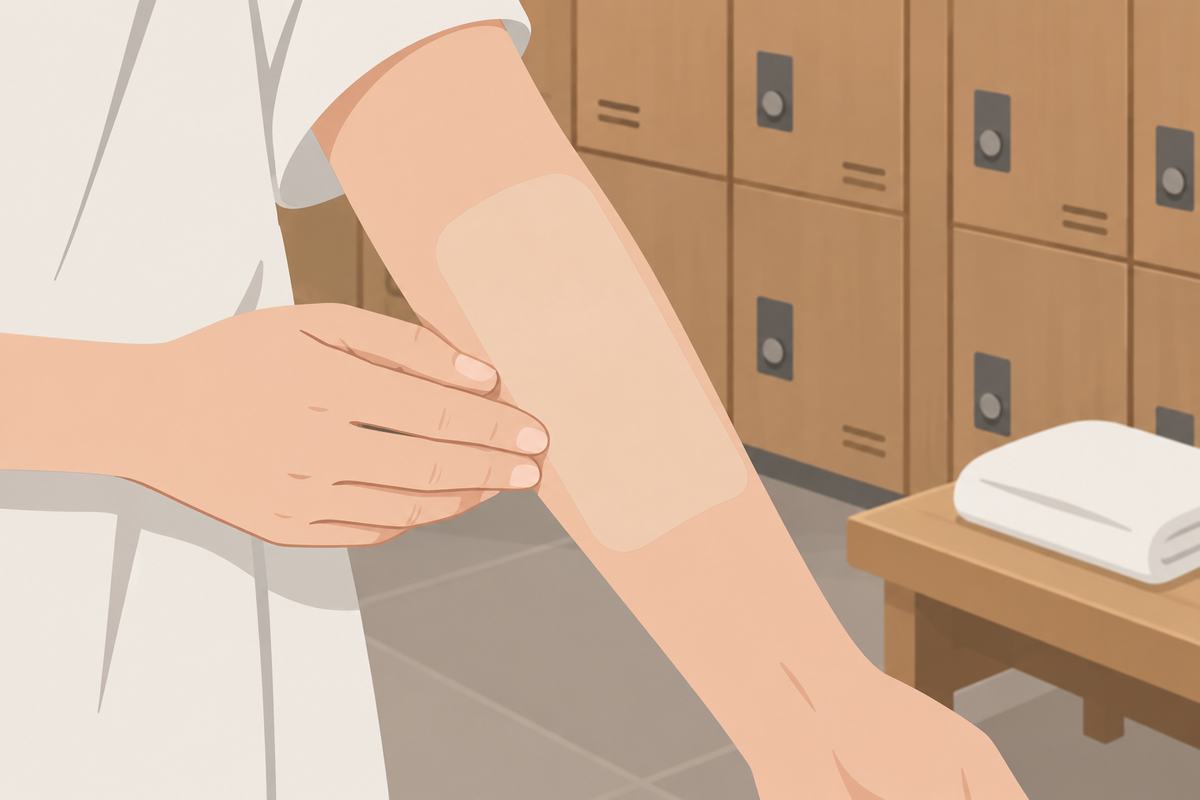
Some facilities allow entry if small tattoos are covered with skin-colored stickers. Generally, tattoos the size of a palm can be covered, and some places sell special stickers at the reception. For example, the onsen at Haneda Airport offers cover stickers for purchase (introduced in the article on airport day-trip onsens).
On the other hand, there are facilities that do not allow entry even if tattoos are covered with stickers. Large tattoos, like those covering the entire back, cannot be fully concealed, so consider other methods. Additionally, in Japanese onsens, wearing swimsuits or rash guards is not permitted, so clothing cannot be used to cover tattoos.
4 Ways to Enjoy Onsen with Tattoos
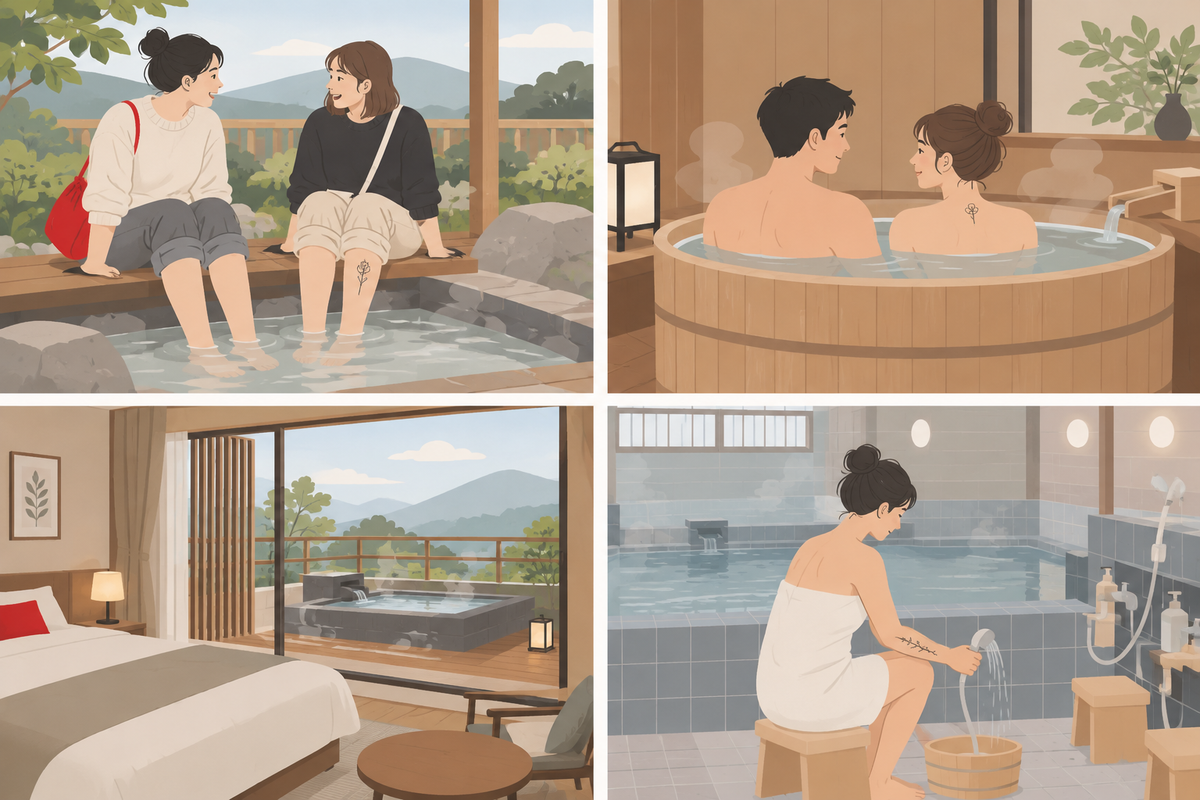
Comparing four methods based on certainty of entry and cost, the most reliable options are private baths and guest room baths, where you won't encounter other guests.
| Method | Less Likely to Be Refused with Tattoos | Cost Estimate | Suitable For |
|---|---|---|---|
| Foot Bath | Rarely refused | Often free | Those wanting a casual try during a walk |
| Private Bath (Family Bath) | Almost always accessible | Included in accommodation fee or extra charge | Those wanting to bathe with family or a partner |
| Guest Room with Open-Air Bath or Entire Rental | Guaranteed access | Higher accommodation fee | Those wishing to bathe frequently without concern for privacy |
| Facilities That Don't Refuse Tattoos (Public Baths, etc.) | Check per facility | From a few hundred yen | Those wanting to experience local atmosphere |
1. Footbath

You can soak just your feet while keeping your clothes on, so it's unlikely you'll be refused entry due to tattoos. Many free footbaths are available in front of stations or around town in onsen areas, making it easy to stop by during a walk. Bring a small towel to dry your feet.
2. Private Bath (Family Bath)
These are private baths that you can reserve for exclusive use at a set time. They are often found within accommodations, and some day-use onsen (hot spring) facilities also offer them. Since you won't be sharing with other guests, it's usually possible to enter even if you have tattoos. It's also great for families or couples to enjoy together.
Popular time slots fill up quickly, so it's best to make a reservation soon after you arrive. Before booking, it's reassuring to confirm if tattoos are allowed.
3. Accommodations with Open-Air Bath and Private Villa Rentals

In guest rooms with onsen baths or whole buildings available for rent, you can enjoy the bath anytime without worrying about others. Although the cost is higher, it's the most reliable option for those with tattoos. You can search for terms like "guest room open-air bath" or "onsen-equipped guest room" on booking sites.
4. Choose facilities that accept tattoos
Many traditional public baths (sento) in town do not refuse entry to those with tattoos. The national sento association explains that there is no rule prohibiting tattoos as a group policy. However, rules can vary by establishment, and larger super sento or day-use onsen often have different policies and may refuse entry.
Some communal baths in onsen areas and facilities that have changed their policies now accept tattoos. For example, an article on Ikaho Onsen introduces communal baths that allow entry to those with tattoos.
Procedure to Check Rules Before Visiting
Even within the same onsen (hot spring) area, rules vary by facility. To avoid being turned away at the entrance, check the following in order.
Read the terms and conditions on the official website. The words "tattoo" and "tattoos" are often found on pages titled "User Guide," "Notes," or "Frequently Asked Questions." If there's an English page, you can search for "tattoo."
If it's not written, ask via email. Inform them of the location and size of your tattoo and ask if you can enter, if it can be covered with a sticker, or if there are private baths available. Having a written response helps prevent any misunderstandings on the day.
Inform the accommodation when making a reservation. If you mention it in the request section of the booking site, you may be guided to a private bath or the bath in your guest room.
Confirm at the reception on the day. Rules may change, so it's reassuring to double-check at the reception before entering.
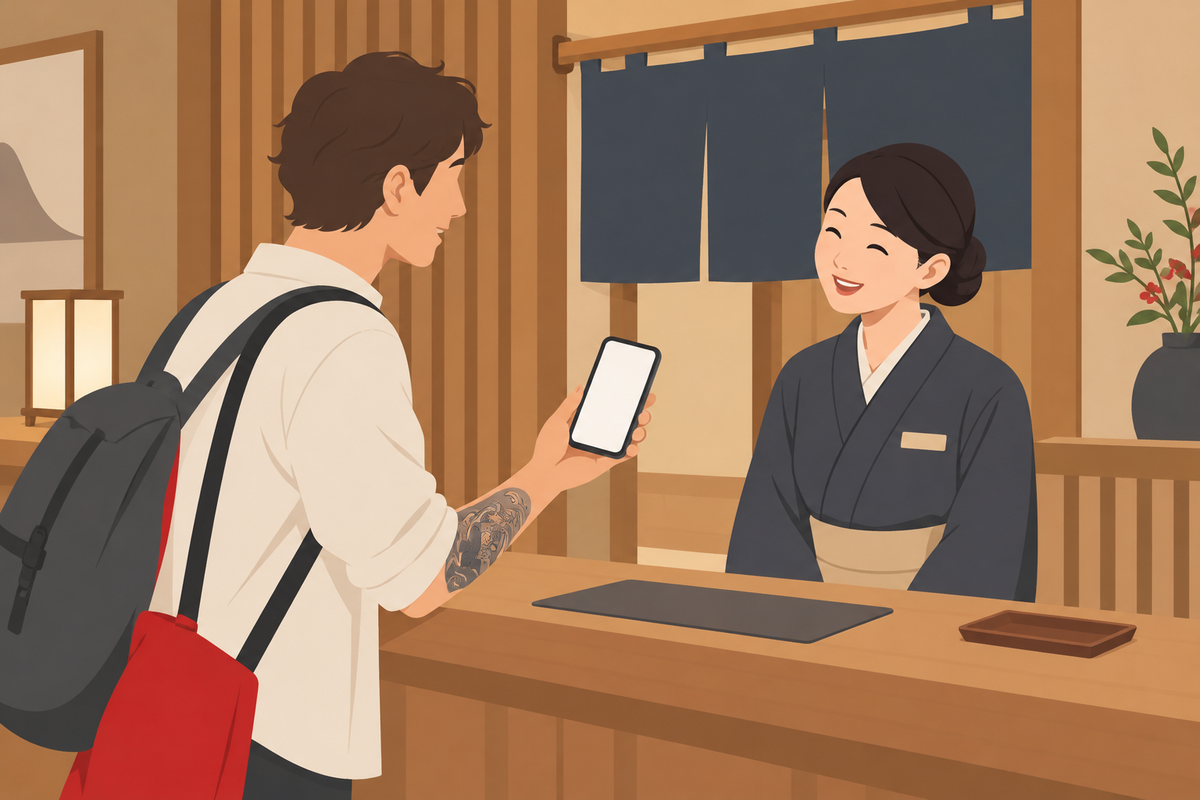
When asking at the reception, show the following Japanese on your screen or say it as pronounced:
- "I have a tattoo, can I bathe?" (TATTOO GA ARIMASUGA, NYUUYOKU DEKIMASUKA)
- "Can I enter if I cover it with a seal?" (SEAL DE KAKUSEBA HAIREMASUKA)
- "Do you have a private bath?" (KASHIKIRIBURO WA ARIMASUKA)
The complete bathing rules are summarized in the Onsen Manners Guide.
Example in Atami

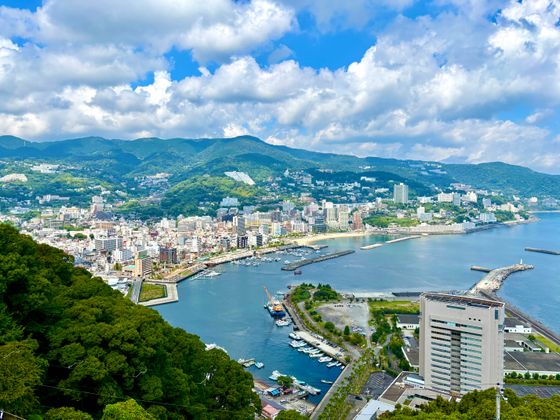
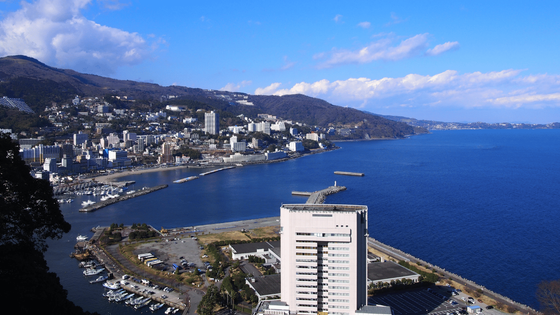
Let's take Atami, about 40-50 minutes by Shinkansen from Tokyo, as an example to see how rules differ among facilities in the same onsen area.
| Facility | Type | Tattoos |
|---|---|---|
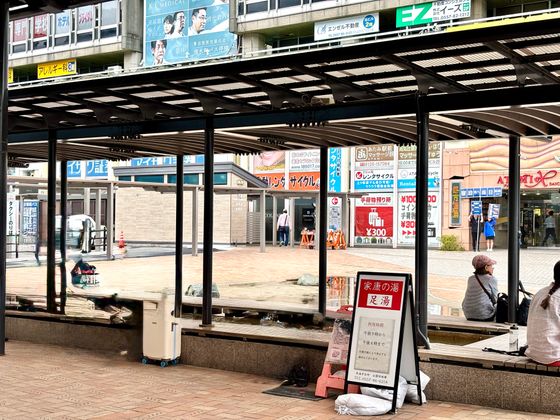
| Ieyasu's Bath (in front of Atami Station) | Footbath, free | Allowed |
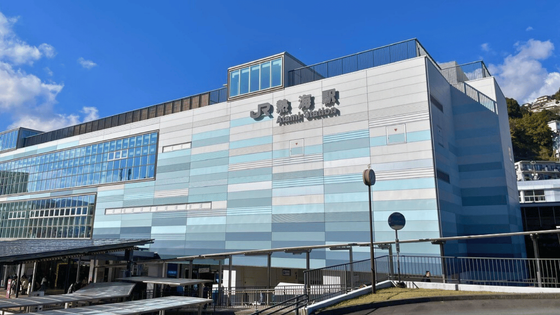
| Atami Station Onsen Bathhouse | Public bath | Not allowed |
| Ocean Spa Fuua | Day-use onsen | Not allowed (even if covered with a sticker) |
| Atami Rental Villa Moon and Sun | Whole villa rental, private onsen and sauna | Allowed |
Enjoy the onsen atmosphere at the footbath near the station, and opt for a private bath for a guaranteed enjoyable experience in Atami. Atami Rental Villa Moon and Sun offers private natural onsen and sauna in each villa, and tattoos are allowed. For an overview of Atami's onsen, refer to the Atami Onsen Guide, and for choosing accommodations, see How to Choose Ryokan and Hotels in Atami.

Frequently Asked Questions
Tattoo and Onsen Q&A
- Is entering an onsen (hot spring) with tattoos illegal?
- No, Japanese law does not prohibit people with tattoos from bathing. Whether they are allowed to enter is determined by each facility.
- Are the onsen (hot springs) separated by gender?
- Public baths, day-use onsen, and inn public baths are divided into men's and women's sections. For mixed-gender bathing, opt for a private bath or the bath in your room.
- Is it okay to enter wearing a swimsuit or underwear?
- No. In Japanese onsen (hot spring), everyone is required to enter naked, and swimsuits, underwear, or rash guards are not allowed. If you need to cover tattoos, choose a facility that allows stickers or use a private bath.
- How to Find Tattoo-Friendly Onsen in Tokyo?
- In Tokyo, local public baths are a top choice. Many places don't refuse entry, but it's best to check each establishment. If you want a guaranteed onsen (hot spring) experience with scenic views, consider staying at accommodations in Atami, about 40-50 minutes by Shinkansen, which offer private baths or rooms with onsen access.
- Are there other places besides onsen (hot springs) where tattoos might lead to refusal?
- Some sports gyms, pools, and certain beaches may deny entry to individuals with tattoos or ask them to cover them. Be sure to check the rules before you go.
- What do Japanese people think about tattoos?
- While perspectives are shifting, especially among younger generations, many still hold negative views about tattoos. In onsen (hot spring) facilities, it is common to refuse entry to those with tattoos out of consideration for other guests.
- Who Should Avoid Onsen (Hot Springs)?
- Avoid entering after drinking alcohol, when feeling unwell, or immediately after eating. Those with chronic conditions like heart disease or high blood pressure, and pregnant individuals should limit their time in the bath and consult a doctor if concerned.
- Do you rinse off with a shower after getting out?
- You don't have to rinse off. If you want to keep the onsen (hot spring) minerals on your skin, leave them as is. Those with sensitive skin may feel more comfortable rinsing lightly.