Atami Plum Garden Guide | Japan's Earliest Plum Viewing Season, Plum Festival 2027, Admission Fee, Access
Updated 6 November 2026Dynamic Japan Travel editors, checked by a licensed travel agency (Aichi No. 3‑1590)Editorial policy
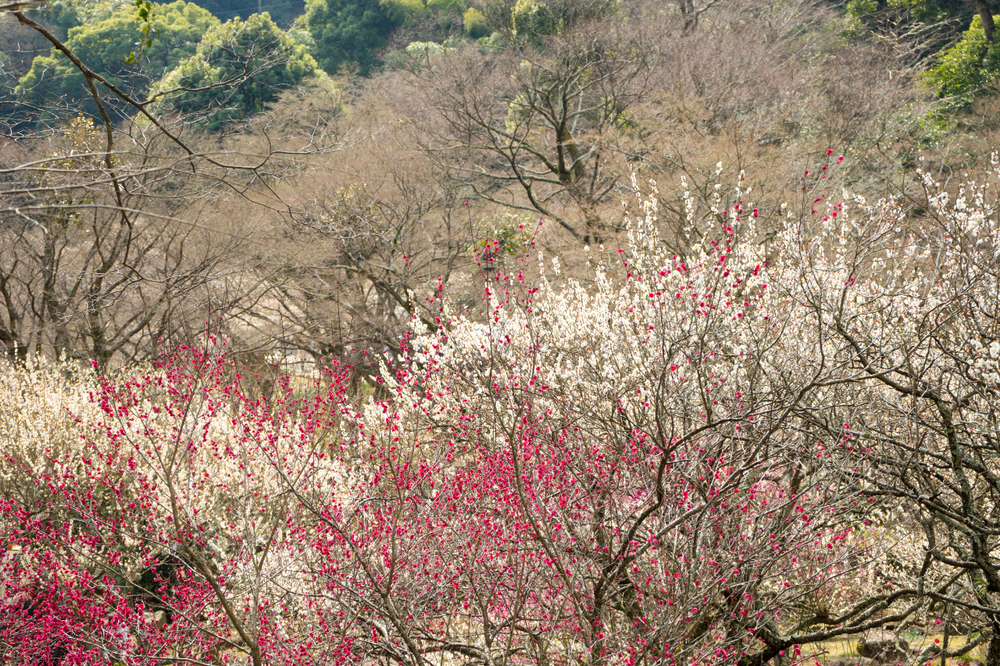
Contents
Atami Plum Garden is known as the earliest plum blossom garden in Japan. Located in the onsen town of Atami, it is accessible as a day trip from Tokyo. This article covers the best time to see the blossoms, the 2027 Plum Festival schedule, entrance fees, directions, how to explore the garden, and recommended attire and items to bring. To be upfront, our visit to Atami Plum Garden was on December 2, 2023, during the autumn foliage season. Information about the plum blossoms is based on data from the Atami City Tourism Association. The autumn experience is shared from our own visit.

What is Atami Plum Garden like?
First, let's introduce Atami Plum Garden. Opened in 1886, Atami Plum Garden is a historical plum garden. It features 60 varieties and 469 plum trees, including some over 100 years old. The plums bloom in sequence: early, mid, and late bloomers. At Atami Plum Garden, there are 271 early bloomers, 103 mid bloomers, and 95 late bloomers. The first flowers usually bloom around October to November each year. In 2025, the first bloom of the season was observed on October 7. In 2024, it was October 16, and in 2023, it was October 18. This is why it is called "the earliest blooming plum in Japan."
The plum blossom is said to have originally come to Japan from China. For over a thousand years, it has been celebrated in Japanese poetry and songs, cherished as a herald of spring. Blooming before the cherry blossoms, many people feel that spring is near when the plum blossoms appear. Although not native to Japan, it is a flower deeply rooted in Japanese culture.
Atami is a town known for its onsen (hot spring) and the sea. In winter, plum blossoms join the scene. From January to February, Atami is bustling with visitors coming to see the flowers.
Plum Blossom Season and Plum Festival 2027
The Atami Plum Garden Plum Festival in 2027 is scheduled from January 9 to March 7. Since the blooming varies each year, please plan accordingly using the bloom forecast below as a guide.
Scheduled dates
Atami Plum Garden Plum Festival
Jan 9 – Mar 7, 2027
2027
- Jan9–31
- Feb1–28
- Mar1–7
The best time to visit the garden is from late January to mid to late February. This can vary by about two weeks each year. Festival details will be updated on the official Atami City Tourism Association website as they are decided.
The festival lasts about two months, but the entire garden is at its best only during part of that time. Typically, the garden is in full bloom from late January to mid to late February. In 2026, the peak viewing period was from January 27 to mid-February, with February 2 reaching 65% bloom. In 2025, it was about two weeks later than usual, with the best time from mid to late February. In 2024, it was early February, and in 2023, it was mid to late February. Thus, the timing can vary by about two weeks each year.
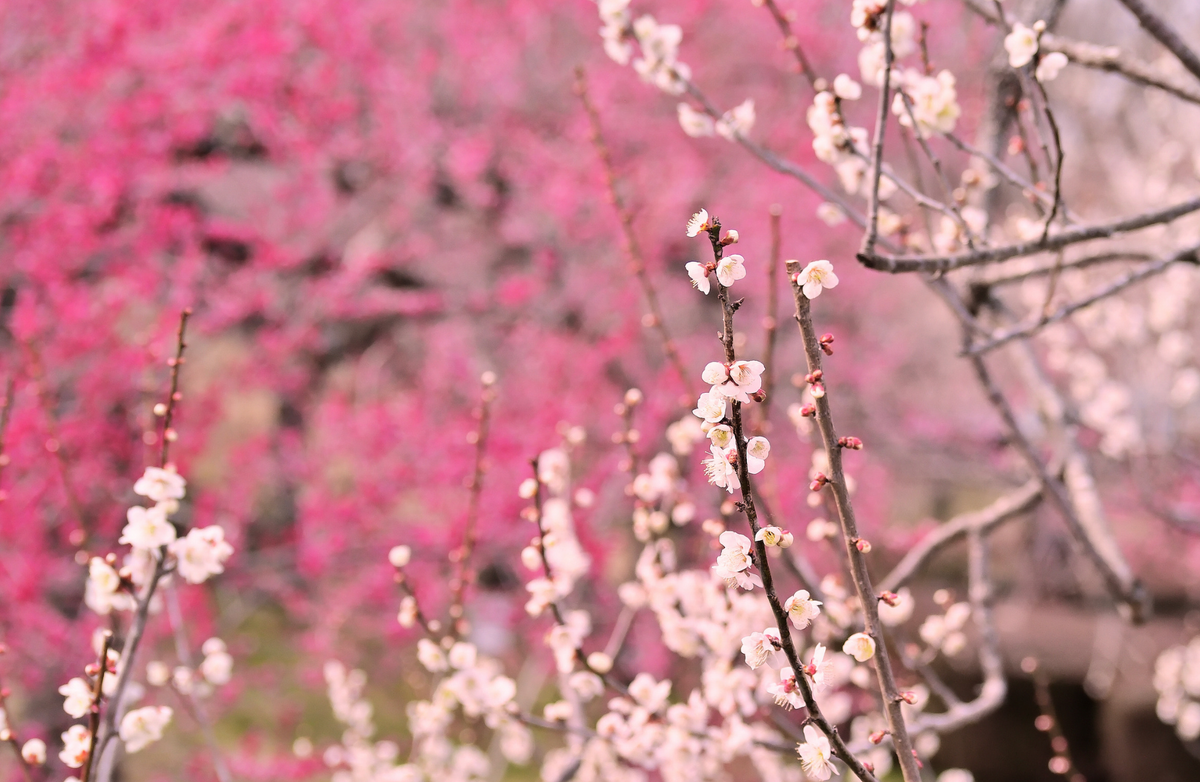
One thing to note is that the 469 plum trees do not all bloom at once. By the time the mid-bloomers and late-bloomers progress, the early bloomers have already started to fall. If you visit early in January, you'll see the early bloomers, while visiting from late February to early March will allow you to see the late bloomers. No matter when you visit, you'll find plums blooming somewhere in Atami Plum Garden. Before you go, check the official website of the Atami City Tourist Association for updated blooming information during the Plum Festival.
People often ask if plums can be seen in Japan in February. The answer is yes. Atami Plum Garden often reaches its peak viewing period in February. As for where the best place to see plums in Japan is, there isn't just one answer. Plum viewing spots are scattered across Japan. Among them, Atami Plum Garden is the closest to Tokyo and is one of the earliest to start blooming.
Enjoying the Plum Blossom Festival
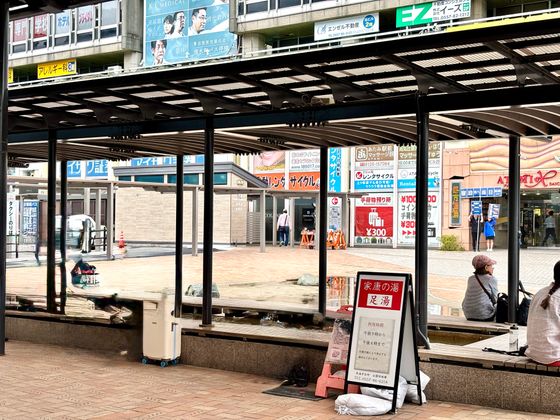
During the Plum Festival, there are more activities to enjoy besides viewing the flowers. The park features a foot bath and souvenir shops. Street performances are held sporadically from 10 AM to 3 PM. From 10 AM to 2 PM, free guided tours by local guides are available at the main entrance. On Sundays and holidays, free servings of amazake are offered from 10 AM and plum tea from 1 PM, each limited to the first 200 visitors. On certain days, there are performances by Atami geisha and song shows. There is no nighttime illumination, so visit during daylight hours to see the plums.
Admission Fee and Opening Hours
Next, let's look at the admission fees and opening hours. Atami Plum Garden is open 24/7 all year round. Admission fees are required only during the Plum Festival from 8:30 AM to 4:00 PM. The admission fees for the 2026 Plum Festival were as follows:
| Category | Fee |
|---|---|
| General | 300 yen |
| Groups of 11 or more | 200 yen per person |
| Guests staying in Atami | 100 yen |
| Junior high school students and younger | Free |
During the paid hours, you pay the entrance fee at the gate. Payment is cash only, so please prepare coins. Guests staying at accommodations in Atami City can get a discount, making it 100 yen. You can enter for free before 8:30 AM and after 4 PM. Visiting early in the morning allows for a calm, free walk. Additionally, starting February 25, 2026, it will be free even during the festival period. This policy may change annually, so please wait for the official announcement regarding 2027.
How to Get to Atami Plum Garden
The easiest way is to take the train from Atami Station to Kinomiya Station, just one stop away, and then walk. You can also take a bus.
Recommended Train Travel
- Atami StationJR Ito LineAbout 3 minutes
- Kinomiya StationOn footAbout 10 minutes
- Atami Plum Garden
Go by bus
- Atami StationIzu Hakone BusAbout 15 minutes
- Baien Bus StopOn footImmediately
- Atami Plum Garden
Kinomiya Station is a JR station, so you can use JR Pass and IC cards like Suica.
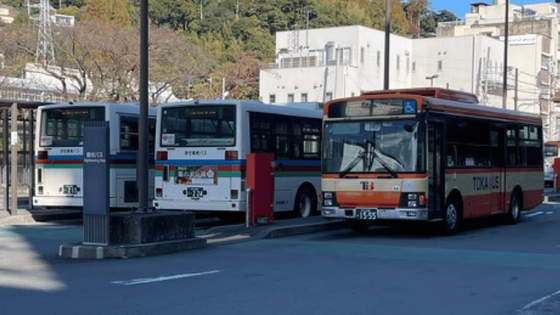
Take the bus from Atami Station's bus terminal heading towards "Baien/Ainohara Danchi" and get off at "Baien." During the Plum Festival, additional services are available.
By taxi, it's about a 5-minute ride from Atami Station, costing around 1,000 yen.
During this period, the parking lot and surrounding roads near the plum garden are crowded daily. On weekends and holidays, the road in front of the plum garden becomes one-way. It is recommended to use the train or bus.
We got off at Kinomiya Station and walked. Kinomiya Station is a small station with white walls and a tiled roof. It's about a 10-minute walk from the station to the plum garden, and the route is easy to follow. Since Kinomiya Station is a JR station, you can use the JR Pass and transportation IC cards like Suica. It's one stop and about 3 minutes from Atami Station.

If traveling by bus, take the Izu Hakone Bus from the bus stop at Atami Station. The "Baien" bus stop is located along a stone wall, marked by a green sign. You can use a transportation IC card for the bus. Atami is a hilly town, so getting around by bus is more convenient than walking. Another article covers how to use the buses in Atami, including bus stop locations and fare payment methods.

It's about a 5-minute taxi ride from Atami Station, costing around 1,000 yen. It's convenient when you have a lot of luggage or are traveling with several people. If you're driving, be cautious. During the Plum Festival, the plum garden parking lot and surrounding roads are crowded daily. The official recommendation is to visit by train.
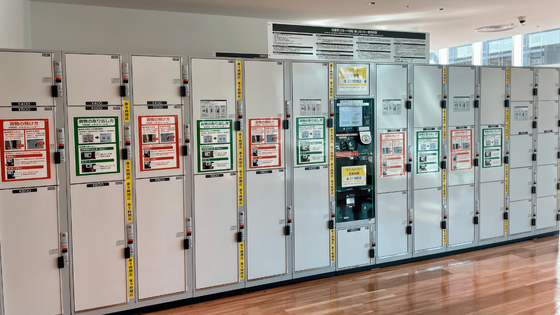
Regarding luggage, Kinomiya Station has a luggage storage and coin lockers, but there are few. Atami Plum Garden also has coin lockers, but they only accept cash. If you're planning to explore multiple spots in Atami, it's advisable to store your luggage at the lockers in Atami Station first. Another article provides details on the location and fees of Atami Station's coin lockers.

For directions from Tokyo to Atami, refer to our guide on traveling from Tokyo to Atami. It includes differences between the Shinkansen and regular trains, as well as estimated travel times.

How to Explore the Park
Upon arriving at the plum garden, the question is how to explore it. The garden is larger than expected, and it took us about an hour to see everything. There are slopes and stairs within the garden. A path runs along the river, featuring small waterfalls and a red-railed bridge. Wear comfortable shoes. Early-blooming plum trees are planted near the entrance, so you can see flowers right away. There are maps available inside, so check the overall layout before starting your walk to avoid getting lost. If you're short on time, simply walking back and forth along the riverside path will still offer a quintessential view of the plum garden.
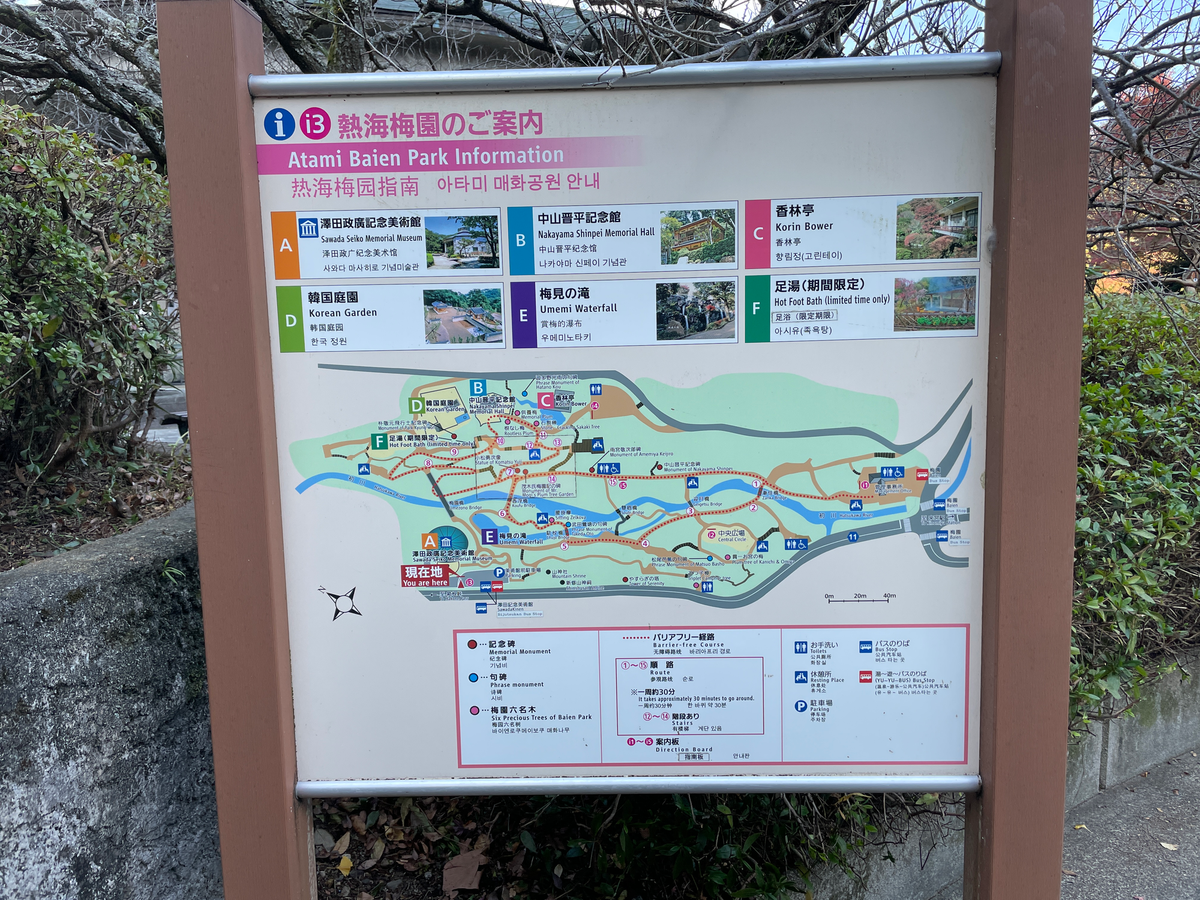
Next to the garden is the Sawada Seiko Memorial Museum. During the Plum Festival, a separate admission fee is required. Nearby is the Nakayama Shinpei Memorial Hall. If time permits, you can visit both along with the plum blossoms.
Etiquette for Enjoying Plum Blossoms
Some plum trees in Atami Plum Garden are over 100 years old. To preserve them, please follow these three guidelines:
- Do not touch branches or flowers: Plum branches are thin and fragile. Enjoy the scent by bringing your face close, but do not pull branches or pick flowers. Older trees cannot recover once a branch is broken.
- Take photos from the paths: Entering the base of the trees compacts the soil and weakens them. Take photos from the paths. On busy days, standing in the middle of the path blocks others. Step aside slightly for a pleasant experience for everyone.
- Take your trash with you: Trash bins may not be readily available. Please take home wrappers and containers from food and drinks purchased at stalls. Carrying a small trash bag is convenient.
Clothing and Essentials
From January to February in Atami, even on sunny days, the wind can be chilly. The park has many slopes and stairs, so be prepared for walking.
- Winter Coat
- You'll be walking outdoors for about an hour. It's helpful to have a jacket that's easy to put on and take off, as well as something to keep your neck warm.
- Comfortable walking shoes
- There are slopes, stairs, and stone paths. Avoid high heels and choose non-slip shoes.
- Cash
- The entrance fee and plum garden coin lockers accept cash only. It's also reassuring to have cash at the food stalls and souvenir shops inside the park. Please prepare coins and 1,000 yen bills.
- IC Transit Card
- Transportation IC cards like Suica can be used on trains from Atami Station to Kinomiya Station, as well as on city buses.
- Small towel
- During the Plum Festival, a foot bath is available in the park. If you have a towel, you can warm your tired feet before heading home.
- Trash bag
- Please bring a bag to take home any food wrappers or other waste.
Decide on umbrellas and rain gear based on the weather forecast. On rainy days, stone paths can become slippery.
In Atami, besides the footbath at the plum garden, there are footbaths near the station and day-use onsen (hot springs). Our article on Atami's onsen highlights places that are easy to visit. The towel used at the plum garden will come in handy.
Autumn Foliage Spots
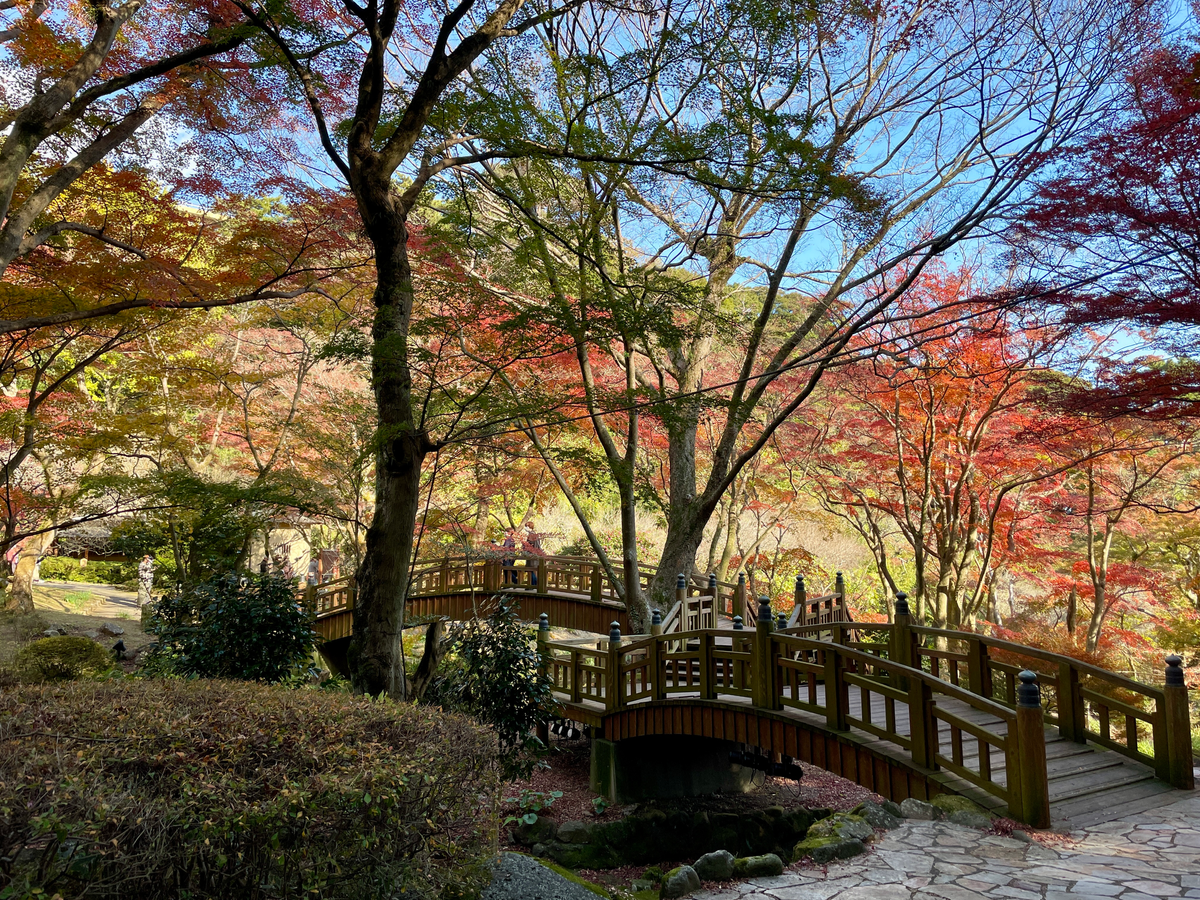
We've discussed plum blossoms, but Atami Plum Garden is also known for its autumn foliage. We visited on December 2, 2023. Walking along the riverside path, there was a small waterfall, and the maple leaves were turning red and yellow. It wasn't crowded, allowing for a peaceful walk in nature.

The combination of the red-railed bridge and the colorful maple leaves was beautiful. At Atami Plum Garden, the "Maple Festival" is held annually from late November to early December. The Atami City Tourism Association promotes it as "the latest autumn foliage in Japan." Outside the plum festival period, there is no entrance fee, and you can visit anytime. Even if you come to Atami outside of winter, it's worth stopping by for a stroll.

Together with Kinomiya Shrine and Atami Sakura
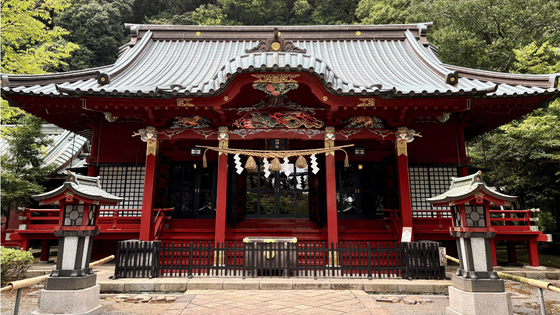
It's a shame to leave with just the plum garden. About a 10-minute walk from Atami Plum Garden is Kinomiya Shrine. Within the grounds stands a giant camphor tree over 2,100 years old, designated as a national natural monument. There's a legend that walking around the trunk once extends your life by a year, and if you walk around it without telling anyone your wish, it will come true. It's beautifully lit up at night, making it a perfect spot to visit after the plum garden.
In Atami from January to February, both plum and cherry blossoms bloom. Along the Itokawa River near Atami Station, the early-blooming "Atami Sakura" blossoms, and the "Atami Sakura Itokawa Cherry Blossom Festival" is held. Seeing both plum and cherry blossoms on the same day is a unique winter experience in Atami. Articles on Atami's tourist spots also cover other attractions, including Kinomiya Shrine.
Stay in Atami During Plum Blossom Season
A day trip is possible, but staying overnight in Atami is recommended for three reasons. First, those staying in Atami city enjoy discounted entrance fees. During the 2026 Plum Festival, guests paid 100 yen compared to the regular 300 yen. Second, you can visit the plum garden during the quiet morning hours. Before 8:30 AM, there's no entrance fee, allowing for a more peaceful stroll. Third, after walking, you can relax in an onsen (hot spring). As a hot spring town, Atami offers a restful soak at night.
How to choose accommodations in Atami is summarized in the guide. Options range from ryokan near the station to quiet lodgings on elevated areas. For instance, Dynamic Japan Travel's Atami rental villa, Tsuki to Taiyo, is located on a hillside in the southern part of Atami and offers four private villas, each with its own sauna and Atami onsen (hot spring). It's ideal for families or friends who want to enjoy the onsen without worrying about privacy.

Frequently Asked Questions
- Can I buy tickets for the Plum Festival in advance?
- There is no official information on advance ticket sales or reservations. During the paid hours of the Plum Festival, you simply pay the entrance fee at the gate. You can visit without a reservation. On busy days, more time may be spent dealing with traffic congestion on the roads and buses in front of the park than entering the park itself, so please start your journey early.
- Can you dine in the plum garden?
- During the Plum Festival, food stalls and souvenir shops are set up in the park. You can buy light snacks and drinks there. For a more substantial meal, it's best to visit restaurants around Kinomiya Station or Atami Station. Outside the festival period, there are no stalls, so it's advisable to eat beforehand.
- Can you enjoy it even on rainy days?
- The plum garden is outdoors. You can enter on rainy days, but the slopes and stone paths can become slippery. Please prepare non-slip shoes and an umbrella. Events in the garden, such as street performances and free guided tours, may be canceled in bad weather. If you visit on a rainy day, it is best to focus on quietly viewing the flowers.
- Is it suitable for children?
- Admission is free for middle school students and younger. However, there are many slopes and stairs in the park, so if you're with small children, take your time and plan for a leisurely visit. On Sundays and holidays, plum tea is served, making it a perfect opportunity for a break.