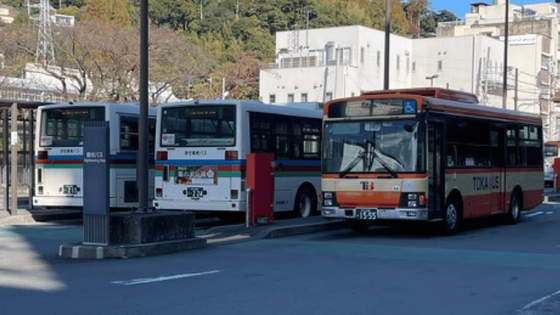
Atami Onsen Guide | Day Trips to Foot Baths, Public Bathhouses, and How to Enjoy Day-Use Hot Springs
Updated 5 November 2026Dynamic Japan Travel editors, checked by a licensed travel agency (Aichi No. 3‑1590)Editorial policy
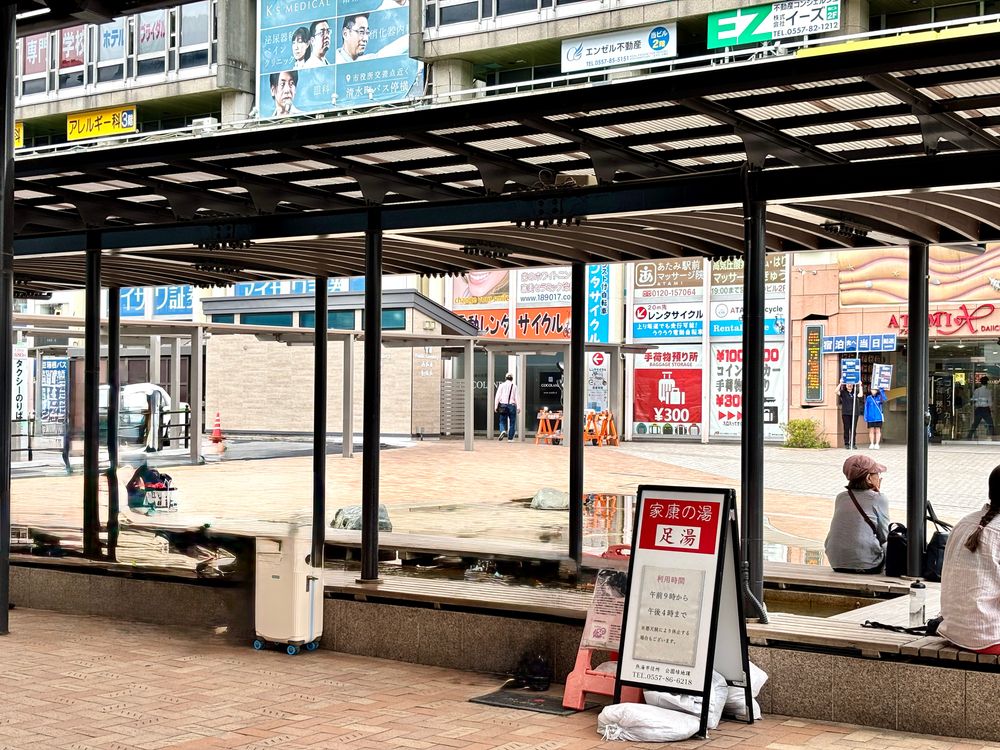
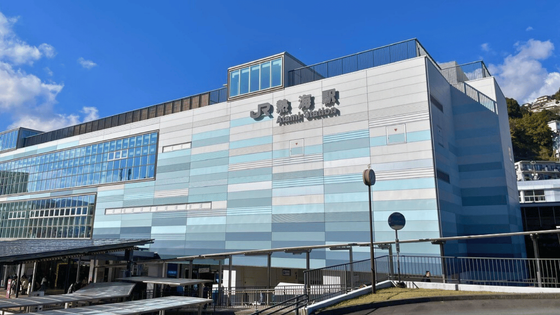
The footbath "Ieyasu no Yu" is located right outside Atami Station. It's free, allowing you to experience the onsen (hot spring) as soon as you arrive.
Contents
In Atami Onsen, travelers can enjoy four types of baths: foot baths, public baths, day-use onsen, and hotel baths. The most convenient option is the free foot bath in front of Atami Station. For a relaxing soak with an ocean view, the day-use onsen "Ocean Spa Fuua," about 10 minutes by free shuttle from the station, is recommended.
This article first introduces what Atami Onsen is like and the types of onsen available. Next, it explains the onsen accessible from the station and the bathing rules, and finally, it compares Atami with Ito, offers advice for those with tattoos, and suggests ways to enjoy staying overnight.
Atami Onsen Basics
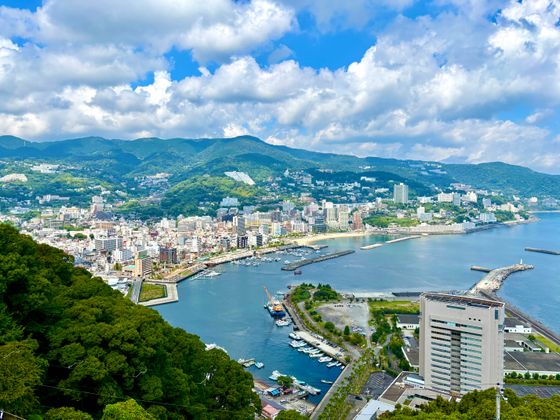
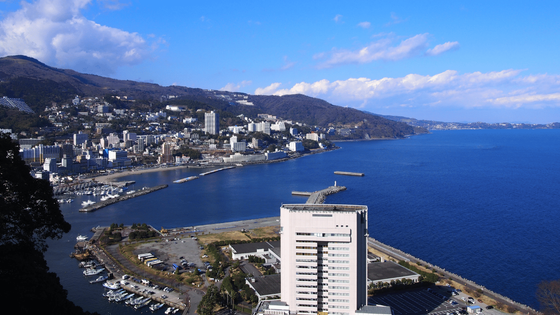
Atami is a well-known onsen (hot spring) destination facing Sagami Bay. The mountains rise immediately behind the sea, and hot springs are found across a wide area from the coast to the hills. Due to its proximity to the sea, many of the springs contain salt, and the high temperature of the sources means that many baths are quite hot.
In the early Edo period, Tokugawa Ieyasu visited for therapeutic bathing, and it is said that Atami's hot water was later transported to Edo Castle. The footbath in front of the station is called "Ieyasu's Bath" for this reason.

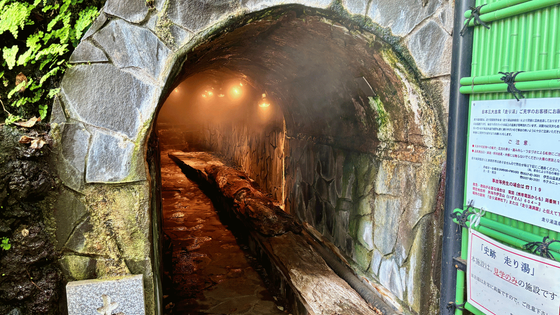
The origin of Atami's onsen (hot spring) is known as "Hashiriyu," where hot water springs from a seaside cave. However, Hashiriyu is a place to view the source, not for bathing. For more details, see the Hashiriyu article. This article covers onsen where you can actually bathe.

There are four types of onsen (hot springs) available.
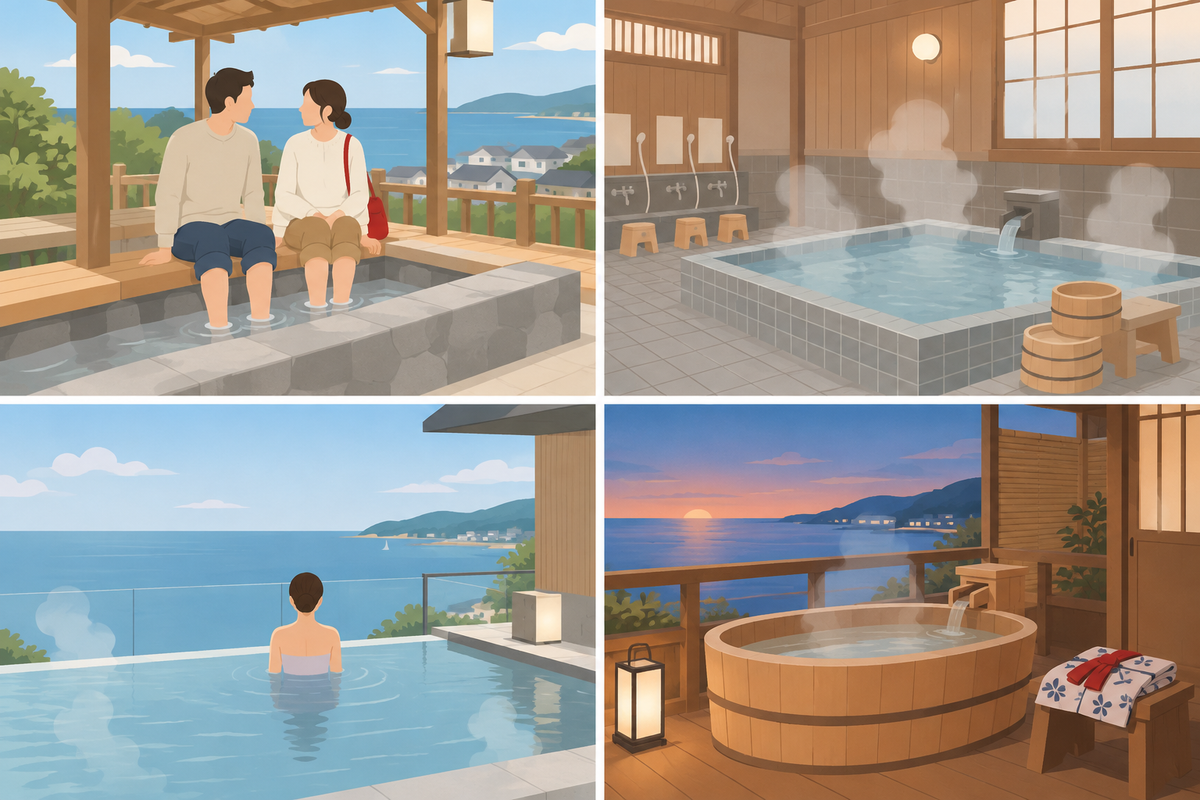
Travelers can easily choose from four types of onsen (hot springs) in Atami. For a casual experience with clothes on, try a foot bath. For local ambiance, visit a public bath. For facilities and views, opt for a day-use onsen. If you want to enjoy both night and morning baths, choose a bath at your accommodation. Prices are per adult.
| Type | Price Range | Towel | Suitable For |
|---|---|---|---|
| Foot Bath | Often free | Bring your own | Those who want a quick try upon arrival or during a walk |
| Public Bath | A few hundred yen | Bring your own (soap often not provided) | Those who want to experience local ambiance or enter cheaply |
| Day-use Onsen (Bath Facilities/Hotel Day-use) | 1,000–3,000 yen range | Included in the fee or available for rent | Those who want to relax in clean facilities with a sea view |
| Accommodation Bath (Public Bath/Private Bath/In-room Onsen) | Included in accommodation fee or extra charge | Provided by the accommodation | Guests, those who want to bathe at night and morning, families, or couples |
Examples of Easily Accessible Onsen from the Station
Here are three places near Atami Station, listed from most convenient to least. The footbath is just a few steps from the station, the public bath is about a 2-minute walk, and the Fuua day-use onsen (hot spring) is about 10 minutes away by free shuttle.
Free Foot Bath "Ieyasu no Yu" Near the Station
Right outside Atami Station's ticket gate, there is a footbath in the station square. It's free, and you can soak just your feet while keeping your clothes on. It's available from 9:00 to 16:00. There's a vending machine for footbath towels next to it, so don't worry if you forget to bring one. It's welcoming for those with tattoos and families with children.

Atami Station Front Onsen Bathhouse (Public Bath, 500 yen)
This small public bath, located about a 2-minute walk from Atami Station, is frequented by locals. It features "gensen kakenagashi," where the natural hot spring water flows continuously, and the salty water is quite hot. The bath is small and the facilities are simple and traditional, making it suitable for those who want to experience a local sento or take a quick dip.
The fee is 500 yen for adults (junior high school and above), 200 yen for elementary school students, and 100 yen for preschool children. It operates from 14:00 to 21:00, closed on Wednesdays and during the New Year holidays. Bring your own soap, shampoo, and towel, and prepare cash for payment. As the water is hot, limit your time in the bath to a few minutes. Note that people with tattoos are not allowed.
Ocean Spa Fuua (Day-use Onsen with Ocean View)
This is a day-use onsen (hot spring) located within the seaside resort "Atami Bay Resort Korakuen." The highlight is the standing open-air bath with a panoramic view of Sagami Bay. You can spend half a day relaxing with amenities like a stone sauna, lounge, and cafe. The official website offers an English page where you can read about fees and important information in English.
- Official Website (English): Ocean Spa Fuua
- Access: From Atami Station, take the free shuttle bus from the rotary on the right after exiting the ticket gate. It takes about 10 minutes and runs approximately every 30 minutes during the day. Outside these hours, use a local bus or taxi.
- Hours: 10:00–22:00 (last entry at 21:00). No reservation is needed.
- Fees: Adults Weekdays ¥3,080, Weekends/Holidays ¥3,410 (as of November 2026), plus a bathing tax of ¥150.
- Included in the Fee: Towels and indoor wear. You can visit empty-handed.
- Payment: Besides cash, credit cards, Alipay, and WeChat Pay are accepted. Payments within the facility are made with a wristband and settled upon departure.
There are two important points to note. People with tattoos cannot enter (even if covered with stickers). Also, children under three are not allowed, and those in elementary school or younger cannot use the open-air bath or stone sauna. Families with small children or those with tattoos should consider the private baths introduced later for peace of mind.
Key Points for First-Time Visitors
Once you've decided on your destination, make sure to check the entry procedures. The three important aspects of Japanese onsen (hot springs) are as follows.
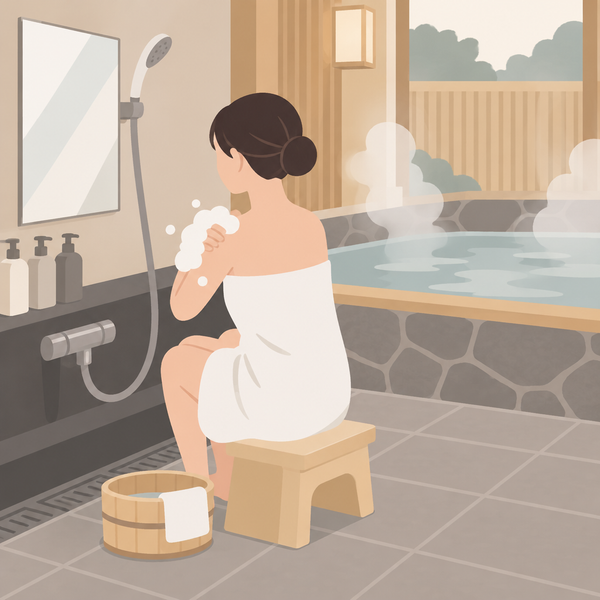
Wash your body before entering the bath.
Sit in the washing area to wash your body, rinse off the soap thoroughly, and then enter the bath.
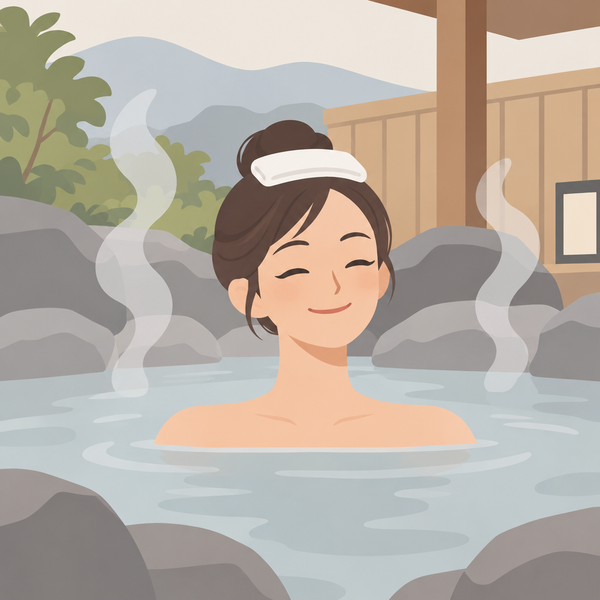
Do not wear swimsuits or underwear.
The baths are divided into men's and women's sections, and everyone enters naked. This is to keep the water clean. A small towel is placed on the head instead of in the water, and long hair is tied up.
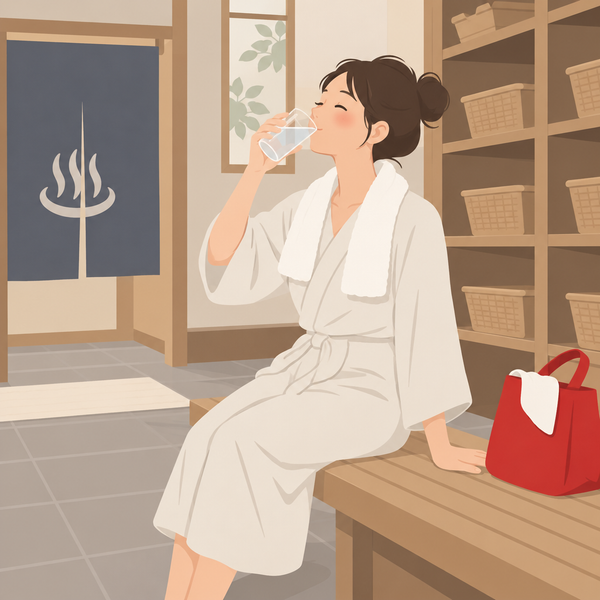
Shorten your time in hot water.
Atami features many hot baths, so aim for 5 to 10 minutes per session. Afterward, drink some water and take a break.
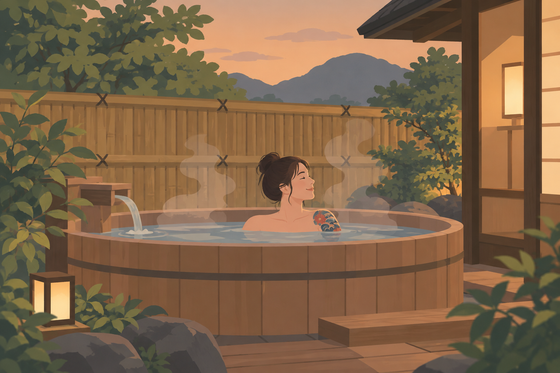
Illustration for Explanation (AI-generated)
What to Bring to a Public Bath
Public baths often do not provide towels or soap, so it's advisable to bring your own.
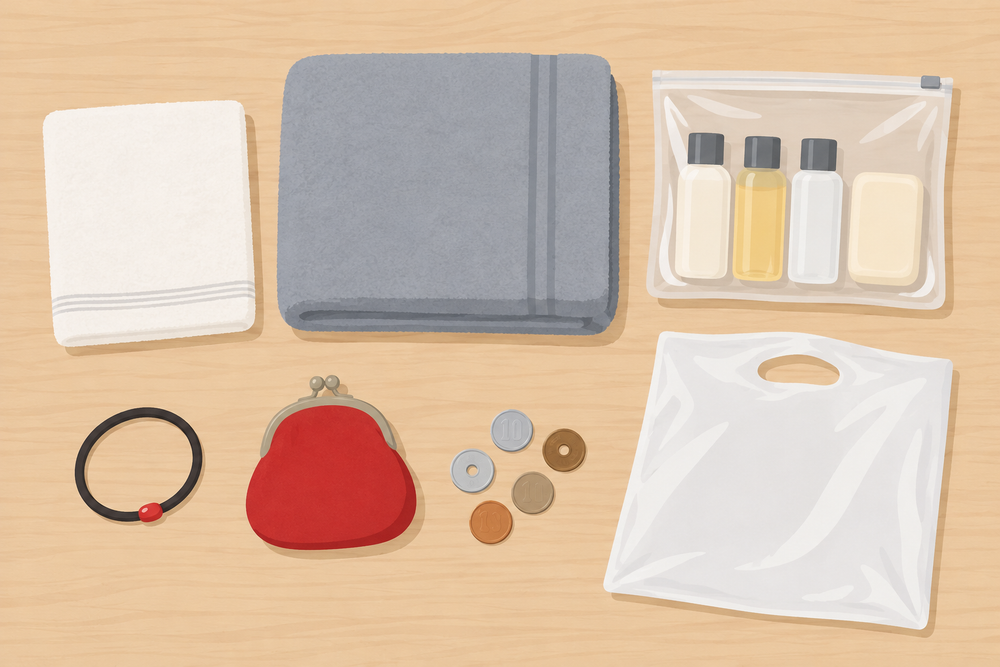
- Small towel
- Used for washing the body or placing on the head.
- Bath towel
- Wipe your body after getting out.
- Soap & Shampoo
- Many places don't provide them, so bring a small container with you.
- Cash
- Public baths primarily accept cash payments. Having coins on hand is convenient.
- Hair tie
- Tie up long hair to keep it out of the water.
- Bag for wet items
- Use this when taking home used towels.
At the day-use onsen Fuua, towels and indoor wear are included in the price, so you can visit empty-handed.
Detailed instructions are summarized in the Onsen Etiquette Guide and How to Use Towels in an Onsen.
Atami or Ito: Which Onsen?
Ito is an onsen (hot spring) destination about 25 minutes from Atami on the JR Ito Line. If you're undecided, consider comparing the following points.
First-Time Day Trip
Atami
- About 40-50 minutes by Shinkansen from Tokyo
- Footbath and public bath in front of the station, day-trip onsen with free shuttle
- There are many accommodations from the coast to the hills, making it easy to choose.
If You Seek Tranquility
Ito
- About 25 minutes from Atami on the JR Ito Line
- Relax at a quiet beach with fewer people
- Stay in Atami and extend your trip the next day.
For first-timers or day-trippers, Atami, with its onsen (hot spring) near the station, is ideal.
Directions to Atami are explained in How to Get to Atami from Tokyo.
Tattoos & Private Baths
At day-use onsen (hot springs) and public baths, those with tattoos are often refused entry. Both the Atami Station Onsen Bathhouse and Fuua mentioned above do not allow people with tattoos (the footbath at the station can be used). If you want guaranteed entry, choose a private bath that you can reserve for a set time or an accommodation with an onsen in the room. The same applies if you want to enjoy the bath with family or as a couple.
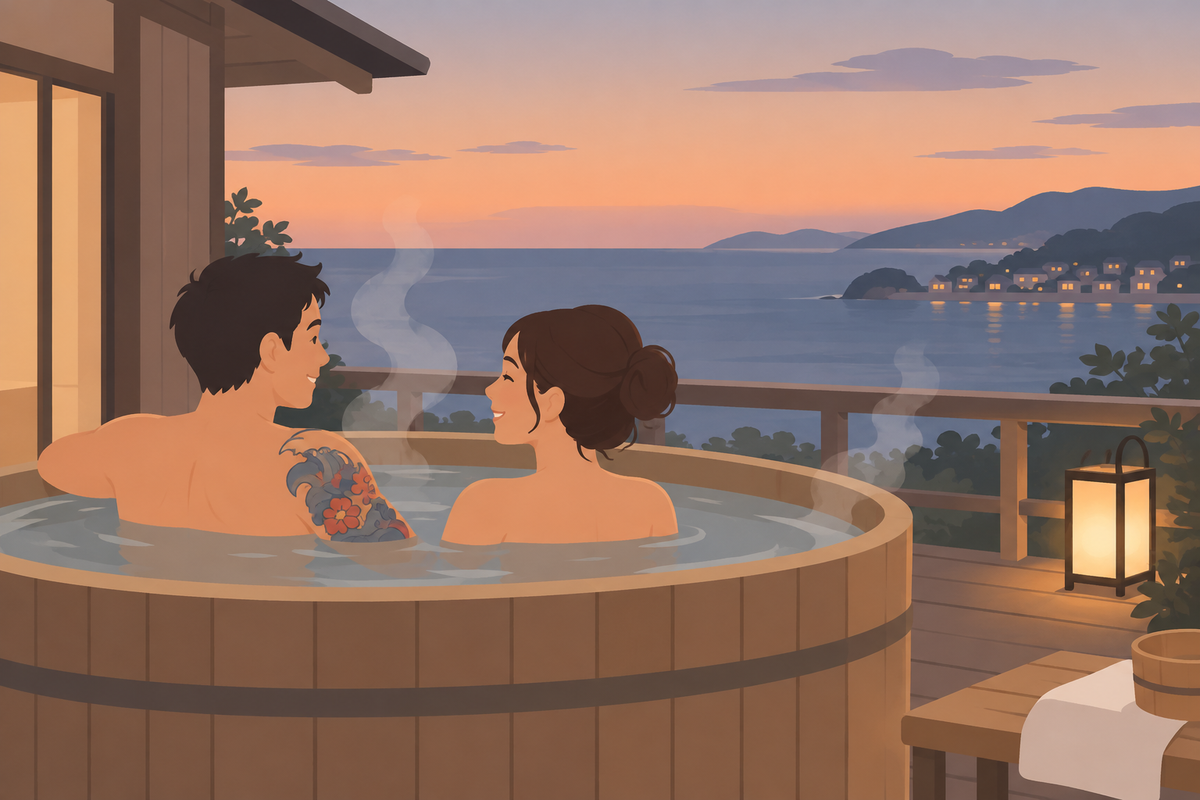
Reasons for refusal, methods to conceal with stickers, and how to check before visiting are explained in detail in the Onsen Guide for Those with Tattoos. Tips on choosing accommodations are covered in How to Choose Ryokan and Hotels in Atami.
Stay for Night and Morning
Day-use onsen (hot springs) close in the evening or at night. If you stay overnight, you can enjoy them at night and again in the morning. If onsen is your goal, it's worth spending a night in Atami.
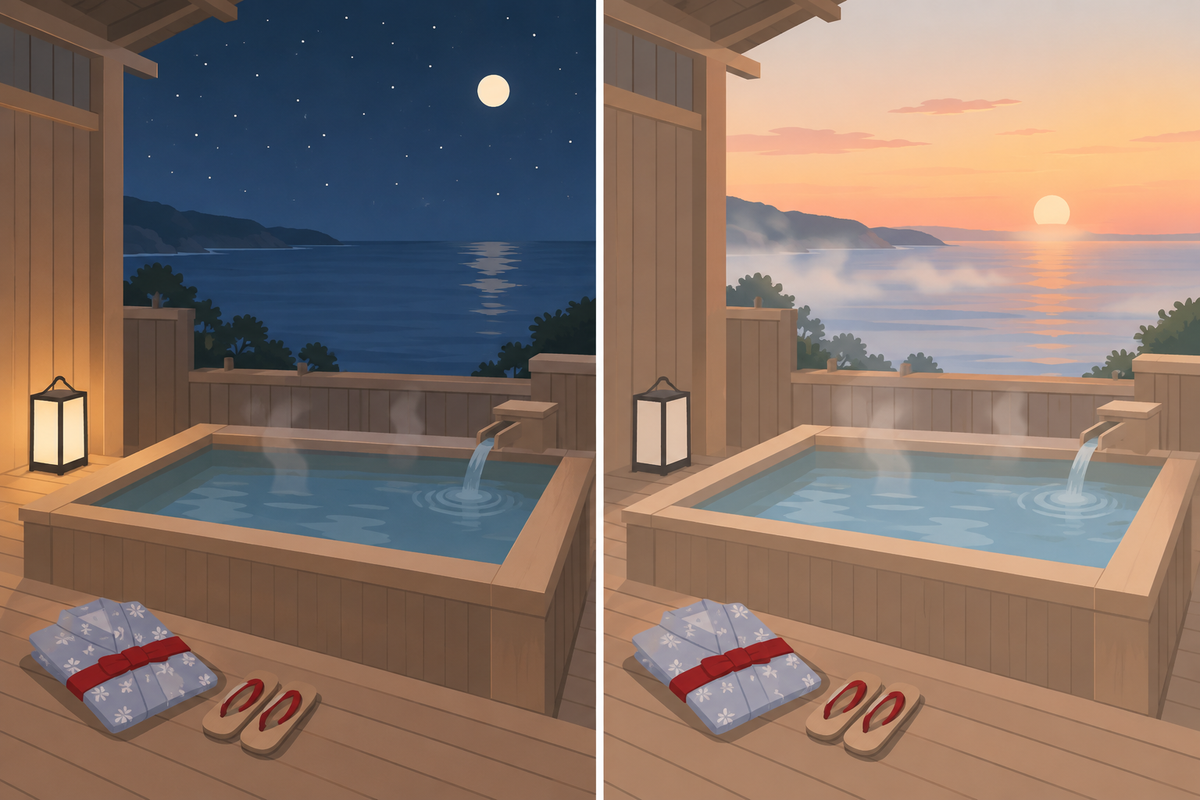
For families, groups, or those with tattoos who prefer privacy, there is the Atami Rental Villa Moon and Sun, where each villa comes with a private natural onsen (hot spring) and sauna. Since the bath and sauna are for exclusive use, those with tattoos can also enjoy them.
Frequently Asked Questions
Atami Onsen Q&A
- Why do you feel unwell after an onsen (hot spring)?
- Staying in too long or losing fluids through sweat can cause dizziness. Drink water before and after bathing, and avoid entering the bath immediately after consuming alcohol or eating.
- Are the baths separated by gender? Is there a mixed-gender bath?
- Public baths and day-use onsen (hot springs) are separated into male and female sections. If you wish to bathe together, opt for a private bath or an onsen in your room.
- Do you wash your hair first? Do you rinse your body after getting out?
- It is customary to wash your body before entering the bath. You may choose to wash your hair or not, but long hair should be tied up and not submerged in the water. After bathing, rinsing off is not necessary, but those with sensitive skin may feel more comfortable with a light rinse.
- Are children allowed?
- Public baths offer child rates, and foot baths are available for everyone. Fuua does not allow entry for children under three, so accommodations with private baths are recommended for those with young children.
- Which is better, Atami or Hakone?
- For ocean views and proximity to the station, choose Atami. For mountain and lake views, opt for Hakone. The comparison is explained in "How to Choose Ryokan and Hotels in Atami."
- Where are Japan's famous onsen (hot springs)?
- Arima (Hyogo), Kusatsu (Gunma), and Gero (Gifu) are known as the "Three Famous Hot Springs of Japan." Atami has long been a popular onsen (hot spring) destination due to its proximity to Tokyo.