Tokyo
Ueno Park Guide Highlights, Access, and Duration (Shrines, Temples, Museums)
Updated 18 November 2026By Dynamic Japan Travel editorsEditorial policy
Contents
Ueno Park is free to enter and is open from 5 AM to 11 PM. Despite being in the heart of Tokyo, its main attraction is that it gathers "quintessentially Japanese" elements in one place, such as shrines, temples, a five-story pagoda, a large Buddha, and a hall floating on a pond. Additionally, Japan's leading museums, art galleries, and even a zoo are located within the same park.
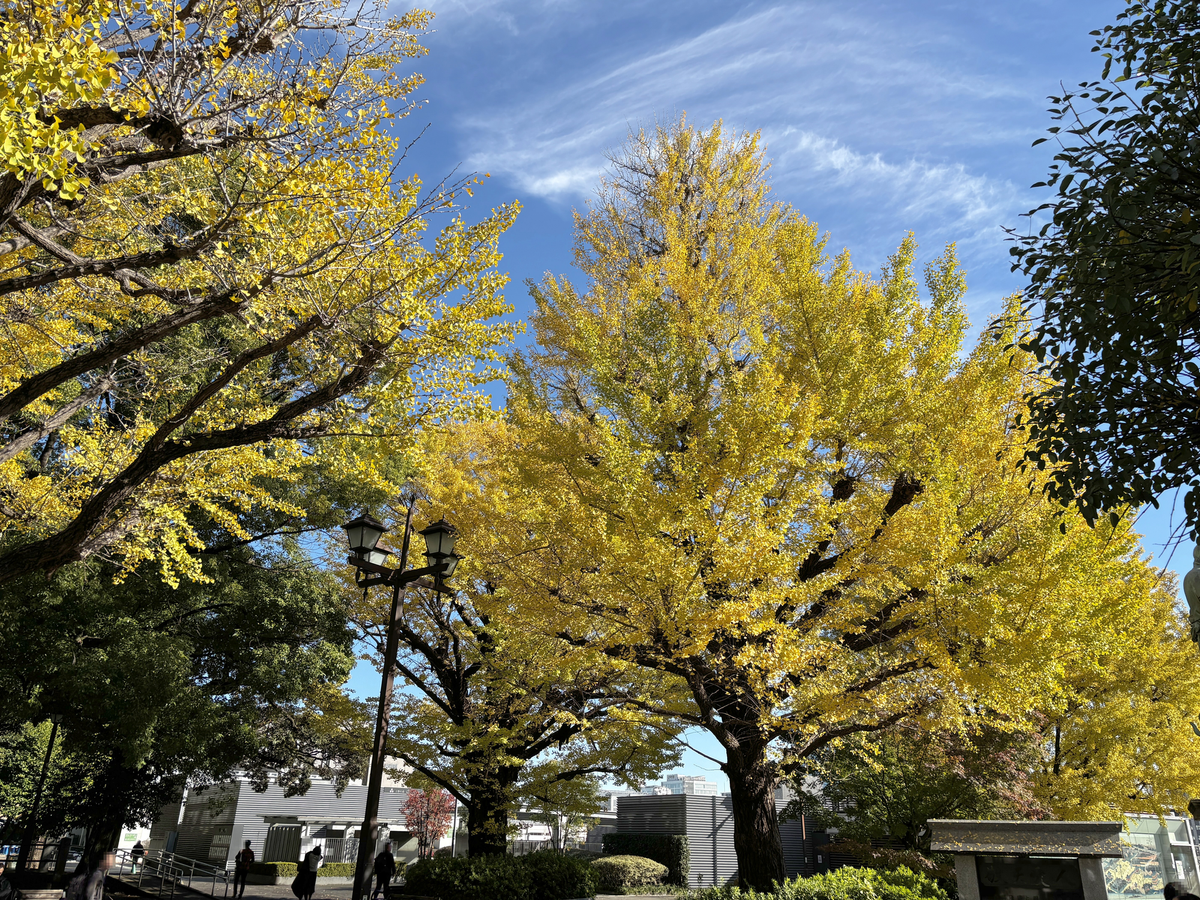
On the morning of November 18, 2026, we started our walk from Keisei Ueno Station and circled the park. The ginkgo leaves had just turned yellow, and the contrast with the blue sky was stunning. Without entering the museums, it took us about 70 minutes to walk around the highlights. In this article, we'll summarize the routes from two stations, points of interest, suggested order and timing, and fees, using photos taken during our visit.
Free admission
Walking in the park is free. No tickets or reservations are needed. Museums and zoos have separate fees.
5 AM to 11 PM
The park is closed from 11 PM to 5 AM.
Just steps from the station
Exit the Park Gate of JR Ueno Station, and the park is right in front of you. It's also just a short walk up the stairs from Keisei Ueno Station.
Walking time is about 1.5 hours.
It takes about 1.5 hours to walk around the highlights. Add more time if you plan to visit the museum.
What is Ueno Park like?
Ueno Park is one of the oldest parks in Tokyo. It was once the land of a large temple called Kan'ei-ji, so many temples and shrines remain within the park. Without traveling to Kyoto or Nara, you can see torii gates, lantern-lined paths, red halls, and a five-story pagoda all in the heart of Tokyo.
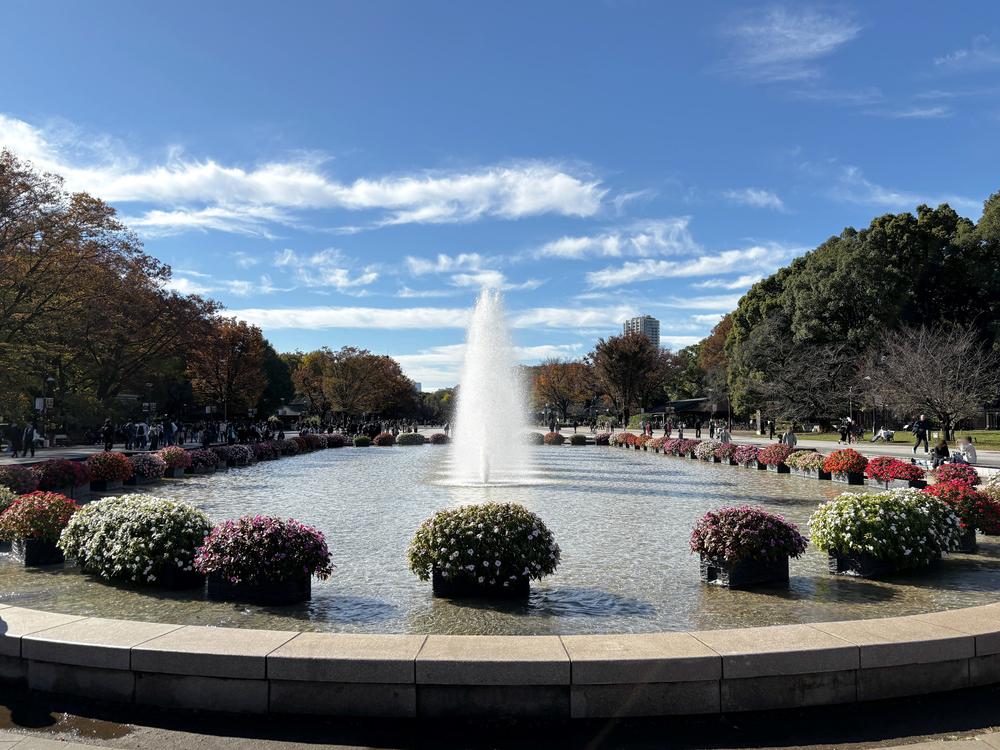
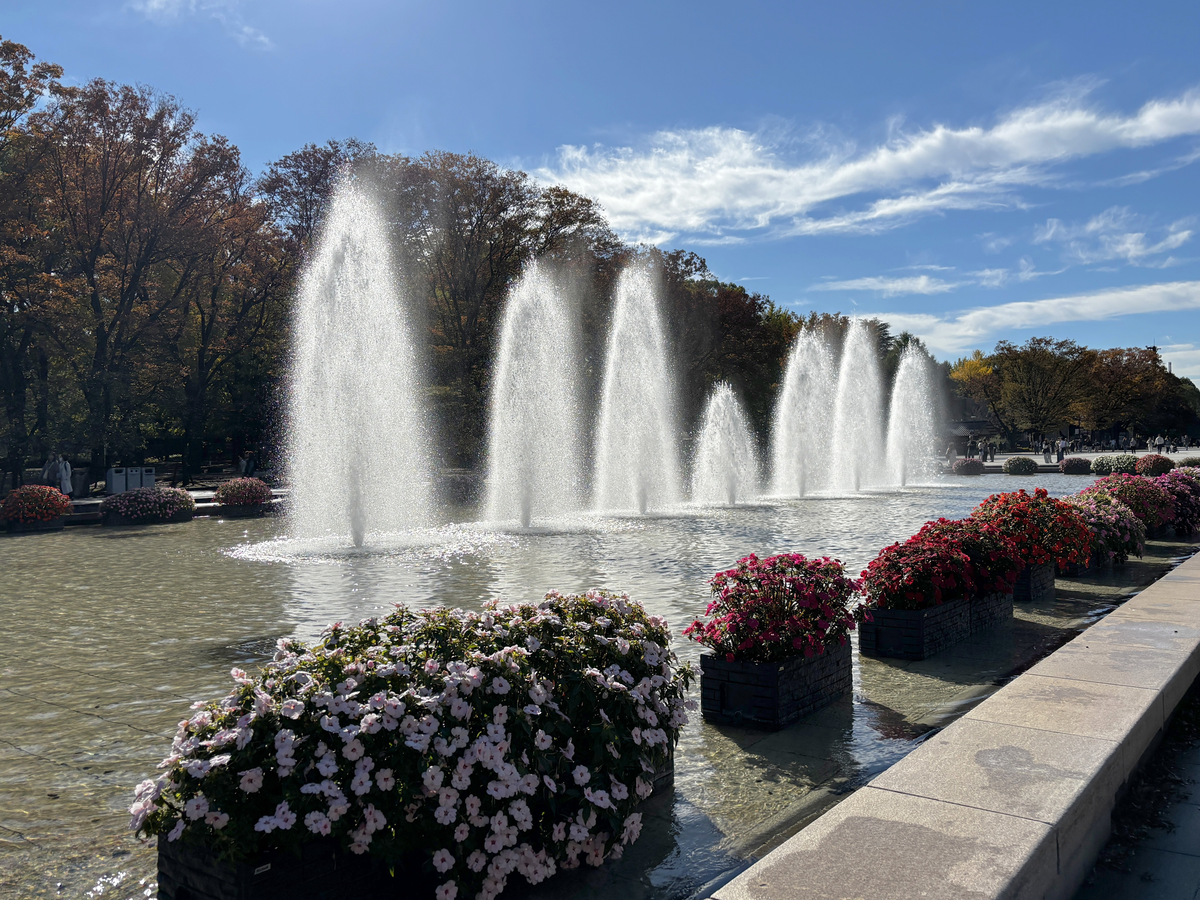
The park is very spacious, with well-maintained paths, benches, and restrooms scattered throughout. The central fountain plaza is adorned with flower pots, all neatly tended.
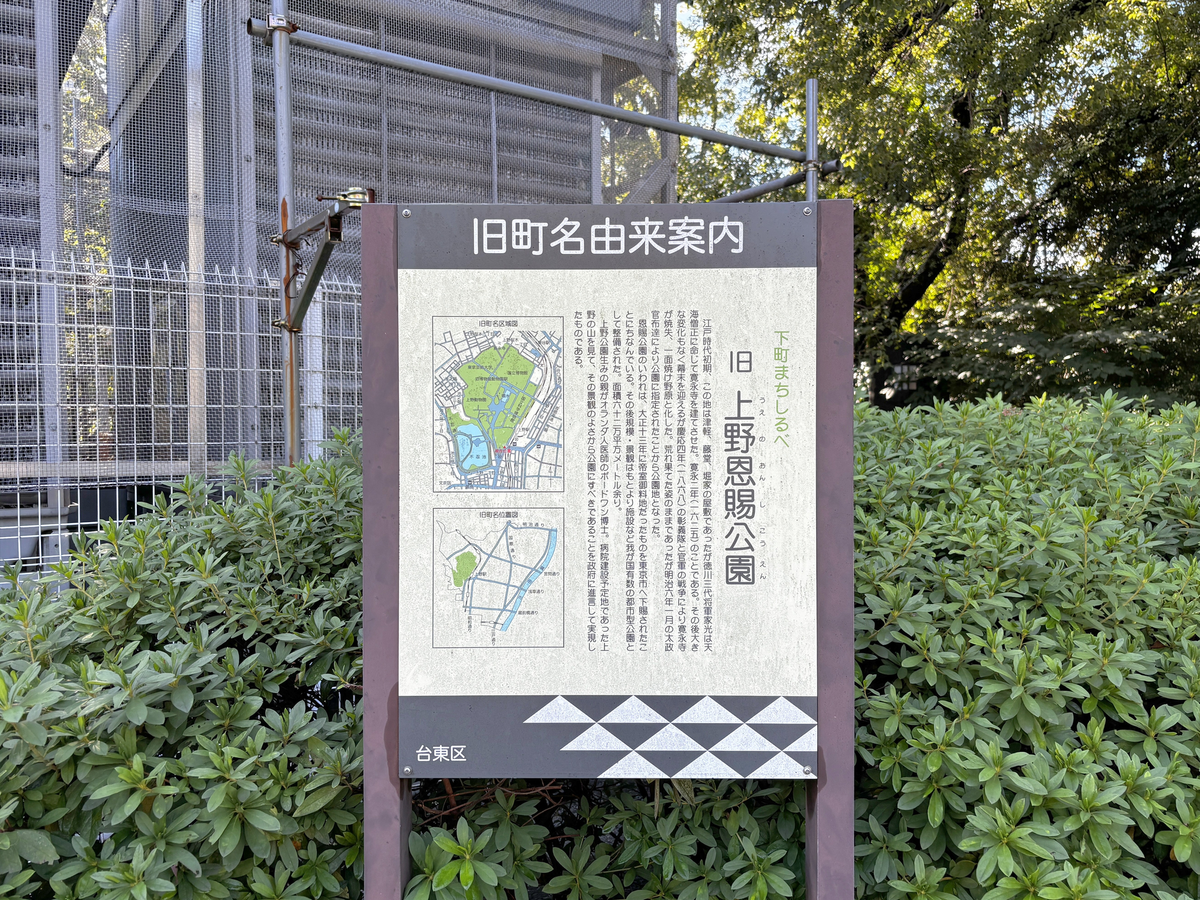
What was helpful while walking was the abundance of informational boards in the park, many of which are in English. They provide details about the origins of place names, the history of buildings, and shrine rules, making it enjoyable to read as you stroll.
Directions to Ueno Park (JR Ueno Station, Keisei Ueno Station)
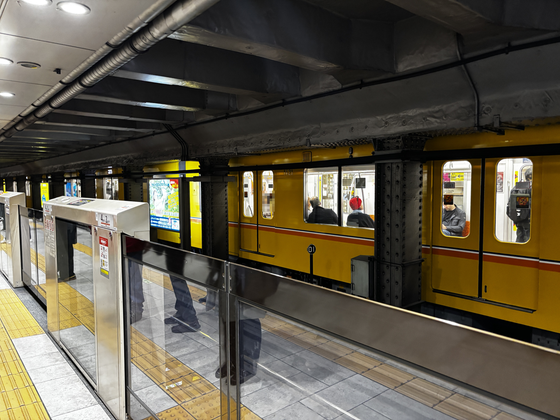
To reach Ueno Park, the paths from JR Ueno Station and Keisei Ueno Station are commonly used. Both stations are right next to the park. The park has slopes and stairs. From August 2026, suitcases are no longer allowed in the Tokyo National Museum. Large luggage should be stored in coin lockers beforehand. Coin lockers are also available within the park. For example, inside Ueno Zoo, the largest lockers cost 500 yen per use (for zoo visitors). The locations of station coin lockers are explained in the Ueno Station Guide. If taking the subway, you can walk from Ueno Station on the Tokyo Metro Ginza Line or Hibiya Line. Instructions on using the subway are provided in How to Use the Tokyo Subway.
From JR Ueno Station (Park Exit)
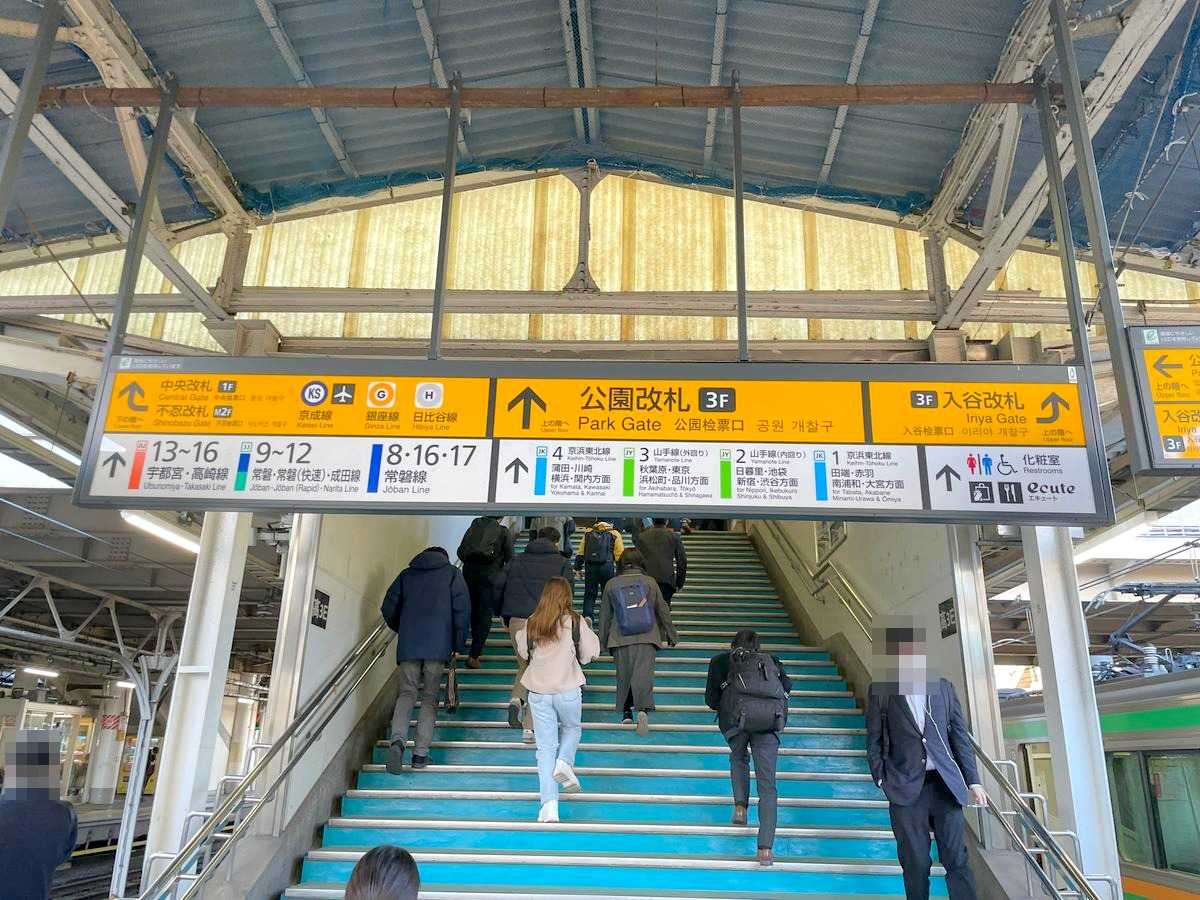
After getting off the JR train, look for the "Park Gate" on the platform sign and take the stairs or escalator to the upper floor. Once you exit the Park Gate, you can enter the park without crossing any roads or using stairs. This gate is the closest to the museum, art gallery, and zoo.
Exit the park gate and head straight; you'll find the National Museum of Western Art on the right and the Tokyo Bunka Kaikan (music hall, closed for renovations as of November 2026) on the left. Beyond that is the fountain plaza.
From Keisei Ueno Station (via Skyliner from Narita Airport)
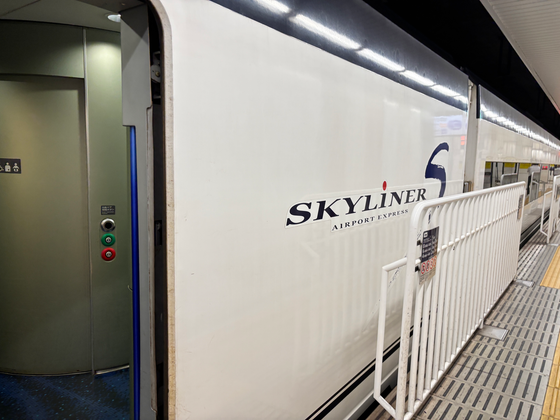
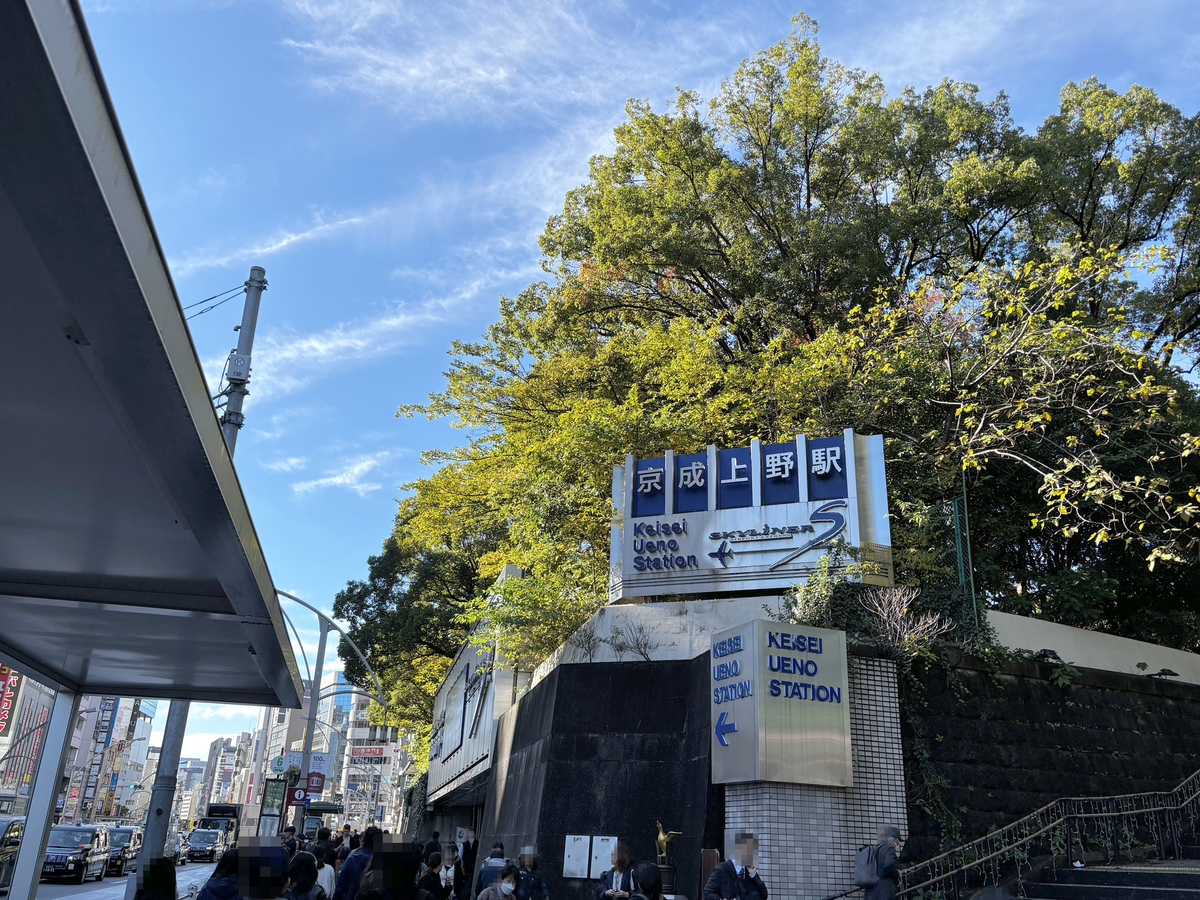
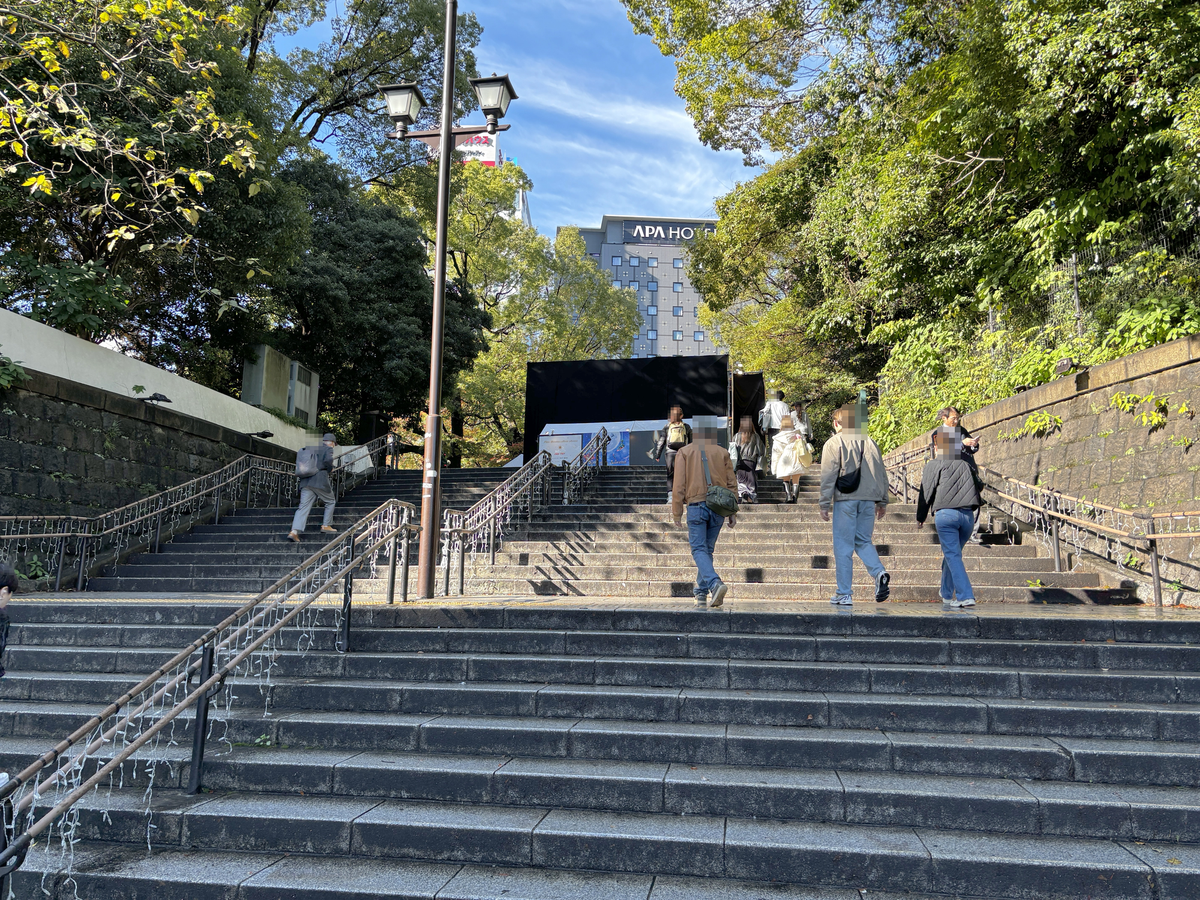
Those arriving from Narita Airport via the Skyliner will reach Keisei Ueno Station. We also took this route. Upon exiting the ticket gate and ascending to the ground level, there are stone steps leading up to the park right next to the station exit. For instructions on how to ride, please refer to the Skyliner article.
Highlights of Ueno Park
Starting from the top of the stairs at Keisei Ueno Station, we'll introduce the route we walked. Walk north along the east side of the park to the museum, then return via the west side passing Toshogu Shrine and the Great Buddha to Shinobazu Pond, allowing you to complete the loop without retracing your steps.
Statue of Saigo Takamori
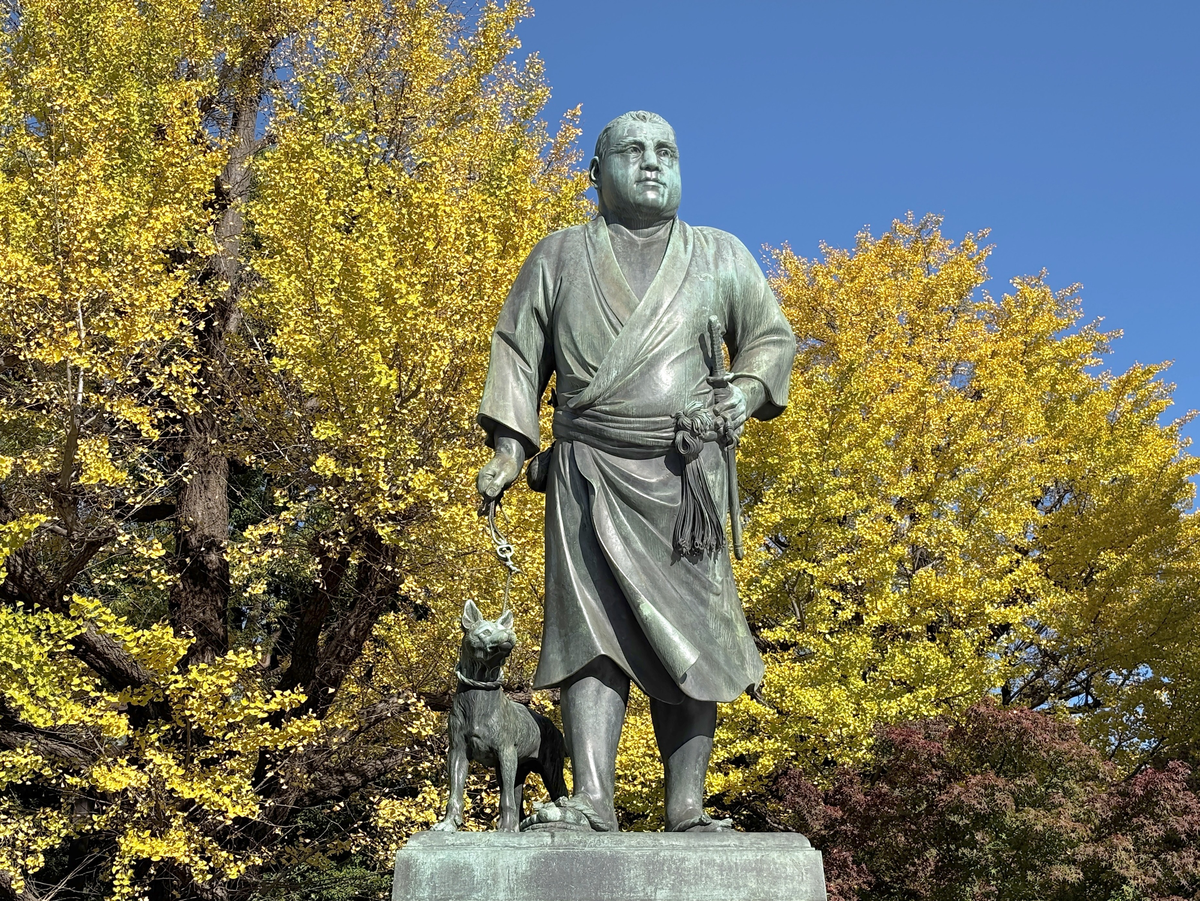
At the top of the stairs, there's a statue of a man with a dog. This is Saigo Takamori, who played a significant role around 150 years ago when the samurai era ended and Japan transformed into a new nation during the Meiji Restoration. It's a symbol of Ueno Park and is often used as a meeting spot. On the day we visited, the ginkgo trees behind were a vibrant yellow, complementing the statue's green color beautifully.
Kiyomizu Kannon-do and the Pine of the Moon
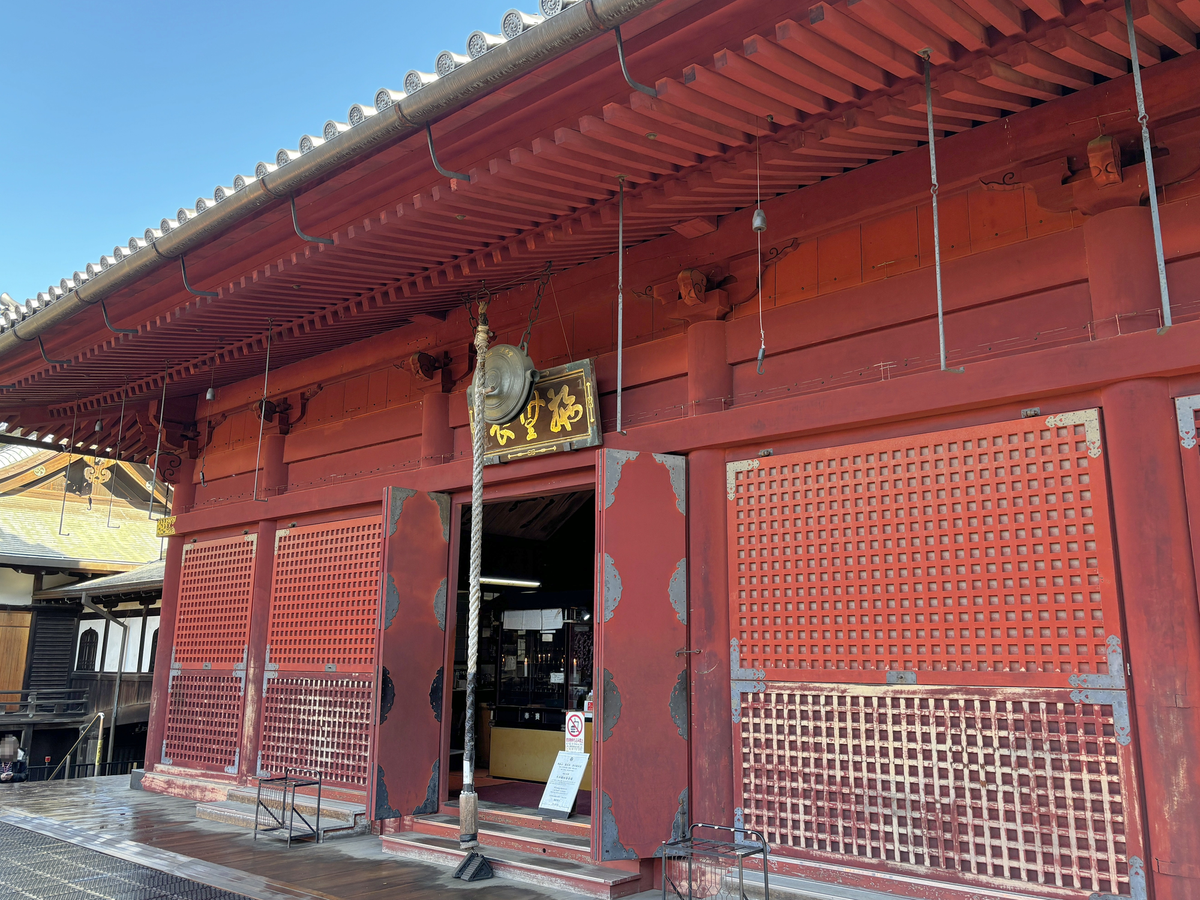
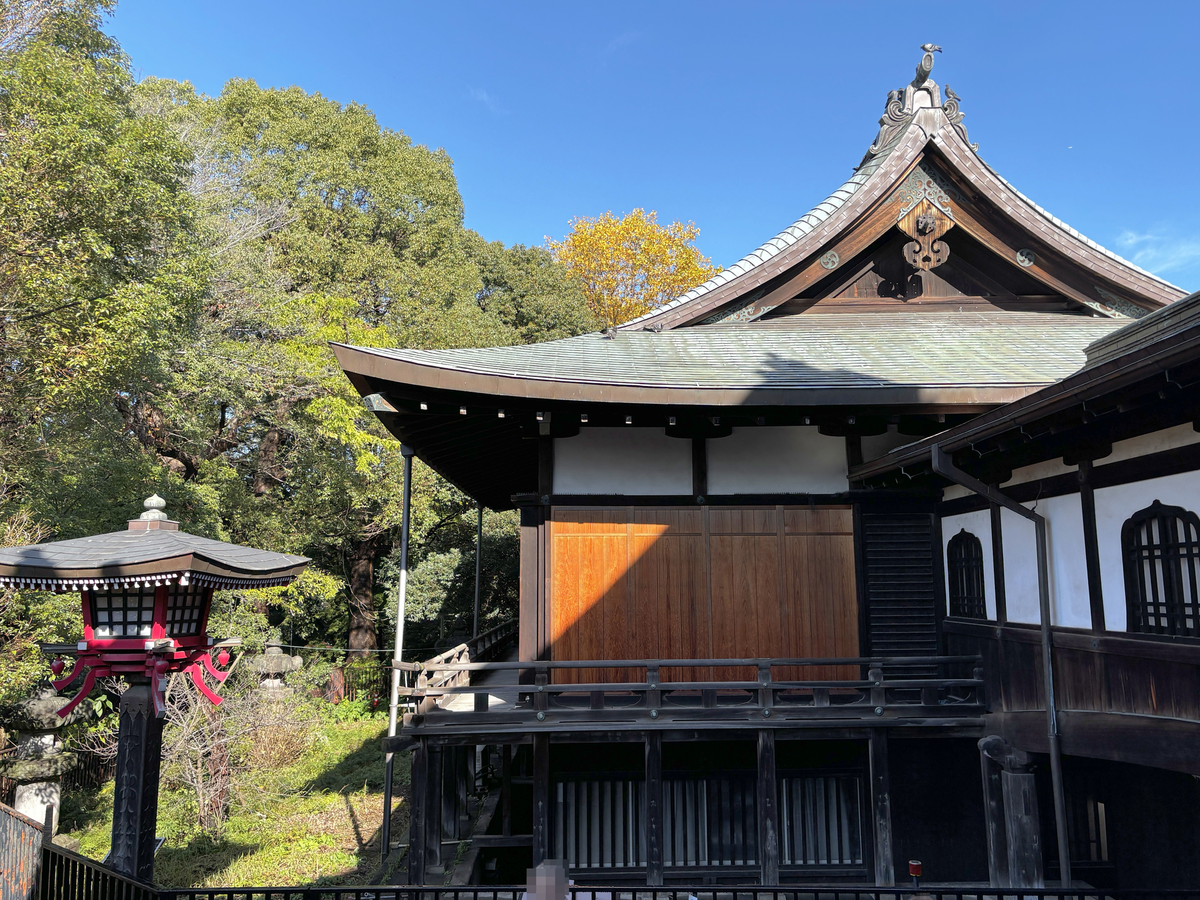
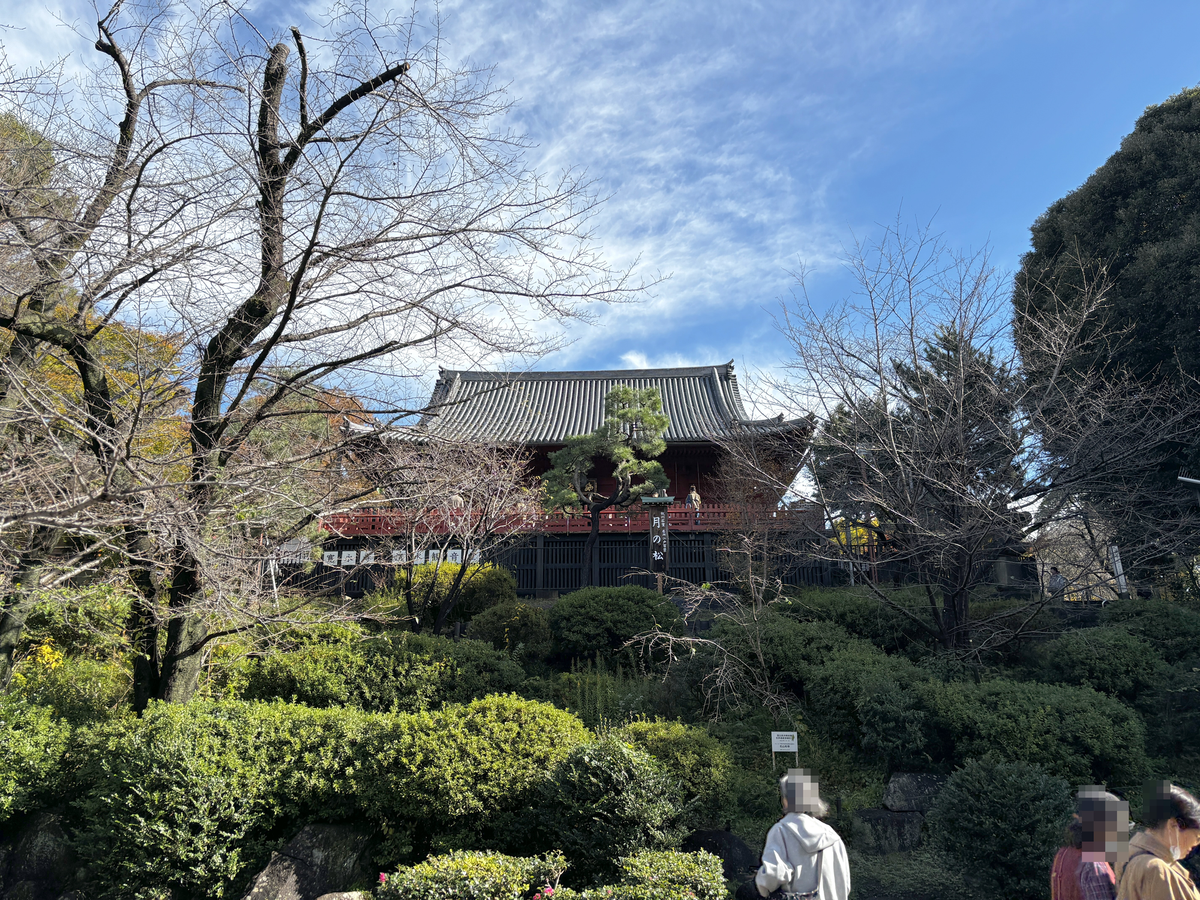
Walking a bit north from the statue of Saigo Takamori, you'll find a red temple building (hall). This is Kiyomizu Kannon-do. It was built to resemble the famous Kiyomizu-dera in Kyoto, with a stage jutting out over the cliff, just like in Kyoto.
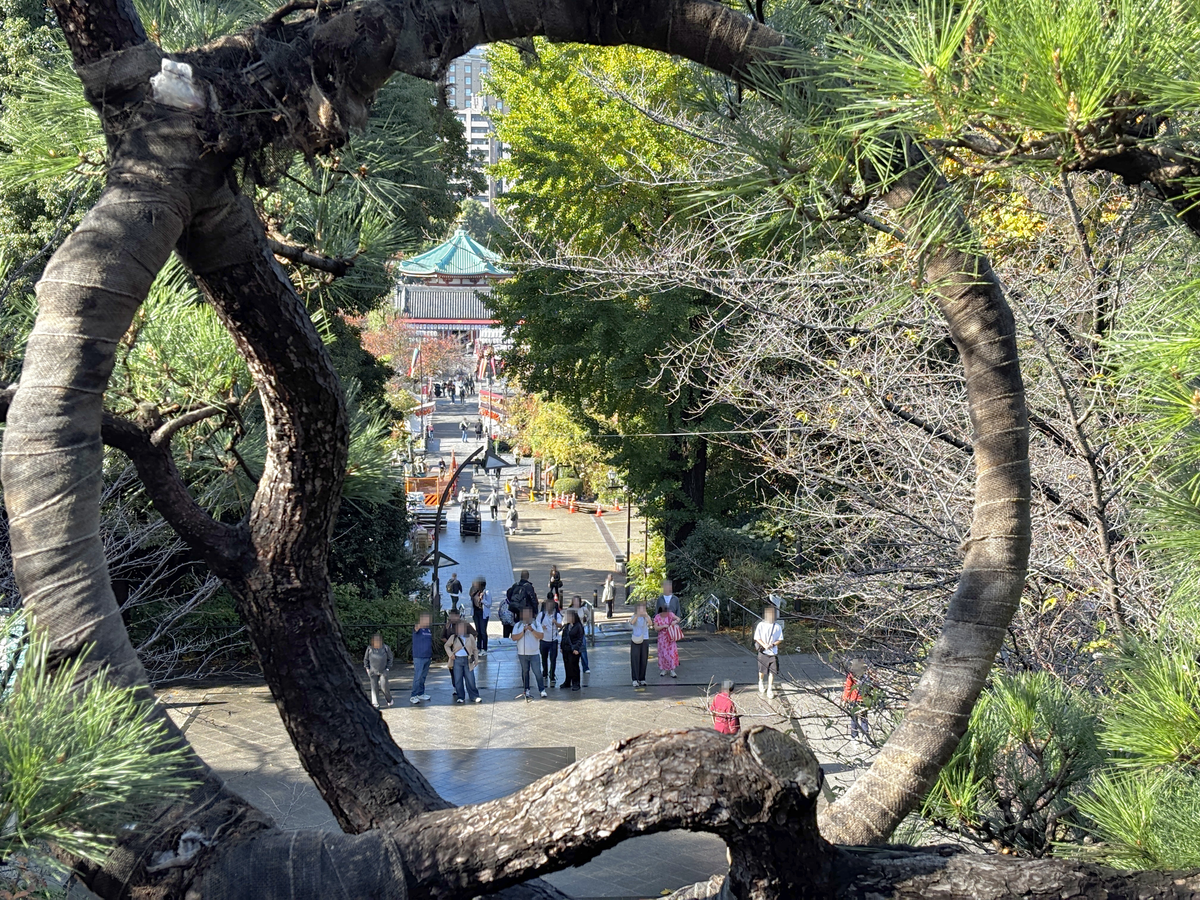
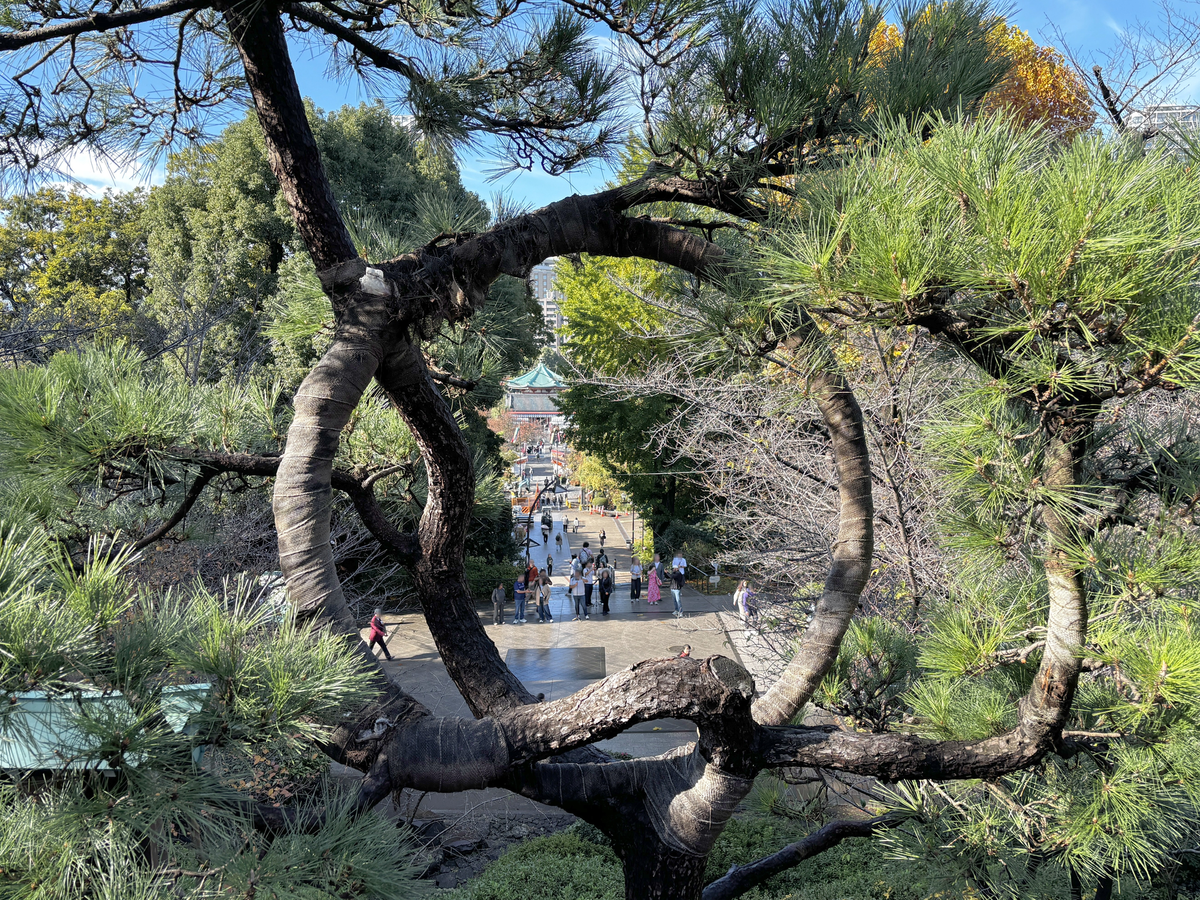
In front of the hall, there's a "Moon Pine" with branches forming a circular shape. Looking through the circle, you can see the Bentendo of Shinobazu Pond far below. I took several photos trying to capture Bentendo perfectly within the circle.
Fountain Plaza and Cafe
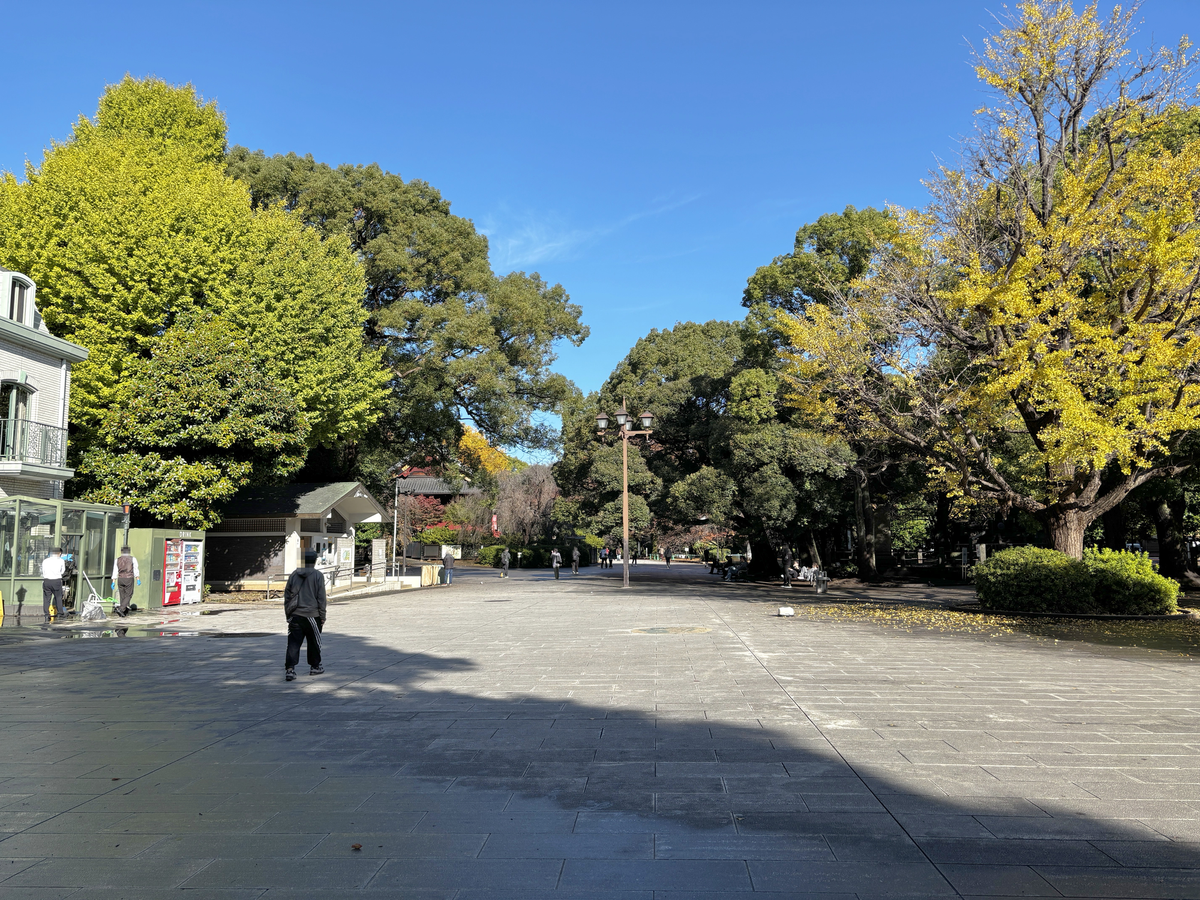
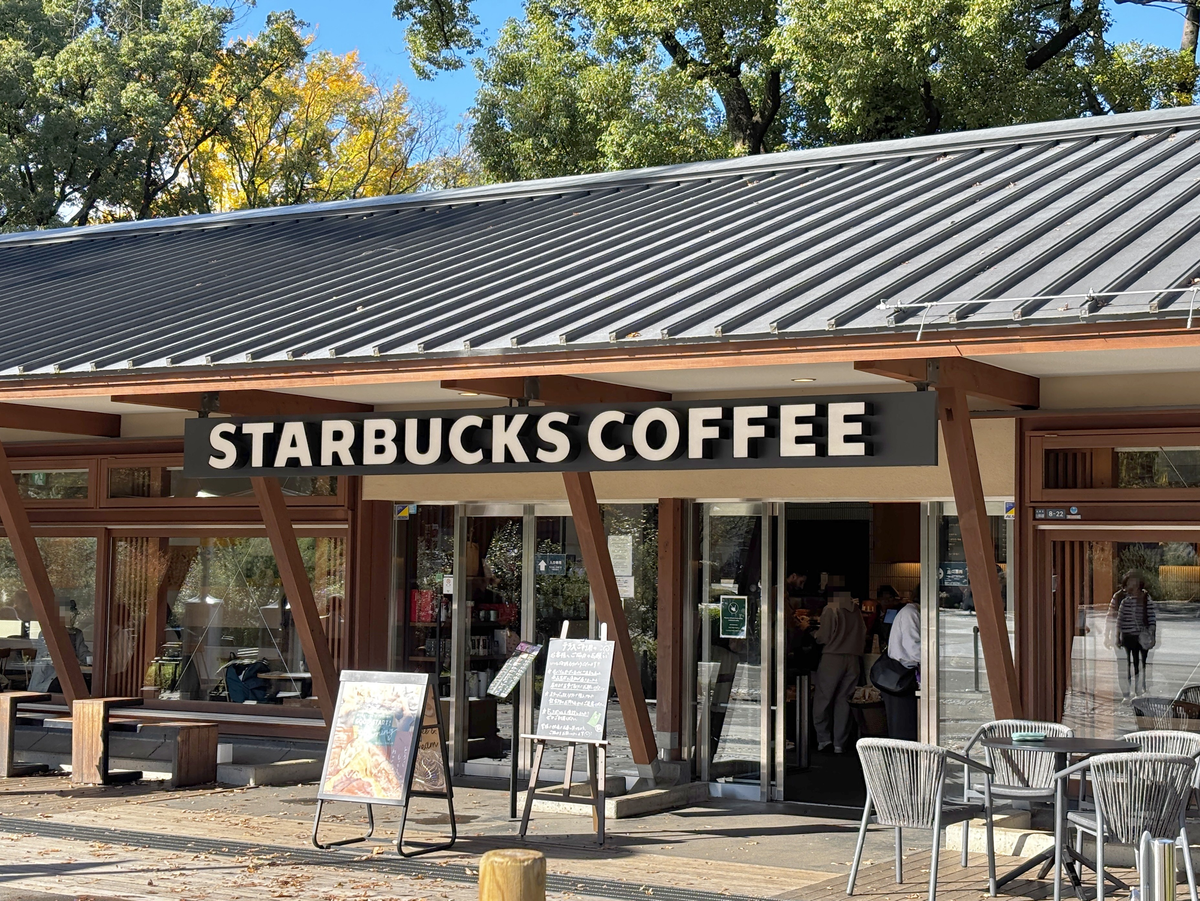
In the center of the park is a large fountain plaza (as seen in the top photo of this article). Flower pots line the edge of the pond, and several fountains shoot water in a row. Benches are available nearby, making it a perfect spot to rest if you're tired from walking. There's also a Starbucks nearby, along with restrooms.
Museums and Art Galleries
Another attraction of Ueno Park is the abundance of museums and art galleries. From Japanese art and European paintings to dinosaurs and science, there's a wide variety to choose from. Even on rainy days, you can pick one that suits your interests.
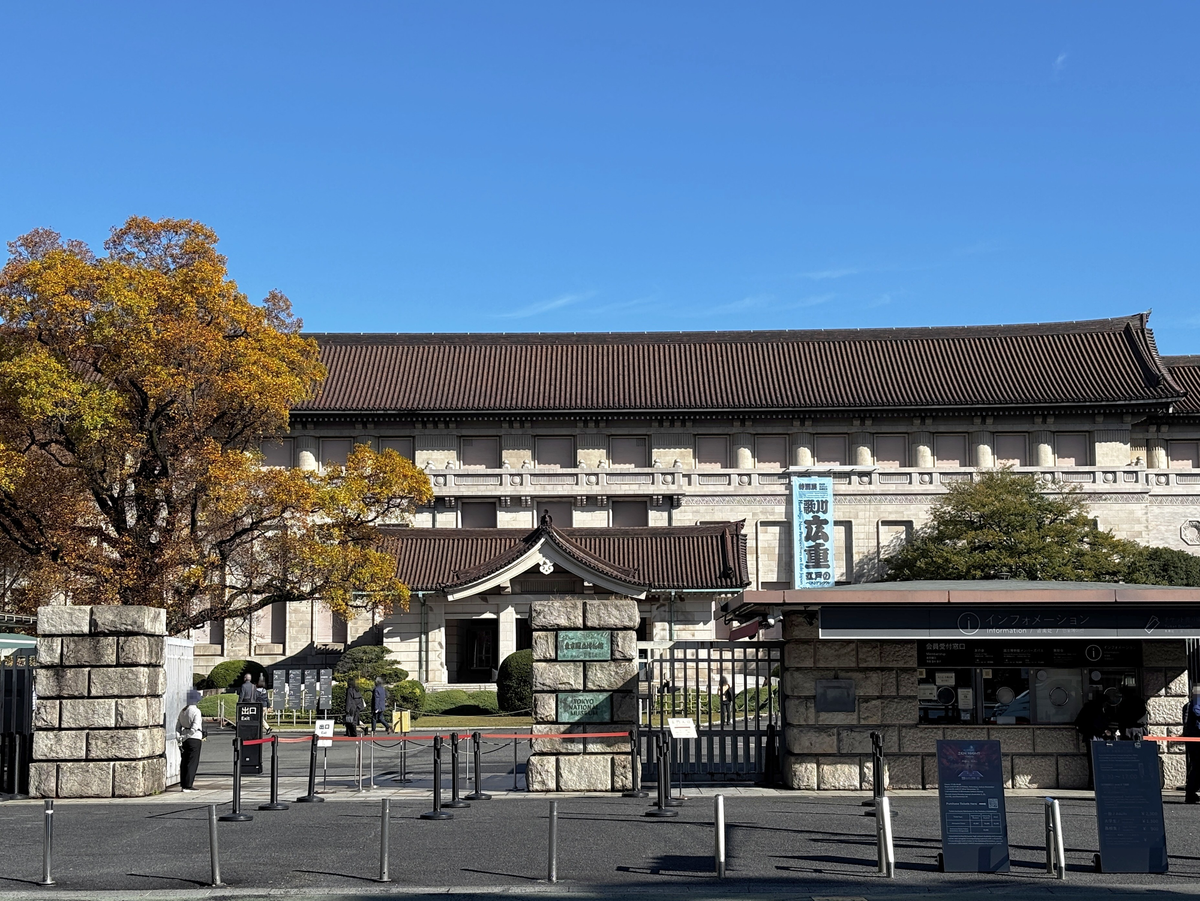
- Tokyo National Museum
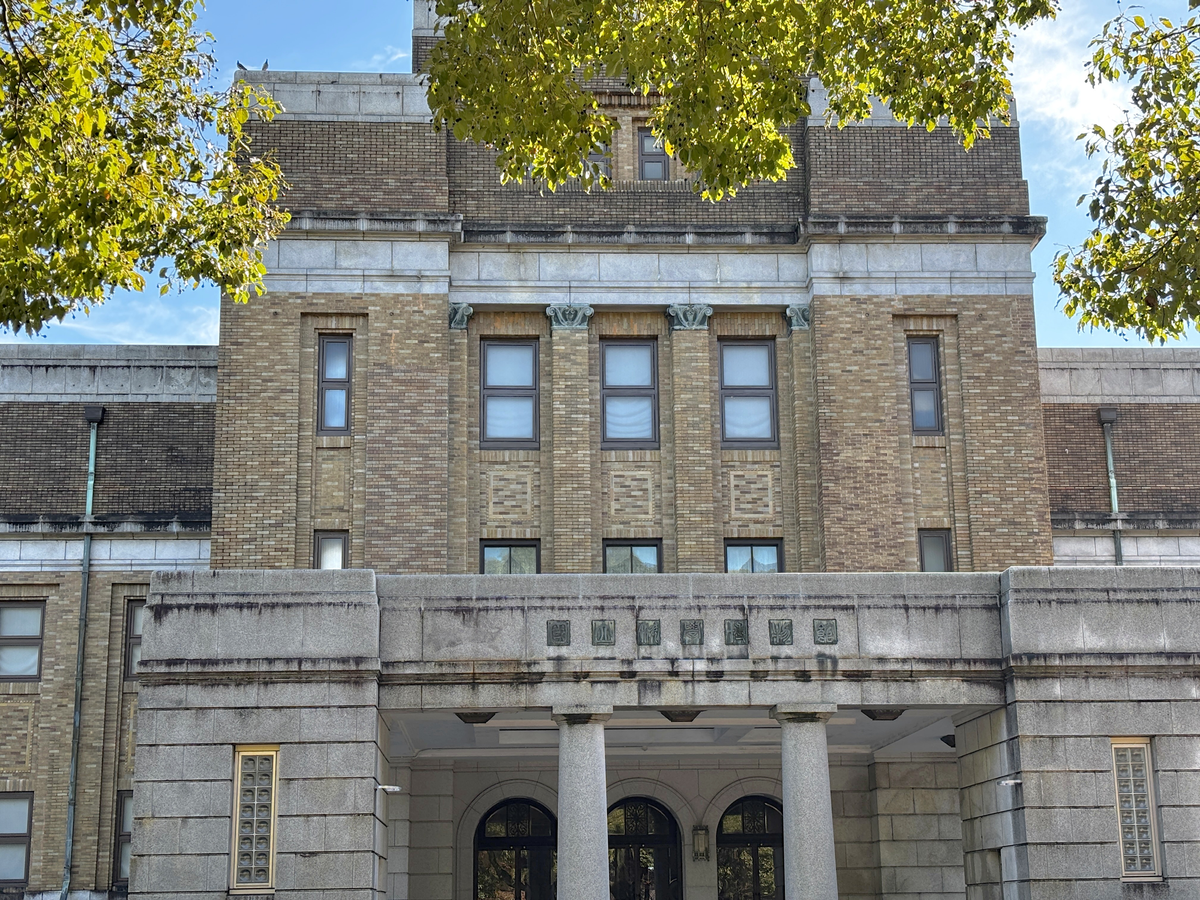
- The oldest museum in Japan. It offers a comprehensive view of Japanese art, including swords, armor, kimonos, and Buddhist statues. Located at the north side of the fountain plaza. Official website (English)・Google Maps
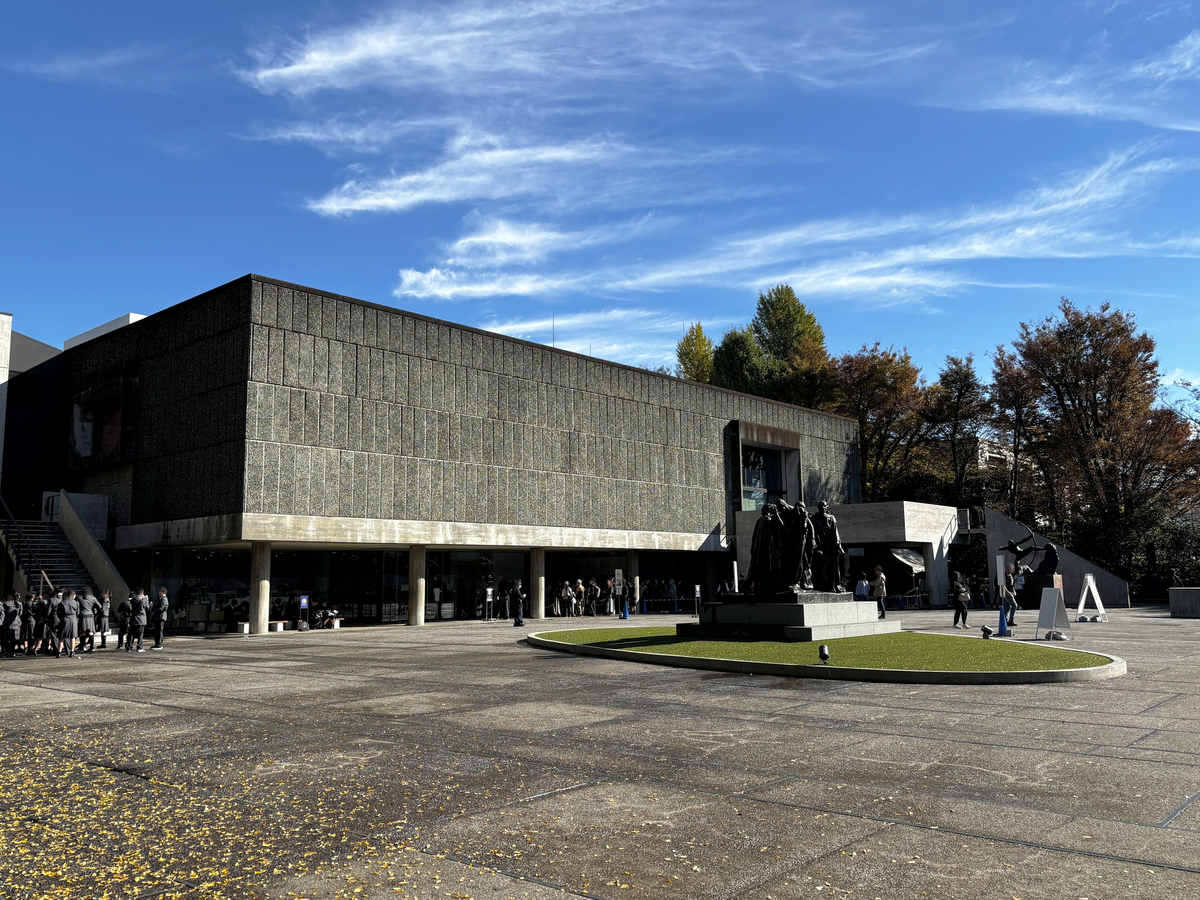
- National Museum of Western Art
- A museum of European paintings and sculptures. The building is a UNESCO World Heritage site. The front yard features sculptures by Rodin. Official website (English)・Google Maps
- National Museum of Nature and Science
- A museum with dinosaur skeletons and exhibits on Japanese nature and science. Enjoyable for children too. Official website (English)・Google Maps
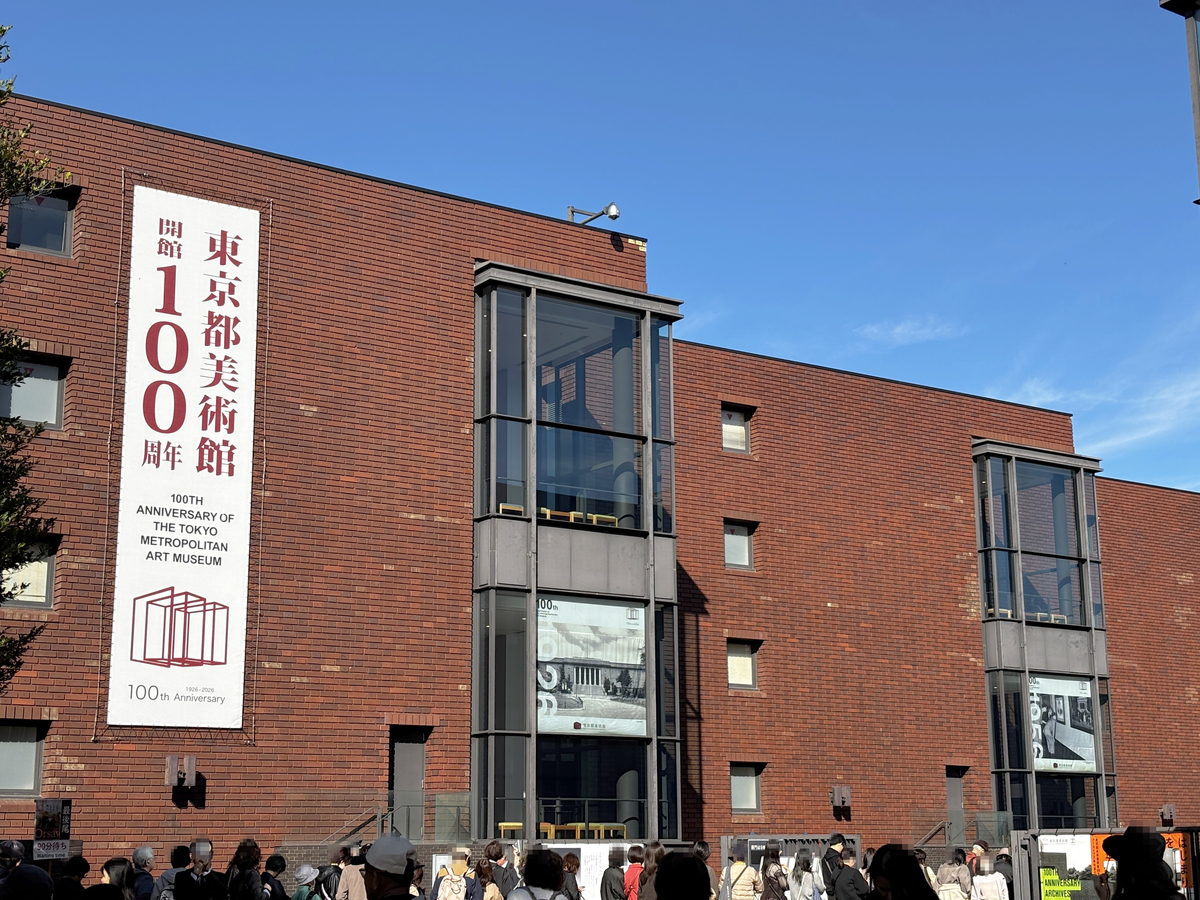
- Tokyo Metropolitan Art Museum
- Opened in 1926, it was Japan's first public art museum and celebrated its 100th anniversary in 2026. Official website (English)・Google Maps
Additionally, there's the Ueno Royal Museum and the Tokyo Bunka Kaikan concert hall (closed for renovation as of November 2026).
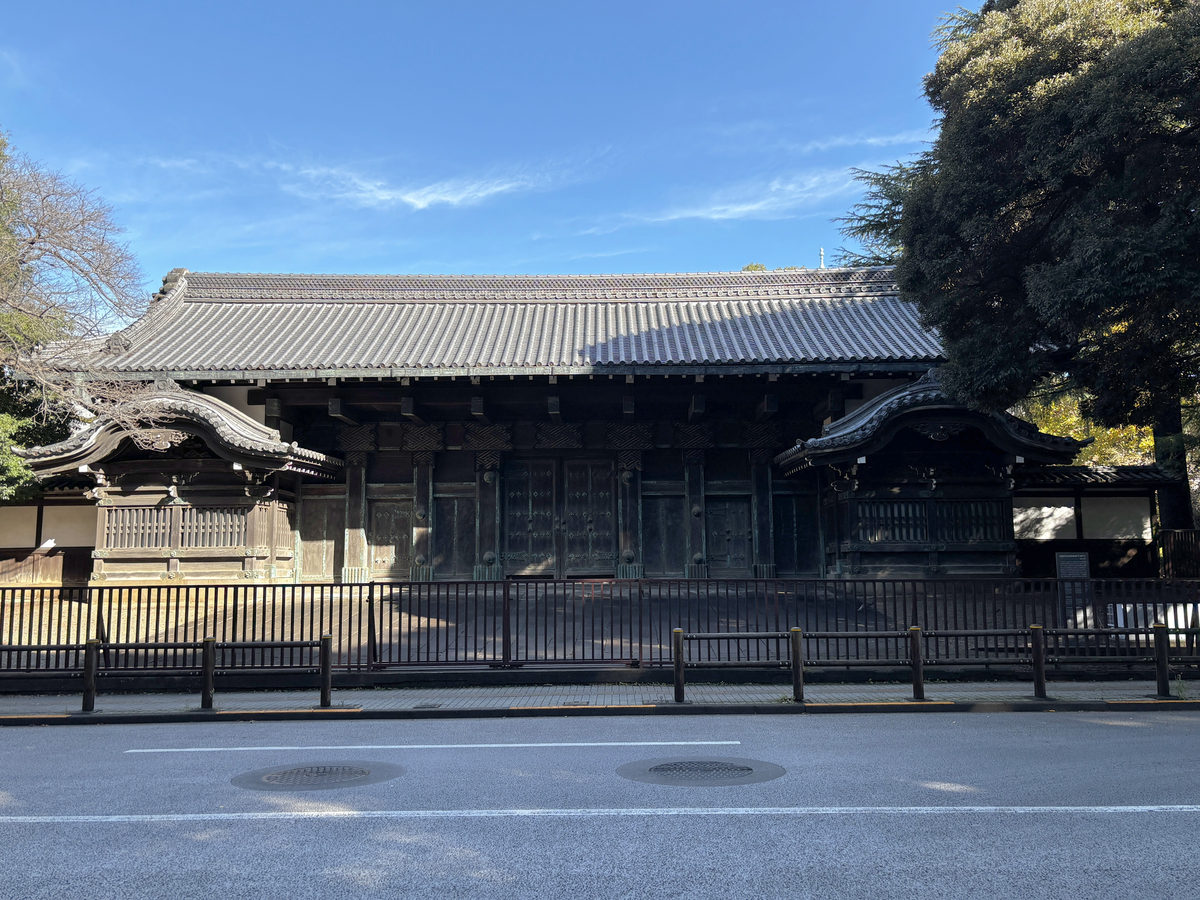
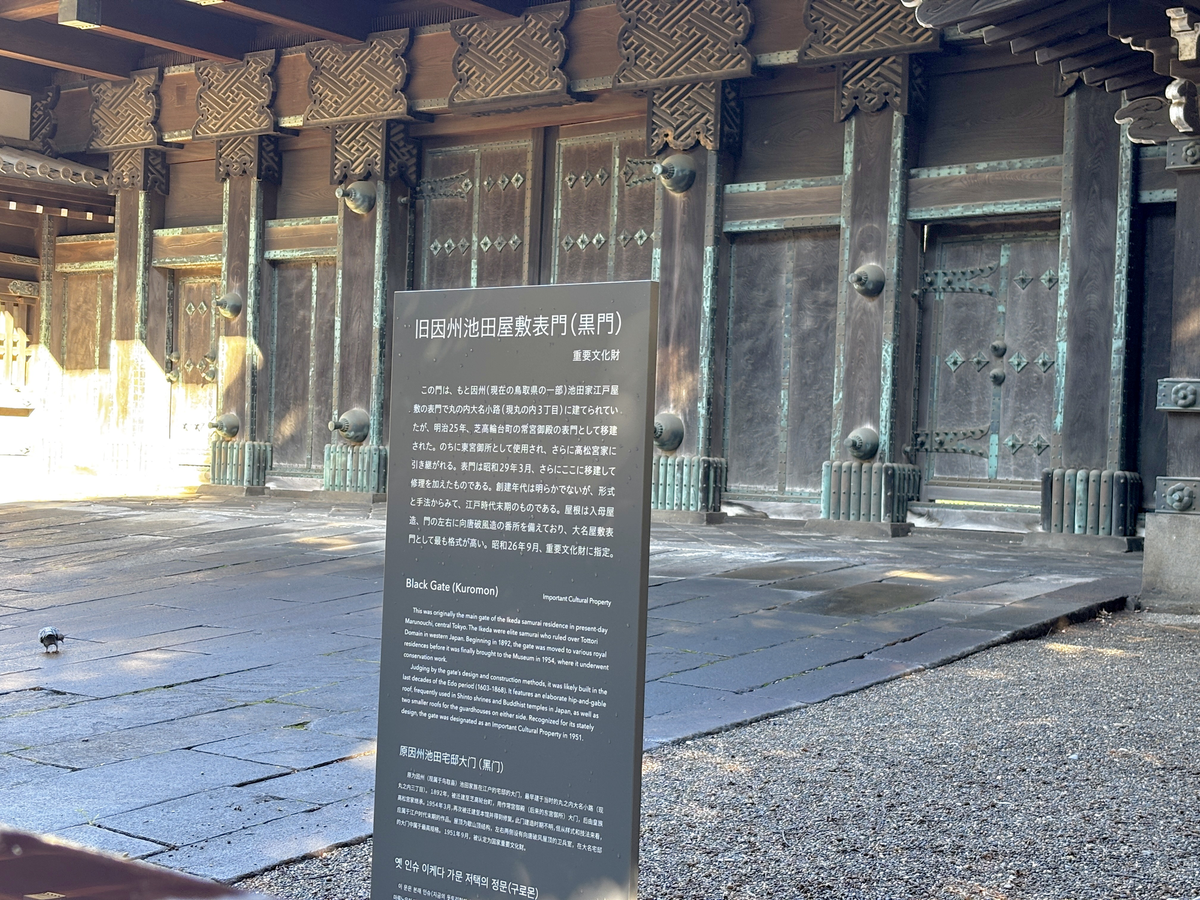
At the western edge of the Tokyo National Museum grounds stands a large black gate known as the "Kuro-mon." This gate, originally from a daimyo's residence during the Edo period (1603–1868), is a nationally designated Important Cultural Property. There are explanatory plaques in Japanese and English in front of it.
For rates and days off, please see "Rates and Opening Hours" below.
Ueno Zoo
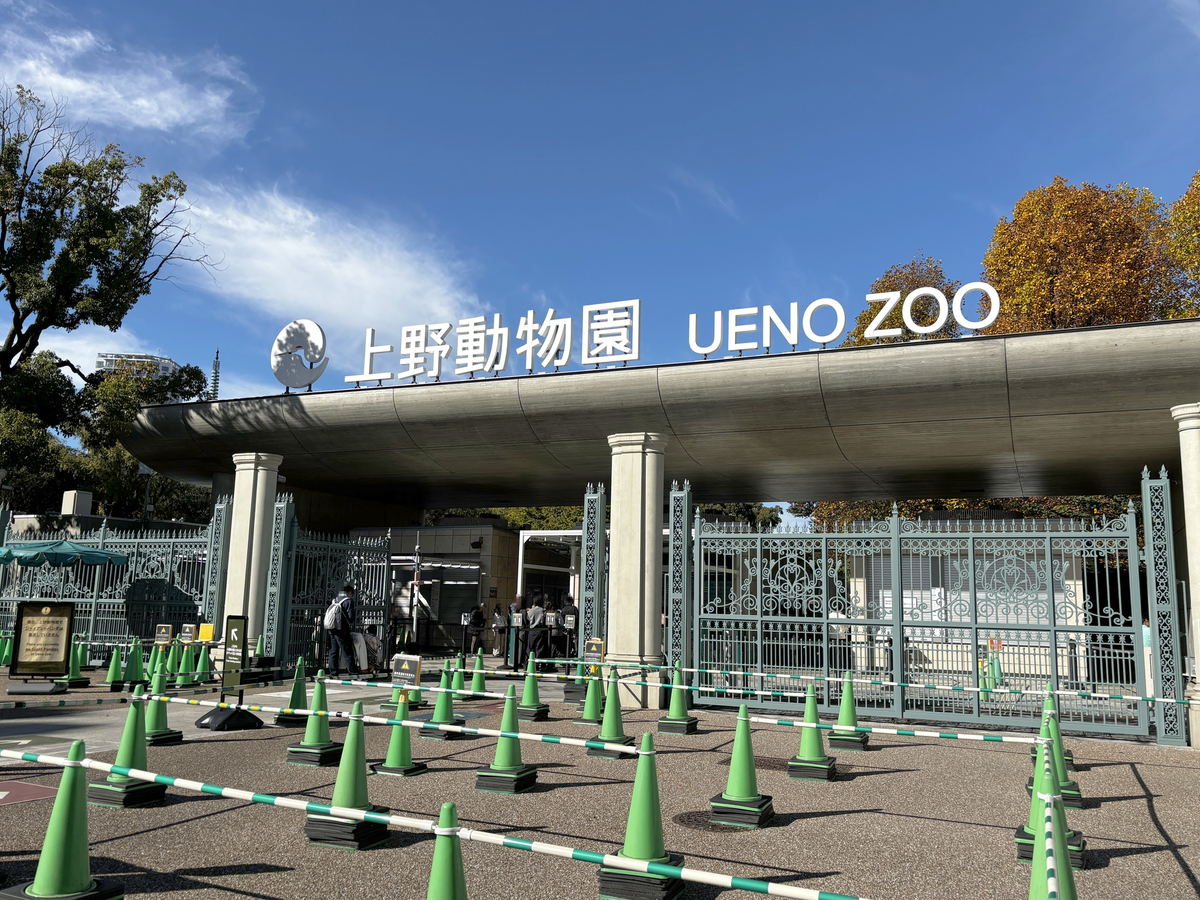
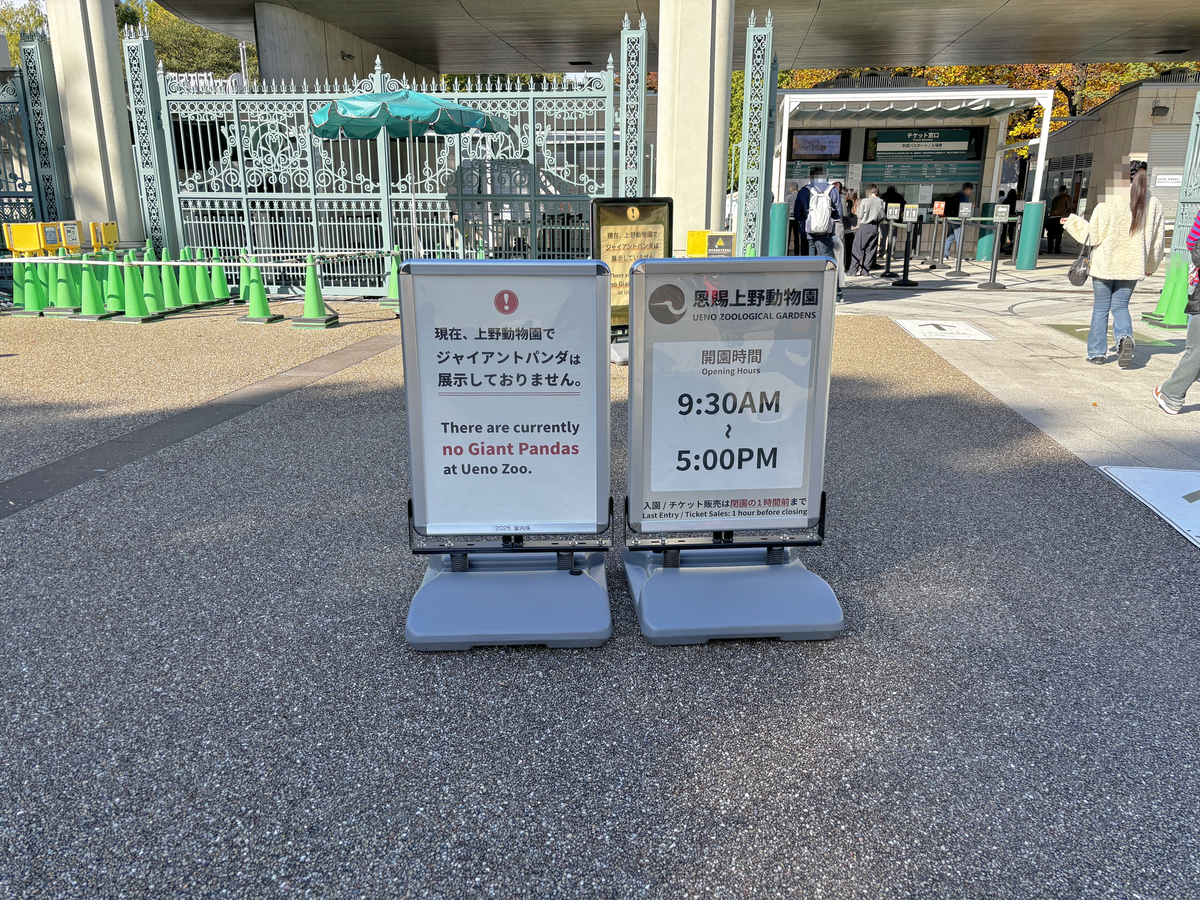
This is the oldest zoo in Japan. The entrance fee for adults is 600 yen. Ueno Zoo was famous for its pandas, but the two pandas returned to China in January 2026, so there are no pandas now. At the entrance, there was a notice in Japanese and English stating "There are no pandas now."
Ueno Toshogu Shrine and Five-Story Pagoda
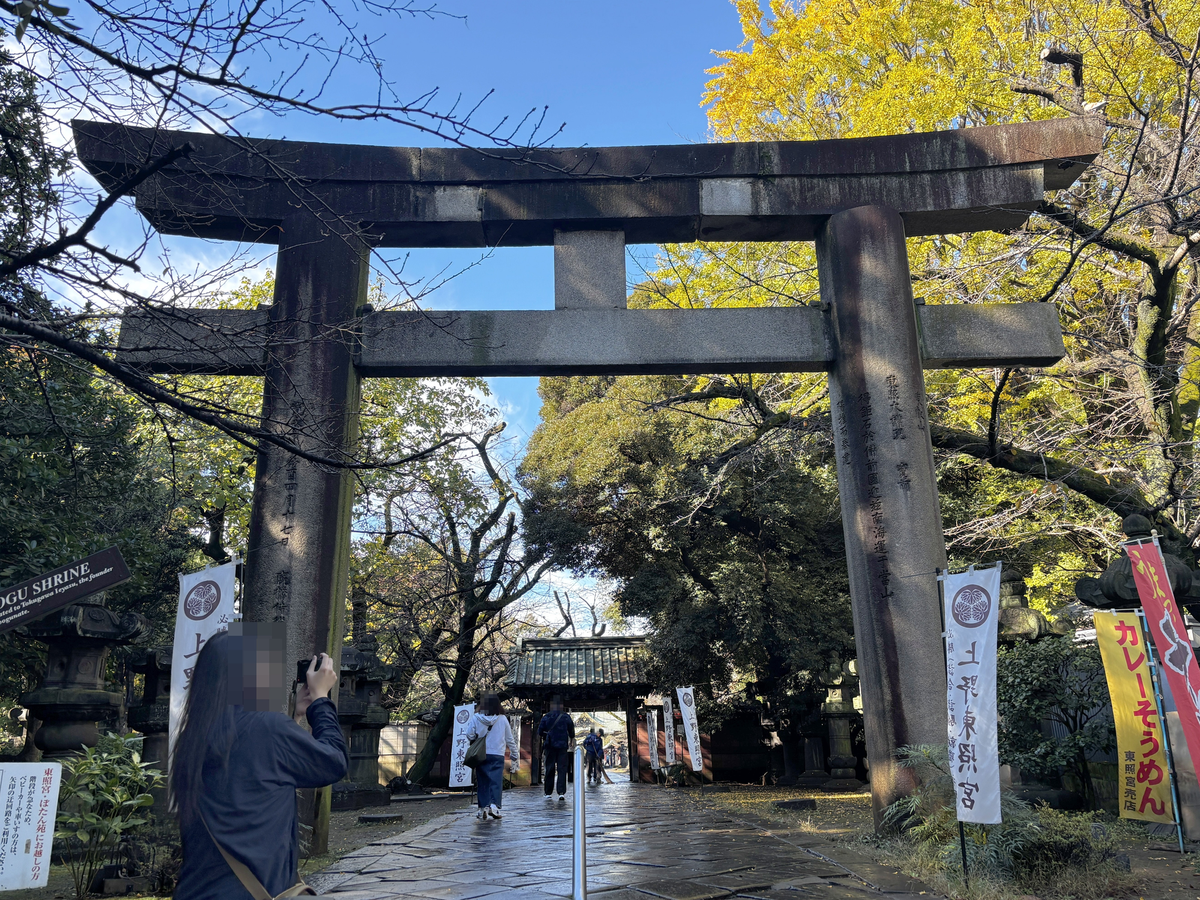
Near the entrance of the zoo, pass through a large stone torii gate and proceed inward to find Ueno Toshogu Shrine. This shrine honors Tokugawa Ieyasu, the shogun who began a new political era in Edo (now Tokyo) about 400 years ago, as a deity. It is Japanese etiquette to bow slightly before passing through the torii gate.
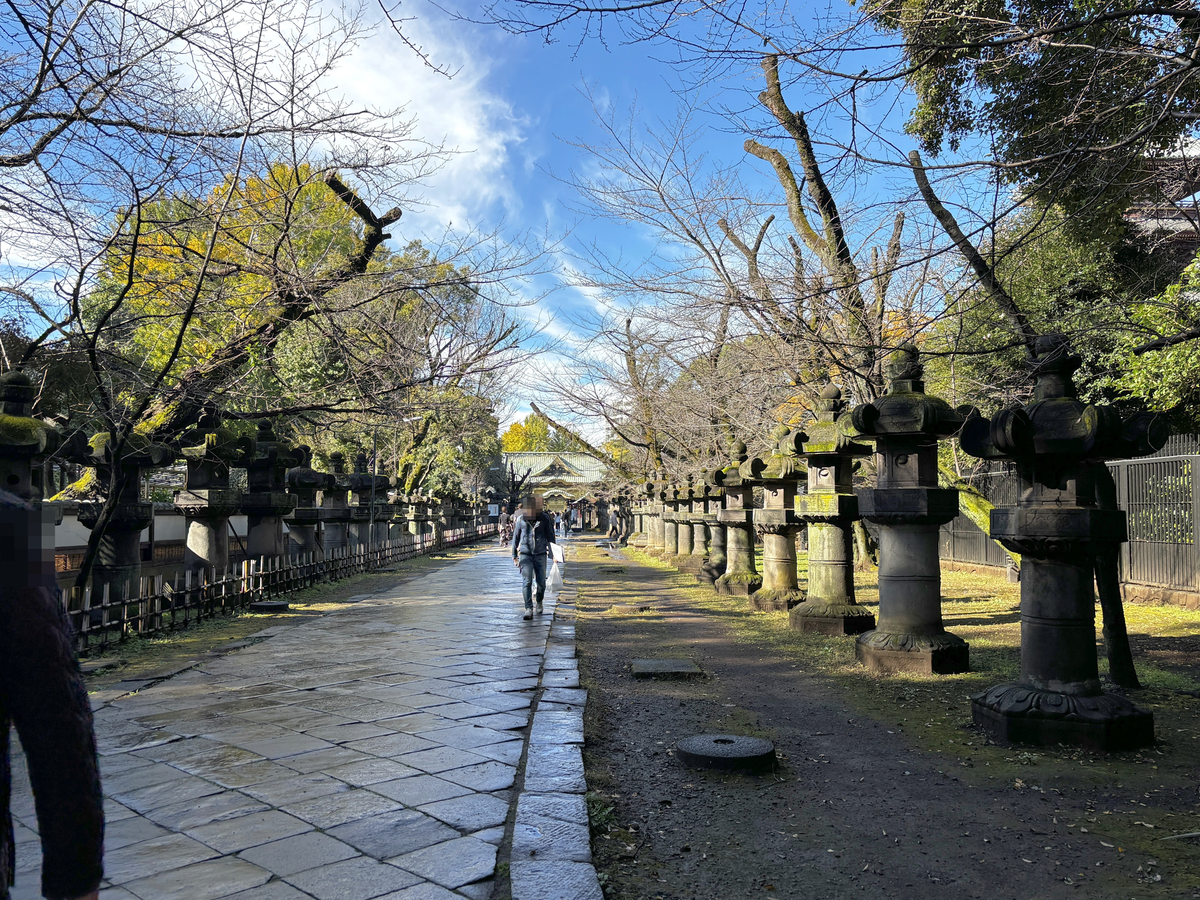
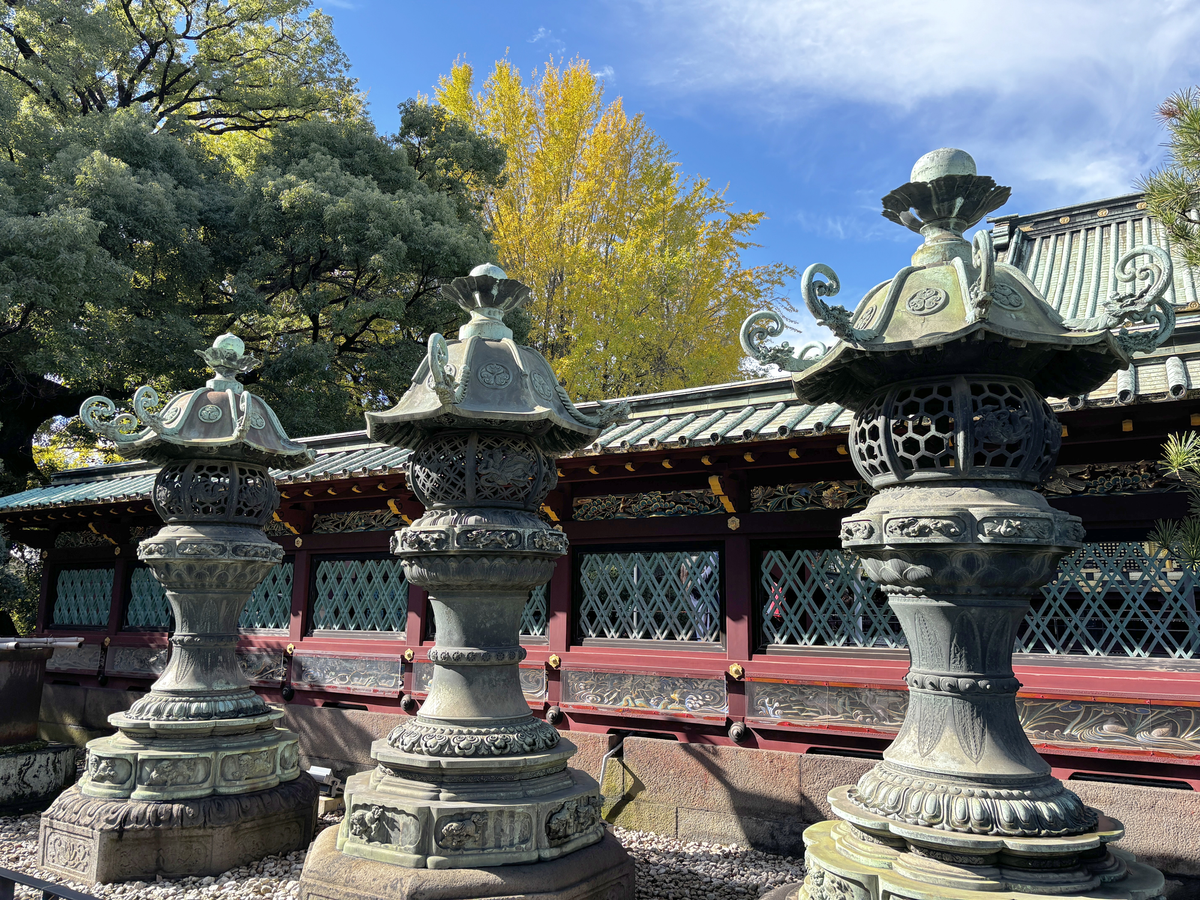
On both sides of the path (approach) leading from the torii gate to the shrine building, there are many stone lanterns (old-style lights) lined up. It is so quiet that it's hard to believe you're in a bustling park, and it was the place where we felt the most like we had "arrived in Japan."
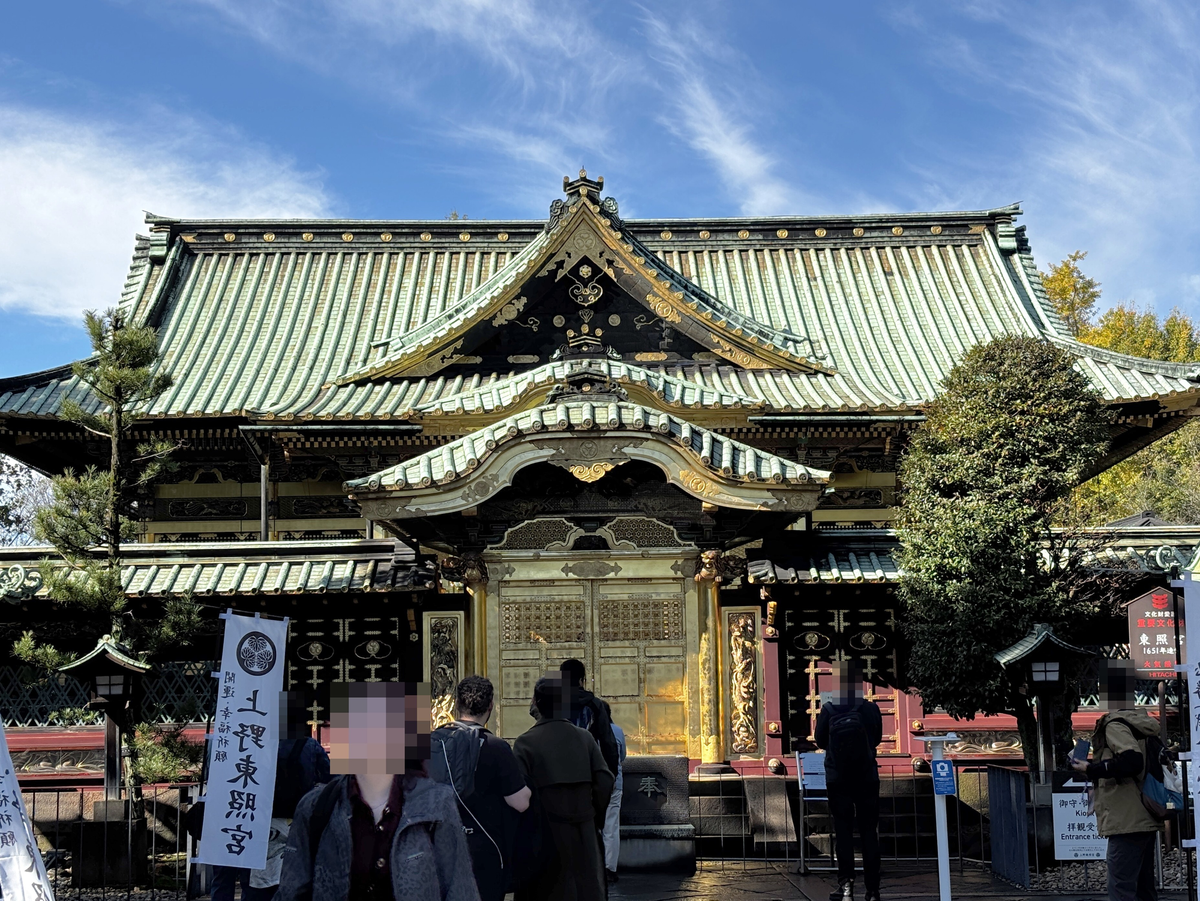
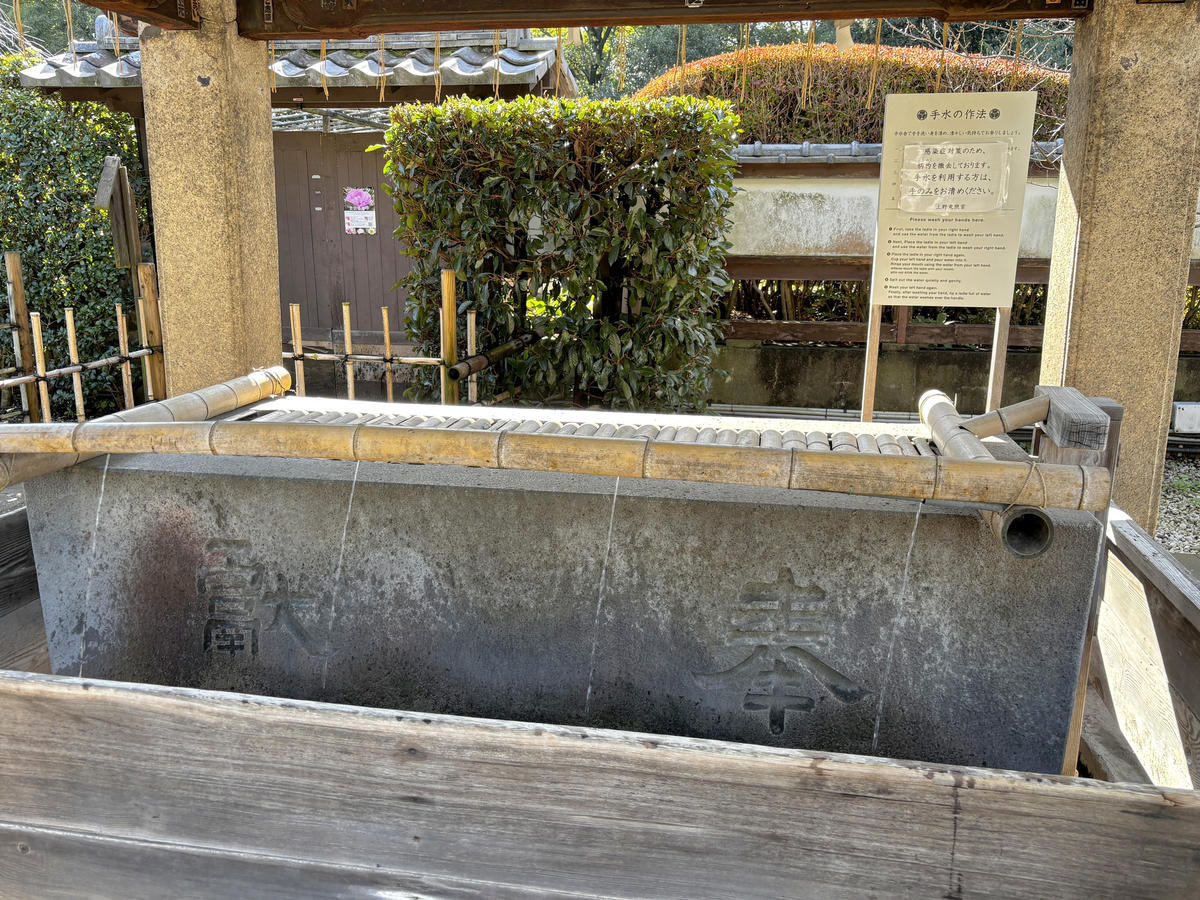
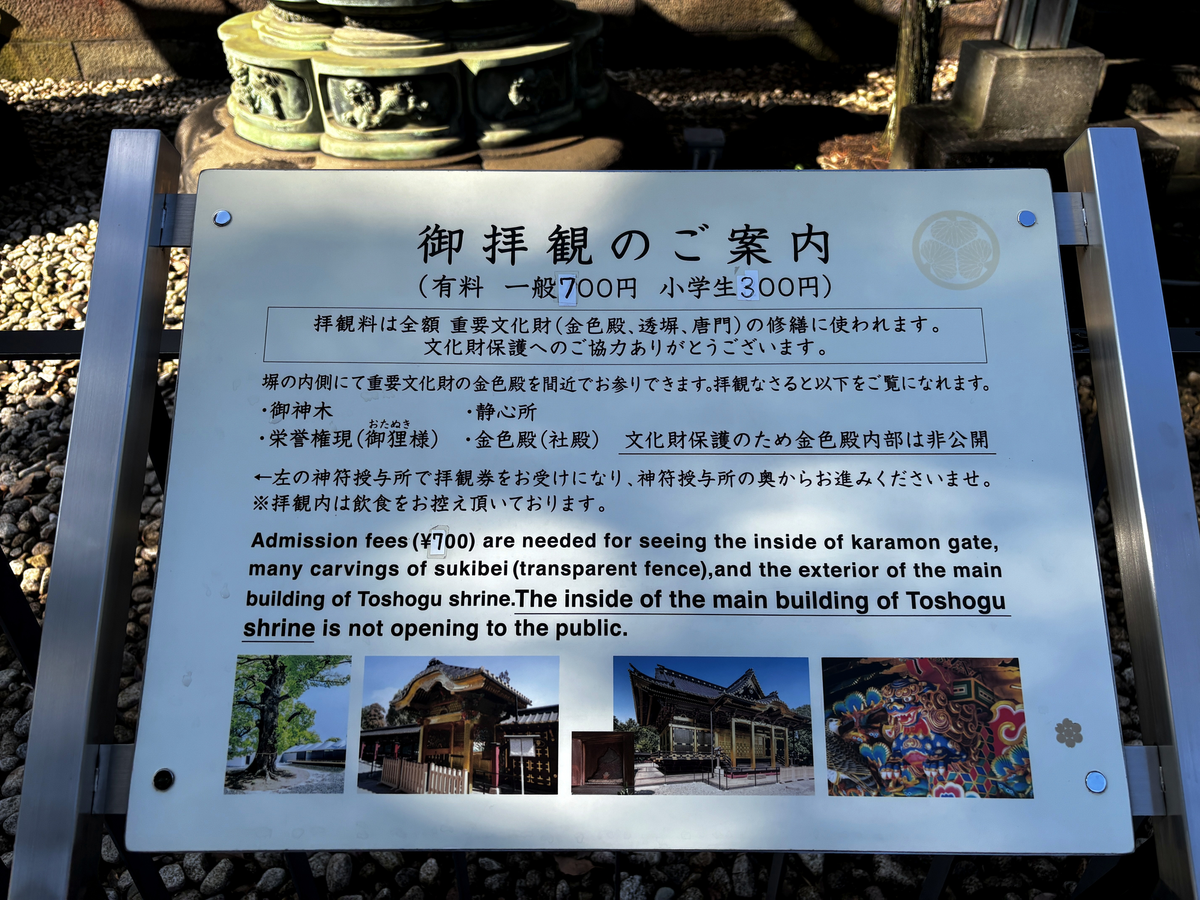
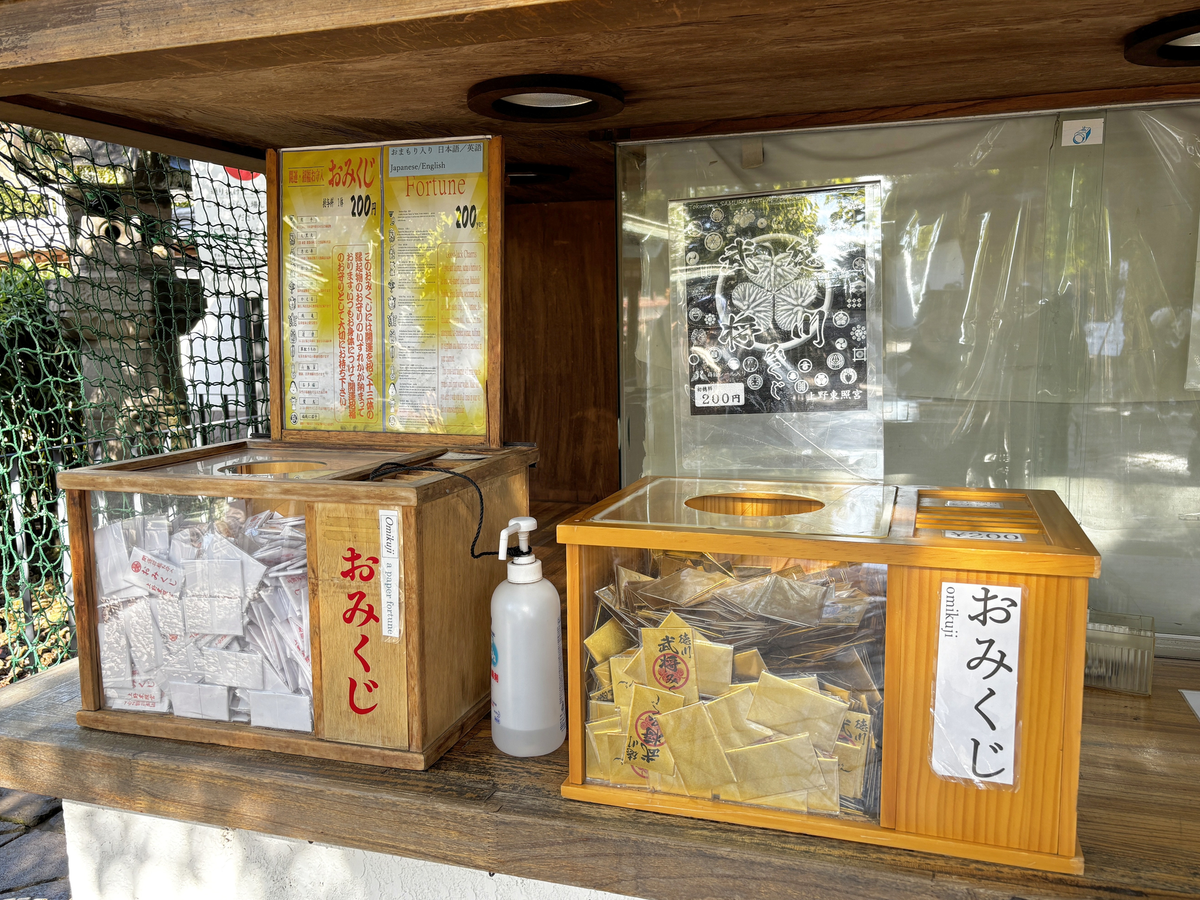
The shrine building (shaden) is adorned with many golden decorations, earning it the nickname "Golden Hall." Visiting from the outside is free. To enter the area enclosed by the walls and see it up close, it costs 700 yen for adults. The entrance signboard includes explanations in English. Omikuji (fortune slips) and omamori (charms) are available, and we also drew an omikuji.
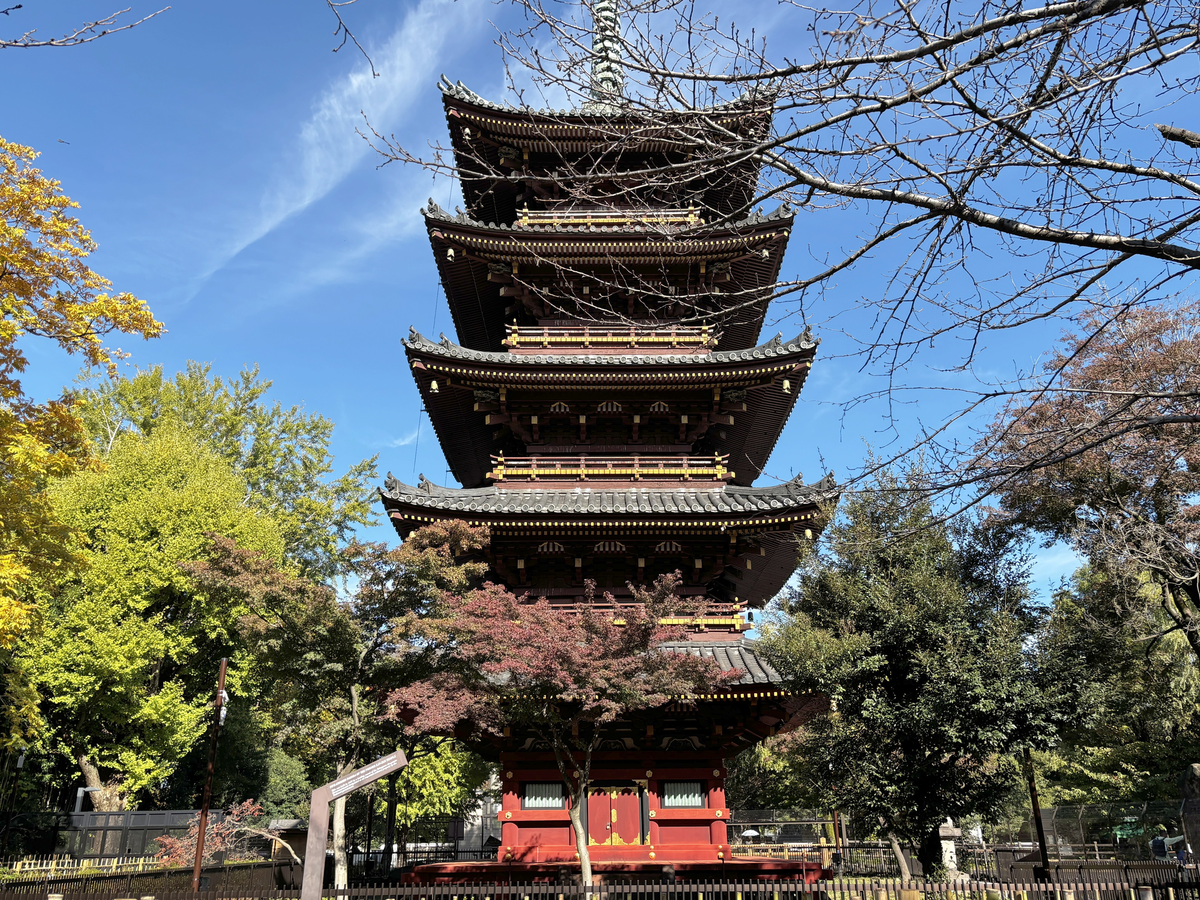
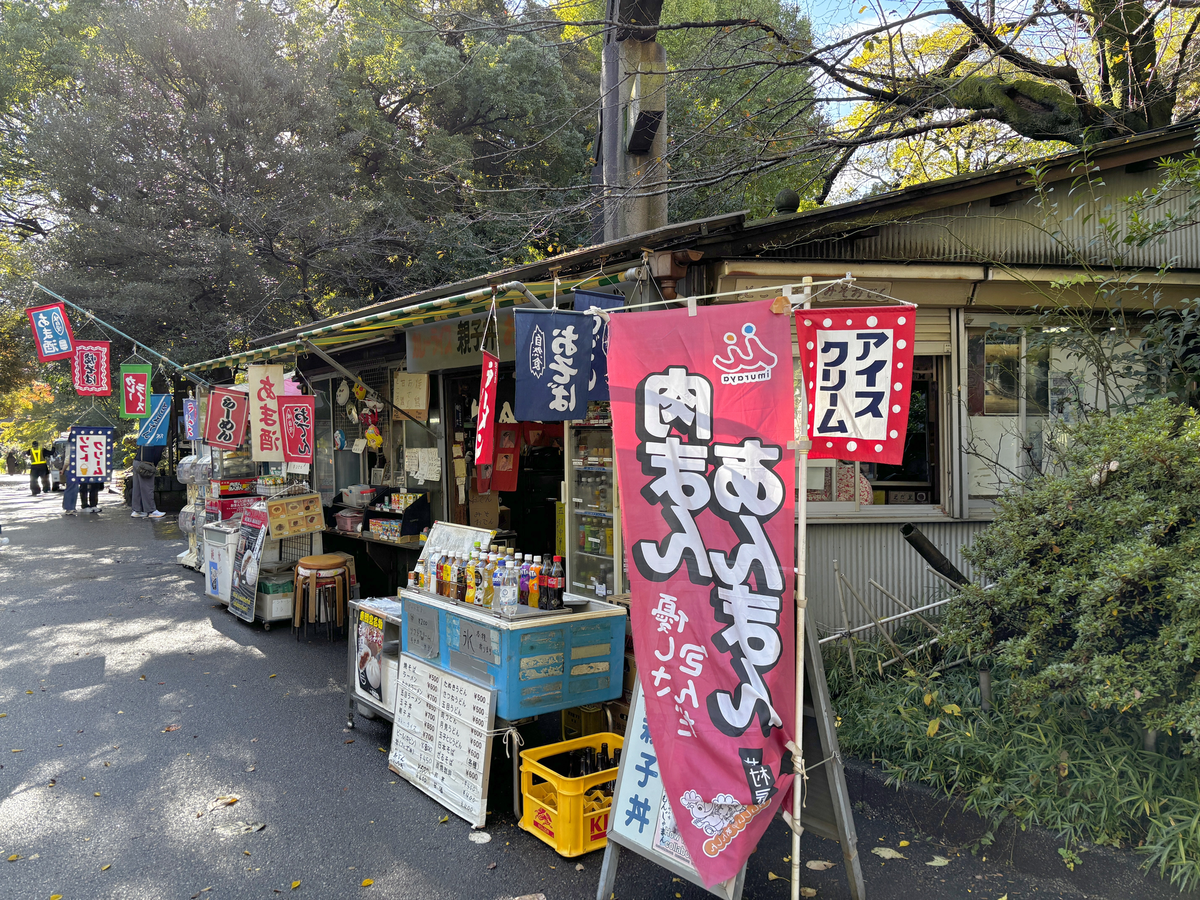
Looking to the side from the approach path, you can see a five-story pagoda beyond the trees. This is the pagoda of the old Kan'ei-ji Temple. Although you can't get close since it's now inside the zoo, it is clearly visible from around the Toshogu Shrine. Near the entrance of the approach path, there are traditional tea houses (small eateries) lined up, with flags displaying "Anmitsu" and "Ice Cream."
Ueno Daibutsu and Daibutsu Pagoda
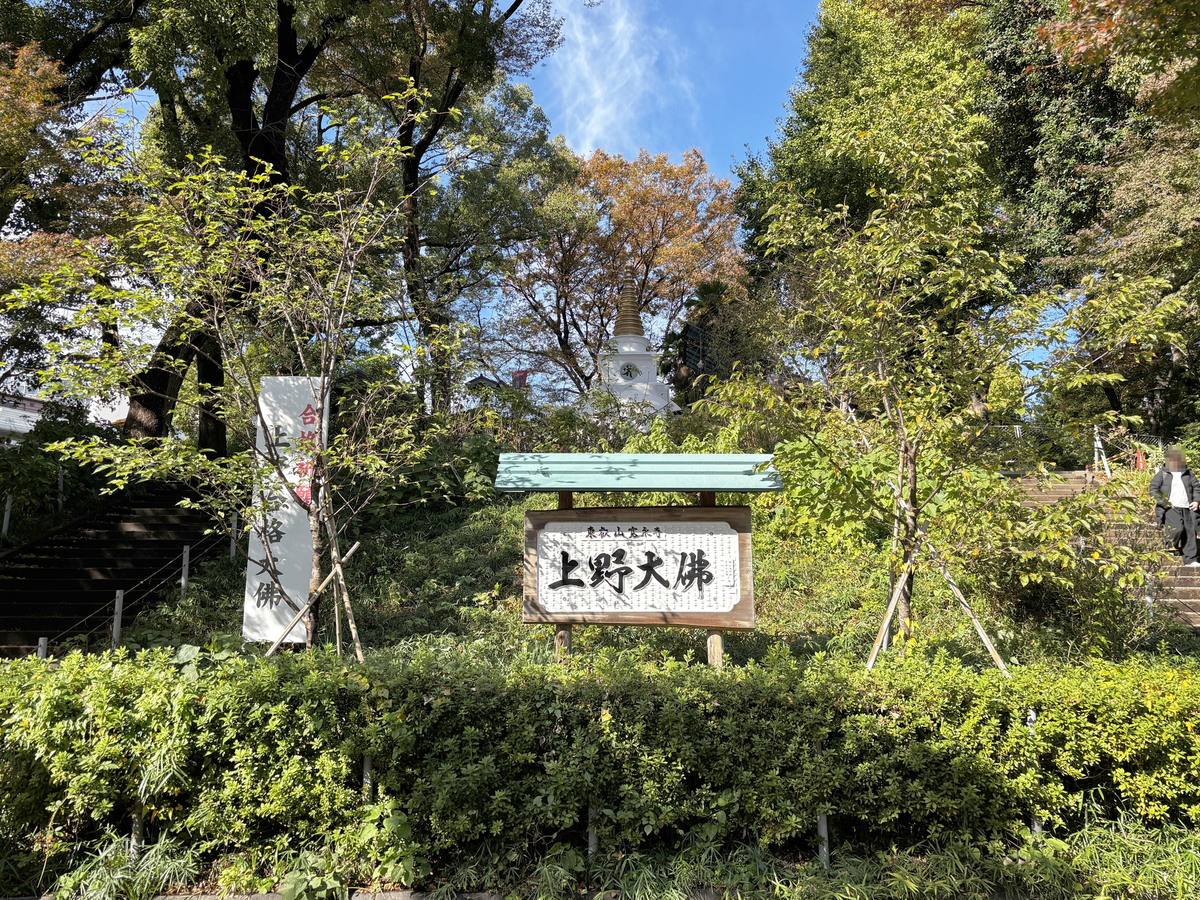
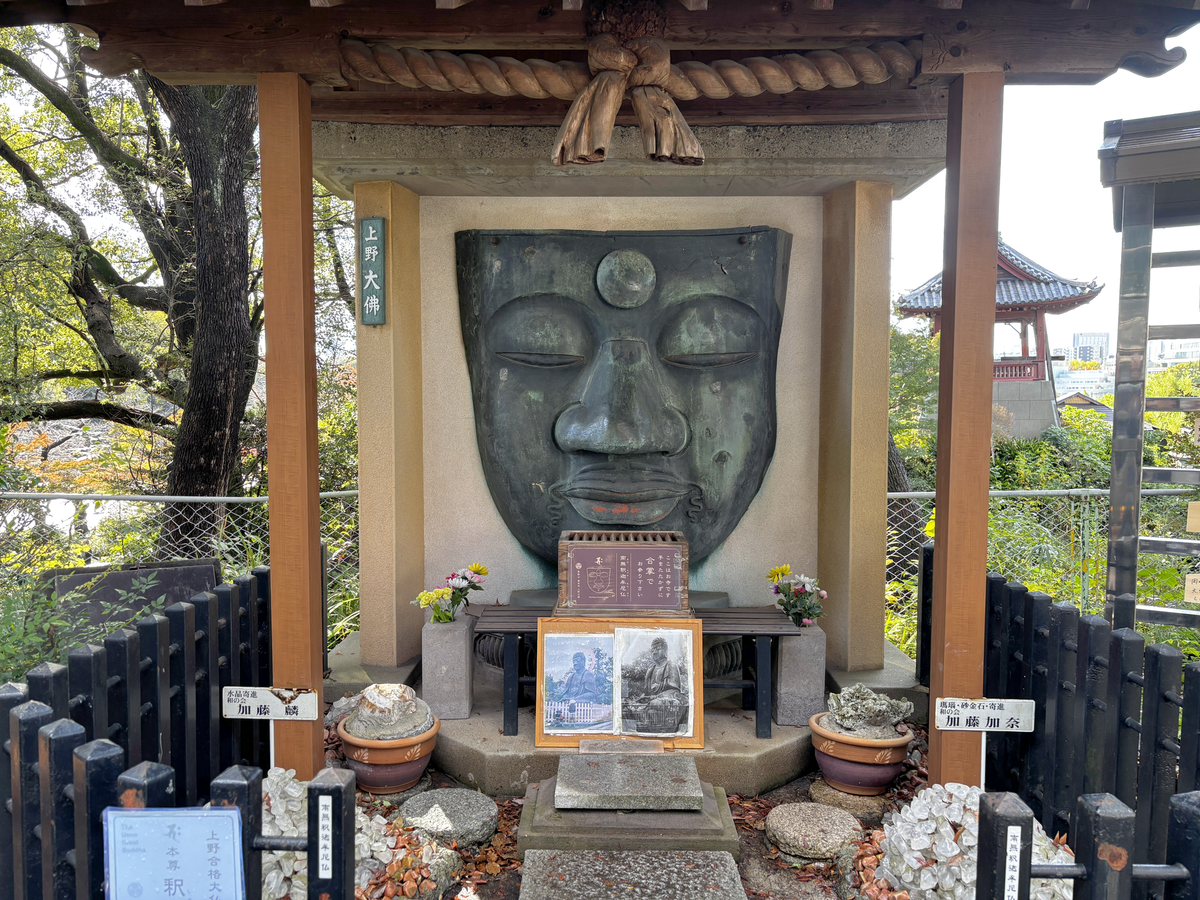
Walking south from Toshogu Shrine, you'll see a sign for "Ueno Daibutsu" and a white tower on the hill. At the top of the stairs, there is a slightly unusual Buddha statue with only the face remaining. The statue lost its body due to earthquakes and war, leaving only the face. In a past earthquake, the face fell from the body to the ground. In Japanese, "ochiru" means both "to fall" and "to fail an exam." Since the face has already fallen, it is believed that "it won't fall anymore," meaning "won't fail exams," so students visit before their exams.
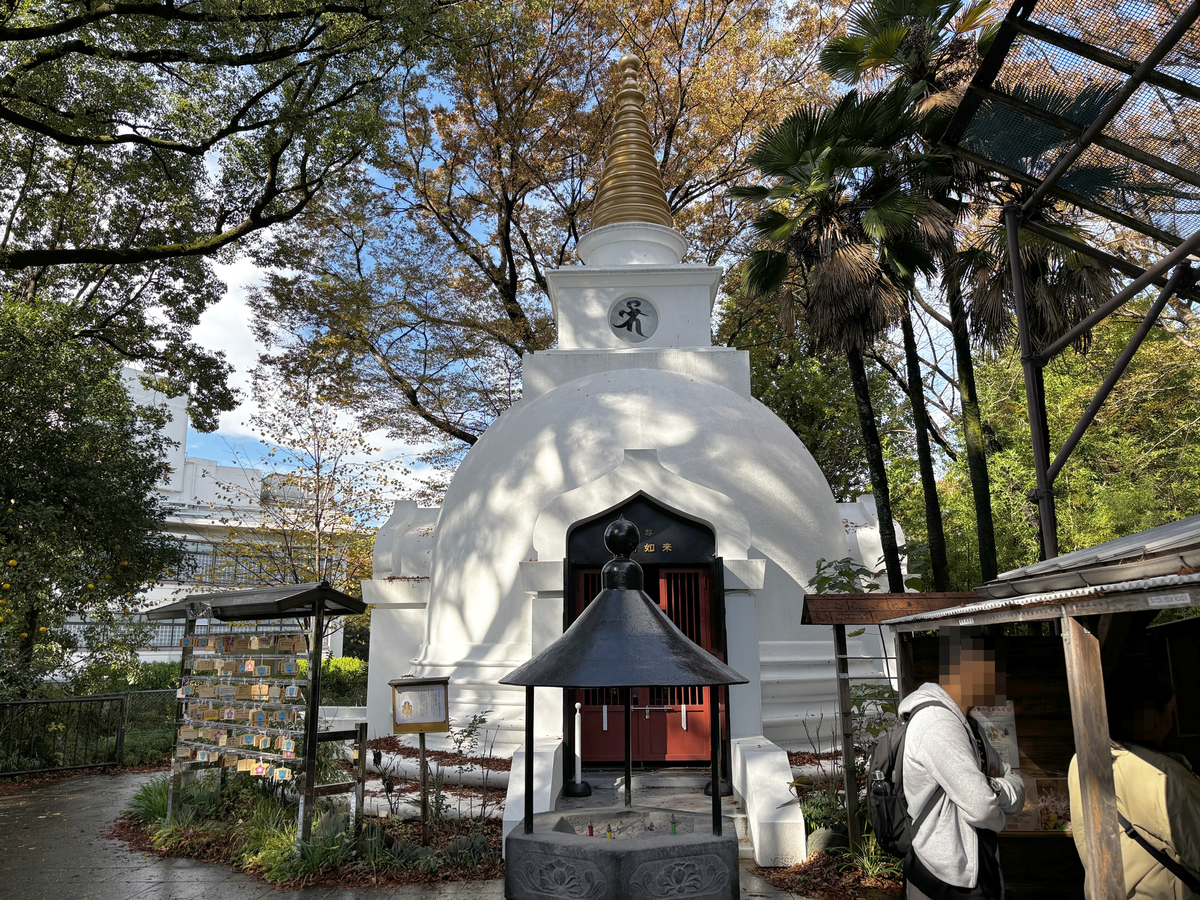
The white building next to the Great Buddha is the "Great Buddha Pagoda". Built in 1967, this pagoda enshrines a Buddha (Yakushi Nyorai) said to cure illnesses. Its white, round shape is uncommon in Japanese temples, attracting others to stop and take photos.
Hanazono Inari Shrine
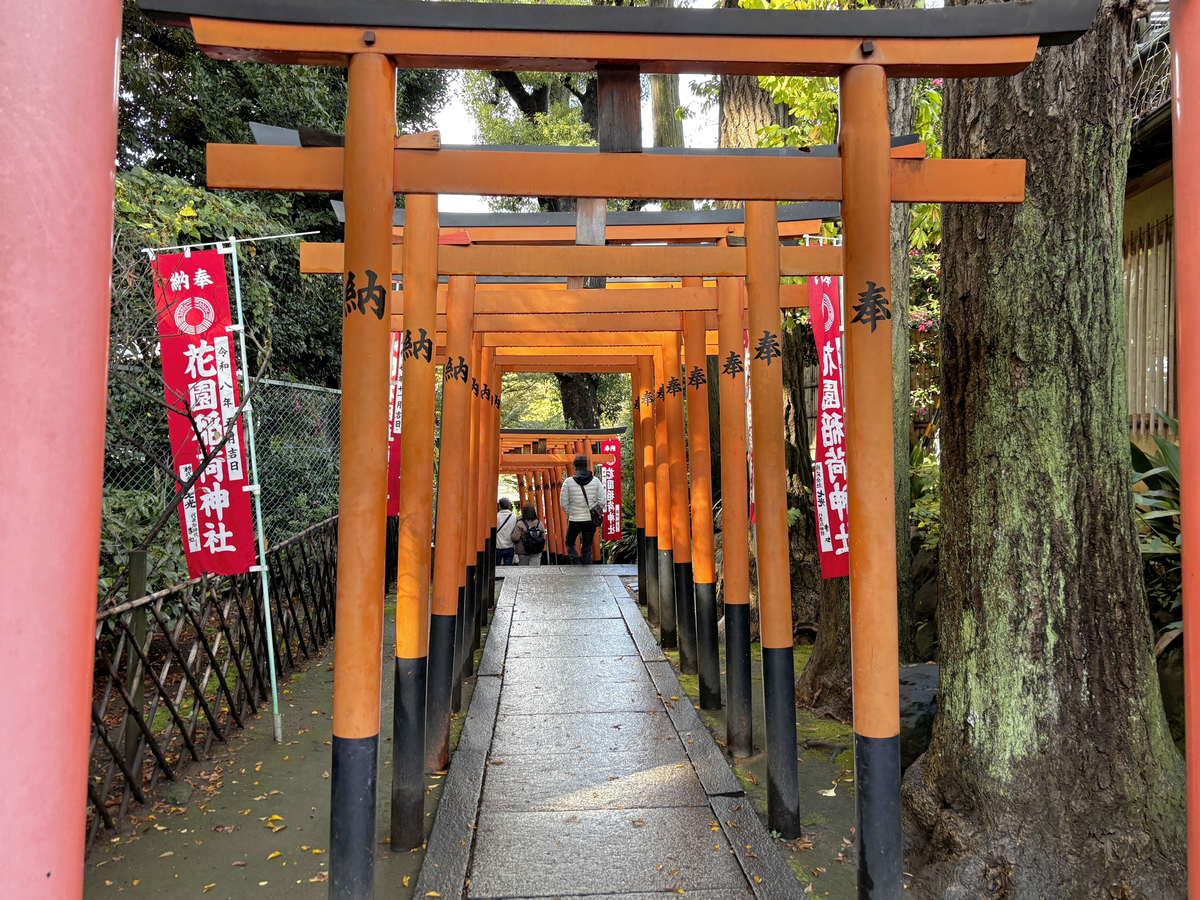
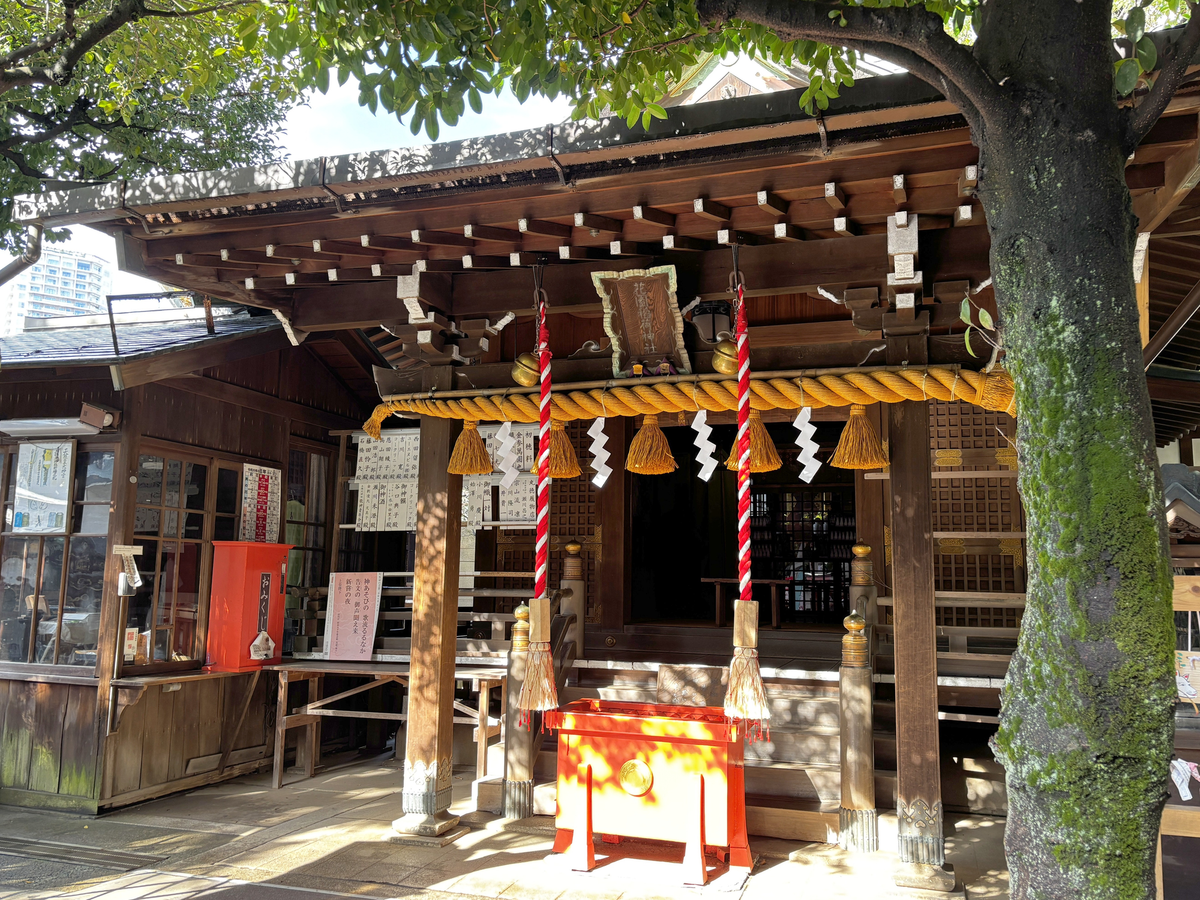
On the way down to Shinobazu Pond, you'll find Hanazono Inari Shrine, where red torii gates form a tunnel-like path. Though short, it offers photo opportunities reminiscent of Kyoto's Fushimi Inari Taisha, famous for its thousands of red torii gates. Beyond the torii, there is a small shrine building.
Shinobazu Pond and Benten-do Temple
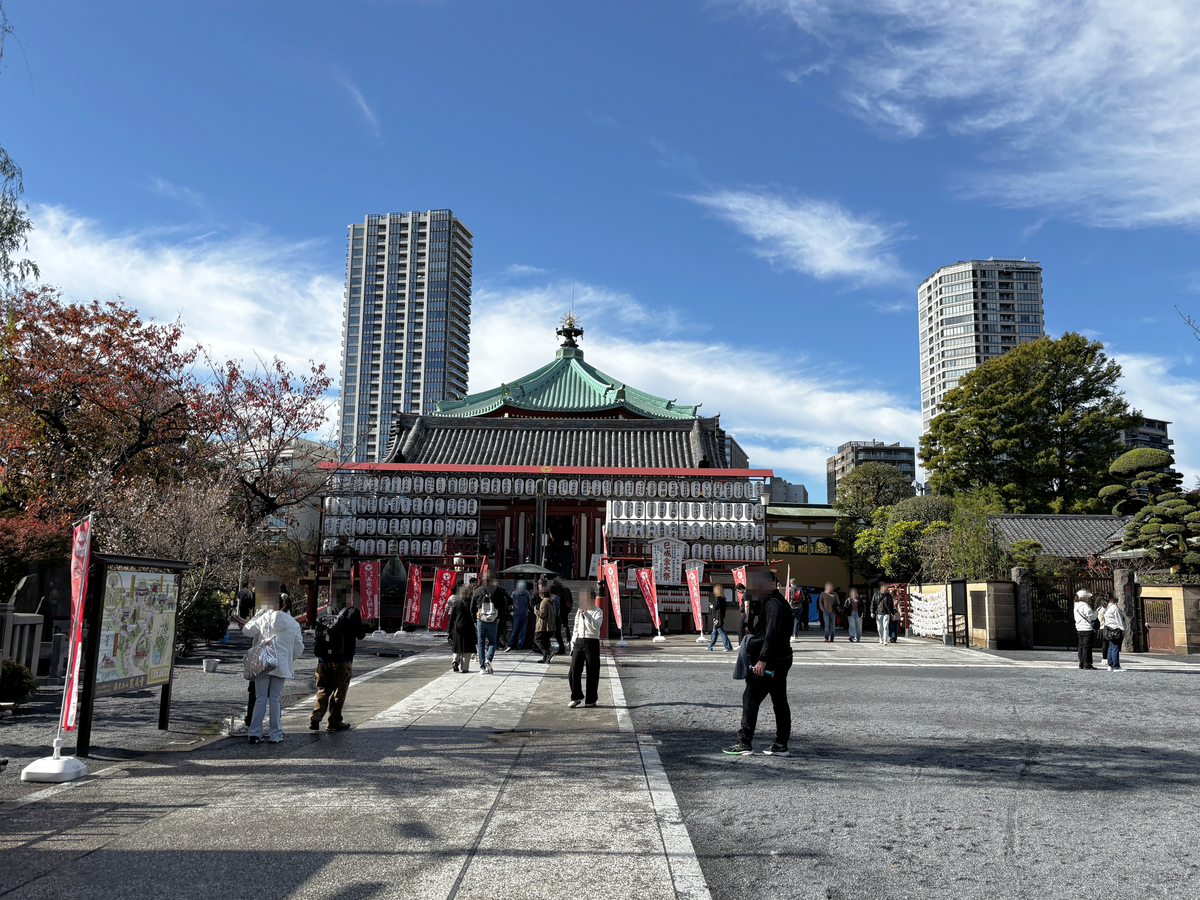
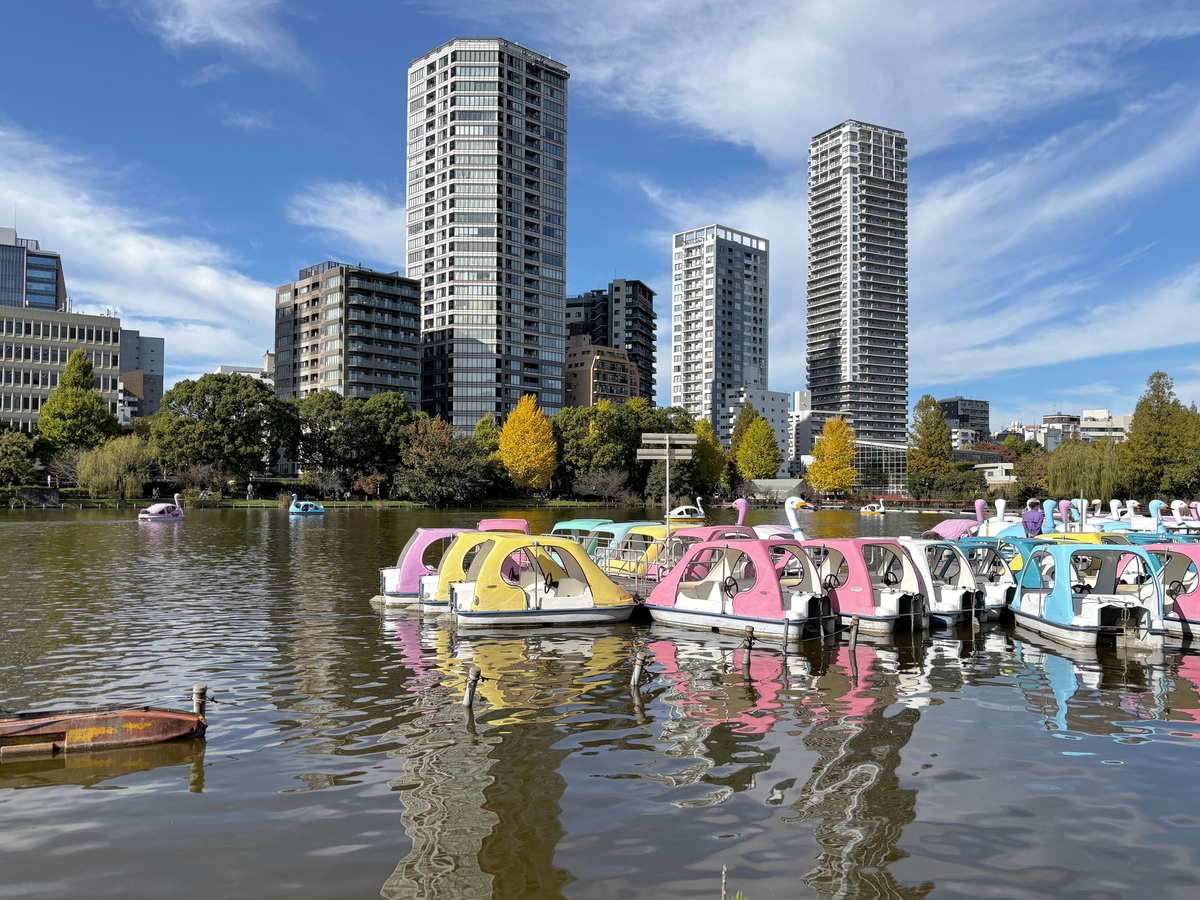
On the west side of the park is a large pond called Shinobazu Pond. In the middle of the pond stands Bentendo, an octagonal red temple, accessible via a straight path. Visiting the temple is free. Behind the temple, you can see tall buildings, offering an interesting view of old Japan alongside modern Tokyo. You can walk around the pond, making it perfect for a stroll.
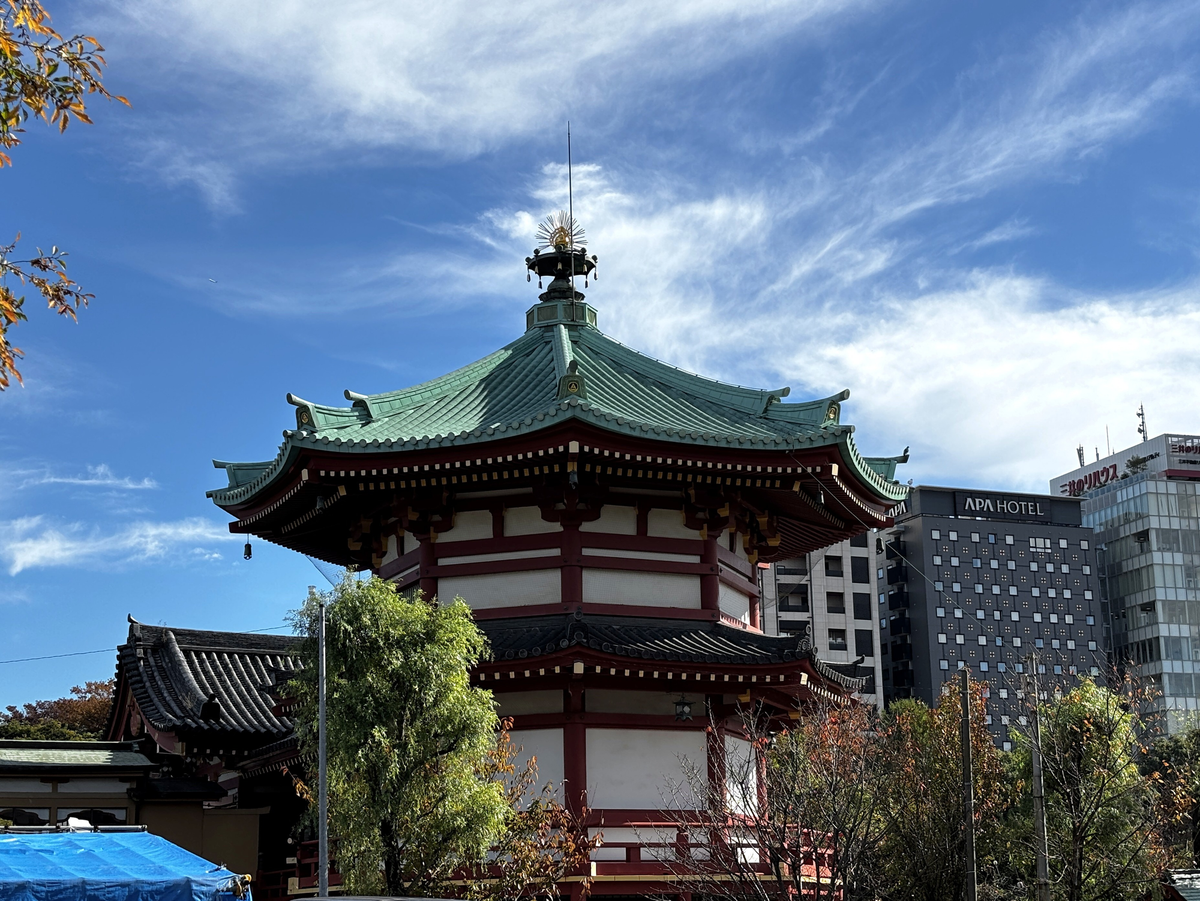
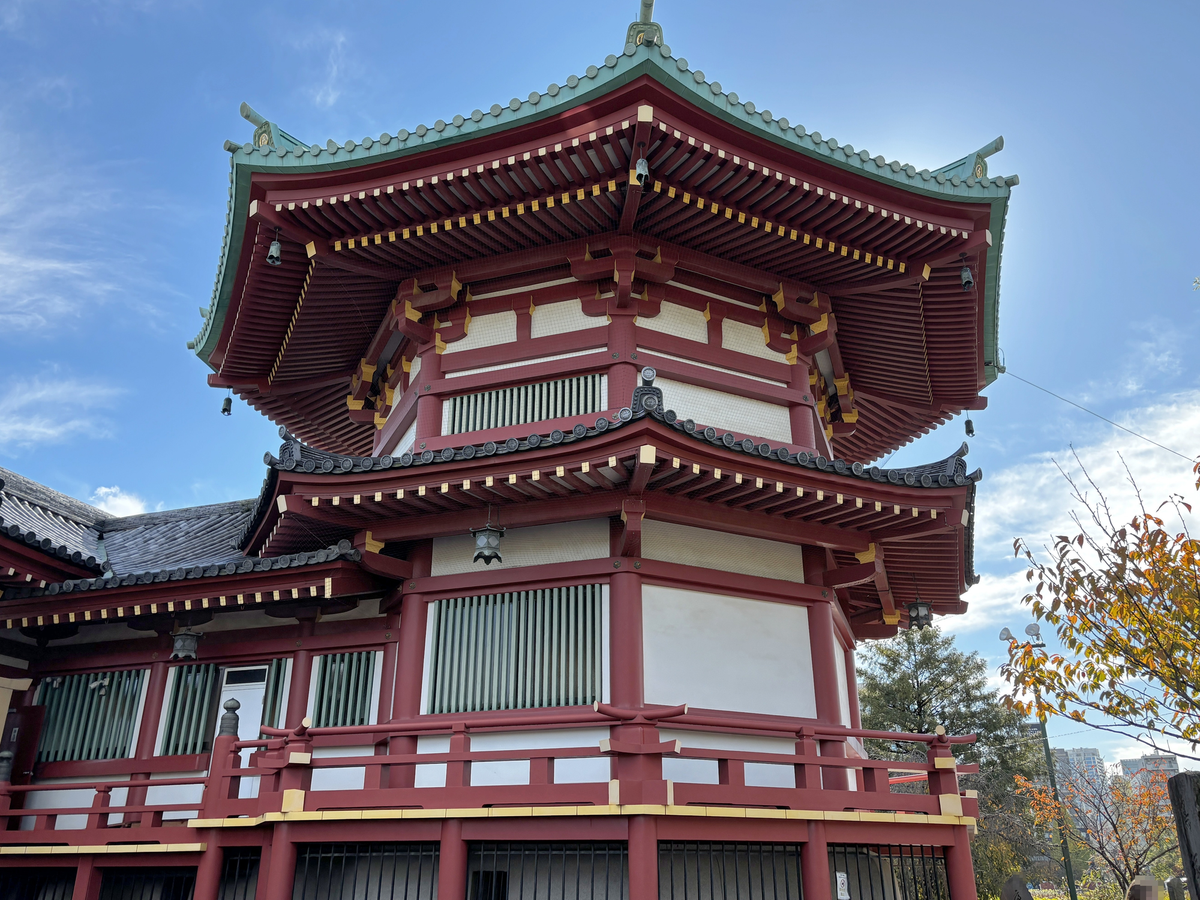
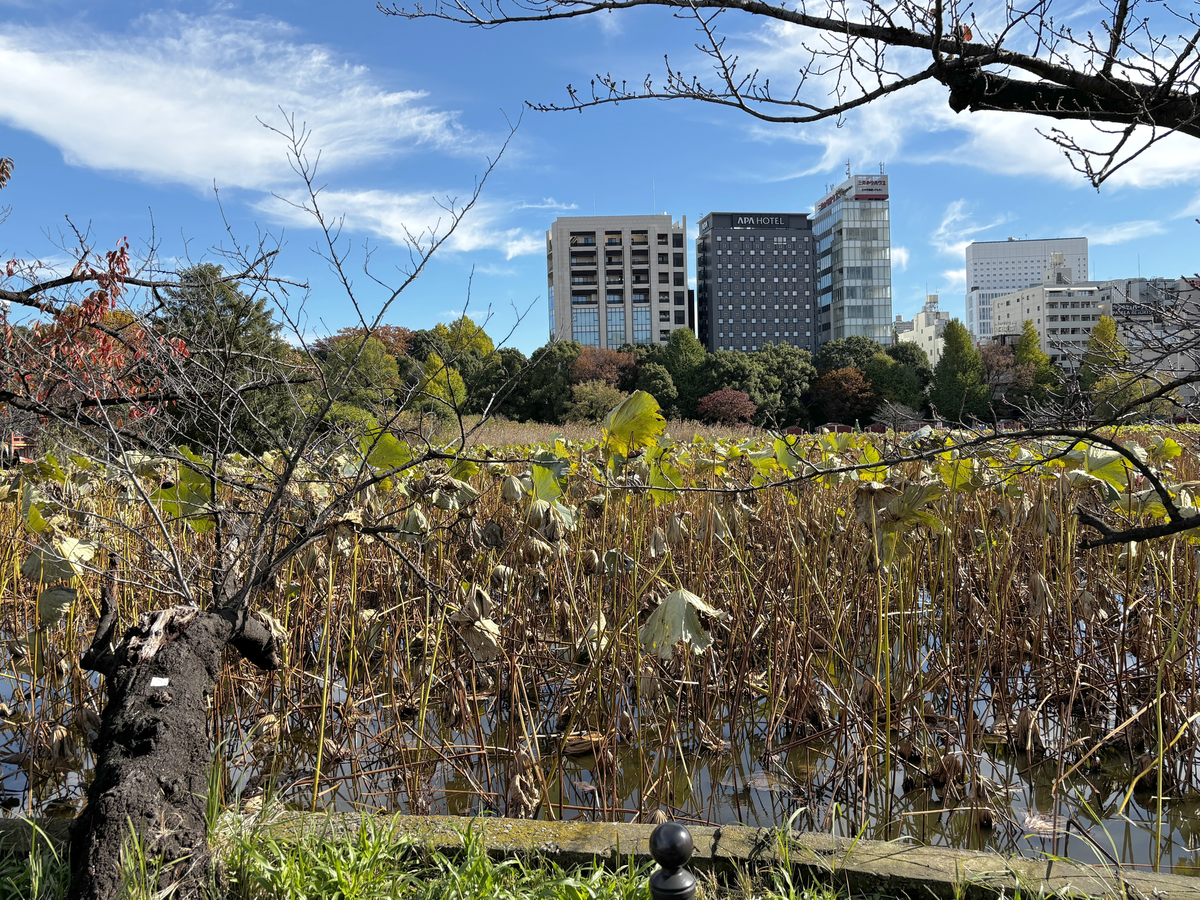
A section of the pond is a boating area where you can ride hand-rowed boats (30 minutes for 800 yen) or swan-shaped pedal boats (30 minutes for 1,000 yen). In summer, the pond is filled with lotus flowers, but when we visited in November, the leaves had turned brown and withered. Looking up from the pond, you can see the Kiyomizu Kannon-do Temple, which you glimpsed earlier from the Moon Pine, perched on the cliff.
Around the Park (Ameyoko)
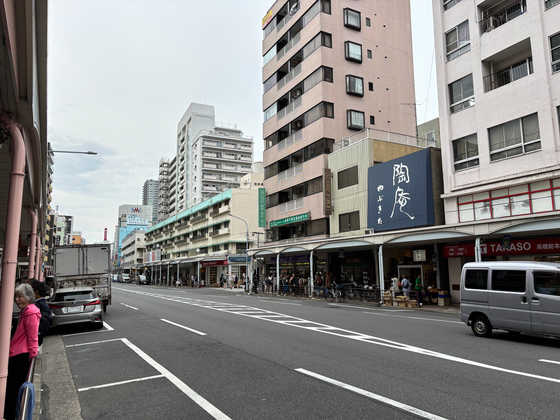
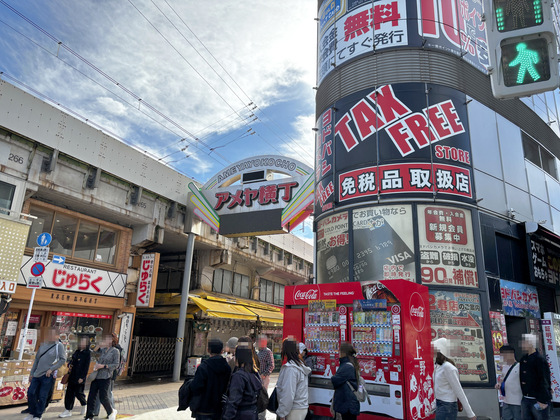
The town around the park is another enjoyable aspect of Ueno. Walking south from Shinobazu Pond, you can return to Ueno Station or Keisei Ueno Station. South of the station is an old shopping street called Ameyoko, lined with food stalls and affordable clothing shops. Just a few minutes' walk from the tranquil forest of the park brings you to the bustling atmosphere of this traditional shopping street. The Ueno Ameyoko Guide explains how to navigate Ameyoko.
Itinerary
Ueno Park Walking Tour (Approx. 1.5 Hours)
Here's an example of a walking tour starting from Keisei Ueno Station, visiting highlights without entering museums. We completed it in about 70 minutes while taking photos. If you plan to read information boards or take breaks, about 1.5 hours should be sufficient. Wear comfortable walking shoes.
About 5 min
From Keisei Ueno Station, climb the stairs to the Saigo Takamori Statue
About 10 min
Shimizu Kannon-do and Moon Pine
About 10 min
Take a Break at the Fountain Plaza (Starbucks Available Here)
About 10 min
Head north past the museums and art galleries.
Walk past the main gate of the Tokyo National Museum, the Black Gate, and in front of the Tokyo Metropolitan Art Museum.
About 5 min
Main Gate of Ueno Zoo
About 20 min
Ueno Toshogu Shrine and Five-Story Pagoda
About 10 min
Ueno Daibutsu and Daibutsu Pagoda
About 5 min
The Red Torii Gate of Hanazono Inari Shrine
About 15 min
Shinobazu Pond and Benten-do Temple
You can walk back from the pond towards Ueno Station and Ameyoko.
If you visit a museum or art gallery, add 1.5 to 2 hours to your schedule. The same amount of time is needed for a zoo visit.
Rates and Opening Hours
As of November 2026. It's advisable to check each official website before visiting for peace of mind.
| Location | Adult Fee | Hours | Closed |
|---|---|---|---|
| Ueno Park | Free | 5:00–23:00 | None |
| Tokyo National Museum (Regular Exhibits) | 1,000 yen | 9:30–17:00 (until 20:00 on Fri & Sat) | Monday |
| National Museum of Western Art (Regular Exhibits) | 500 yen | 9:30–17:30 (until 20:00 on Fri & Sat) | Monday |
| Ueno Zoo | 600 yen | 9:30–17:00 (last entry at 16:00) | Monday |
| Ueno Toshogu Shrine | Free for worship; paid area 700 yen | Paid area 9:30–16:00 (until 17:00 from Mar to Sep) | None |
| Shinobazu Pond Boat Area | 800 yen per 30 min~ | 9:30–16:50 from Nov to Feb (varies by season) | Wednesdays from Dec to Feb |
Special exhibits have separate fees. The regular exhibit fee at the National Museum of Western Art is set to increase from March 2027. The museums, art museums, and zoo in the table are closed on Mondays (open on public holidays, closed the following weekday). Some facilities, like the Tokyo Metropolitan Art Museum, have different closing days. Walking in the park is fine even on Mondays. Many facilities are also closed during the New Year holidays, so please check the official websites for dates.
Seasonal Enjoyment Tips
- Spring (Late March to Early April)
- Ueno Park is a famous cherry blossom spot in Tokyo. The park's paths are filled with cherry blossoms, attracting many people for "hanami," enjoying meals while viewing the flowers. It's very crowded, so visiting early in the morning is recommended.
- Summer (July to August)
- Shinobazu Pond is covered with lotus leaves and flowers. The sun is strong, so bring a hat and water while walking.
- Autumn (Mid-November to Early December)
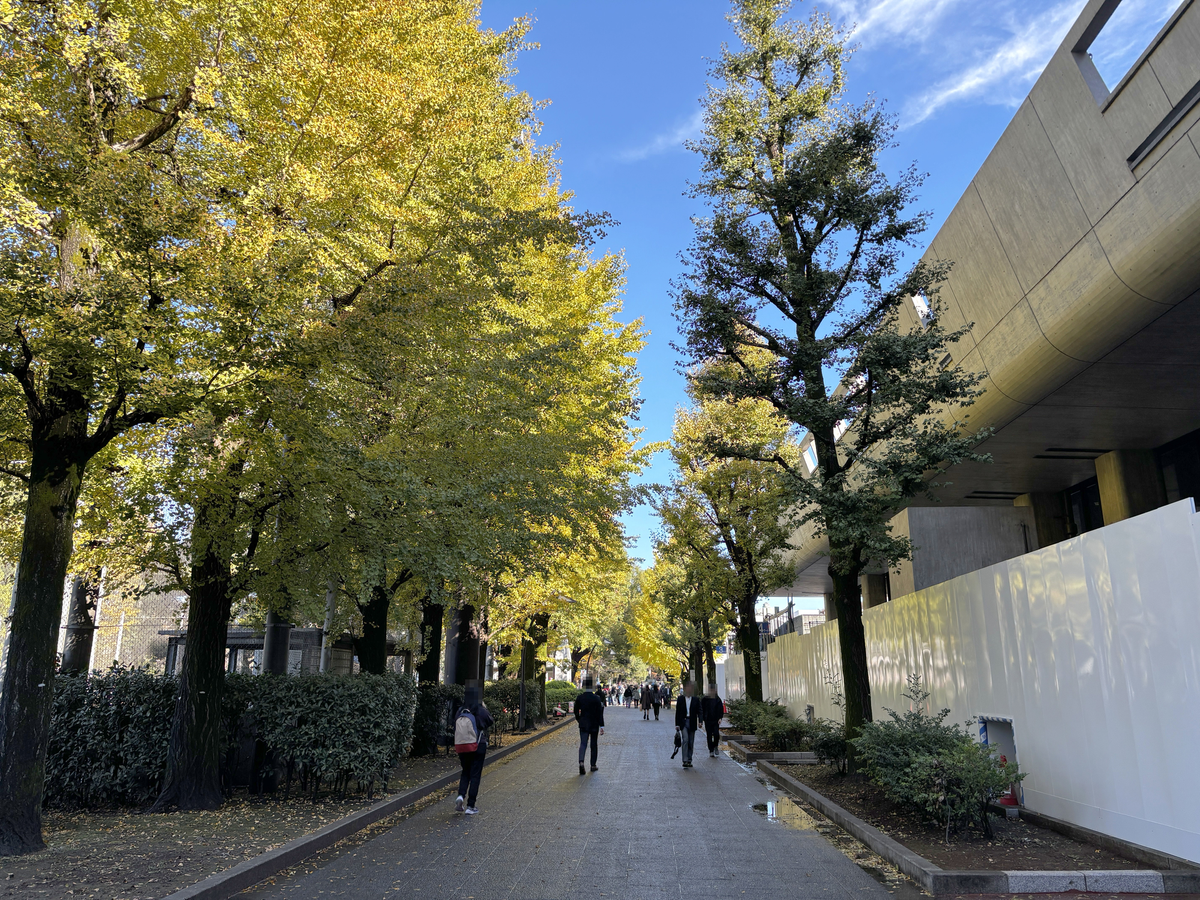
- The ginkgo leaves turn yellow. On November 18, when we visited, the ginkgo trees behind the Saigo Takamori statue and beside the museum were a vibrant yellow, beautifully contrasting with the blue sky.
- Winter
- It gets dark early in the evening, so explore while it's still light.
Make Ueno Your Base for Tokyo Sightseeing
Ueno is a convenient base for exploring Tokyo. We found it to be quite practical during our visit.
- Direct from the airport
- You can take the Skyliner from Keisei Ueno Station to Narita Airport without transfers. You can also stroll through the park on arrival or departure days.
- Quick access to Asakusa
- The subway's Ginza Line takes you to Asakusa in about 5 minutes.
- Access to the Shinkansen
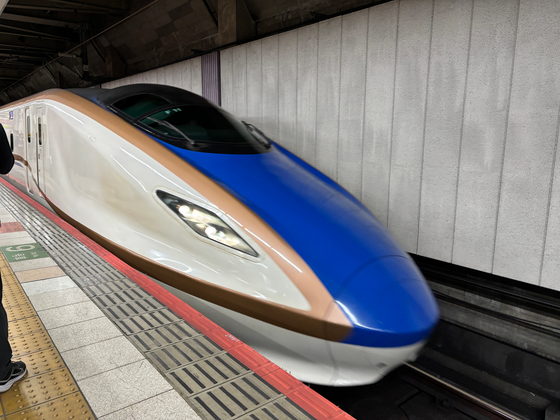
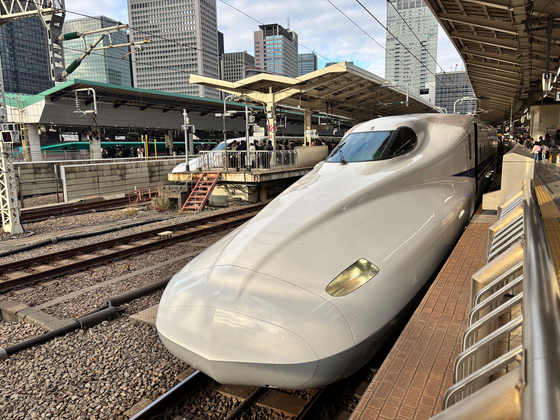
- Ueno Station is a stop for the Tohoku and Hokuriku Shinkansen, making it a starting point for trips from Tokyo to other regions.
- Shopping and dining
- Ameyoko is located south of the station, with dining options open until late.
In winter, for example, you can take the Hokuriku Shinkansen from Ueno Station to Nagano Station, then the Nagano Electric Railway to Yudanaka Station. From there, a trip to the onsen town of Shibu Onsen is recommended.
Q&A
Frequently Asked Questions about Ueno Park
- Is there an admission fee for entering Ueno Park? Do you need a ticket?
- Entry to the park is free, and no tickets or reservations are required. However, there are fees for the museum, art gallery, zoo, and the paid areas of Toshogu Shrine.
- Is Ueno Park worth visiting?
- It's free to enter and located right next to the station, allowing you to walk around a shrine, temple, five-story pagoda, Great Buddha, pond, and museum all at once. It's perfect for a half-day visit on the day you arrive in or depart from Tokyo.
- What Not to Miss in Ueno Park?
- For those short on time, we recommend the approach to Ueno Toshogu Shrine, the Moon Pine at Kiyomizu Kannon-do, Benten-do at Shinobazu Pond, and the Tokyo National Museum.
- How much time should I spend at Ueno Park?
- Walking around the highlights takes about an hour and a half. We took about 70 minutes while taking photos. If you plan to visit a museum or zoo, allow 3 to 4 hours for a more relaxed experience.
- Can you see pandas at Ueno Zoo?
- As of November 2026, they are no longer visible. The two pandas that were at Ueno Zoo returned to China in January 2026.
- Can you enter Ueno Park at night?
- You can enter until 11 PM. Entry is not allowed from 11 PM to 5 AM. Museums and zoos close in the evening, and some areas are dark at night, so it's recommended to walk around while it's still light.