Tokyo
Tokyo Station Shinkansen Platform Guide Easy Navigation with Blue and Green Markers
Updated 16 November 2026By Dynamic Japan Travel editorsEditorial policy
Contents
Tokyo Station is vast with numerous gates, making it easy for first-time visitors to Japan to get lost. This article uses photos we took at Tokyo Station to guide you step-by-step to the Shinkansen platforms.
There are three key points:
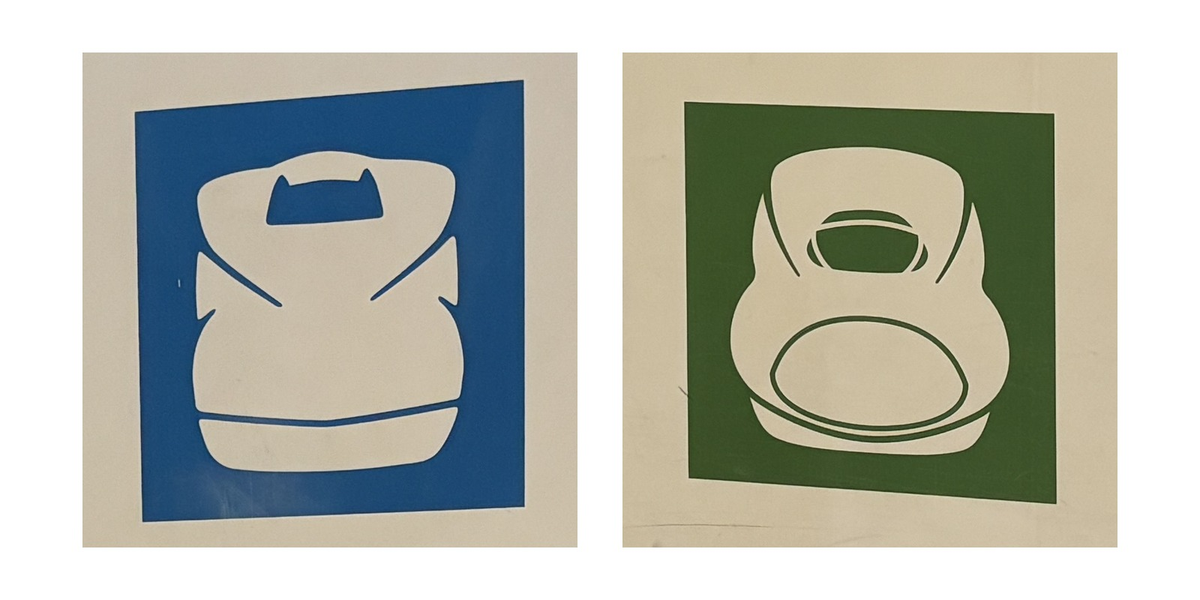
- Check the color of your Shinkansen mark. The Tokaido and Sanyo Shinkansen are blue (platforms 14-19), while the Tohoku and Hokuriku Shinkansen are green (platforms 20-23).
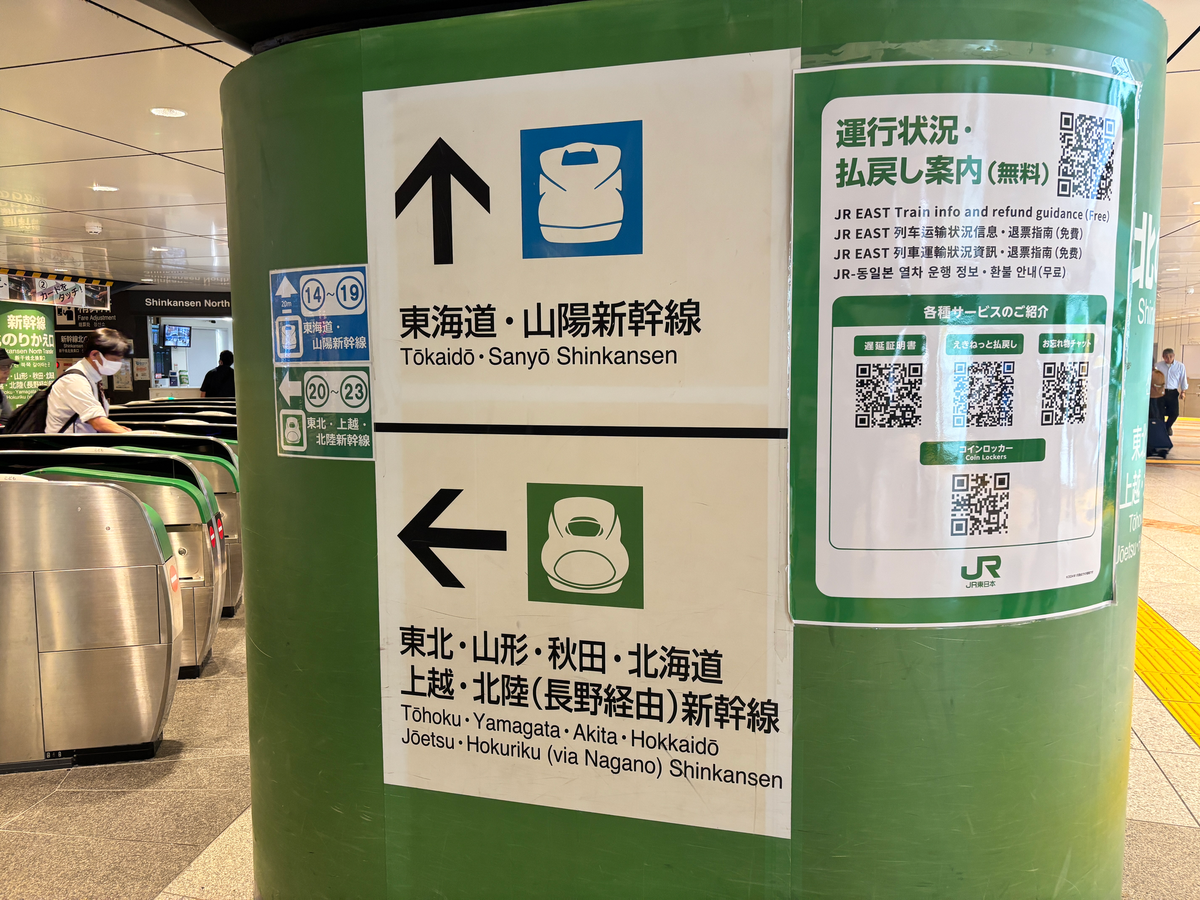
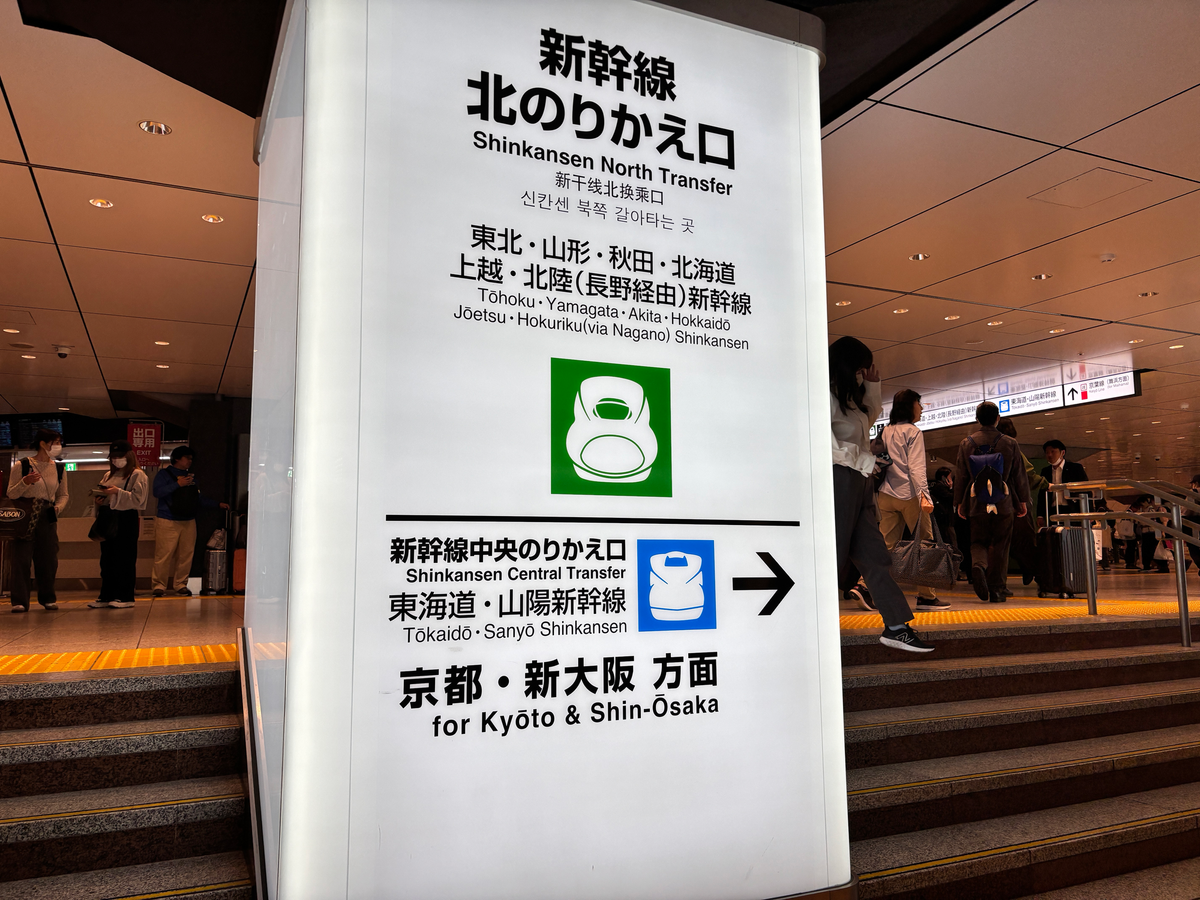
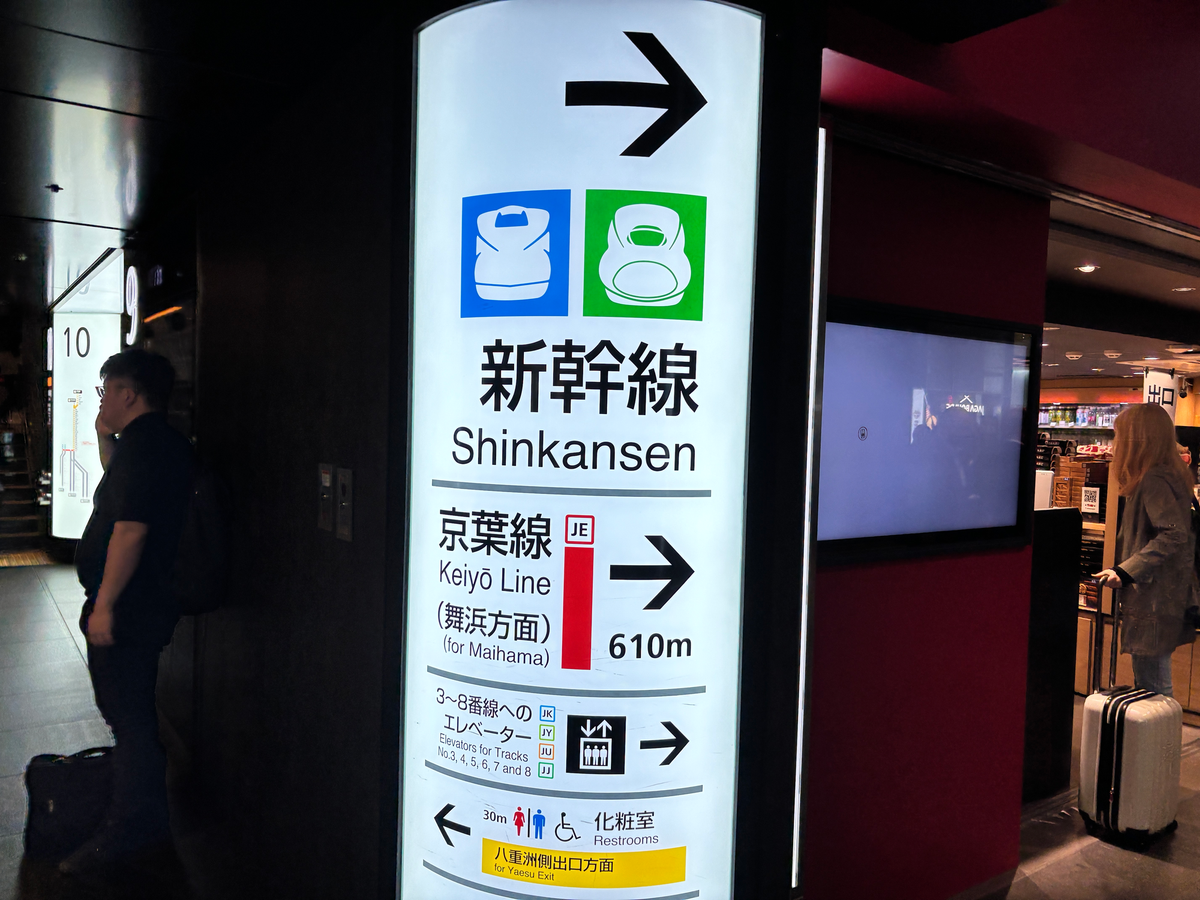
- Follow the signs with that color mark and "Shinkansen" in the station.
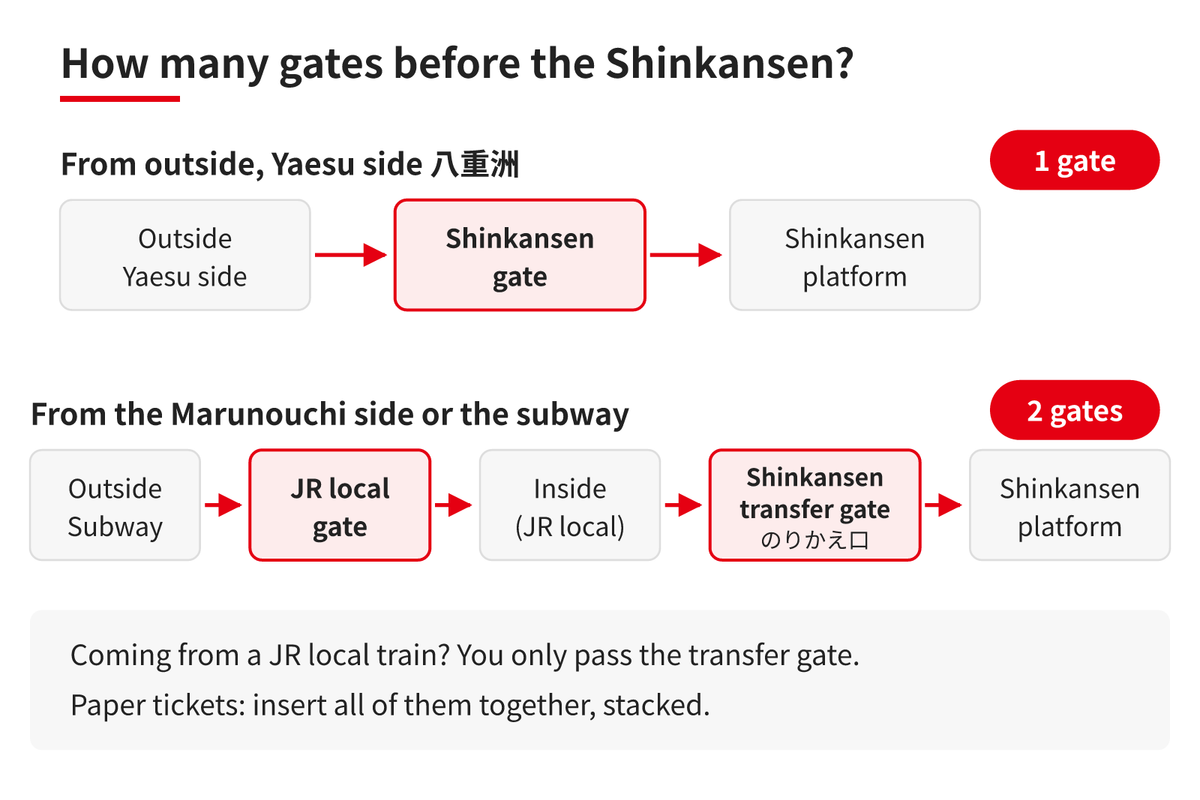
- Entering from the Yaesu side Shinkansen gate requires only one ticket check. Coming from the Marunouchi side or the subway requires two.
The Shinkansen at Tokyo Station is divided into two lines: "Blue" and "Green".
Two companies operate Shinkansen trains from Tokyo Station, each with different guide mark colors and platforms.
| Shinkansen | Mark Color | Main Destinations | Platform |
|---|---|---|---|
| Tokaido Shinkansen (JR Central) | Blue | Atami, Nagoya, Kyoto, Shin-Osaka (connects to Sanyo Shinkansen to Hakata) | Platforms 14-19 (Yaesu side) |
| Tohoku, Hokuriku, Joetsu Shinkansen, etc. (JR East) | Green | Sendai, Nagano, Kanazawa, Niigata, etc. | Platforms 20-23 |
Blue is for Tokaido and Sanyo Shinkansen, while green is for Tohoku, Yamagata, Akita, Hokkaido, Joetsu, and Hokuriku Shinkansen. Follow the blue for Atami, Nagoya, or Kyoto. Train names also help distinguish them: Nozomi, Hikari, and Kodama are blue, while Hayabusa, Kagayaki, and Hakutaka are green.
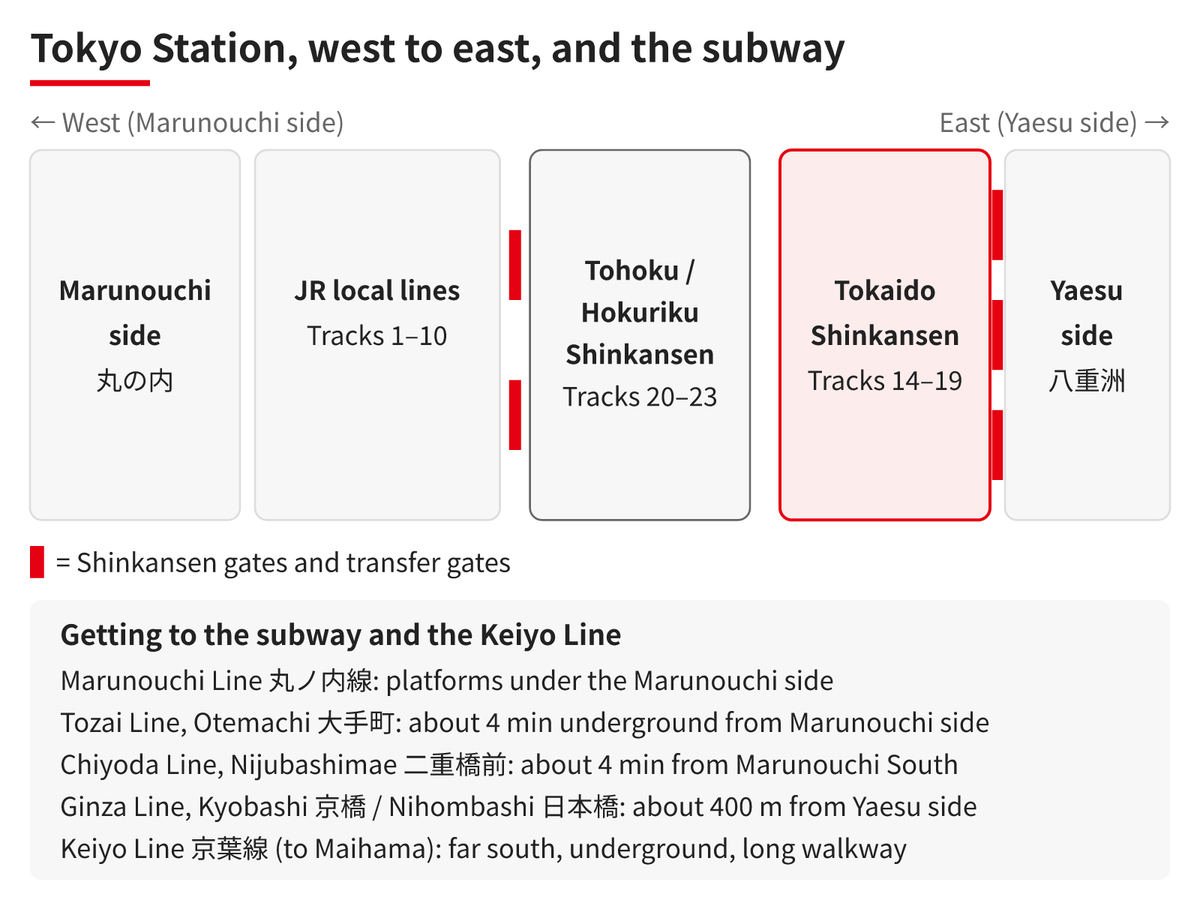
Station signs on columns and ceilings use these color marks. From west to east, the station layout is Marunouchi side, conventional train platforms (like Yamanote and Chuo lines), green Shinkansen, blue Shinkansen, and Yaesu side.
There are times when you pass through the ticket gate once and times when you pass through it twice.
The Shinkansen platform has an additional ticket gate inside the regular train ticket gates.
Entering from the Yaesu side (1 ticket gate)
The Yaesu North, Yaesu Central, Yaesu South, and Nihonbashi entrances have Shinkansen ticket gates accessible directly from outside the station. The Yaesu side gates are for the blue Tokaido Shinkansen. The Nihonbashi entrance provides direct access to the green Tohoku and Hokuriku Shinkansen.
Coming from the Marunouchi side or subway (2 ticket gates)
First, pass through the regular train ticket gate. Then, go through the "Shinkansen Transfer Gate" for the second ticket gate.
Arriving at Tokyo Station by JR regular train (1 ticket gate)
Since you are already inside the regular train ticket gates, you only need to pass through the Shinkansen transfer gate.
How to
Procedure for Transferring from Local Train to Shinkansen
Directions for those arriving from the Marunouchi side or by subway, and those arriving by JR conventional lines.
1Follow your color marker.
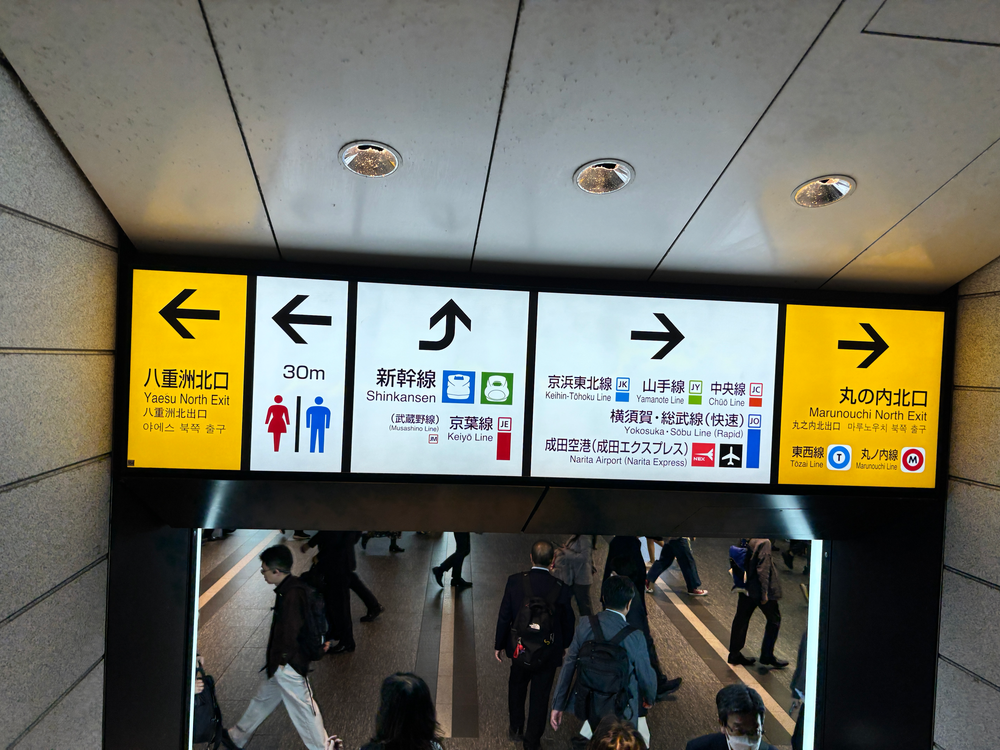
Ceiling guide. Indicates directions for the Shinkansen, exits, and subway. Follow the blue signs for the Tokaido and Sanyo Shinkansen, and the green signs for the Tohoku and Hokuriku Shinkansen. The signs also include "Shinkansen" in English.
2Pass through the local train ticket gate (only for those coming from outside the station or the subway).
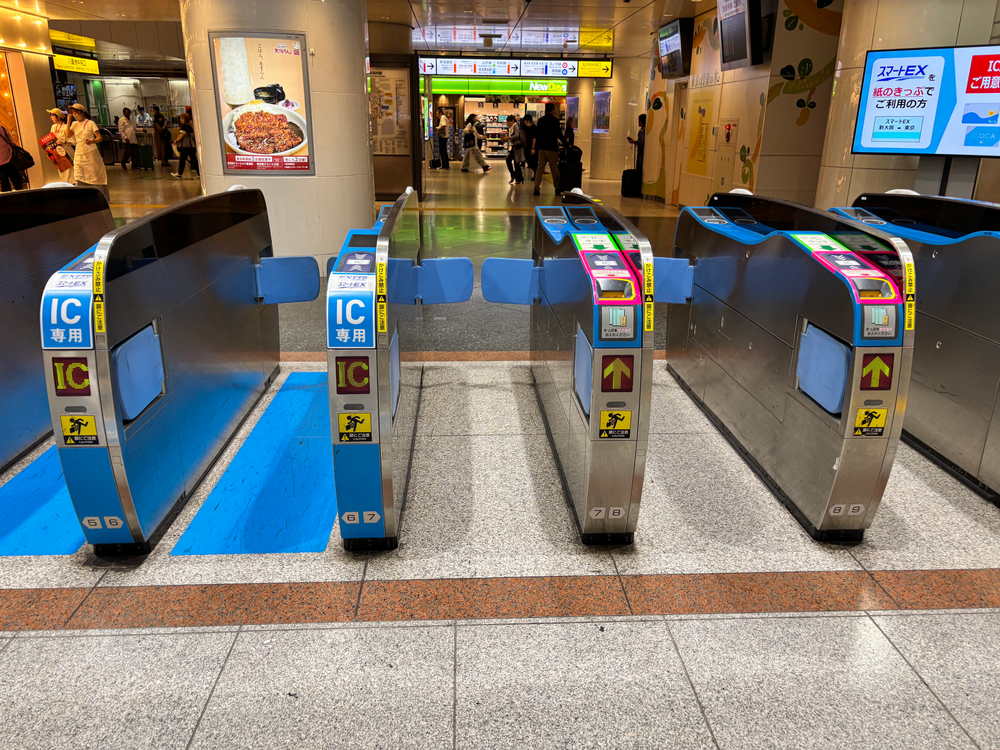
There are also gates exclusively for IC cards. Enter with a ticket or a transportation IC card. There are gates exclusively for IC cards. Those with paper tickets should choose a gate with a slot for ticket insertion.
3Pass through the Shinkansen transfer gate
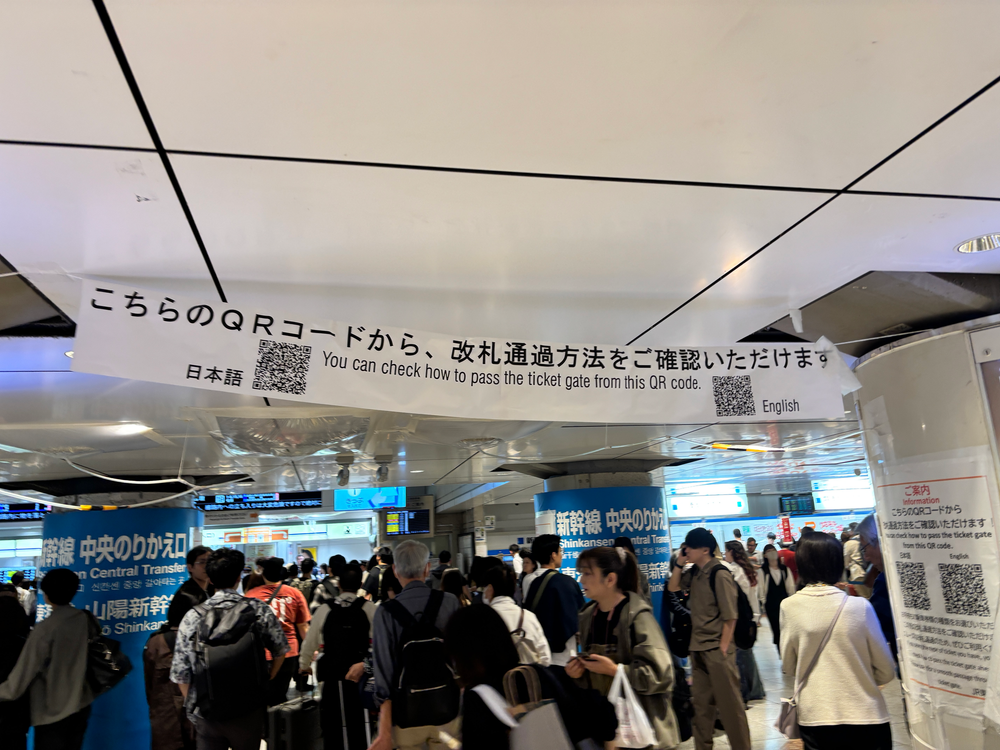
Enter the Tokaido Shinkansen through the central transfer gate or similar entrances. Paper tickets combine all necessary tickets, like the boarding pass and Shinkansen express ticket, into one. Be sure to take the ticket as you'll need it at your destination station. If you've registered a transit IC card on the reservation site, simply tap the same IC card you used for local trains.
4Check the platform number and head to the platform.
After passing through the transfer gate, check the departure information for your train's platform number and take the escalator up to the platform.
Those entering from the Yaesu side Shinkansen ticket gate only need to pass through the Shinkansen ticket gate once, just like in Step 3.
When Passing Through the Ticket Gate with a Japan Rail Pass
For Japan Rail Pass (JR Pass) holders, insert the pass into the automatic ticket gate. Don't forget to retrieve your pass.
- You cannot use gates marked "IC only."
- You cannot pass through the automatic gates with a reserved seat ticket alone. Use it together with the pass.
- The pass alone does not allow travel on Nozomi and Mizuho trains. An additional special ticket is required.
For more details, see the Japan Rail Pass article.
Directions to Each Destination
From Narita Airport (Narita Express)
The Narita Express arrives at a platform deep underground at Tokyo Station. Take the escalator up and follow the signs for the "Shinkansen." Since you arrive by JR train, the ticket gate is at the Shinkansen transfer entrance on the first floor. However, the Shinkansen platform is far, so allow plenty of time. Directions from the airport are summarized in the articles How to Get from Narita Airport to Tokyo and Keisei Skyliner Arriving at Ueno.
From Haneda Airport
Take the Tokyo Monorail to Hamamatsucho and transfer to the JR line to reach Tokyo Station via conventional lines. The transfer gate is on the first floor. For those coming via the Keikyu Line and heading to Atami or Nagoya, it may be closer to transfer at Shinagawa Station, where the Tokaido Shinkansen stops. Detailed information is compiled in How to Get from Haneda Airport to Tokyo.
From the Marunouchi Subway Line
After exiting the Marunouchi Line ticket gate, head through the underground passage towards the JR Marunouchi-side ticket gate. You will pass through two ticket gates: one for the conventional lines and another for the Shinkansen transfer.
From outside the station (from hotels or the city)
If you're on the Yaesu side, you can directly enter the Shinkansen ticket gates. If you're on the Marunouchi side, you can use the North Free Passage on the north side of the station to reach the Yaesu side without entering the ticket gates.
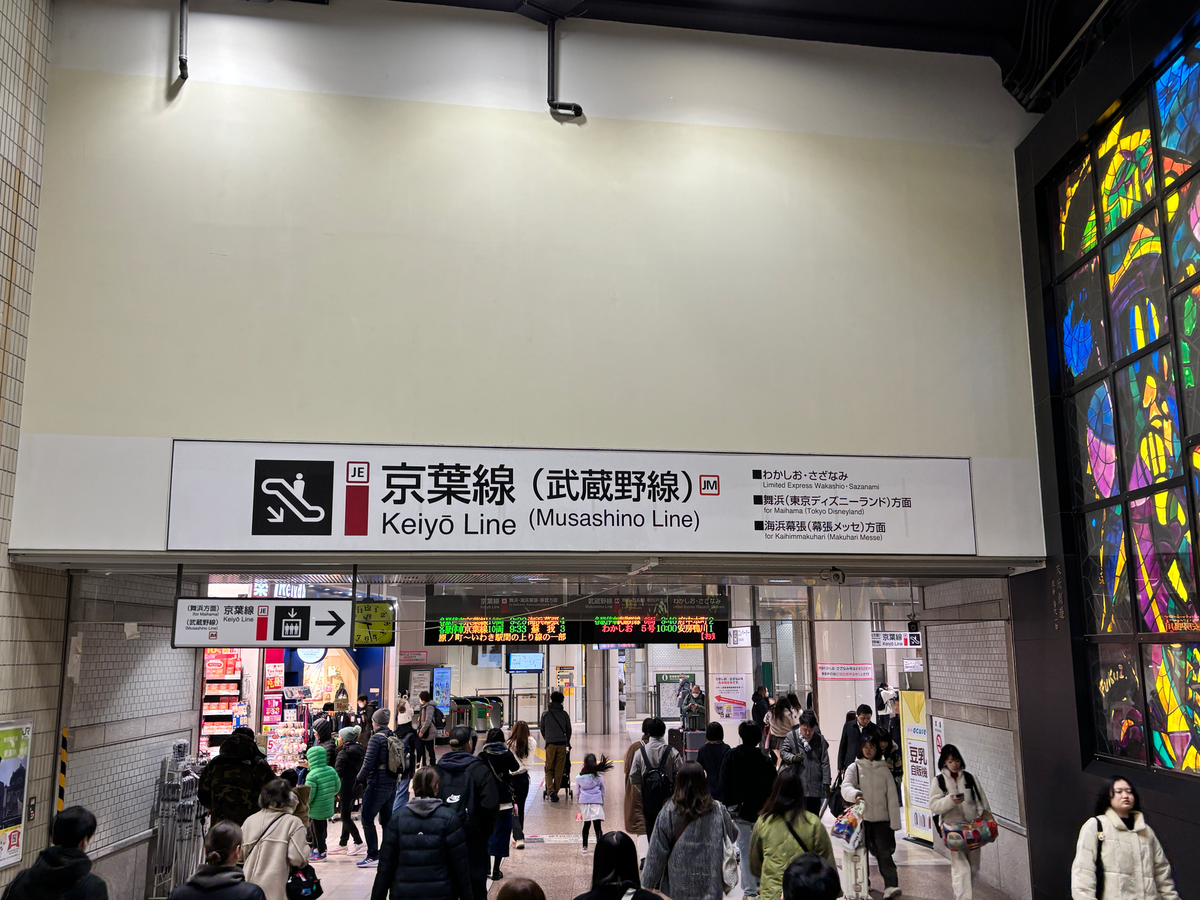
From the Keiyo Line (towards Maihama and Tokyo Disney Resort)
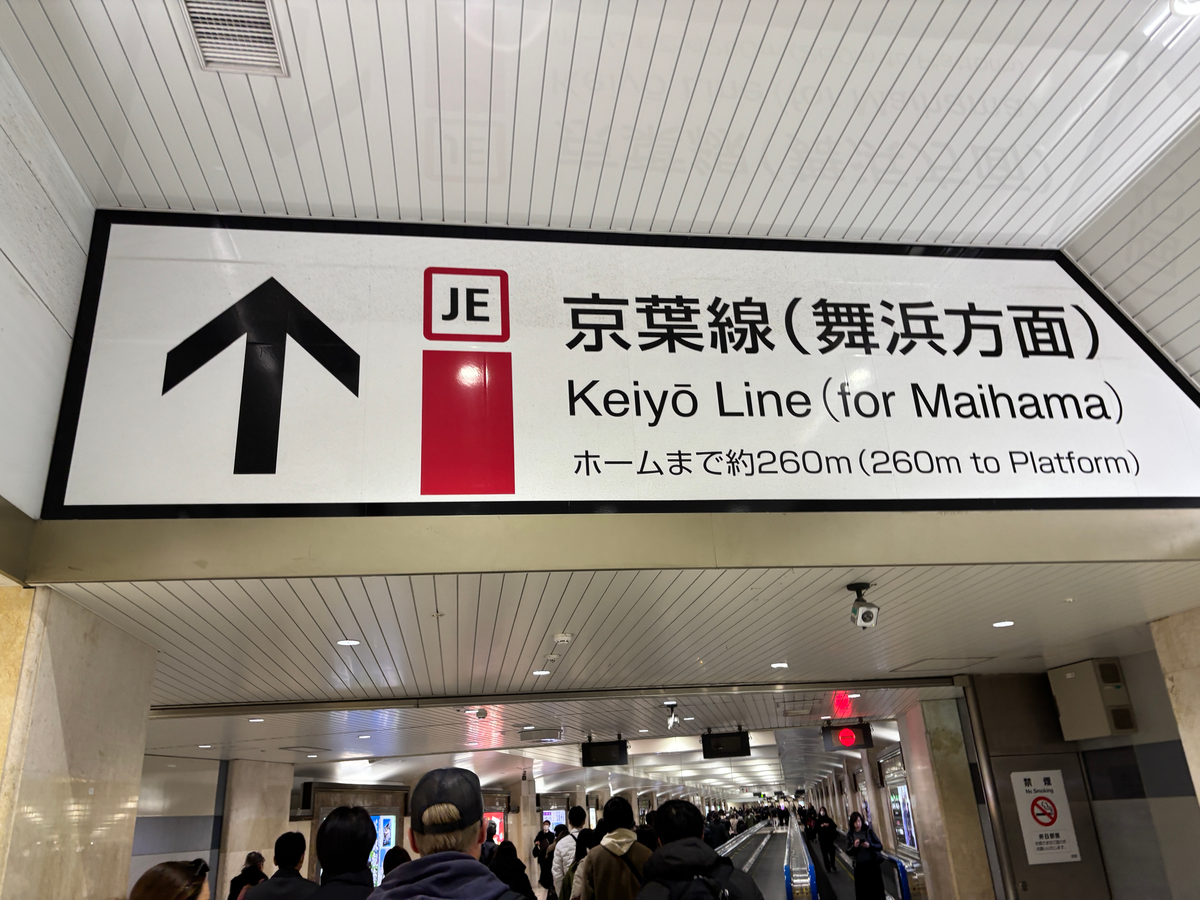
The Keiyo Line platform is located underground on the south side of the station, quite far from the other platforms. The signs indicate "610m," and even after walking for a while, it still showed "260m." Allowing more than 10 minutes for transferring to the Shinkansen is advisable.
Where to Buy Shinkansen Tickets?
The easiest way is to book in advance using your smartphone. You can reserve tickets for the Tokaido Shinkansen with "Smart EX" and for the JR East Shinkansen with "Ekinet." The purchasing process is summarized in How to Buy Shinkansen Tickets.
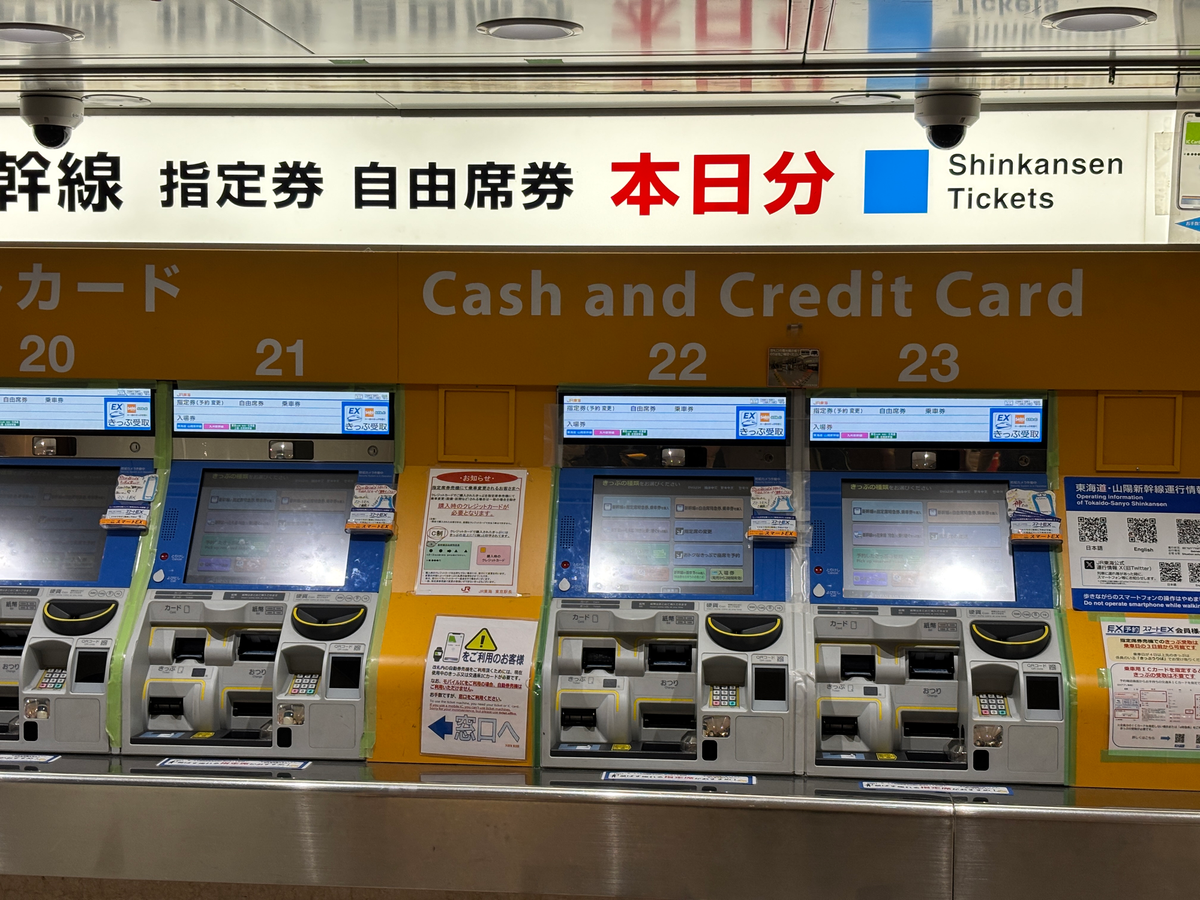
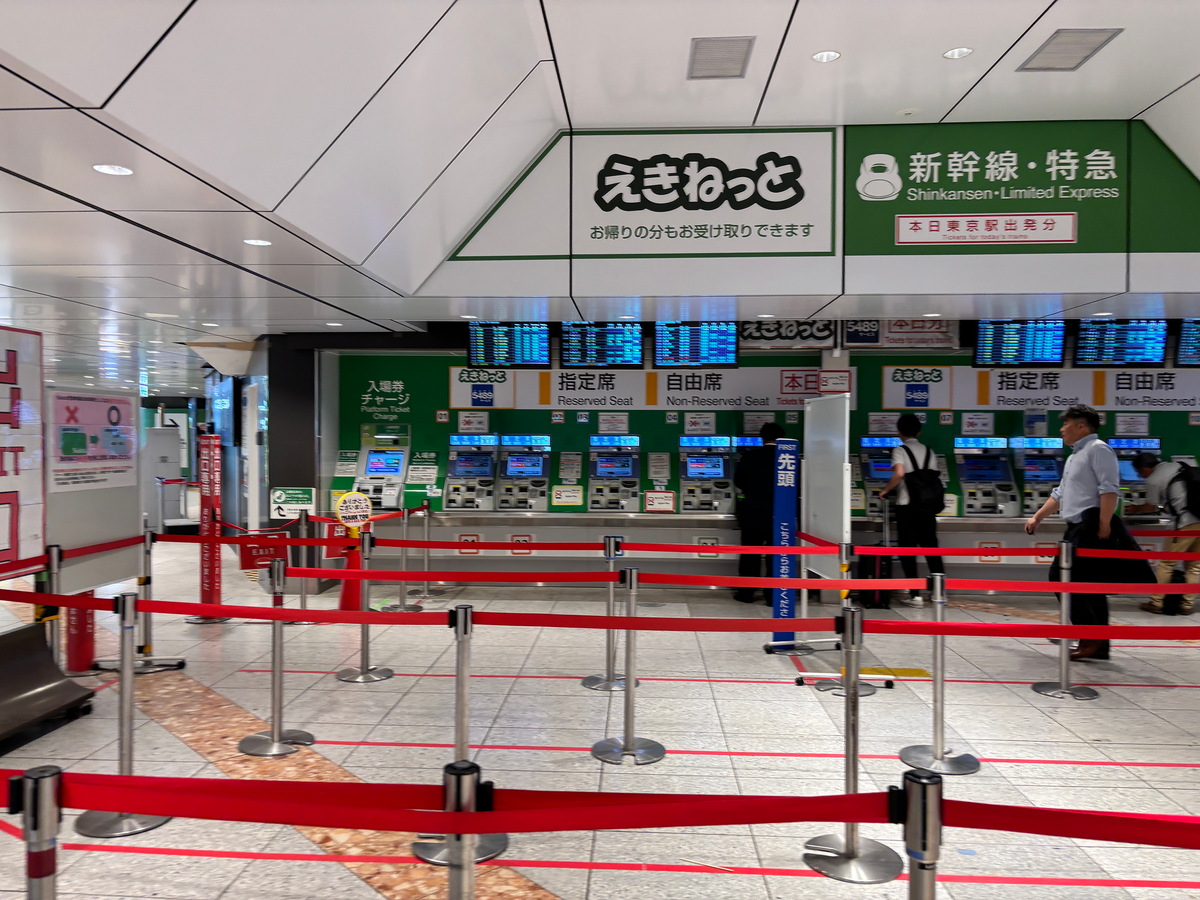
When buying at the station, use the ticket machines near the Shinkansen gates or transfer gates. The photo below shows a ticket machine where you can purchase same-day Shinkansen tickets. Both cash and credit cards are accepted.
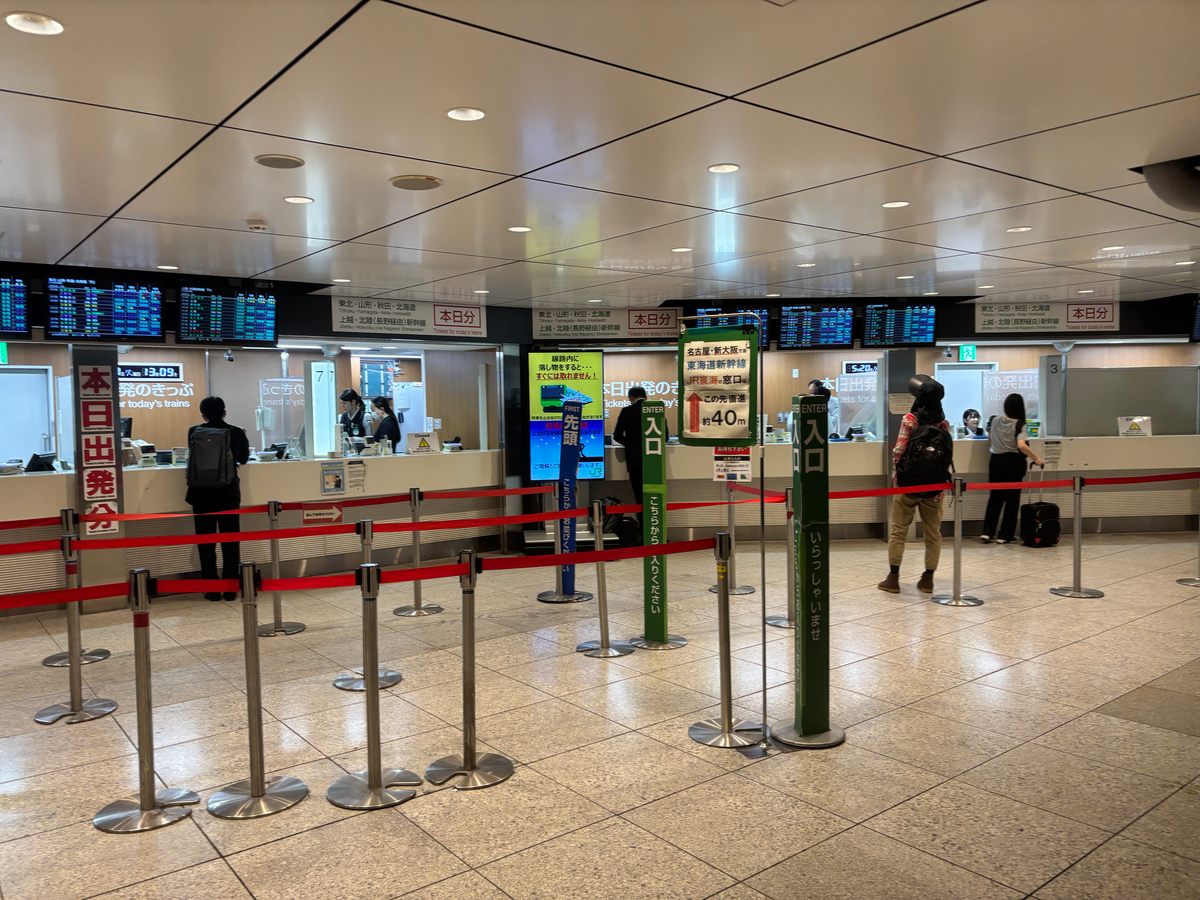
If you want to consult at a counter, go to the ticket office of the company operating the Shinkansen you are taking. For the blue Tokaido Shinkansen, it's the JR Central ticket office at the Yaesu Central Exit (open from 5:40 AM to 10:45 PM as of November 2026). For the green Tohoku and Hokuriku Shinkansen, visit the JR East ticket office. The JR East counter guide indicates that the JR Central ticket office is about 40 meters ahead.
When you reach the platform (departure information, car number, large luggage)
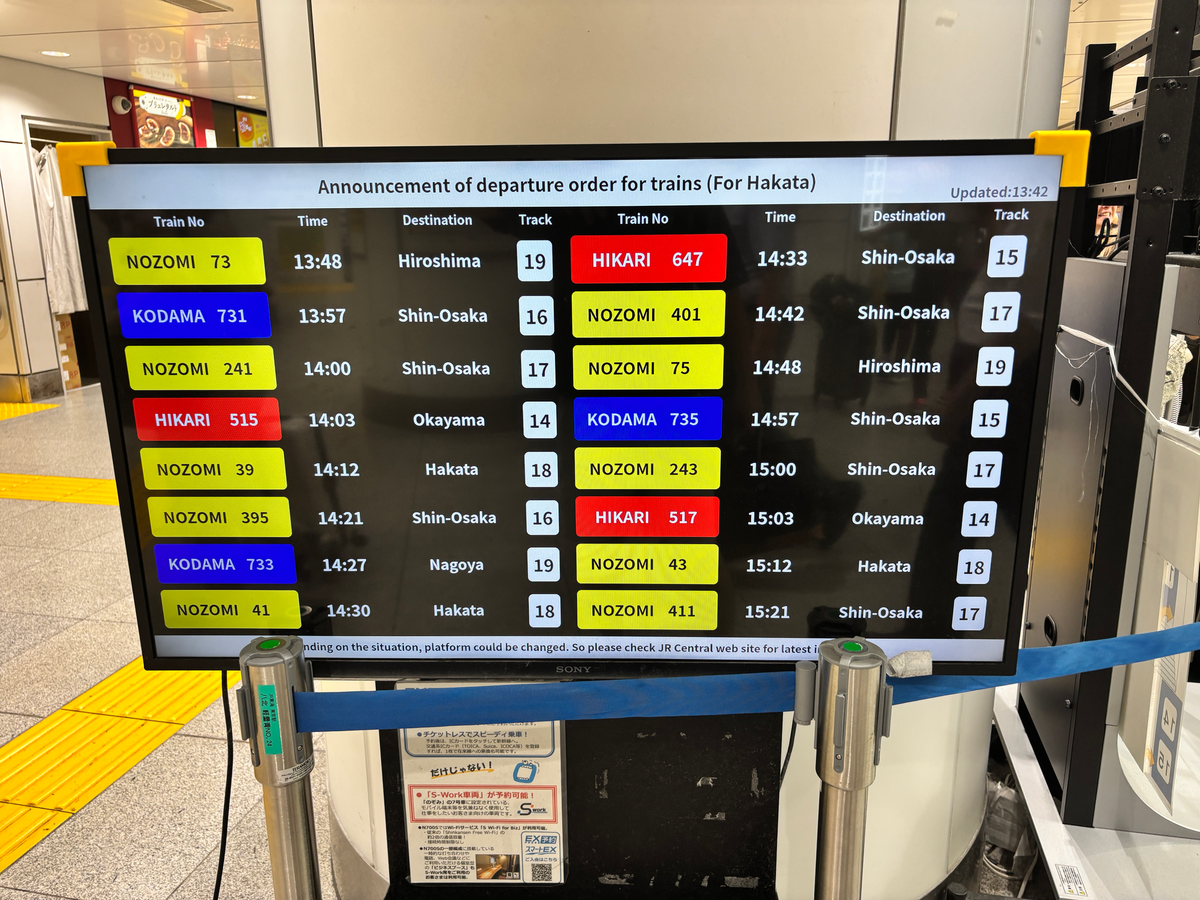
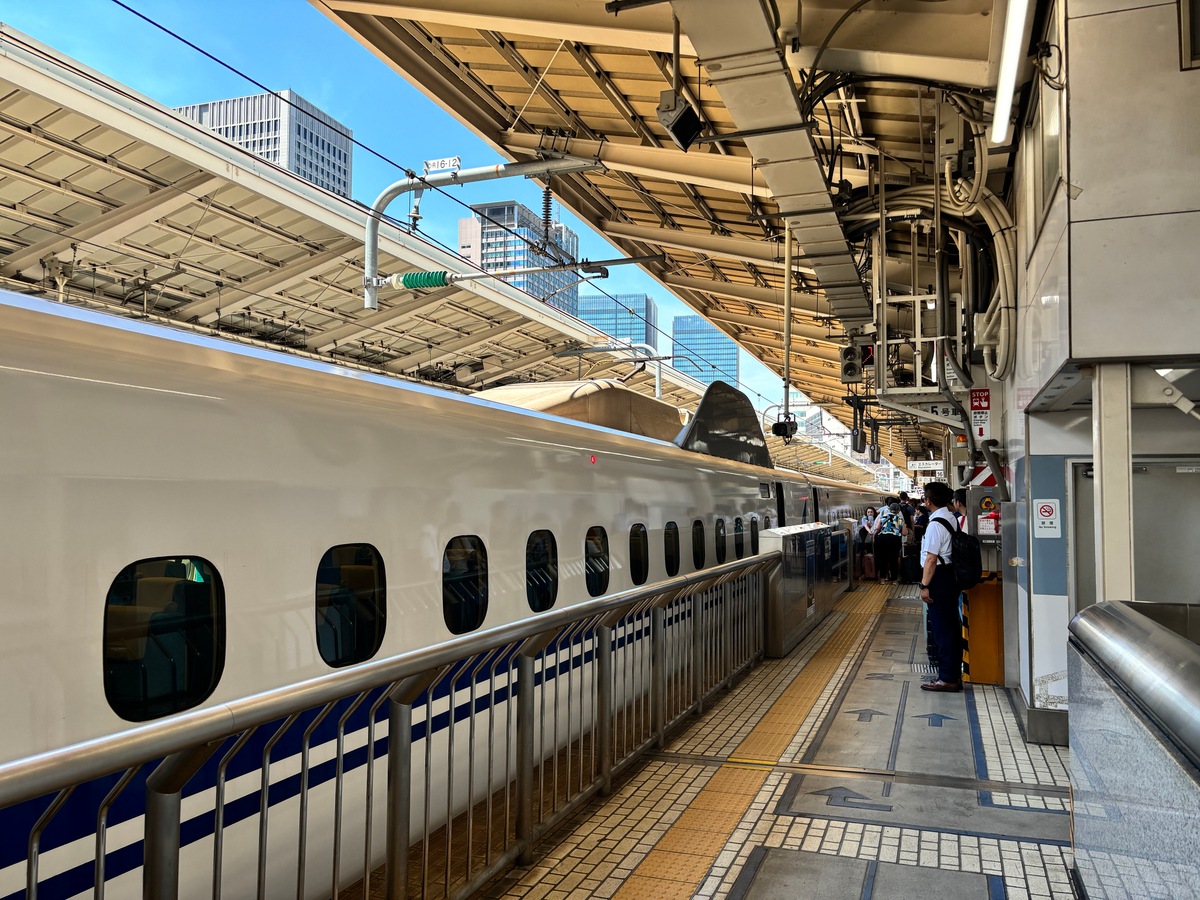
Near the transfer gates and ticket barriers, there are departure information displays. They include English displays showing train names, departure times, destinations, and platform numbers. Find your train's platform number before heading to the platform.
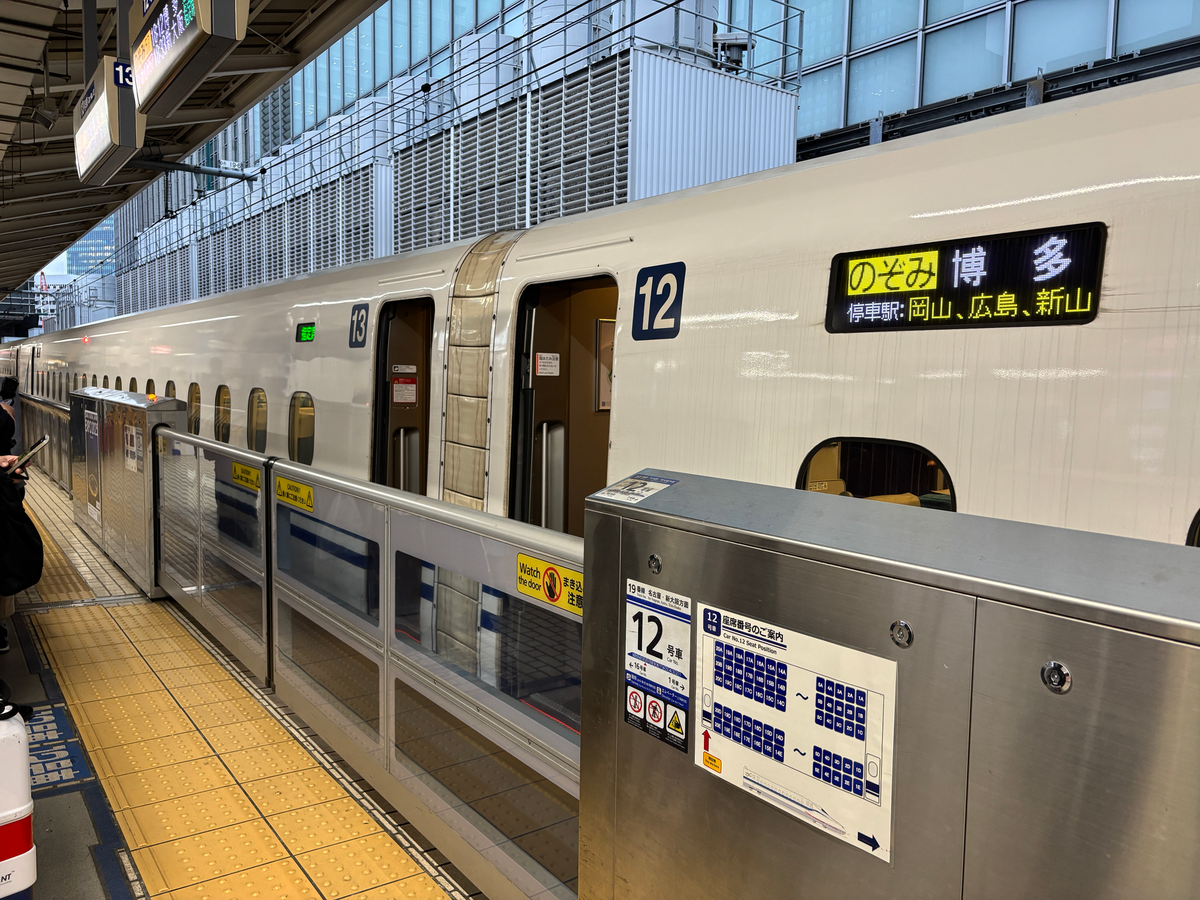
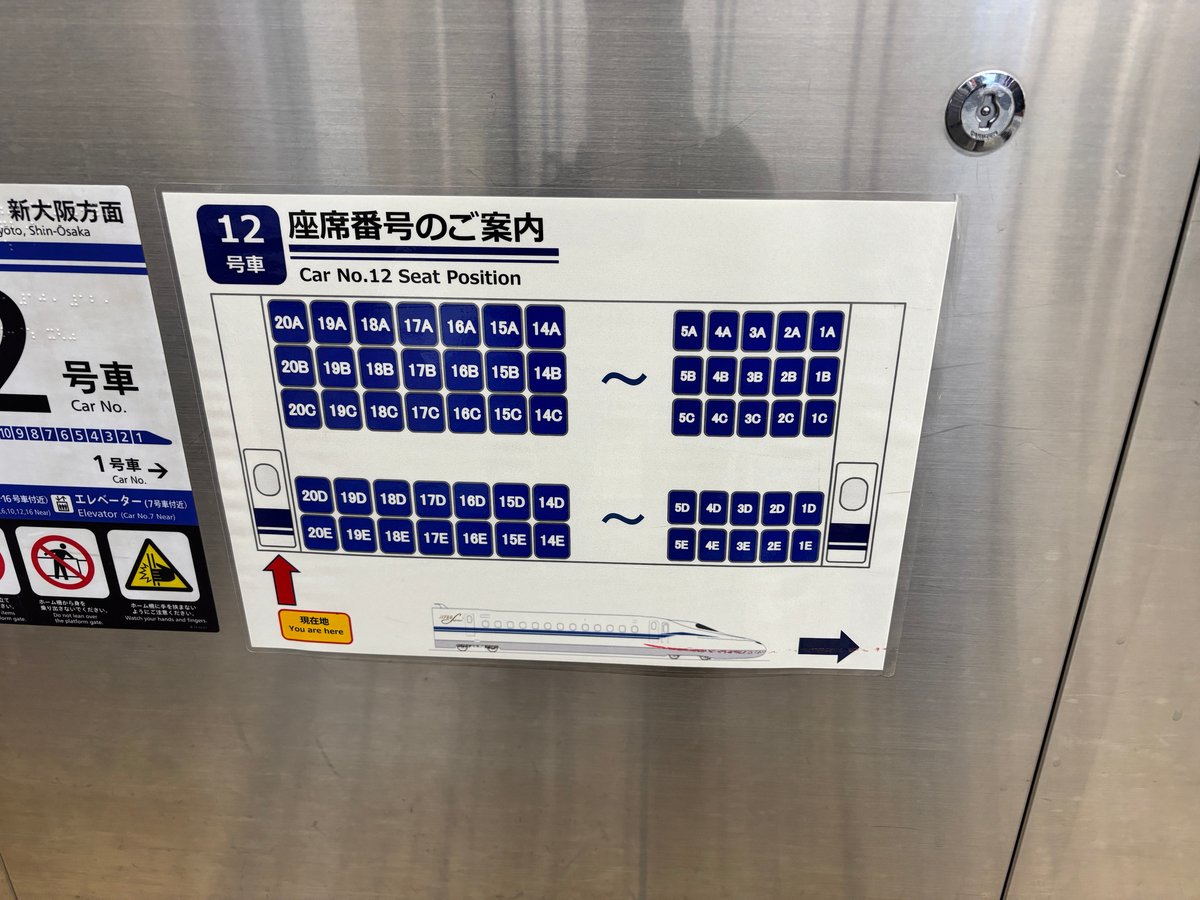
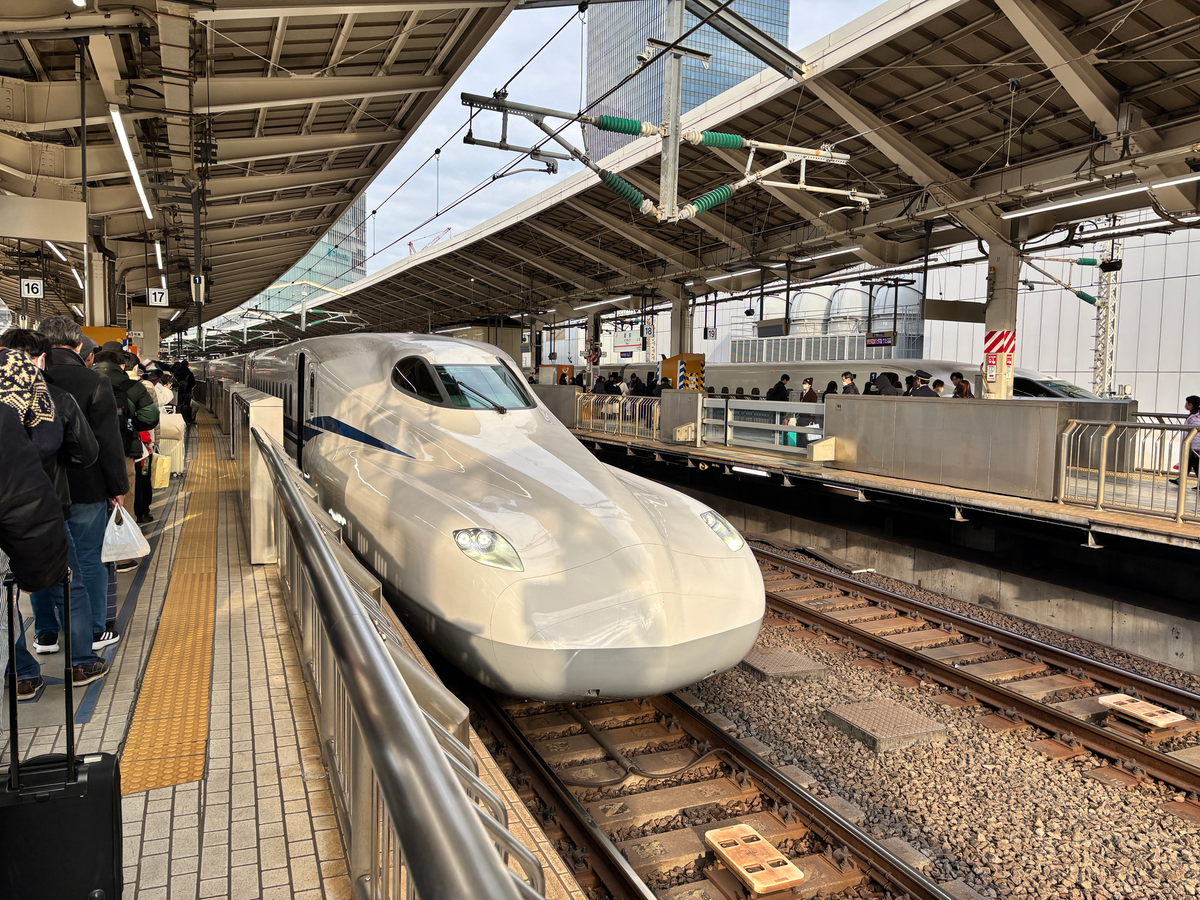
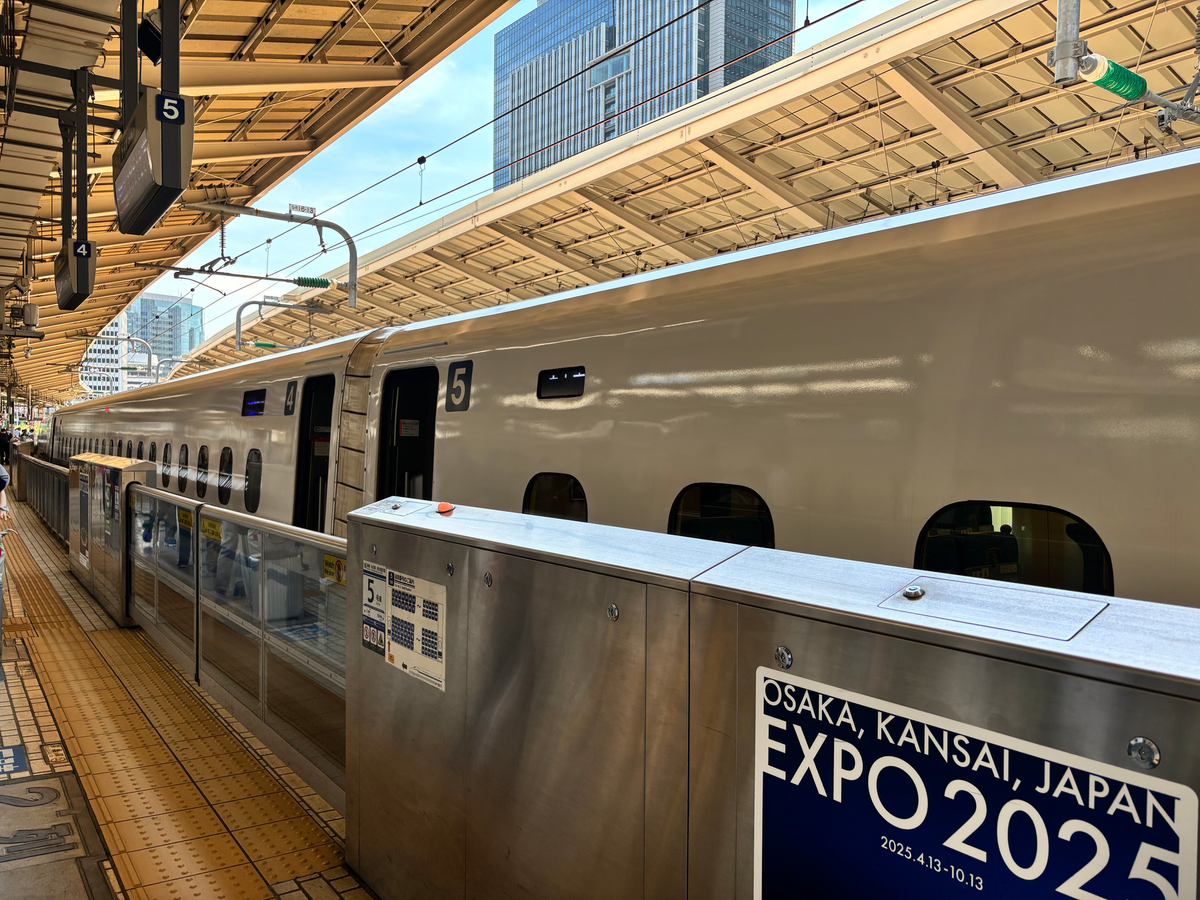
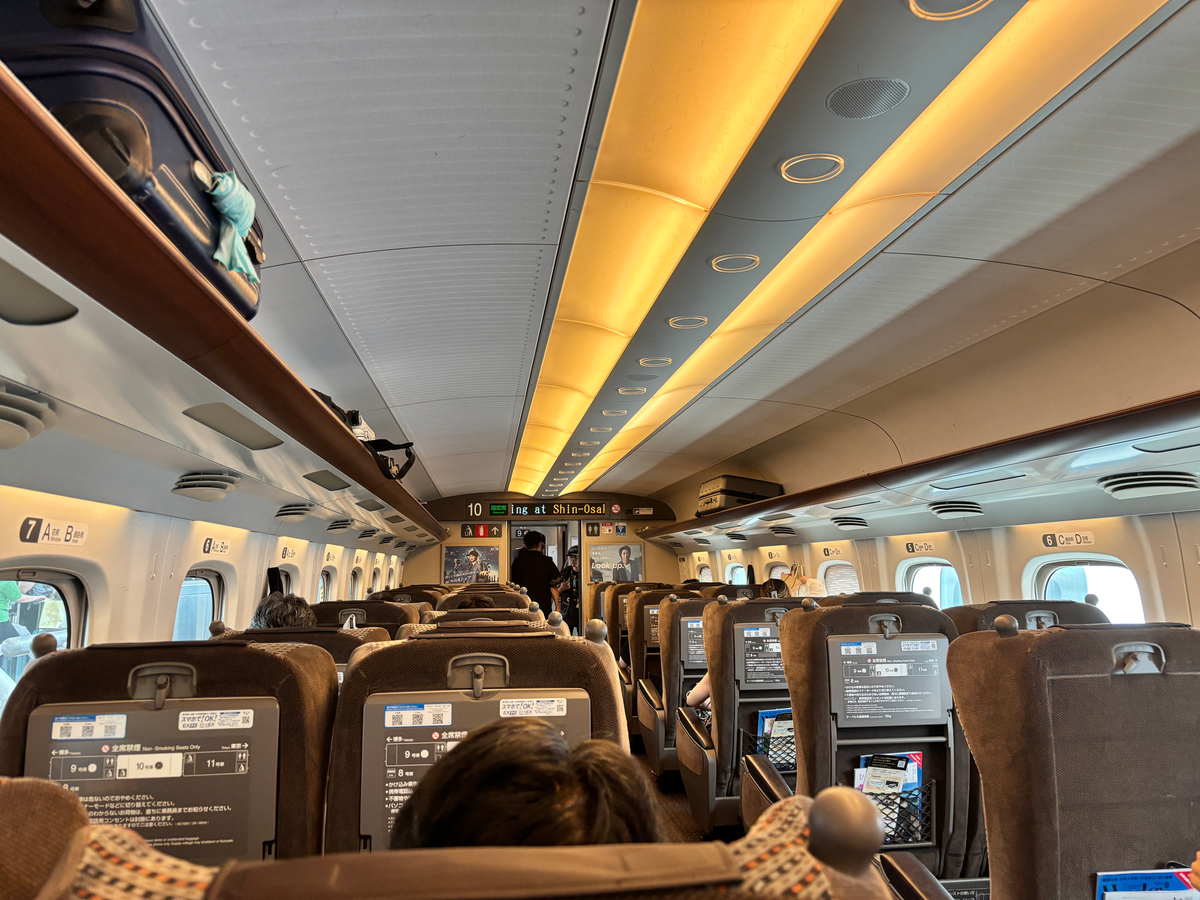
The platform displays car numbers. Passengers with reserved seats should wait at the location indicated on their ticket. Since Tokyo Station is the departure station, the doors will open after the arriving train has been cleaned.
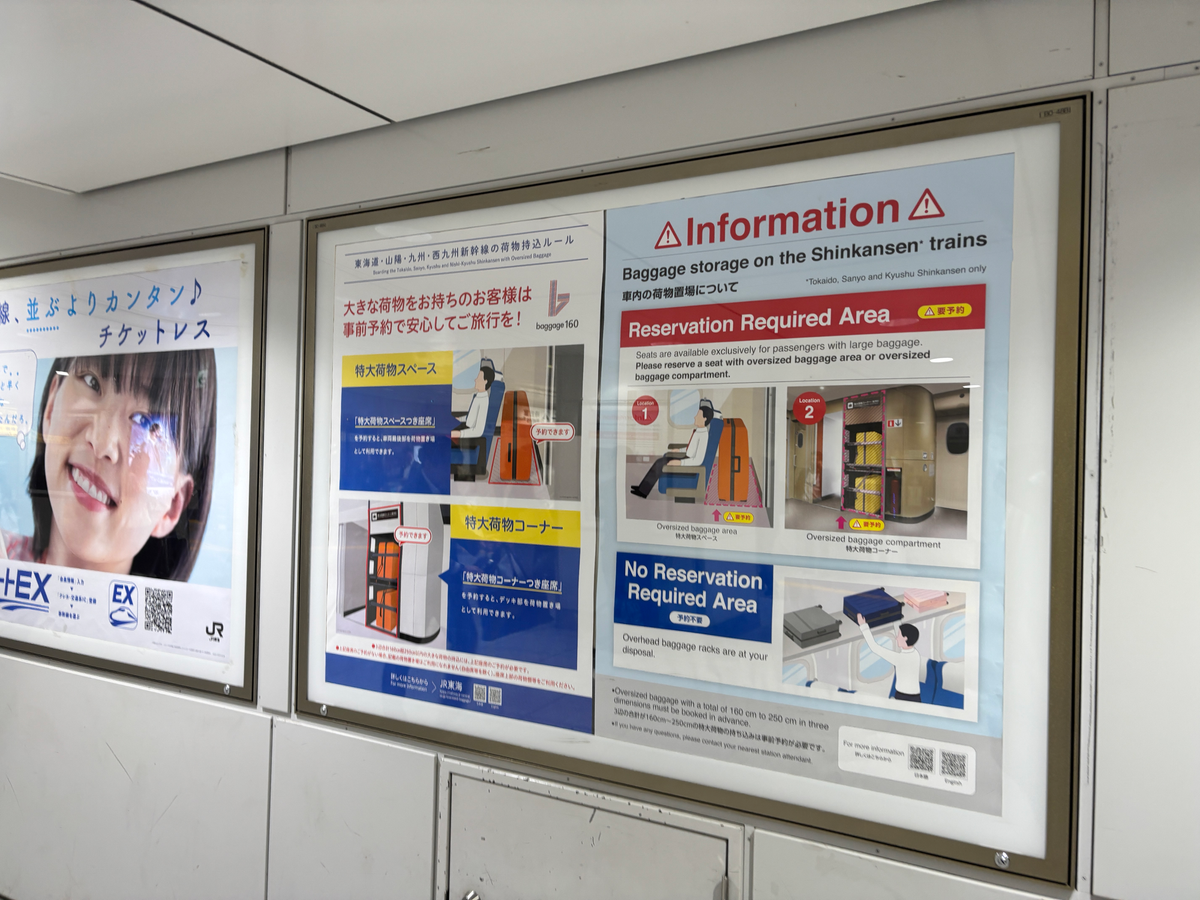
If you have a large suitcase, please be careful. On the Tokaido Shinkansen, when bringing luggage with a combined length, width, and height exceeding 160cm (up to 250cm), you need to reserve a "seat with oversized luggage space." If you bring it without a reservation, a fee will be charged.
How Early Should You Arrive? Tips to Avoid Getting Lost
If it's your first time, arriving at Tokyo Station 30 minutes before departure is reassuring. This allows time to collect your ticket and buy bento or drinks.
- At the station, follow only your color (blue or green) markers
- If lost, show your ticket or reservation screen to a station staff member and ask for help
When transferring from the Shinkansen to the subway
The only subway with a platform at Tokyo Station is the Tokyo Metro Marunouchi Line. Other subways require a short walk to nearby stations.
- Marunouchi Line
- The platform is located underground on the Marunouchi side. Destinations include Ginza, Shinjuku, and Ikebukuro.
- Tozai Line
- It's about a 4-minute walk through the underground passage on the Marunouchi side to Otemachi Station. Otemachi Station also connects to the Chiyoda Line, Hanzomon Line, and Toei Mita Line, though some lines require additional walking.
- Chiyoda Line
- It's about a 4-minute walk from the Marunouchi South Exit to Nijubashimae Station.
- Ginza Line
- It's approximately 400 meters from the Yaesu side to Kyobashi or Nihombashi Station. Destinations include Asakusa, Ueno, and Shibuya.
- Toei Asakusa Line
- It's about 600 meters to Nihombashi or Takaracho Station.
If you have a transportation IC card, you can transfer between JR and the subway with just a tap. Instructions on how to add it to your smartphone are summarized in the Mobile Suica article.
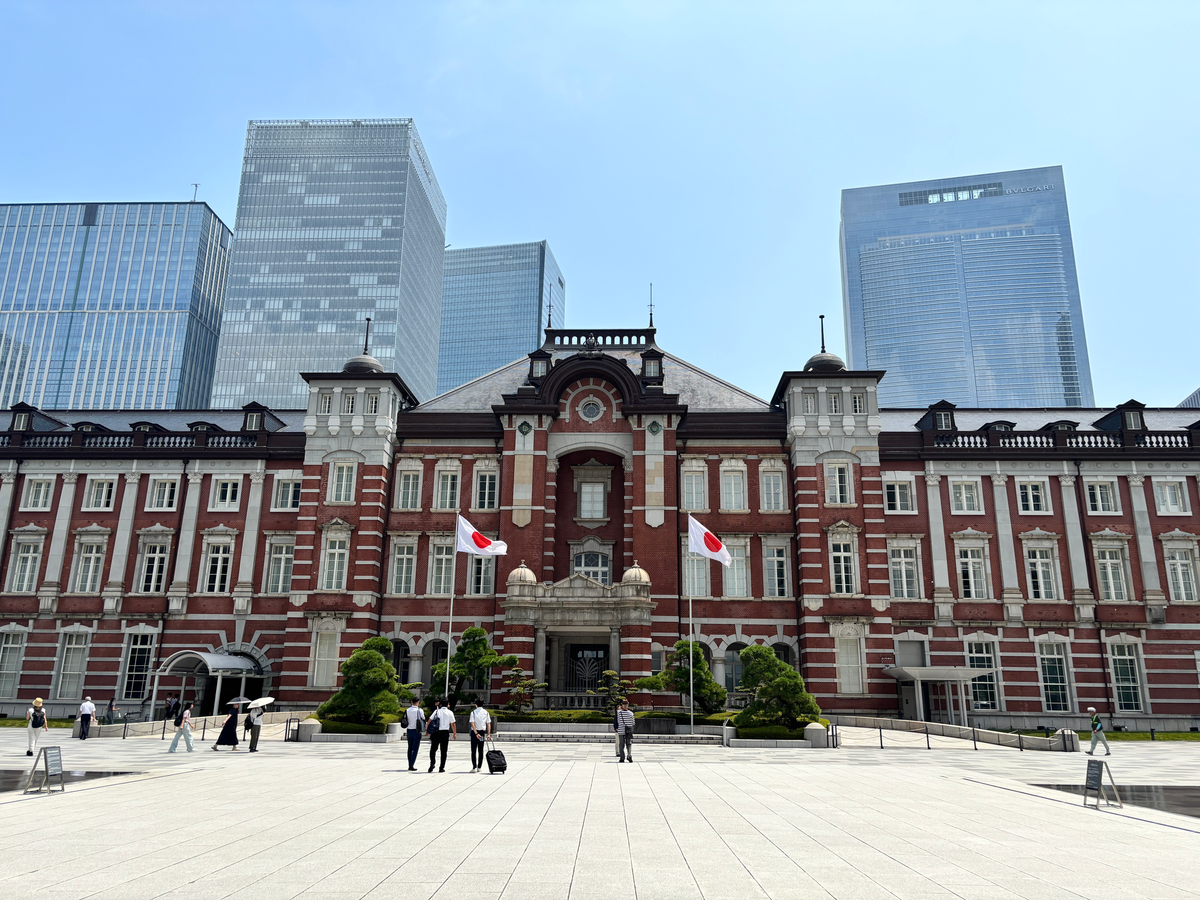
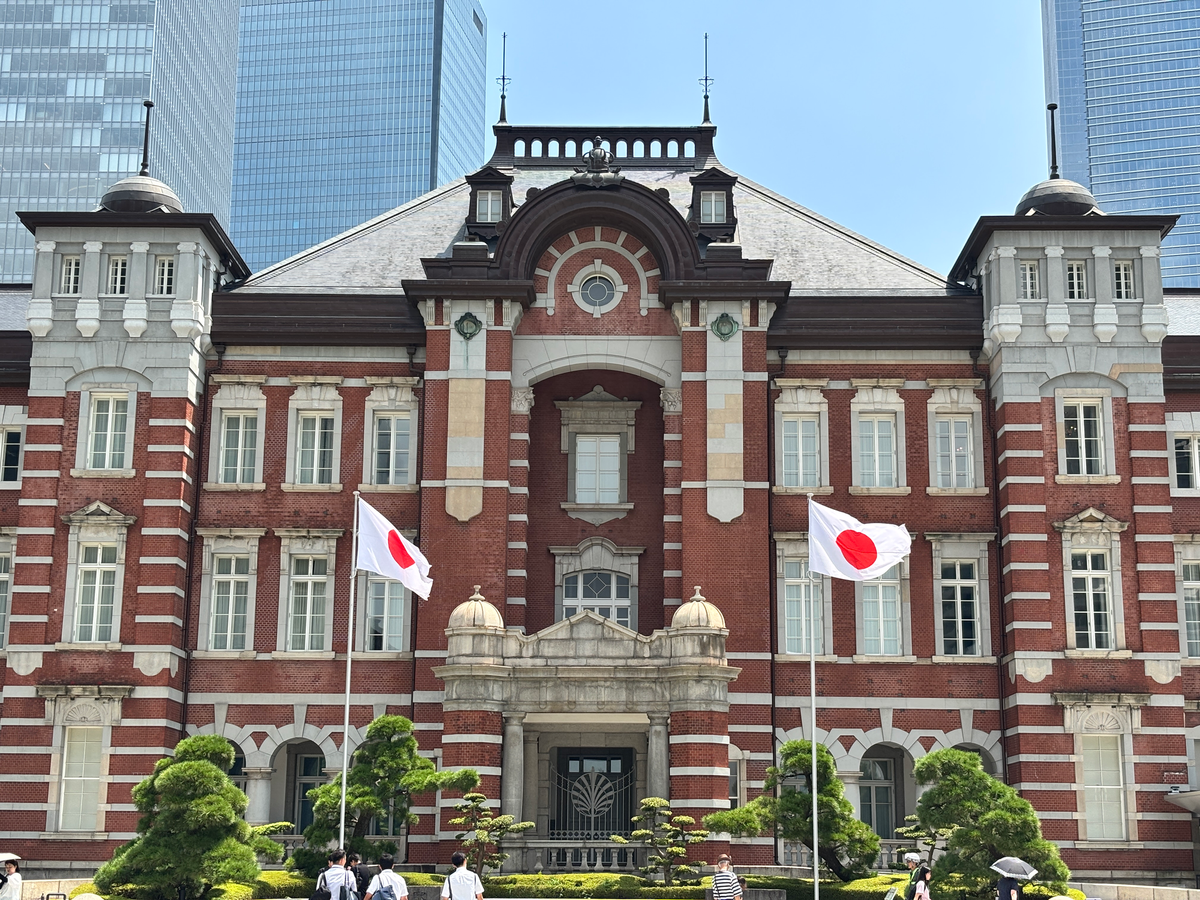
If you have time, visit the red-brick Marunouchi Station Building.
On the Marunouchi side, there is a red brick station building completed in 1914. In 2012, it was restored to its original appearance. If you have time, step outside from the Marunouchi Central Exit and take a look from the plaza in front of the station.
From Tokyo Station to Atami, then via Nagoya to Kiso
To reach Atami, take the blue-marked Tokaido Shinkansen Hikari or Kodama, which takes about 40-50 minutes. The Nozomi does not stop at Atami. For train selection, see How to Get from Tokyo to Atami and Differences Between Nozomi, Hikari, and Kodama.
You can also take the Tokaido Line or the Limited Express Odoriko. The two images below show the platform for the Tokaido Line, not the Shinkansen. The local train to Atami departs from platform 9. It's separate from the Shinkansen platforms 14-19, so be careful not to confuse them.
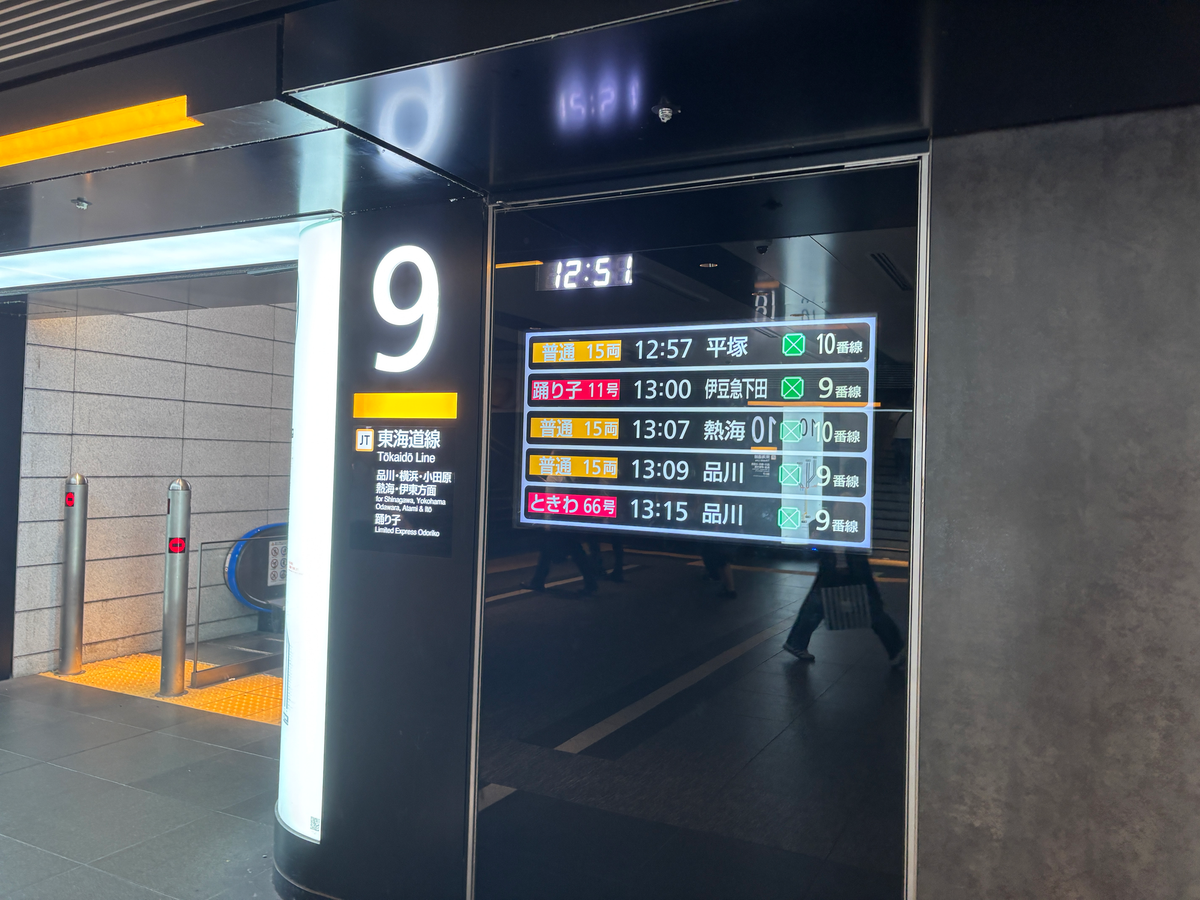
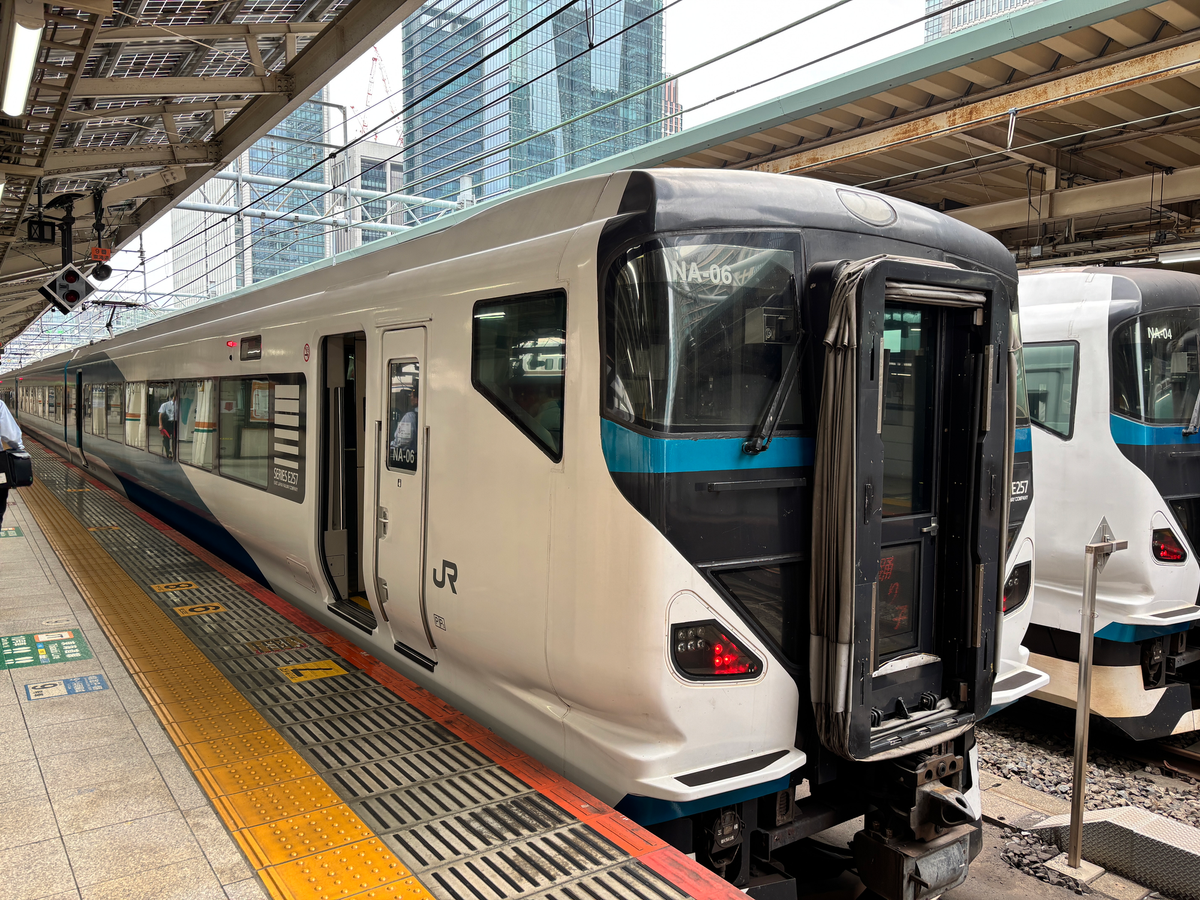
To reach Kiso, where old post towns remain, take the Nozomi to Nagoya, which takes about 1 hour and 40 minutes. Transfer to the Shinano limited express at Nagoya to head to Kiso-Fukushima or Minami-Kiso. Also, check out how to get from Tokyo to Nagoya and train access to Kiso. If you're staying in Kisoji, we also introduce accommodations in Kiso.
Q&A
Frequently Asked Questions
- Is Tokyo Station the same as the Shinkansen station?
- It's located within Tokyo Station. However, the Shinkansen platforms are inside a separate ticket gate from the regular train lines.
- Where do you board the Shinkansen at Tokyo Station?
- The blue-marked Tokaido and Sanyo Shinkansen depart from platforms 14 to 19 on the Yaesu side, while the green-marked Tohoku and Hokuriku Shinkansen depart from platforms 20 to 23. Enter through the Shinkansen gates on the Yaesu side or Nihonbashi exit, or via the transfer gates inside the station.
- How many minutes in advance should I arrive at Tokyo Station?
- If it's your first time, aim to arrive 30 minutes before departure. Allow more time when transferring from the underground platforms of the Keiyo Line or Narita Express.
- Can I bring large luggage?
- You can bring it. On the Tokaido Shinkansen, luggage with a combined length, width, and height exceeding 160cm and up to 250cm requires a reservation for a "seat with oversized luggage space" or similar.
- Is Tokyo Station easy to get lost in?
- The station is quite large, but there are English signs for "Shinkansen." First, check if your Shinkansen is blue or green, and follow the corresponding color markers to reach your train.