Tokyo
Kappabashi Street Guide Buy knives, pots, and tableware in the wholesale district. Directions and map.
Updated 19 November 2026By Dynamic Japan Travel editorsEditorial policy
Contents
In Tokyo, when it comes to kitchenware streets, Kappabashi Street is the place to go. Located between Asakusa and Ueno, it's known as "Kappabashi Street" or "Kappabashi Kitchen Town" in English. This is a wholesale district, where restaurants and shop owners come to buy tools in bulk for their businesses. Many stores cater to professionals, offering a wide variety of knives, pots, and dishes, often at reasonable prices. Nowadays, many travelers from abroad visit and choose Japanese knives and tableware as souvenirs. In the store we visited, even travelers could purchase just one item.
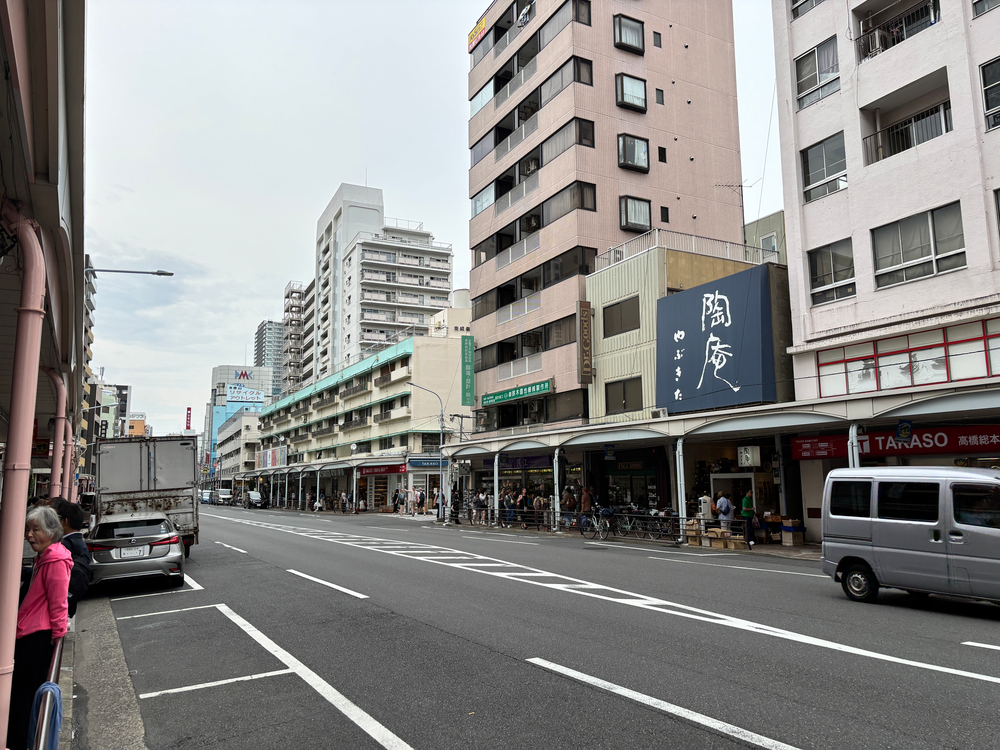
We walked from the southern entrance of the street to around the Kappabashi intersection, slightly north of the center, on a weekday afternoon in May 2025, taking about an hour and a half. In this article, we will introduce how to get there, stores for knives, pots, and dishes, food sample-making experiences, and frequently asked questions, along with photos we took during our visit.
Things to Know in Advance
- Location
- Between Asakusa and Ueno. About a 5-minute walk from the nearest Tawaramachi Station
- Length and Number of Shops
- Approximately 800m, with over 170 shops
- What to Buy
- Japanese knives, pots and pans, plates and bowls
- Closed Days
- About 70% of shops are closed on Sundays and holidays
- Time
- We spent about an hour and a half covering half the street, entering shops
- Payment
- Some shops accept cards, but it's safe to carry some cash
- Knives
- For return flights, pack them in checked luggage, not carry-on
What is Kappabashi Street like?
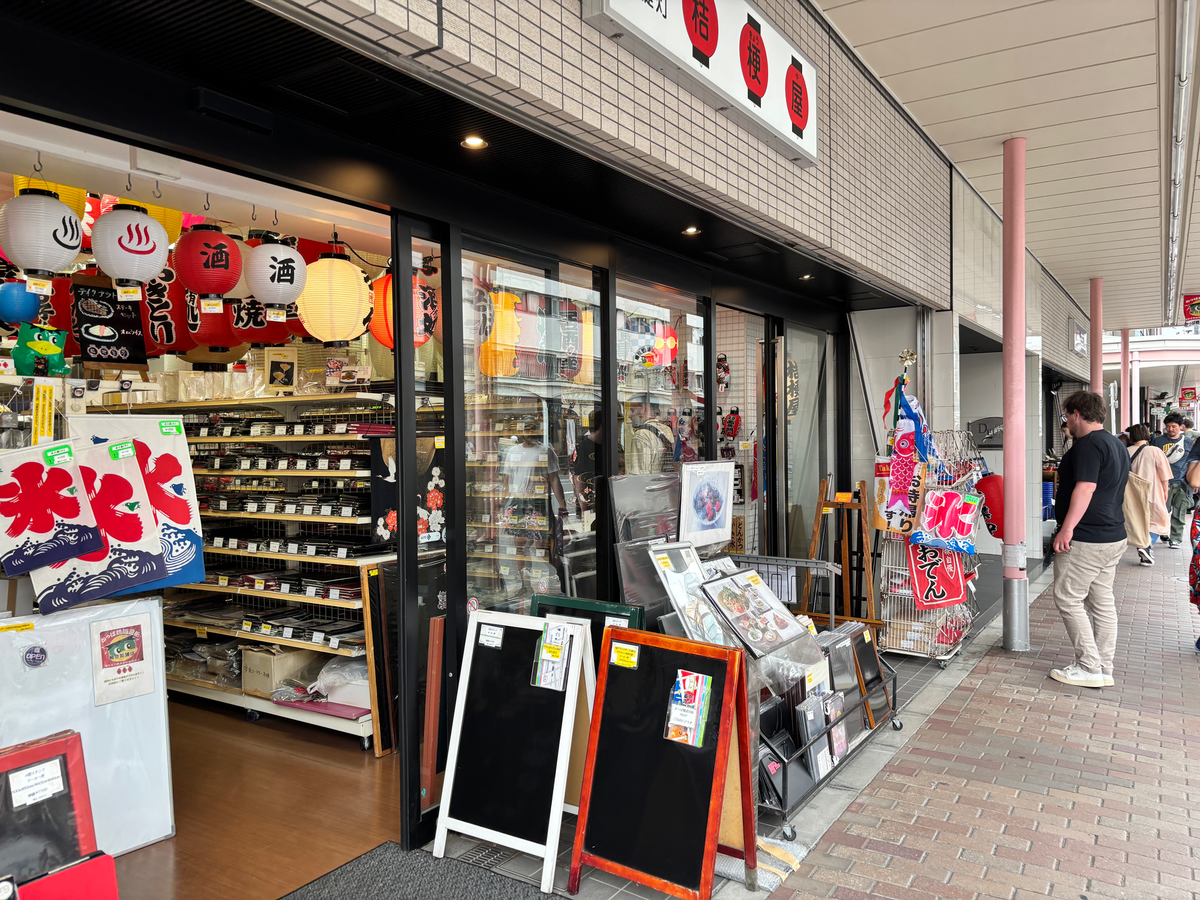
The street stretches about 800 meters, lined with over 170 shops. They sell almost everything related to cooking and restaurants, including knives, tableware, pots, chopsticks, entrance curtains (noren), paper lanterns (chouchin), restaurant signs, and food samples.
Around Senso-ji Temple, there are shops catering to tourists for street food. In contrast, Kappabashi is a wholesale district where restaurant professionals come to stock up. Therefore, you can compare a wide variety of tools, including sizes and shapes not commonly seen in regular stores. Tokyo's official tourism site (GO TOKYO) also highlights it as a place to buy tableware and kitchen tools at good prices.
The history page on the official Kappabashi Tool Street website notes that the number of foreign tourists has significantly increased since around 2015. Japanese knives and tableware are popular among travelers from abroad.
How to Get to Kappabashi Dougu Street
The nearest station is Tawaramachi Station on the Tokyo Metro Ginza Line. You can also walk from other stations. The red line on the map below indicates the Kappabashi Tool Street.
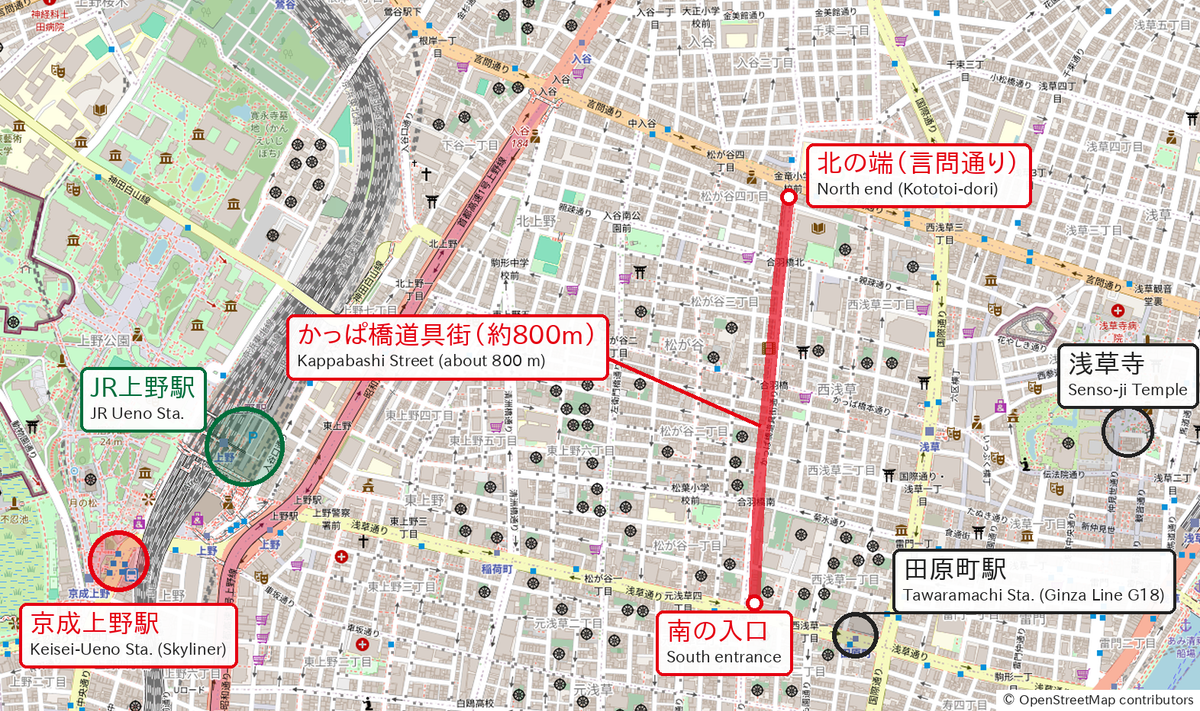
The official website of Kappabashi Tool Street lists the walking times from the stations as follows:
- Tawaramachi Station (Tokyo Metro Ginza Line): About 5 minutes on foot
- Asakusa Station on the Tsukuba Express (different from the Asakusa Station on the Ginza Line, etc.): About 5 minutes on foot
- Iriya Station (Tokyo Metro Hibiya Line): About 6 minutes on foot
- Asakusa Station (Tokyo Metro Ginza Line, Toei Asakusa Line, Tobu Line): About 13 minutes on foot. This station is closer for those coming from Sensoji Temple
- Ueno Station (JR): About 15 minutes on foot
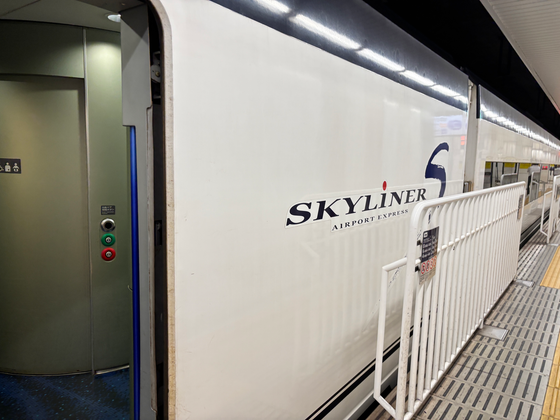
Kappabashi Tool Street is located east of Ueno Station and Keisei Ueno Station. For those arriving from Narita Airport via the Skyliner, Keisei Ueno Station is right next to Ueno Station. The easiest way to get there is to take the Ginza Line for two stops and get off at Tawaramachi Station. Directions from Keisei Ueno Station, how to ride the Keisei Skyliner, and how to buy tickets and pass through the gates on the Ginza Line are explained with photos in How to Ride the Keisei Skyliner and How to Use the Tokyo Subway. If you think you might get lost inside Ueno Station, check out the Ueno Station Guide.
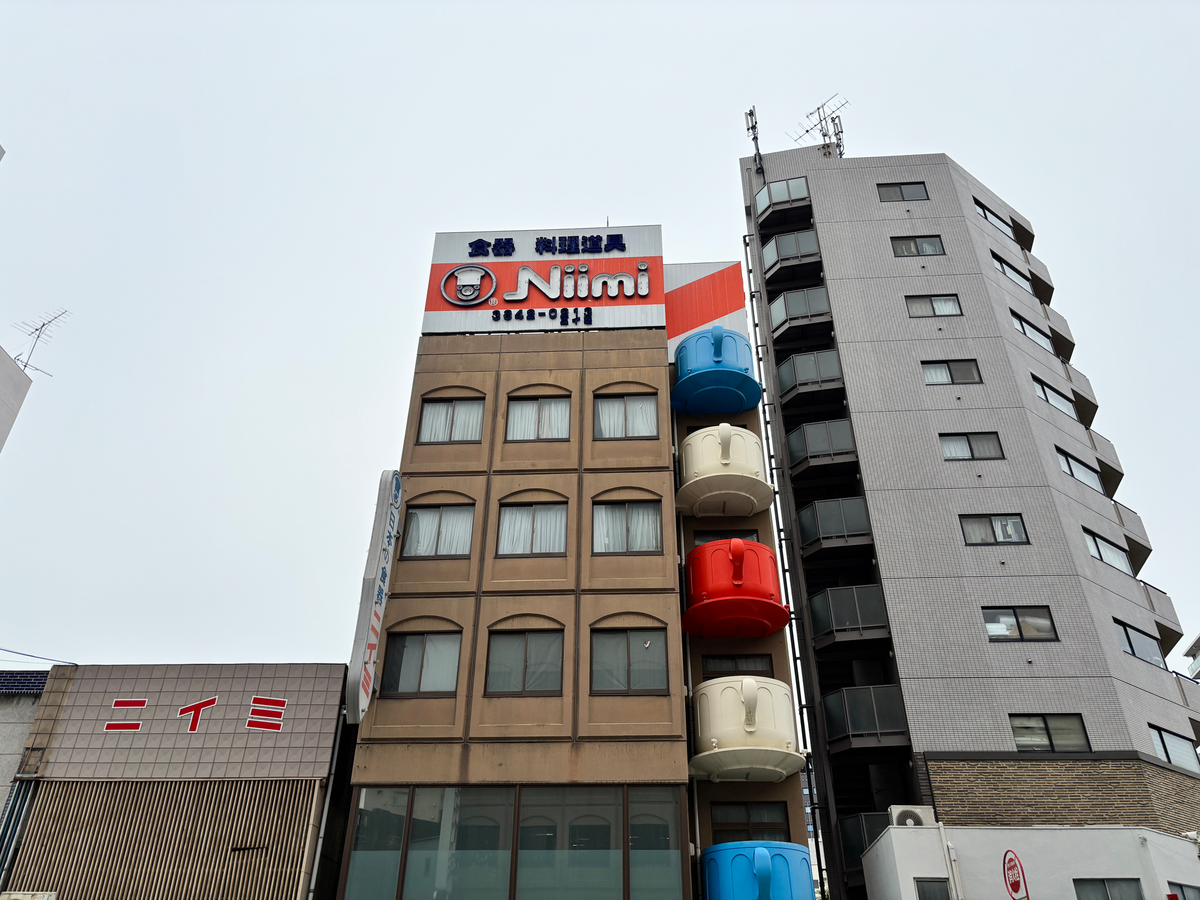
Walking from Tawaramachi Station, you'll arrive at the southern entrance of the street. Here, a large statue of a chef's face on top of a building serves as a landmark. We also started our walk from this southern entrance.
Things to Buy at Kappabashi: Knives, Pots, Plates
Japanese knives, pots and pans, and plates are popular among travelers from abroad. Here, we introduce the shops we visited while walking, categorized by the items you might want to buy. Since there are many stores of the same type, it's recommended to compare several before making a decision.
Japanese Knives
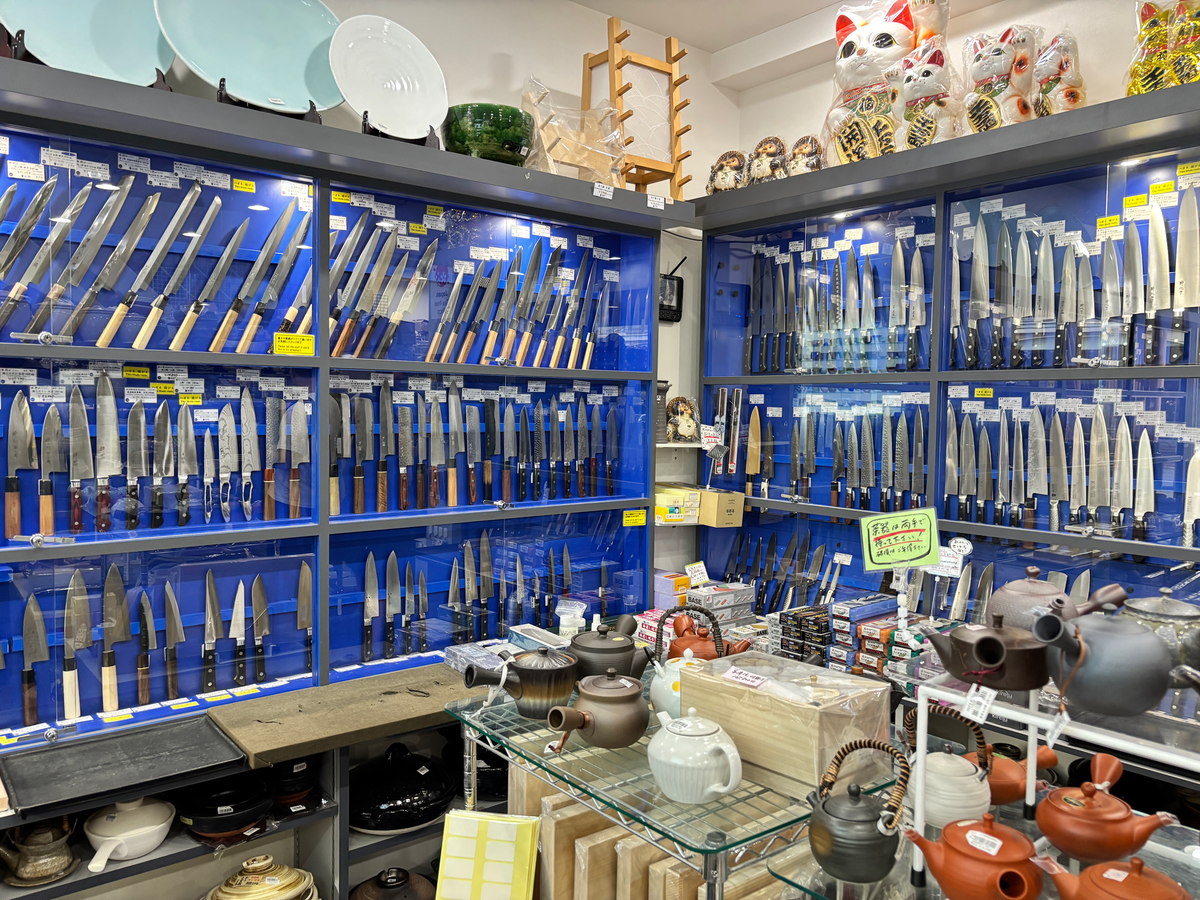
One of the popular souvenirs at Kappabashi is Japanese knives. A wall full of cases displays knives of various lengths and shapes, making it enjoyable just to look at them.
Japanese knives have names based on their shapes. For example, there's the "Santoku," which can cut both meat and vegetables, the "Gyuto," similar to a Western chef's knife, the "Nakiri" for cutting vegetables, and the long "Yanagiba" for slicing sashimi. If you're unsure which to choose, tell the staff what you usually cook to help make your choice easier. Some stores offer engraving services for the knives. Prices and times vary by store, so inquire at the shop.
Be mindful of your return flight. Knives cannot be carried in your hand luggage on the plane. Place them in your suitcase and check them in. Also, check the regulations for bringing knives into your country before departure.
Cooking Tools: Pots and Pans
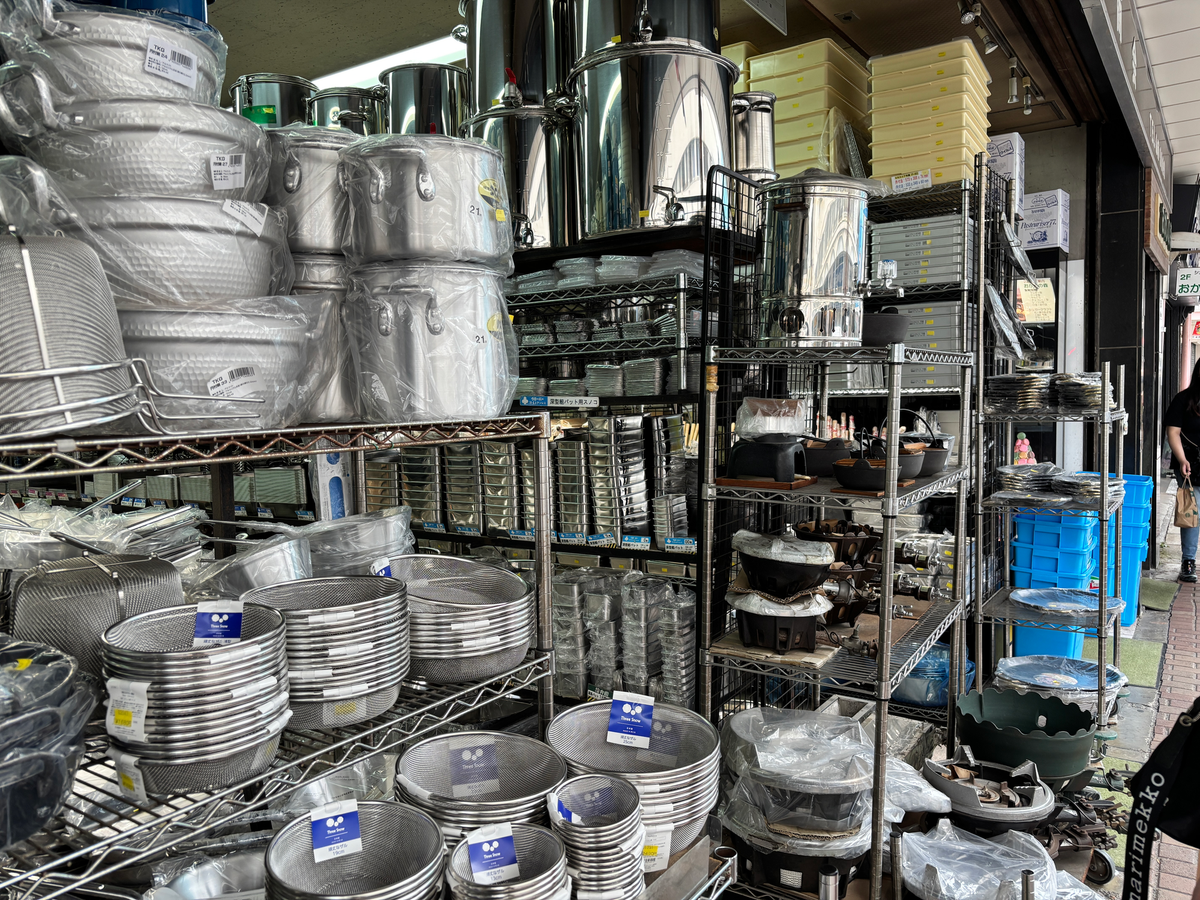
Some shops had large pots stacked outside, like those used in ramen shops. It's a scene typical of a street for professional tools, and just looking around is enjoyable.
There are also many tools that are easy to use at home. For example, the official site of Kama-asa in Kappabashi features square frying pans for making Japanese omelets (tamagoyaki pans) and iron frying pans. If you're interested in trying Japanese home cooking, be sure to check them out.
Plates & Tableware
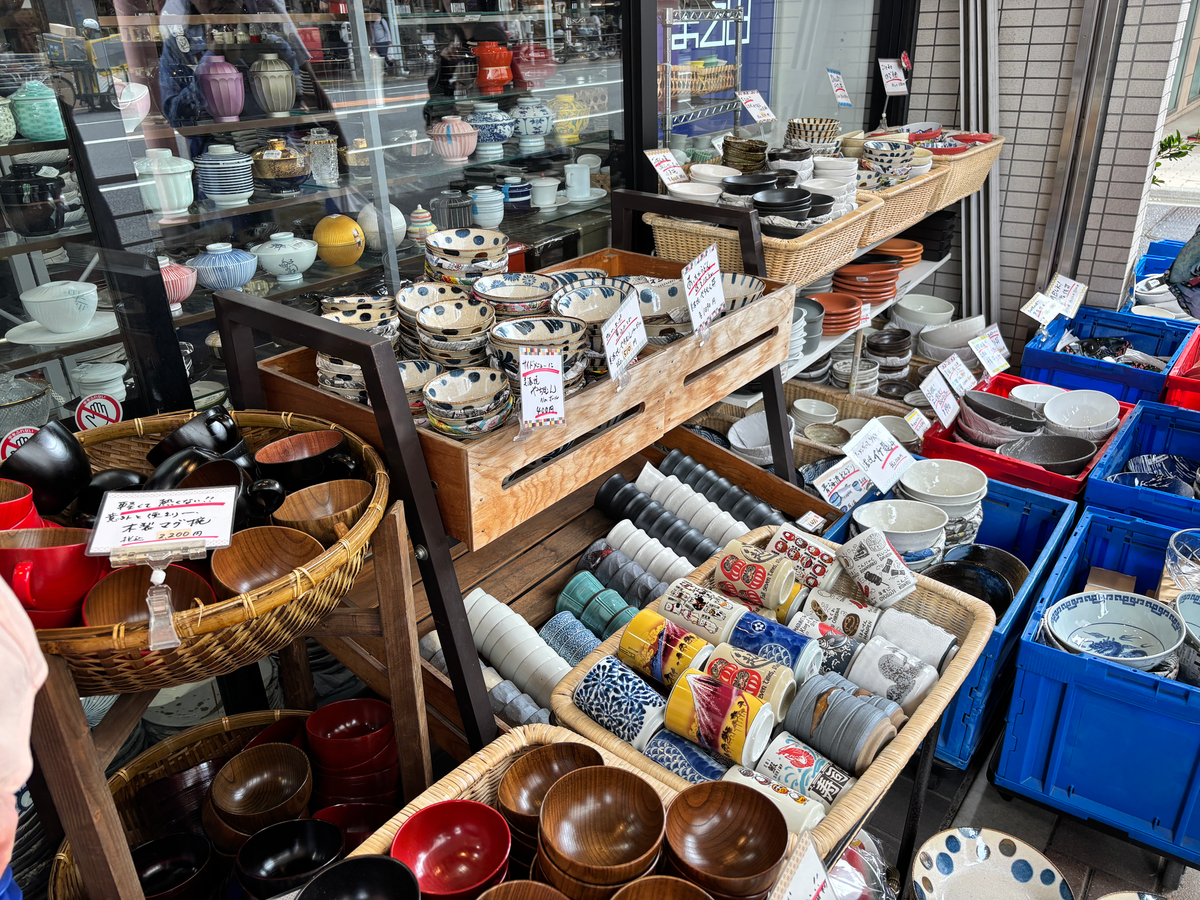
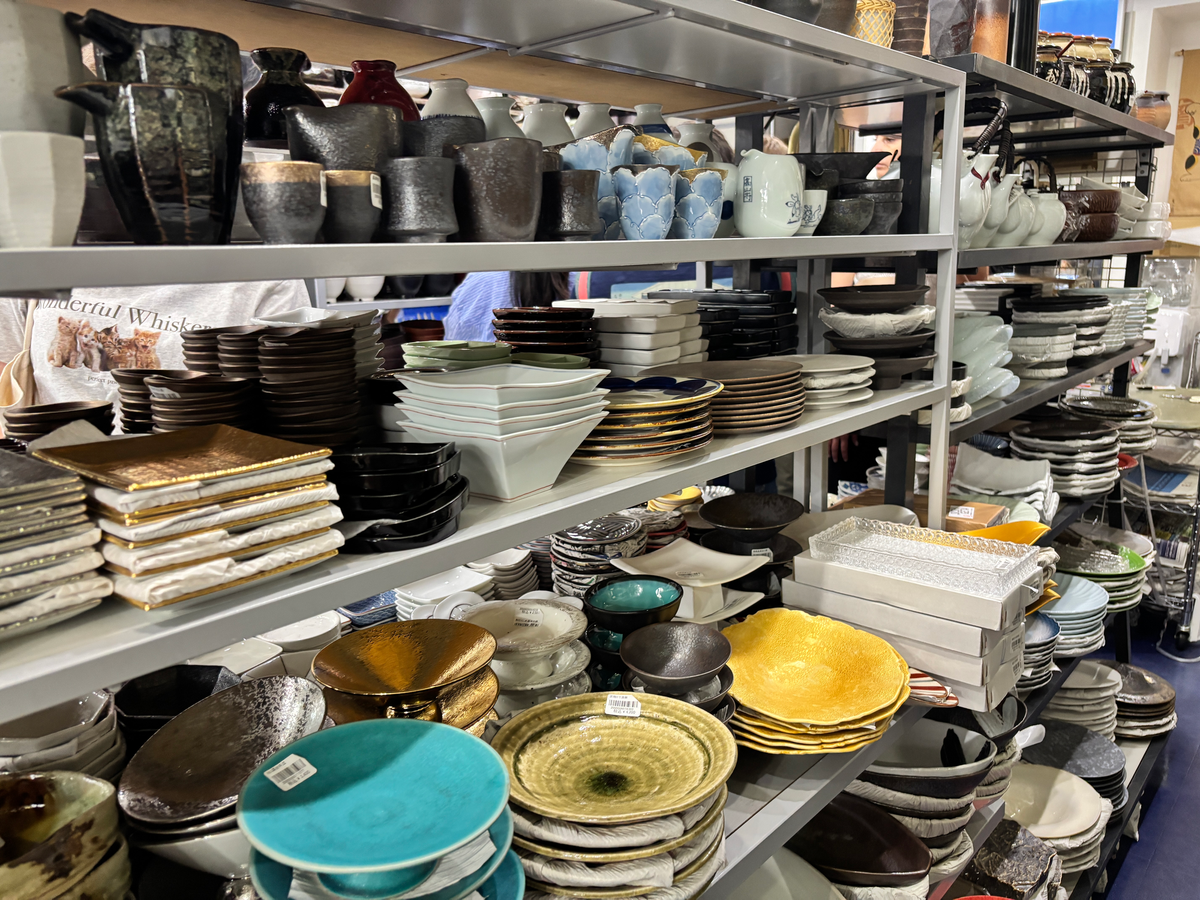
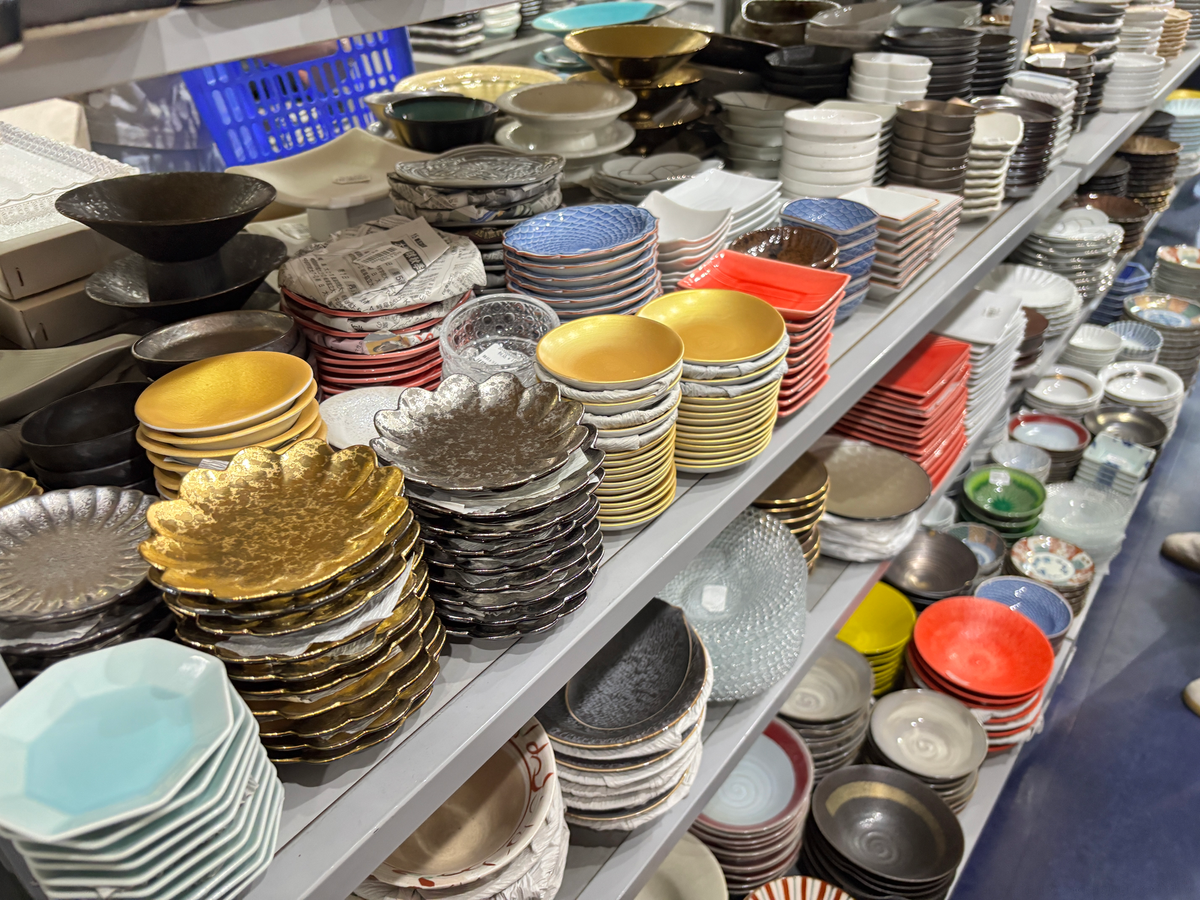
While walking, we frequently noticed stores selling tableware. Rice bowls, small dishes for side dishes, small cups for soba sauce (soba choko), and large plates are stacked up to the ceiling. They offer not only Japanese tableware but also dishes for Western and Chinese cuisine.
Dozens of the same plates are displayed because restaurants often buy them in bulk. In the store we visited, you could also purchase just one piece if you liked. Prices vary by store and item, so it's a good idea to visit several shops to find something within your budget. As these are fragile, wrap them in clothes when packing them in your suitcase for safe transport.
Chopsticks, Glassware, and Lanterns: Perfect Souvenirs
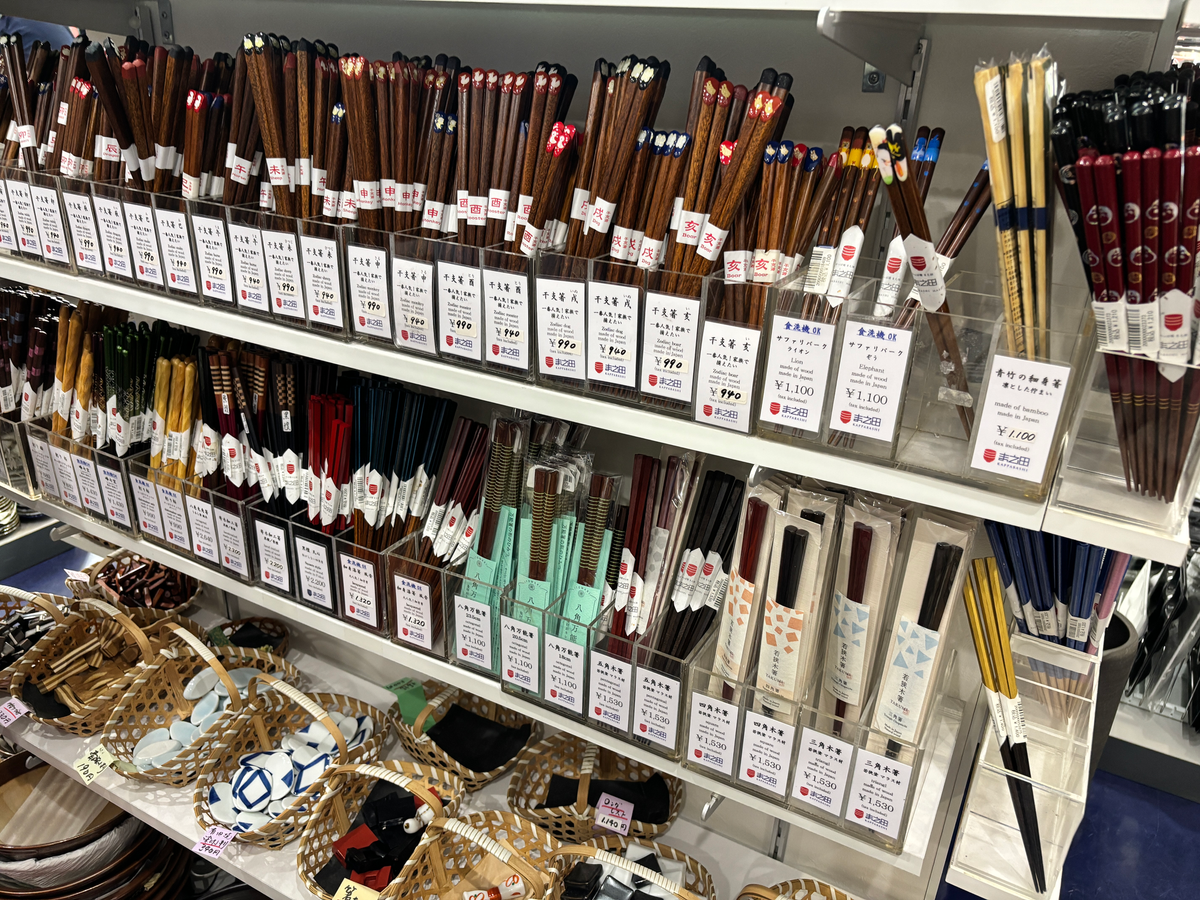
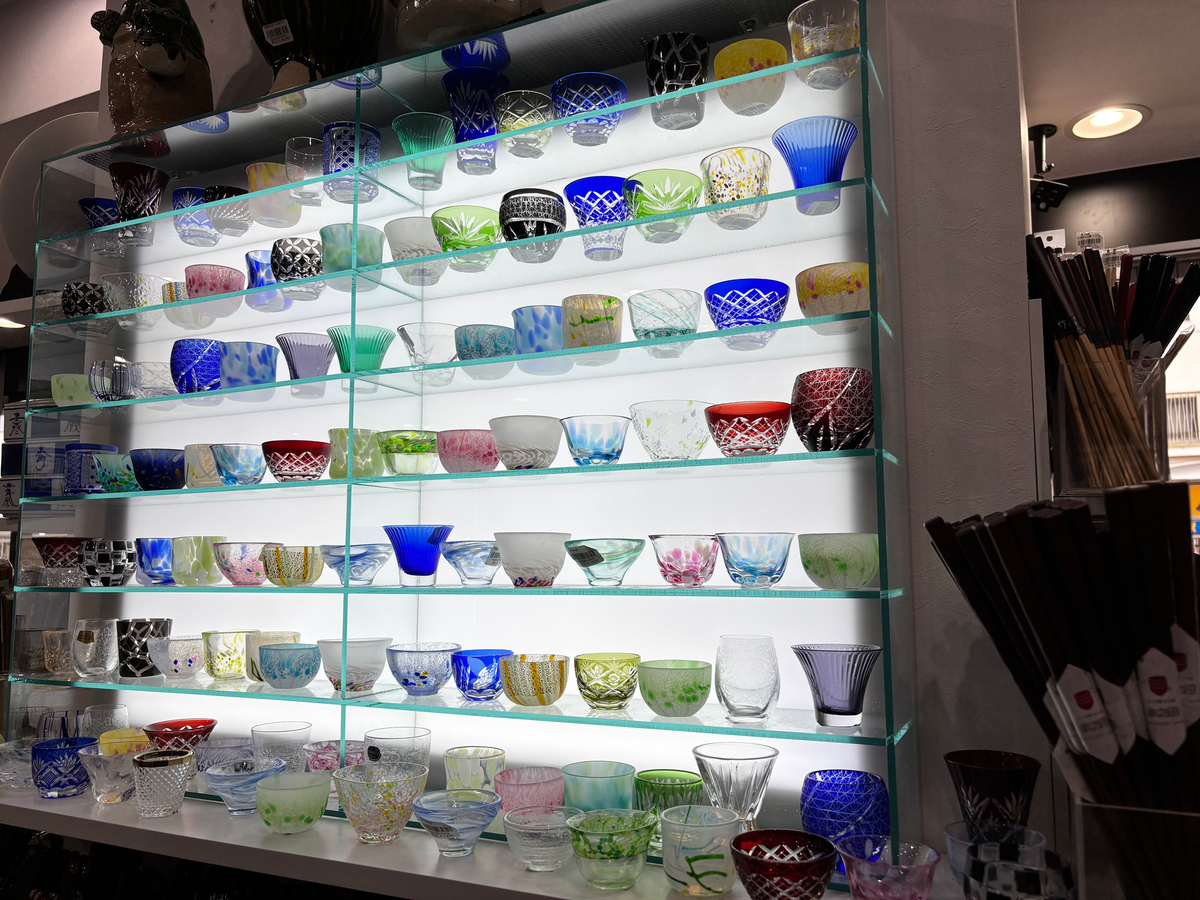
For lightweight and easy-to-carry souvenirs, chopsticks and glass cups are recommended. The chopstick section offers a wide variety, including shorter ones for children. The cut glass cups, with intricate patterns etched into colored glass, sparkled under the light at the display we saw.
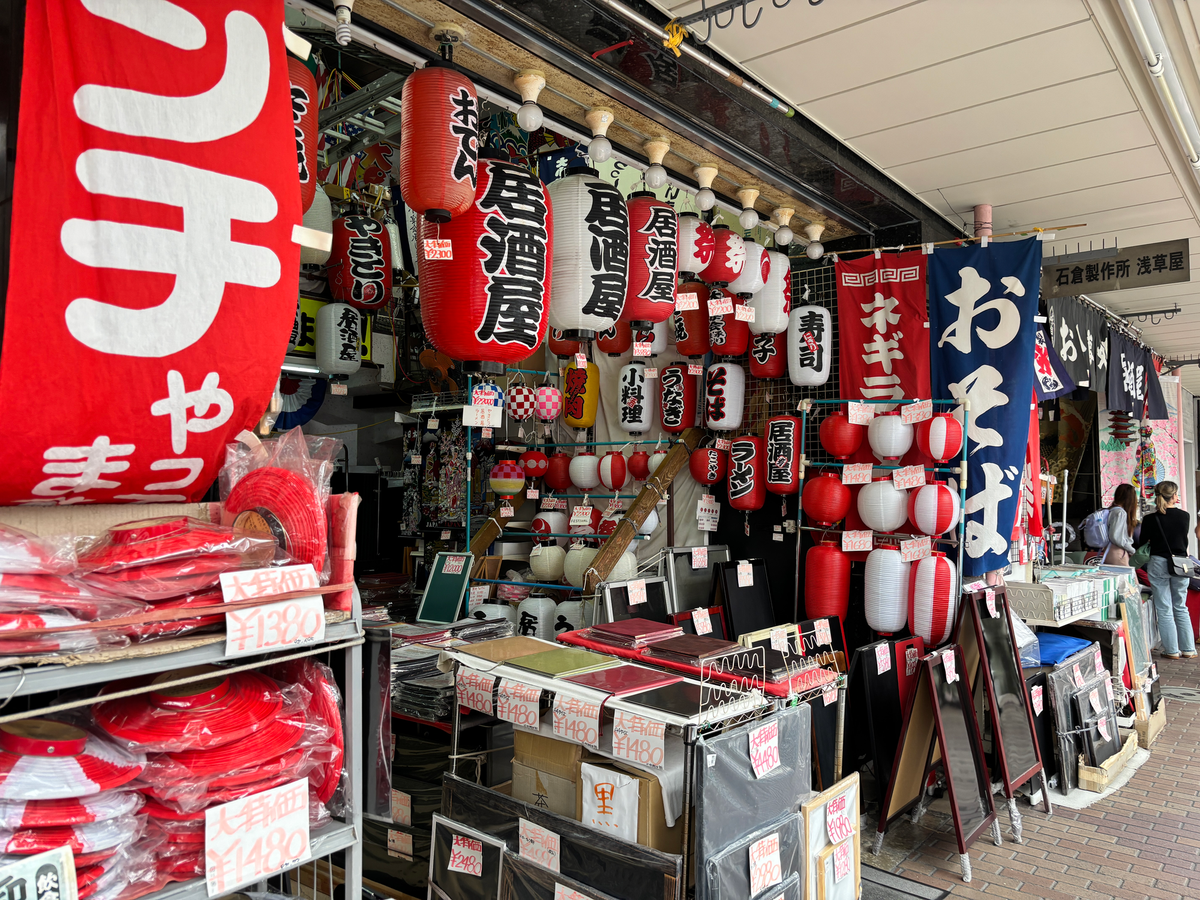
There are specialty shops for lanterns and noren curtains. The red lanterns often seen at the entrances of Japanese izakayas and diners are also sold here.
Sightseeing on Foot: Kappa Statue and Nori Shop
Golden Kappa Statue and Kappabashi Intersection
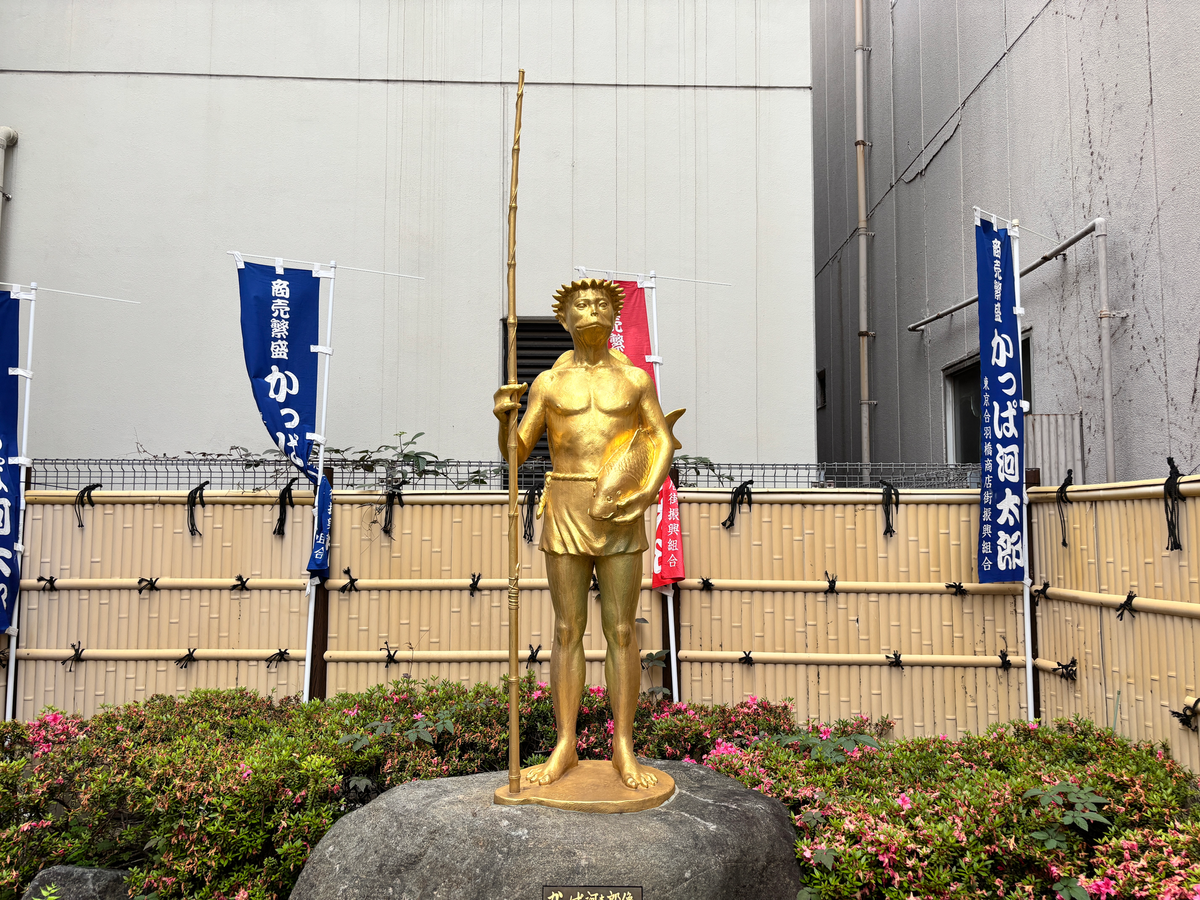
Walking north from the southern entrance, you'll find a golden kappa statue slightly north of the street's center. Kappa are mythical creatures from Japanese folklore that live in rivers. It's a popular spot for taking photos.
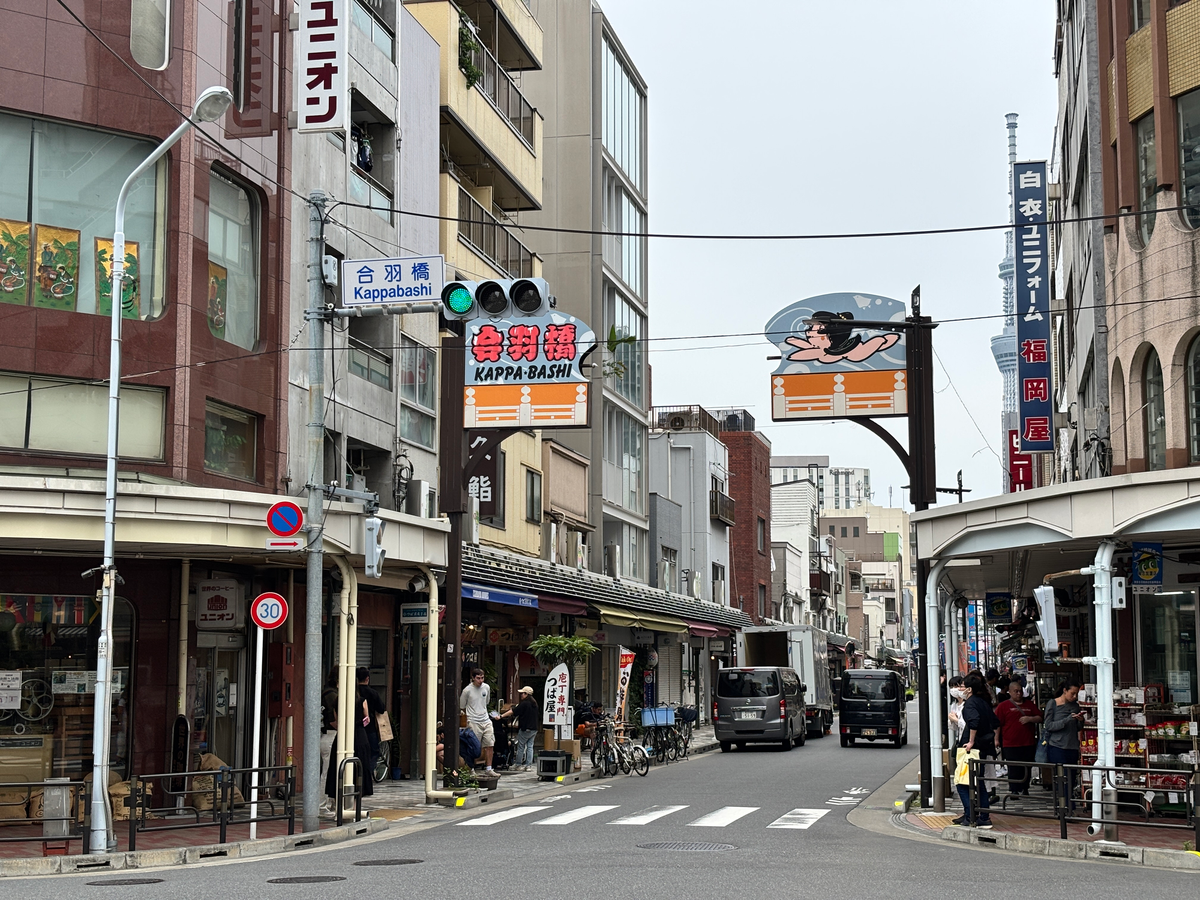
Just past the statue is the Kappabashi intersection with a large sign. Around this intersection, there are stores selling food samples and seaweed. We ended our walk around here, but the street continues further north.
Seaweed Shop
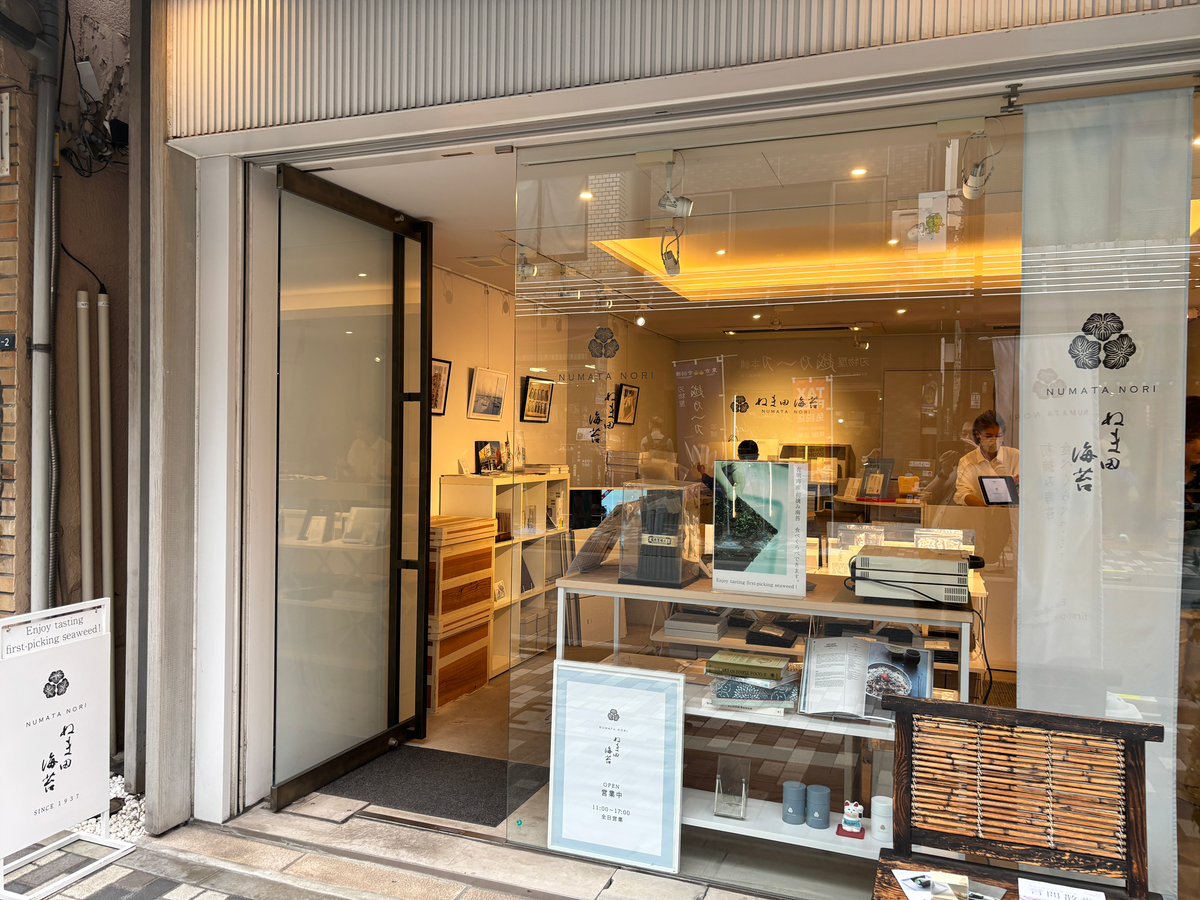
There are not only shops for tools but also food stores. At the seaweed specialty shop we visited (thin sheets of dried seaweed used for rice balls and sushi), we could buy seaweed souvenirs in bags. They are lightweight and have a long shelf life, making them easy to pack for the return trip.
Food Sample Shops and Crafting Experience
Have you ever seen lifelike food replicas displayed at the entrance of Japanese restaurants? These are called "food samples," made from materials like plastic. Near the Kappabashi intersection, there are shops selling these food samples.
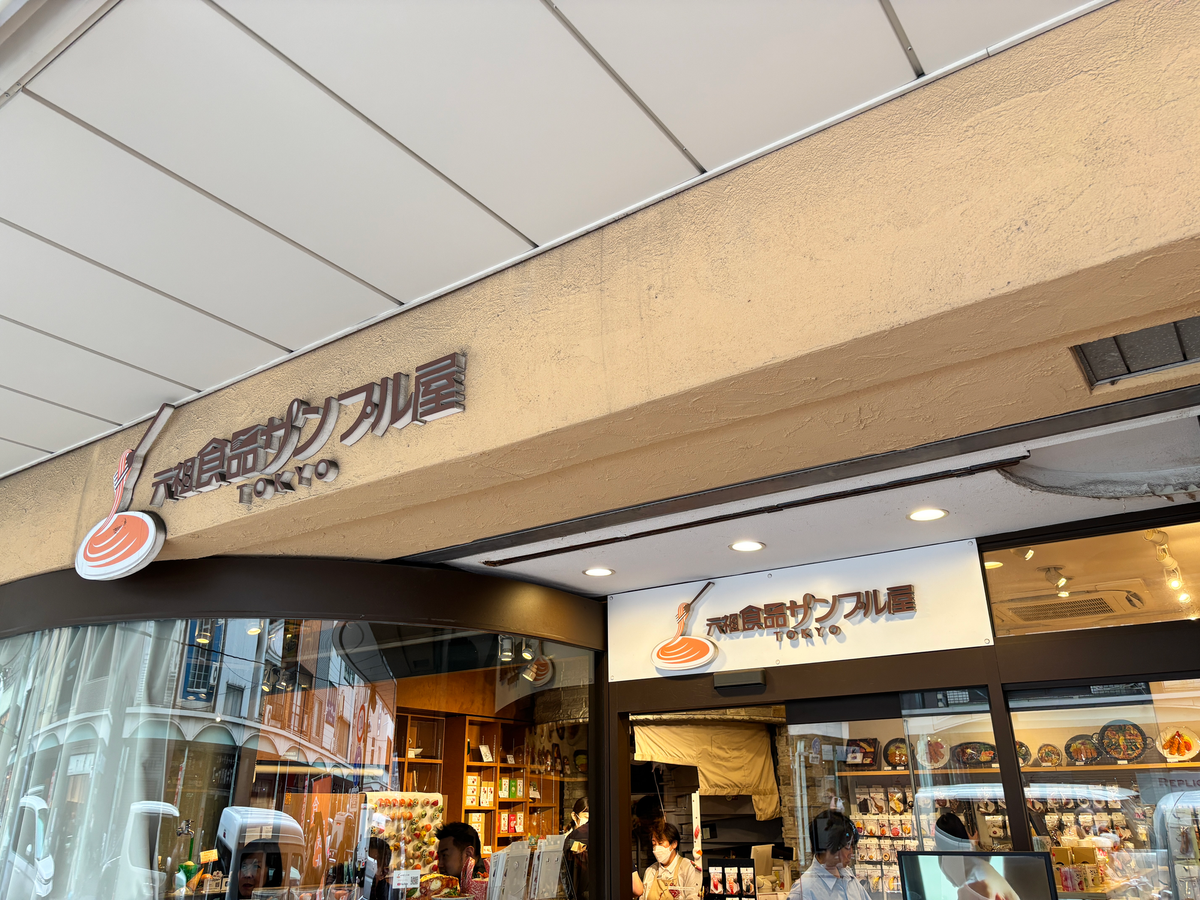
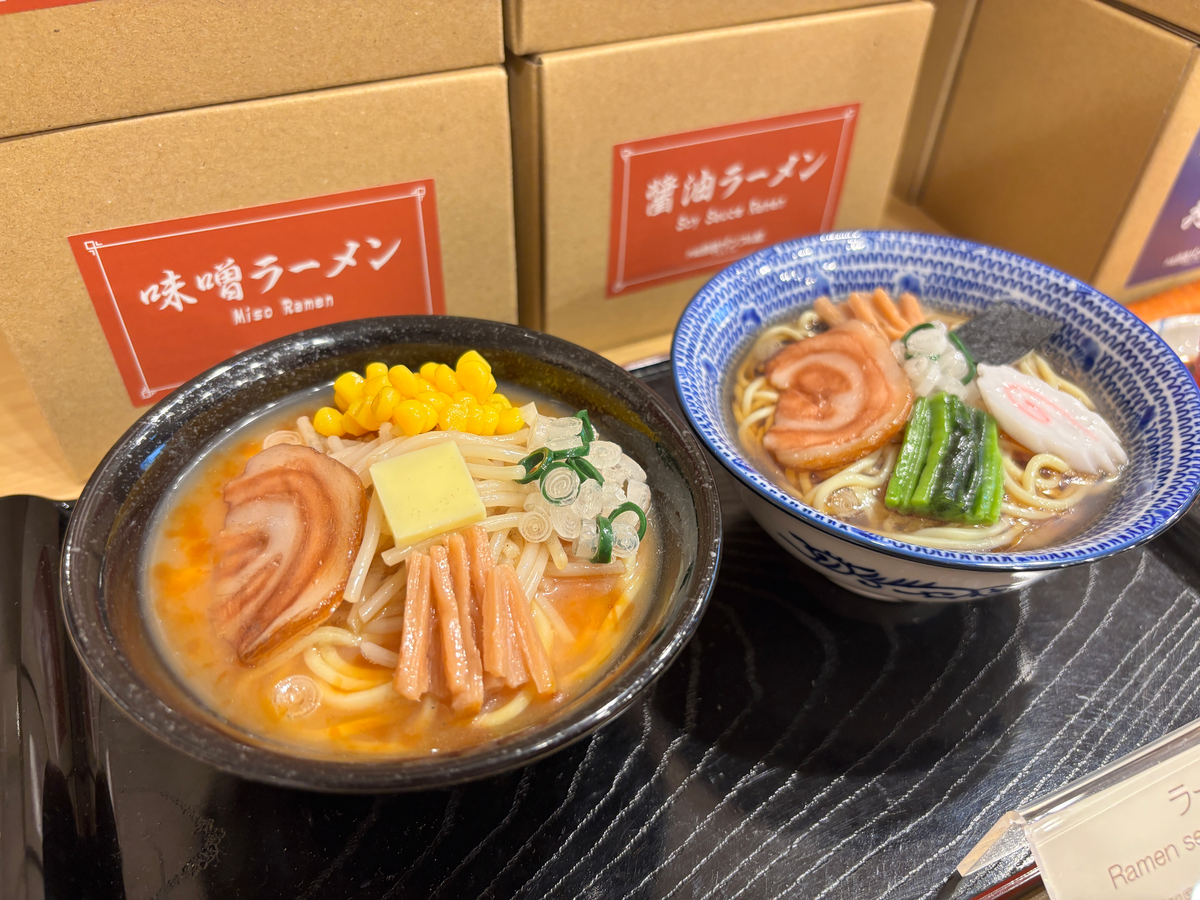
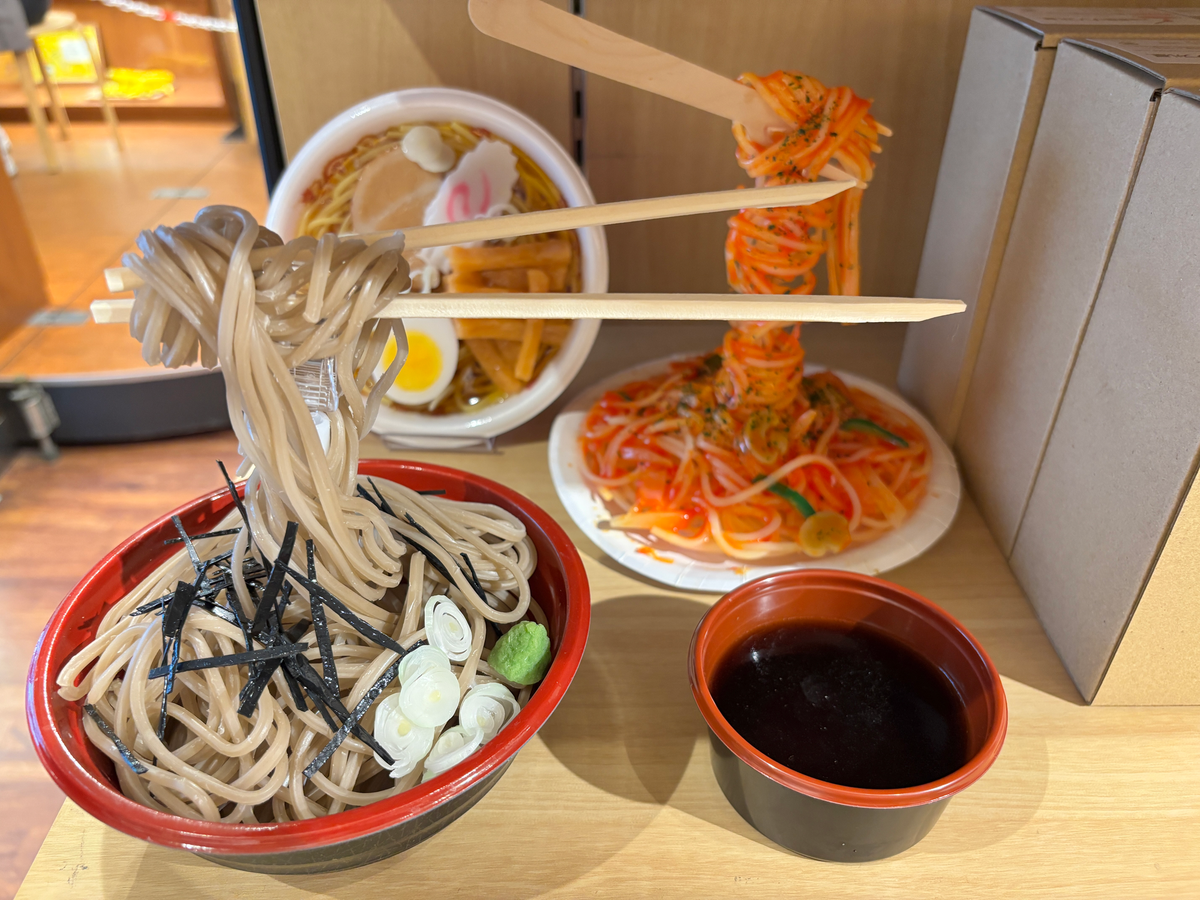
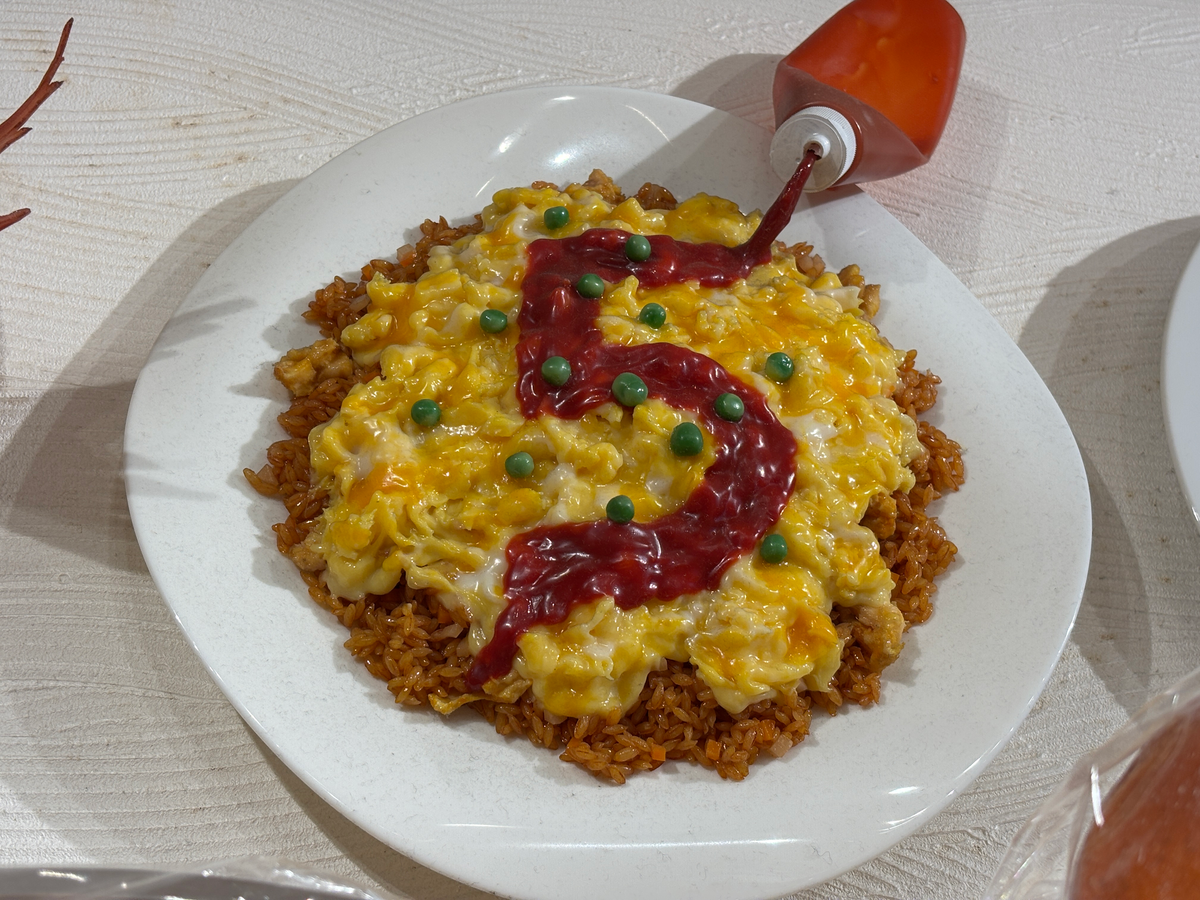
Inside the store, you'll find samples of ramen, sushi, and omurice that look incredibly realistic. There are also small items like sushi-shaped magnets, perfect for souvenirs.
Participated in a Food Sample Making Experience
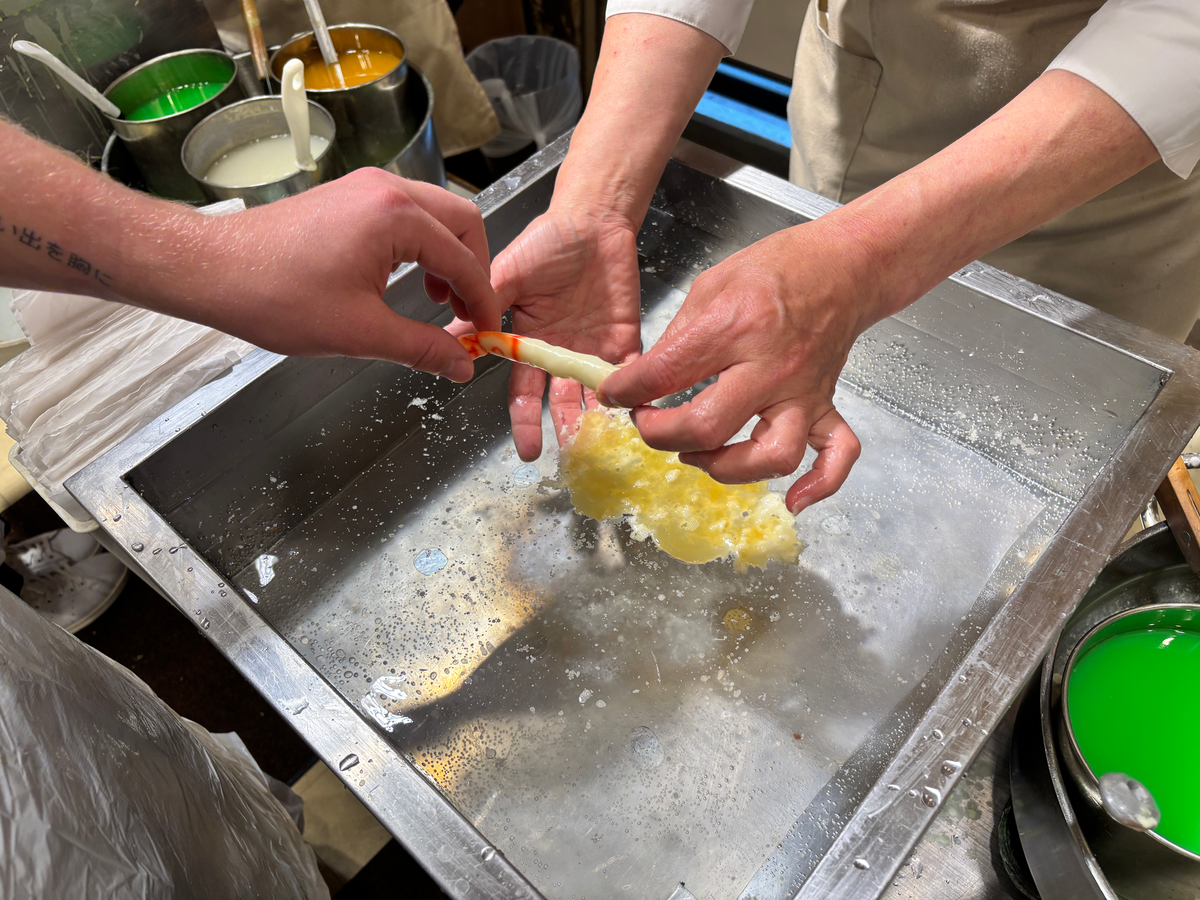
Before applying, it's important to know that reservations are required and that explanations are only in Japanese. According to the official site as of November 2026, those who do not understand Japanese need to participate with an interpreter. One interpreter is needed for every four participants. Reservations for 1 to 4 people can be made online, while groups of 5 or more need to book by phone. The session lasts about 40 minutes, costs 3,300 yen per person (tax included), and is open to those in first grade (ages 6-7) and older. Please check the official site for the latest information before booking.
On a different day, we participated in an experience at this shop. The activity uses wax (the material for candles). We poured colored wax over hot water, shaped it by hand, and made tempura and lettuce. It was easier than expected, and we could take home what we made.
Places to Visit After Kappabashi
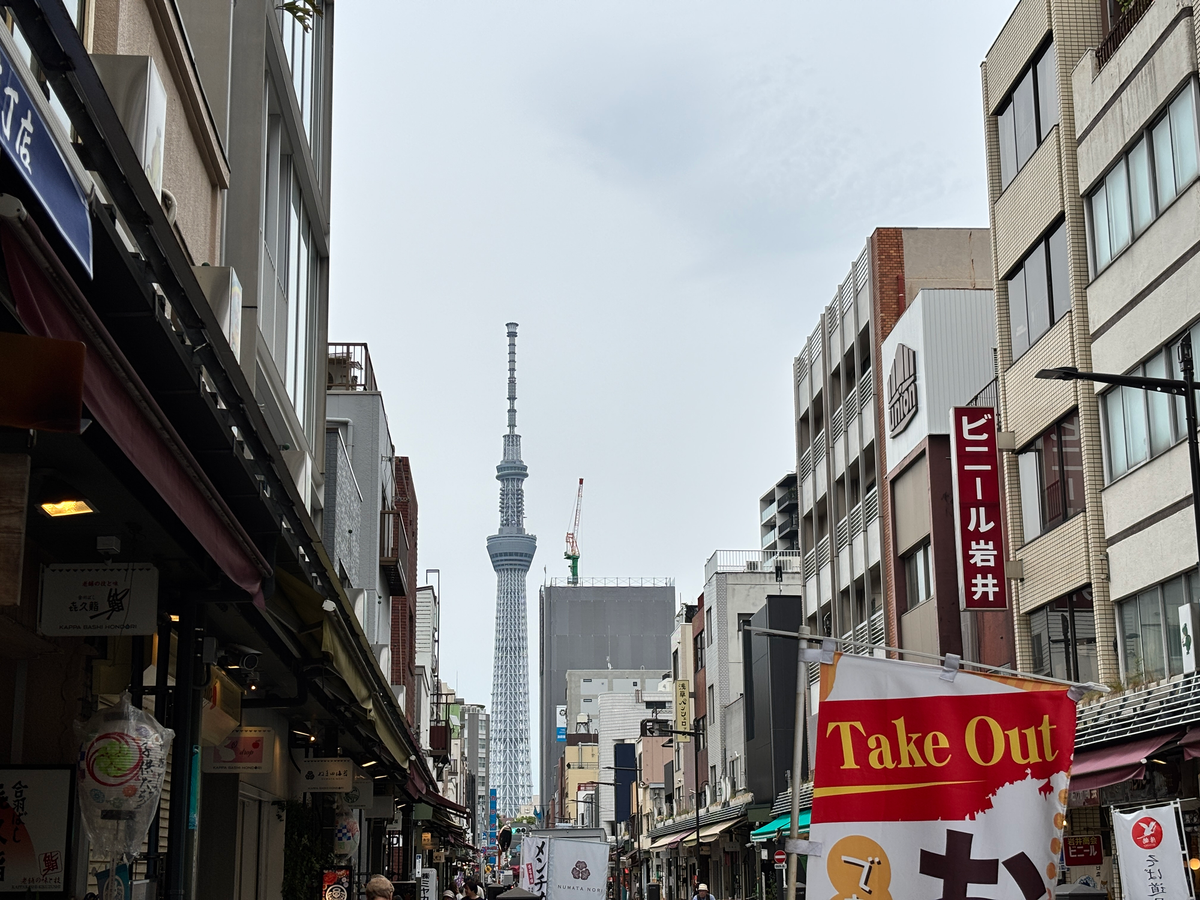
Looking east from near the Kappabashi intersection, you can see the Tokyo Skytree at the end of the road. Walking east along this road will take you towards the center of Asakusa, where Senso-ji Temple is located.
In Ueno, there is the Ameyoko shopping street near the station, as well as Ueno Park, which is home to temples and museums. It's just two stops on the Ginza Line from Tawaramachi Station to Ueno Station, making it possible to visit both Kappabashi and Ueno in one day.
Q&A
Frequently Asked Questions about Kappabashi Tool Street
- Is Kappabashi Tool Street worth visiting?
- Highly recommended for those who love Japanese cuisine, tableware, and knives. We walked for about an hour and a half without getting bored. For those interested in trying street food and seeing famous buildings, the area around Sensoji Temple is more suitable.
- Are you open on Sundays and public holidays?
- According to the official website, about 70% of the shops are closed on Sundays and public holidays. If you want to take your time exploring, it's recommended to avoid these days. Closing days vary by shop.
- Are you open on Monday?
- Monday is typically a regular weekday. According to the official website, "about 70% of the stores are closed" on Sundays and public holidays. However, if Monday is a public holiday, more stores tend to close. Each store has its own closing days.
- How long does it take to tour around?
- We walked for about an hour and a half from the southern entrance to around the Kappabashi intersection, stopping at shops along the way. If you plan to carefully select knives or participate in a food sample-making experience (about 40 minutes), it's best to allow 2 to 3 hours.
- Is Kappabashi Tool Street cheap?
- This wholesale district, frequented by restaurant professionals, is a great place to find tableware and kitchen tools at reasonable prices. However, not everything is cheap. Items like knives can vary significantly in price depending on quality. With a wide variety available, it's best to compare several shops to find something that fits your budget.
- Is Kappabashi just a tourist trap with high prices?
- No, it is still a wholesale district where restaurant professionals come to buy their tools. Additionally, there are many travelers from abroad, and in the store we entered, travelers could purchase just one item.
- What time does the store close?
- Closing times vary by store. If you're visiting in the evening, check the hours of your desired store in advance. As of November 2026, the official website states that the store offering food sample-making experiences is open from 10:00 AM to 5:30 PM.
- Can only cash be used?
- No, it's not cash only. However, it varies by store. One of the places we visited had a sign indicating that you could pay by card or with a smartphone (contactless payment). In smaller shops, cash-only policies might still apply, so it's reassuring to carry some cash.
- Is it okay to take photos inside the store?
- Some stores allow photography, while others do not. If there is no guidance, ask the staff before taking photos.
- Can I buy this tax-free?
- Tax exemption (a system allowing foreign travelers to avoid paying consumption tax or receive a refund) varies by store. When purchasing expensive items like knives, bring your passport and inquire at the store.
- Can I bring a knife on a plane?
- Items cannot be carried in your hand luggage. Please place them in your suitcase and check them in. Also, check the rules for bringing items into your own country before departure.