Tokyo
Ueno Station Guide Explaining Shinkansen, Exits, and How to Get to Tokyo Station and Narita Airport with Photos
Updated 16 November 2026By Dynamic Japan Travel editorsEditorial policy
Contents
Ueno Station is a major station located in the northern part of Tokyo. It serves as a stop for Shinkansen trains heading to the Tohoku and Hokuriku regions, and is also connected by the Yamanote Line and subway. Ueno Park is right in front of the station. In this article, we will use photos taken at Ueno Station to guide first-time visitors to Japan through areas where they might easily get lost.
First, here are three important points:
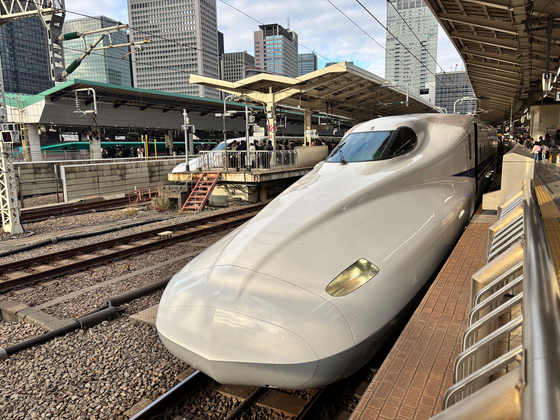
- The Shinkansen trains stopping at Ueno Station include the Tohoku, Hokuriku, and Joetsu Shinkansen, which head north. The Tokaido Shinkansen to Kyoto and Osaka does not stop at Ueno Station.
- The Shinkansen platforms are located deep underground. Allow plenty of time for transfers.
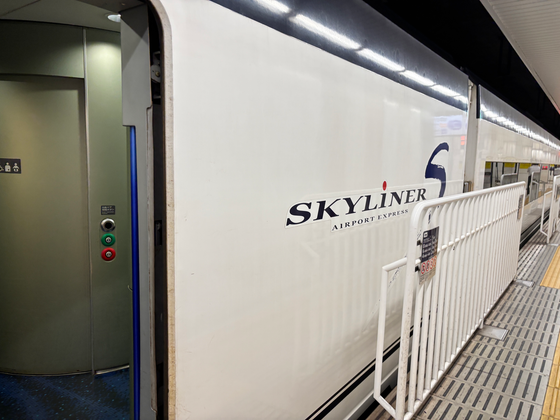
- The Keisei Ueno Station, where the Skyliner to Narita Airport departs, is a separate station from JR Ueno Station (see "From Ueno Station to Narita Airport" below for details).
What is Ueno Station Like? Differences from Tokyo Station
There are stations from three companies at "Ueno Station."
| Company | Main Lines | Example Destinations |
|---|---|---|
| JR East | Shinkansen, Yamanote Line, Keihin-Tohoku Line, Ueno-Tokyo Line, Joban Line, etc. | Tokyo Station, Akihabara, Sendai, Kanazawa, Atami |
| Tokyo Metro (Subway) | Ginza Line, Hibiya Line | Asakusa, Ginza, Shibuya |
| Keisei Electric Railway | Skyliner, etc. (Station name is Keisei Ueno Station) | Narita Airport |
The major difference from Tokyo Station is the Shinkansen. Tokyo Station has two types: the Tokaido Shinkansen to Kyoto and Osaka (blue signage) and the JR East Shinkansen heading north (green signage). Only the green JR East Shinkansen stops at Ueno Station. As a result, the Shinkansen platforms are concentrated in one area, making it an easy station to navigate.
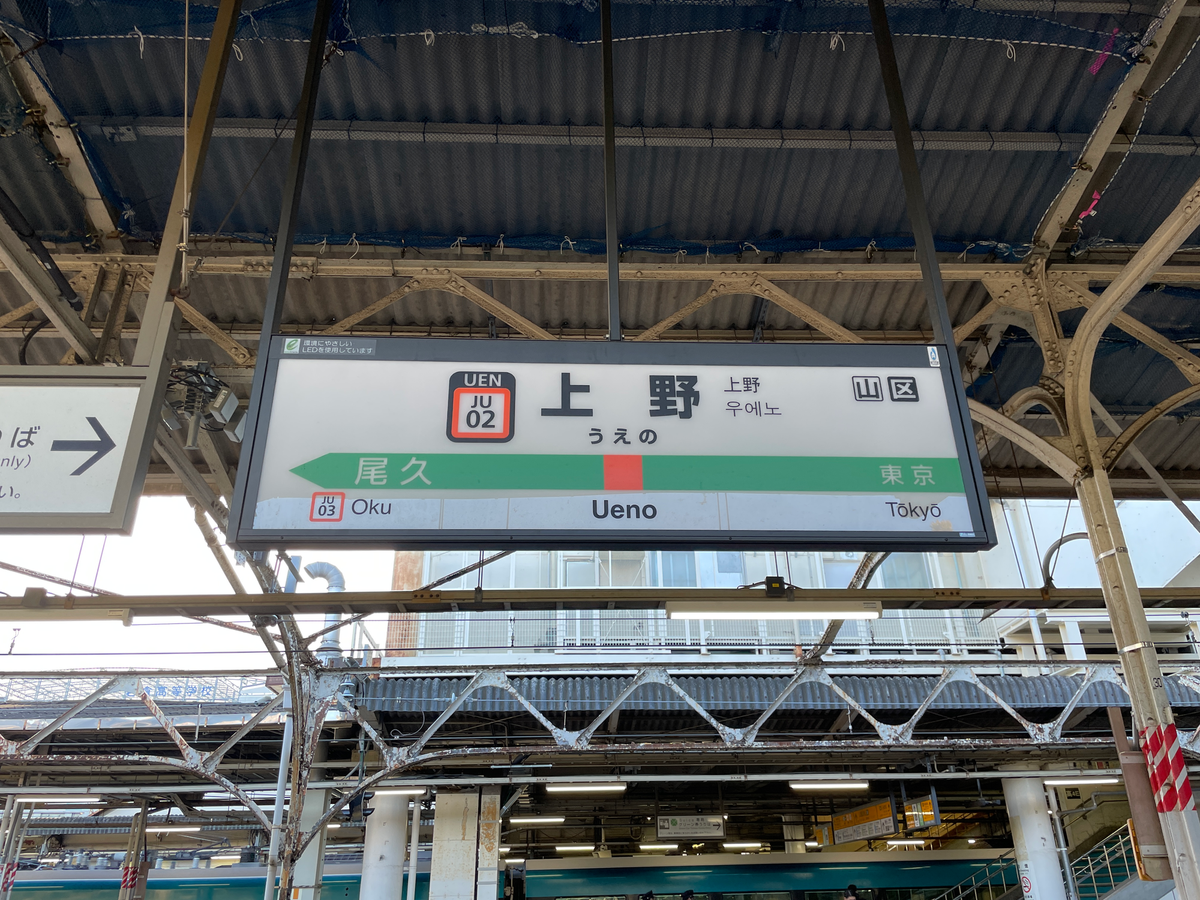
Directions from Ueno Station to Tokyo Station
Ueno Station and Tokyo Station are separate stations. You can travel from Ueno Station to Tokyo Station by JR train.
- Yamanote Line
- Tokyo Station is the fourth stop. The Yamanote Line is a green train that circles central Tokyo.
- Ueno-Tokyo Line
- If heading towards Tokyo and Shinagawa, the next stop is Tokyo Station.
Both are JR lines, so you can reach Tokyo Station without transferring. Travelers heading to Kyoto or Osaka should transfer to the Tokaido Shinkansen at Tokyo Station. For how to navigate Tokyo Station, refer to the Tokyo Station Shinkansen Boarding Guide.
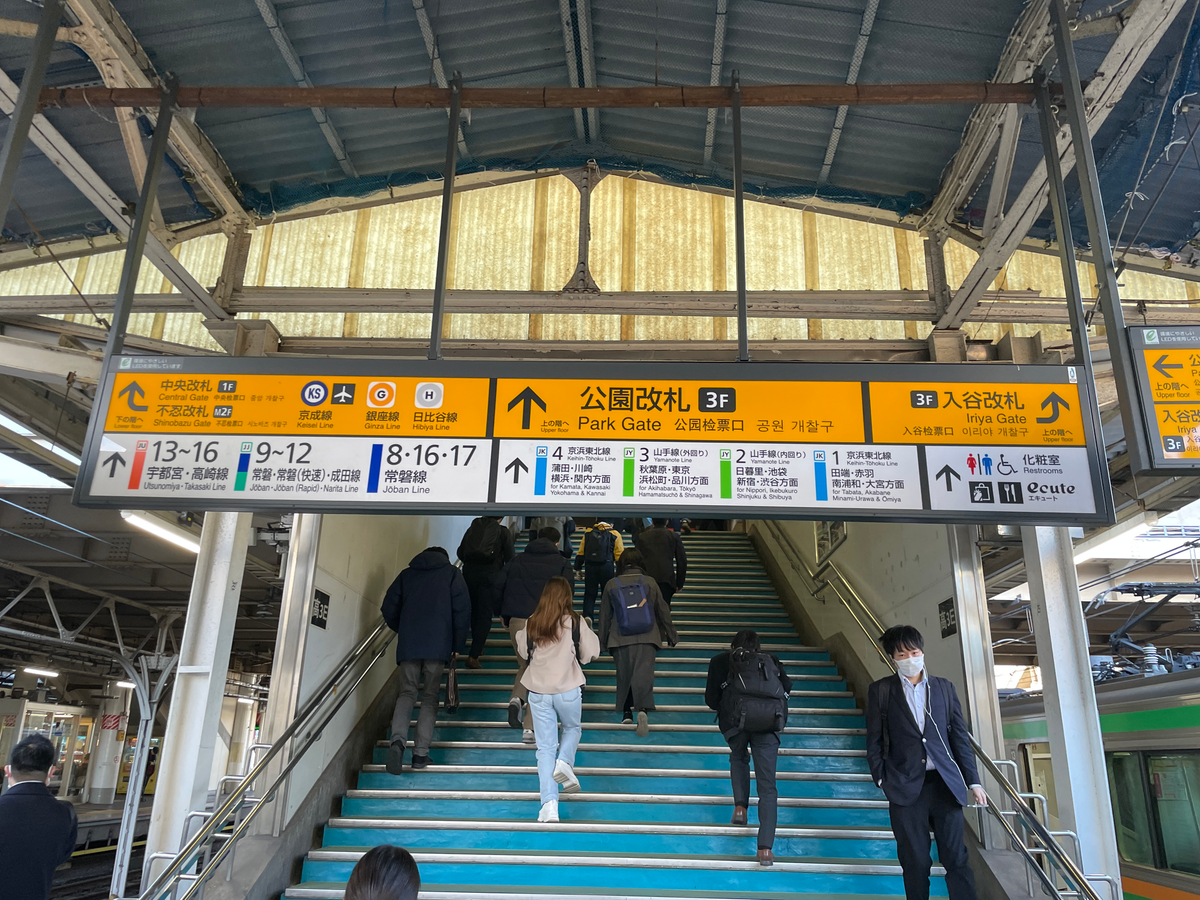
Choosing the Right Gates and Exits at Ueno Station
JR Ueno Station has multiple ticket gates. Choose the gate based on your destination for a shortcut.
- To Ueno Park, Zoo, and Museums
- Park Gate. Exiting the gate, Ueno Park is right in front of you.
- To Ameyoko
- Shinobazu Gate. Ameyoko is a shopping street along the tracks between Ueno Station and Okachimachi Station.
- To Shinkansen and Subway
- Central Gate. Those boarding the Shinkansen from outside the station can enter here to find the transfer gate inside.
When you go up the stairs from the platform, the names of the gates are written on the yellow ceiling signs. Those heading to Ueno Park should look for "Park Gate."
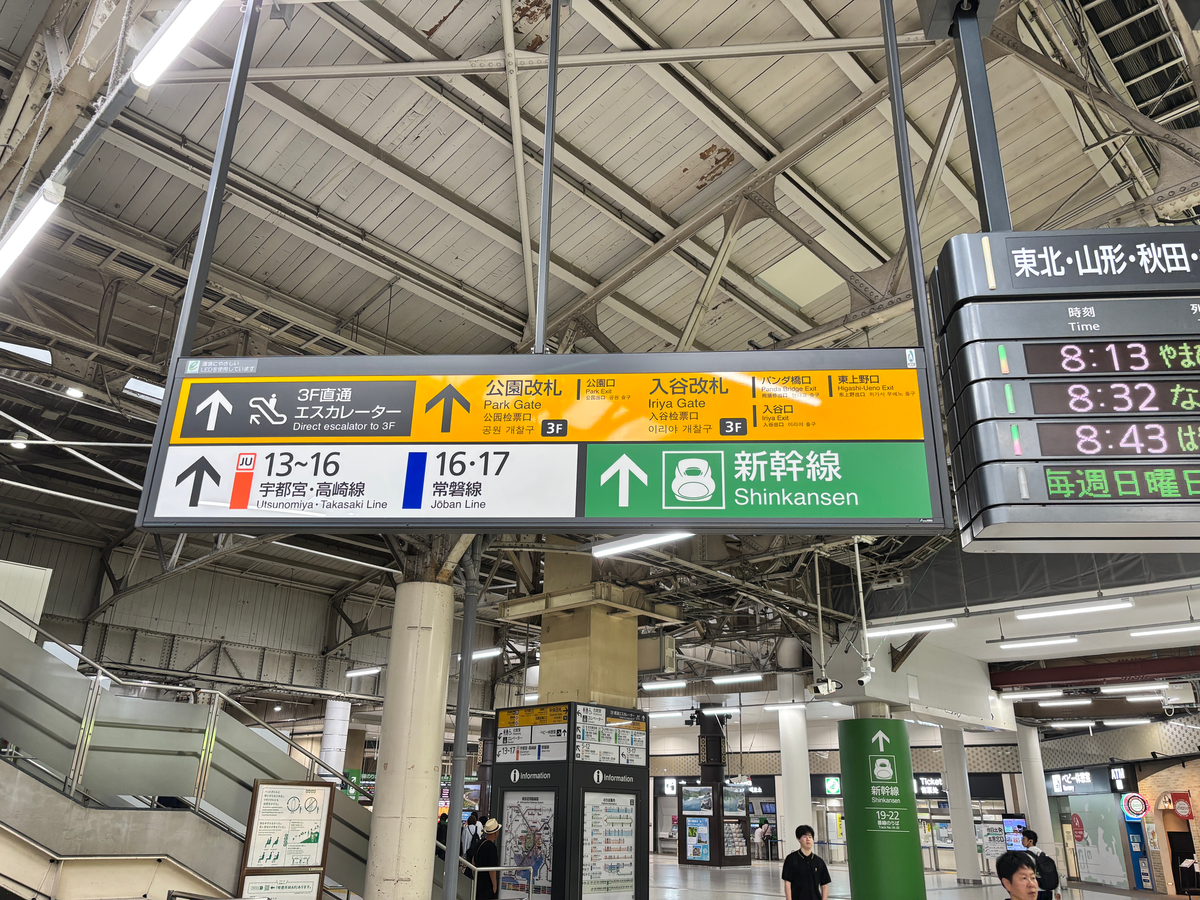
Take the Shinkansen from Ueno Station
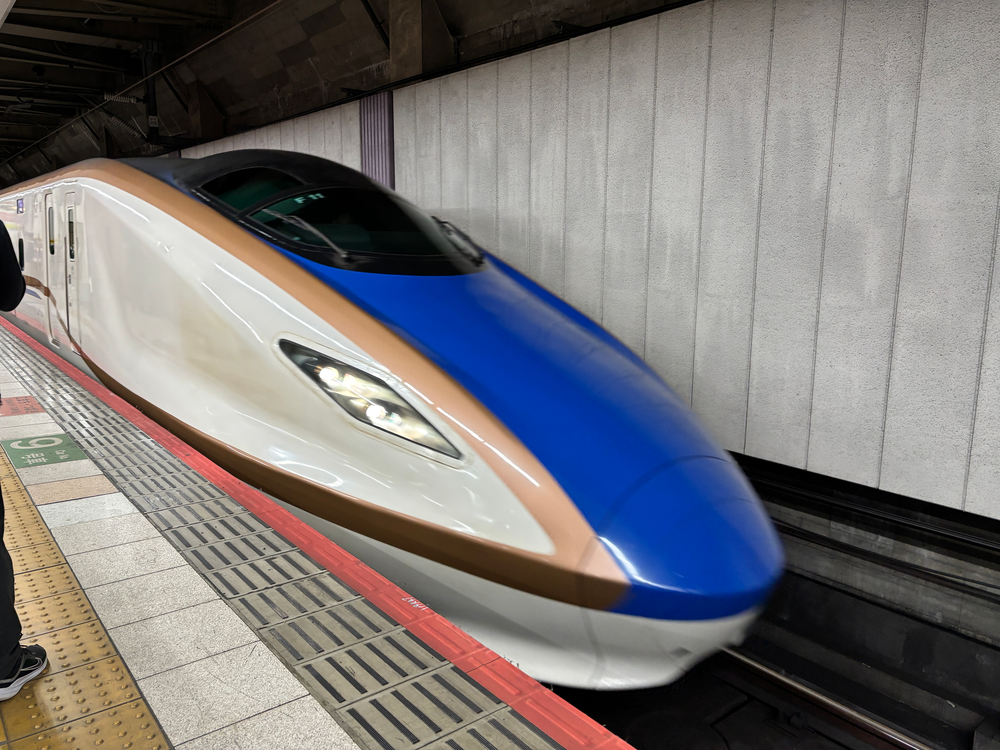
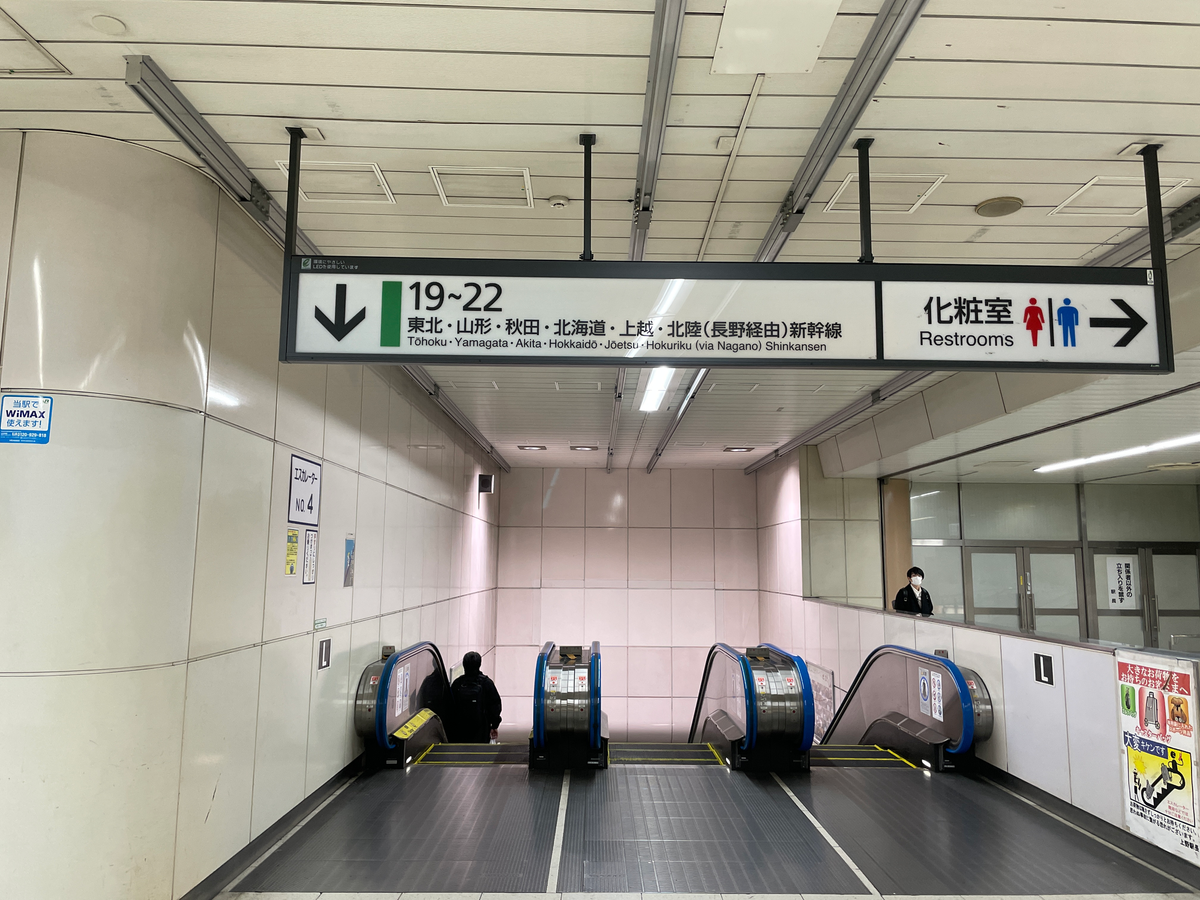
The Shinkansen platforms at Ueno Station are numbers 19 to 22, located on the fourth basement level. The Tohoku, Yamagata, Akita, Hokkaido, Joetsu, and Hokuriku Shinkansen stop here, providing access to destinations like Sendai, Morioka, Shin-Hakodate-Hokuto, Niigata, Nagano, and Kanazawa.
Inside the station, follow the "Shinkansen" signs. Those transferring from regular JR trains (conventional lines) like the Yamanote Line do not exit the station. Instead, they pass through the "Shinkansen Transfer Gate" within the station. If you haven't purchased a ticket yet, please read how to buy Shinkansen tickets and the section below on "Tickets, Midori no Madoguchi, Suica Charge" first.
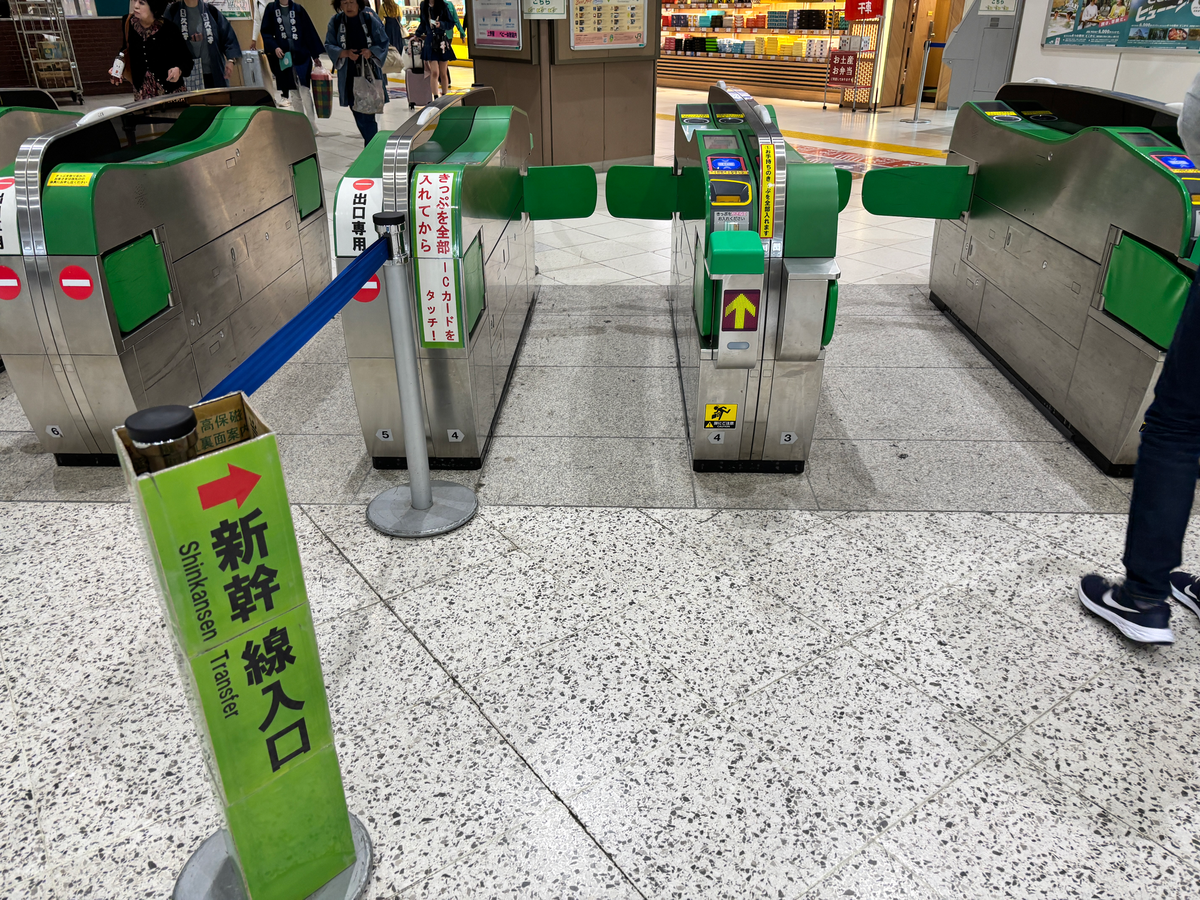
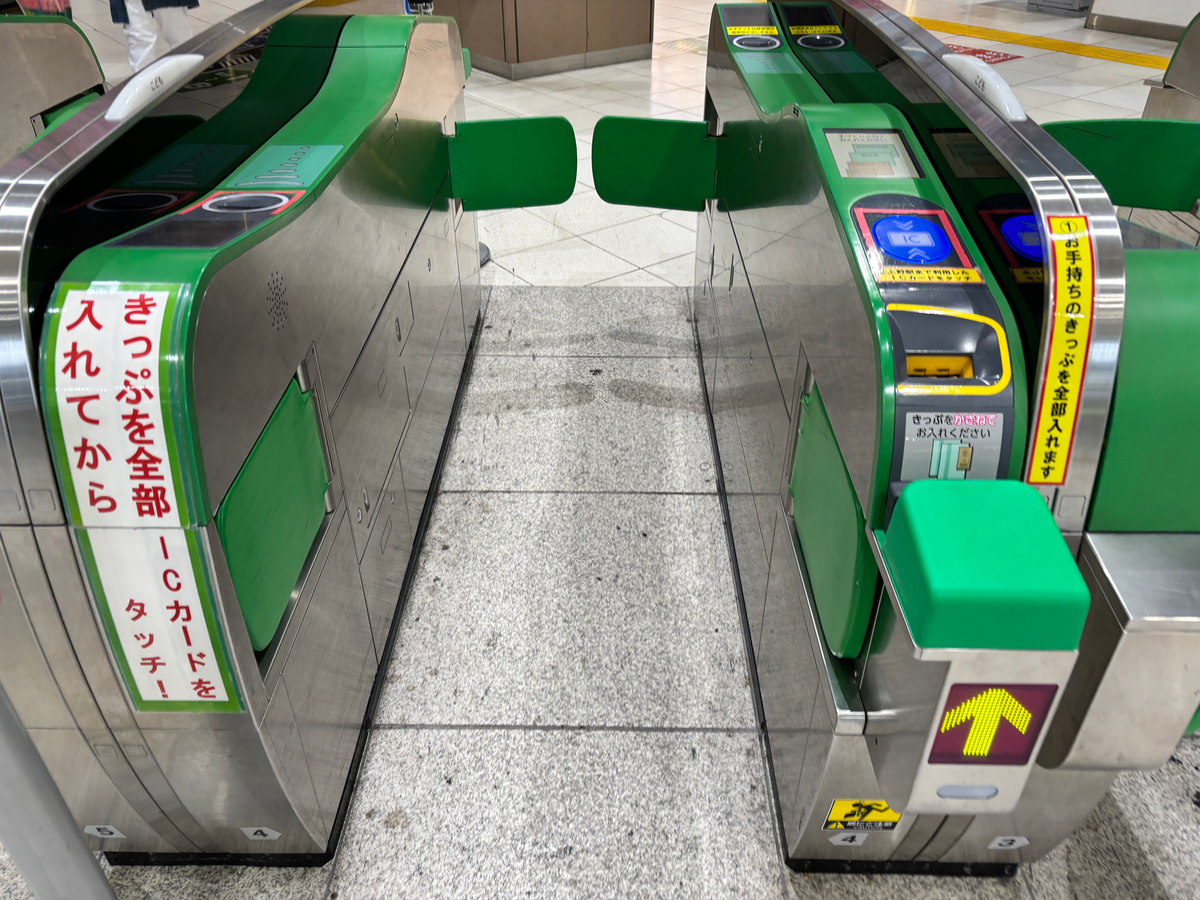
If you have two or more paper tickets, stack them and insert them into the gate at once. When we passed through, the gate displayed a message saying, "Insert all tickets before tapping your IC card." Those who have registered an IC card like Suica (a card for train travel) on the reservation site can simply tap their card to pass through.
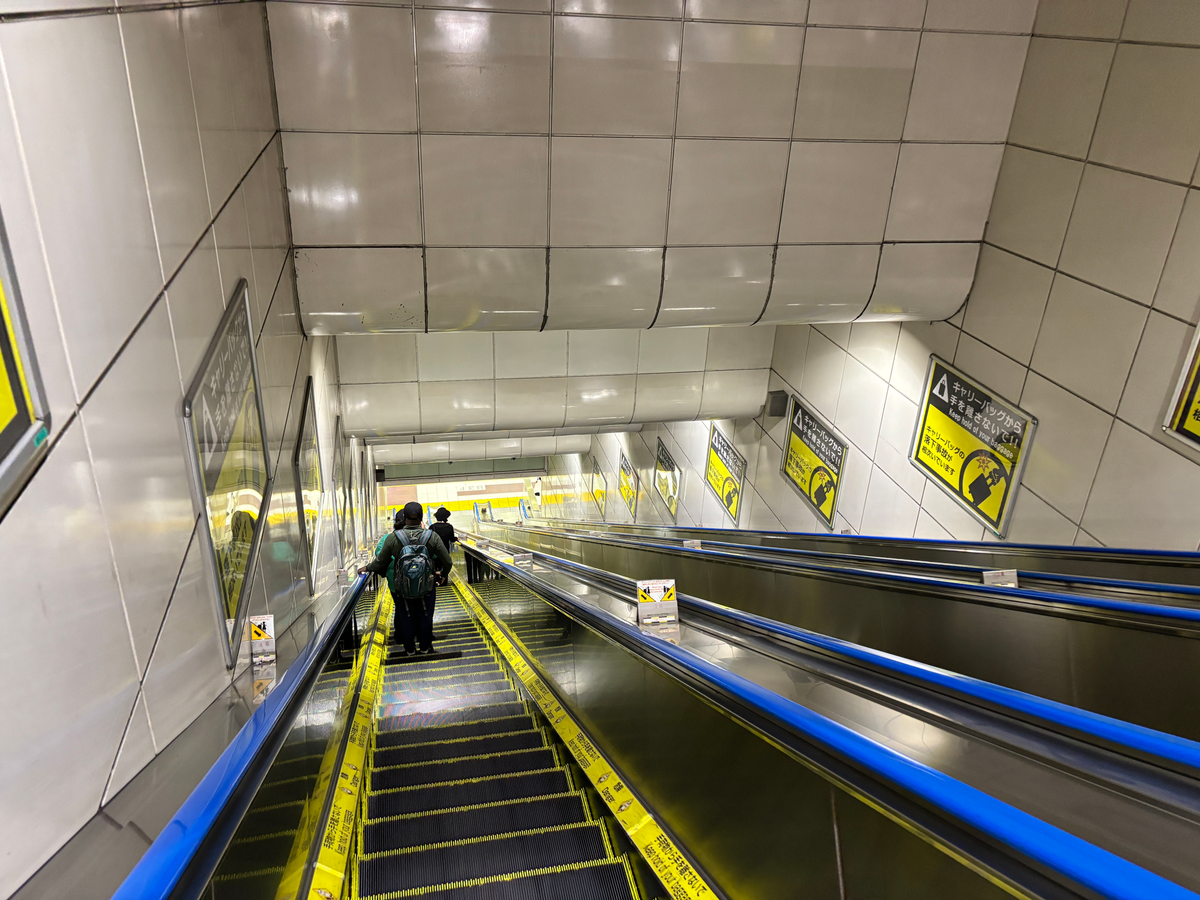
After passing through the ticket gate, take the long escalator down to the platform. We also found it deeper than expected. Allow extra time for transfers.
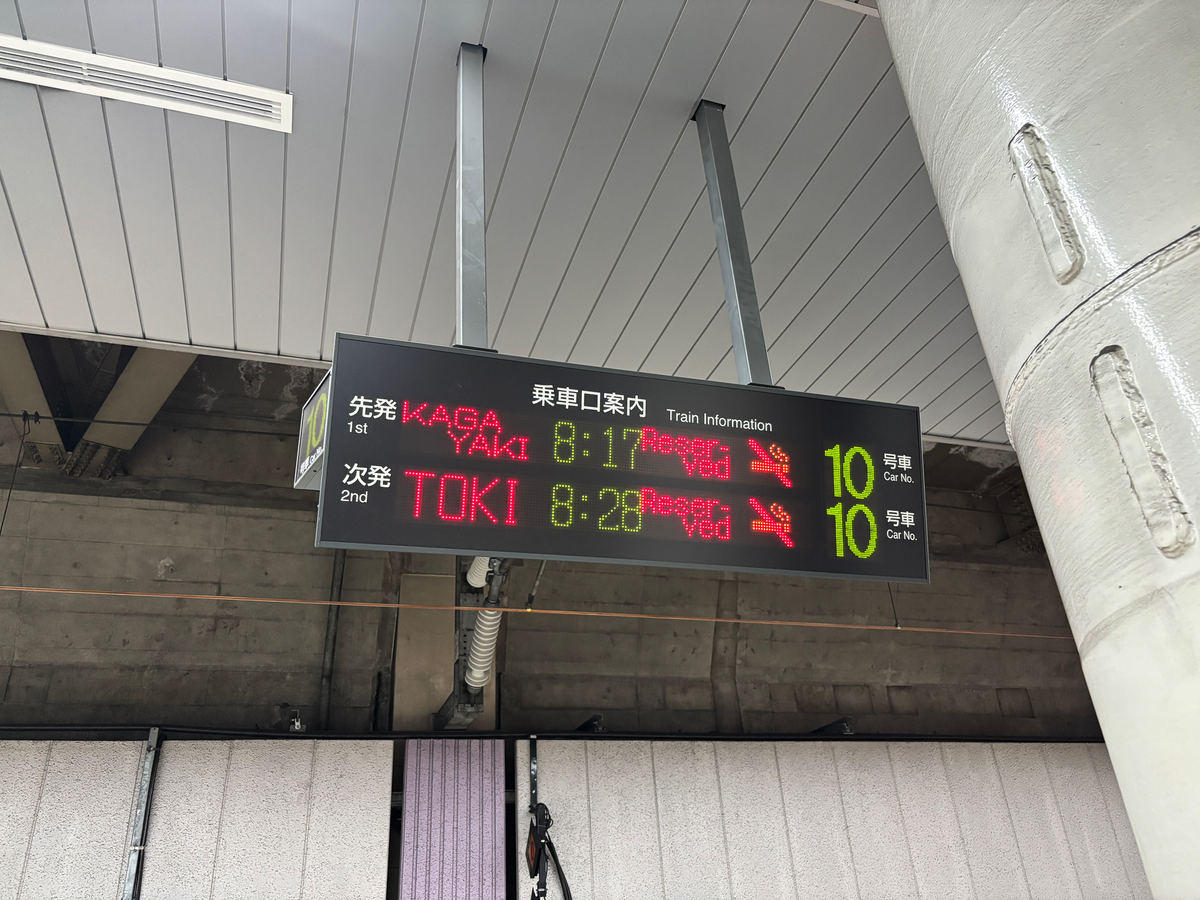
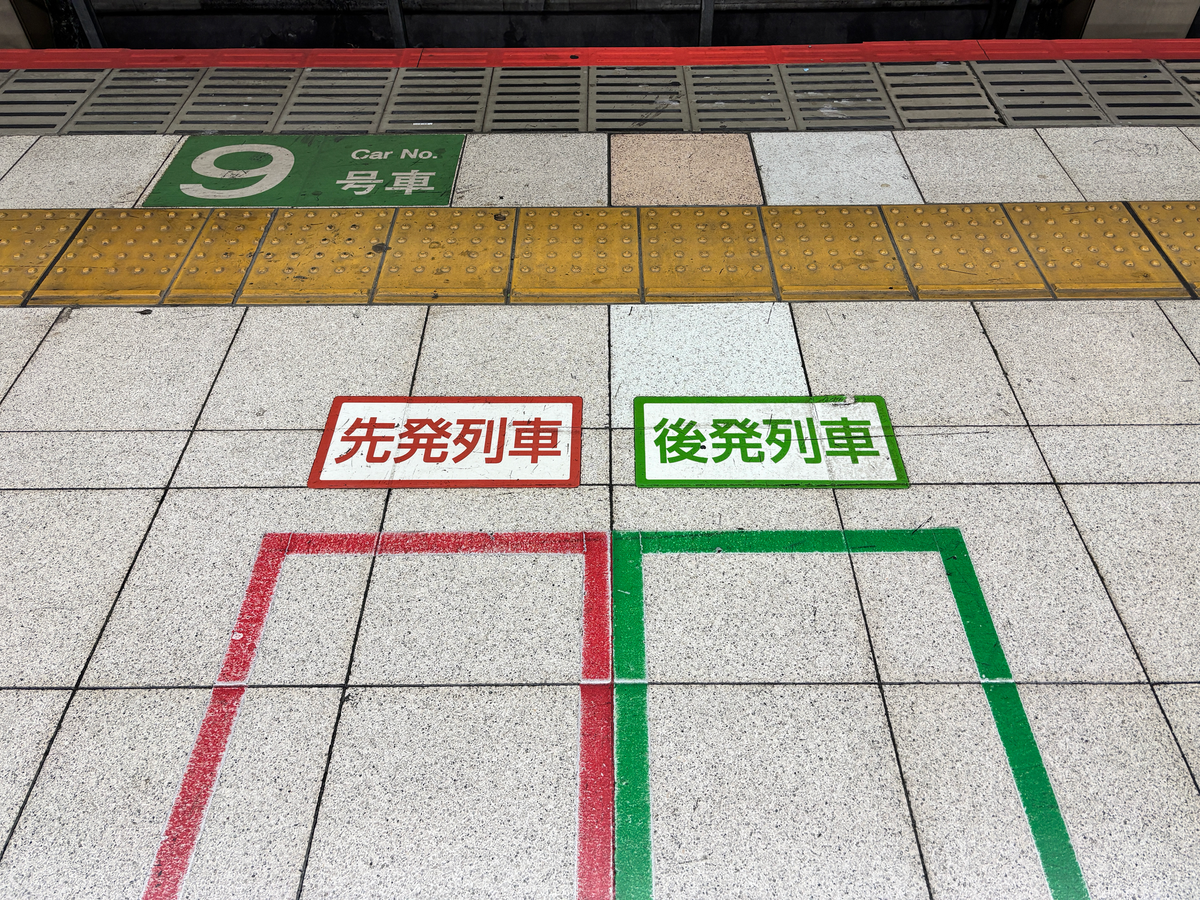
At the platform, check the boarding gate signs and floor lines.
The platform display shows the name, departure time, and car number of the next train. Numbers for the car and lines indicating where to queue are marked on the floor. On the platform we observed, the red line was for the next departing train, and the green line was for the following train. Check the platform display to confirm which line your train belongs to before queuing.

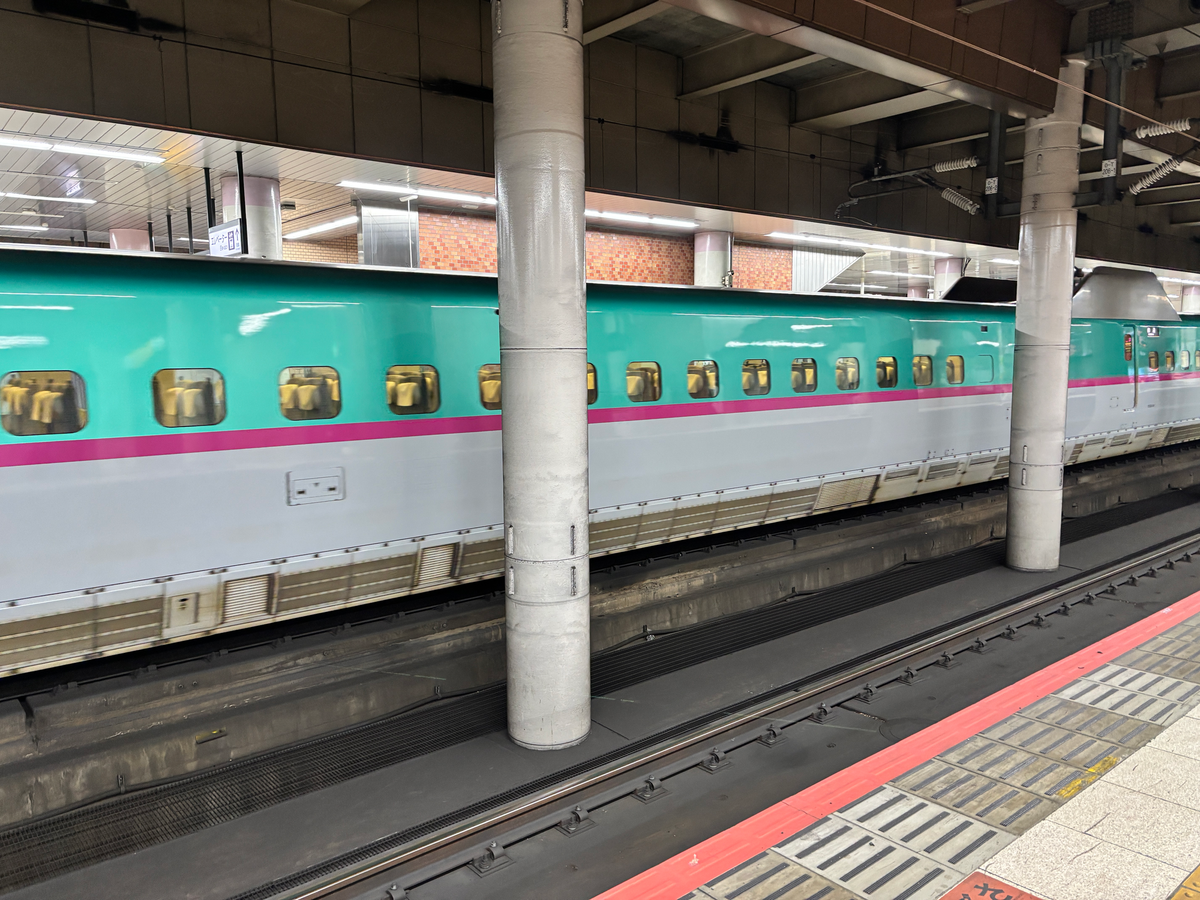
When you get off the Shinkansen, follow the signs for "JR Line Transfer Gate" to transfer to local lines such as the Yamanote Line.
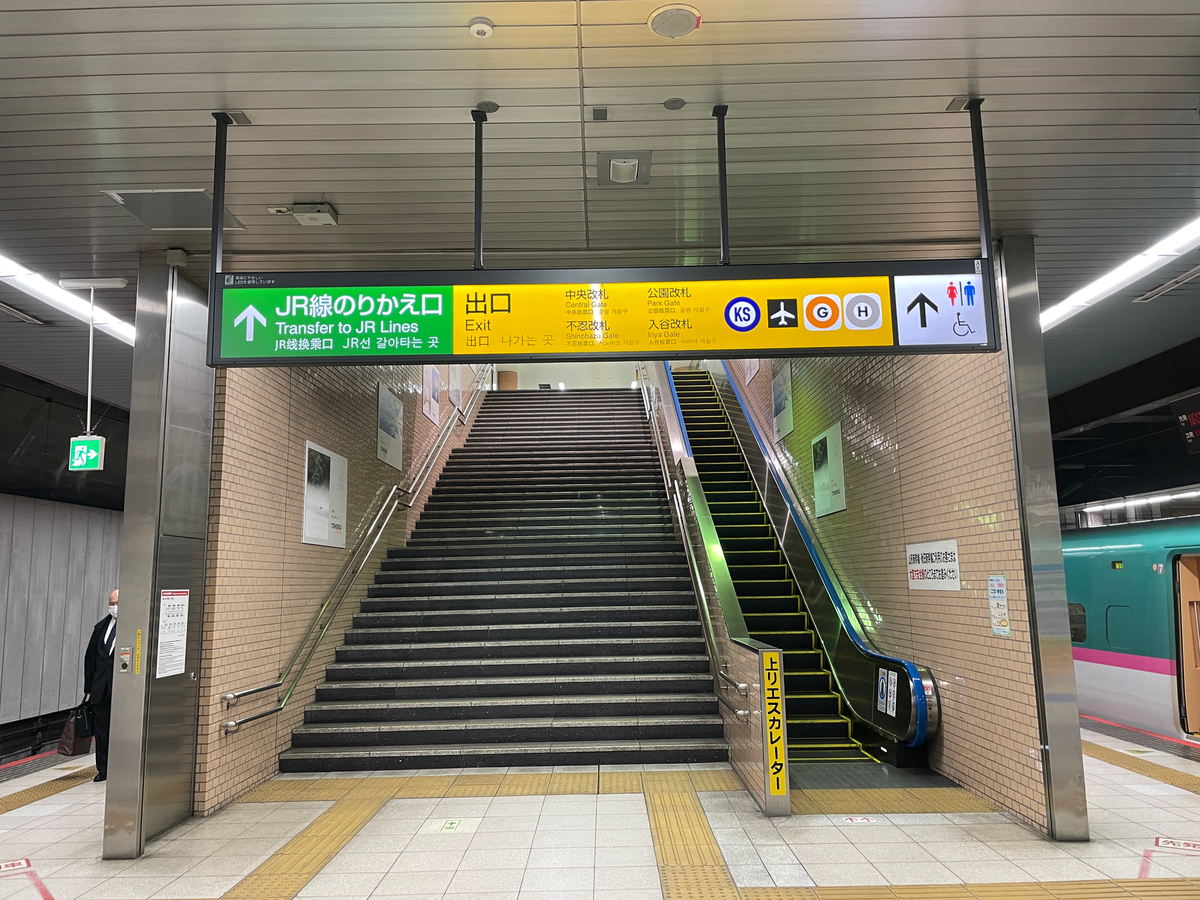
Yamanote Line, Ueno-Tokyo Line, Joban Line Platforms
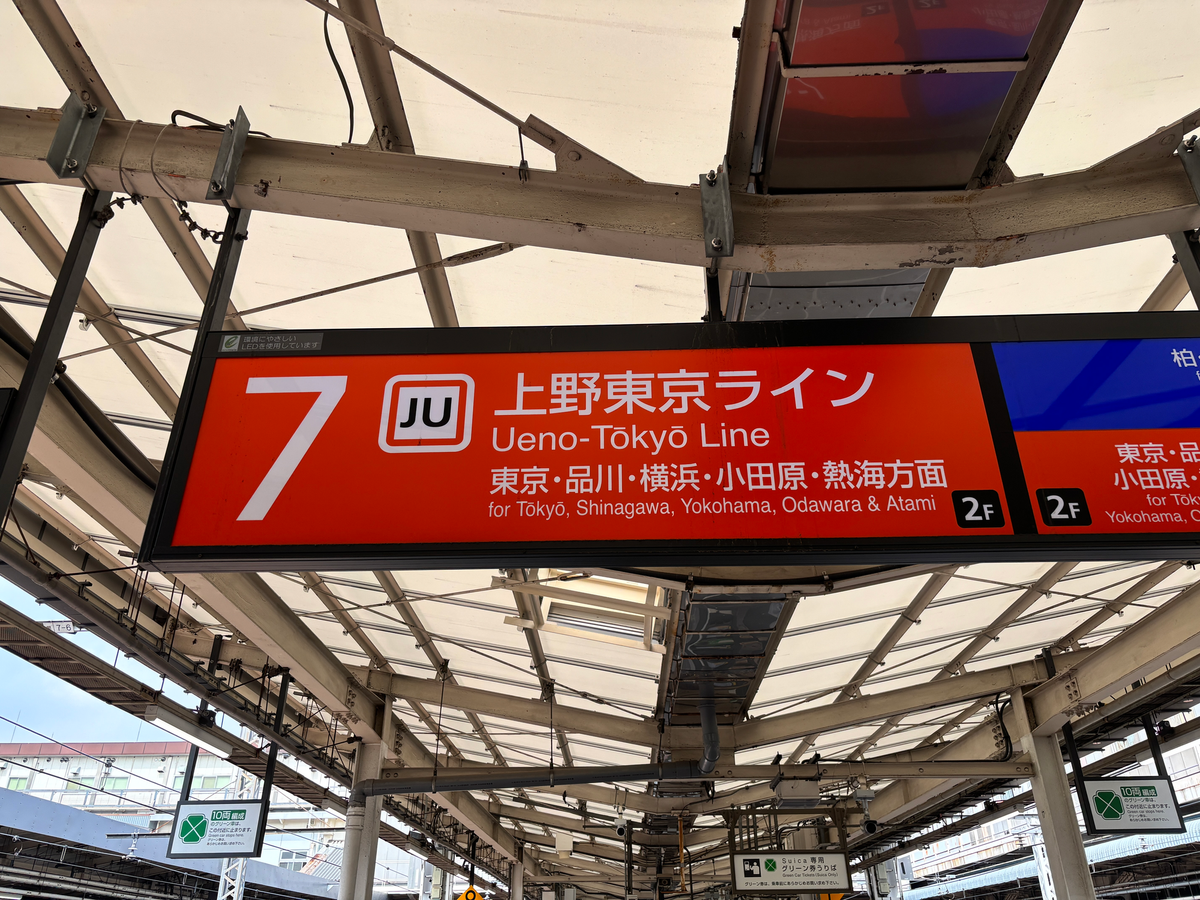
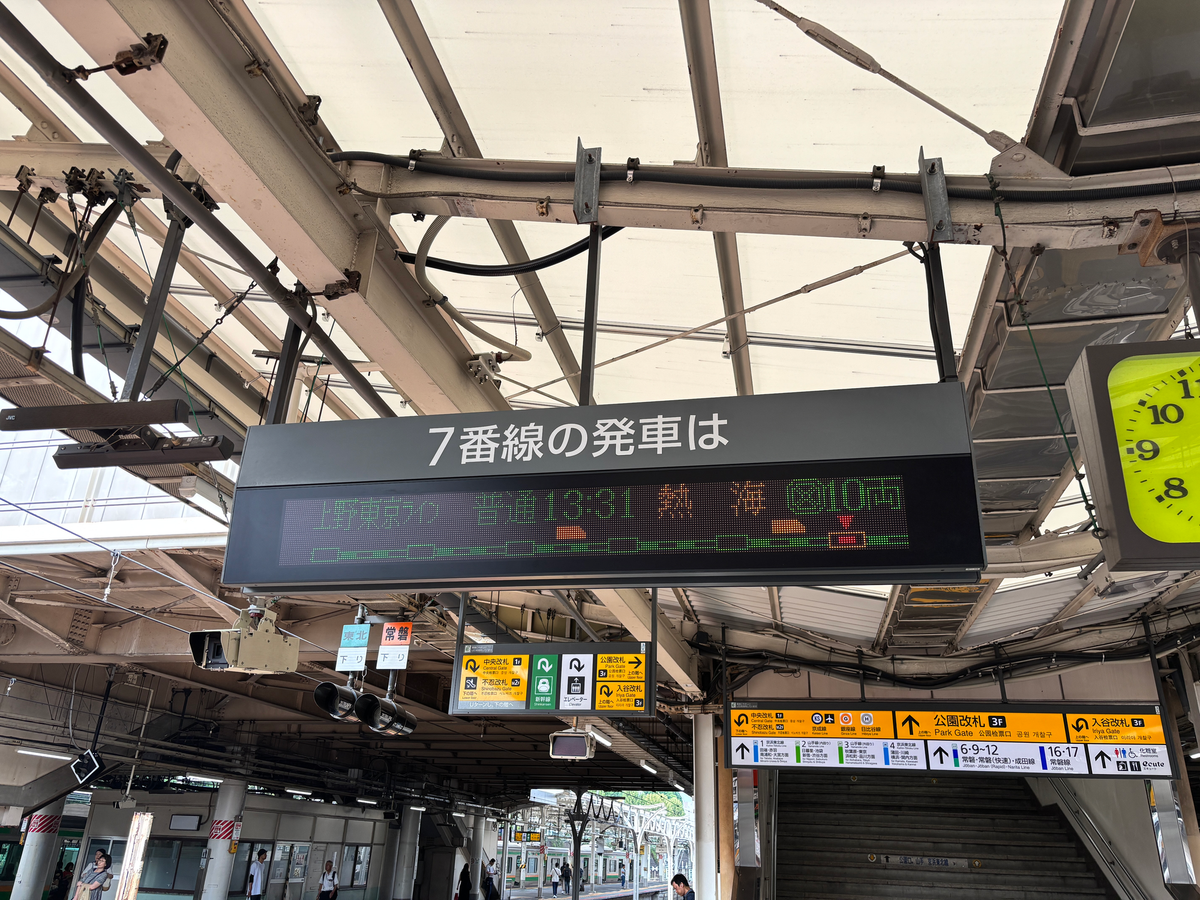
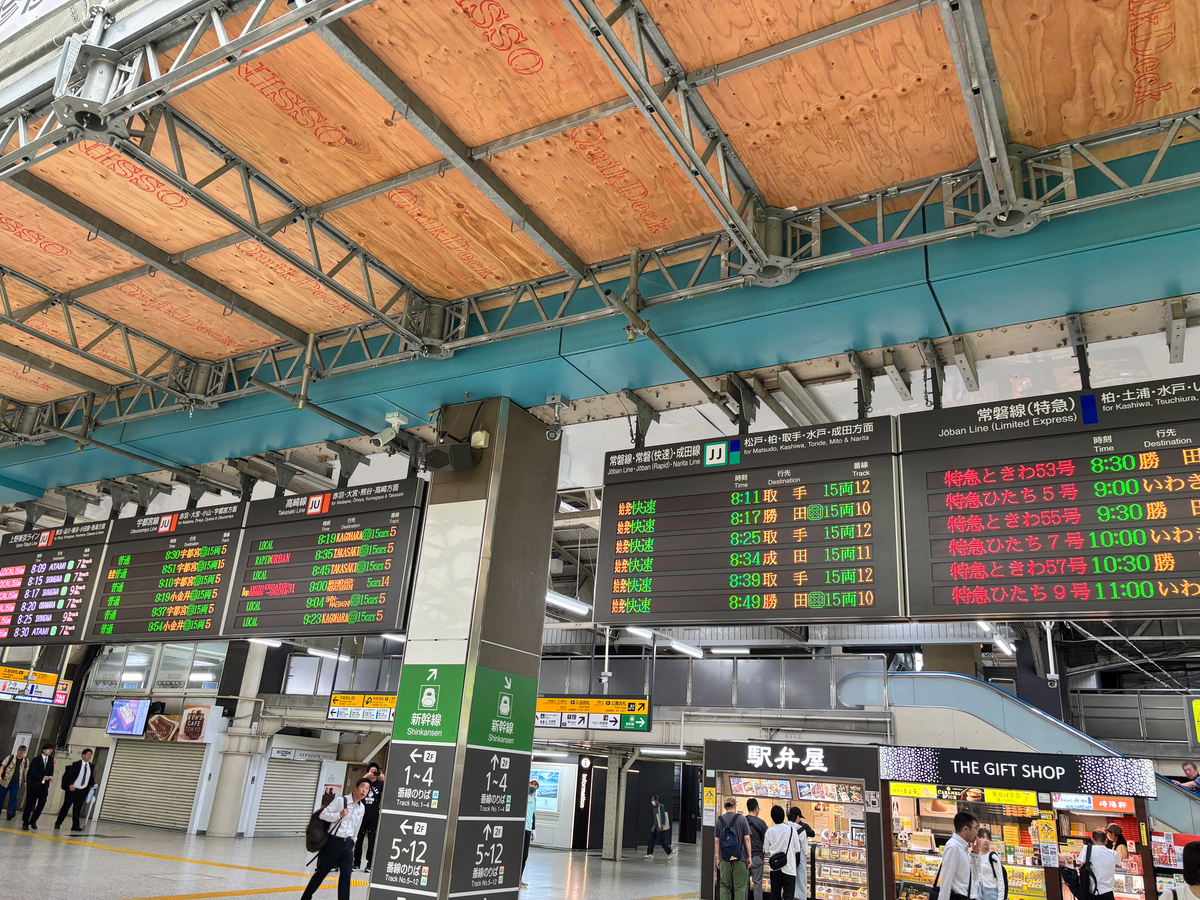
The Ueno-Tokyo Line allows direct travel from Tokyo, Shinagawa, and Yokohama to Odawara and Atami without transfers. When we boarded, the train to Atami departed from platform 7. It's convenient for reaching Atami without using the Shinkansen. For details on how to get to Atami, see How to Get from Tokyo to Atami.
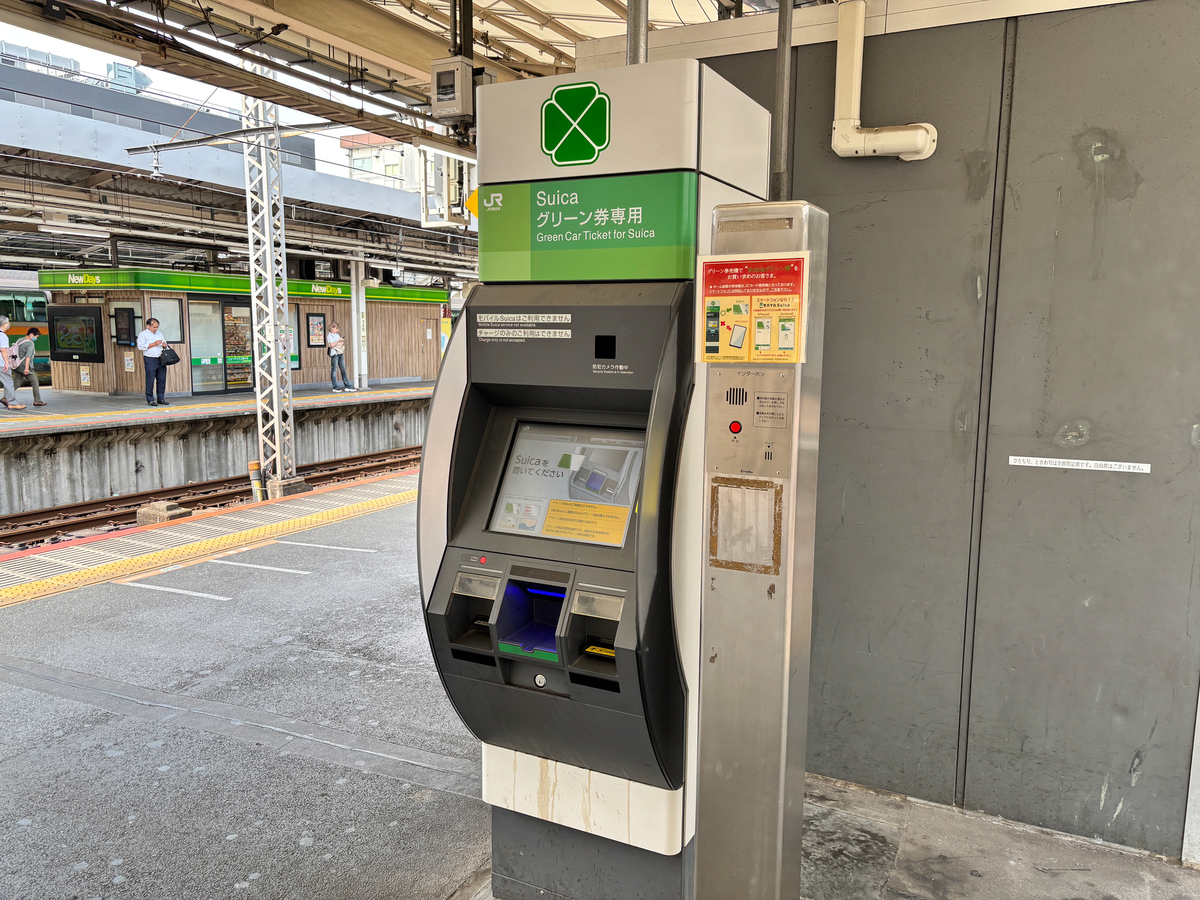
Trains like the Ueno-Tokyo Line have Green Cars (spacious and comfortable seating cars that require an additional Green Ticket). You can purchase a Green Ticket by loading it onto your Suica or other IC card at the "Suica Green Ticket Machine" on the platform before boarding.
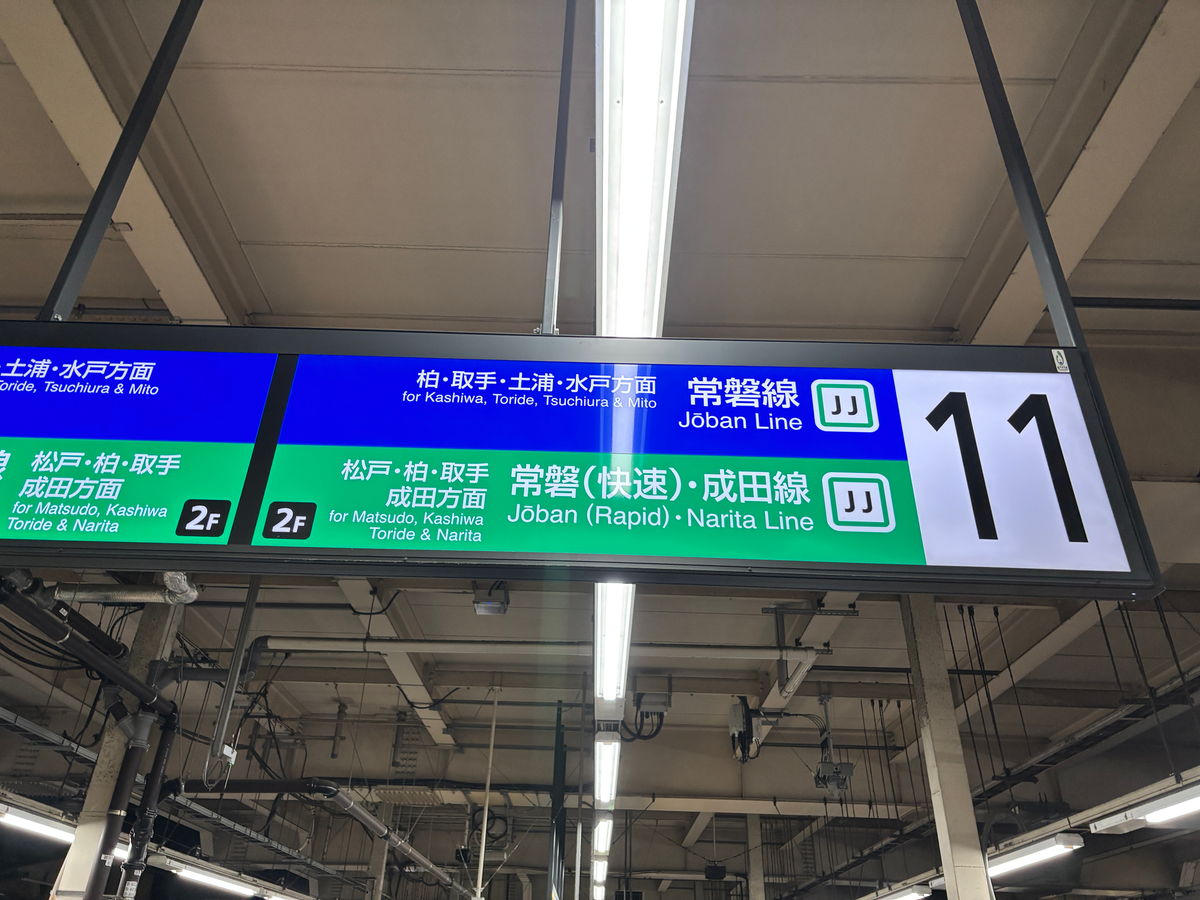
The Joban Line heading towards Mito departs from platforms like 11. Be sure to check the platform number and destination on the information board before boarding.
From Ueno Station to Narita Airport | The Skyliner departs from Keisei Ueno Station
The Skyliner to Narita Airport departs from Keisei Ueno Station of Keisei Electric Railway. There is no Skyliner platform inside JR Ueno Station. Exit the JR ticket gates and walk to Keisei Ueno Station near Shinobazu Pond. Those arriving at Ueno from Narita Airport walk in the opposite direction to the JR station.
Details on how to identify and ride the Skyliner are thoroughly covered in the article How to Ride the Skyliner.
Transfer to the Ginza Line or Hibiya Line of the subway.
Ueno Station is also served by the Tokyo Metro Ginza Line and Hibiya Line. Exit the JR ticket gates and follow the subway signs (marked with an "M") to go underground.
- Ginza Line
- Towards Asakusa, Ginza, and Shibuya. It's three stops to Asakusa.
- Hibiya Line
- Towards Akihabara, Ginza, and Roppongi.
If you have an IC card like Suica, you can transfer between JR and the subway with just a tap. For how to use it on your smartphone, see the Mobile Suica article.
Ticket, Midori no Madoguchi, Suica Recharge
Booking Shinkansen tickets in advance on your smartphone is convenient. You can reserve JR East Shinkansen tickets through "Ekinet." The process is summarized in How to Buy Shinkansen Tickets.
Reserved tickets can be picked up at the station's reserved seat ticket machines. The screen can be switched to English, and you proceed via buttons like "JR-EAST Train Reservation."
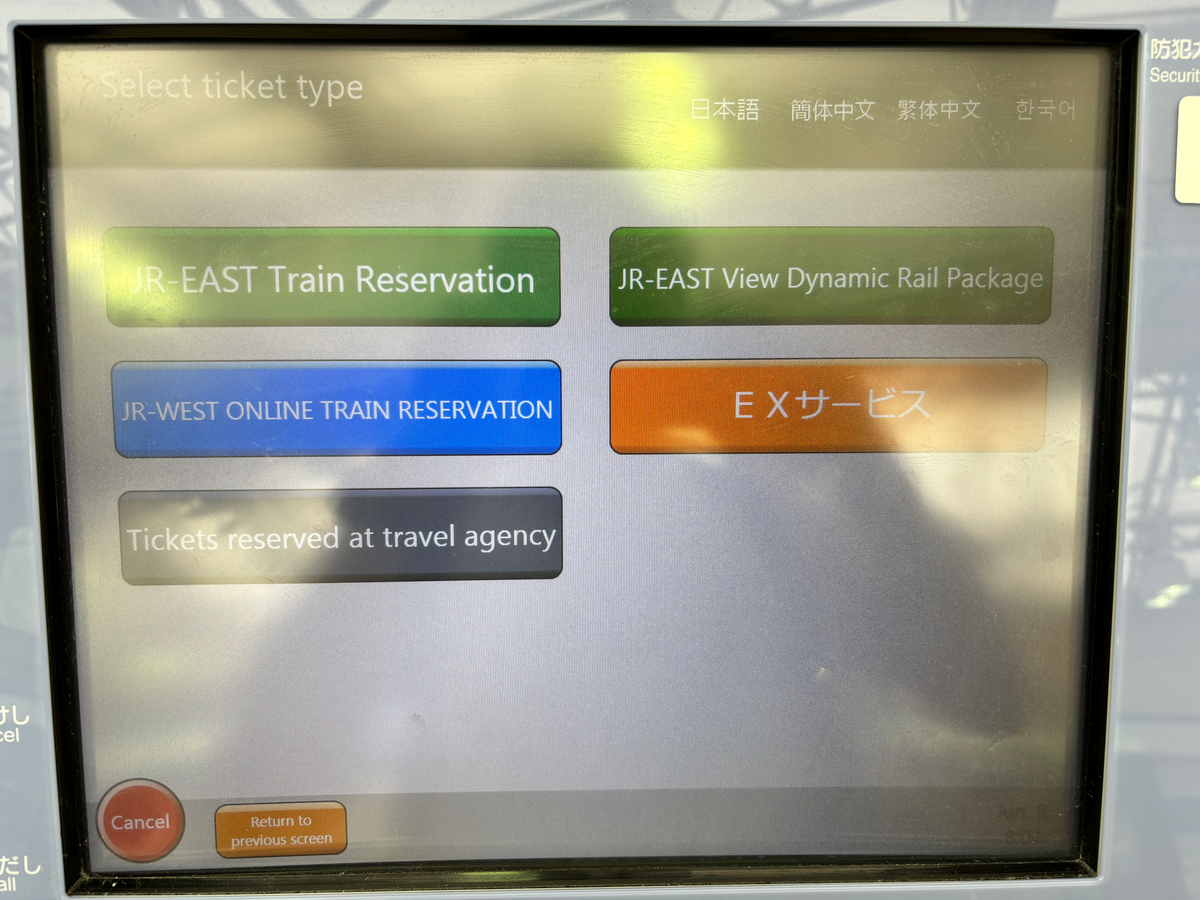
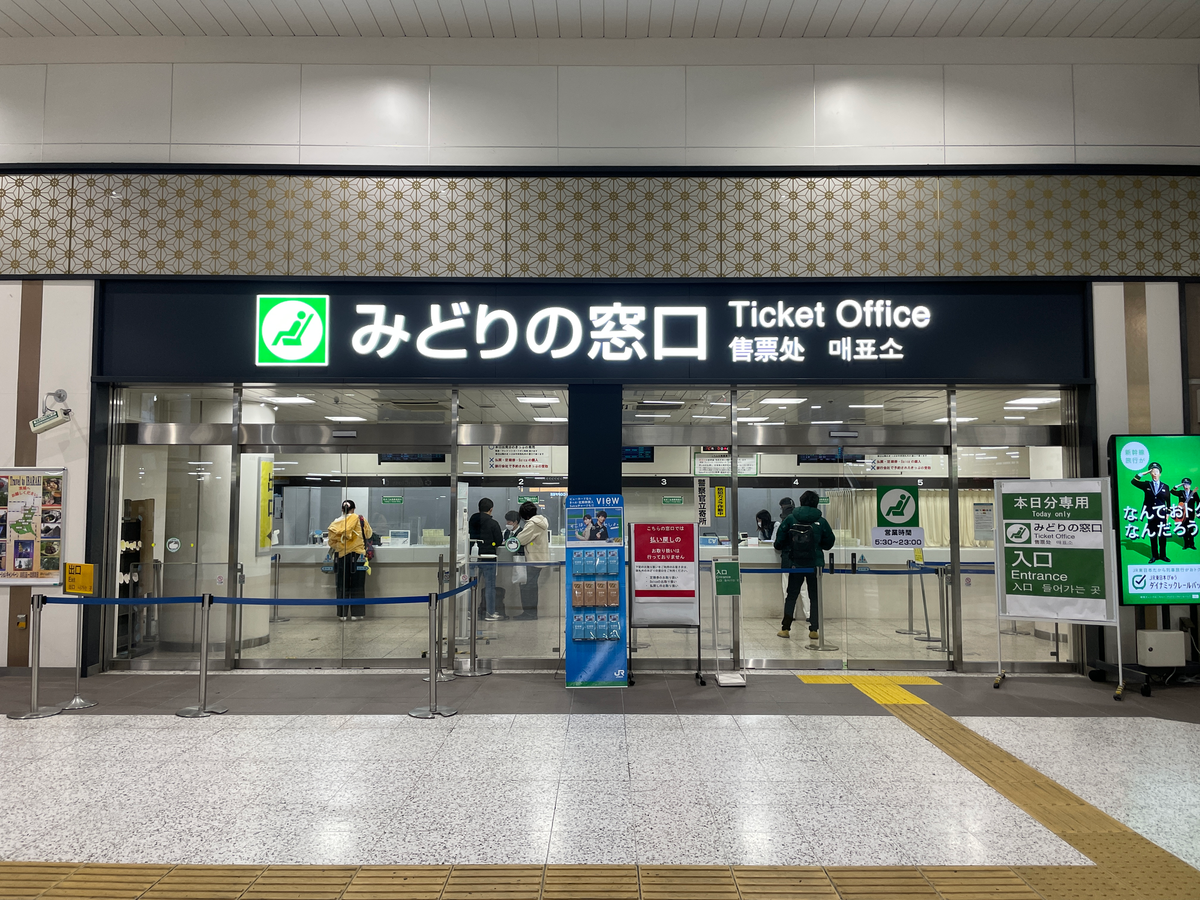
If you want to buy a ticket while consulting with a station staff member, head to the JR ticket counter "Midori no Madoguchi."
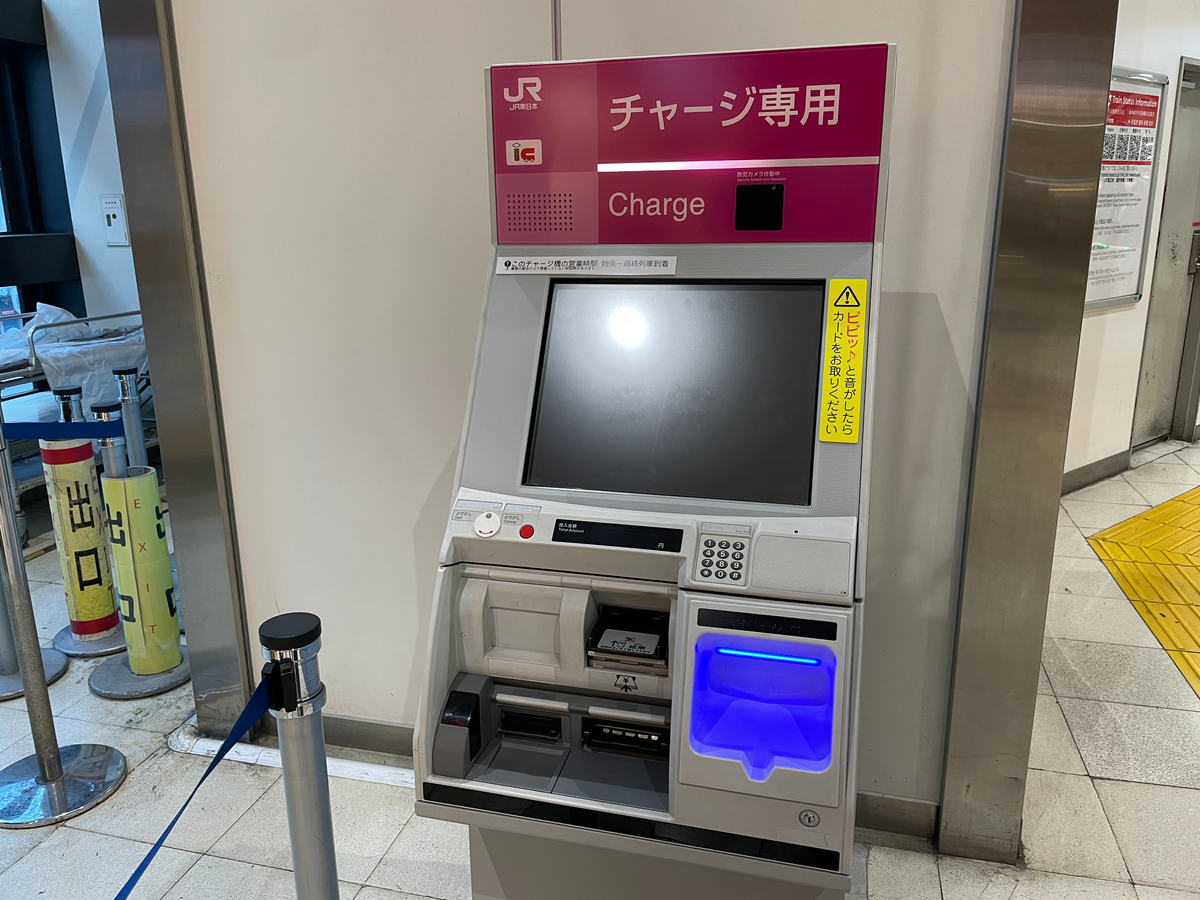
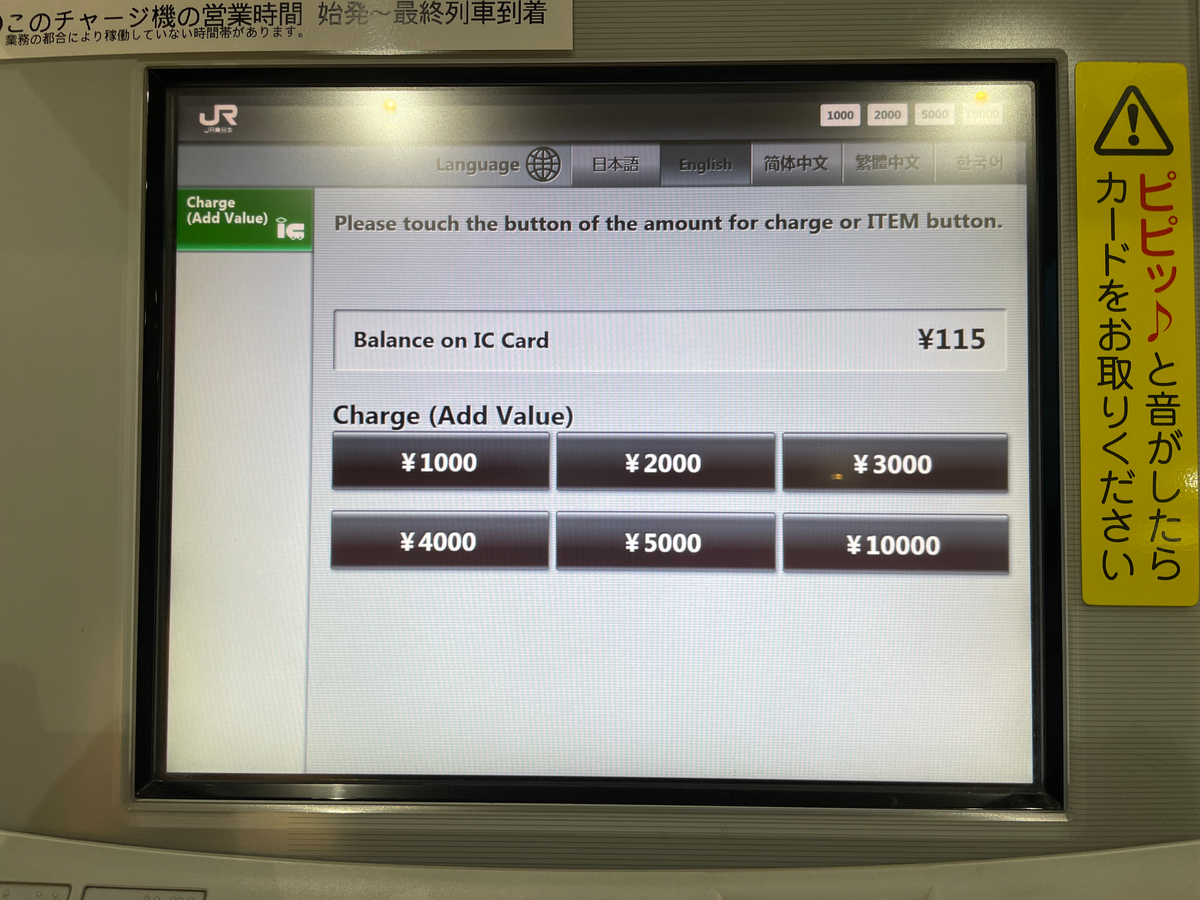
When your IC card like Suica has a low balance, use the charge machine. The screen can be set to English. On the screen we saw, you could choose an amount from 1,000 yen to 10,000 yen.
Coin Lockers and Shops at Ueno Station
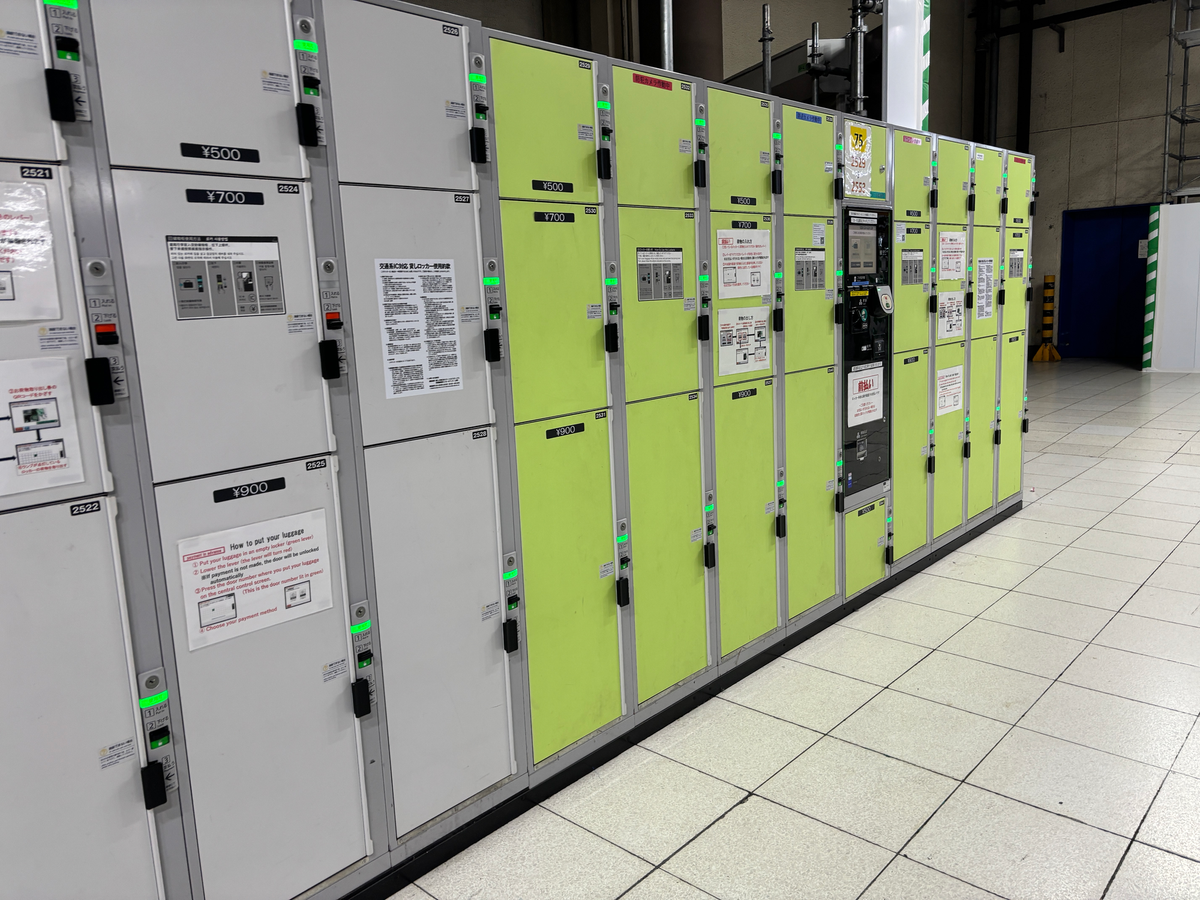
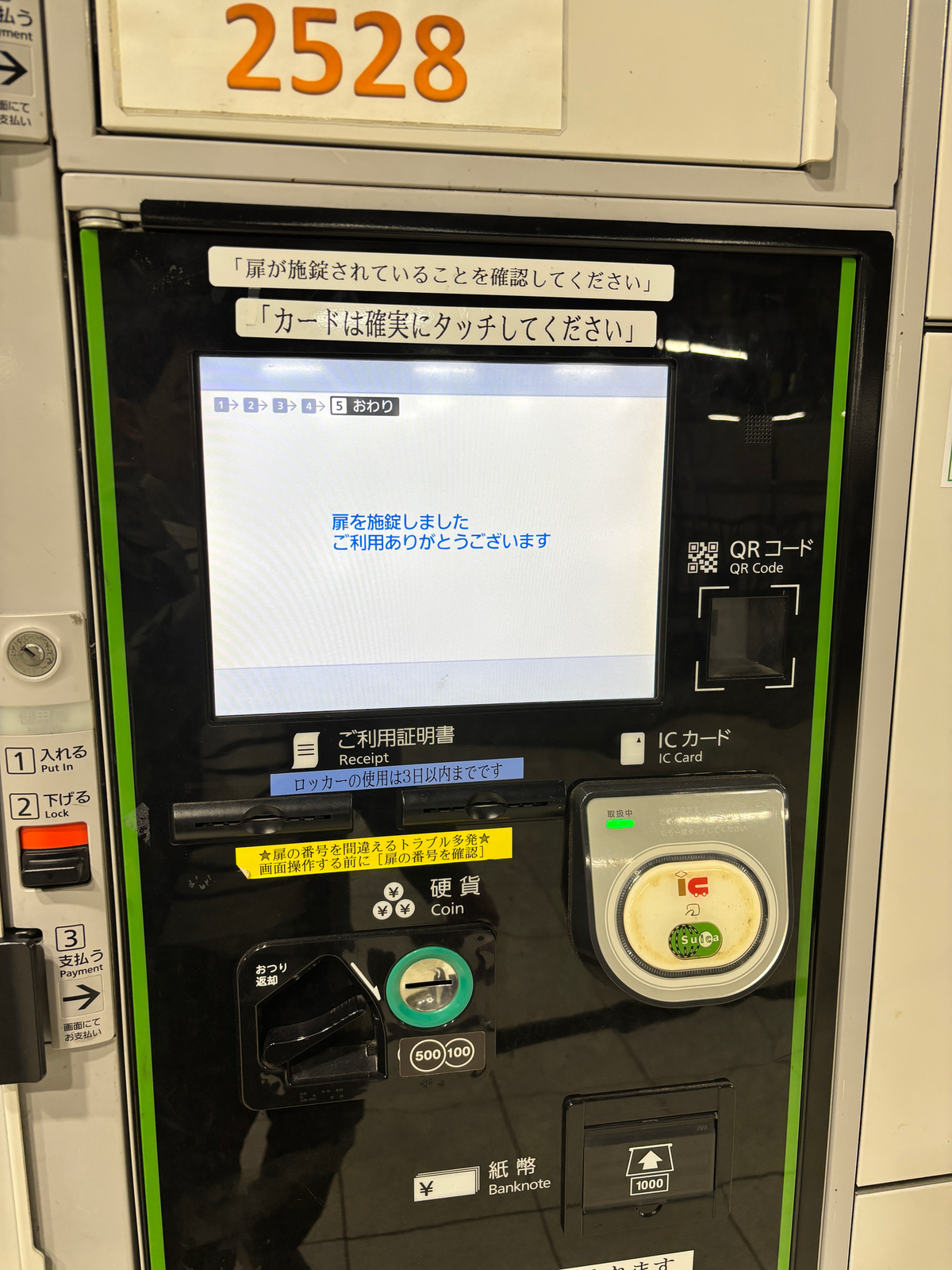
Ueno Station has coin lockers that can be paid for with IC cards like Suica. When we checked, there were three sizes available, costing 500 yen, 700 yen, and 900 yen. On days when you plan to visit Ueno Park or museums before taking the Shinkansen, storing your luggage at the station allows you to walk around comfortably without carrying bags.
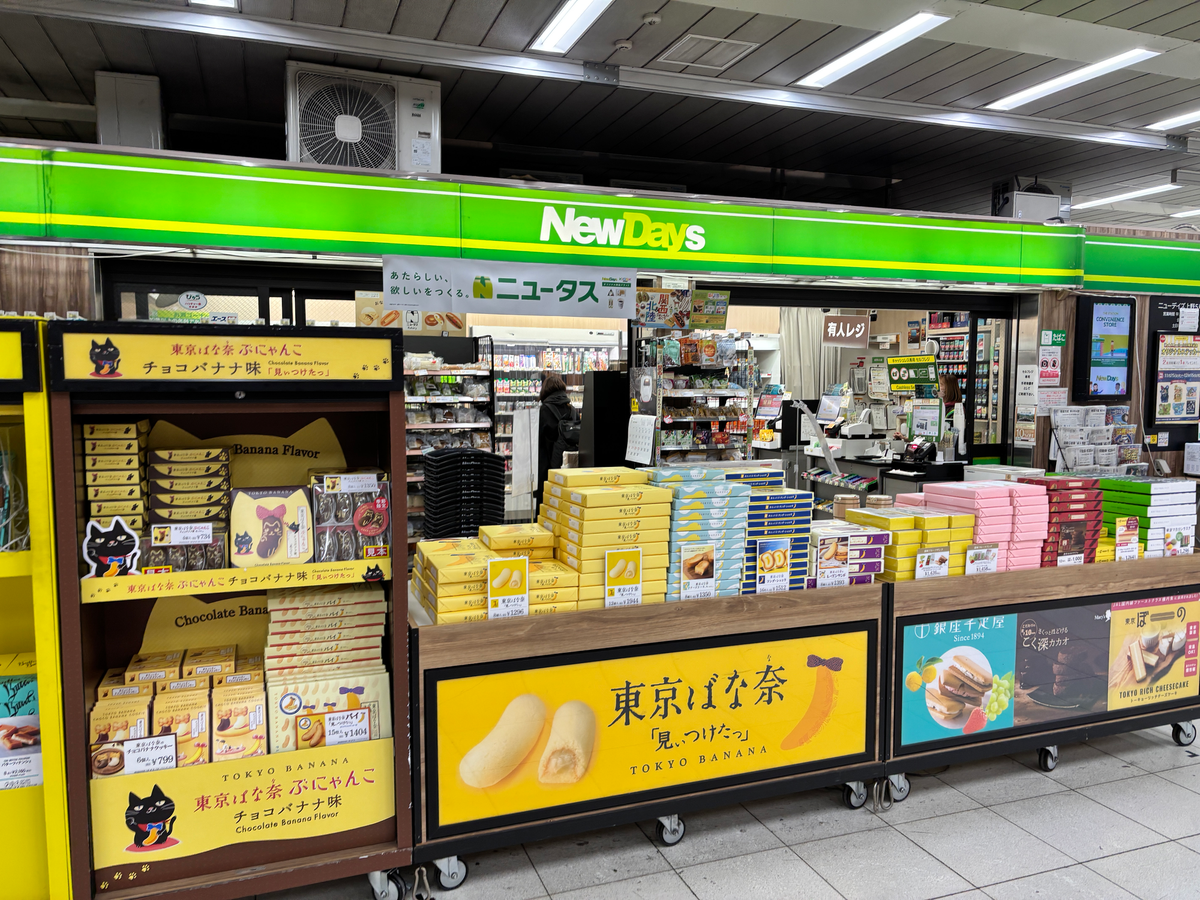
Inside the Shinkansen ticket gates, there's a convenience store where you can buy Tokyo souvenirs and drinks. In the central wide passage (concourse), there are also shops selling ekiben (station bento boxes).
Places Within Walking Distance from Ueno Station
Exit the Park Gate at Ueno Station, and you'll find yourself in Ueno Park. Within the park, you'll find Ueno Zoo, the Tokyo National Museum, and the National Museum of Western Art, among other museums. Near the Shinobazu Gate, there's Ameyoko, lined with food and clothing shops. Asakusa is just three stops away on the Ginza Line subway.
Q&A
Frequently Asked Questions
- What is Ueno famous for?
- Famous for Ueno Park, home to Ueno Zoo and museums, and the Ameyoko shopping street. It's also a station for the Skyliner to Narita Airport and Shinkansen heading north.
- Is Ueno far from the center of Tokyo?
- It's not far. Ueno is part of central Tokyo. It's the fourth stop on the Yamanote Line to Tokyo Station and the third stop on the Ginza Line to Asakusa.
- Is Ueno a convenient place to stay?
- Convenient location. The Skyliner to Narita Airport, the Shinkansen heading north, Ueno Park, and Asakusa are all nearby. At the bottom of this article, you'll find accommodations in the area.
- Which is better to stay: Ueno or Shinjuku?
- For those arriving at or departing from Narita Airport, visiting Asakusa or Ueno Park, or traveling to Tohoku or Hokuriku by Shinkansen, Ueno is convenient. For those frequently heading towards Mount Fuji, Shibuya, or Harajuku, Shinjuku is convenient.