Tokyo
Sensoji Temple is recommended at dusk Even with shops closed, it can be viewed calmly with fewer people, along with walking tips and omikuji.
Updated 19 November 2026By Dynamic Japan Travel editorsEditorial policy
Contents
At Sensoji Temple, the best time to visit is during twilight. Here, "twilight" refers to the period around sunset when the sky is still slightly bright.
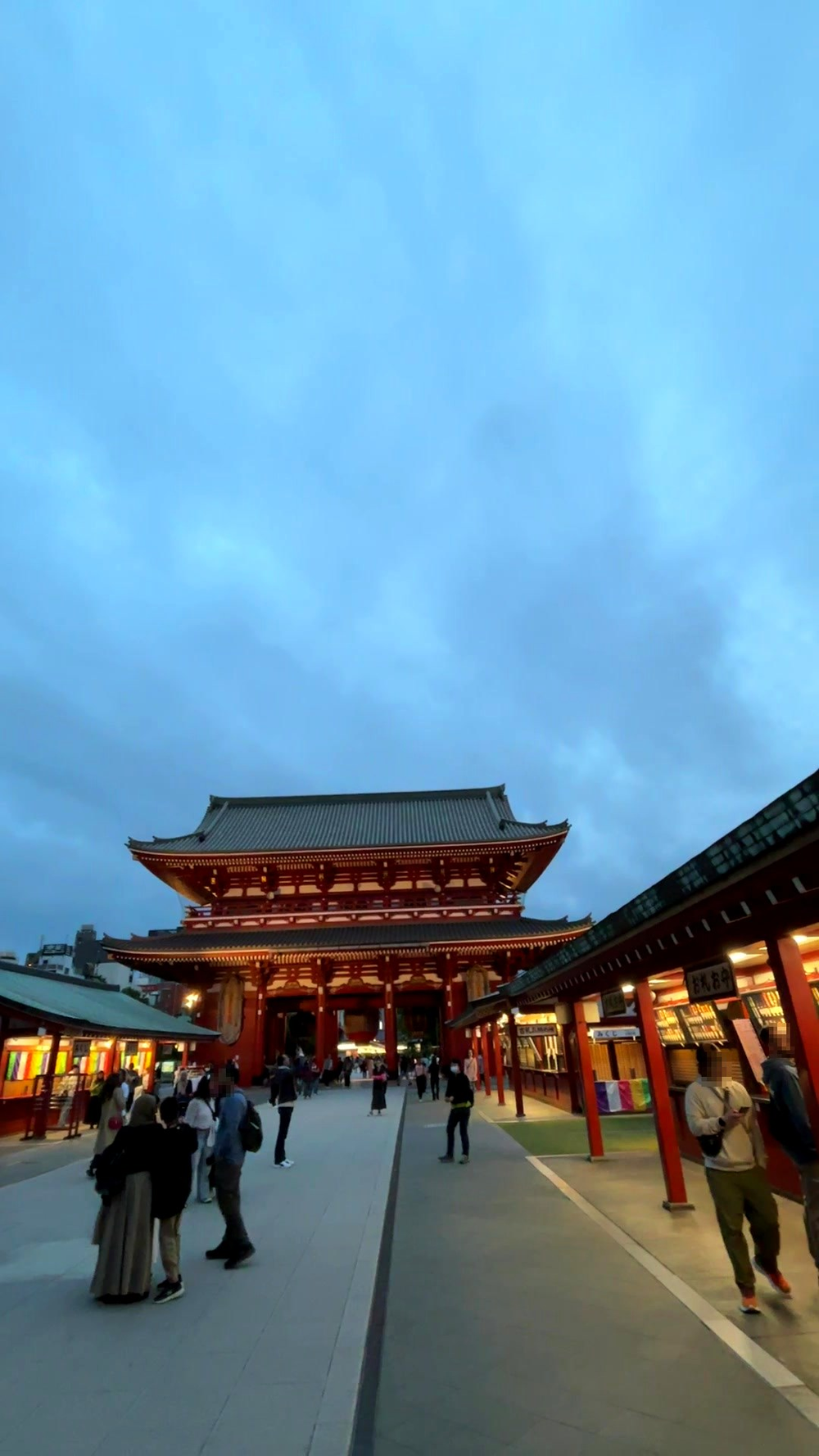
Visiting after 6:30 PM in May 2025, most shops in Nakamise were closed, so shopping was limited. However, with fewer people around, it was peaceful to explore the expansive temple grounds. As the sky darkened, the illuminated gates and five-story pagoda became more visible. This article features photos taken at twilight and night, along with tips on how to navigate and draw omikuji. It also includes information on the time of sunset each season, how to pay respects, and directions to the temple.
Things to Know in Advance
- Illumination
- Daily from sunset until around 11 PM. Kaminarimon, Hozomon, the Five-Storied Pagoda, and the Main Hall are lit up (according to Senso-ji's official website).
- Main Hall Hours
- 6 AM to 5 PM (from October to March, from 6:30 AM). You cannot enter the Main Hall after 5 PM.
- Nakamise Shops
- When we visited after 6:30 PM in May, most shops were closed.
- Admission
- Entry to the temple grounds is free. No tickets required.
- Location
- Asakusa, Tokyo. About a 5-minute walk from Asakusa Station.
- Omikuji
- When we drew one in May 2025, it was 100 yen. Available even after 5 PM.
- Time Required
- About 1 hour for visiting and drawing omikuji. If viewing from dusk to night, 1.5 to 2 hours.
Three Reasons to Visit Senso-ji at Dusk
1. Few people, allowing for a calm visit (May)
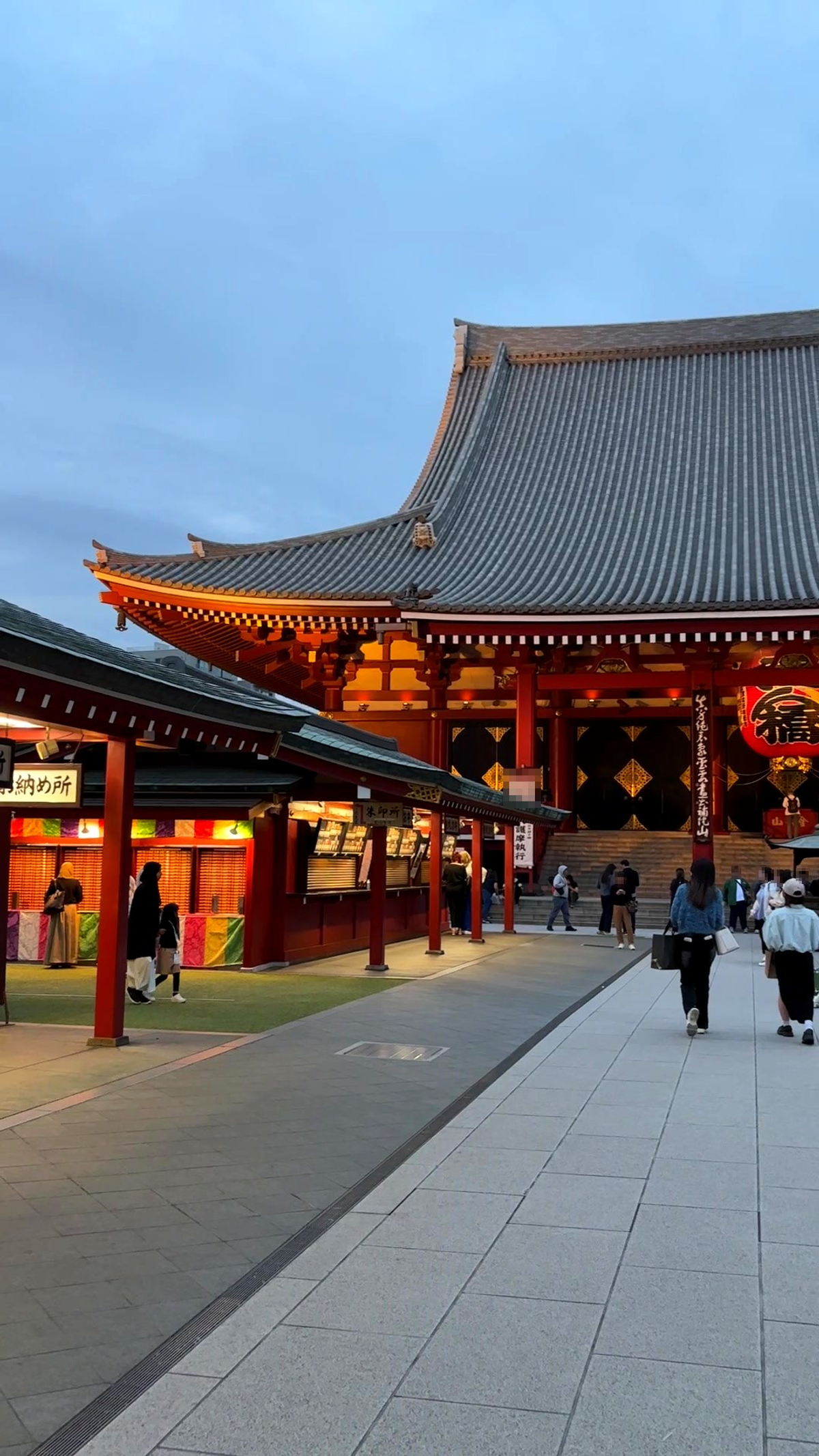
Visiting in May at dusk, the best part was the lack of crowds. Senso-ji Temple is one of Tokyo's most popular spots, reportedly attracting about 30 million visitors annually. It's said to be very crowded during the day. However, when we visited after 6:30 PM in May, there were only a handful of people on the wide stone path in front of the main hall. We could walk without dodging others and take our time to admire the buildings. We could also take photos at our own pace.
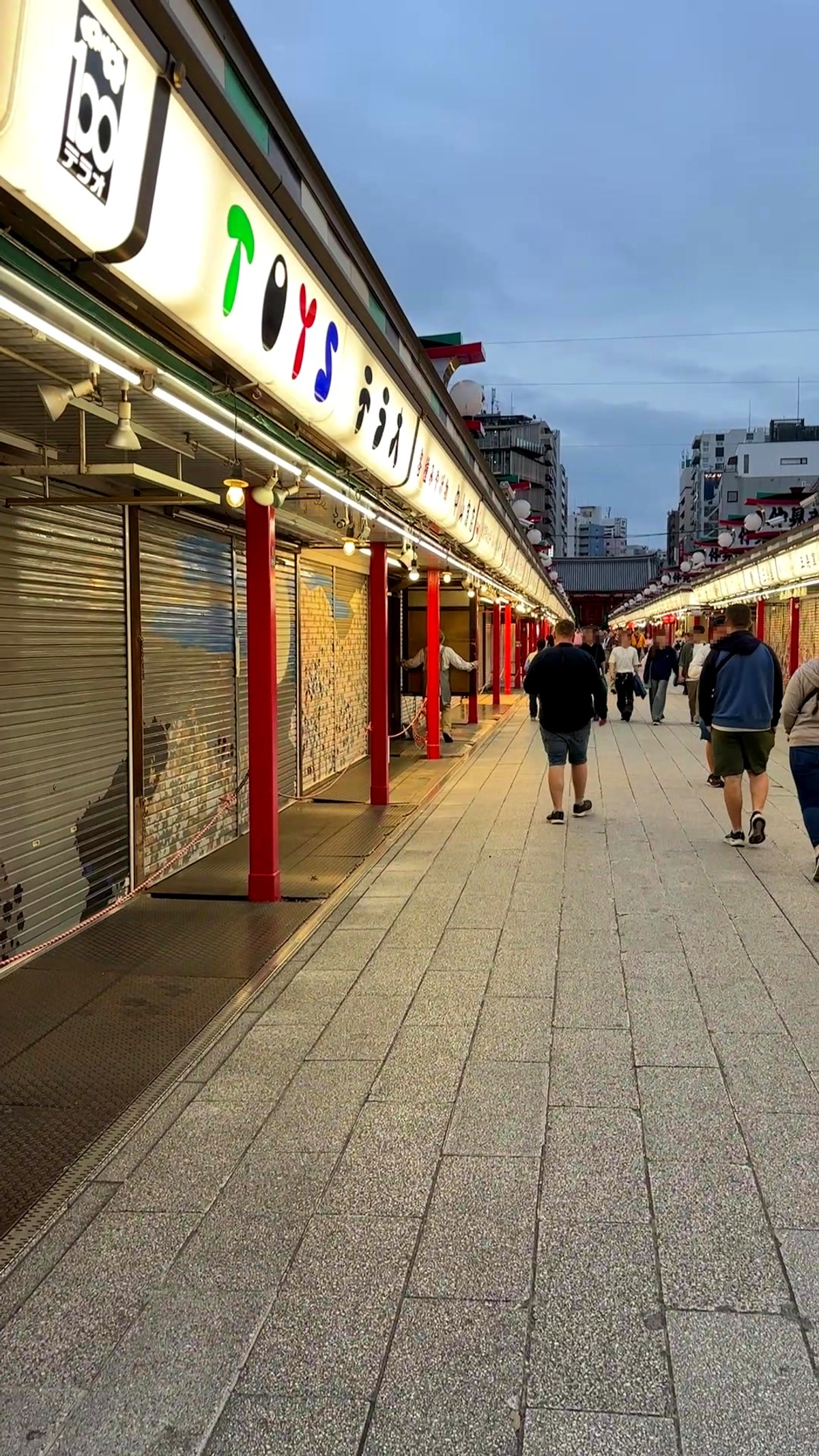
Instead, most shops are closed. Many stores in Nakamise have their shutters down. If you want to buy souvenirs or sweets, visit earlier. For those who prefer to quietly admire the temple buildings, evening is ideal.
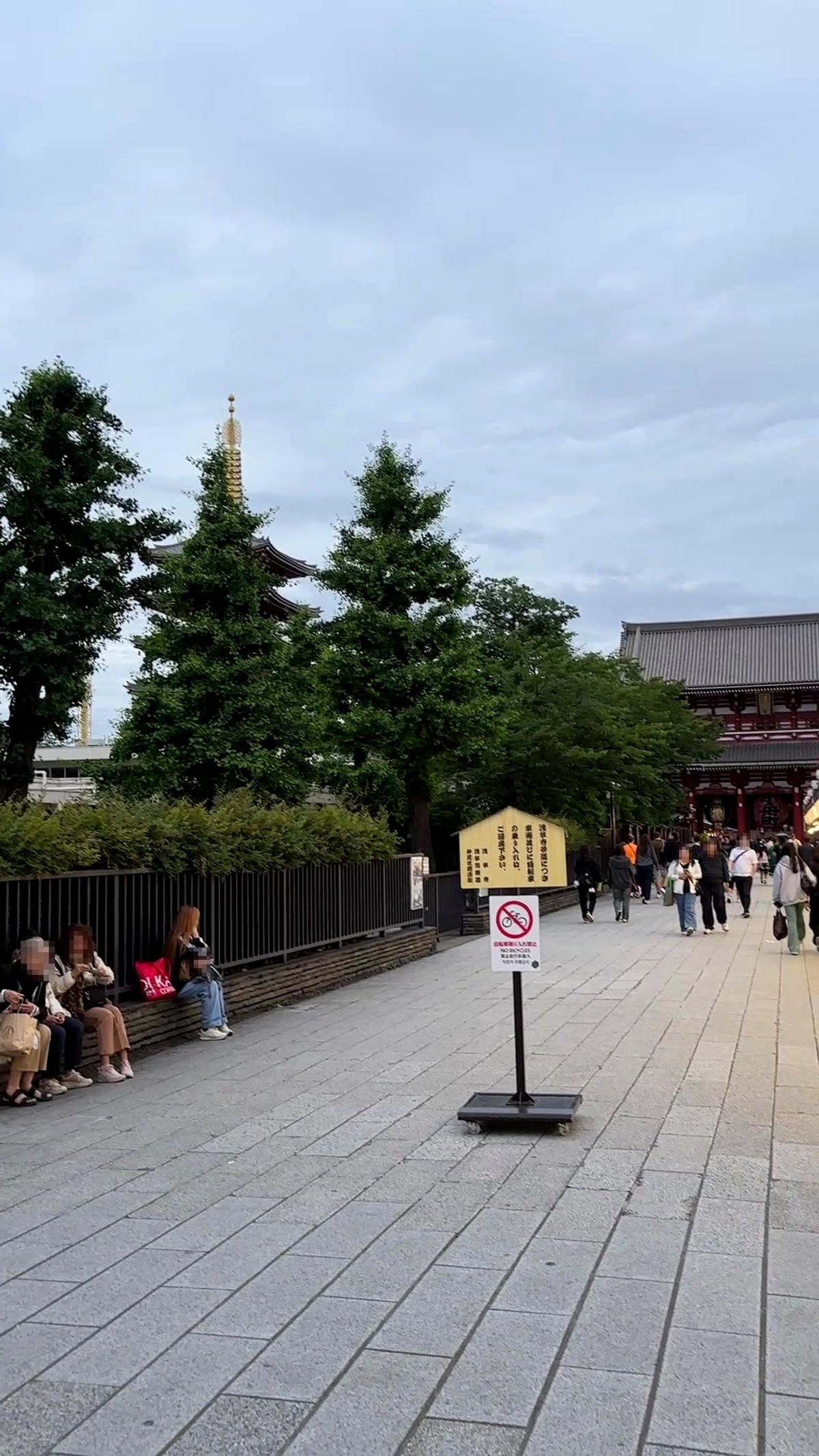
However, it's not always less crowded. When visiting around 6 PM in November, it was already dark, but many shops in Nakamise were still open, and there were many people in front of Hozomon Gate. The atmosphere varies by season and day. This description is based on our visit in May.
2. The sky changes color, and the buildings light up.
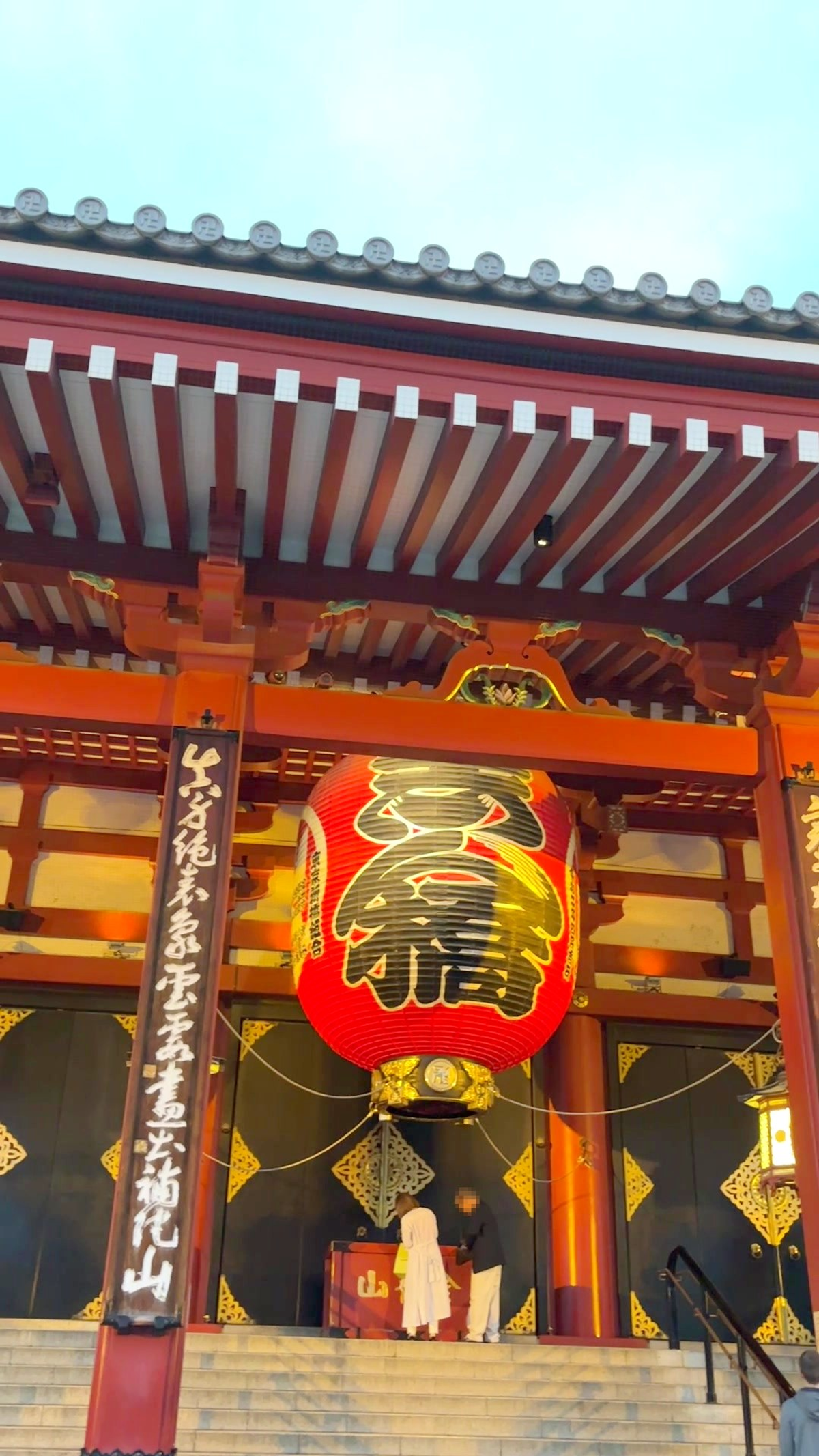
Just before and after sunset, the sky gradually shifts from blue to navy. This time, when the illuminated red buildings and blue sky can be seen together, is particularly photogenic.
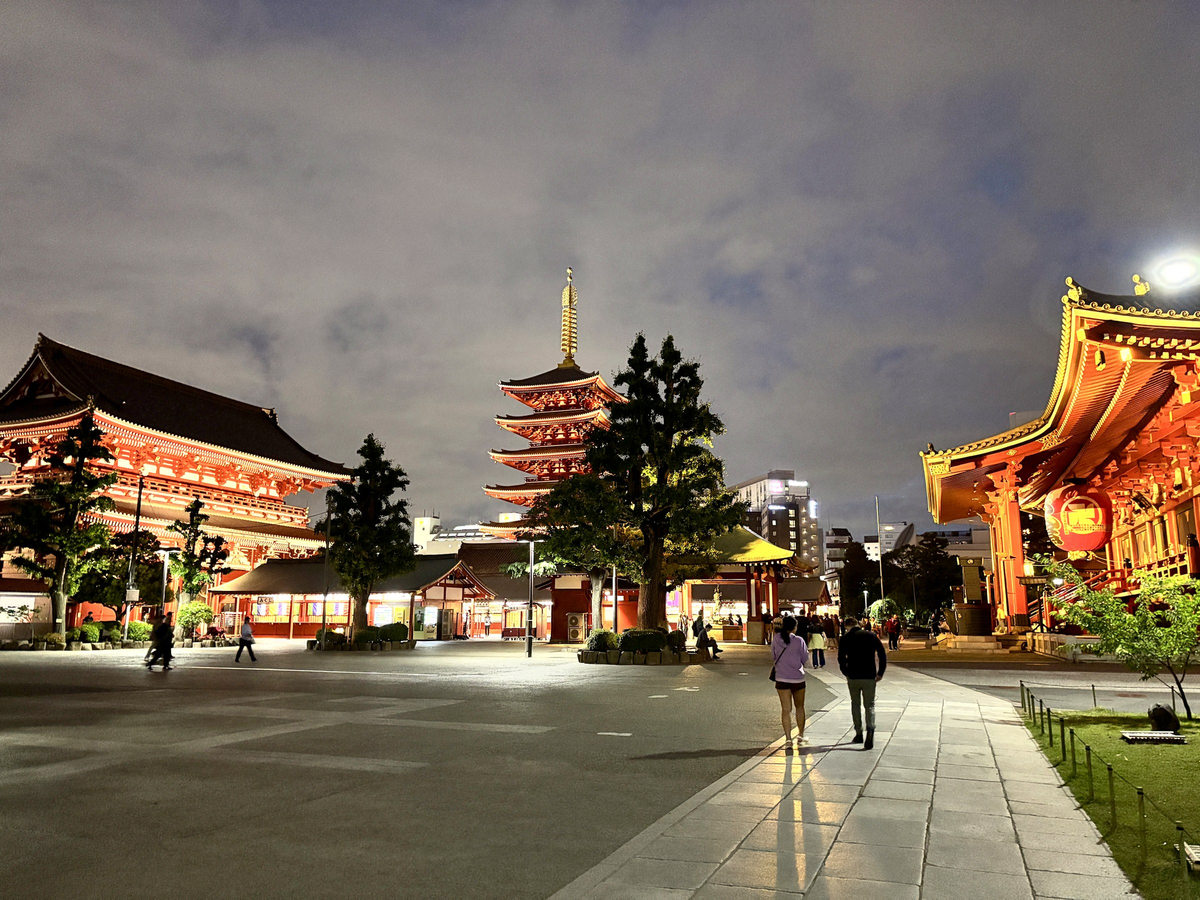
3. You can stay and enjoy the night illumination.
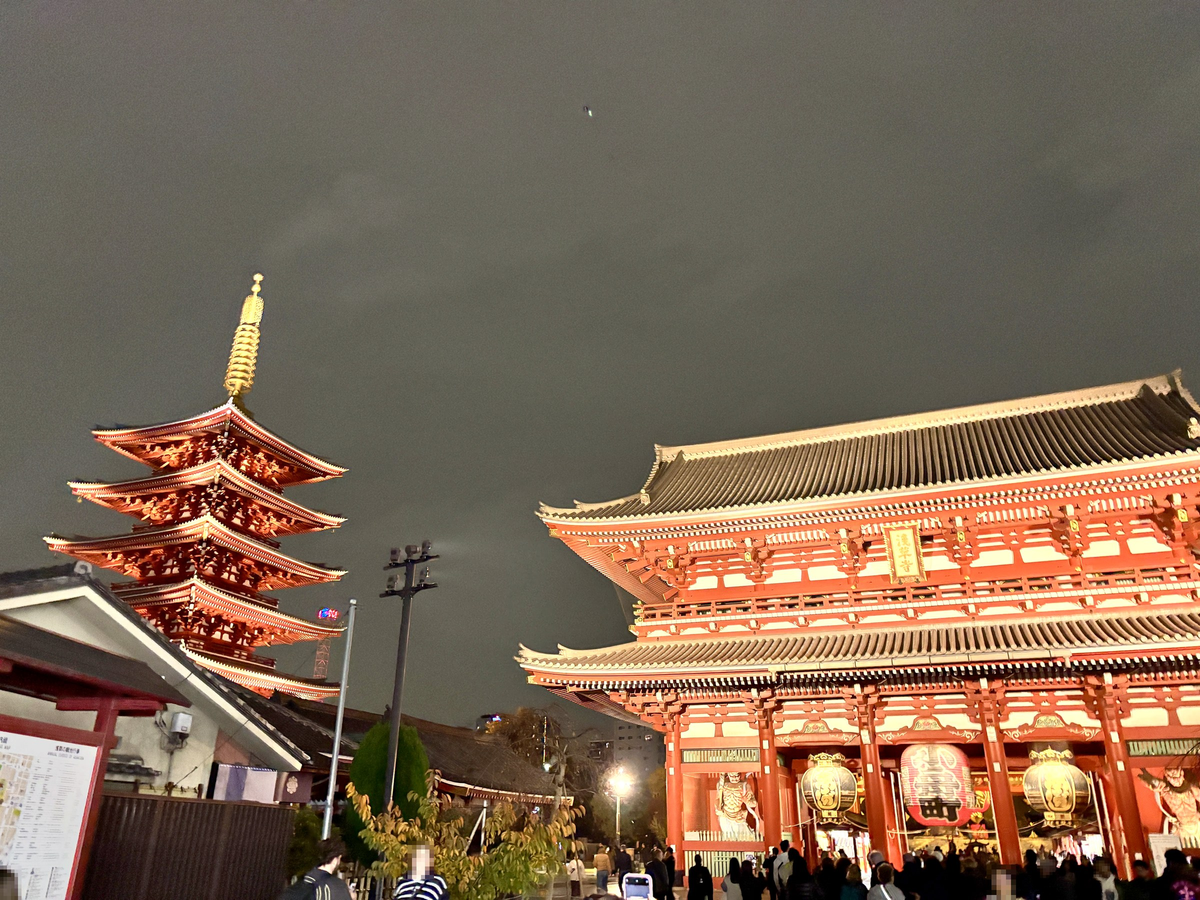
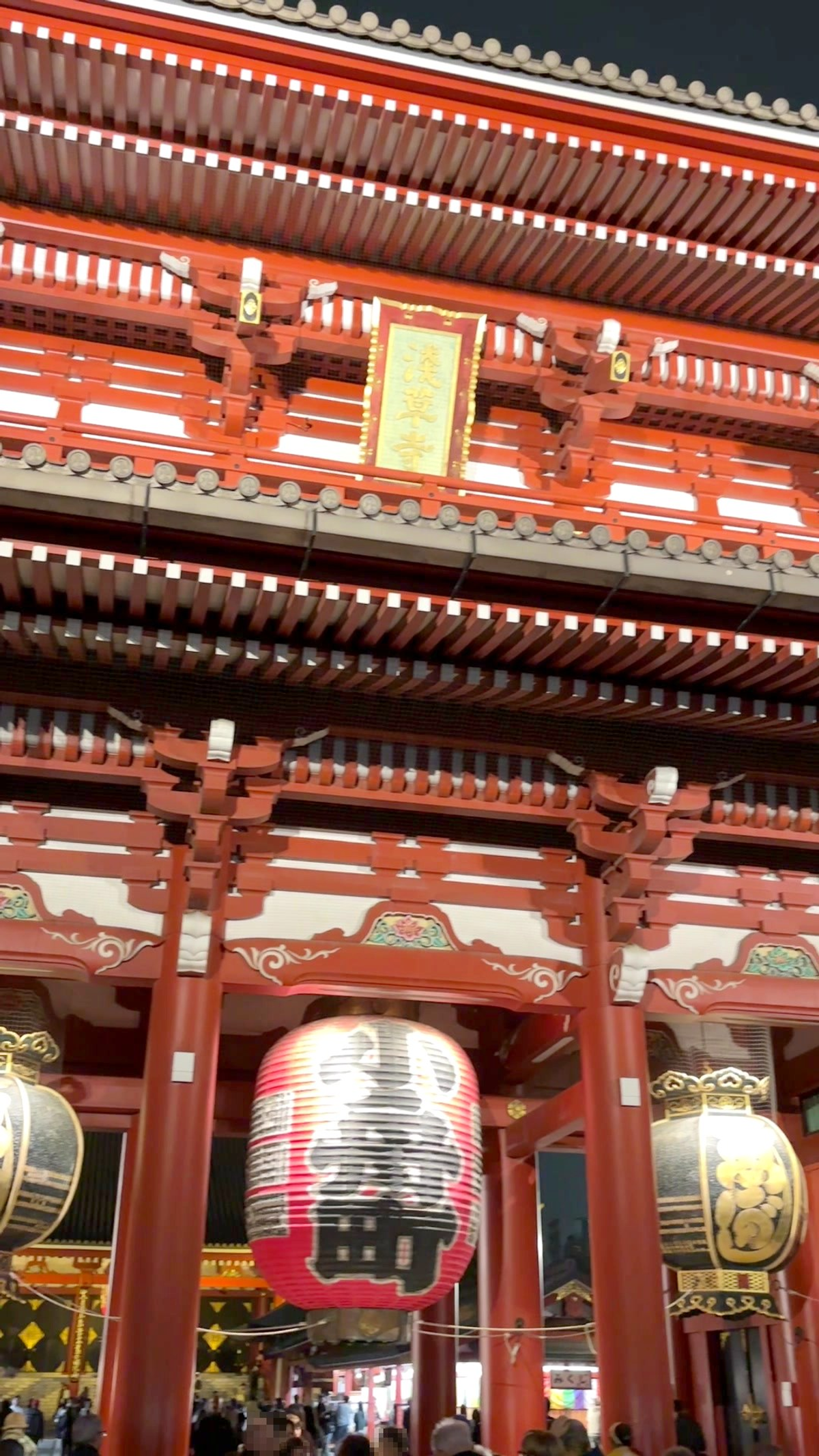
After dusk, you can enjoy the night illumination. In May, after 7 PM, the sky turns navy blue, and the lit-up buildings look beautiful. The photos above and below were taken on a November night. During the November visit, the large red Hozomon Gate stood out brightly against the dark sky. Standing under the gate and looking up, the large lantern glowed softly, appearing much larger and more impressive than in photos.
What time to go? The time it gets dark changes with the seasons.
Even at the same 6 PM hour, the scenery and crowd varied greatly depending on the day. In May, the sky was still bright, while in November, it was already dark. Compare the two photos we took.
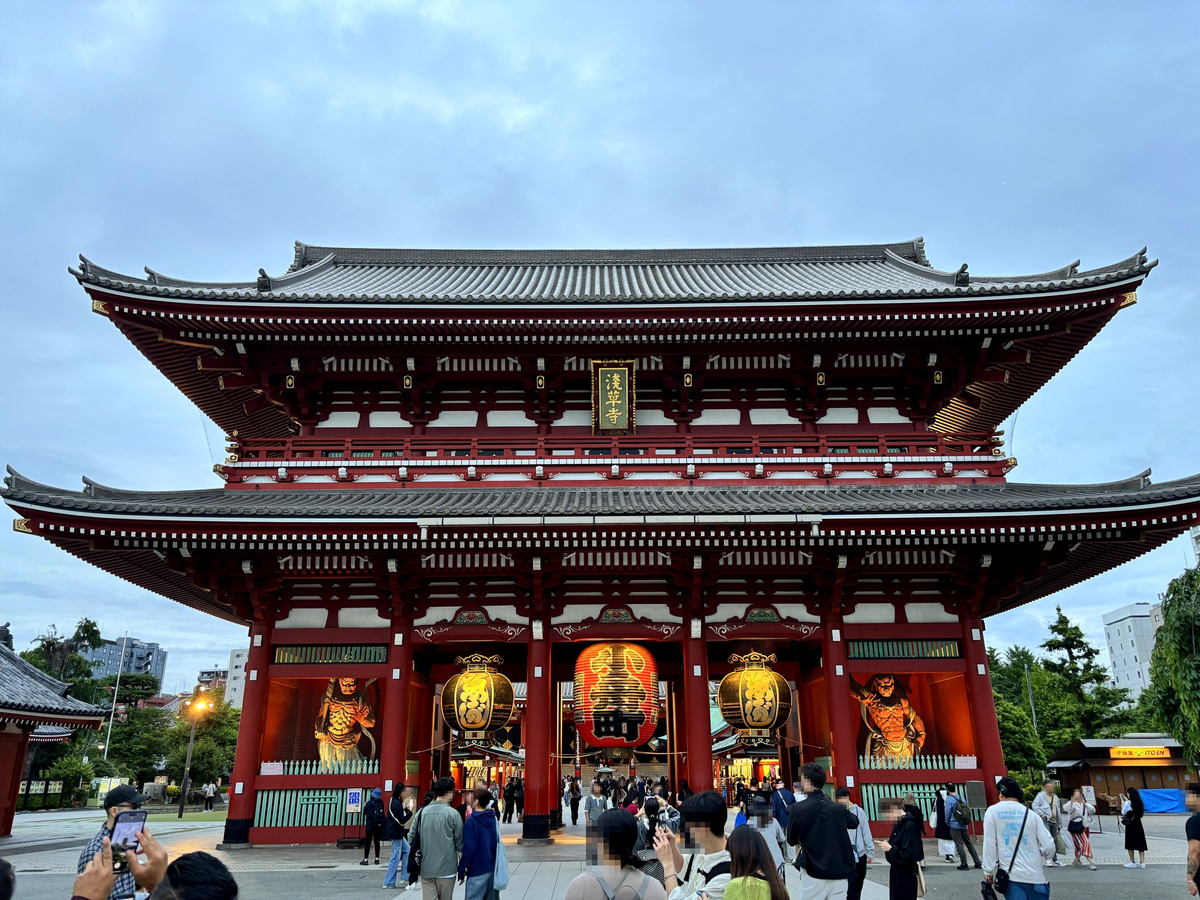
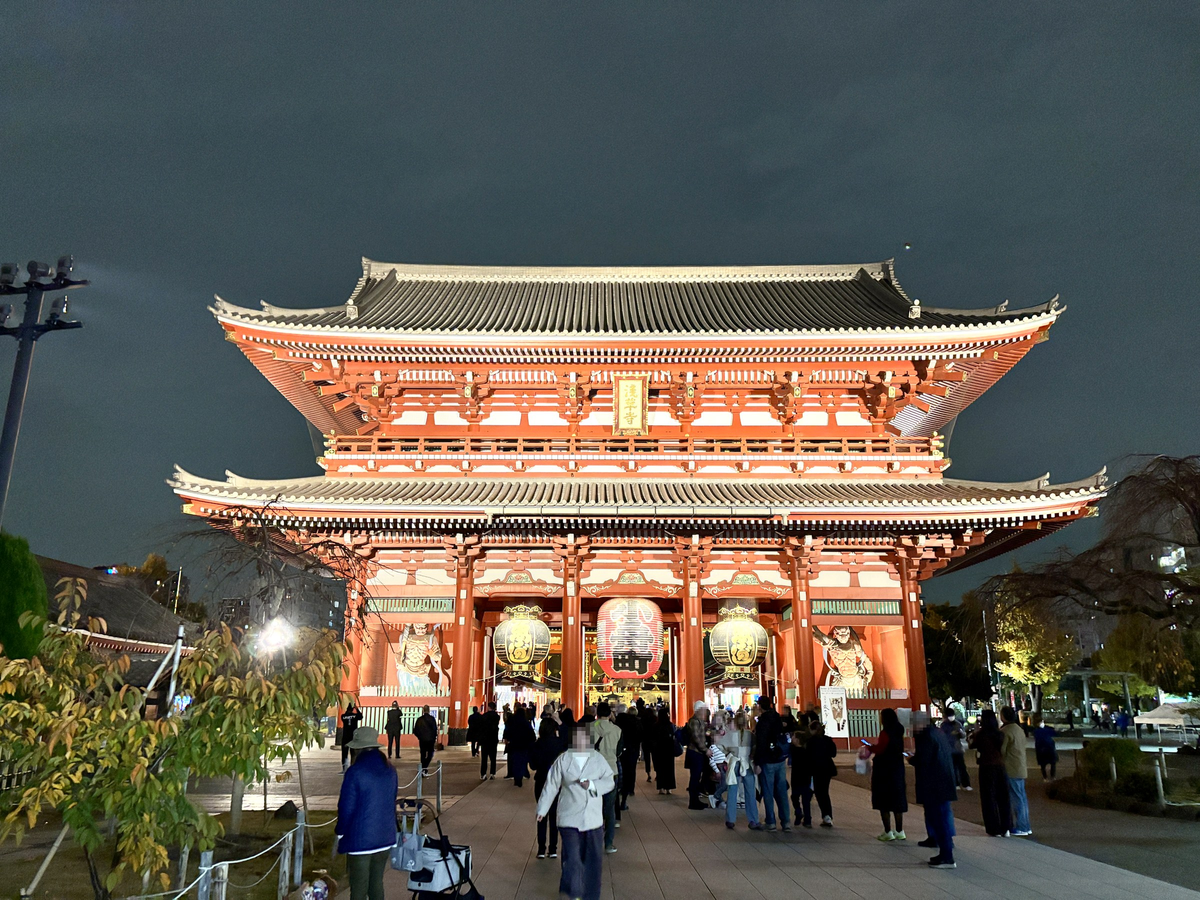
According to the National Astronomical Observatory, sunset in Tokyo is around 6:45 PM in late May and around 4:30 PM in late November. If you want to see the twilight, check the sunset time on your smartphone and aim to arrive a little earlier. You can enjoy both the bright and night views.
- Around late May
- Sunset is late, and it gets dark around 7 PM
- From November to mid-January
- Sunset is before 5 PM, so the illumination starts before the main hall closes at 5 PM
The latest sunset is around late June, at about 7 PM. The earliest is around early December, at about 4:30 PM. Other months fall in between these times. In May, most of the shops in Nakamise were already closed by sunset. That's likely why there were fewer people at twilight. For different purposes, consider the following three guidelines:
- If you want to visit the main hall, arrive by 5 PM
- If you want to shop in Nakamise, go early when the shops are open
- If you want to walk quietly with fewer people, go after the Nakamise shops close (in our May example, after 6:30 PM)
How to Explore Senso-ji at Dusk
Senso-ji Temple is connected by a straight path from the southern Kaminarimon Gate to the northern Main Hall. Walk in the order of Kaminarimon → Nakamise → Hozomon → Five-Story Pagoda → Main Hall to avoid getting lost.
Kaminarimon (Thunder Gate)
The entrance to Senso-ji Temple is the famous Kaminarimon, known for its large red lantern. It's so iconic that it's often associated with Asakusa, and it is illuminated at night.
Nakamise
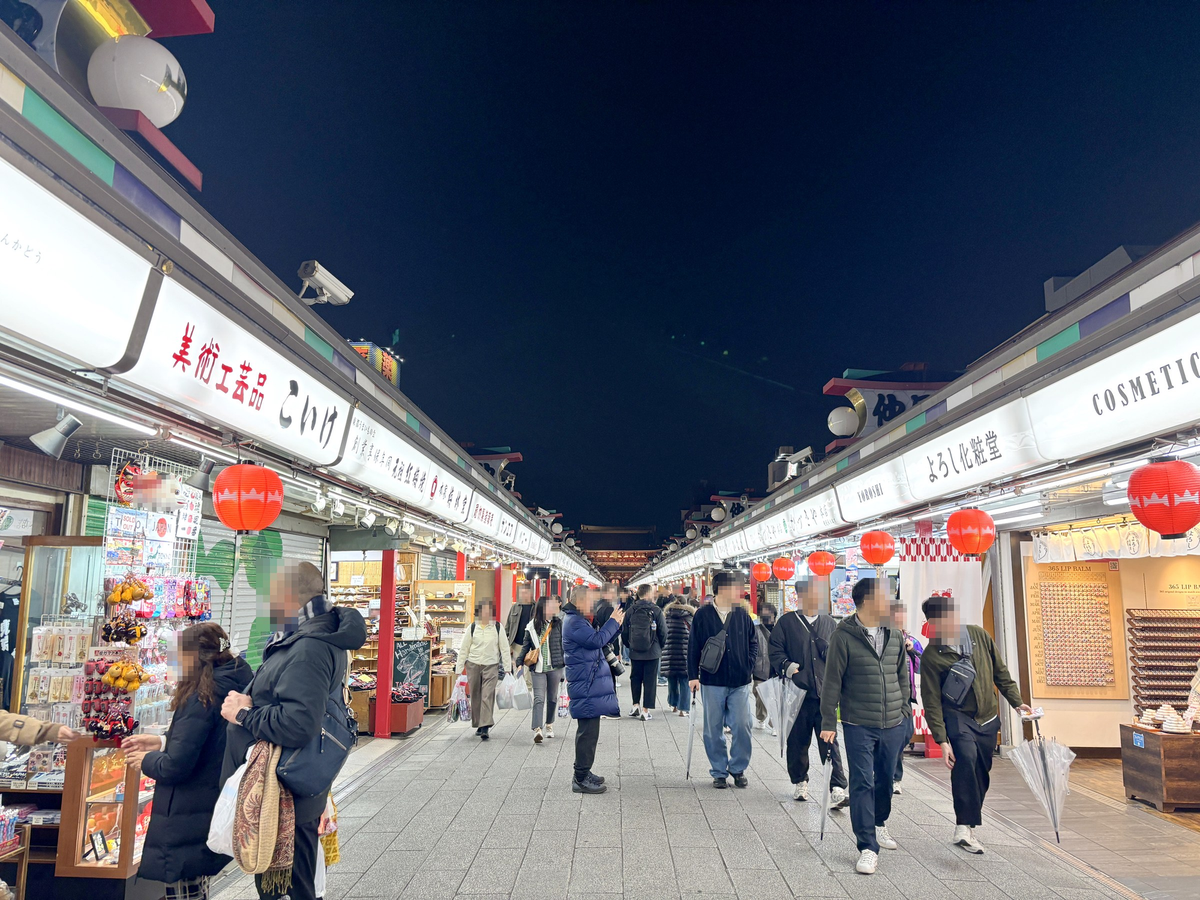
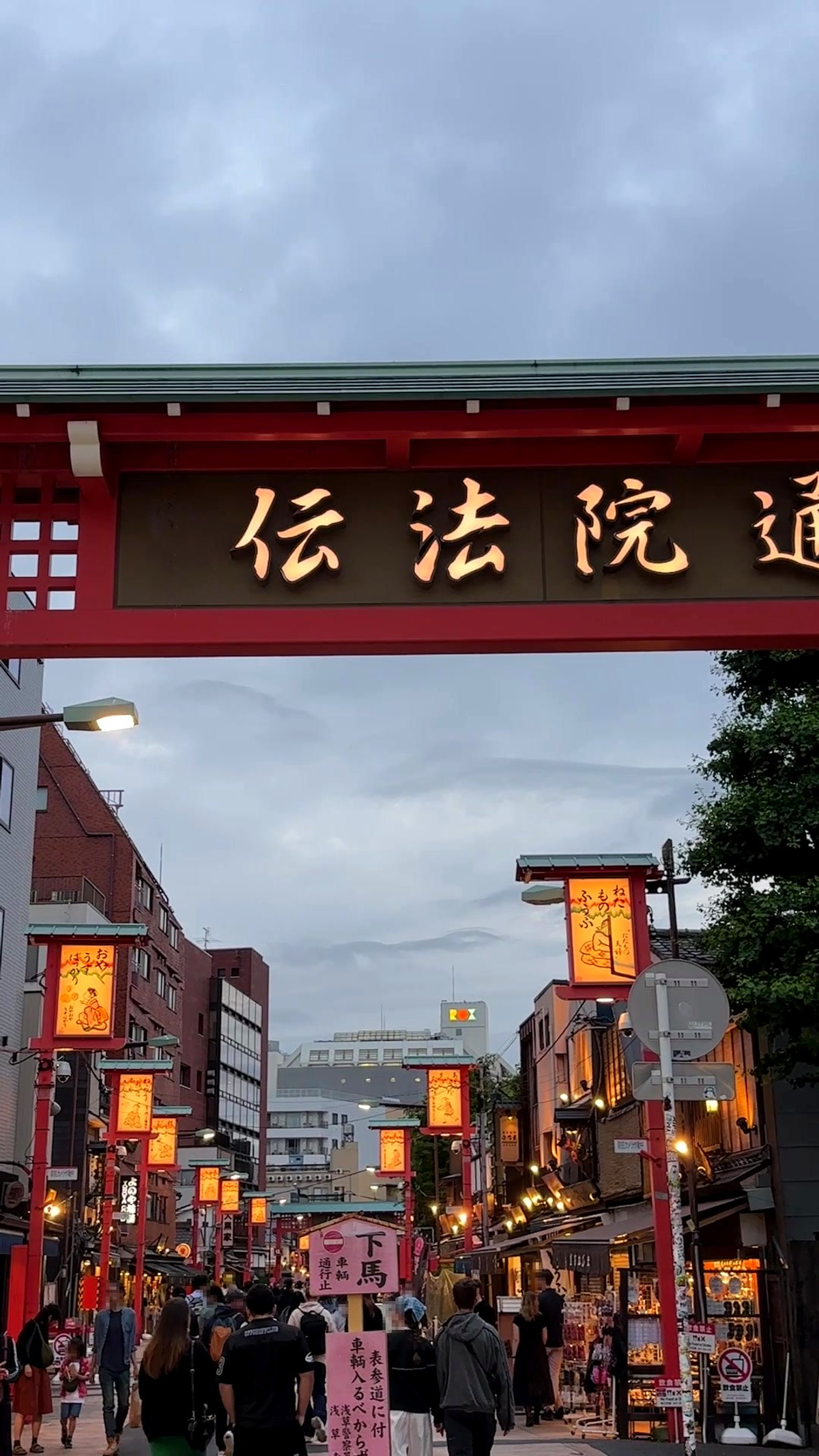
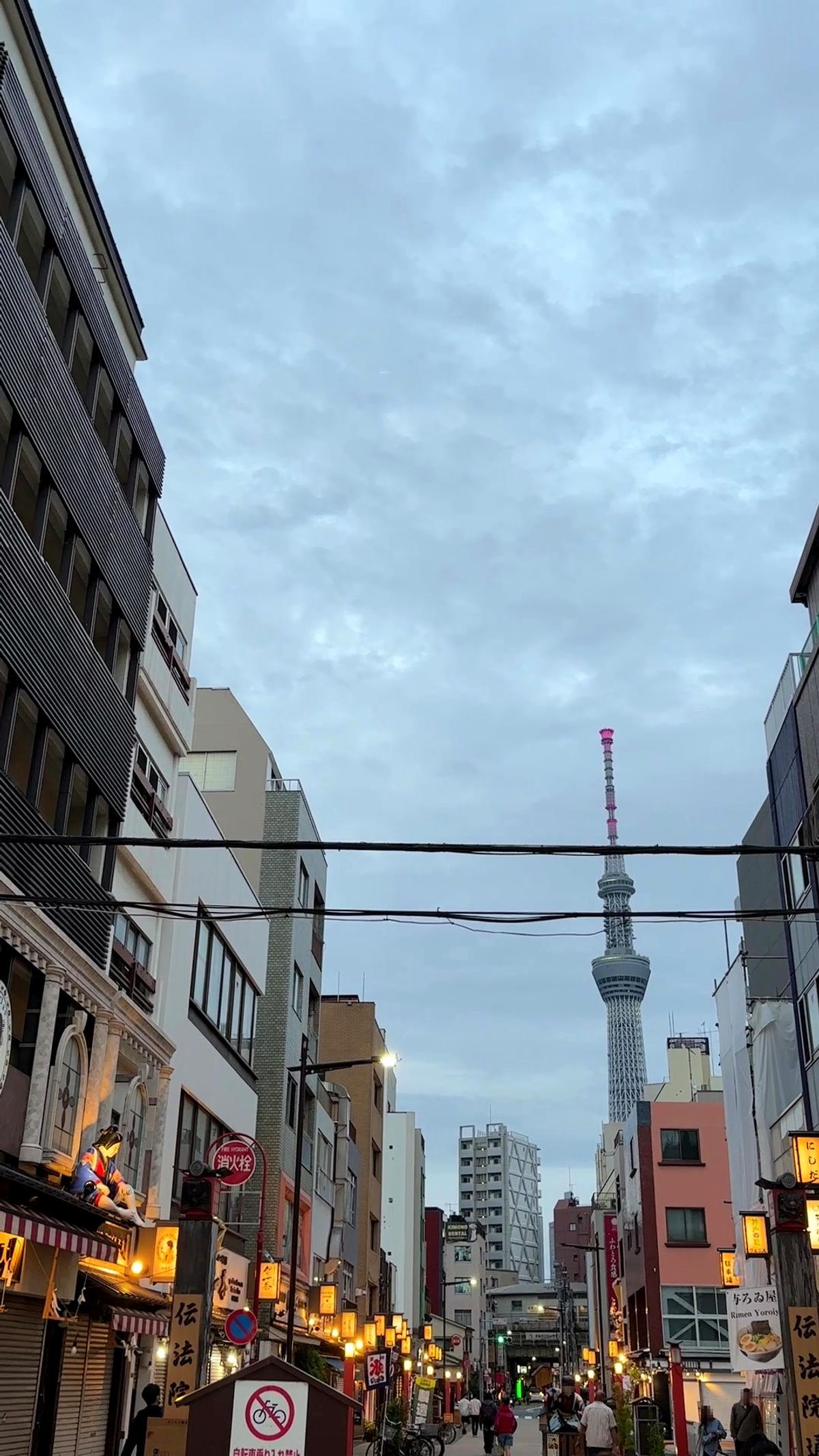
The path from Kaminarimon to Hozomon is Nakamise, leading to the main hall. It is lined with souvenir shops selling items like fans and hand towels, as well as confectionery stores offering treats like ningyo-yaki and senbei. Closing times vary by shop. Around 6:30 PM in May, most shops were closed. However, you could enjoy walking while admiring the paintings on the shutters. If you turn onto a side street midway through Nakamise, you'll find Denboin Street. At dusk, lanterns light up, and you can also see the Tokyo Skytree at the end of a nearby street.
Hozomon Gate and Nio Statues
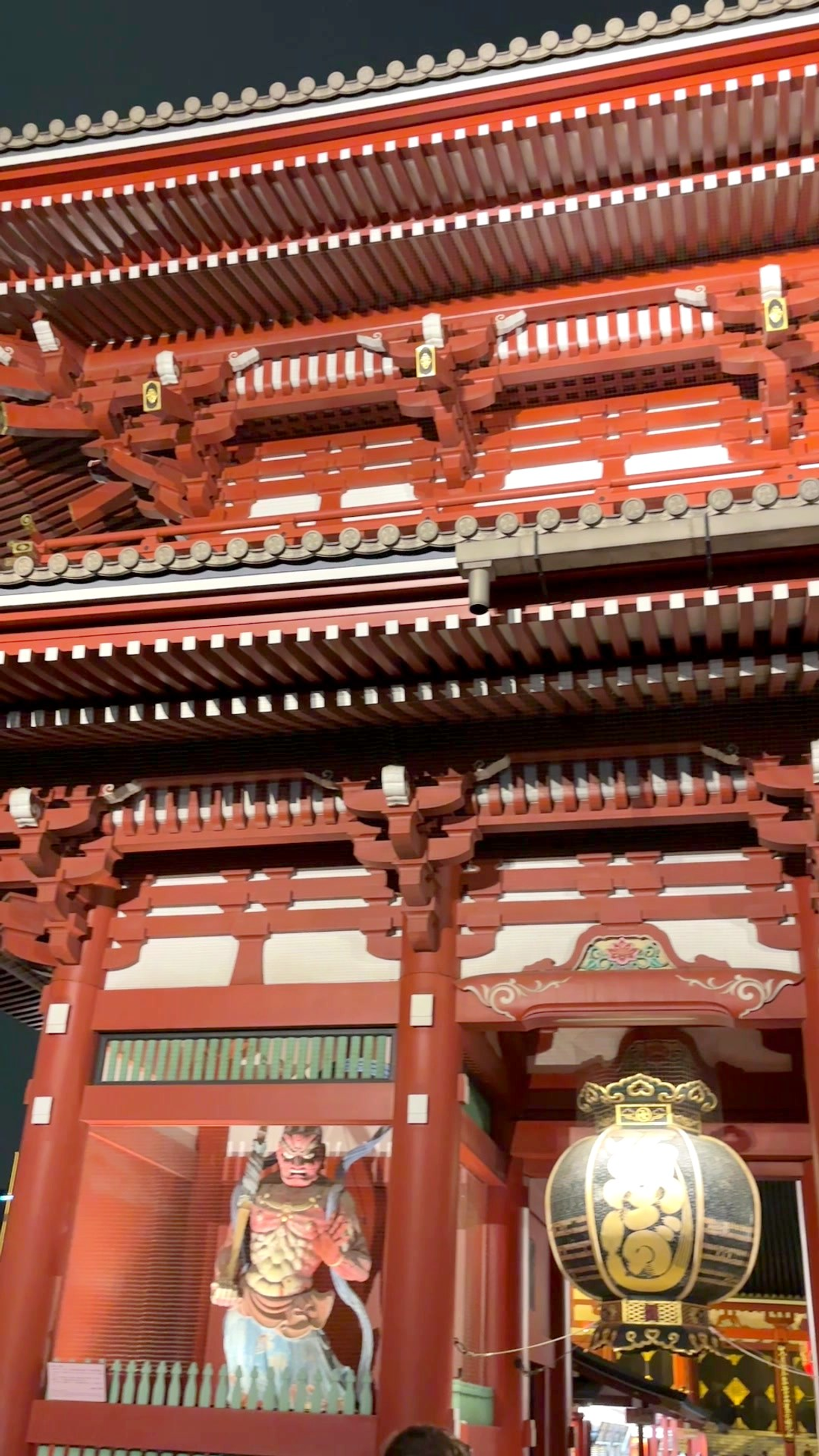
The second large gate beyond Nakamise is the Hozomon Gate. On either side of the gate stand imposing statues called Nio, which protect the temple. At night, the statues are illuminated, making them appear even more formidable.
Five-story Pagoda
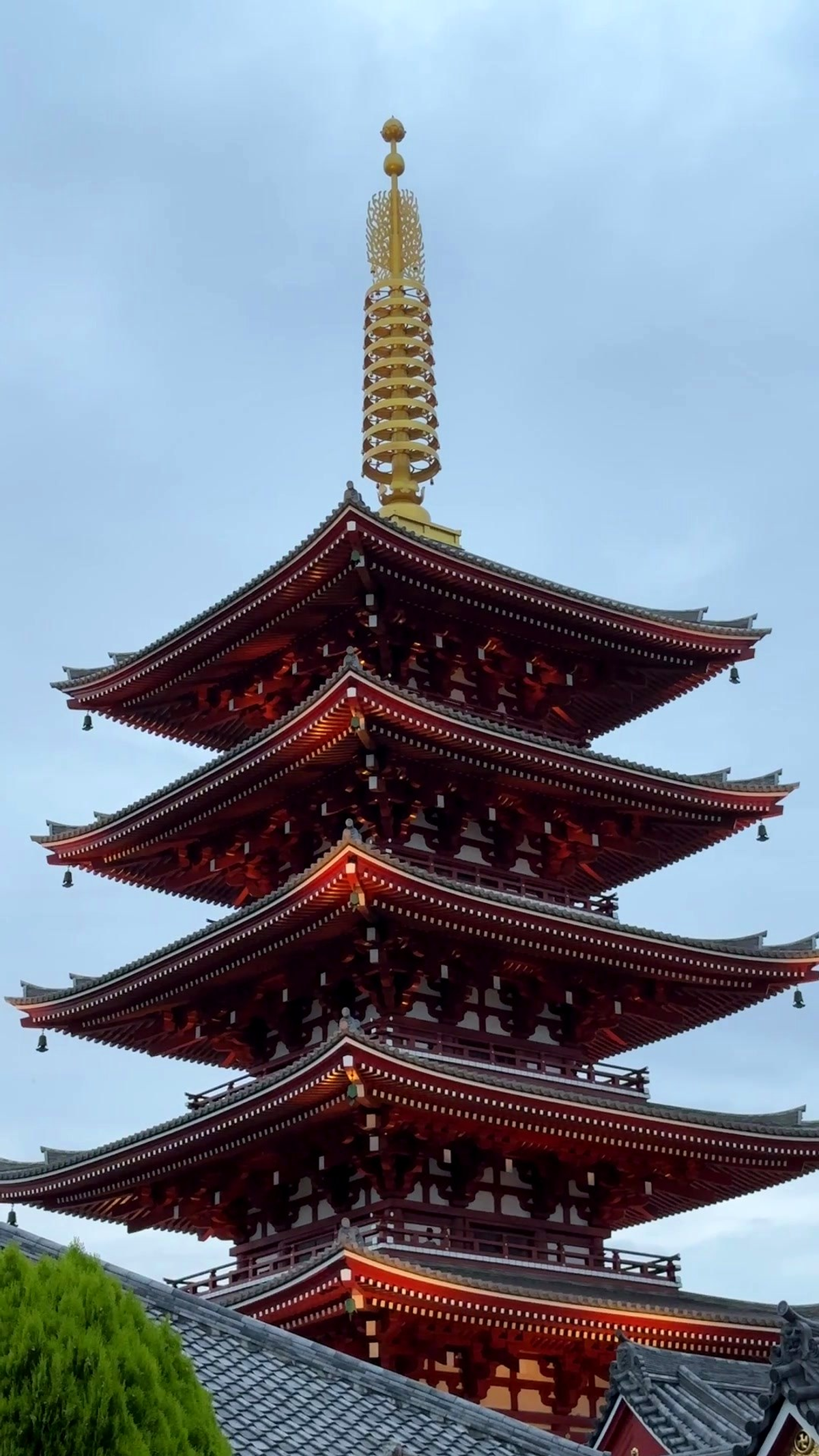
Passing through Hozomon Gate, you'll find the five-story pagoda on your left. This slender tower with five overlapping roofs is illuminated at night. From in front of Hozomon Gate, you can capture both the pagoda and the gate in a single photo.
Main Hall (本堂)
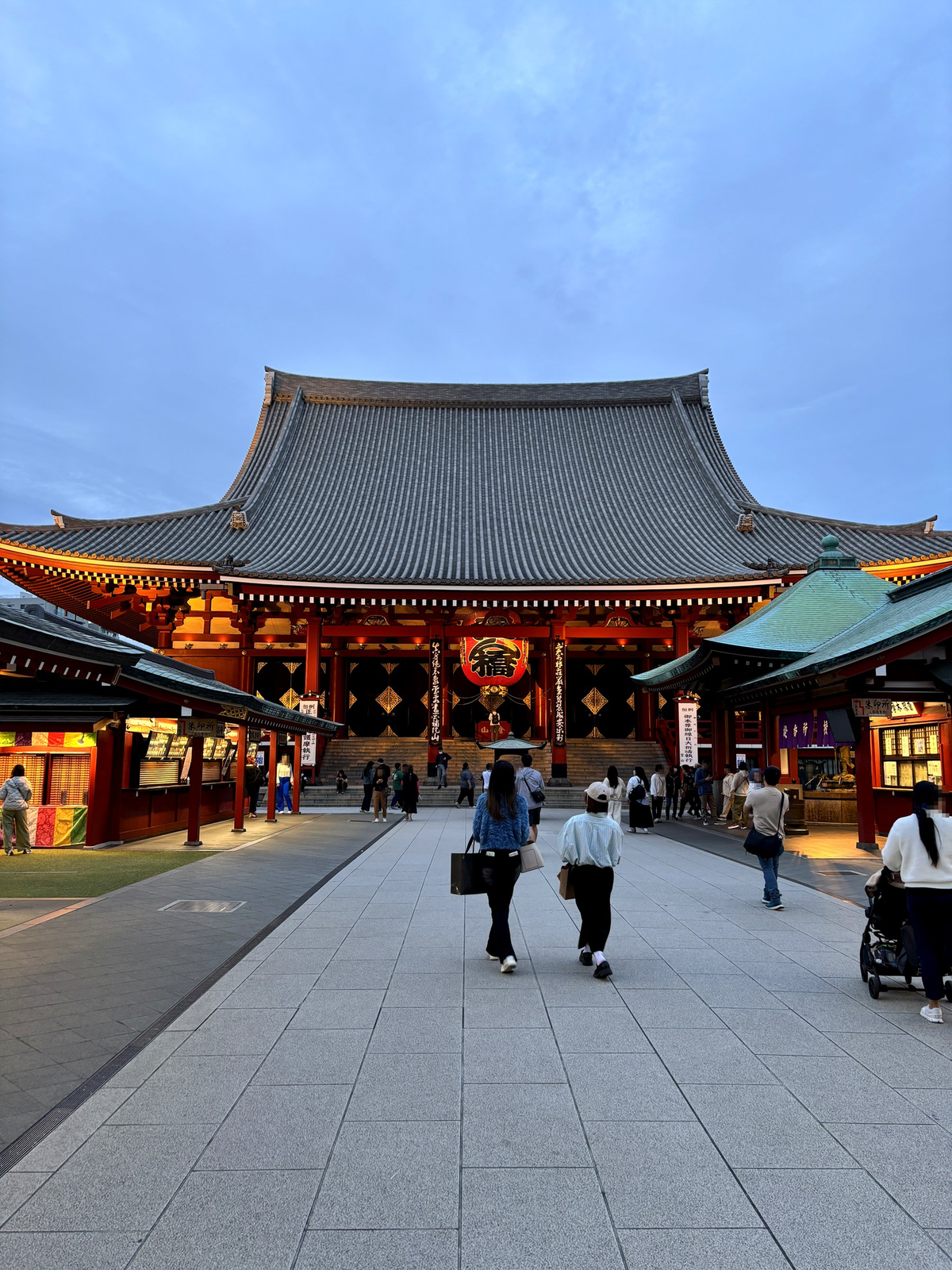
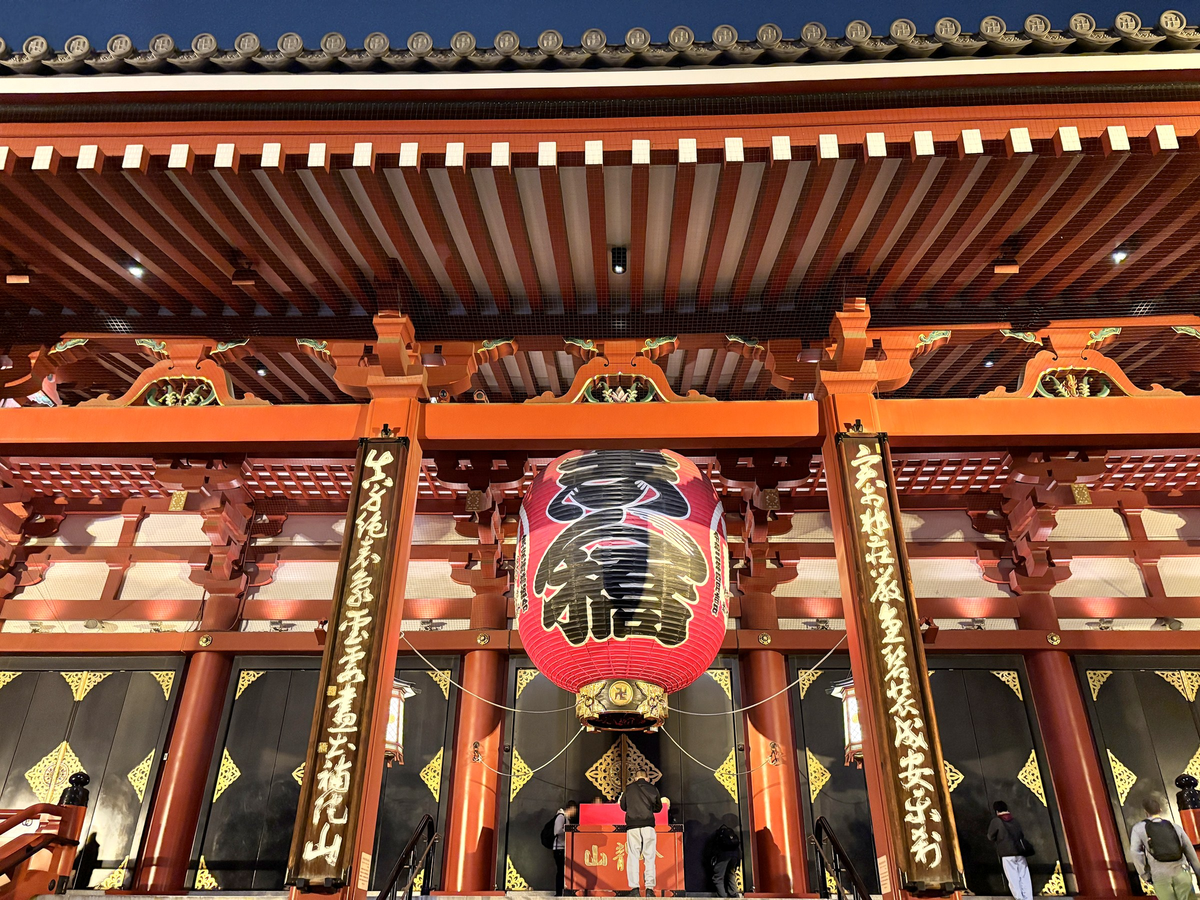
The most important building at Senso-ji Temple is the Main Hall, where the Kannon (Bodhisattva of Compassion) is enshrined. Entry into the Main Hall is allowed until 5 PM, so we couldn't enter on both occasions. However, we were able to view the illuminated Main Hall from outside and offer our prayers. In front of the Main Hall, there is a large incense burner (Jokoro), from which smoke rises. According to the official website, many people waft the smoke over their bodies to wish for good health.
Asakusa Shrine, located right next to the main hall
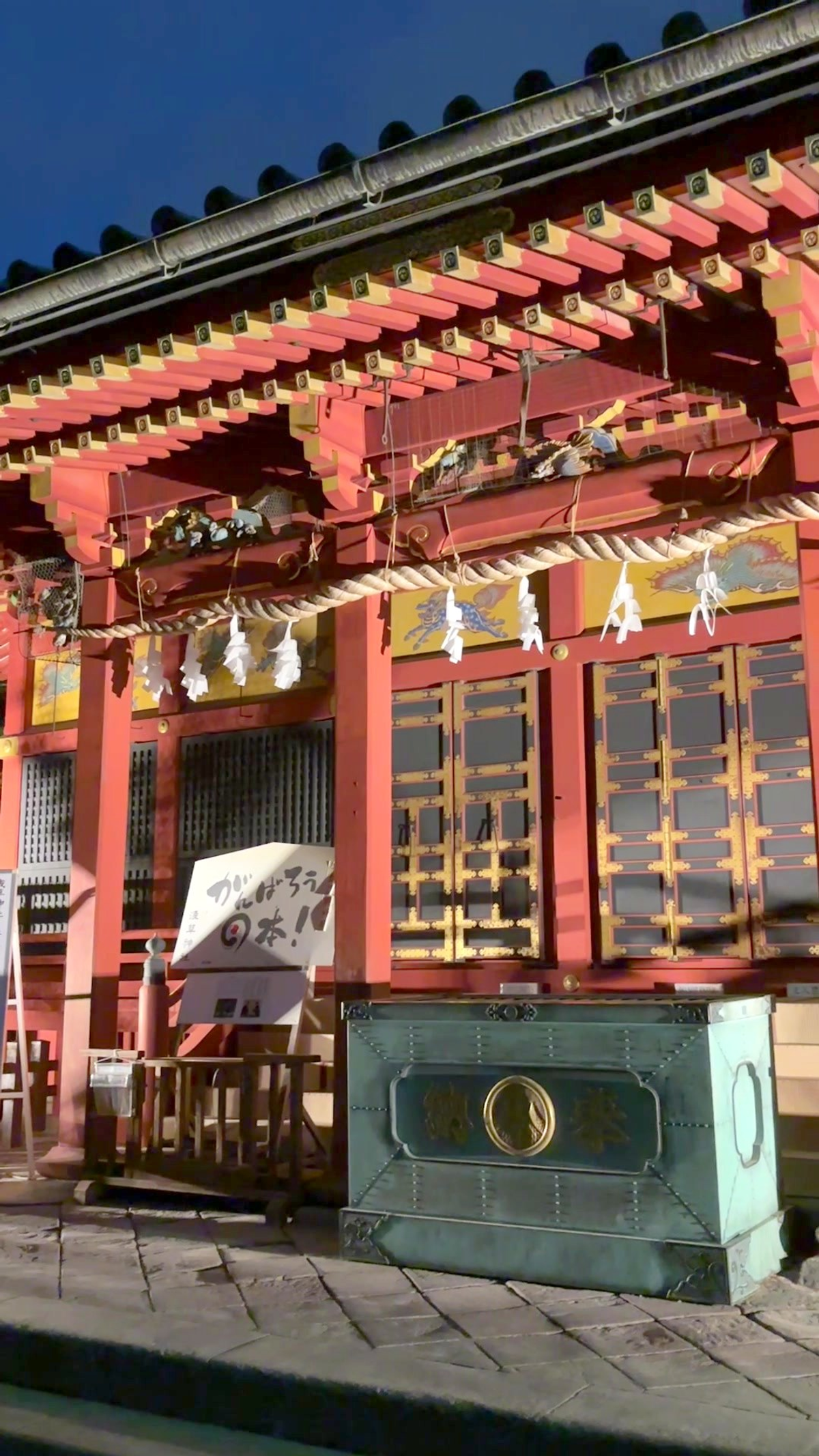
Near the main hall is the Asakusa Shrine. While Senso-ji is a temple, Asakusa Shrine is a Shinto shrine. According to the official site of Asakusa Shrine, those involved in the founding of Senso-ji are enshrined as deities here, and it is also known as "Sanja-sama." When we visited around 7:20 PM in May, the shrine was illuminated, and it was quiet with no people around. A thick rope called shimenawa, typically hung at shrines, is displayed in front of the building.
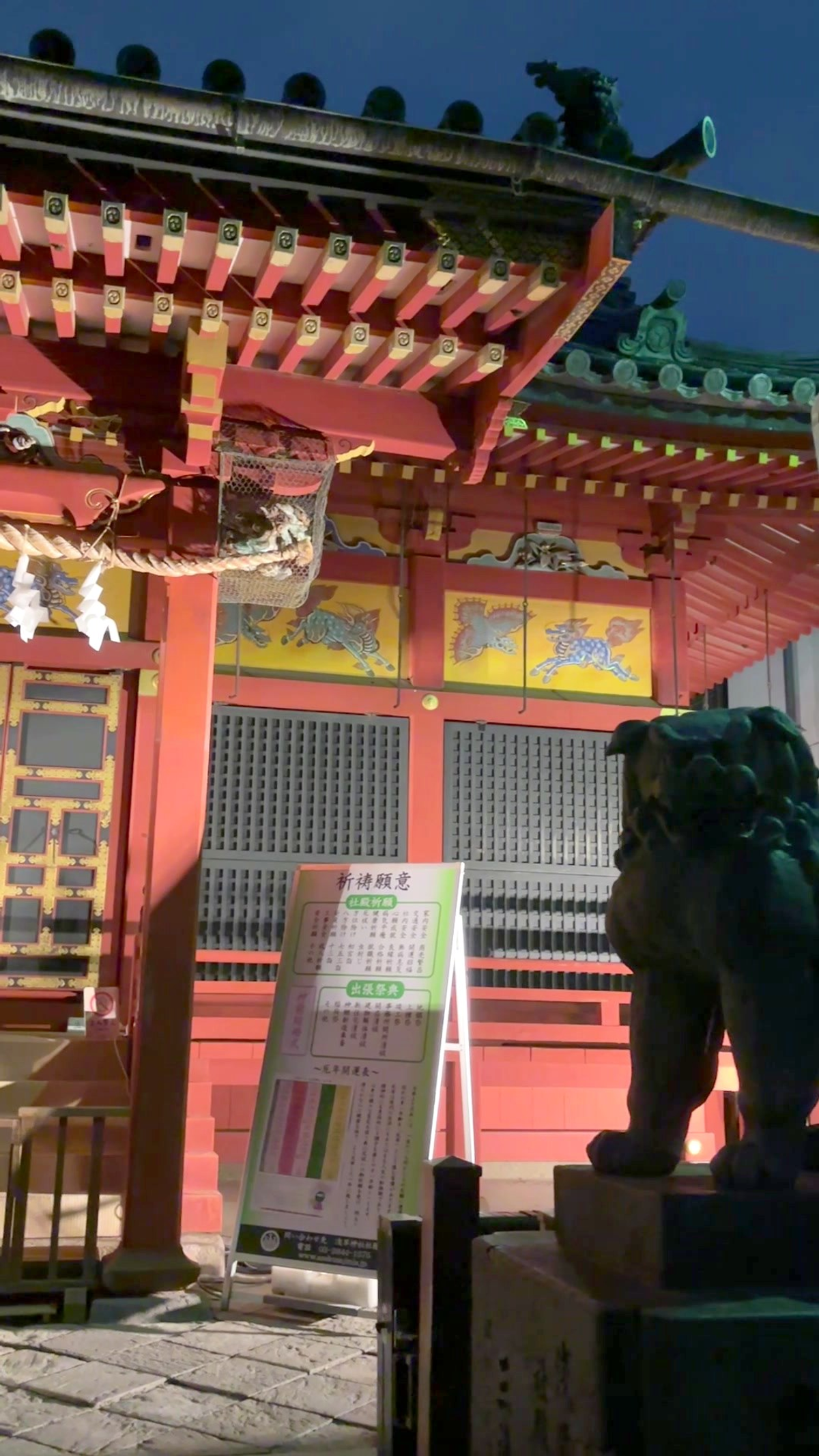
The way to pay respects at temples and shrines differs, so please also see the "How to Pay Respects" section below.
Compare
Things You Can and Can't Do After 5 PM
What I've Accomplished
Available after 5 PM
- Stroll through the grounds to see the illuminated gate and five-story pagoda.
- Join hands in prayer outside the main hall.
- Drawing a fortune slip (We were able to draw one around 6:50 PM in May)
- Taking Photos with Fewer People (May Evening)
Things I Couldn't Do Due to Time Constraints
Cannot be done after 5 PM; depends on the time.
- You cannot enter the main hall to pray.
- Shopping at Nakamise (Most shops were closed by 6:30 PM in May. In November, many shops were open around 6 PM.)
This is what it was like when we visited in May and November 2025.
How to
How to Draw Omikuji at Sensoji Temple
Omikuji is a fortune-telling paper that predicts good and bad events in your future. There are places around the main hall where you can draw omikuji. We drew ours in the evening after 5 PM. Since there were few people, we could take our time finding the right drawer. The explanation paper provided also includes English. We forgot to take a photo of the paper we drew, so we'll introduce the process up to drawing it with photos.
1Find a place to draw an omikuji fortune.
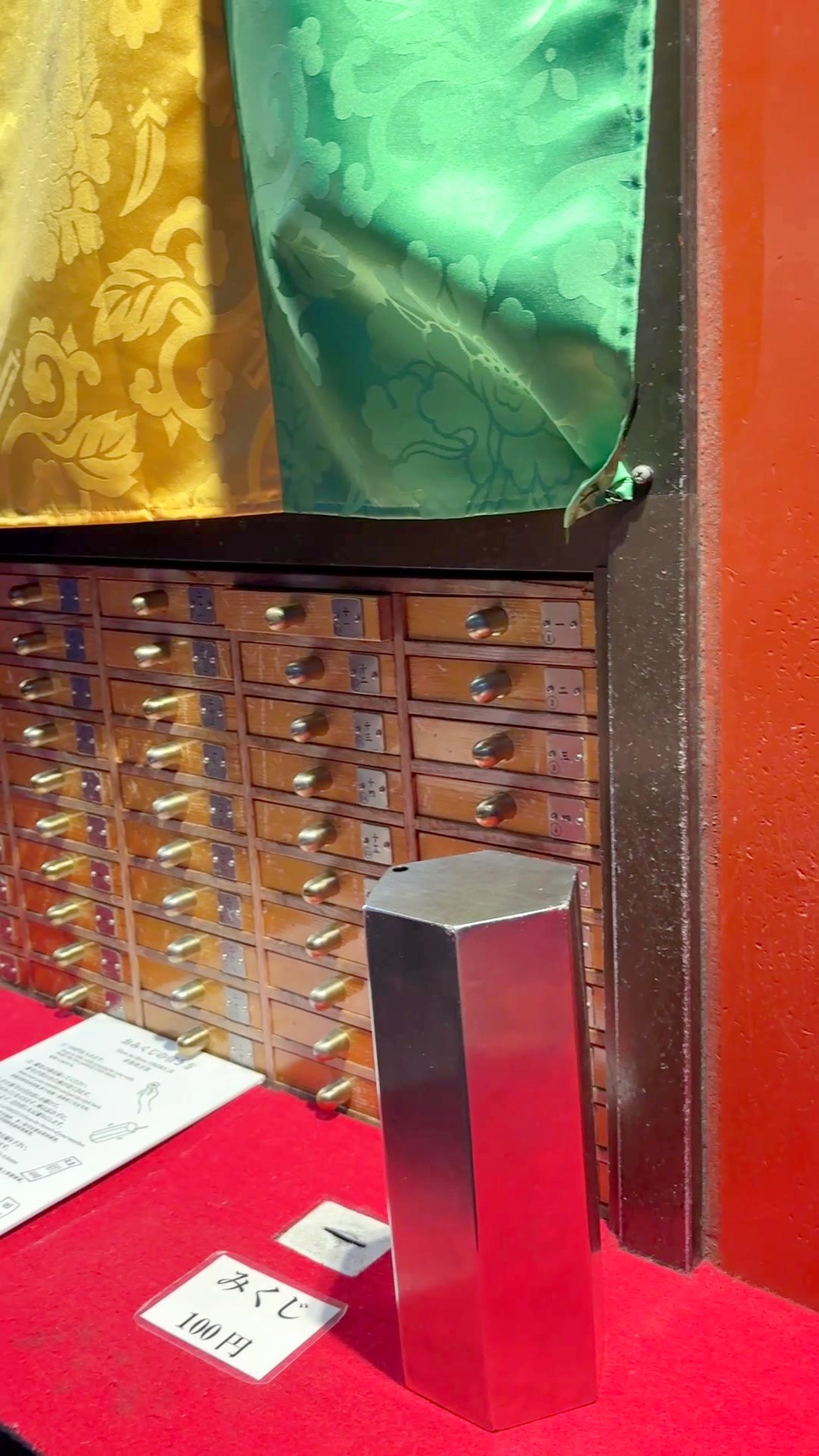
Places to Draw Omikuji A shelf with many small drawers and a stand with a silver cylinder are the landmarks.
2Read the instruction sheet.
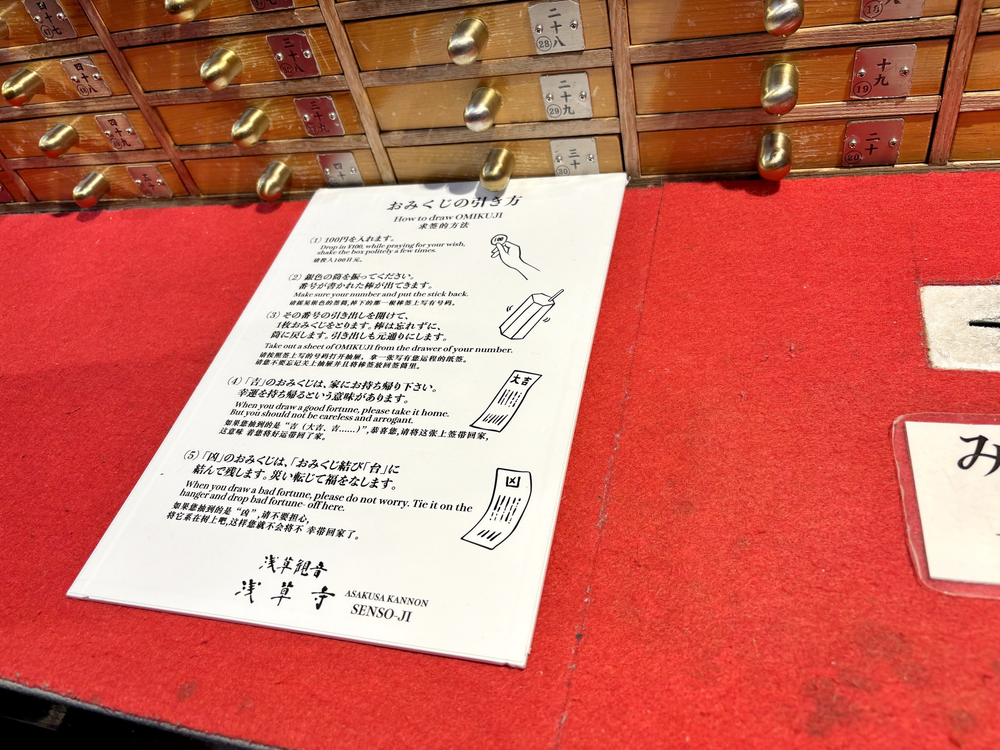
A paper with explanations in Japanese and English The instruction paper on the stand has directions written in Japanese and English.
3Enter the fee
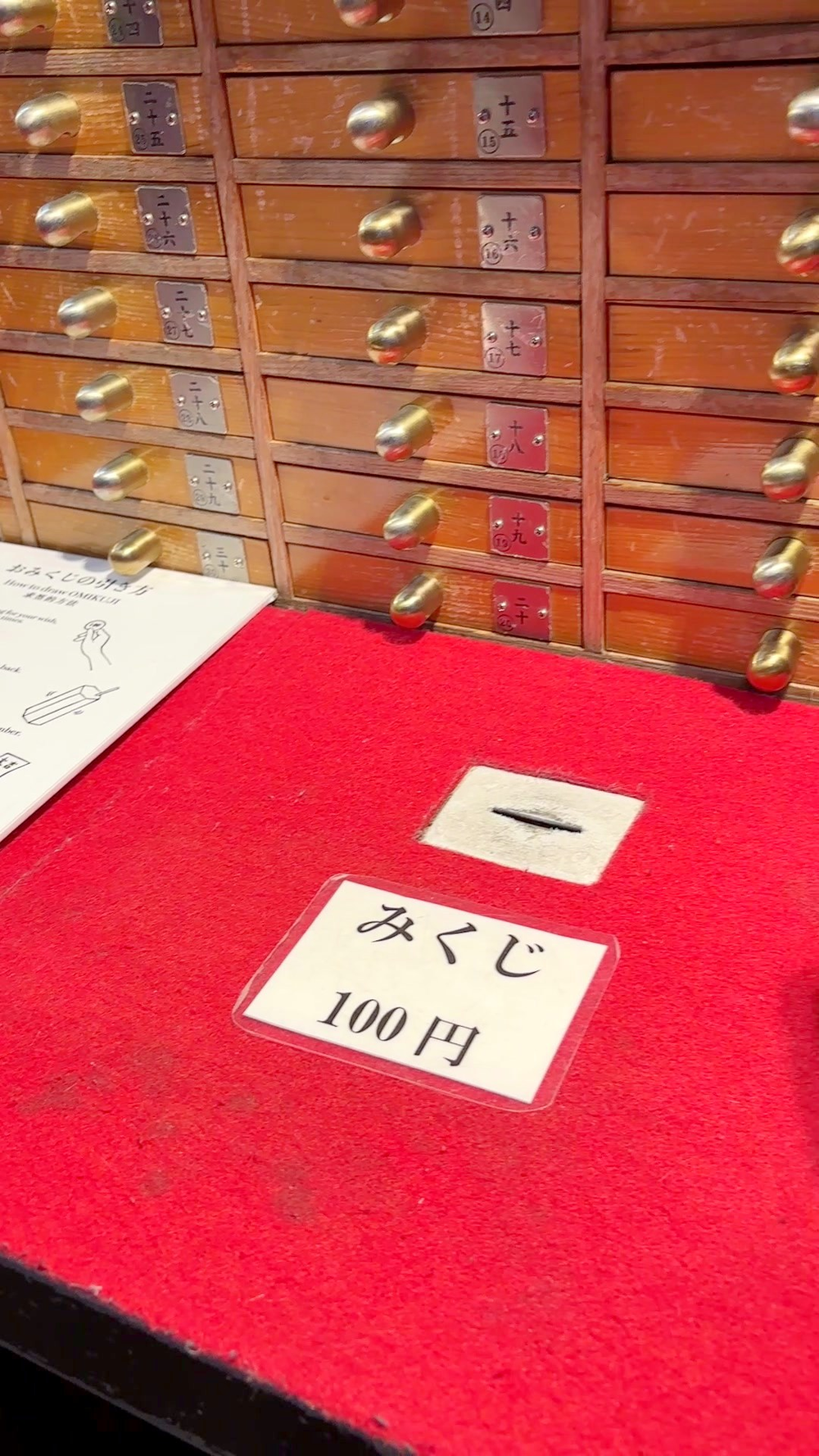
"Fortune slip: 100 yen" sign When we drew in May 2025, it was 100 yen per turn. There is a price tag on the machine.
4Shake the tube and take out one stick.
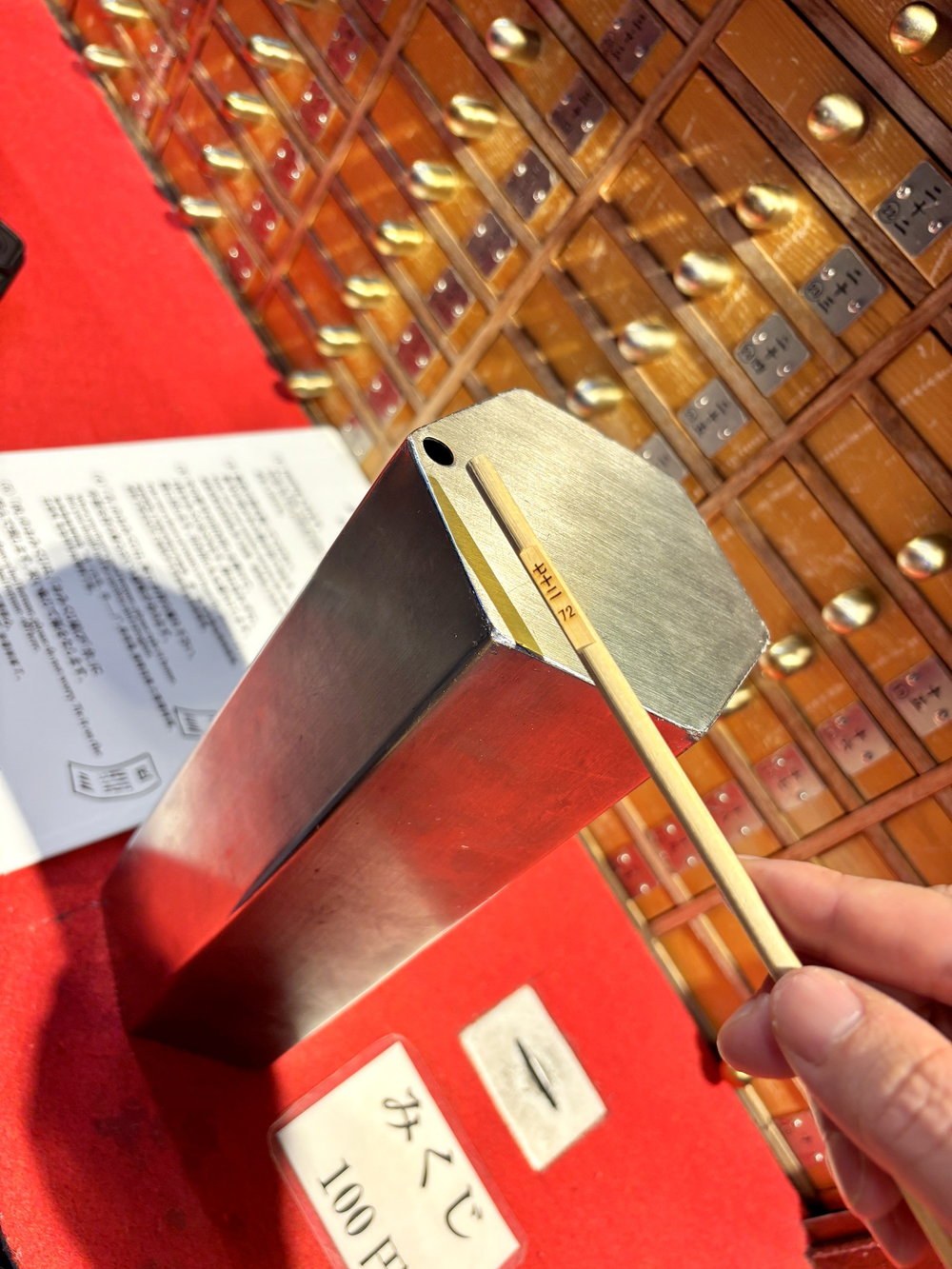
The moment the rod emerged from the cylinder Shake the silver tube well with the hole facing down, and a thin stick will emerge.
5Look at the number written on the stick.
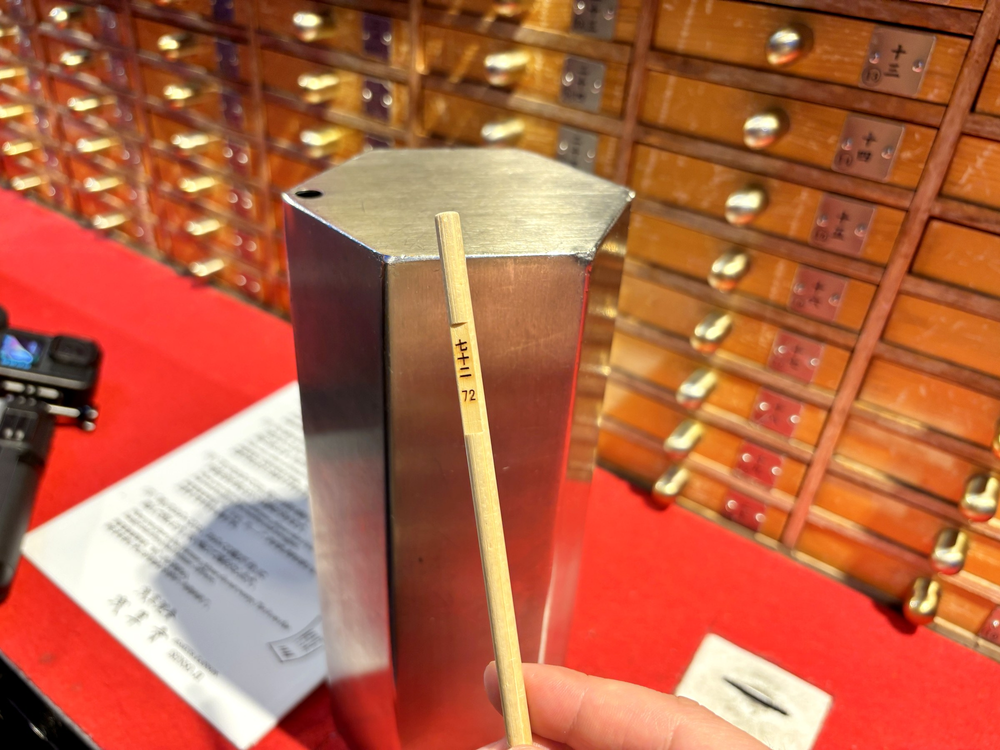
There is a number written on the end of the stick. The sticks have numbers written in kanji. Even if you can't read kanji, don't worry. Taking a photo of the stick with your smartphone makes it easier to compare the characters and shapes on the drawers. After checking, return the stick to the tube (the official site also instructs to always return it).
6Take one sheet of paper from the drawer with the same number.
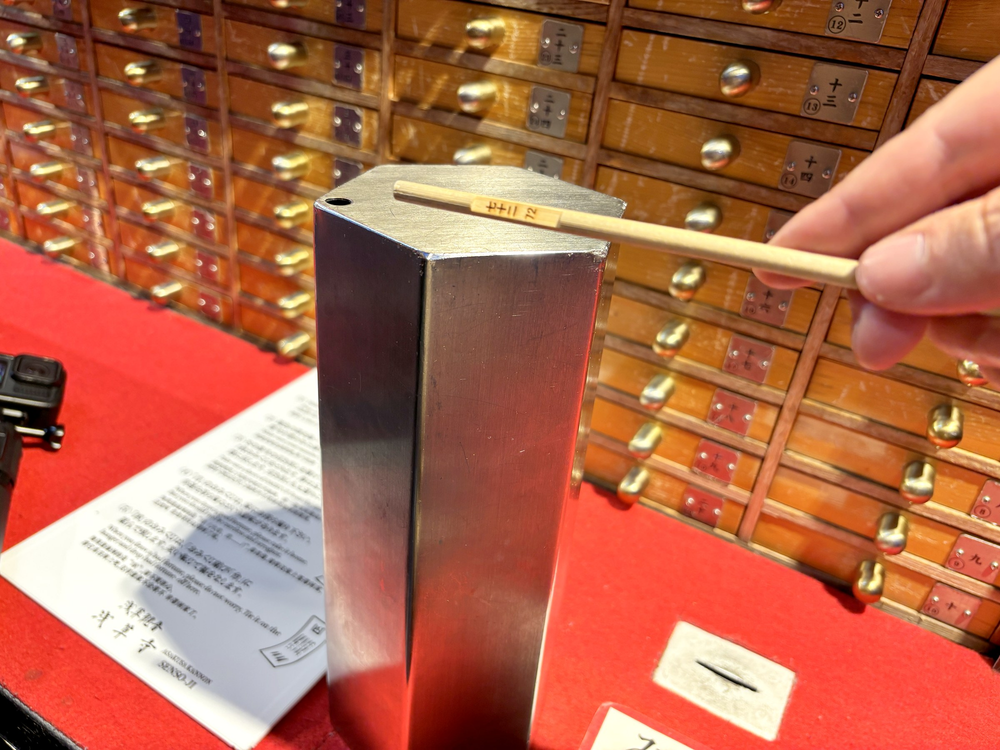
Find the drawer with the same number as the stick. Open the drawer with the same number (same character) as the stick and take a piece of paper. The omikuji at Senso-ji is said to have many "kyo" (bad fortune). According to the official website, those who receive a "kyo" should tie the omikuji at a designated spot within the temple grounds. Don't worry even if you get a "kyo."
How to Visit a Shrine
Senso-ji is a Buddhist temple. The way to pray differs slightly from that at a shrine.
- Bow lightly in front of the main hall
- Gently place money (offering) into the box in front. There is no set amount
- Join your palms together in front of your chest and pray quietly
- Finally, bow lightly again
At a shrine, it is customary to bow twice, clap your hands twice, and bow once more. At a temple, do not clap your hands. If the main hall is closed after 5 PM, quietly join your hands in prayer from outside the hall.
How to Get to Senso-ji Temple
Near Senso-ji, there are four Asakusa Stations: Tokyo Metro Ginza Line, Toei Asakusa Line, Tobu Skytree Line, and Tsukuba Express. According to Senso-ji's official site, it's about a 5-minute walk from any station. The A4 exit of the Toei Asakusa Line is the closest. The Tsukuba Express Asakusa Station is located a bit further from the other Asakusa Stations.
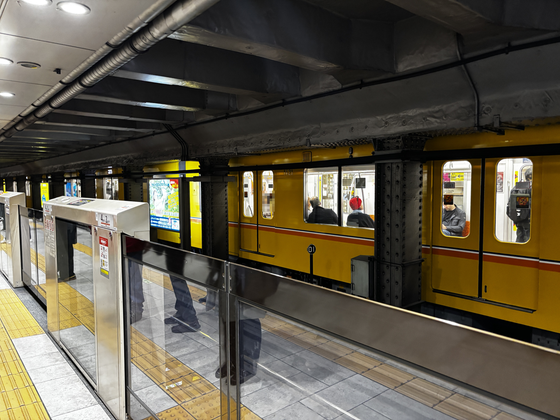
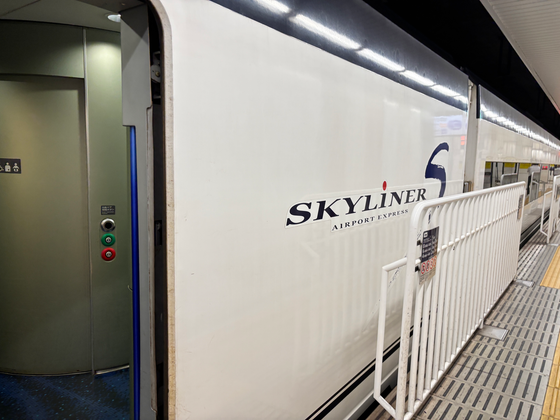
From Ueno, take the Ginza Line to its terminus at Asakusa Station. For ticket purchasing, see How to Use Tokyo's Subway. For those coming from Narita Airport, check How to Use the Keisei Skyliner and the Ueno Station Guide. It's also within walking distance from Kappabashi Tool Street, known for its kitchenware shops, making it a great itinerary to shop at Kappabashi during the day and visit Senso-ji at dusk.
Q&A
Frequently Asked Questions about Senso-ji Temple
- Is it better to visit Senso-ji during the day or at night?
- It depends on your purpose. If you want to pray inside the main hall, it's best to go by 5 PM. For shopping in Nakamise, visit during daylight. To see the illumination, evening to night is recommended. If you prefer a quieter experience, go after the shops close. When we visited in May after 6:30 PM, most shops were closed, but it was less crowded and we could stroll leisurely. However, in November around 6 PM, shops were open and it was busier.
- Can I enter the temple grounds in the evening or at night?
- We visited twice after 5 PM, and both times we were able to walk around the grounds and see the illuminated gate and five-story pagoda. Entry to the main hall is until 5 PM. According to the official Senso-ji website, the lights are on daily from sunset until around 11 PM.
- Is Senso-ji Temple really less crowded at dusk?
- It depends on the day. When we visited after 6:30 PM in May, there were few people, but around 6 PM in November, it was already dark, and many people were in front of the Hozomon Gate. The situation varies by season and day of the week.
- Is a ticket or money needed to enter Senso-ji Temple?
- No need. Entering the temple grounds and praying at the main hall are free. However, there is a charge for purchasing omikuji (fortune slips) or omamori (charms).
- How much time should I allocate for Senso-ji Temple?
- It typically takes about an hour. This includes walking from the Kaminarimon Gate to the main hall, offering prayers, and drawing a fortune slip. If you want to see the change in sky colors at dusk and the illumination, it's best to allow 1.5 to 2 hours.
- Do you clap your hands when visiting Senso-ji Temple? What is the difference between a temple and a shrine?
- At Senso-ji Temple, you do not clap your hands. Senso-ji is a Buddhist temple dedicated to Buddha, so you quietly press your palms together in prayer. Shrines are places of Shinto, where you worship deities by clapping your hands. Asakusa Shrine is located right next to Senso-ji, allowing you to visit both the temple and the shrine at once.
- Is it okay to go in shorts?
- Based on our research, the official website of Senso-ji Temple does not specify a dress code. However, since it is a place of worship, it is advisable to dress modestly and avoid revealing clothing.