Practical Travel
How to Get to Kiso Valley from Tokyo
Updated 22 October 2026By Dynamic Japan Travel editorsEditorial policy
Contents
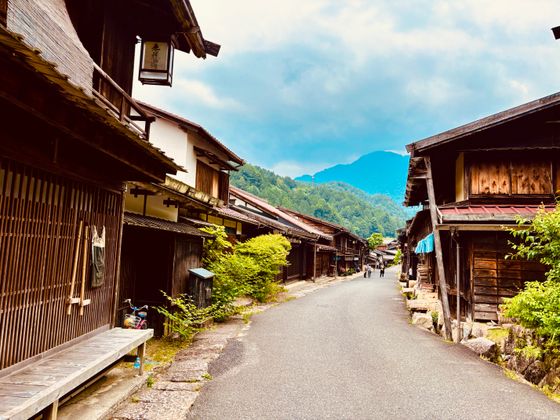
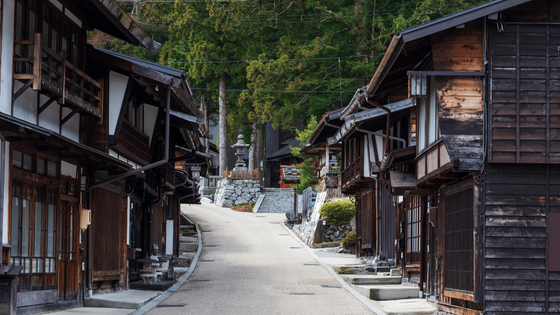
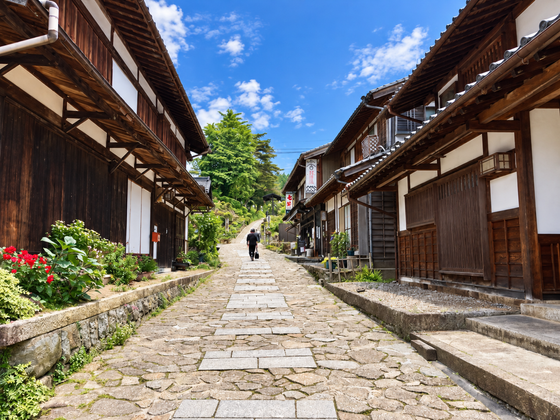
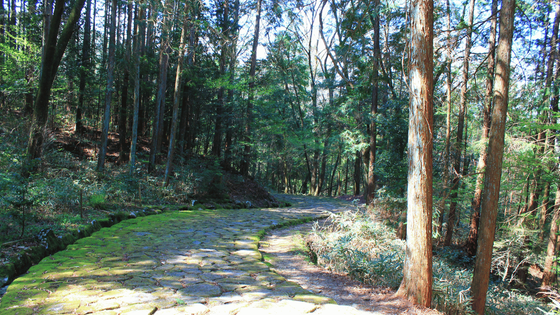
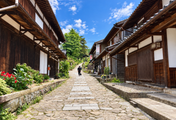
The Kiso Valley (Kisoji) is located in Nagano Prefecture, stretching north to south along the Kiso River. Known as the route of the Nakasendo highway during the Edo period, it is still dotted with post towns such as Narai-juku, Kiso-Fukushima, Agematsu (Nezame-no-Toko), and Tsumago-juku. Surrounded by deep mountains and rivers, the area retains the scenery of old Japan.
One question every first-time visitor to the Kiso Valley has is: "How do I get there from Tokyo?" The answer is actually quite simple, and once you know it, you won't get lost. This guide walks you through how to travel from Tokyo to the Kiso Valley.
Getting from Tokyo to the Kiso Valley by Train
First, let's look at the most recommended way to travel from Tokyo to the Kiso Valley: by train. There are two routes into the Kiso Valley. To reach Narai, take the Limited Express Azusa from Shinjuku; to reach Tsumago, travel via Nagoya. Either way, the travel time is roughly the same.
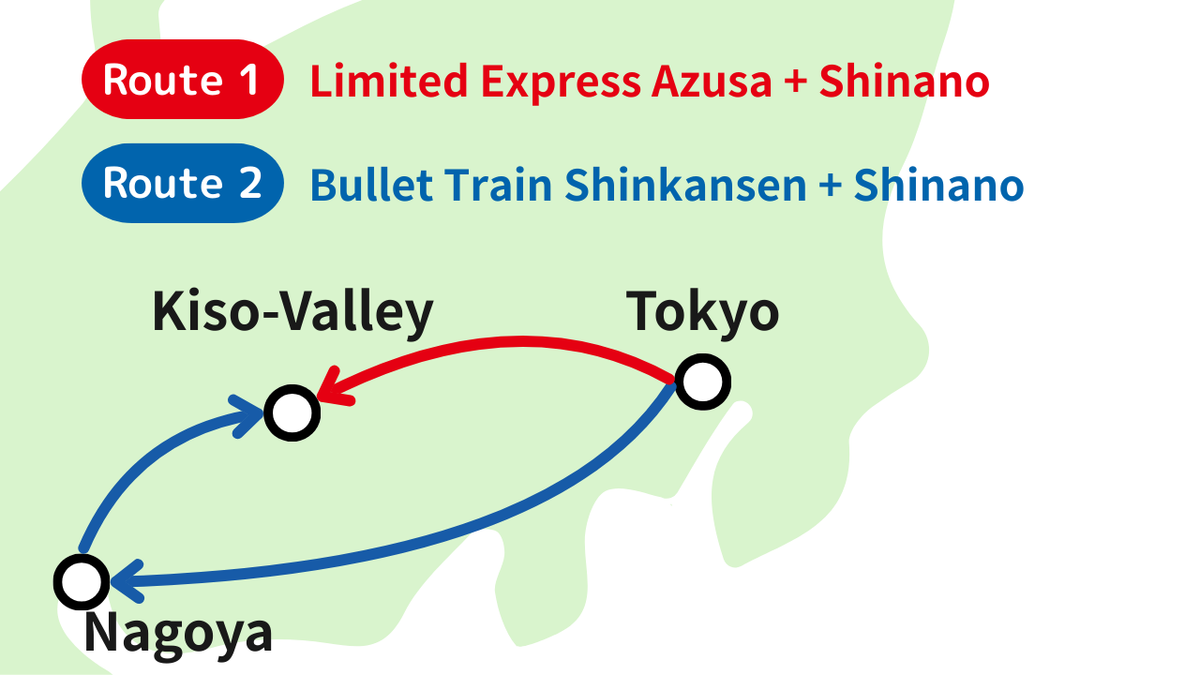
(2 routes from Tokyo to Kiso-valley)
Via Shinjuku and Shiojiri (Chuo Main Line)
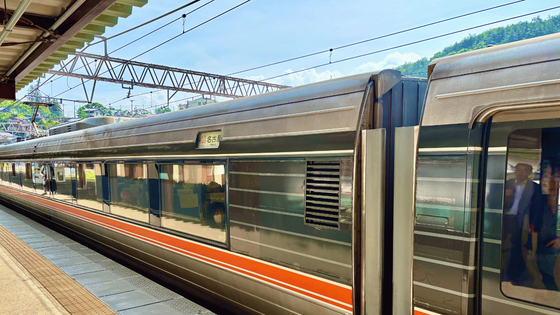
From Shinjuku Station, take the Limited Express Azusa toward Matsumoto, arriving at Shiojiri Station in about 2 hours 30 minutes. From there, transfer to the Limited Express Shinano, which takes about 35 minutes to reach Kiso-Fukushima. The total journey time is around 3 hours 10 minutes. With just one transfer, this route is easy to follow.
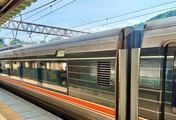
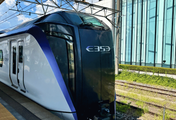

(Route 1: Limited Express Azusa and Shinano)
Via Tokyo and Nagoya (Shinkansen + Chuo Main Line)
From Tokyo Station, take the Tokaido Shinkansen "Nozomi" to Nagoya Station, a ride of about 1 hour 35 minutes. There, transfer to the "Shinano" limited express bound for the stations of the Kiso Valley. The trip from Nagoya to Kiso-Fukushima takes about 1 hour 30 minutes, bringing the total journey to roughly 3 hours 10 minutes. This route is recommended for travelers who want to enjoy the comfort of the Shinkansen.
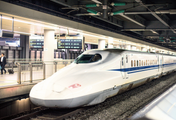

(Route 2: Tokaido Shinkansen and Shinano)
Travel Time from Tokyo to the Kiso Valley
Below are the approximate travel times from Tokyo to major destinations. There's little difference in travel time whether you go via Shinjuku or via Nagoya. However, the Shinkansen route costs more than the Azusa limited express, so if you'd like to save money, we recommend taking the Azusa.
Destination | Via Shinjuku | Via Nagoya |
|---|---|---|
Narai Station (Narai-juku) | About 3 hours | About 3 hours 20 minutes |
Kiso-Fukushima (town center) | About 3 hours 10 minutes | About 3 hours 10 minutes |
Agematsu Station (Nezame-no-Toko) | About 3 hours 20 minutes | About 3 hours |
Nagiso Station (Tsumago-juku) | About 3 hours 40 minutes | About 2 hours 50 minutes |
Points to Note When Traveling from Tokyo to the Kiso Valley
Here are a few things to keep in mind when traveling by train from Tokyo to the Kiso Valley.
Types of Tickets You'll Need
When taking the Shinkansen or a limited express train, you'll need two types of tickets: a basic fare ticket and a limited express ticket. Both can be purchased together at a JR ticket machine or a "Midori no Madoguchi" ticket counter. Just tell the staff "Kiso-Fukushima made, tokkyu de" (to Kiso-Fukushima, by limited express) and they'll handle the rest.
If traveling via the Shinkansen, buy your tickets in two separate segments: "Tokyo to Nagoya (Shinkansen)" and "Nagoya to Kiso-Fukushima (Shinano limited express + basic fare ticket)."

(You need to buy 2 kinds of tickets)
Availability of the Japan Rail Pass (JR Pass)
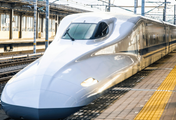
All the routes introduced here are operated by JR, so the Japan Rail Pass can be used. You can simply use the pass as is, but it's a good idea to reserve seats in advance for peace of mind. The limited express trains "Azusa" and "Shinano" are covered by the JR Pass and can be ridden free of charge. Note, however, that an additional fee is required when using the "Nozomi" Shinkansen with the JR Pass.
Can I use IC cards like Suica?
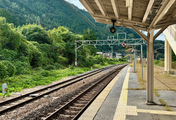
Suica, the prepaid IC card that works seamlessly in Tokyo, often can't be used at the small stations in the Kiso Valley (Kisodani).
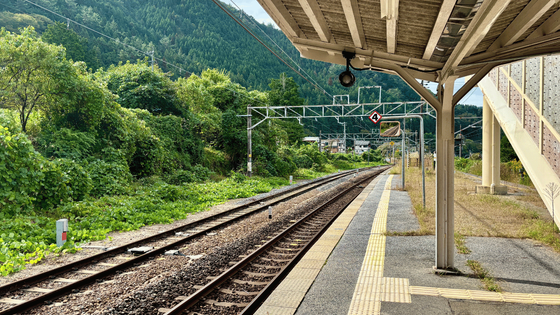
For example, stations such as Narai, Agematsu, and Nagiso don't have IC card readers at the ticket gates. Please note that you'll need to board with a paper ticket instead.
Kiso-Fukushima Station has a ticket counter, so it's a good idea to buy your return ticket there as well. If you accidentally board with Suica, just let a station staff member know and they'll exchange it for a paper ticket.
We recommend basing yourself at Kiso-Fukushima Station
If it's your first visit to the Kiso Valley, we recommend **basing yourself at Kiso-Fukushima Station**. From here you can take day trips to Narai-juku and Tsumago-juku, and the station area has plenty of accommodations and restaurants.