Tokyo
Tokyo Skytree Tickets, Prices, and Access Experience Guide to the 350m and 450m Observation Decks
Updated 22 November 2026By Dynamic Japan Travel editorsEditorial policy
Contents
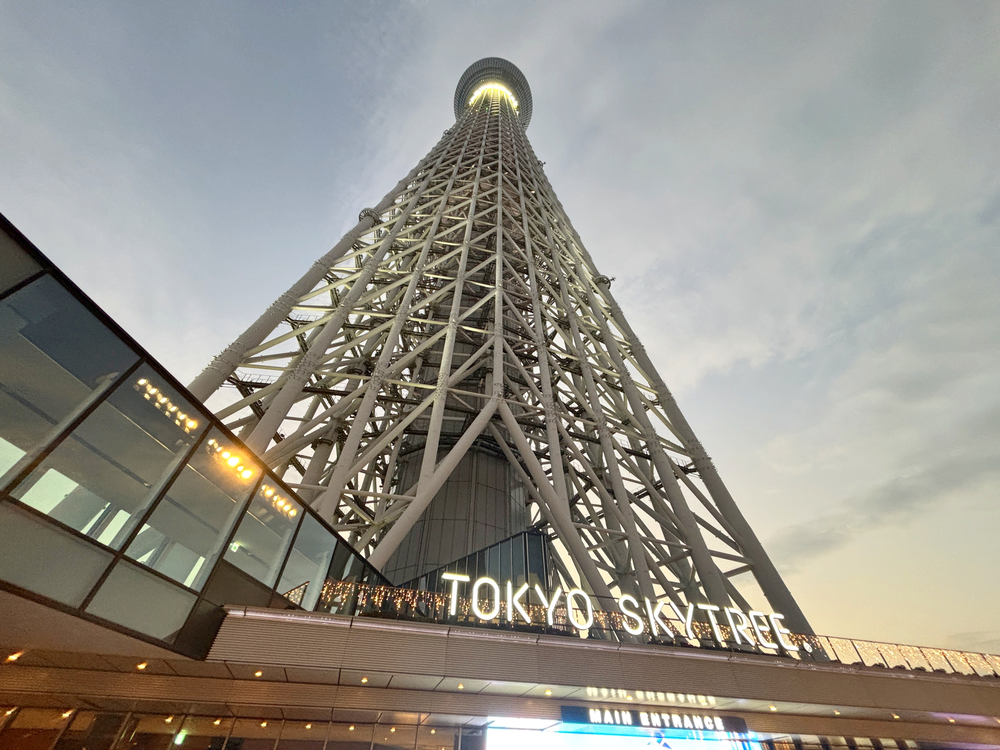
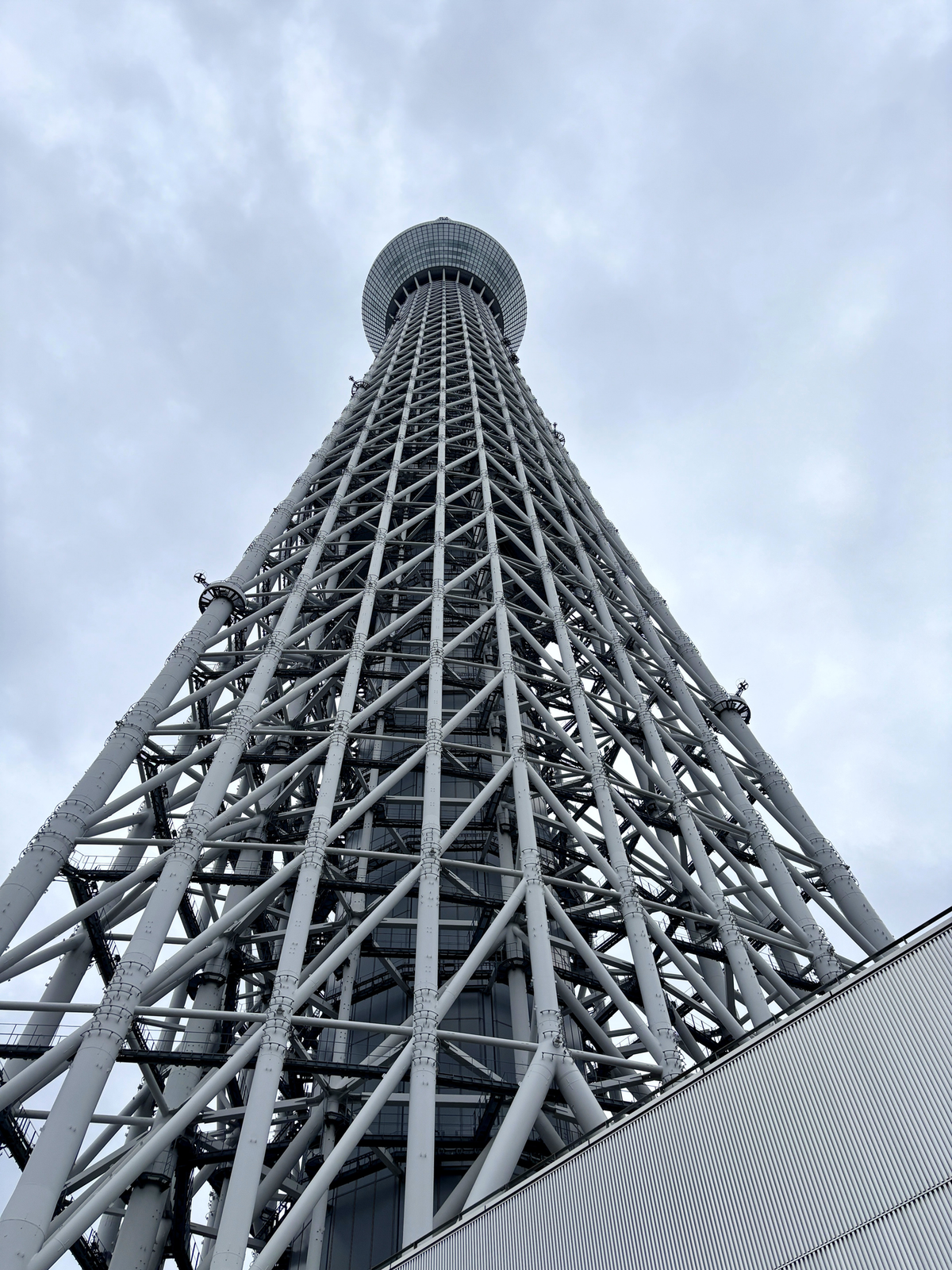
The Tokyo Skytree is a 634m tall tower located near Asakusa. In 2011, it was recognized by the Guinness World Records as the "world's tallest tower." Among the world's tallest structures, including buildings, it ranks as the third tallest, following the Burj Khalifa in Dubai (828m) and Merdeka 118 in Malaysia (approximately 679m). It is the tallest structure in Japan.
The observation floors are named "350" and "450," which correspond to their height (m) from the ground.
We visited both observation decks on an early summer evening. In winter, we viewed Mount Fuji against the sunset and the nightscape. During Christmas, we walked through the shops below. This article guides you through our journey with photos, from looking up from the ground, gazing down from 350m, surveying from 450m, and finally looking up once more.
- Admission
- The Tembo Deck (350m) starts at 1,800 yen for adults. Buying on the day at the 4th floor costs 500 yen more
- Hours
- 10:00–22:00 (last entry at 21:00). Hours may vary by day
- Entrance
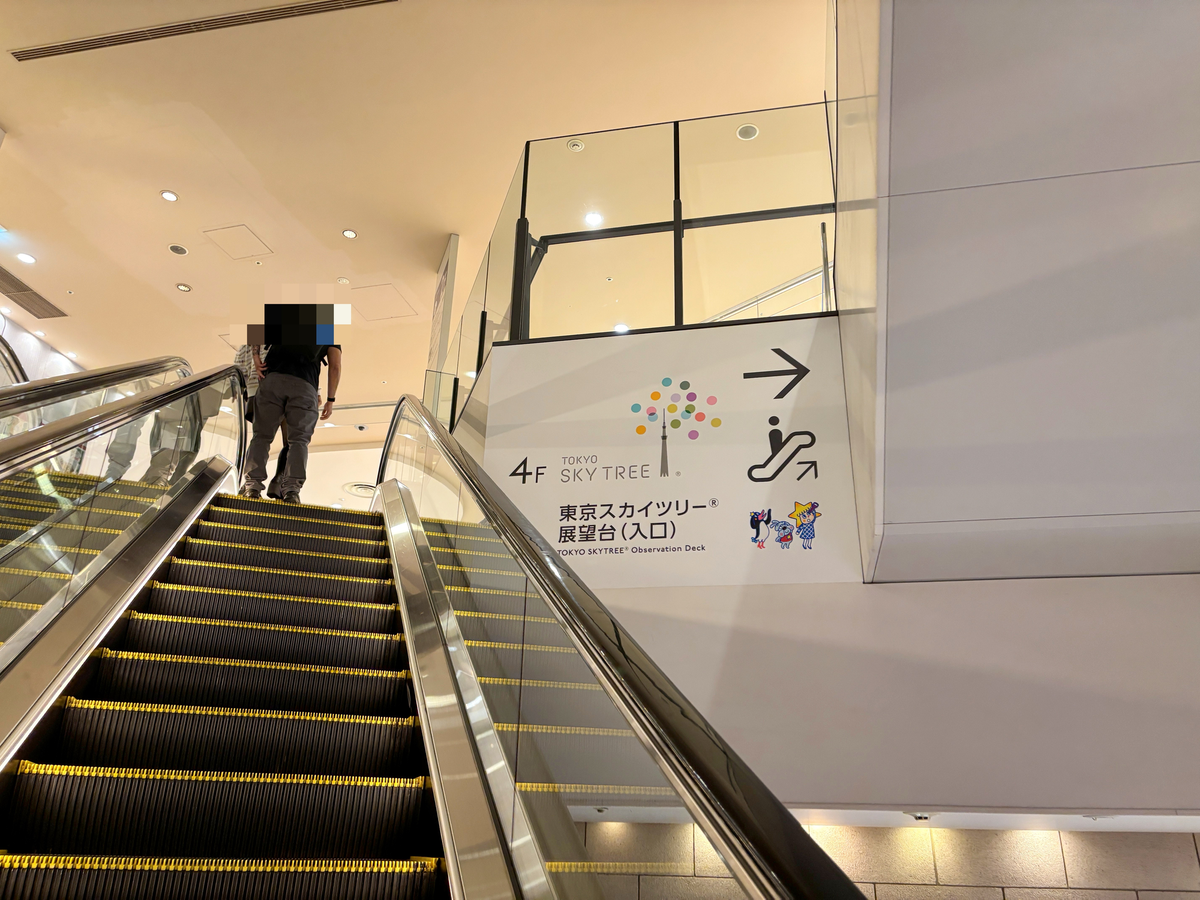
- The entrance to the observation decks is on the 4th floor
- Nearest Station
- Oshiage (Skytree) Station, Tokyo Skytree Station
- Duration
- Visiting both the Tembo Deck and Tembo Galleria takes about 1 hour and 15 minutes from arrival to departure
What is Tokyo Skytree like?
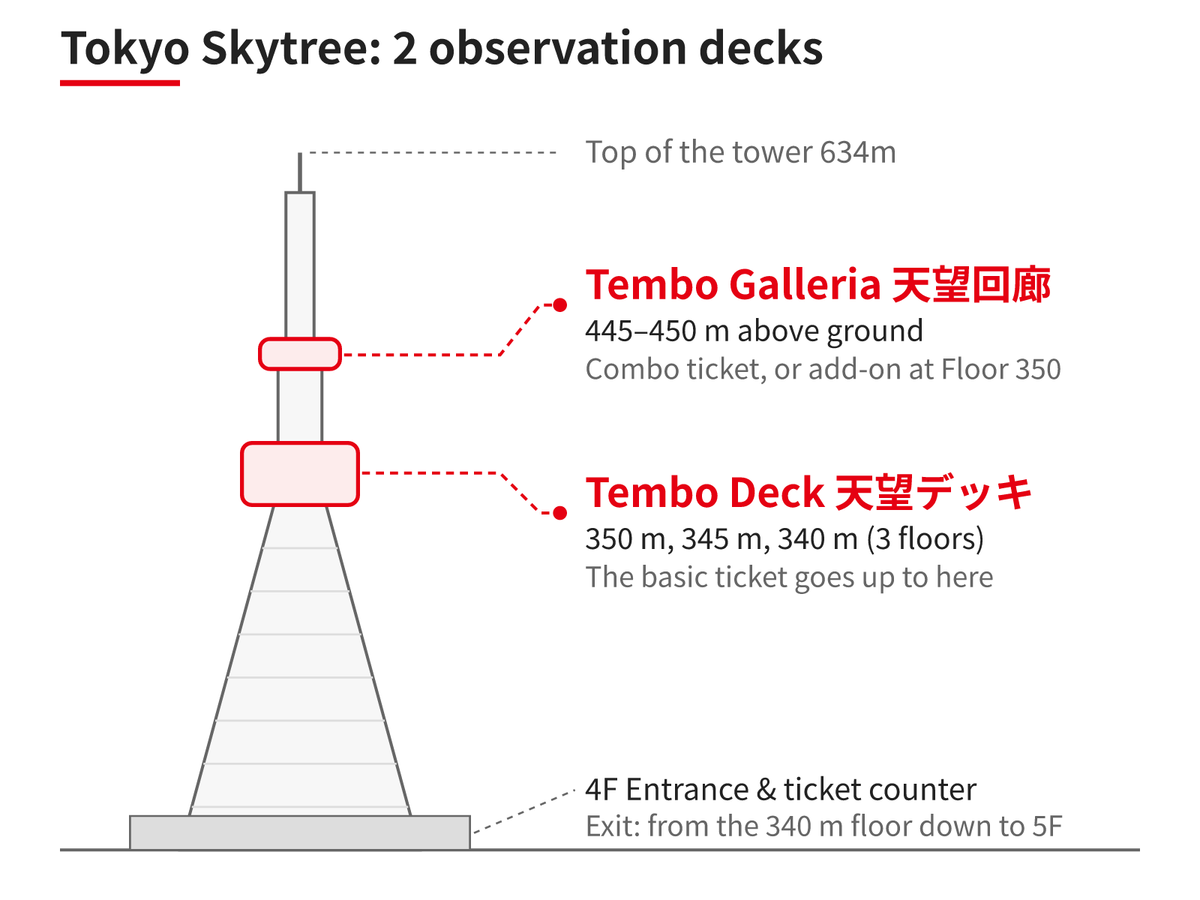
The observation decks of the Skytree have an easy-to-remember rule. The floor names correspond to their heights (e.g., "Floor 350" is 350m high). There are two paid observation decks, and we visited both.
- Tembo Deck
- Consists of three floors at 340m, 345m, and 350m. This is accessible with the cheapest ticket.
- Tembo Galleria
- An observation deck at 445m to 450m. You ascend further from the Tembo Deck. A combo ticket or an additional ticket is required.
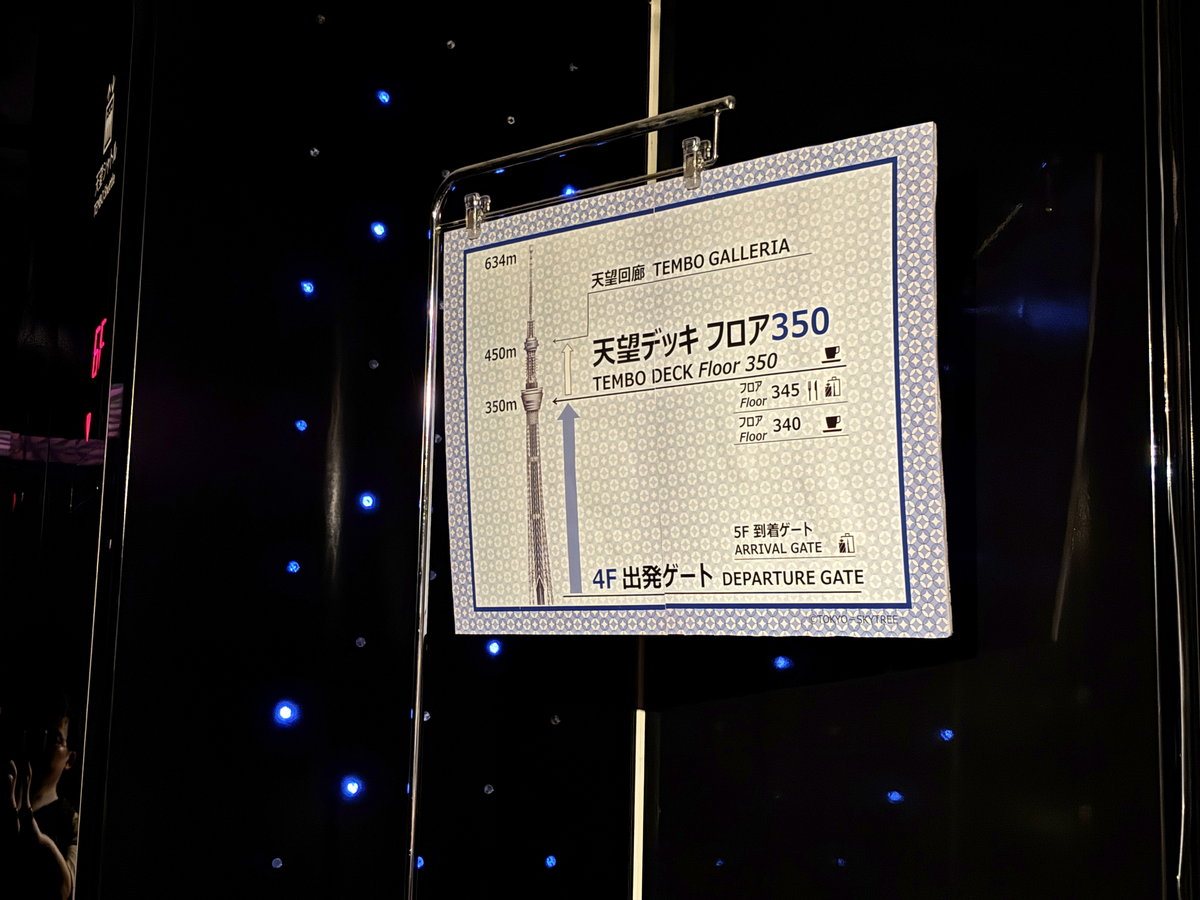
The heights and positions of the two observation decks are shown in the diagram below. The entrance is on the 4th floor of the building beneath the tower (Tokyo Skytree Town). From there, you take an elevator to the Tembo Deck. On the way back, you descend from the lowest floor, 340, to the 5th floor by elevator. In numbers, the sequence is 4th floor → 350 → 450 → 340 → 5th floor.
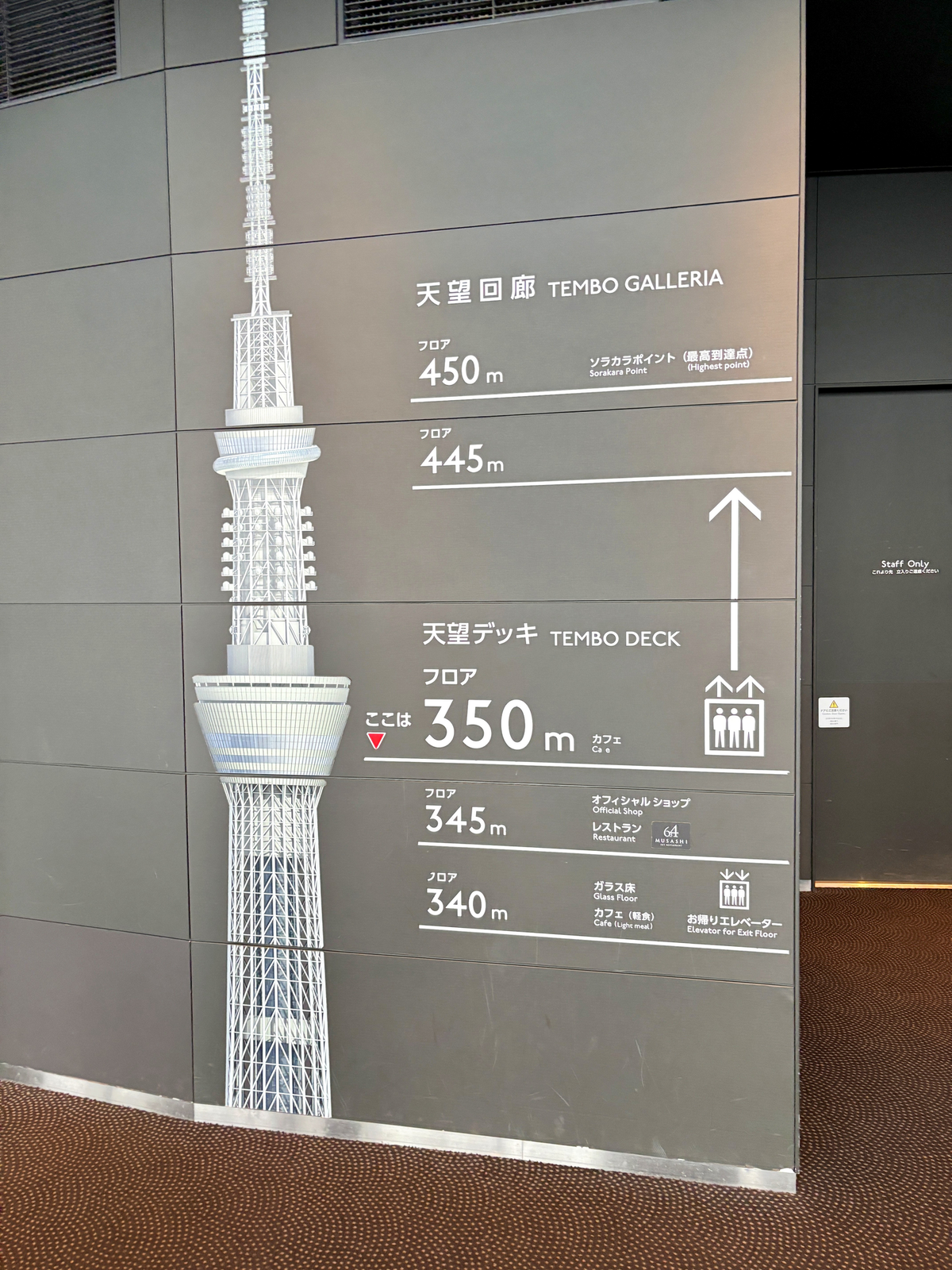
Upon reaching the observation deck, there was a drawing of the tower on the wall along with height information. A mark indicated "This is 350m," and it was clear that the Tembo Galleria was above.
At the base of the tower in Tokyo Skytree Town, there is Tokyo Solamachi, which houses numerous shops and eateries. Even without going up to the observation deck, you can enjoy shopping and dining.
Directions to Tokyo Skytree
There's only one destination: the entrance to the observation deck on the 4th floor. There are two nearest stations, both close to the Skytree Town.
- Oshiage (Skytree) Station
- Tokyo Metro Hanzomon Line, Toei Asakusa Line, Keisei Line
- Tokyo Skytree Station
- Tobu Skytree Line (one stop from Asakusa Station)
According to the official website, it's about a 7-minute walk from Oshiage Station to the main entrance on the 4th floor, and about a 6-minute walk from the west exit of Tokyo Skytree Station. For subway navigation, refer to How to Use the Tokyo Subway.
Route
Main Access Routes
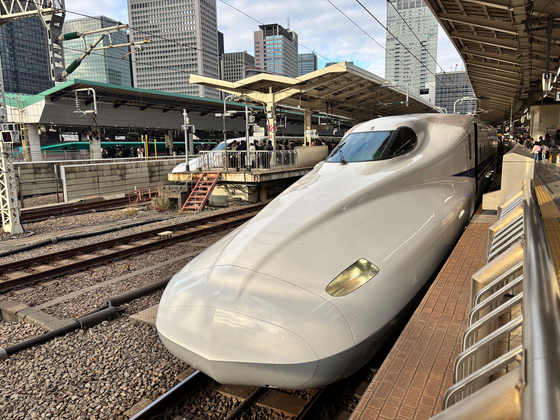
It's about a 5-minute train ride from Asakusa and approximately 20 minutes from Tokyo Station (according to the official website).
By train from Asakusa
- Asakusa StationTobu Skytree Line1 station
- Tokyo Skytree StationOn footAbout 6 minutes
- Tokyo Skytree 4th Floor Entrance
From Narita Airport, it takes about 49 minutes to reach Oshiage (Skytree-mae) Station via the Keisei Narita Sky Access Line.
From Haneda Airport, it takes about 39 minutes to reach Oshiage (Skytree) Station via the Keikyu Line and Toei Asakusa Line.
The travel time from the airport is an estimate from the official website. Some trains may require transfers, so please check your destination before boarding.
You can also reach it by taking the Toei Bus from Asakusa.
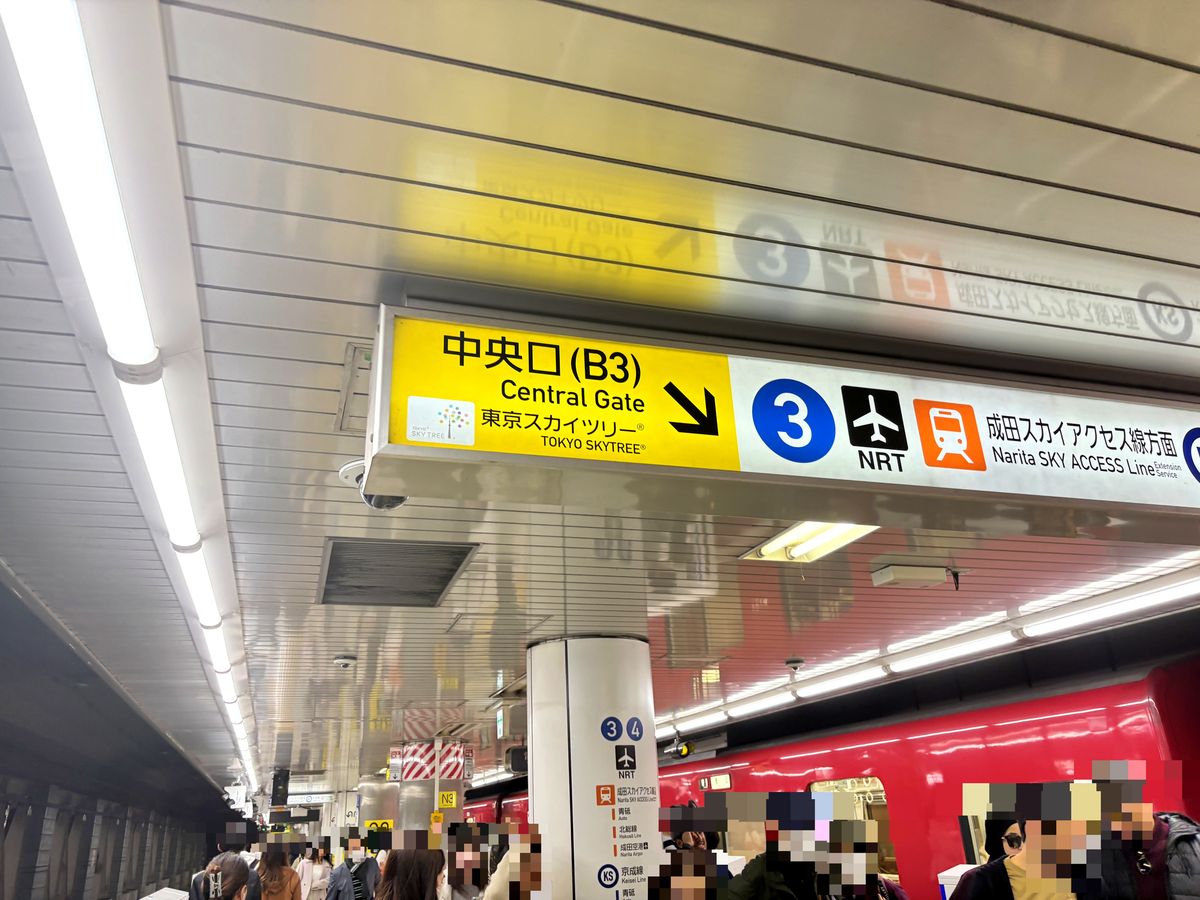
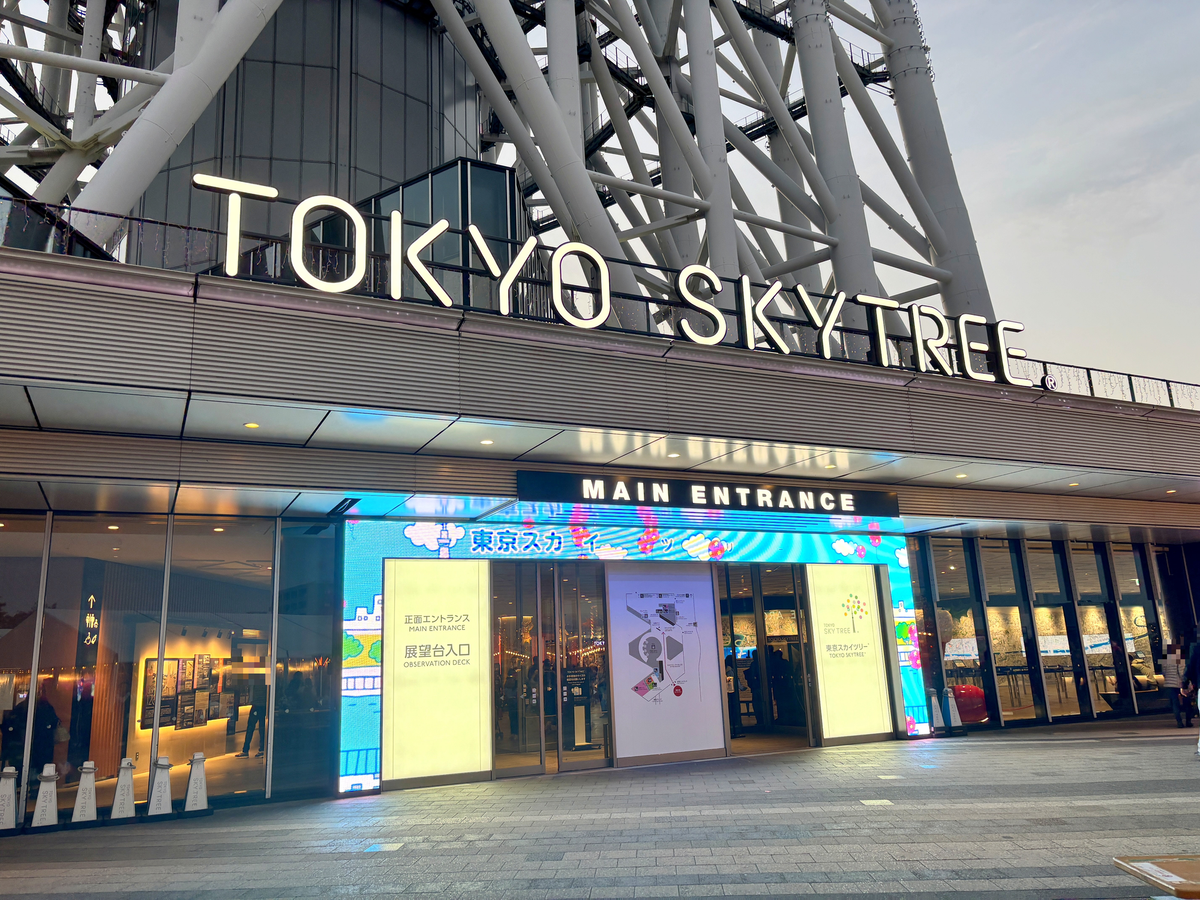
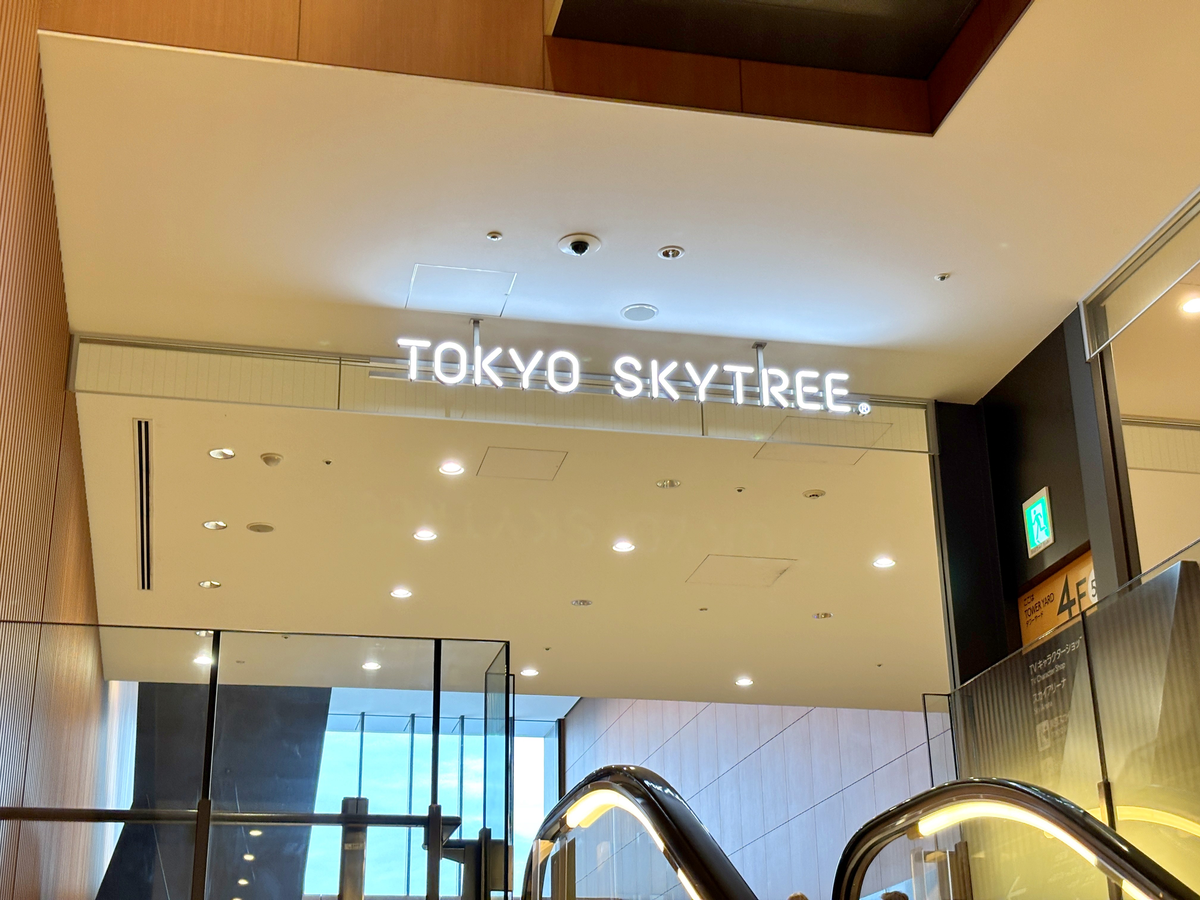
During the Christmas season, I arrived at Oshiage Station by train. Following the yellow signs, I reached the entrance of Skytree Town without getting lost. From there, I took the escalator up. The escalator had a sign saying "4F Tokyo Skytree Observatory (Entrance)."
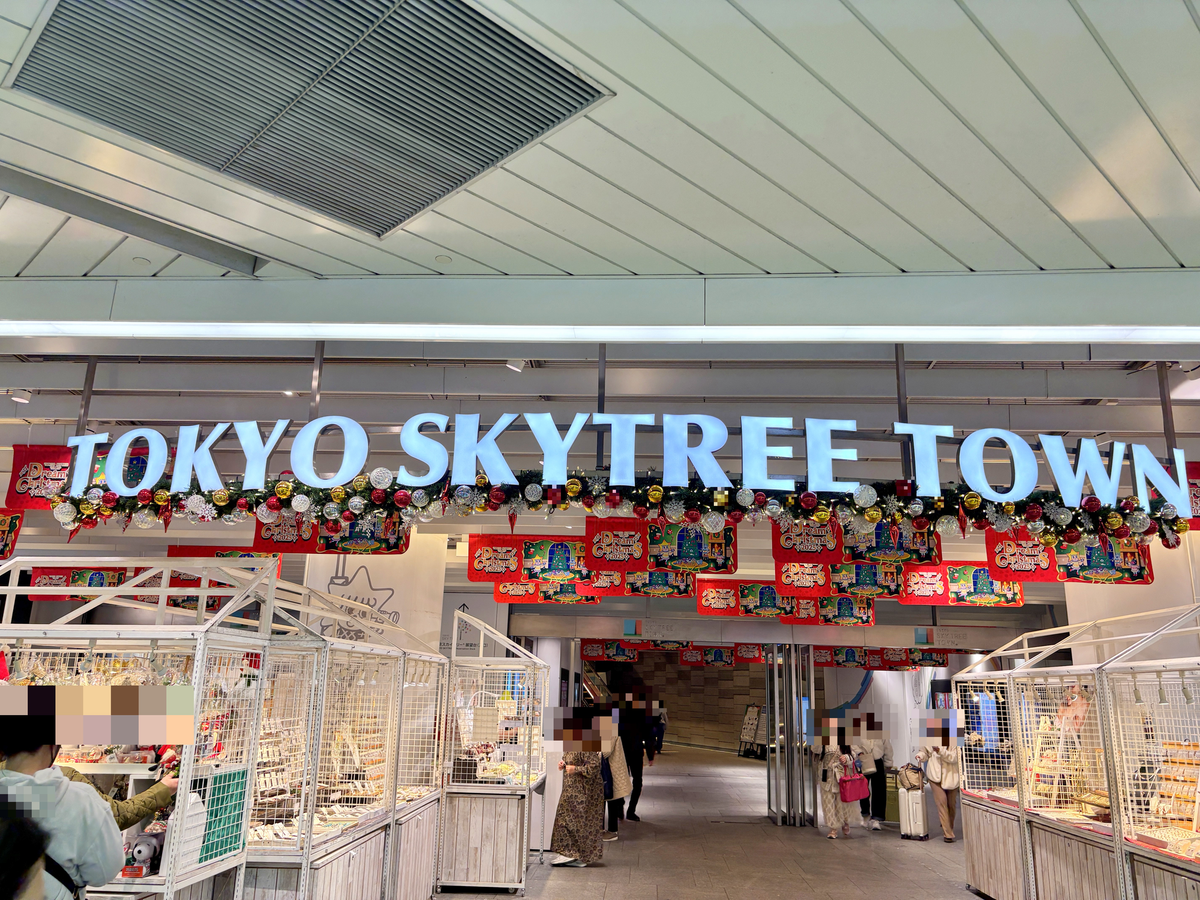
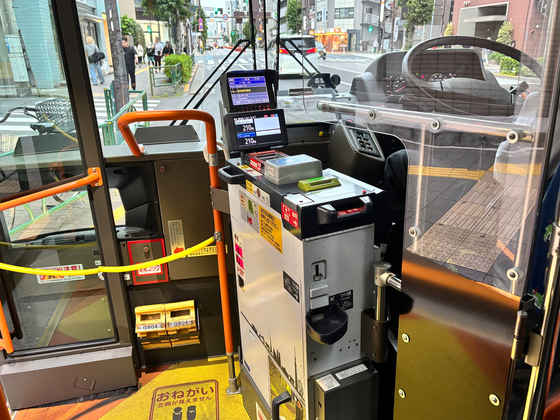
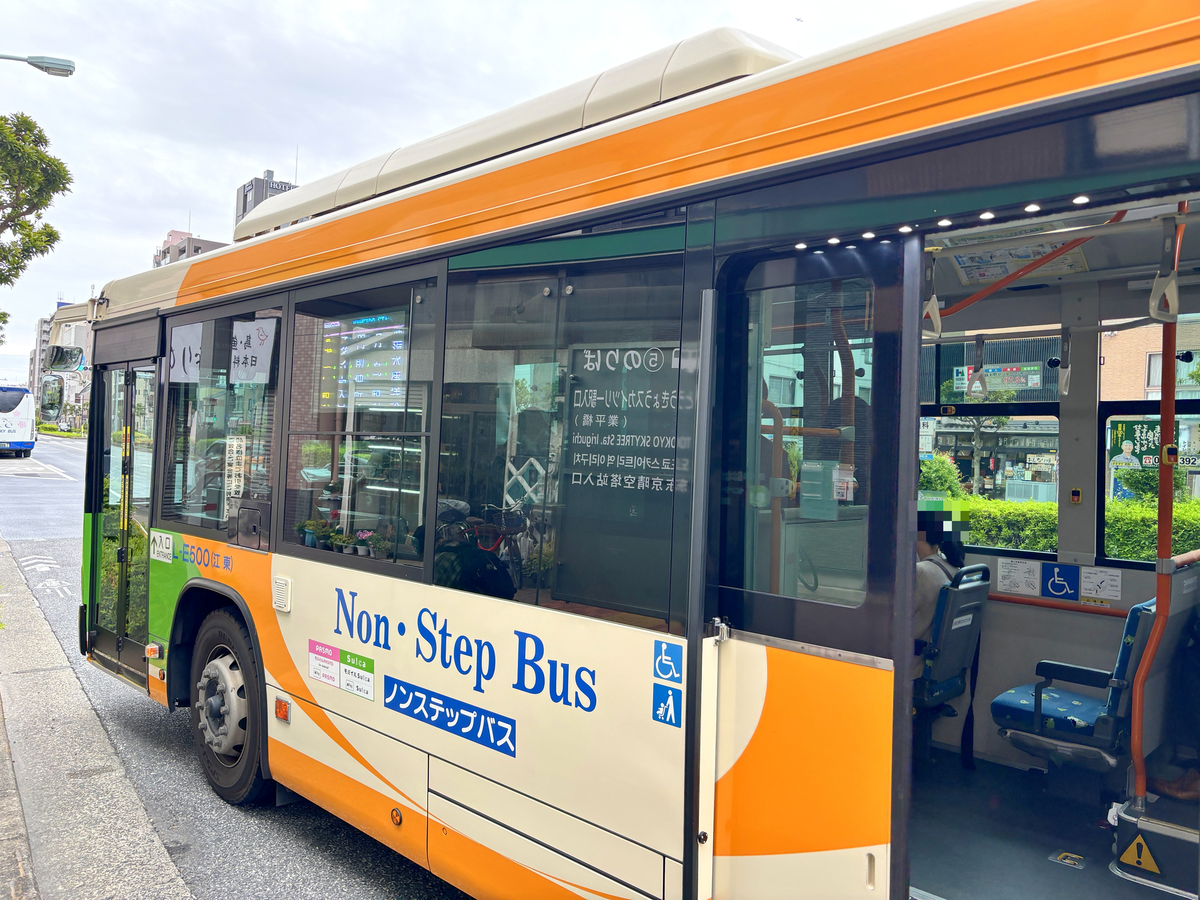
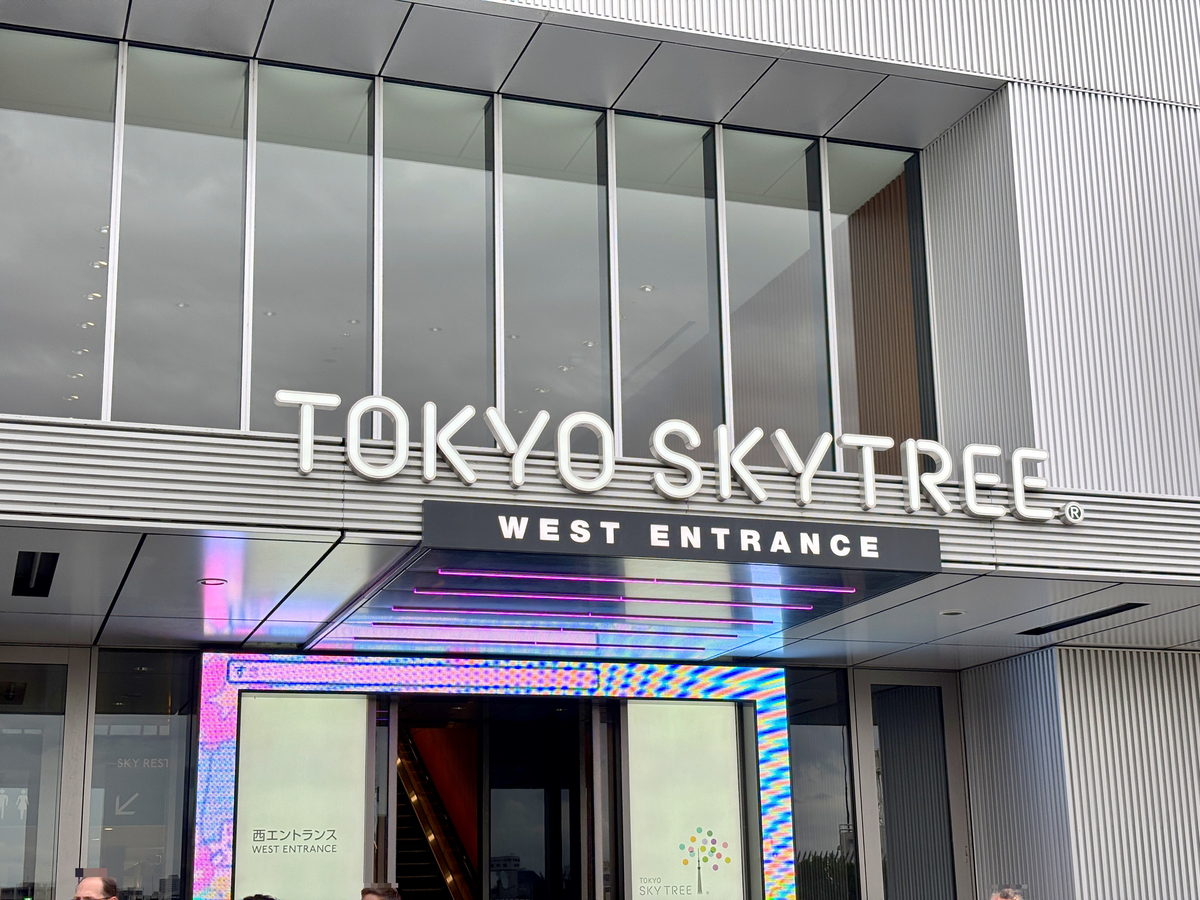
During early summer, after walking around Asakusa, we took the Toei Bus to near the Skytree. The Toei Bus fare is 210 yen, regardless of distance. Pay when you board. For details on how to ride, see How to Ride Tokyo City Buses. After getting off the bus, we entered the building from the west side entrance (WEST ENTRANCE).
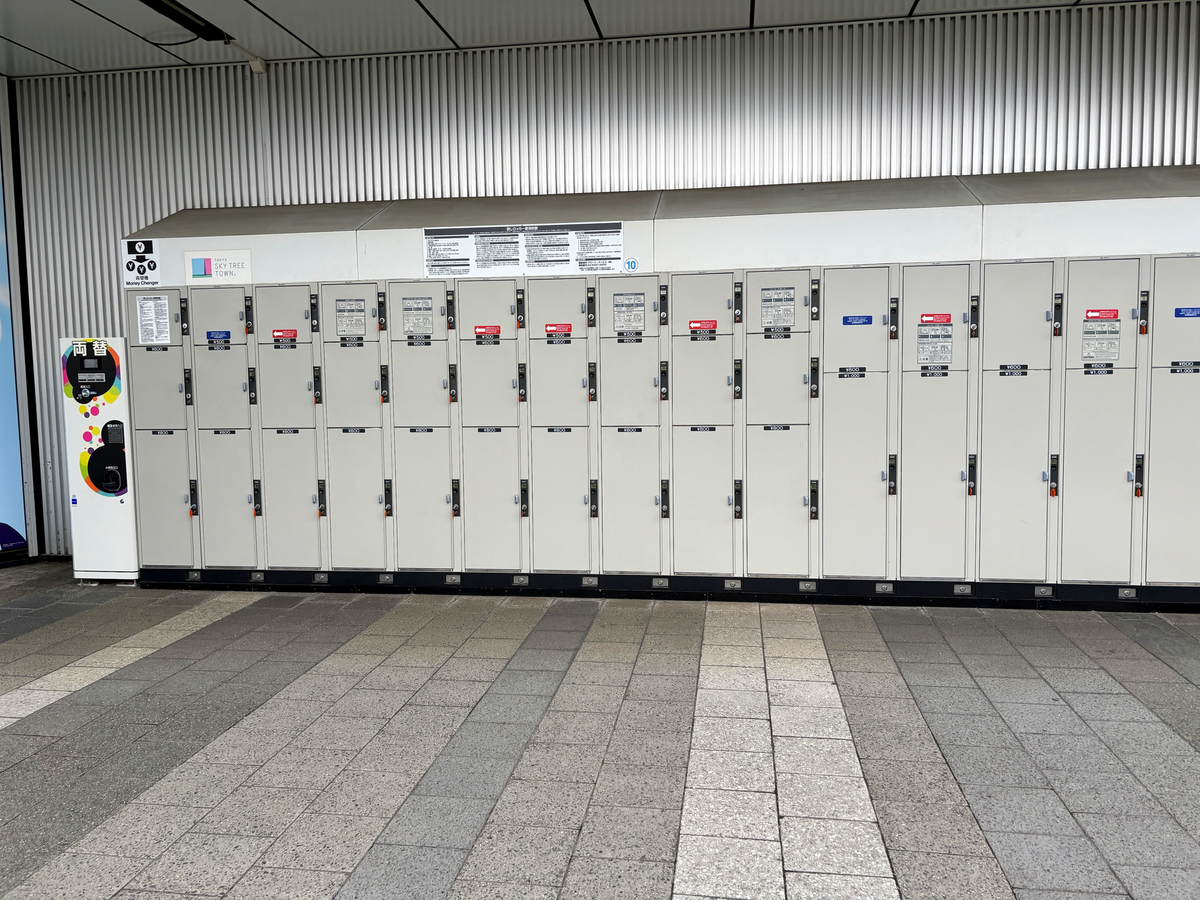
Watch Out for Large Luggage: Items exceeding 60cm on any side cannot be brought into the observation deck. Please store suitcases in the paid coin lockers at Skytree Town. We also noticed coin lockers near the west entrance.
How to Buy Tickets and Pricing
Important information first: If you buy tickets in advance on the official website, you save 500 yen per ticket. You can also purchase them on the day at the 4th-floor counter or ticket machines, but a same-day handling fee (500 yen) applies. On very busy days, they may stop selling tickets at the counter.
| Ticket | Adult (15 and over) | Child (6-14) |
|---|---|---|
| Observation Deck (350m) | From 1,800 yen | From 900 yen |
| Observation Deck + Corridor Set | From 3,000 yen | From 1,500 yen |
| Additional Corridor Ticket (purchase at Floor 350) | 1,400 yen | 700 yen |
These are the official website prices as of November 2026. Prices vary by day. The table shows the lowest prices available. Check the reservation page on the official website for the prices on your visit day. Children 5 and under are free.
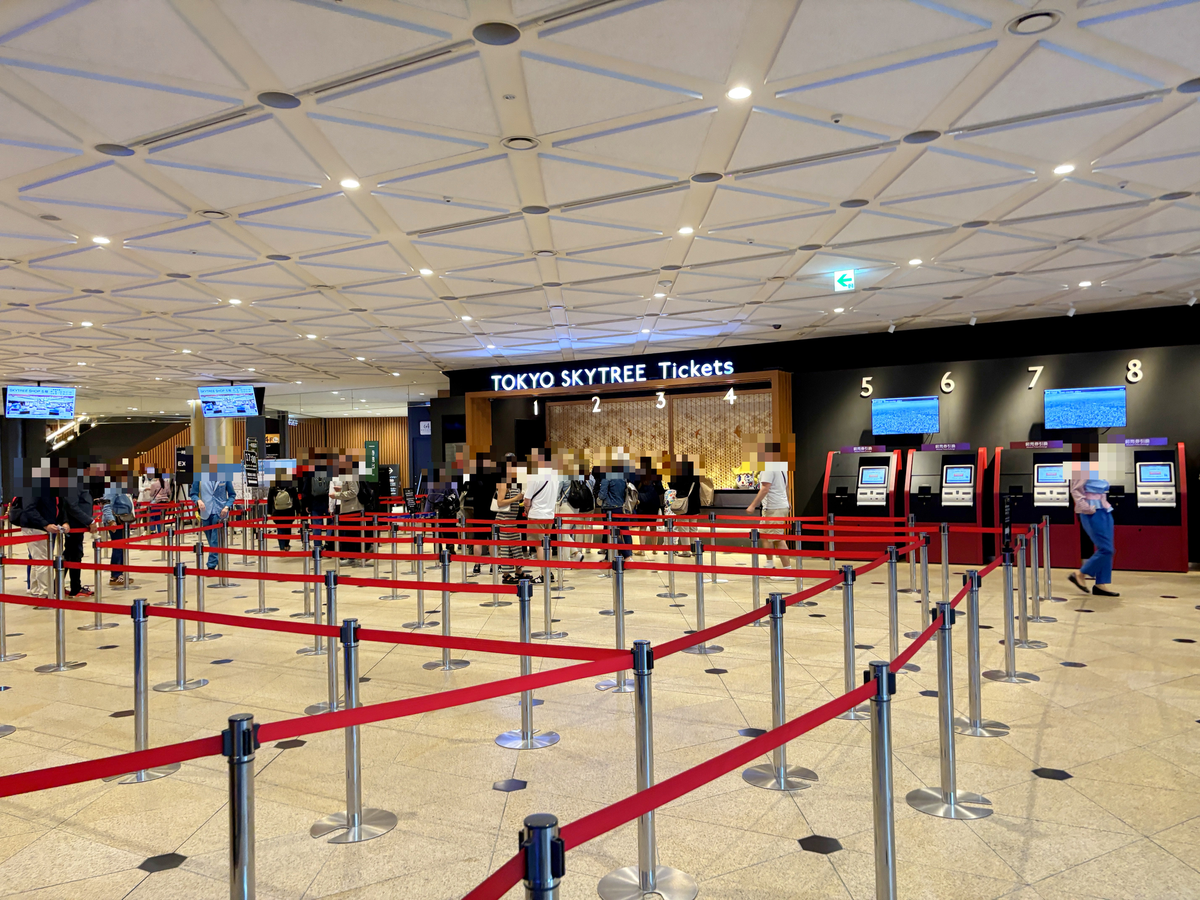
We visited on a weekday evening. The line at the ticket counter on the 4th floor was short, and we were able to purchase tickets quickly. Ticket machines are also available next to the counter.
From the 4th Floor to 350m: Ride the Seasonal Elevator
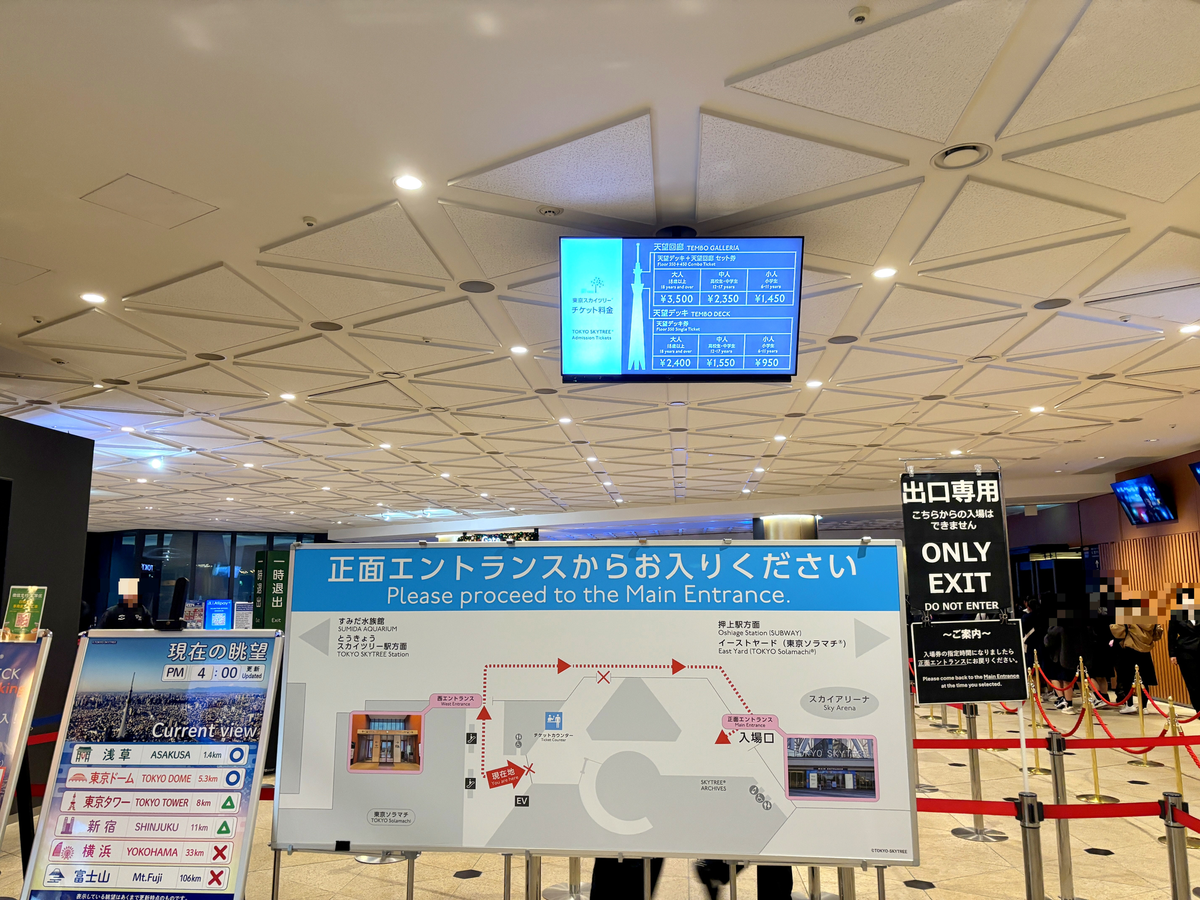
On the fourth floor, there was an information board with a map. It read, "Please enter through the main entrance." The adjacent panel was labeled "Current View" and displayed the names and icons of various locations.
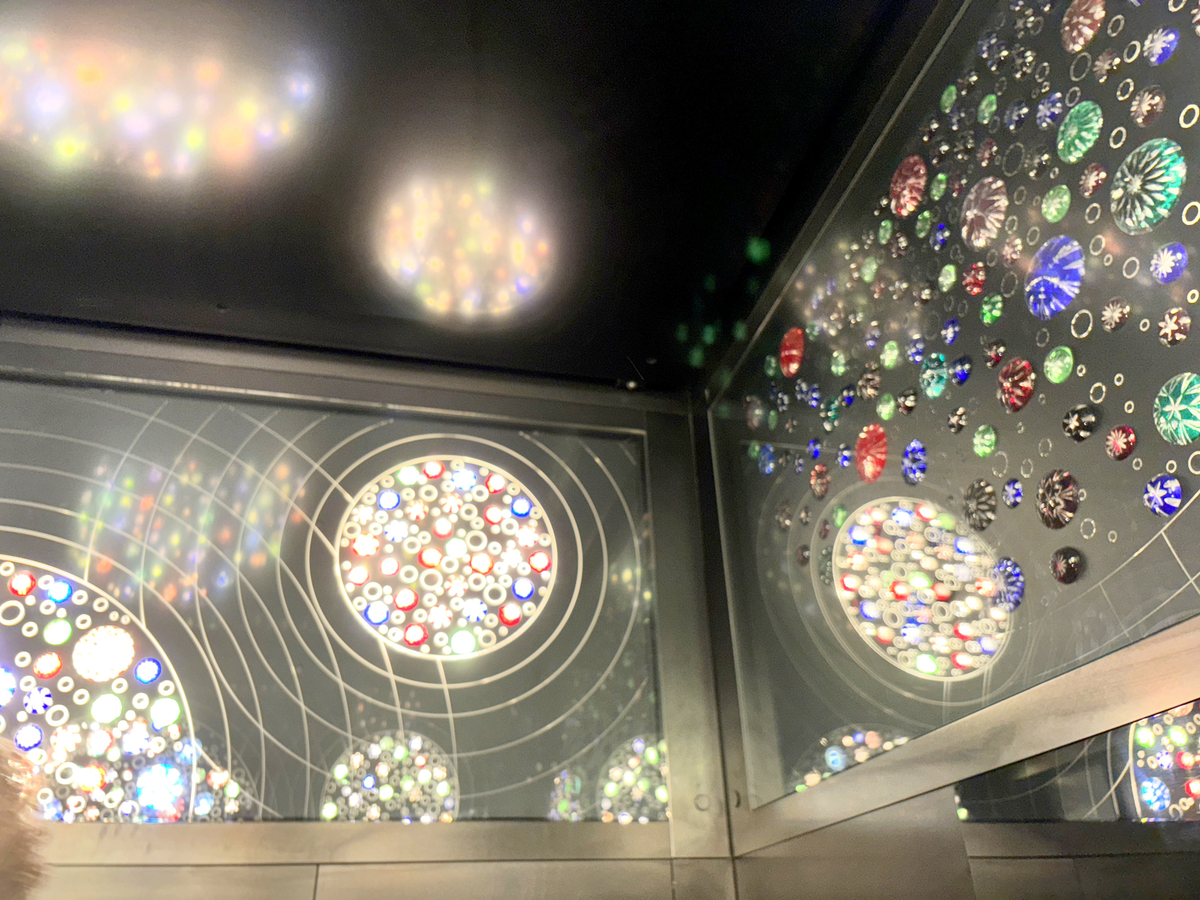
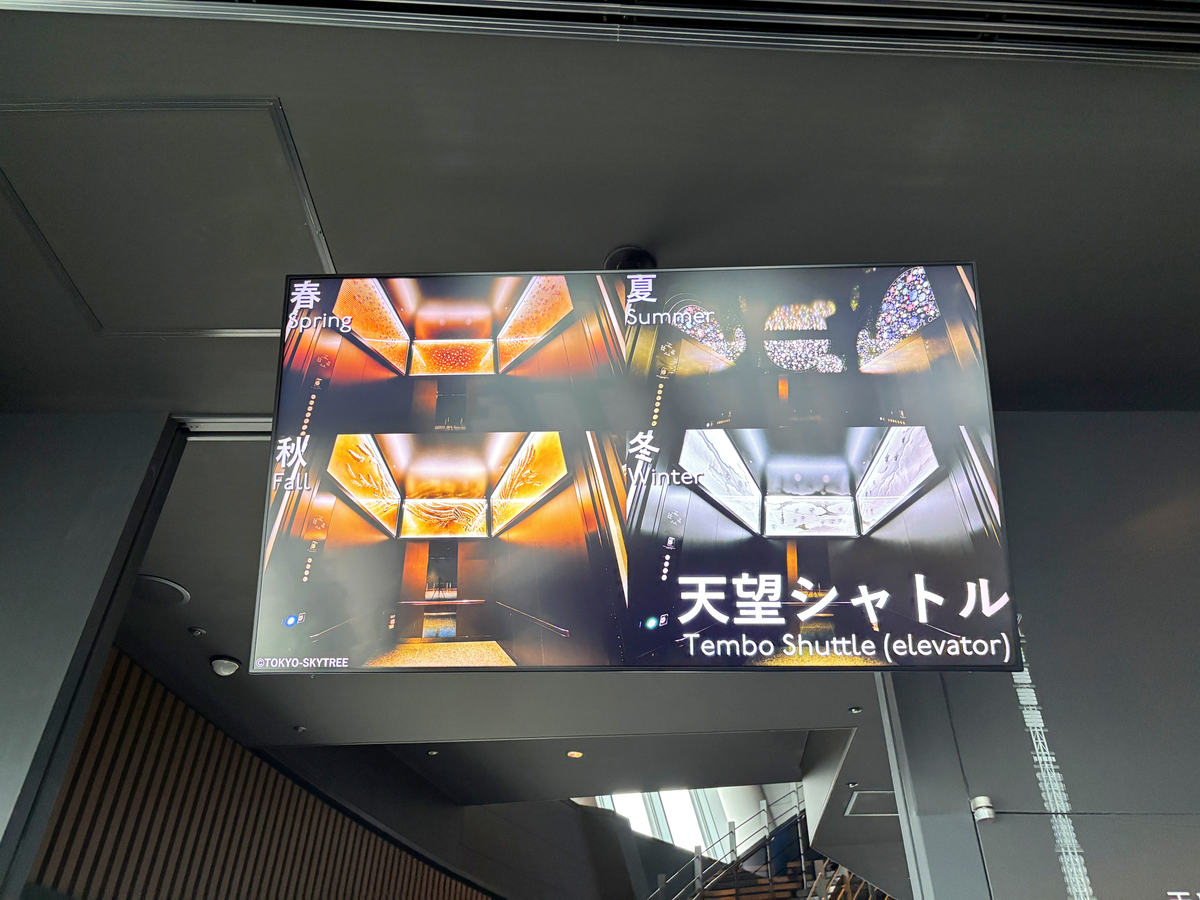
After passing through the entrance, take the "Tembo Shuttle" elevator to the Tembo Deck. There are four Tembo Shuttles, each themed after a season: spring, summer, autumn, and winter. The interior decorations are completely different for each one.
The one we rode had glowing glass decorations. It looked like fireworks, so it seemed to be the summer elevator. Inside, there was a sign saying "TEMBO DECK Floor 350." While admiring the decorations, we had already reached 350 meters.
The observation deck featured a large screen introducing the four observation shuttles, each representing a different season: spring, summer, autumn, and winter. You can check which season you rode here. Look forward to seeing which season you'll get on the way back.
Observation Deck (350m): Overlooking Tokyo
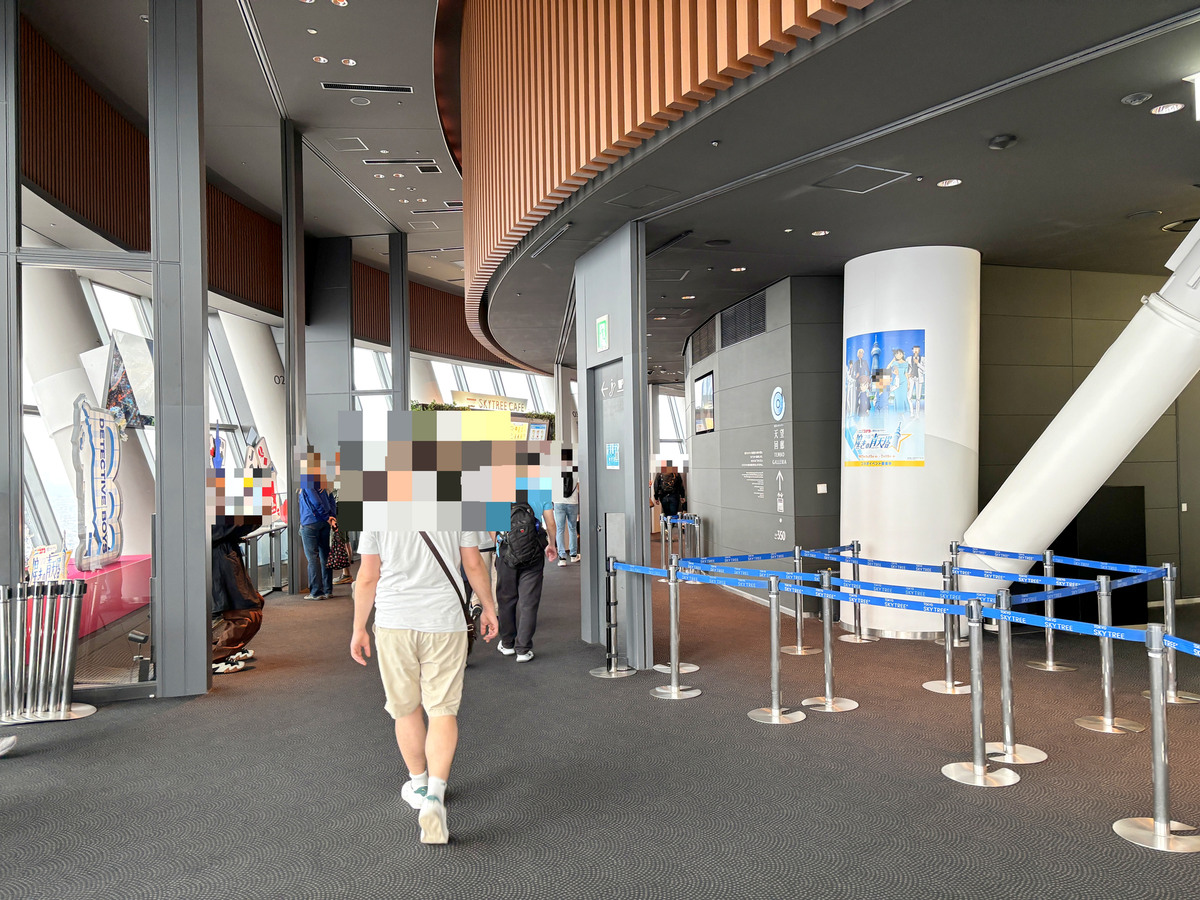
As you step off the elevator, you immediately enter a floor with large windows. The entire floor is surrounded by windows. The pillars are marked with numbers and directions, such as "06 South," helping you determine which way you are facing.
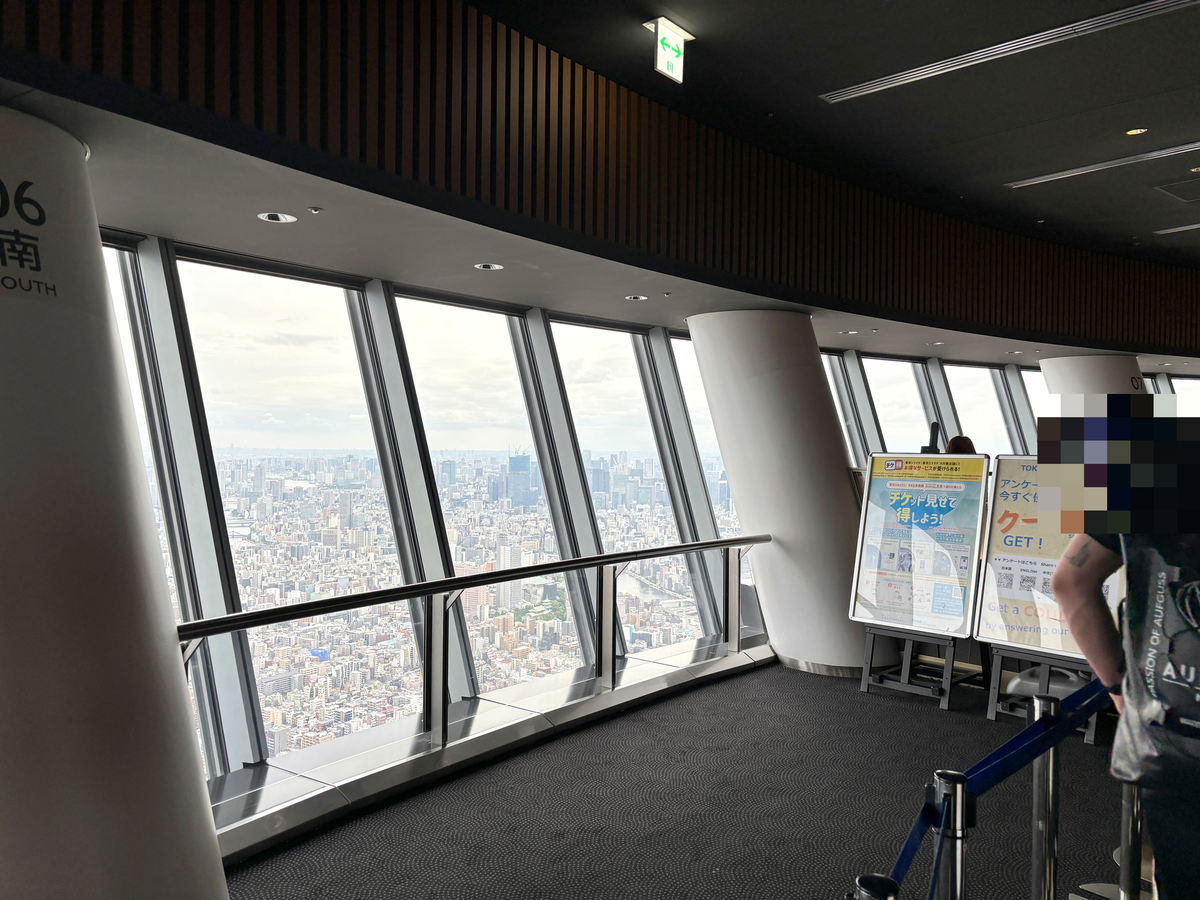
The early summer day we ascended was cloudy. Still, it was clear that the city of Tokyo stretched endlessly. The Sumida River flowed windingly just below, and the distant buildings appeared small.
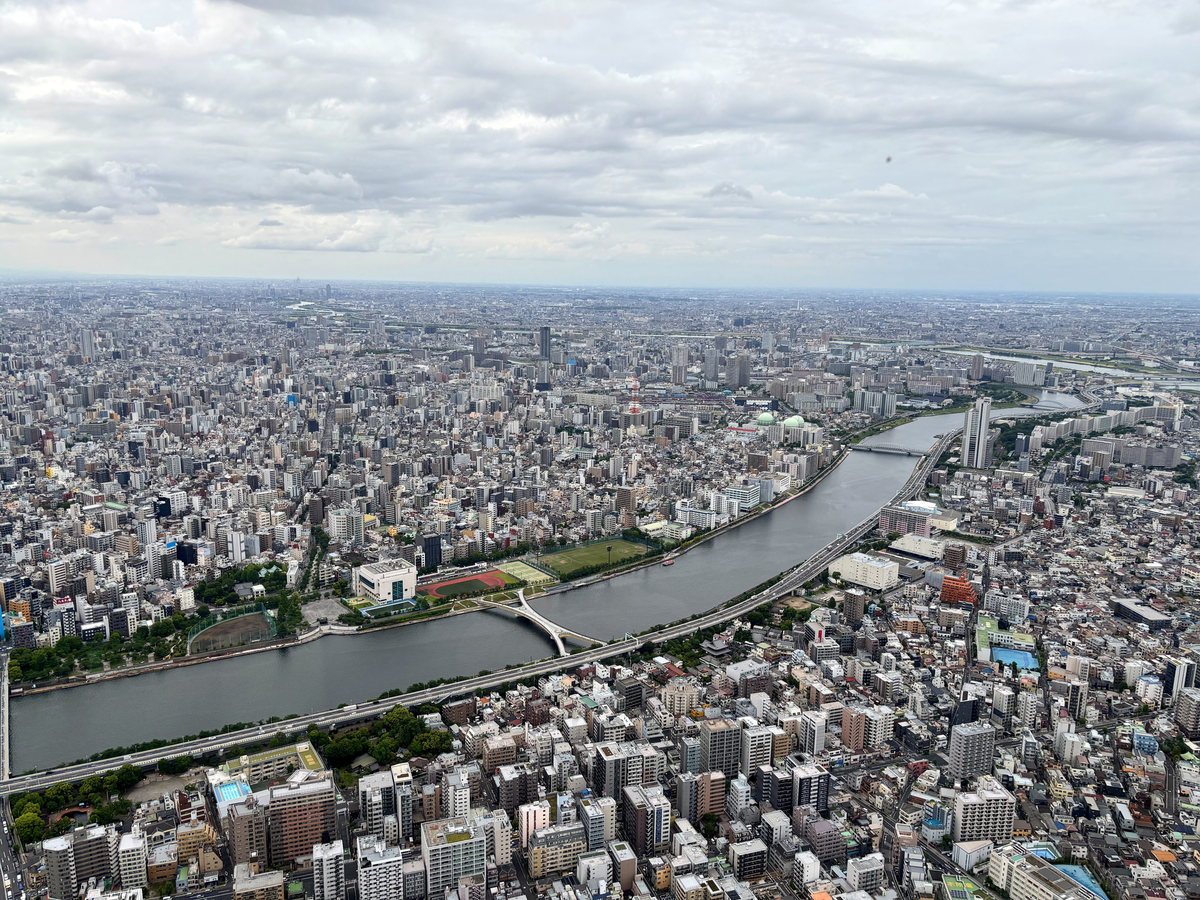
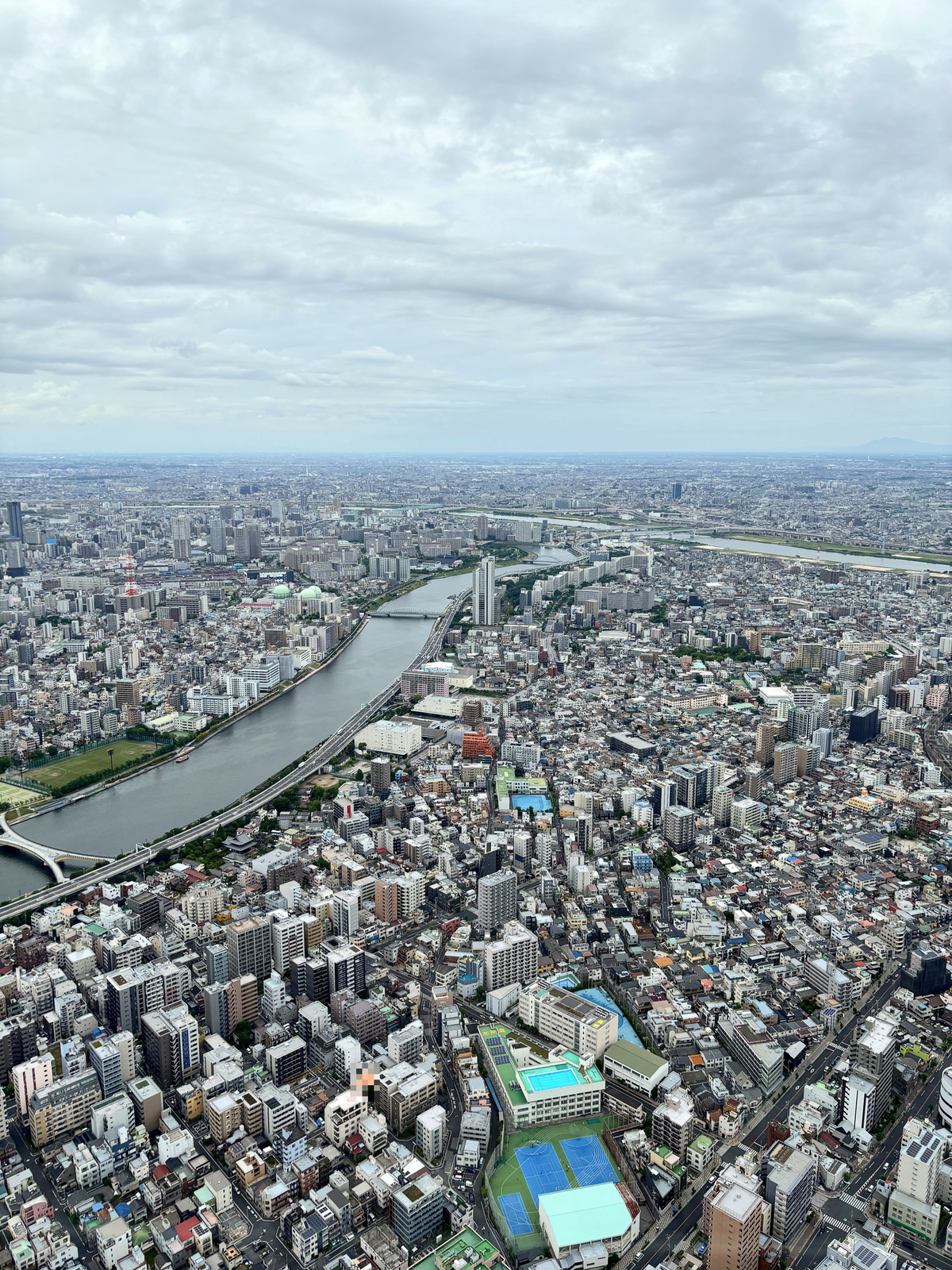
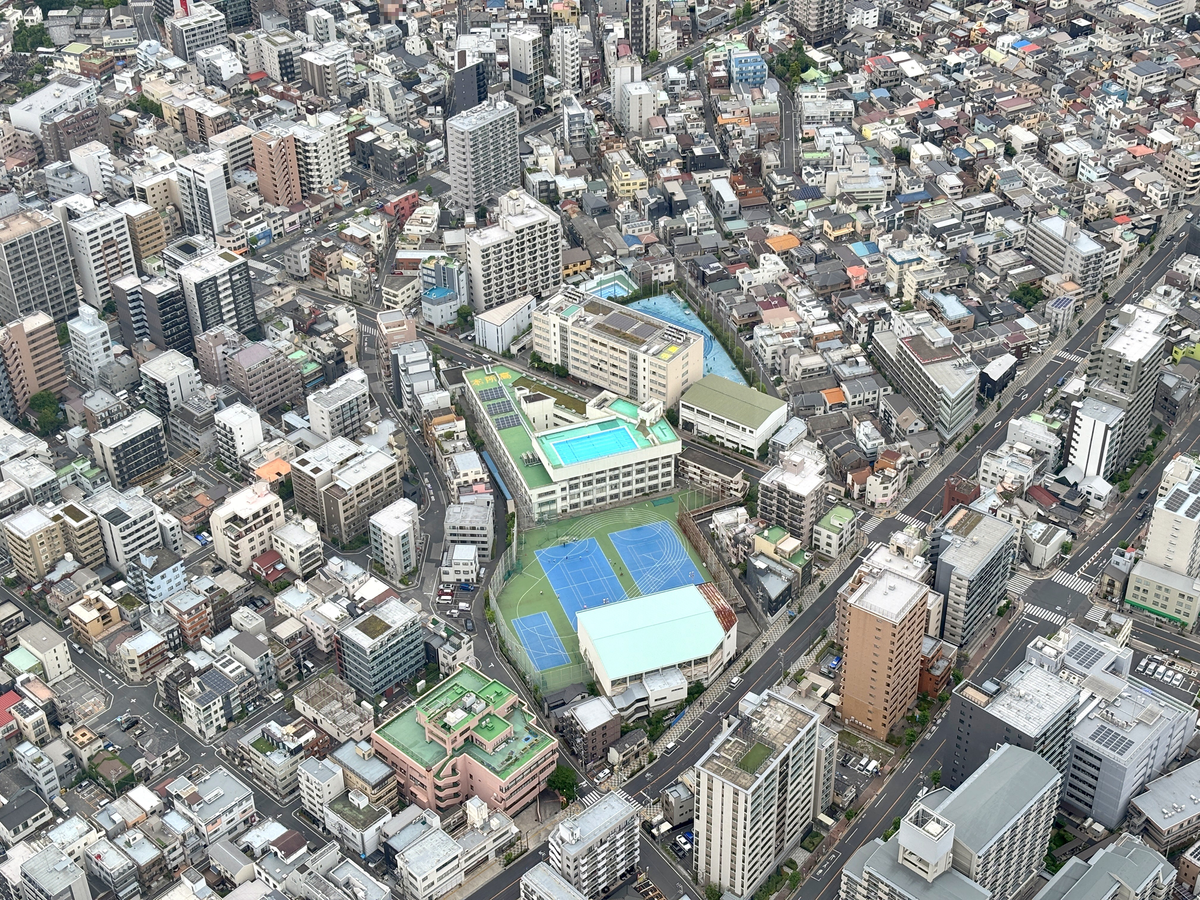
Take a look directly below. The school pool and tennis courts appeared tiny, like toys.
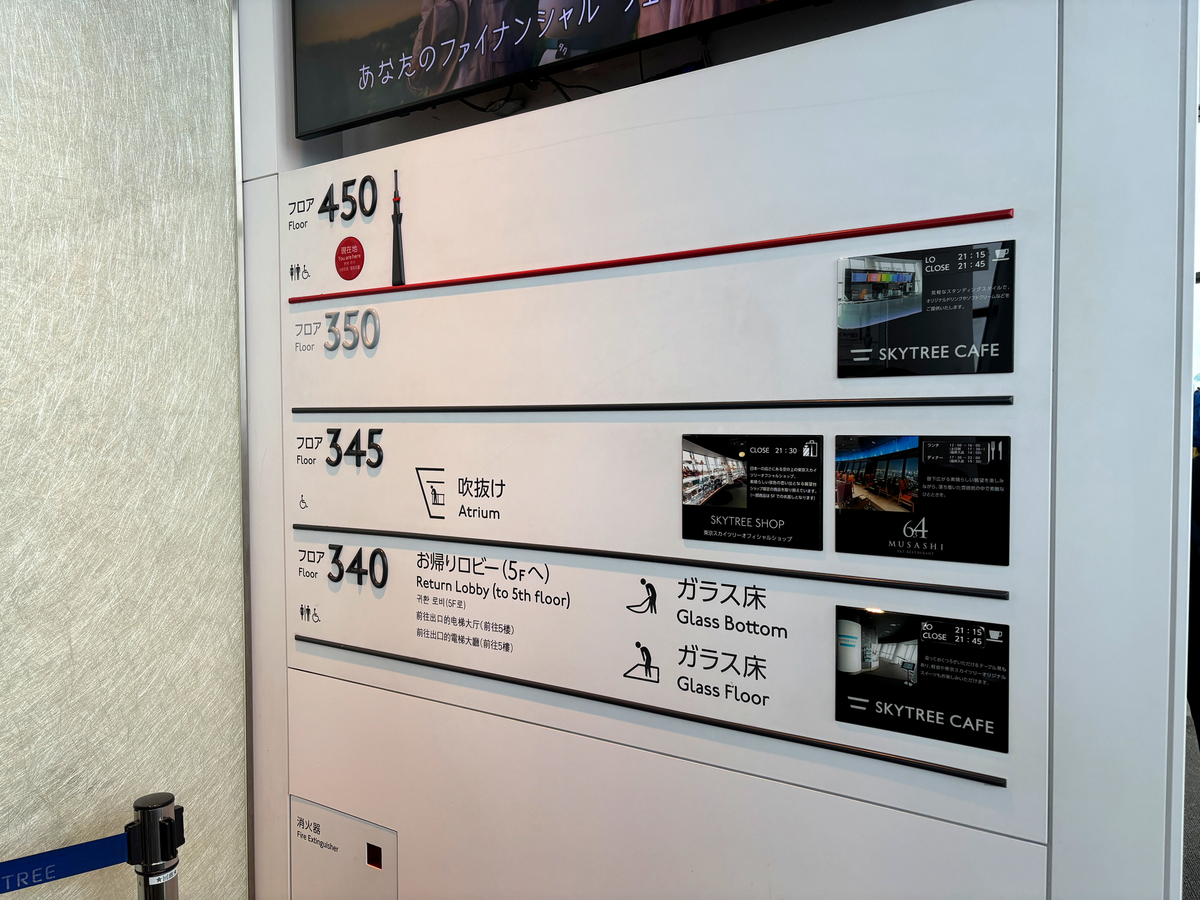
The observation deck is divided into three levels: Floors 350, 345, and 340. The photo below shows a floor directory taken later at the Tembo Galleria. According to this, Floor 350 has a café, Floor 345 has a shop and a restaurant, and Floor 340 features a glass floor and a café. The return lobby is also on Floor 340, from where you descend to the 5th floor.
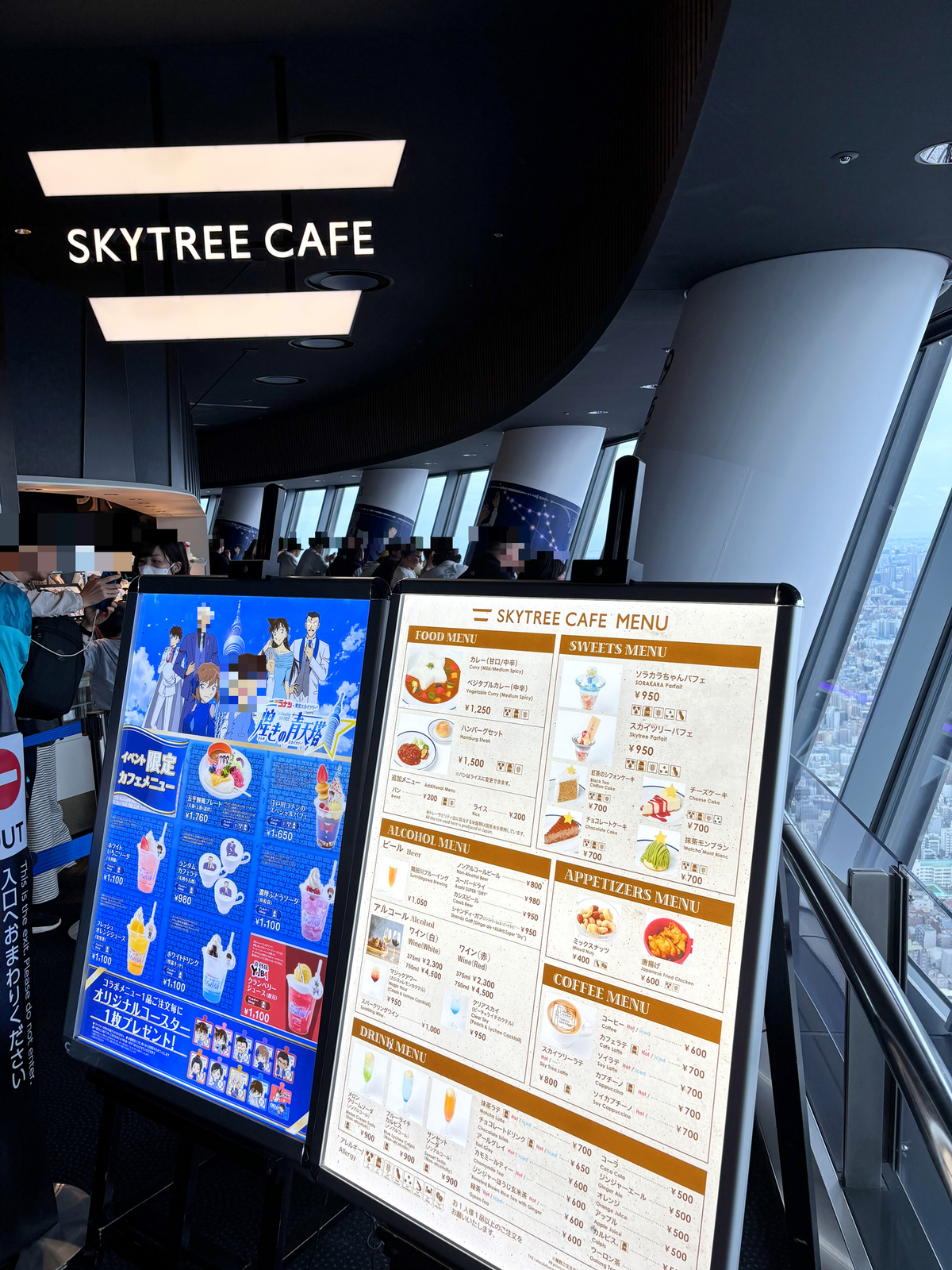
On Floor 350, there's a café (SKYTREE CAFE). When we visited, there was a small line.
Glass Floor on Floor 340
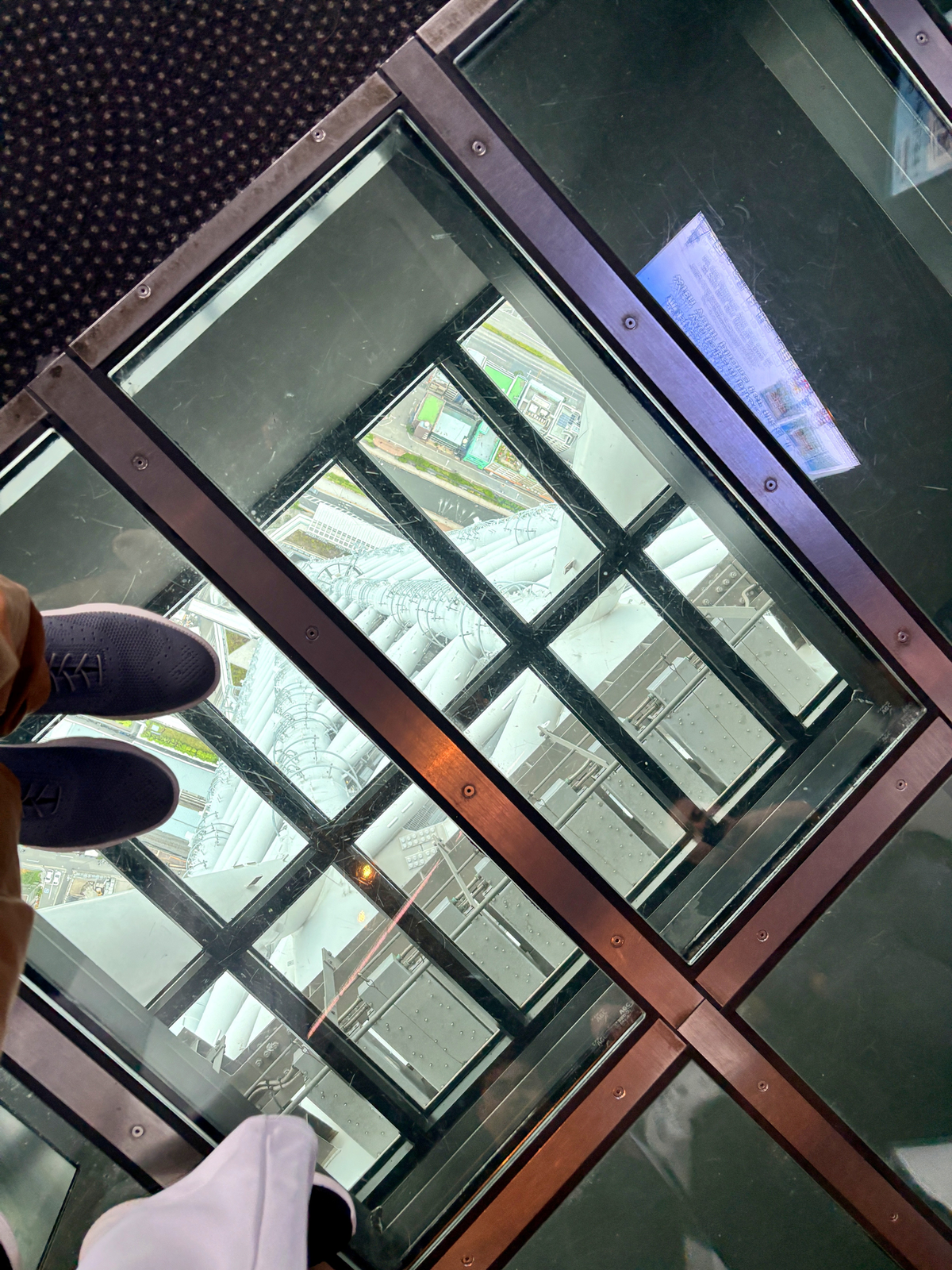
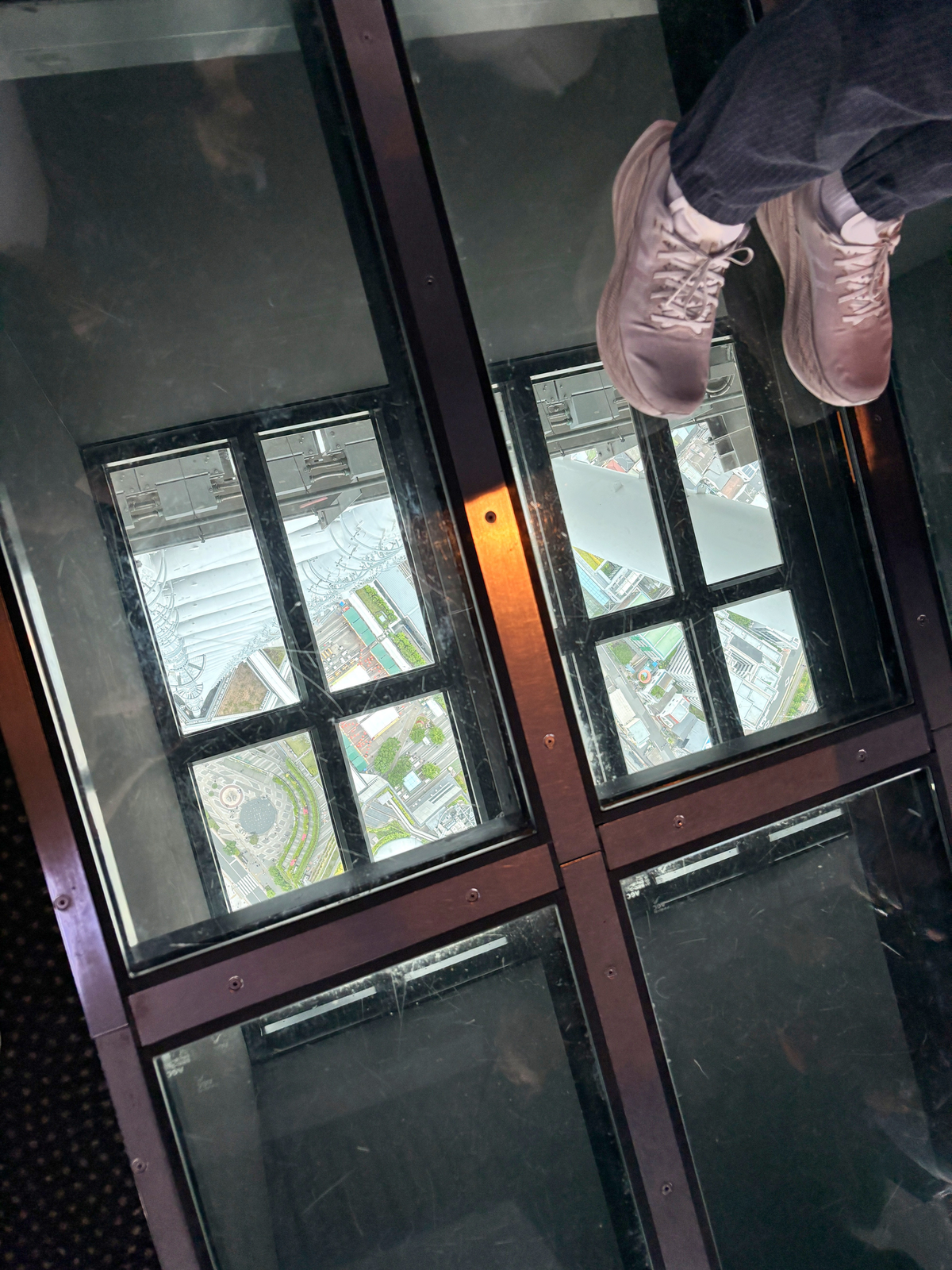
On the 340th floor, there is an area with a glass floor. It measures 2 meters by 3 meters. Below the glass, you can see the tower's framework and the ground 340 meters below. Can you stand on it? We stood on it and took a photo of our feet and the ground together.
Should you go up to the Tembo Corridor (450m)? Our answer is "yes."
The Tembo Galleria is an observation deck located about 100 meters above the Tembo Deck (refer to the diagram in "What is Tokyo Skytree?"). According to the official site, it is an observation deck where you can enjoy the view while walking along a gently sloping path from 445m to 450m in height. The highest point is 451.2m.
Tickets for the Tembo Galleria can only be purchased by those who already have a ticket for the Tembo Deck. You can buy a combo ticket with the Tembo Deck or purchase an additional ticket on Floor 350. There is no same-day handling fee for additional tickets bought on Floor 350.
After visiting Floor 350, we proceeded to the Tembo Galleria.
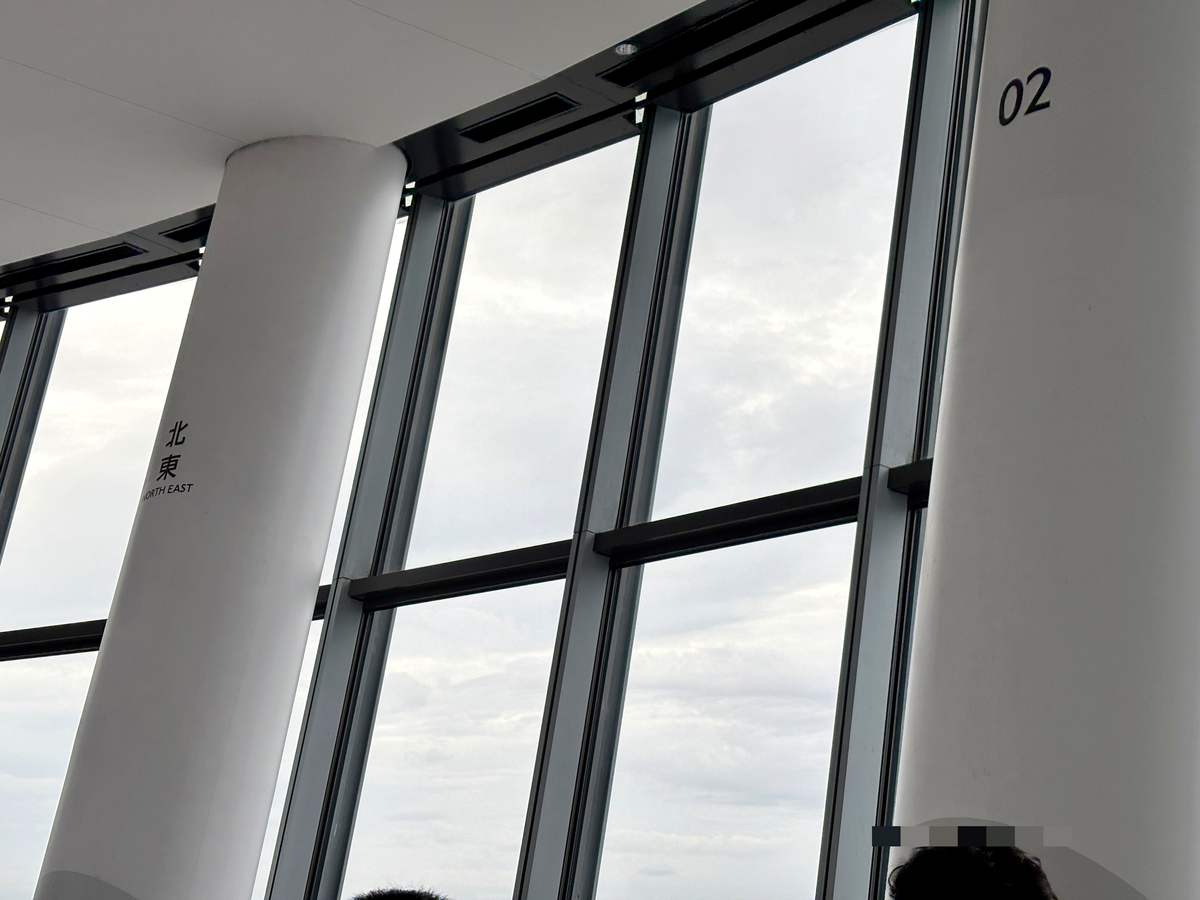
The windows of the Tembo Corridor differ in shape from those of the Tembo Deck. They are framed diagonally and divided by thick black frames. The pillars also have numbers and directions written on them. We found the "06 South" pillar on the Tembo Deck and the "02 Northeast" pillar in the Tembo Corridor. How many can you find?
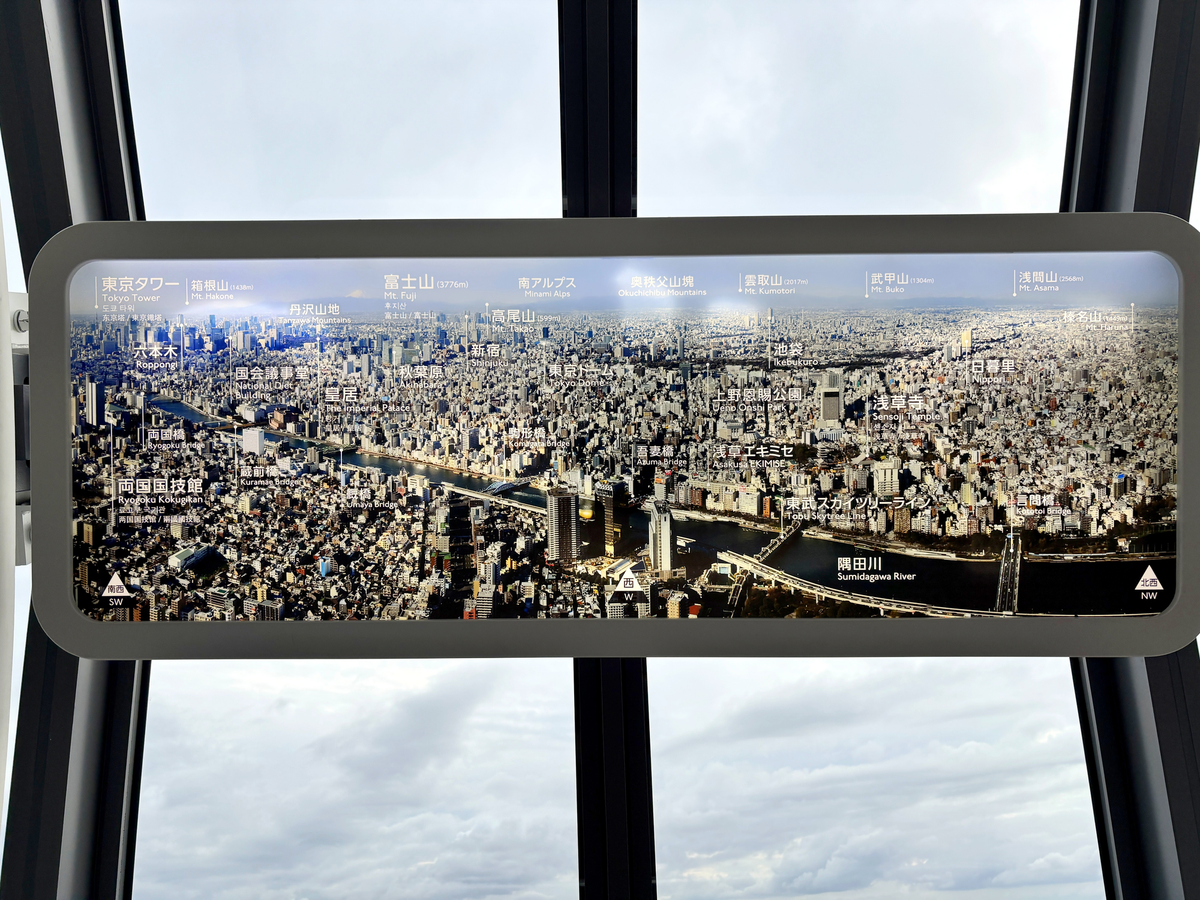
There are also guide panels on the windows that show the names of visible buildings and mountains in photos. Directions to Tokyo Tower and Mount Fuji are also indicated.
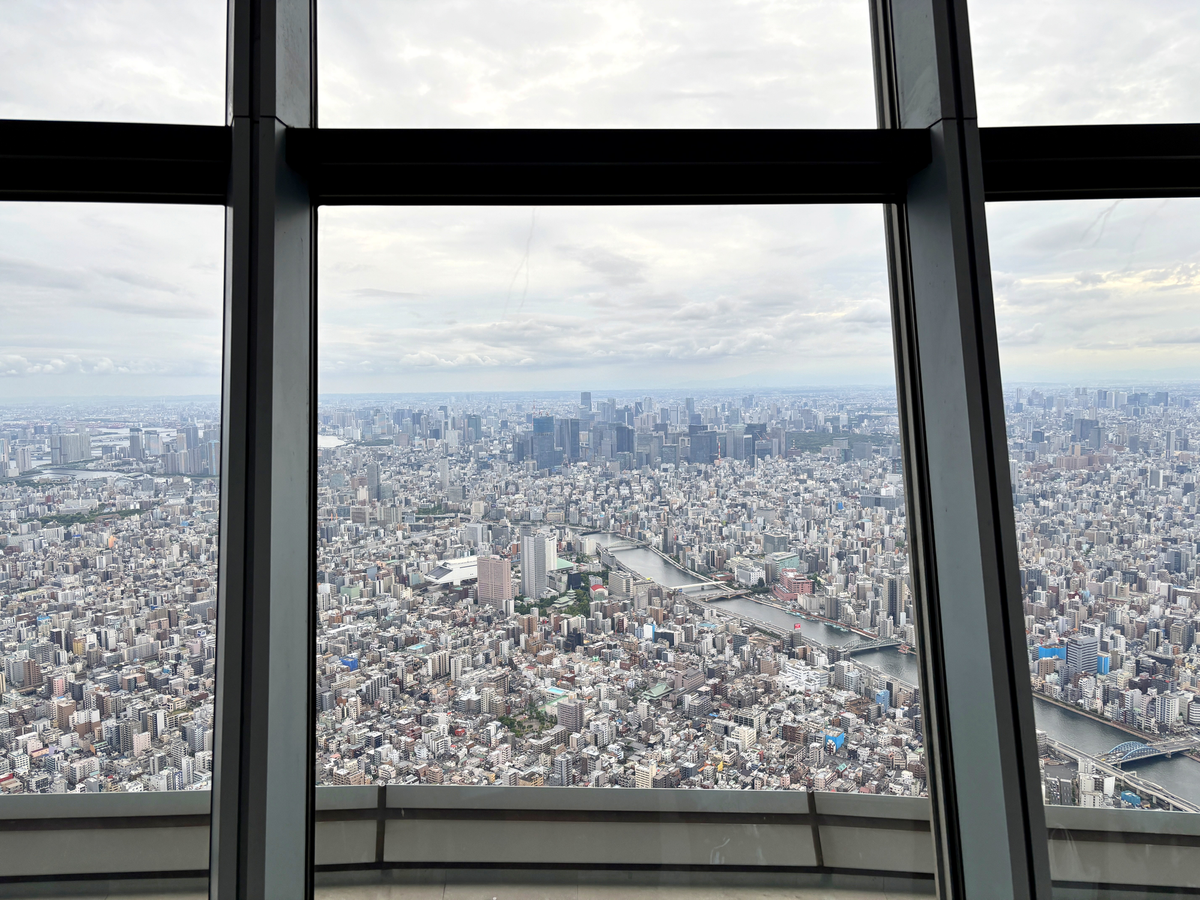
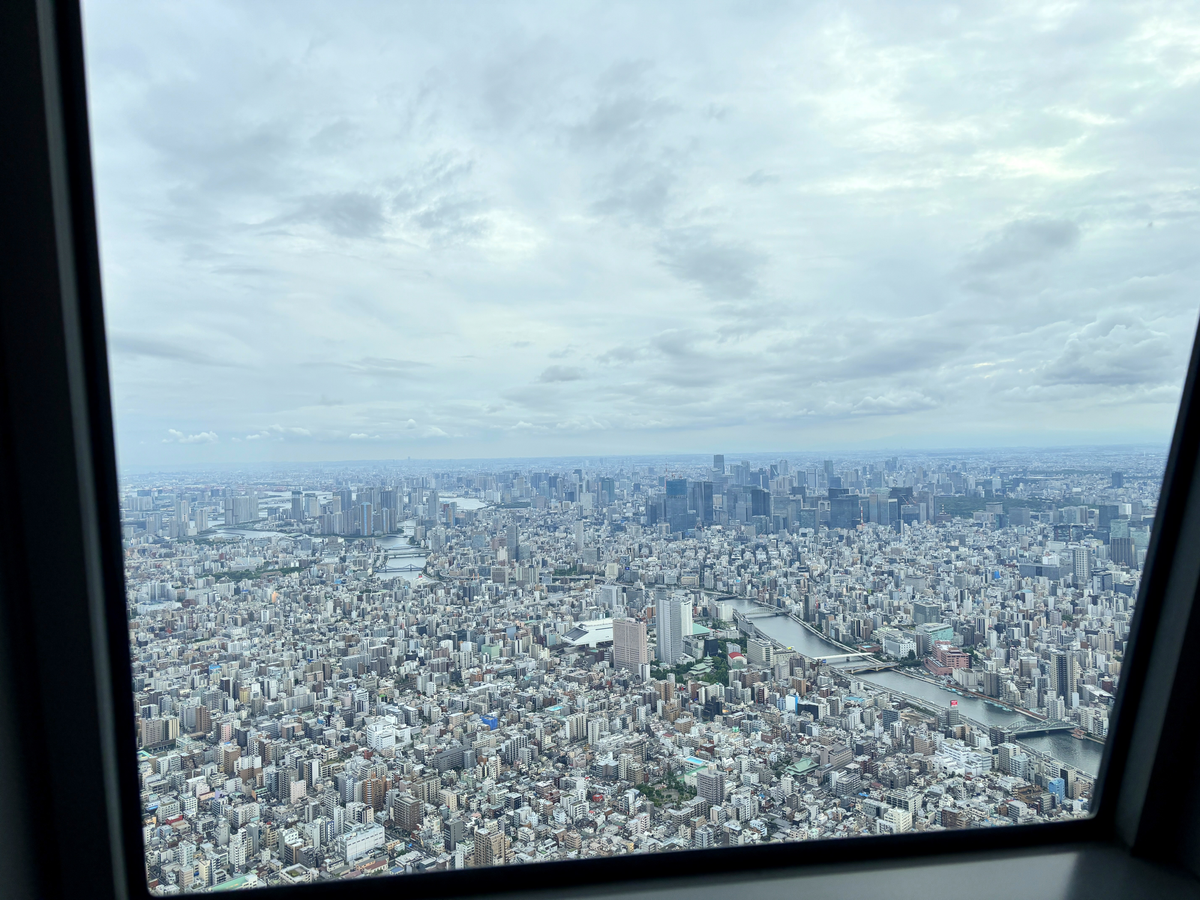
In numbers, the difference from the Tembo Deck is only 100 meters. However, when you actually go up, this 100 meters feels much more significant than expected.
From the Tembo Deck, you can see the Sumida River right below and school pools. It feels like you're "looking down" on the city. From the Tembo Galleria, you can see the city stretching continuously to distant tall buildings. It feels like you're "overlooking" the city. Even on the same day with the same cloudy sky, the view was different.
The cost and time required are minimal. On the cheapest day, a combo ticket is 1,200 yen more than a ticket for the Tembo Deck alone. If you buy an additional ticket on Floor 350, it's 1,400 yen. Including the elevator ride, it took about 20 minutes.
We recommend going up to the Tembo Galleria as well. You can buy the additional ticket on Floor 350, allowing you to decide after checking the sky from the Tembo Deck. Only on days when the clouds are too low to see the view, it's better to stop at the Tembo Deck.
Time Required and Recommended Time
We visited on a weekday evening in early summer. From arrival to departure, including the Skywalk, it took about 1 hour and 15 minutes. Here's the breakdown:
- Arriving, buying tickets, and taking the elevator: about 15 minutes
- Observation Deck Floor 350: about 15 minutes
- Skywalk (including elevator rides): about 20 minutes
- Café on Floor 350 and Glass Floor on Floor 340: about 10 minutes
- Descending and exiting: about 15 minutes
The operating hours on the day we checked the official website were from 10:00 to 22:00, with last admission at 21:00. Hours may vary, so please check the official website for the schedule on your visit day.
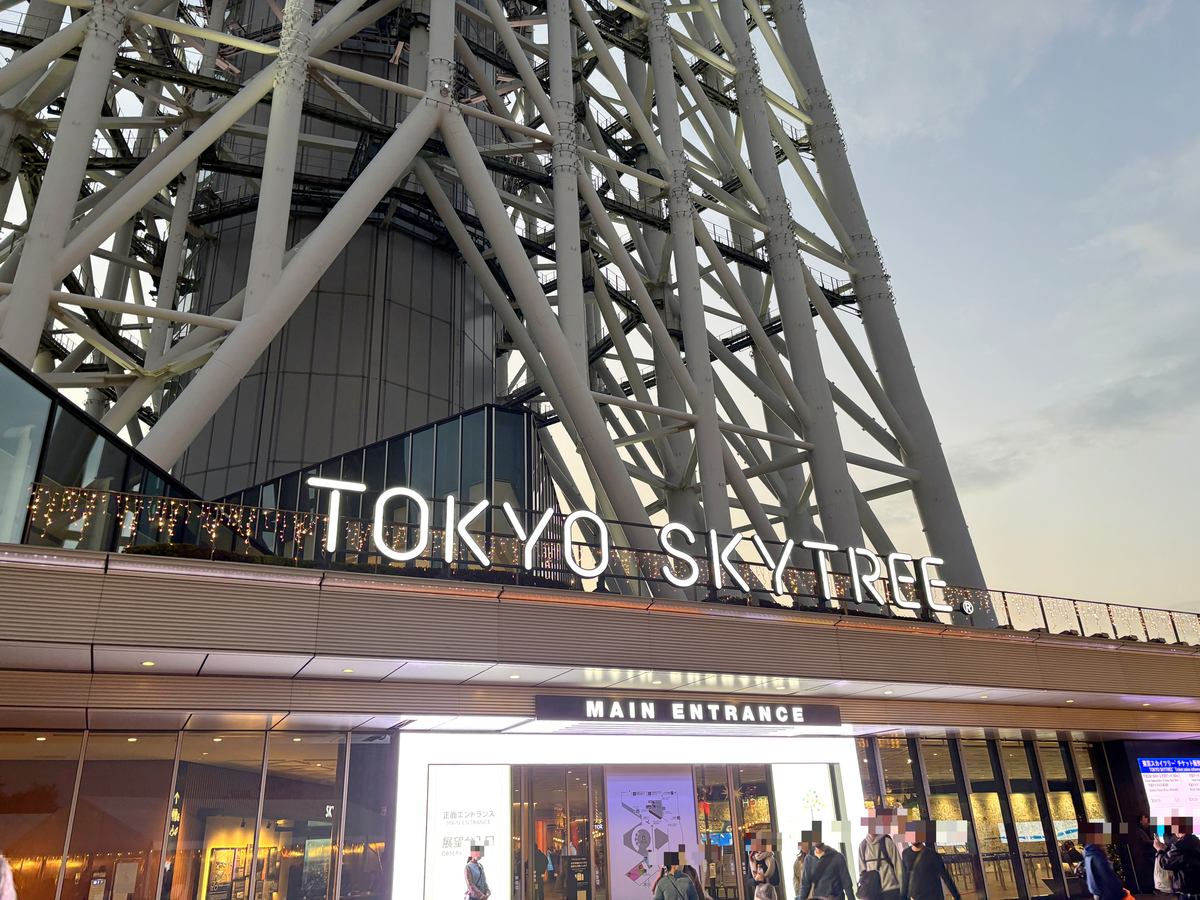
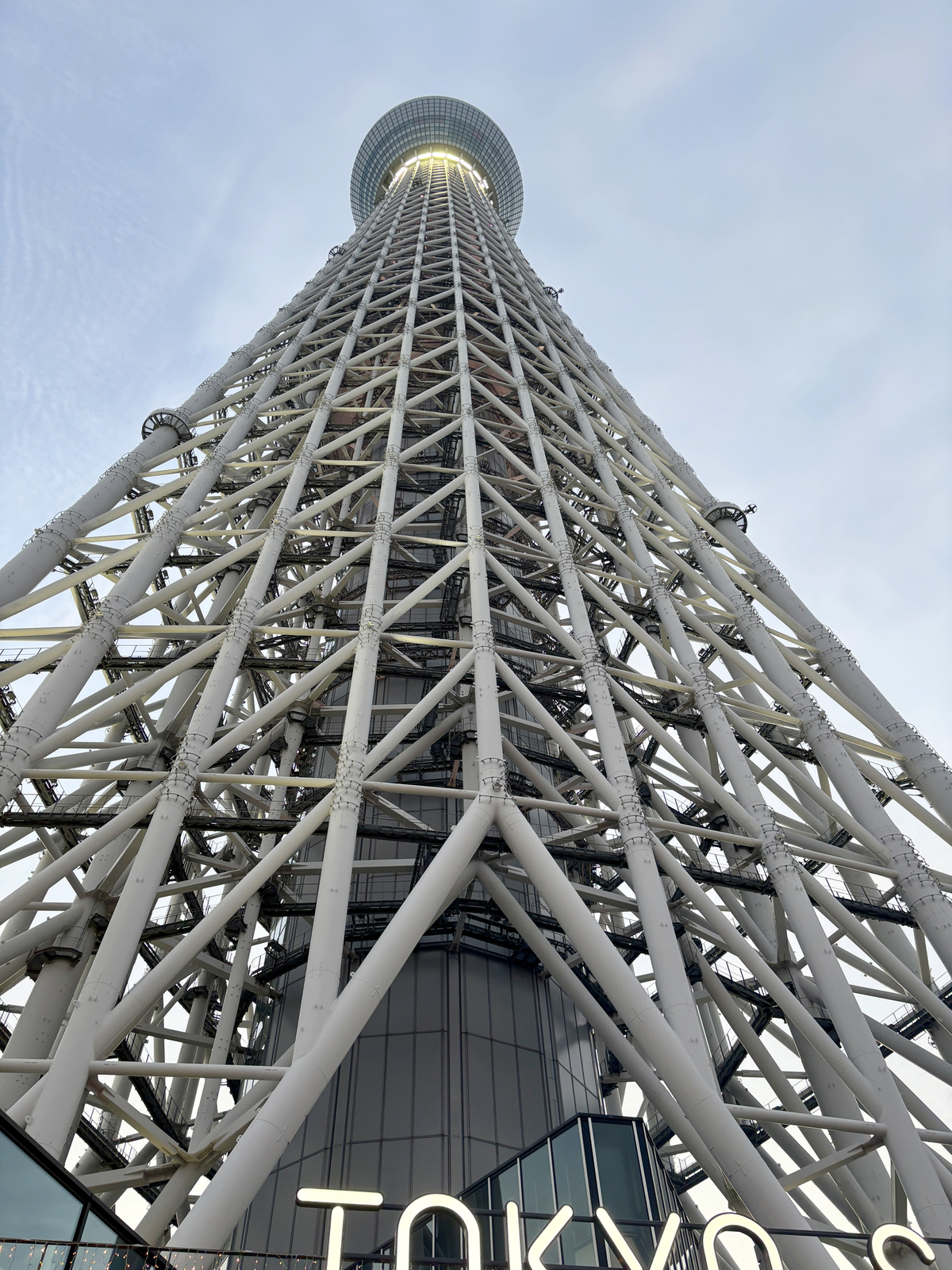
Evenings vary in brightness depending on the season. In early summer, it was still bright outside in the evening. Around the same time in winter, the sun was already setting behind the clouds. During the Christmas season, when looking up from the base of the tower, there was a bit of light left in the sky, and the entrance below was illuminated.
Winter Sunset, Mount Fuji, and Night Views
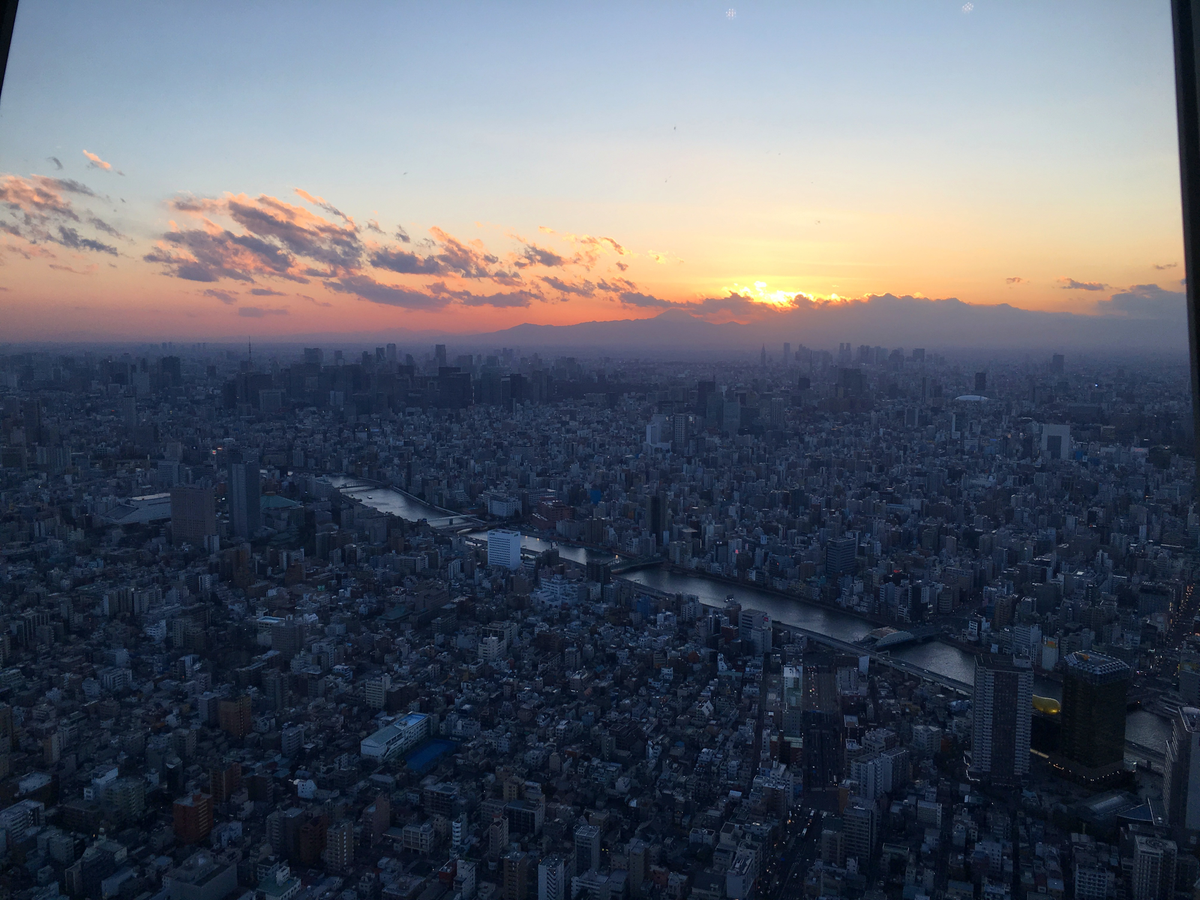
On a winter day, just around sunset, I was at the observation deck. The western sky turned orange with the sunset, and the silhouette of Mount Fuji appeared in black against it. In the foreground, the Sumida River flowed.
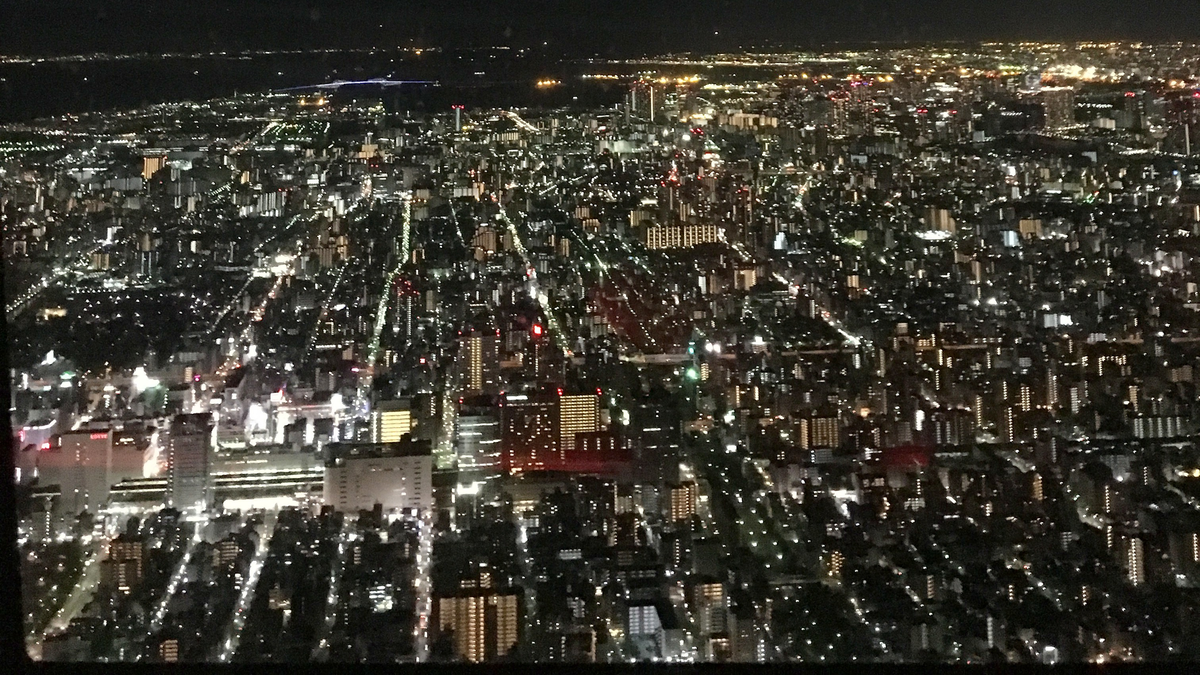
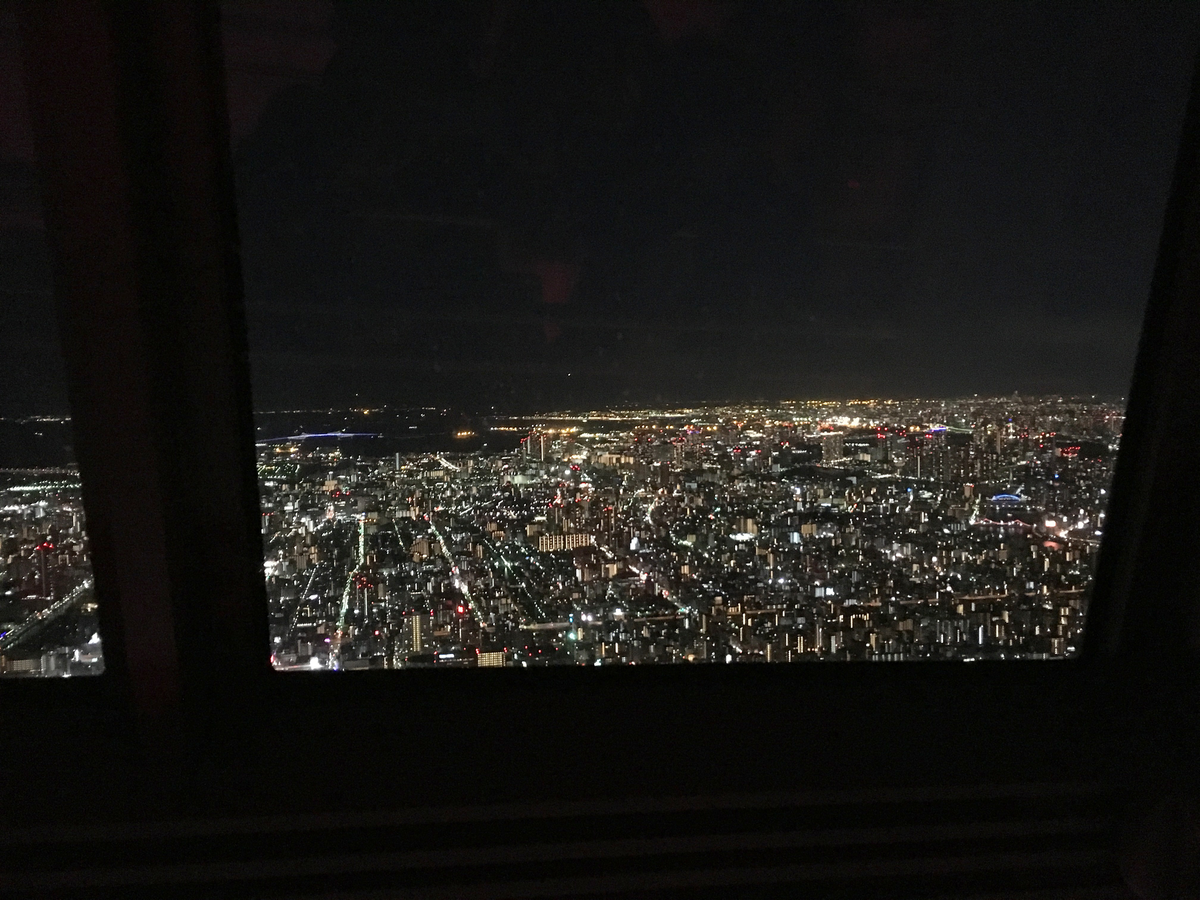
After about an hour and a half, it became completely dark outside. Looking down, the city lights stretched far into the distance.
At night, the lights and people inside the observatory are easily reflected in the window glass. Shadows of people reflected in the window appeared in our photos too. When taking pictures, try bringing the camera closer to the window.
When is the best time to get out?
Here's a summary of the views at different times of day. The daytime description is general, while the evening and night are based on our observations.
- Daytime
- Easy to see the shapes of distant mountains and the city.
- Evening
- In winter, Mount Fuji's silhouette appeared against the sunset sky. In early summer, the city remained bright even in the evening.
- Night
- City lights spread across the view. The interior is often reflected in the window glass.
If visiting only once, it's recommended to go up just before sunset. In winter, we stayed at the observation deck for about an hour and a half, watching the sunset transition into the night view. After the sunset, the night view was also visible from the same observation deck. Sunset occurs earlier in winter and later in summer. On days with low clouds, the view from above may be mostly obscured. It's reassuring to check the weather on the morning of your visit. Tickets can be purchased on the day at the 4th floor, but a 500 yen fee applies.
Tokyo Skytree or Tokyo Tower: Which to Visit?
Compare
Differences Between Tokyo Skytree and Tokyo Tower
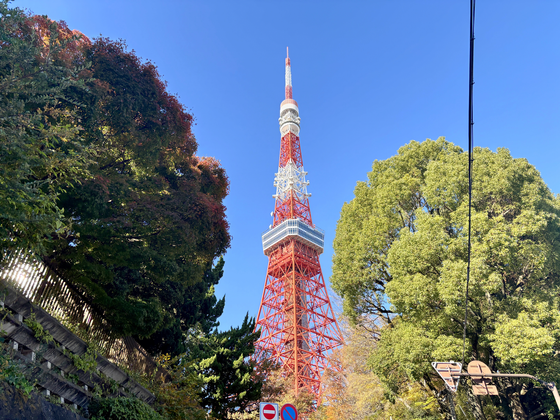
Both are towers offering views of Tokyo from above. In fact, the Skytree's Tembo Deck (350m) is higher than the top of Tokyo Tower (333m).
Choosing by Height
Tokyo Skytree
- Height: 634m. Observation decks at 350m and 450m.
- You can enjoy a wide view of Tokyo from a very high vantage point.
- There is a glass floor and an elevator themed around the four seasons.
- About a 5-minute train ride from Asakusa. Easy to visit on the same day as Asakusa.
- There is a large shopping mall (Tokyo Solamachi) at your feet.
If you want to see Tokyo's iconic landmarks
Tokyo Tower
- Standing at 333 meters tall, the red and white structure is a long-standing symbol of Tokyo.
- It's lower than the Skytree, so the city and buildings appear closer.
- Easily combined with sightseeing in southern Tokyo, such as Roppongi and Shiba Park
If you want to see Tokyo from a high vantage point, Tokyo Skytree is recommended. By ascending to the Tembo Galleria (450m), you'll be standing over 100m higher than the top of Tokyo Tower.
I also went up Tokyo Tower. For details on the 150m and 250m observation decks and the Top Deck Tour through the inside of the tower, see our guide to the Tokyo Tower experience.
After getting off, head to Tokyo Solamachi.
Even after returning to the ground, the experience isn't over. Upon descending from the observation deck, you'll find the official souvenir shop (SKYTREE SHOP) selling Tokyo Skytree souvenirs.
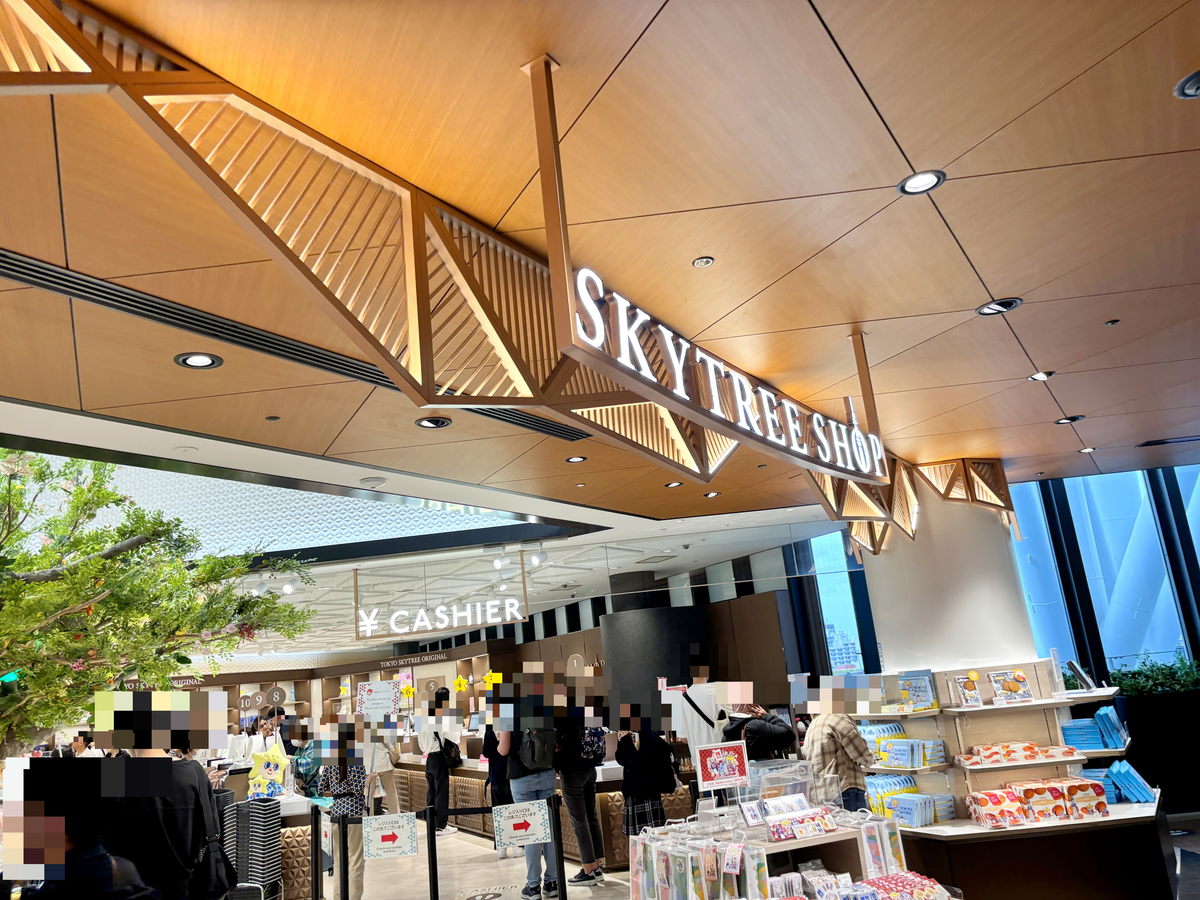
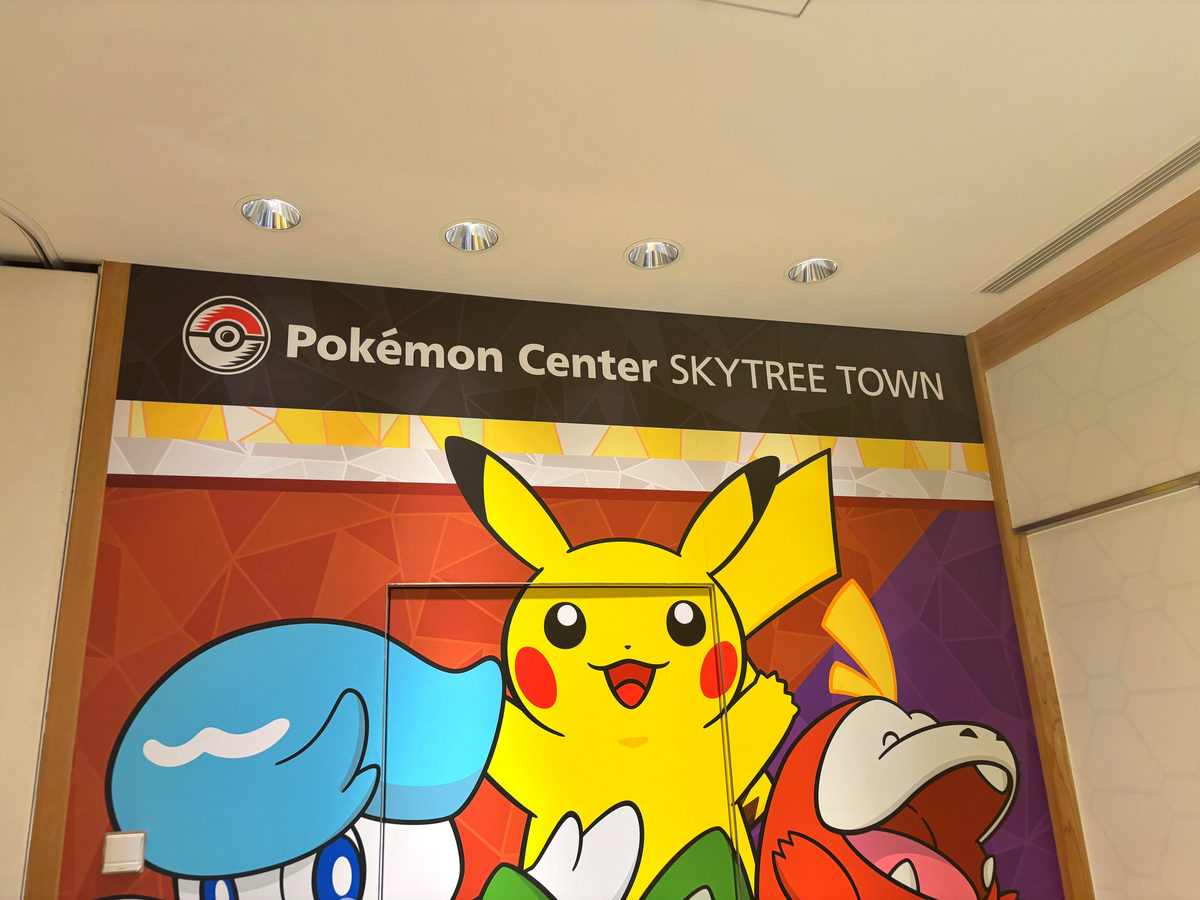
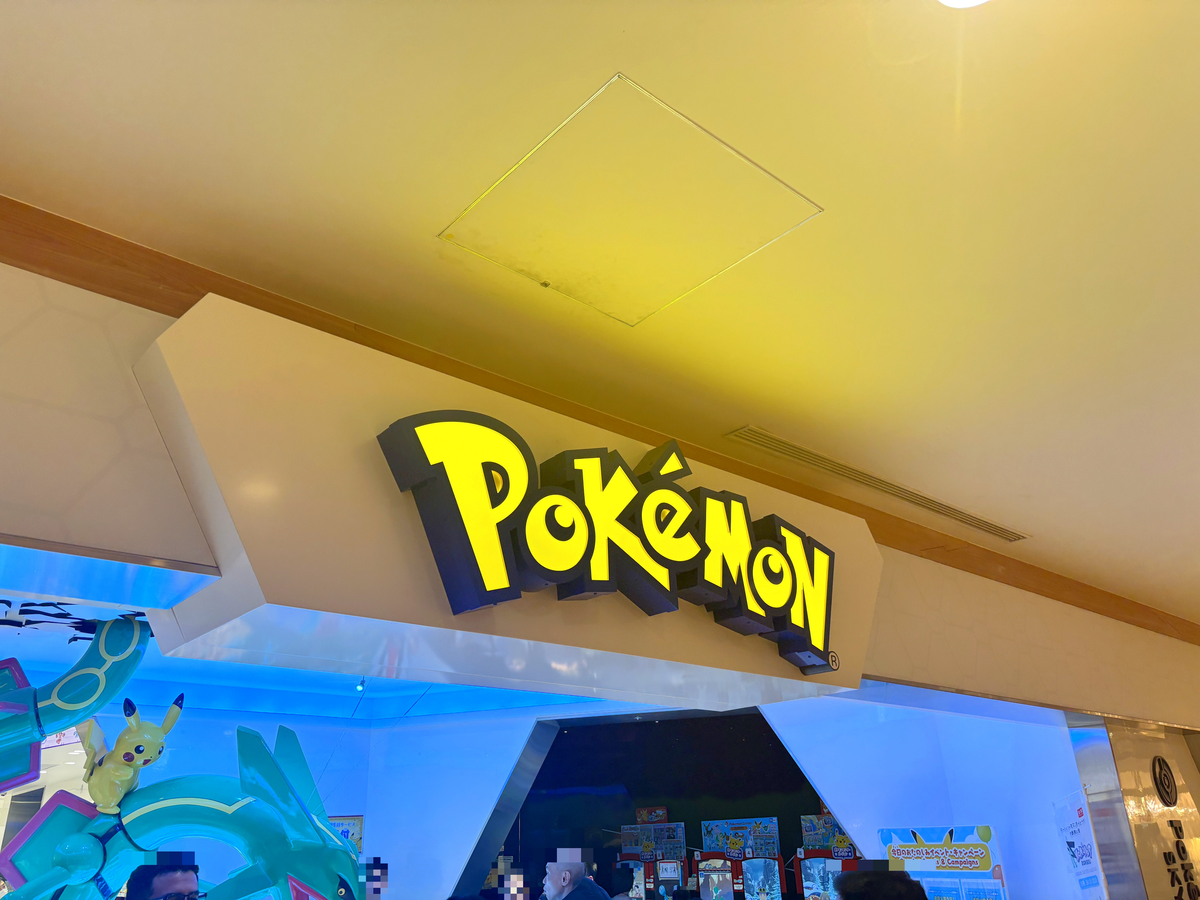
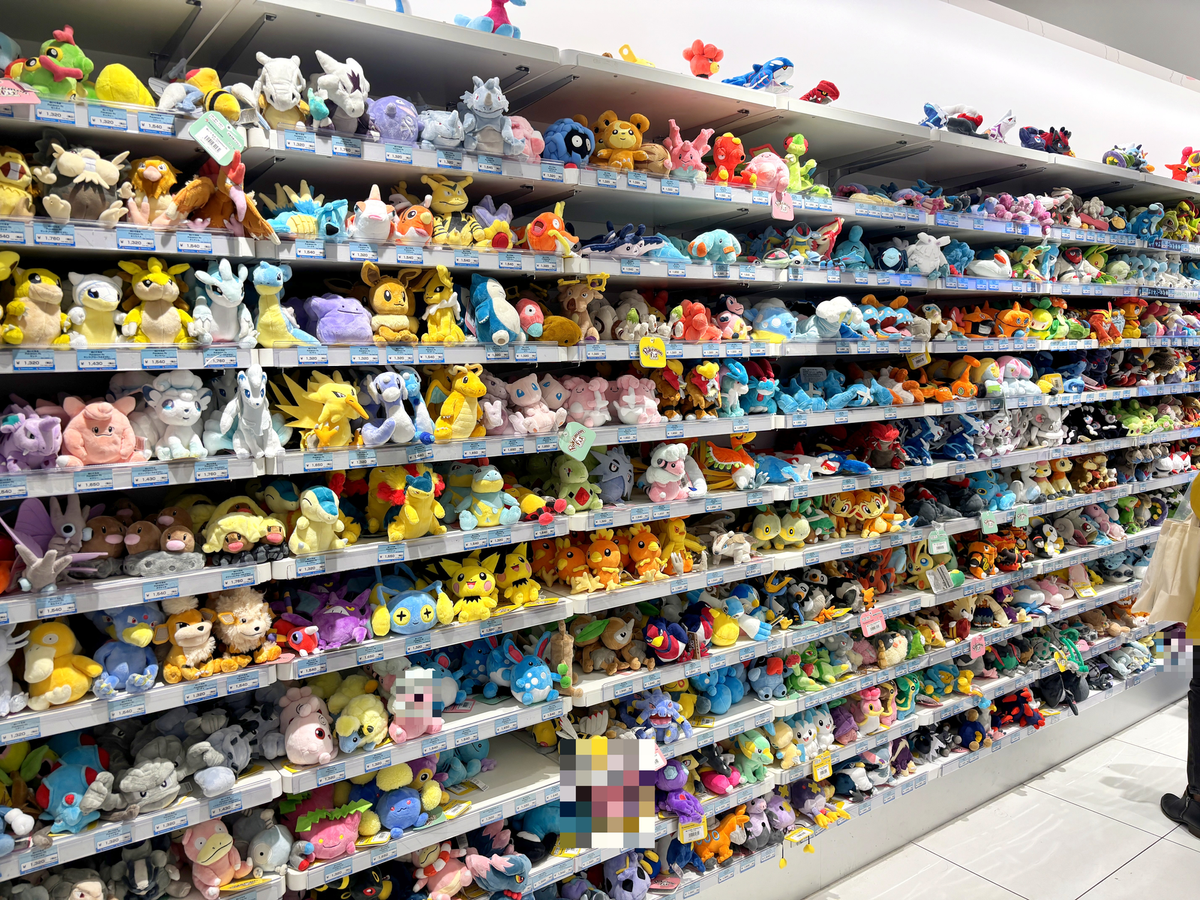
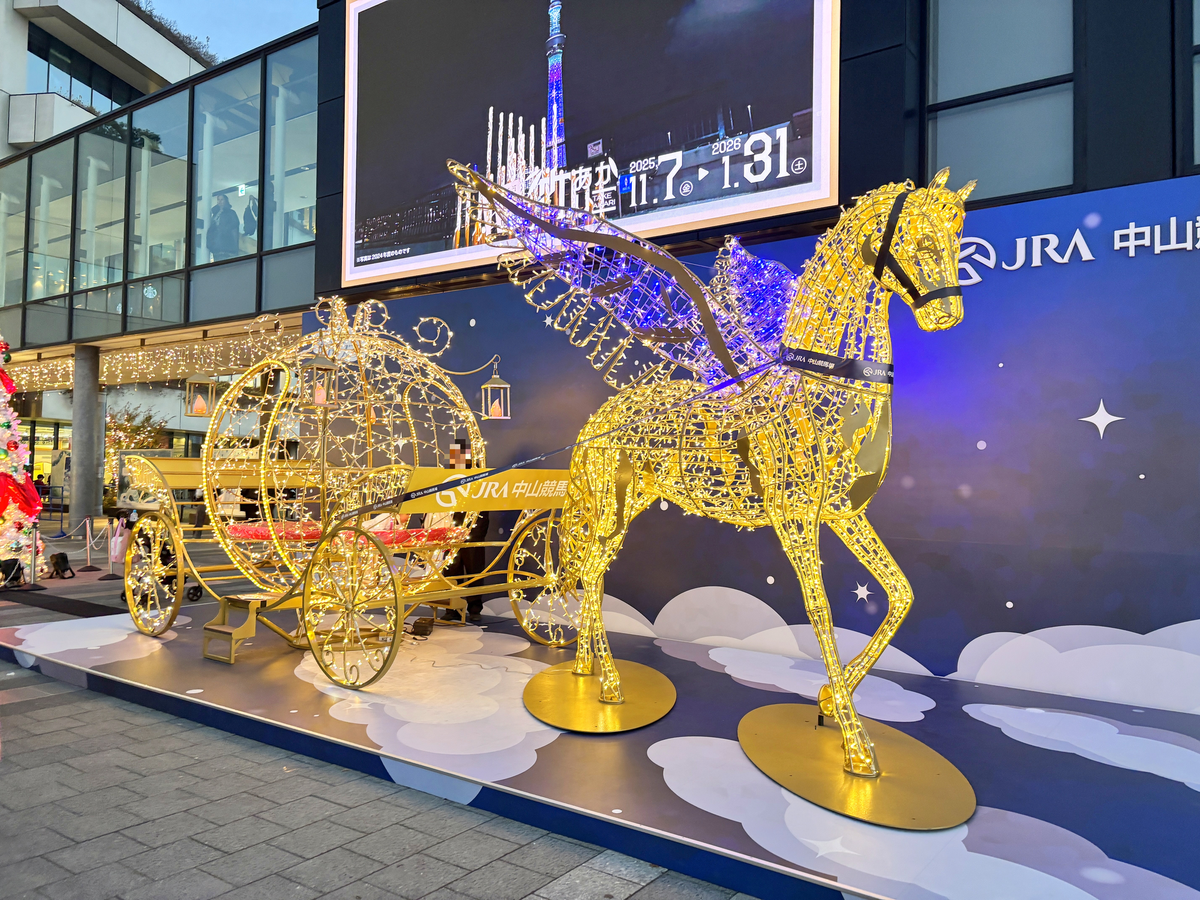
Tokyo Solamachi is home to numerous shops and eateries. During the Christmas season, a stroll through Solamachi after dark is delightful. At the Pokémon Center Skytree Town, the store's walls are lined with an array of Pokémon plush toys.
If you're visiting Asakusa, consider exploring nearby areas too.
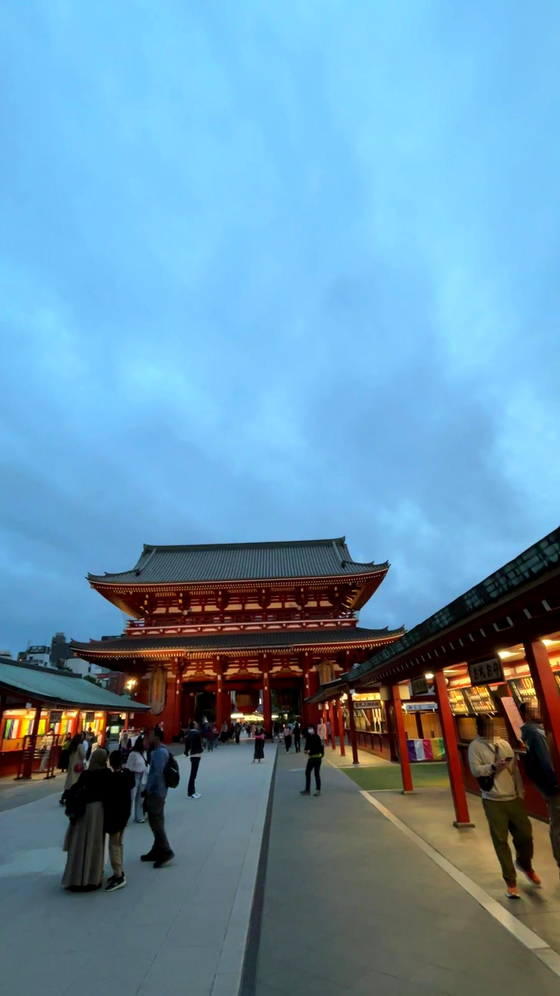
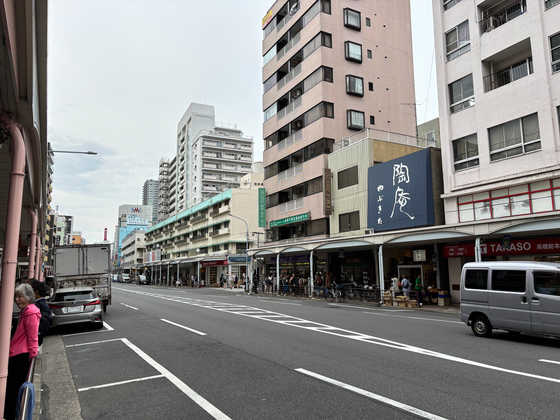
During the day, Asakusa; in the evening, the Skytree. This order made for easy, short travel. In Asakusa, many visit Senso-ji Temple and explore the cooking tool shops along Kappabashi Tool Street.
Finally, look up once more.
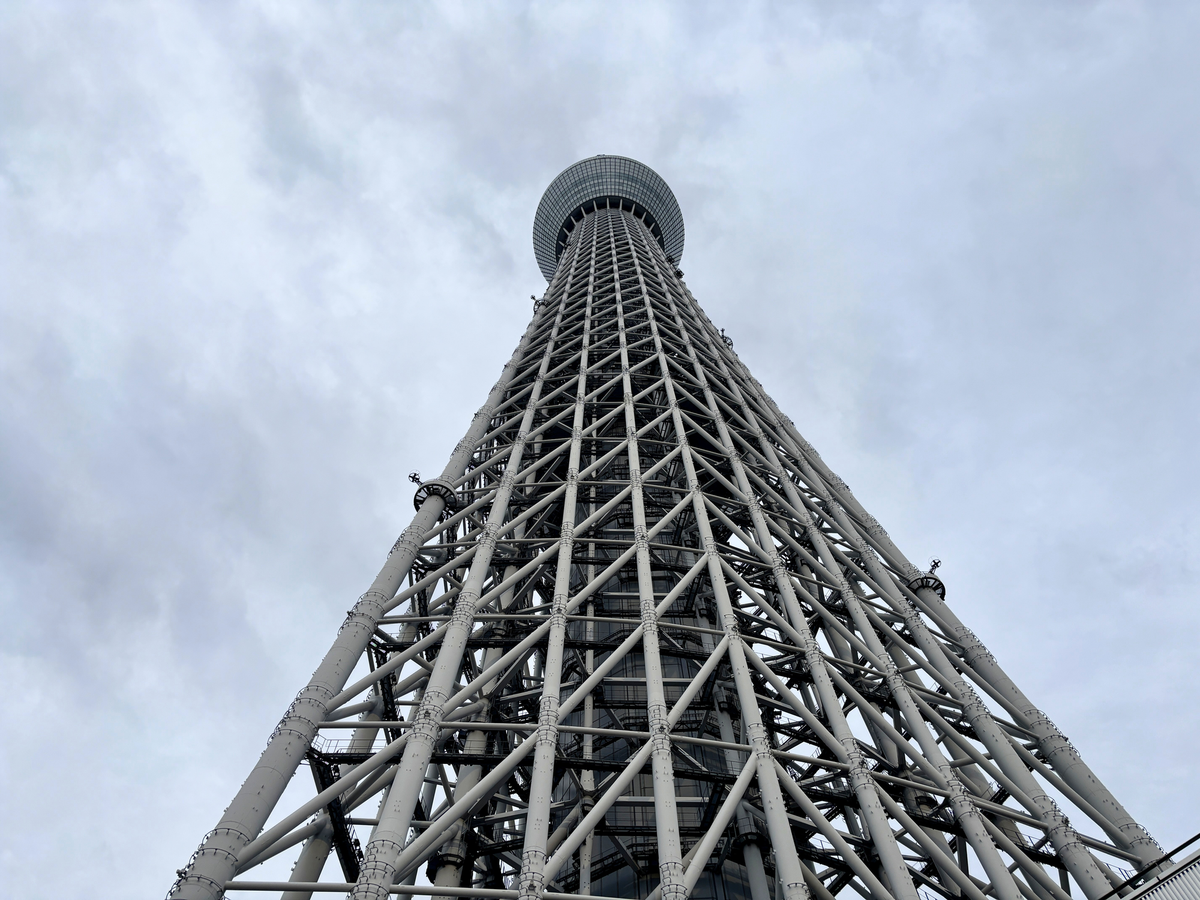
Before you leave, take one last look up at the tower. The observation deck where you stood earlier now appears small and high in the sky.
Frequently Asked Questions
Q&A
Tokyo Skytree FAQs
- How long will it take?
- We spent about 1 hour and 15 minutes visiting both the Tembo Deck and Tembo Galleria, including the time to purchase tickets. When we watched the transition from sunset to night view, we stayed at the observation deck for about an hour and a half.
- Do I need a reservation to climb?
- No. You can purchase same-day tickets at the 4th-floor counter or ticket machines without a reservation. However, there is a handling fee of 500 yen per ticket. On very busy days, sales at the counter may be suspended. If you know your travel date, it's advisable to buy in advance on the official website for peace of mind.
- Should I also go up to the Sky Corridor?
- We recommend it. The difference is 100 meters, but the observation deck feels like you're "looking down" at the city, while the observation corridor gives a "panoramic view," which was more different than expected. Additional tickets can be purchased on Floor 350.
- Can you see Mt. Fuji from the Skytree?
- On clear, sunny days, it can be visible. When we visited in winter, we could see the shape of Mount Fuji against the sunset sky. On a cloudy day in early summer, it wasn't visible. The guide board by the windows of the observation corridor indicated the direction of Mount Fuji.
- Can I bring a suitcase up to the observation deck?
- Luggage with any side exceeding 60 cm cannot be brought in. Please use the paid coin lockers or temporary luggage storage available in the Skytree Town.
- How tall is the Skytree compared to other towers worldwide?
- It's the tallest "tower" in the world, recognized by the Guinness World Records in 2011. Among the tallest structures globally, including buildings, it ranks third after the Burj Khalifa in Dubai (828m) and Merdeka 118 in Malaysia (about 679m), standing at 634m. It is the tallest structure in Japan.
- Is it worth visiting?
- We think so. Even on cloudy days, you can appreciate the vastness of Tokyo. In winter, you can see the sunset, Mount Fuji, and the night view that follows. It's recommended for first-time visitors to Tokyo.