Culture & History
Shrines vs. Temples: How to Tell Them Apart and How to Pray at Each
Updated 25 November 2026By Dynamic Japan Travel editorsEditorial policy
Contents
Key Points of This Article
If you're visiting a shrine or temple in Japan for the first time and aren't sure where or how to pay your respects, here's a quick guide.
- What is enshrined? Shrines are places dedicated to the deities of Shinto. Temples are places that convey Buddhist teachings, where visitors press their palms together before the Buddha.
- Where do you pray? Look for the main worship hall (haiden) at a shrine, and the main hall (hondo) at a temple.
- When do you clap? At most shrines, you clap twice before praying. At temples, you don't clap; simply press your palms together quietly.
What Is a Shrine? What Is a Temple?
Shinto shrine (jinja)
A Shinto shrine is a place dedicated to the enshrinement of Shinto deities. Visitors come to express gratitude for daily life and to pray for peace and well-being.
Q&A
Shrine Beliefs and Festivals
- What is enshrined here?
- Each shrine enshrines a deity with a particular connection to it. This deity is called the saijin (祭神, the enshrined deity). Some are associated with mountains or the sea, while at other shrines the enshrined deity is a person who has long been revered in the local area.
- Where did this belief originate?
- Shinto is a faith that grew up in Japan. People sensed the presence of gods in nearby natural features such as mountains and the sea, and have enshrined and worshipped them in communities across the country.
- What events are held?
- During Shichi-Go-San, families visit shrines to celebrate their children's growth. At the autumn Niinamesai festival, freshly harvested grains are offered to the gods in thanks for the bountiful harvest.
Buddhist Temple (Otera)
A temple is a place to pay respects to the Buddha and learn the teachings of Buddhism. Monks train there, and visitors come to hear the teachings or to remember the deceased.
Q&A
Temple Faith and Annual Events
- What is enshrined here?
- At a Buddhist temple, the main object of worship enshrined at the center is called the honzon (本尊). Some temples enshrine Buddha statues such as Amida Nyorai or Kannon Bosatsu, while others take as their honzon a mandala, a depiction of the Buddhist world in pictures or characters.
- Where did this belief originate?
- Buddhism originated in ancient India, based on the teachings of the Buddha. In the mid-6th century, it was introduced to the Japanese imperial court from Baekje (Kudara), a kingdom on the Korean Peninsula.
- What events are held?
- The spring flower festival (Hana Matsuri) celebrates the birth of the Buddha. At some temples, visitors pour sweet tea (amacha) over a small statue of the infant Buddha as part of the celebration.
From the Entrance into the Grounds: Torii, Sanmon Gate, and the Buildings Beyond
Compare
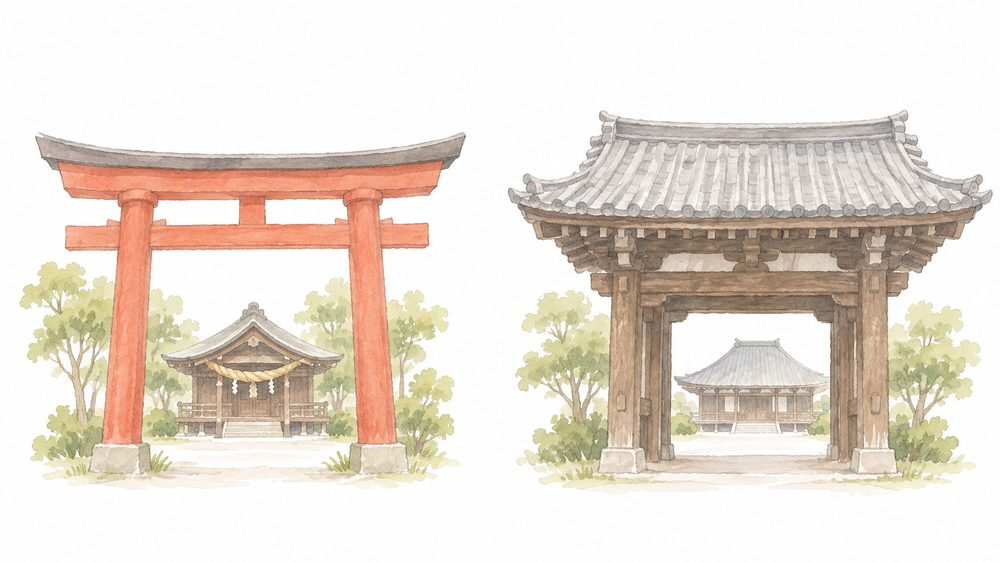
Shrine Torii Gates and Temple Sanmon Gates
Shrine
Torii
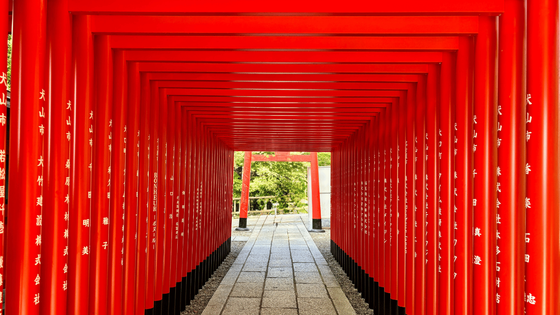
- The shape—two pillars joined by a crossbeam at the top—is the giveaway. It marks the boundary of a place where a deity is enshrined.
- Besides the familiar vermilion, some torii gates are the color of natural wood or stone.
Temple
Sanmon (Temple Gate)
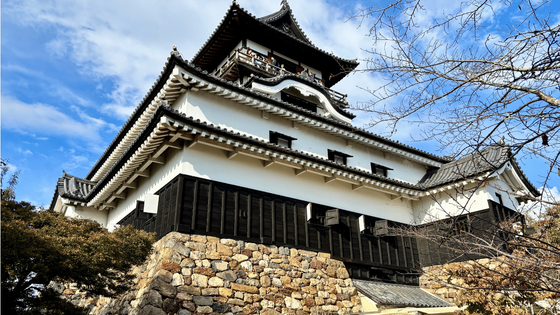
- The gate at a temple entrance. Many have a roof, and visitors pass through it to proceed to the main hall.
- Some temple gates are also flanked by a pair of Niō statues, the guardian figures that protect the temple.
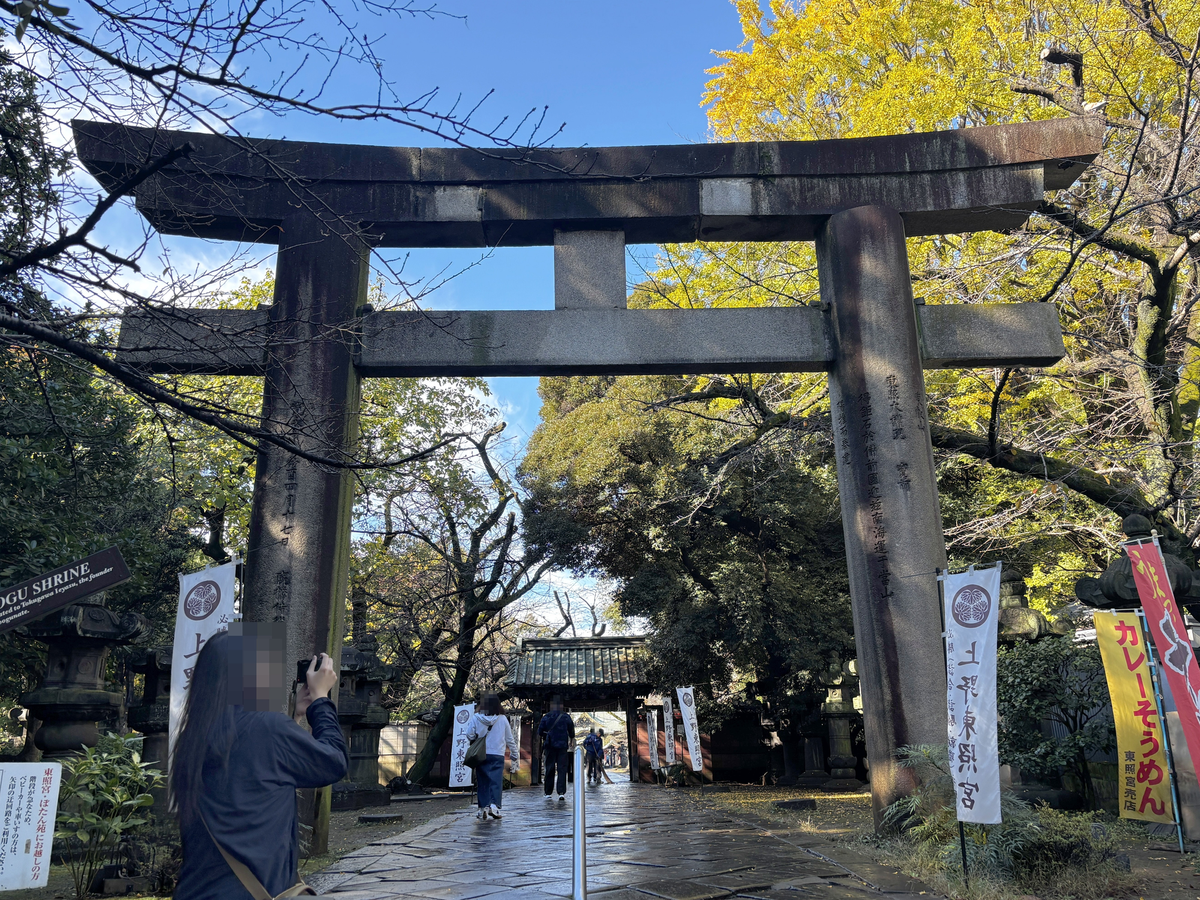
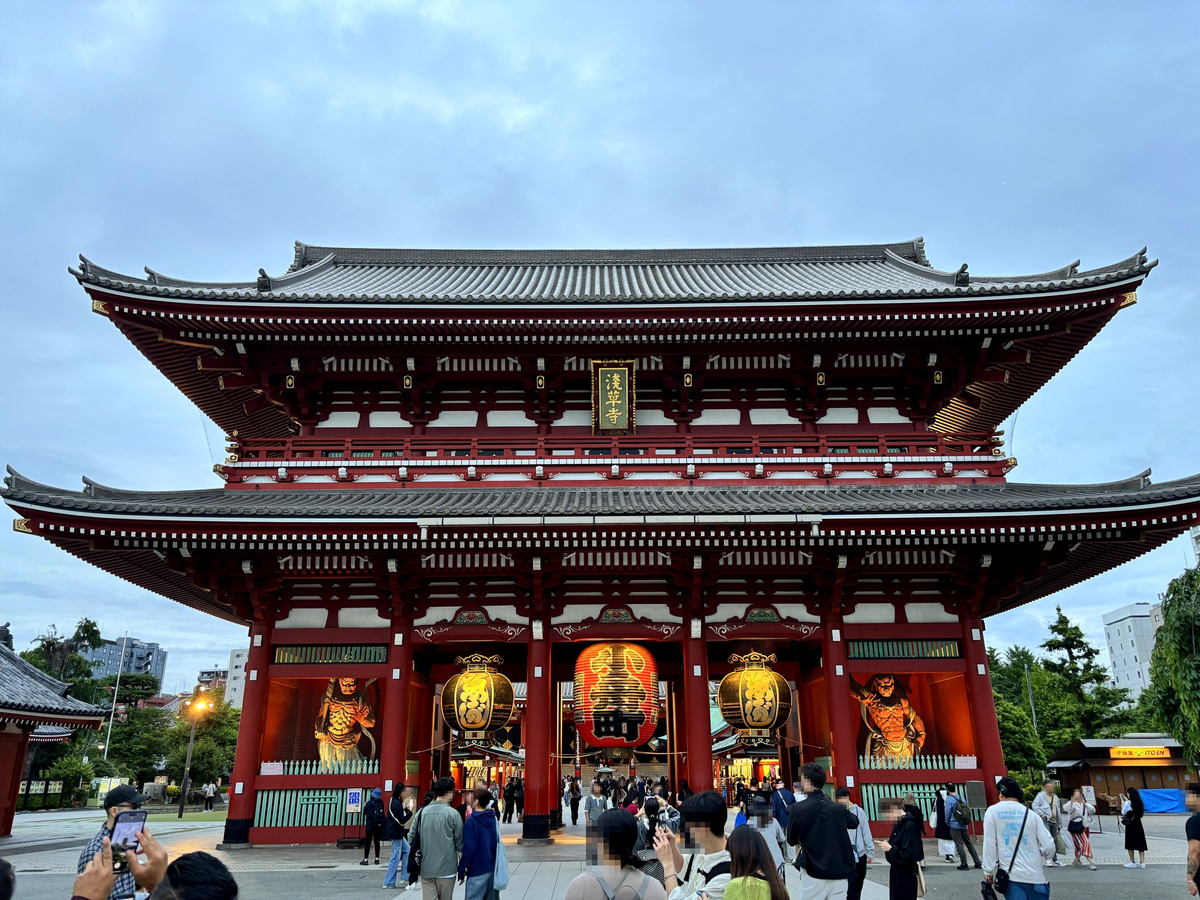
Does a torii gate always mean a shrine?
You can't tell by the torii gate alone. Torii sometimes stand on temple grounds (the precinct). If you're unsure, check the signboards on the grounds to confirm which building you are visiting to pray.
For centuries in Japan, Shinto deities and Buddhist deities were worshipped as closely linked. This is known as "shinbutsu shūgō" (the syncretism of Shinto and Buddhism). Even after the government began a policy in 1868 to separate Shinto from Buddhism, there are still places where a shrine and a temple stand on the same grounds or right next to each other.
Once you pass through the gate, which building do you head to?
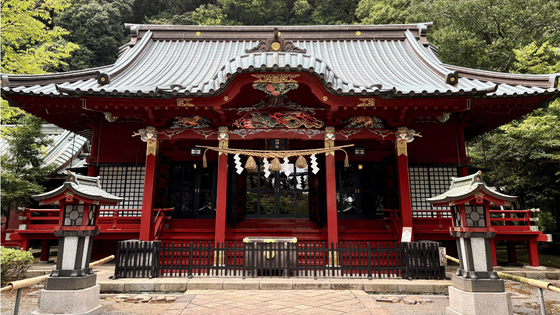
- At a shrine, head to the haiden (worship hall). At most shrines, visitors offer their prayers in front of the haiden. The building behind it, where the deity is enshrined, is the honden (main sanctuary).
- At a temple, head to the hondo (main hall). This is the central hall that enshrines the temple's principal image. Some temples call it the kondo (golden hall).
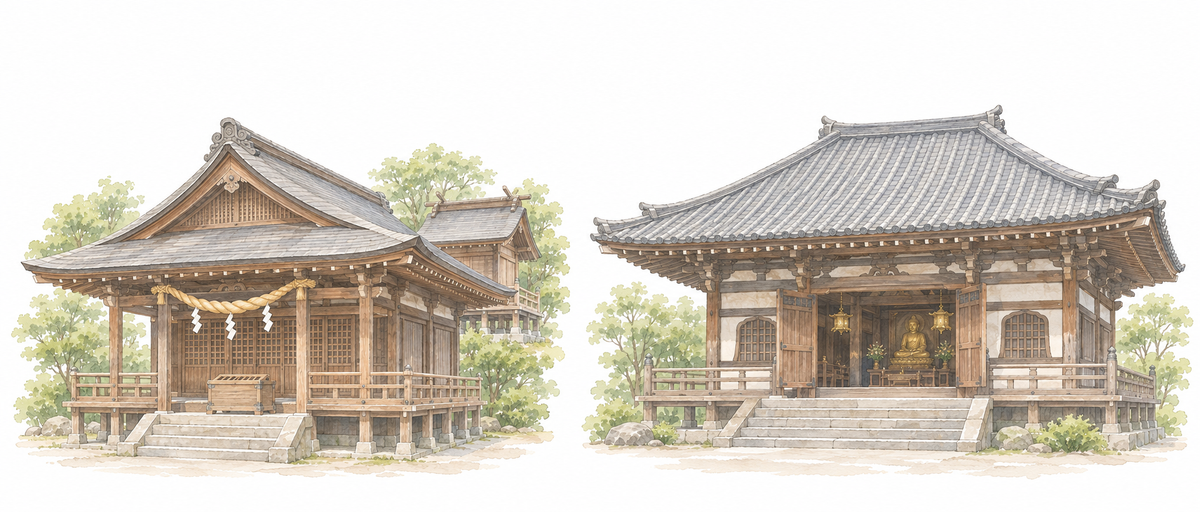
Temple grounds may also contain other structures, such as a bell tower (shōrō) that houses a large bell, or a five-story pagoda.
When you visit a shrine or temple, can you see the object of worship?
In Shinto shrines, objects such as mirrors or mountains, enshrined as places where a kami (deity) dwells, are called "goshintai" (sacred objects of worship). At Buddhist temples, what visitors see depends on whether the principal image (honzon) is open to the public.
| Place of worship and object of reverence | What visitors see |
|---|---|
| Goshintai enshrined in a shrine's main hall (honden) | The goshintai is not normally shown to the public. Visitors pray from the worship hall (haiden) or another designated place for prayer. |
| Shrines where the mountain itself is the goshintai | Some shrines have visitors pray toward the mountain from the worship hall. |
| Temples that display the principal Buddhist image | Visitors can put their hands together in prayer before the principal image. |
| Temples whose principal image is a hidden Buddha (hibutsu) | The principal image is not normally shown to the public. Visitors can still pay their respects even though the image cannot be seen. |
How Do Shrine and Temple Workers Differ?
People You'll See at a Shrine
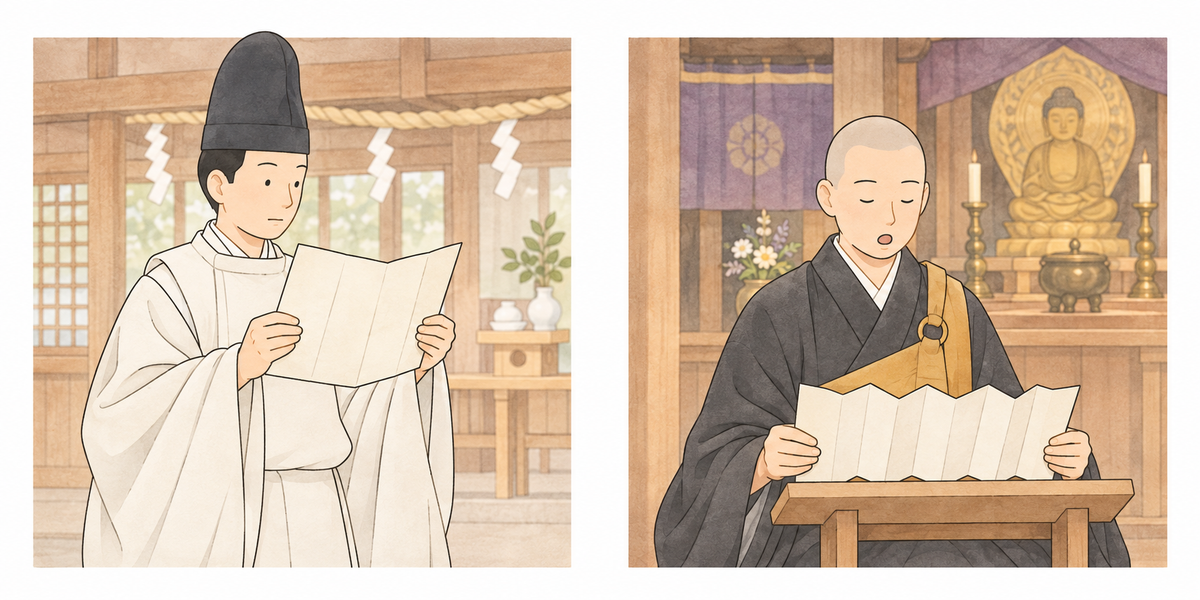
- Shinshoku (Shinto priests) present offerings to the kami, and conduct festivals and prayer rites. The "norito" recited during ceremonies are words that convey gratitude and requests to the kami.
- Guji (chief priest) is the shinshoku who oversees a shrine's festivals and administration.
- Miko (shrine maidens) assist the priests. They perform dances as offerings at festivals and hand out amulets to visitors.
People You See at Temples
- Sōryo (Buddhist monks) study Buddhism, practice its disciplines, and pass on its teachings. During Buddhist ceremonies known as hōyō (memorial services), they recite sutras aloud. This chanting is called "dokyō."
- Jūshoku (head priest) refers to the monk who represents a temple and is responsible for running it.
How Does the Way of Worship Differ?
- Is it okay to just look around? Yes. At both shrines and temples, grounds open to the public can be visited for sightseeing alone.
- Where do you purify your hands and mouth? Both have a water basin called a "chozuya" (purification fountain).
- Where should you go for the first visit of the year? For hatsumode, the first prayer of the New Year, some people visit shrines and others visit temples.
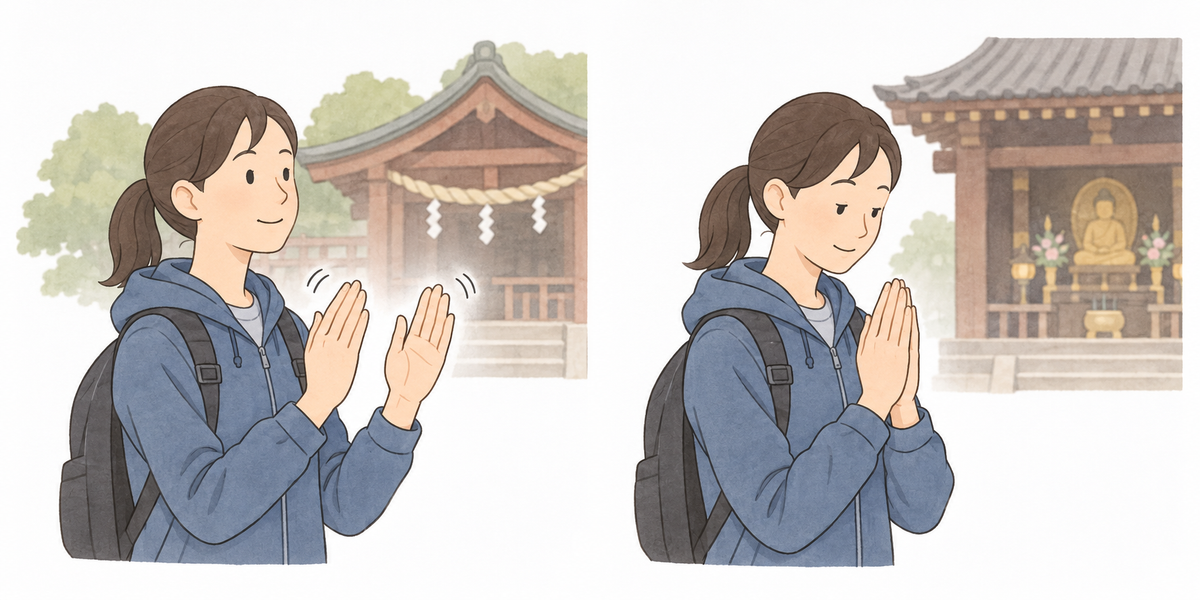
When should you clap at a shrine?
At most shrines, visitors pray using the "two bows, two claps, one bow" etiquette.
- In front of the main hall, make two deep bows.
- At chest height, clap twice to show respect to the deity.
- With your hands still together, silently express your gratitude or wishes.
- Finish with one more deep bow.
Some shrines use a different number of claps. If a shrine posts instructions on etiquette, follow them.
At temples, don't clap; simply press your palms together in prayer
In front of the main hall, or at any worship spot inside, face the principal image and quietly press your palms together in front of your chest. This gassho (palms-together gesture) expresses respect for the Buddha. Finish with a bow.
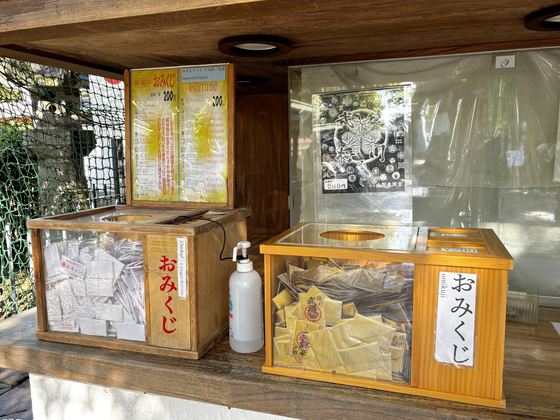
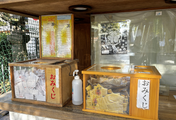
Many shrines and temples let visitors draw an omikuji (fortune slip) after paying their respects. This article explains how to read the fortune written on the paper and what it means to tie it up on the grounds.
What Is a Goshuincho? Can One Book Be Used for Both Shrines and Temples?
Goshuincho (御朱印帳) are books for collecting "goshuin (御朱印)," stamps received at shrines and temples as proof of a visit. A goshuin typically consists of a vermilion seal accompanied by the name of the shrine or temple and the date of the visit, written in ink.

Some shrines and temples allow you to use the same goshuincho (stamp book) for both, while others recommend keeping separate books.
Want to use a goshuincho from a shrine at a temple too?
At the goshuin reception desk, show your book and ask, "May I receive this temple's goshuin in this book?"
In Japanese: 「こちらのお寺の御朱印も、この帳面にいただけますか?」