Izusan Shrine in Atami: A Peaceful Power Spot for Love
By Dynamic Japan Travel Editorial Team—Supervised by P-HAM Co., Ltd. (Licensed Travel Agency, Aichi No. 3-1590)
Contents
In Atami, just 40 minutes by Shinkansen (bullet train) from Tokyo, there is a powerful power spot known to those in the know. Izusan Shrine (伊豆山神社) is a shrine built on a quiet hill surrounded by forest, believed for centuries to bring blessings of "love connections" and "good fortune."
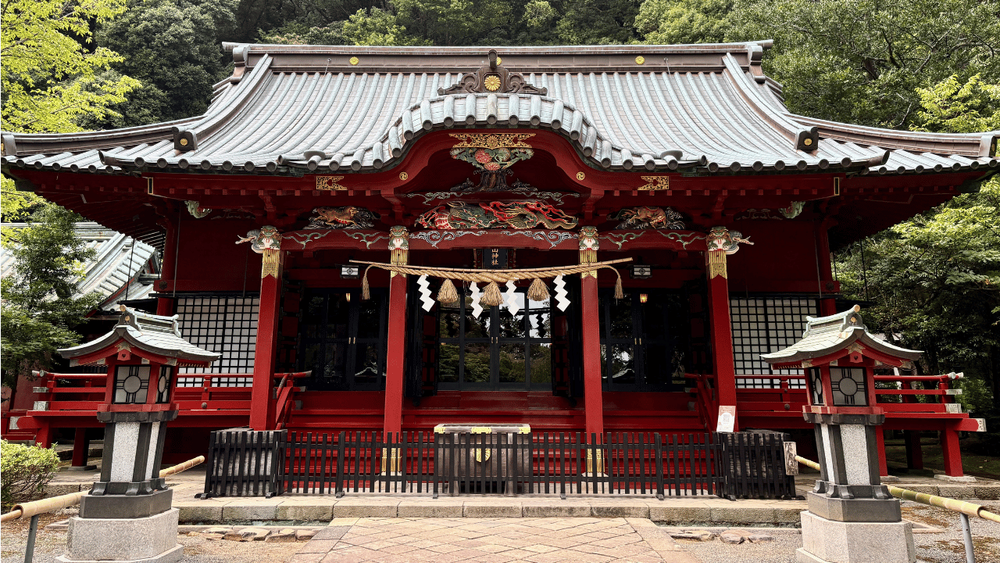
In contrast to the lively and vibrant atmosphere of Kinomiya Shrine (來宮神社), Izusan Shrine offers a more tranquil and mysterious vibe. The striking vermilion main hall nestled in deep greenery, a unique fountain with red and white dragons entwined, and cute heart-shaped objects showcase the serene beauty typical of Japan. About 800 years ago, the legendary Minamoto no Yoritomo (源頼朝), who later became Japan's first Shogun, and Hojo Masako (北条政子) were united at this shrine, making it a place of love and good fortune. Admission is free, and it is easily accessible by bus.
Four Attractions of Izusan Shrine
Here are four reasons why Izusan Shrine is popular.
Powerful Power Spot: The place where Japan's first Shogun found love. A shrine for love connections and good fortune.
Quiet and Mysterious Atmosphere: The shrine grounds are surrounded by forest, contrasting with the bustling Kinomiya Shrine. Perfect for those wanting to experience a calm Japanese shrine.
Dragon Fountain: A unique handwashing station (chōzuya) with two entwined dragons.
Abundant Photo Spots: Heart-shaped objects, the beautiful vermilion main hall, and a koi pond.
Highlights of the Shrine Grounds
The grounds of Izusan Shrine are filled with enjoyable and experiential spots. Here are some particularly recommended areas.
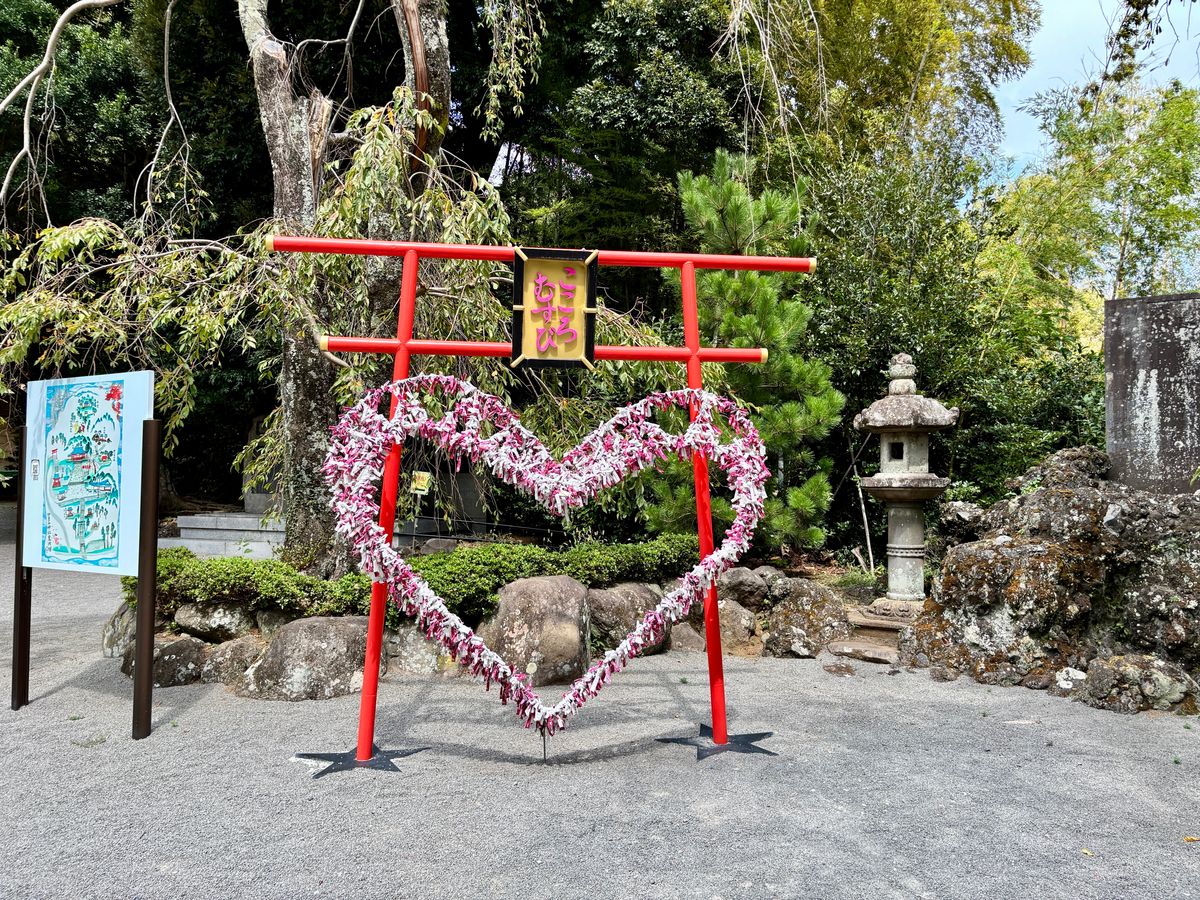
Heart-Shaped Object "Kokoromusubi no Torii"
The most eye-catching feature is a heart-shaped object made from omikuji (fortune slips) and a small red torii gate. This photo spot is perfect for a love shrine, attracting many visitors for pictures.
Dragon Handwashing Station
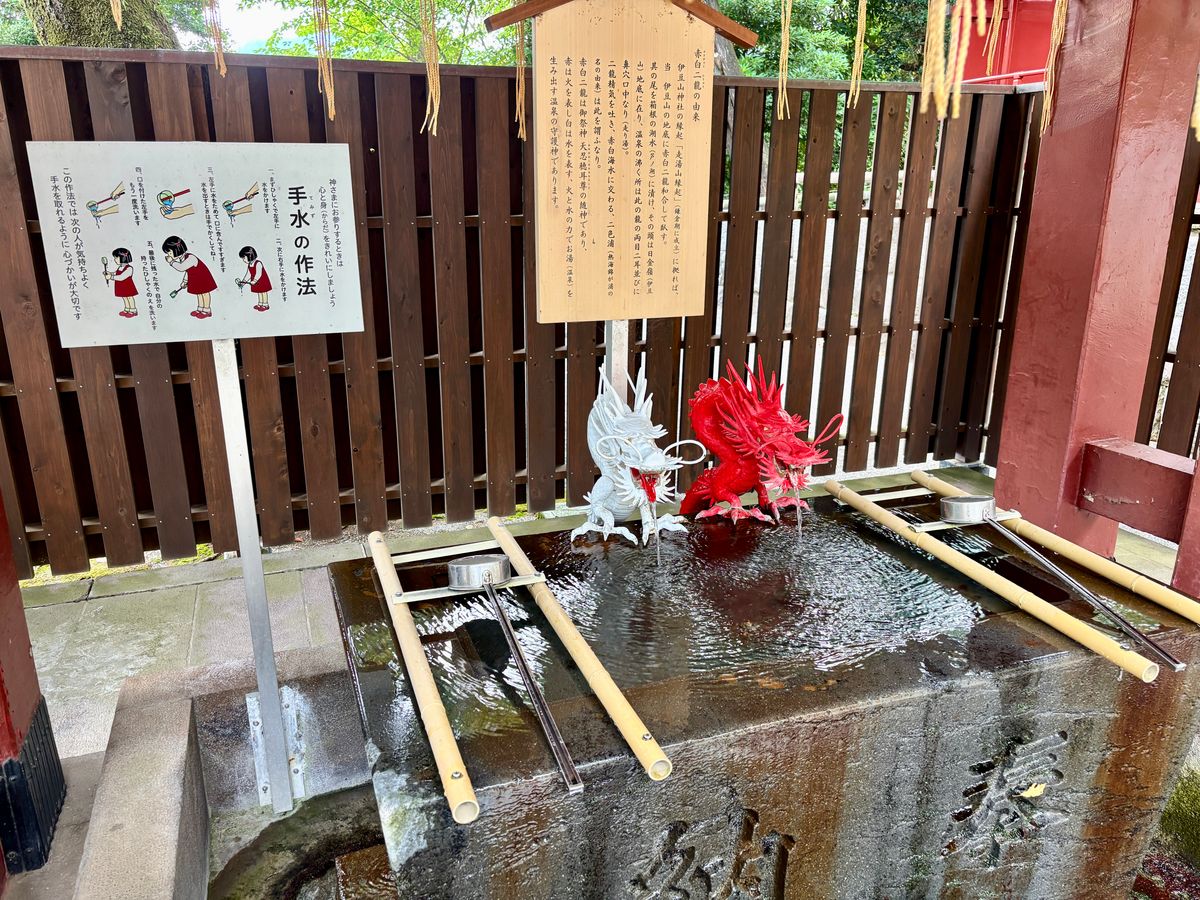
The first thing you see upon arriving at the shrine is the handwashing station (chōzuya) with a red dragon and a white dragon entwined. This is where visitors purify their hands before worship.
These two dragons are said to be guardian deities that create Atami's hot springs. The red dragon governs "fire," while the white dragon governs "water," and their combined powers are believed to produce the hot springs. In fact, at the foot of Izusan Shrine, there is an ancient hot spring called "Hashiriyu," linking the dragon legend to the hot spring. It is also cherished as a symbol of couples.
Beautiful Vermilion Main Hall
At the top of the stairs, the vibrant vermilion main hall appears amidst the green forest. It is an impressive building adorned with dragon carvings, creating a tranquil atmosphere surrounded by nature.
Join your hands in prayer in front of the main hall, wishing for love connections, good fortune, and family harmony. After your visit, you can receive charms and goshuin (commemorative stamps) at the shop located to the right of the main hall.
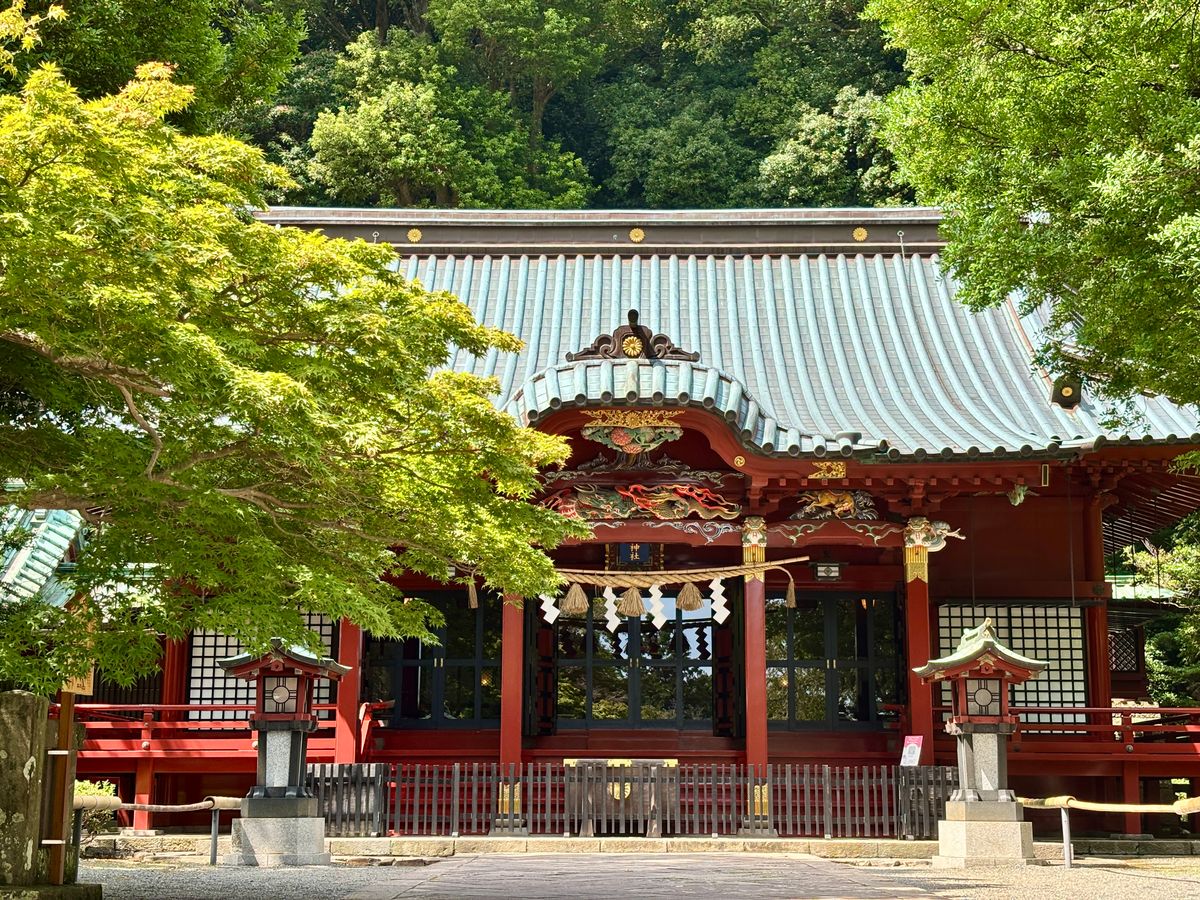
Sacred Nagi Tree
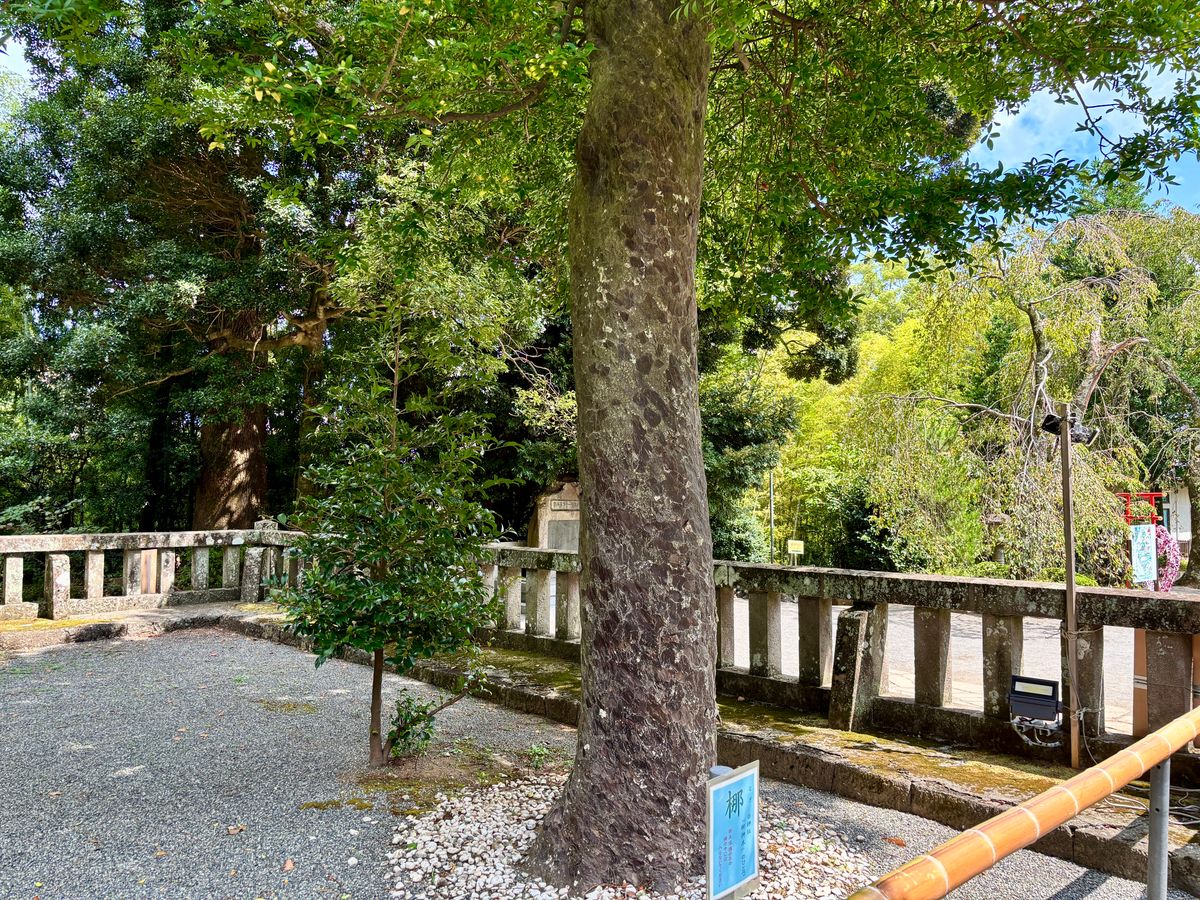
The large tree at the entrance of the main hall is the "Nagi" tree, a symbol of love connections. The leaves of the Nagi tree are very strong and do not easily tear, symbolizing the idea that "the bonds between people will not break."
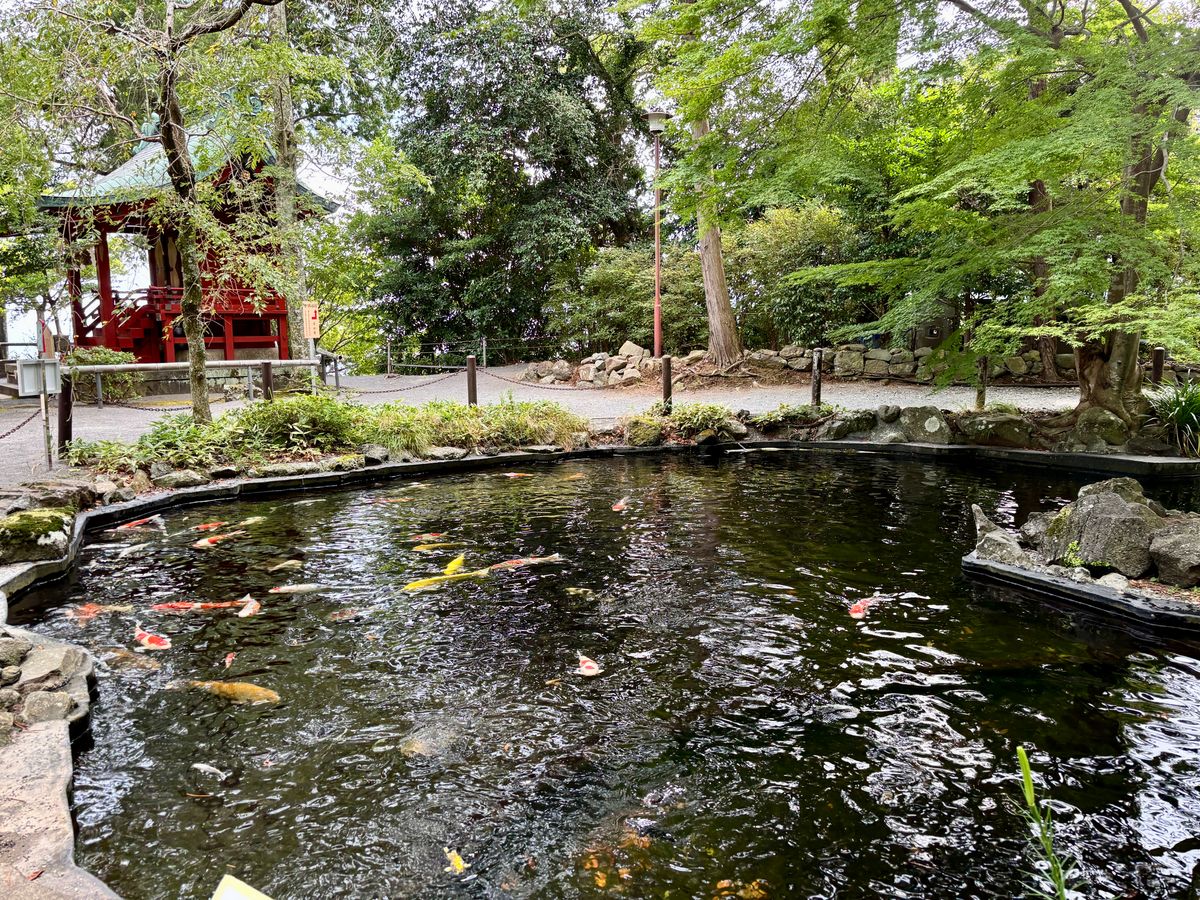
Dragon God Pond with Koi
There is a pond called "Ryujin Pond" on the grounds, where colorful koi swim. Benches are available nearby, allowing visitors to sit and enjoy the view. It’s a great spot to take a break during your visit.
Omikuji and Charms
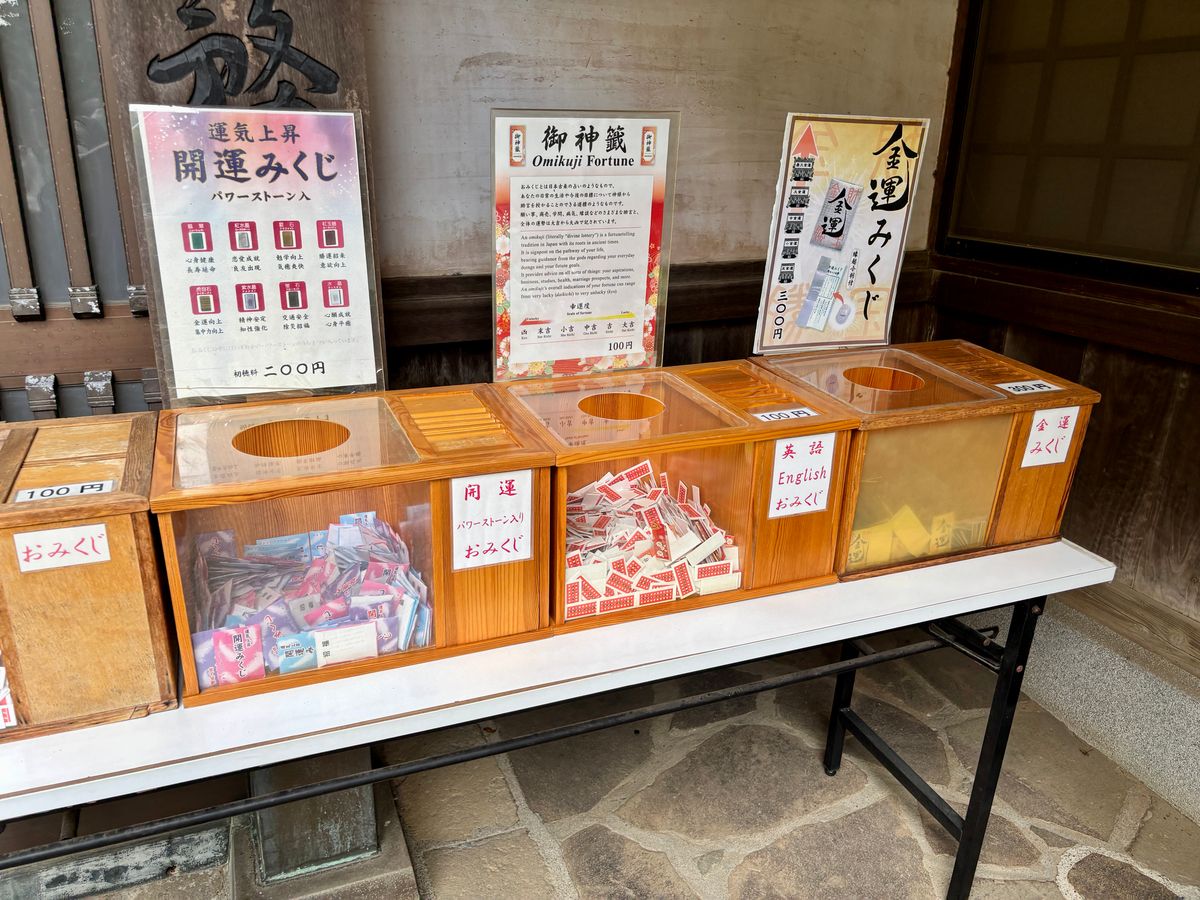
Experience unique to Japanese shrines includes omikuji (fortune slips) and omamori (protective charms). Both can only be purchased with cash, so bring some coins.
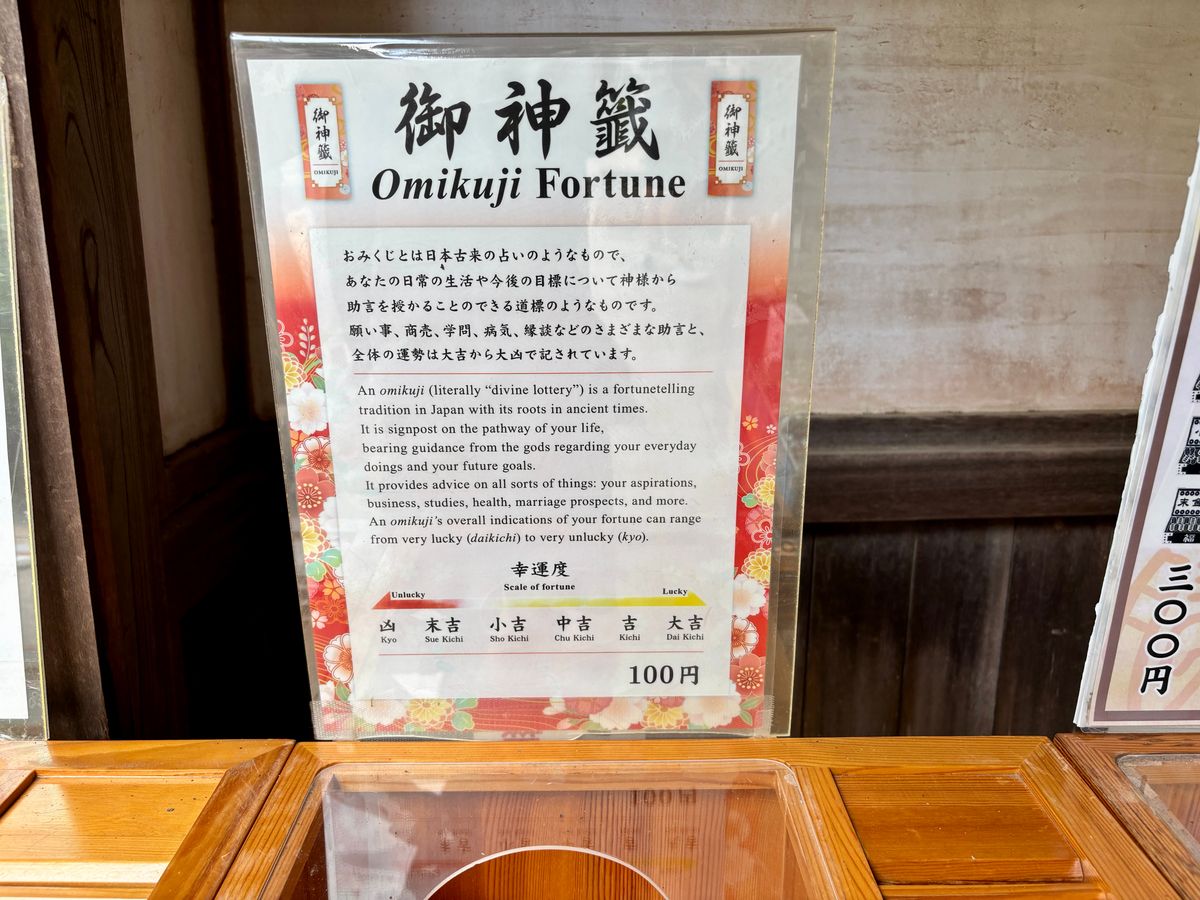
Omikuji (100 yen〜)
Omikuji involves drawing a stick or fortune slip from a box to determine your fortune. They range from "Daikichi" (very good) to "Kyo" (bad). Izusan Shrine's omikuji comes with English explanations, so you can enjoy it even if you don't understand Japanese.
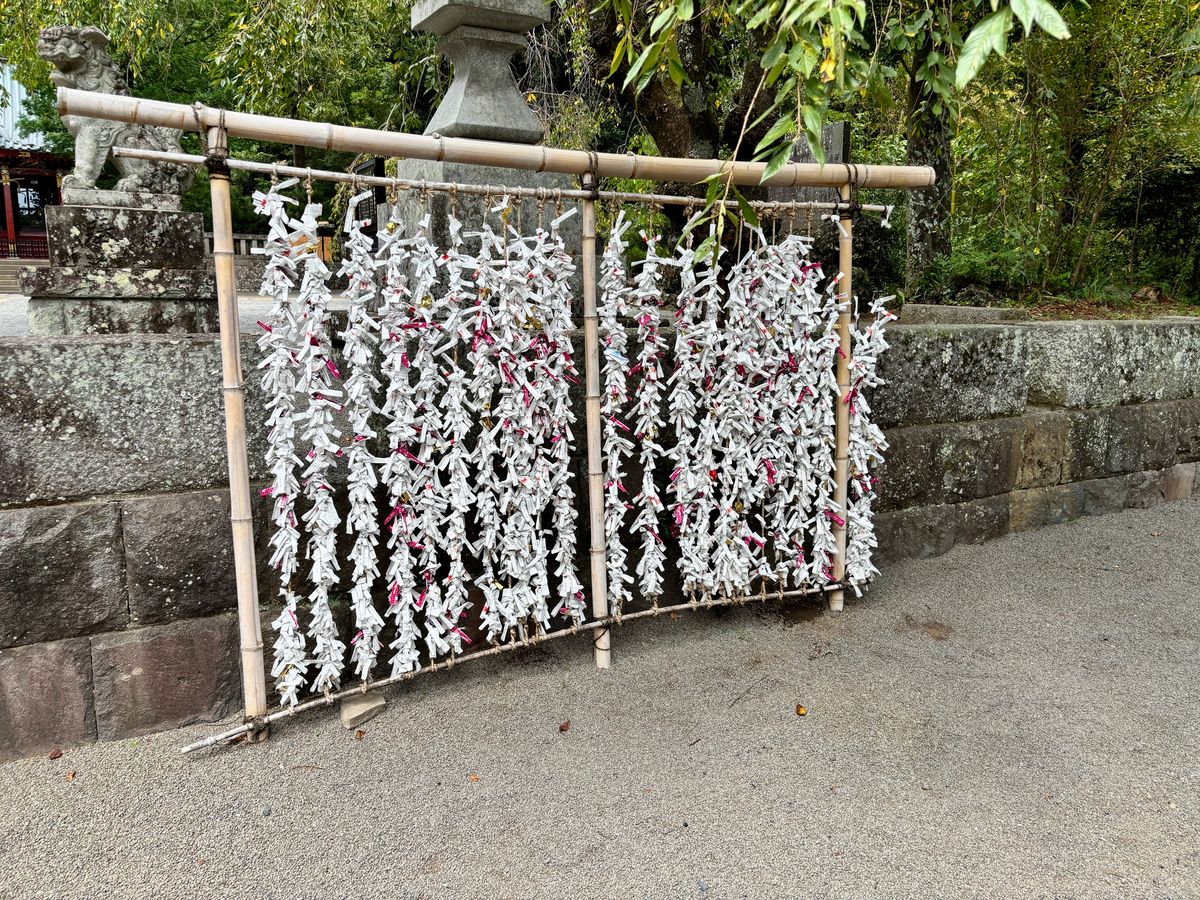
You can take your drawn omikuji home as a souvenir. It is also customary to tie it at the "omikuji tying place" on the shrine grounds. The sight of many tied omikuji makes for a great photo opportunity.
Omamori
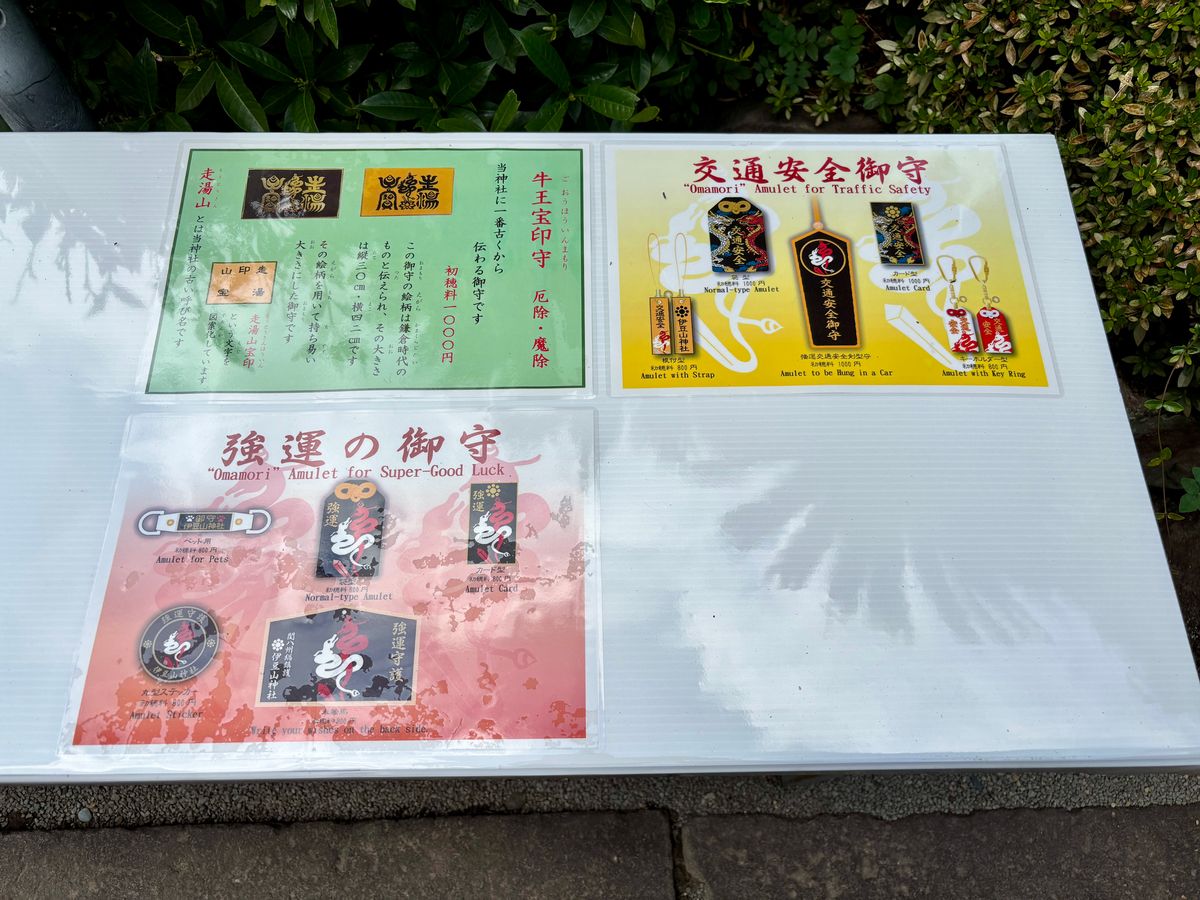
The most popular is the "Good Fortune Omamori" featuring red and white dragons. It is chosen by those wishing for improved luck in love, work, and life in general. There are also charms for love connections and traffic safety.
Goshuin (300 yen〜1,000 yen)
Goshuin is a special stamp you receive as a memento of your visit to the shrine. You can get a pre-written one. A popular design features lovers (500 yen).
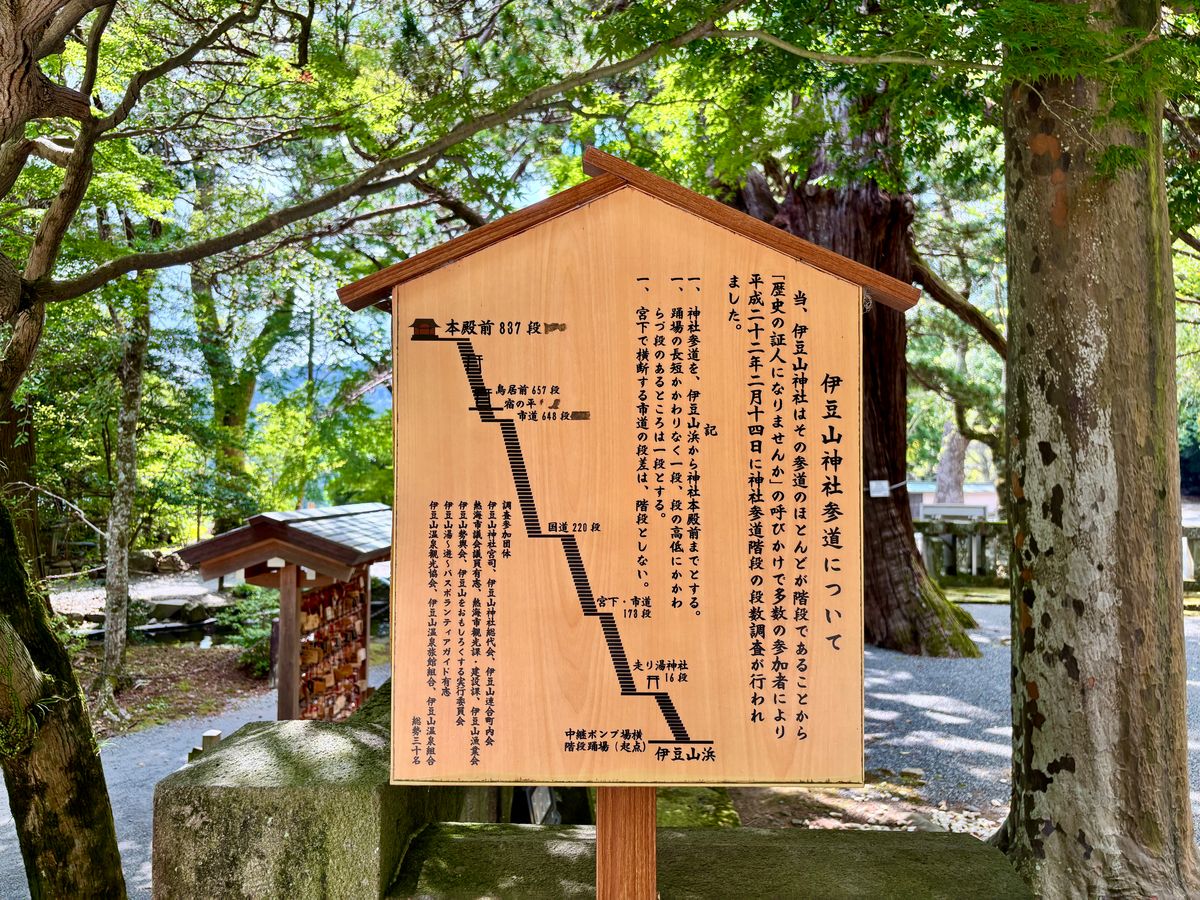
837 Steps of the Approach
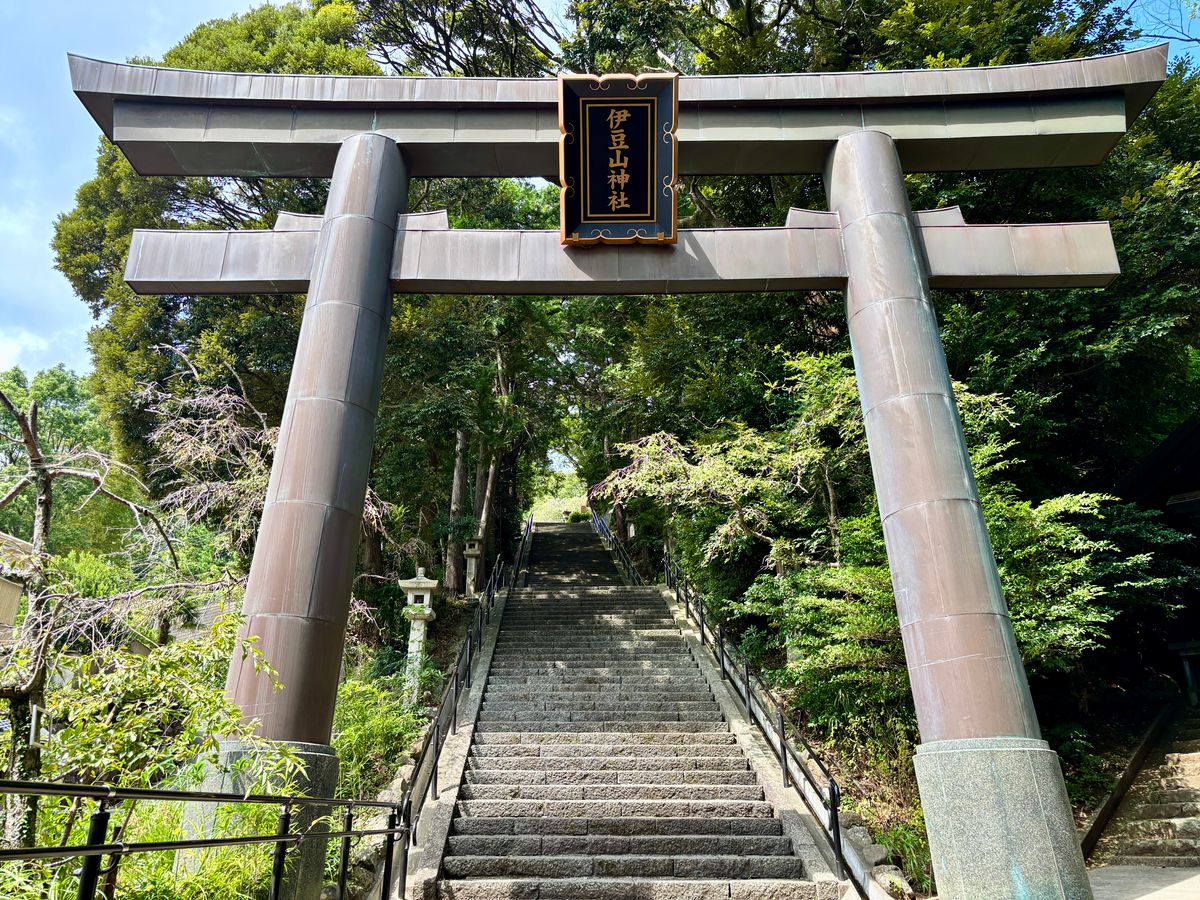
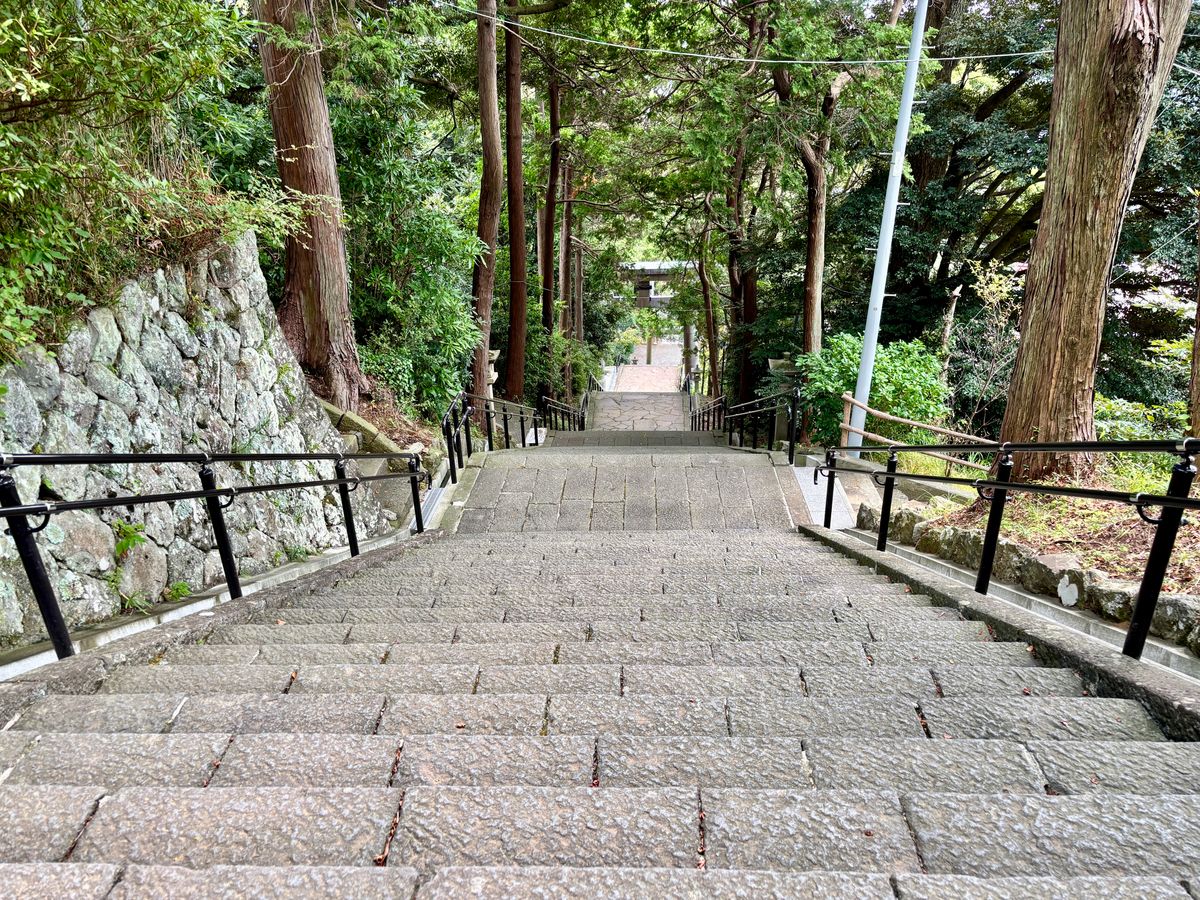
The approach to Izusan Shrine consists of a total of 837 stone steps leading from the coast to the main hall. This is equivalent to the height of a 50-story building, making it quite a challenge to climb all the way.
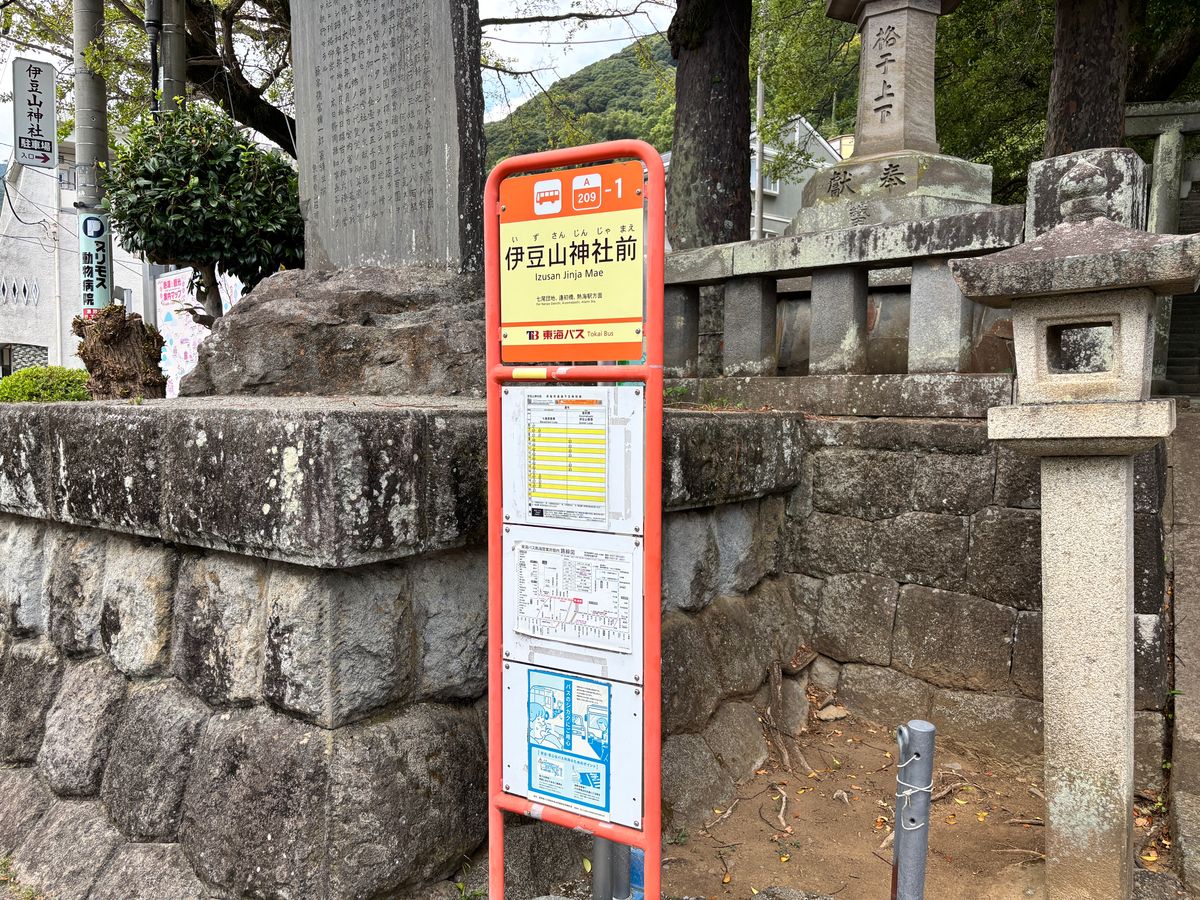
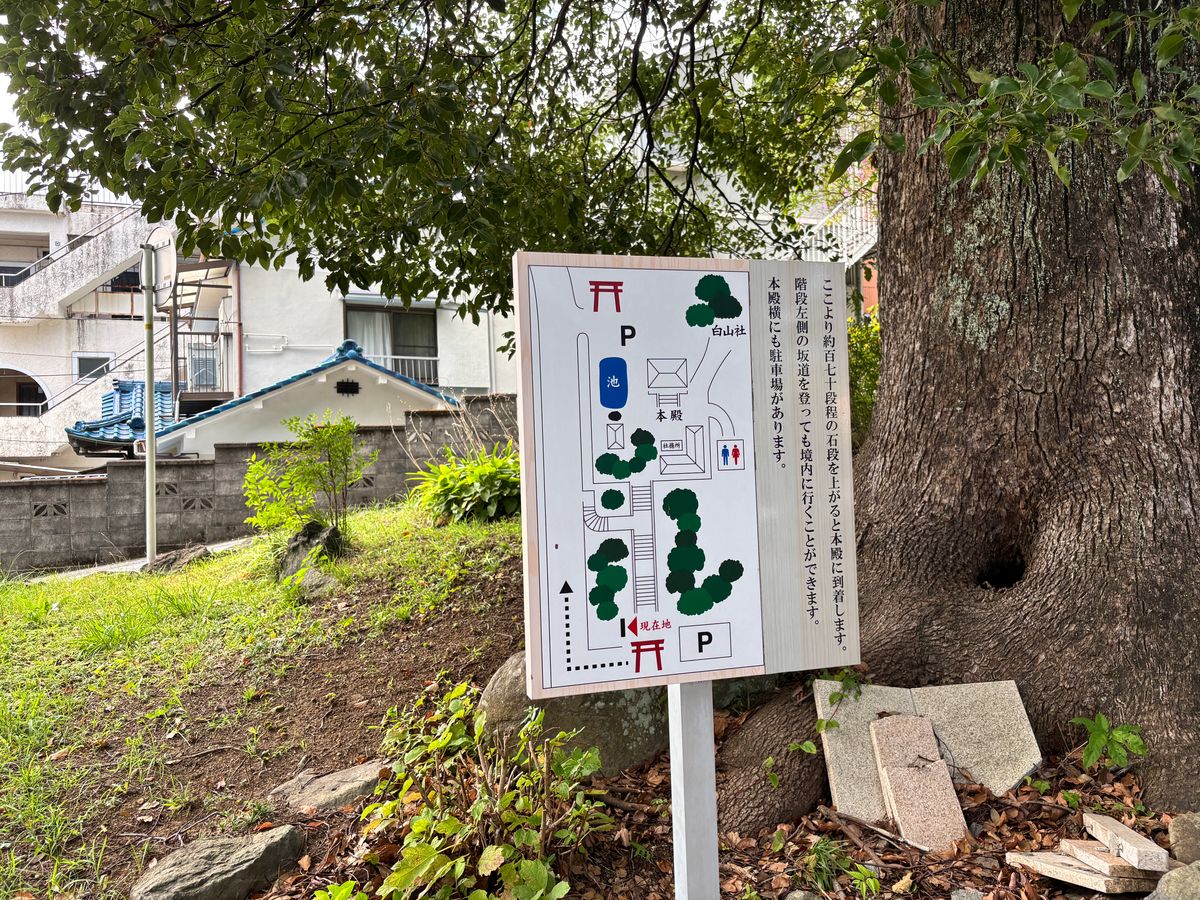
But don't worry. Most people get off at the bus stop "Izusan Shrine Mae" and only climb the remaining 189 steps. If you wear comfortable shoes, you can reach the main hall in about 10 to 15 minutes. There are handrails for safety.
How to Visit Without Climbing Steps
If you take a taxi or drive to the "Upper Parking Lot" next to the main hall, you can visit the shrine with almost no steps. This is recommended for those with mobility issues or families with small children.
Challenge the 837 Steps from Hashiriyu
If you have the stamina and time, try the route climbing the 837 steps from the coast's "Hashiriyu."
Hashiriyu is a hot spring closely connected to Izusan Shrine. The shrine was originally called "Hashiriyu Gongen," and the hot spring and shrine have been worshipped together. The sight of hot water gushing from a cave at 70 degrees Celsius is impressive, and it is considered one of Japan's oldest hot springs. If you visit Izusan Shrine, be sure to stop by Hashiriyu as well.

Hiking to Hongu Shrine and Musubimyojin Shrine
Further up the mountain from the main hall is a small shrine called Hongu Shrine (本宮社). It takes about an hour to walk the mountain path, making it suitable for hiking enthusiasts.
To the left of the stairs leading up from the main hall is a small love shrine called Musubimyojin Shrine (結明神社). Its quiet presence in the forest creates a very mystical atmosphere.
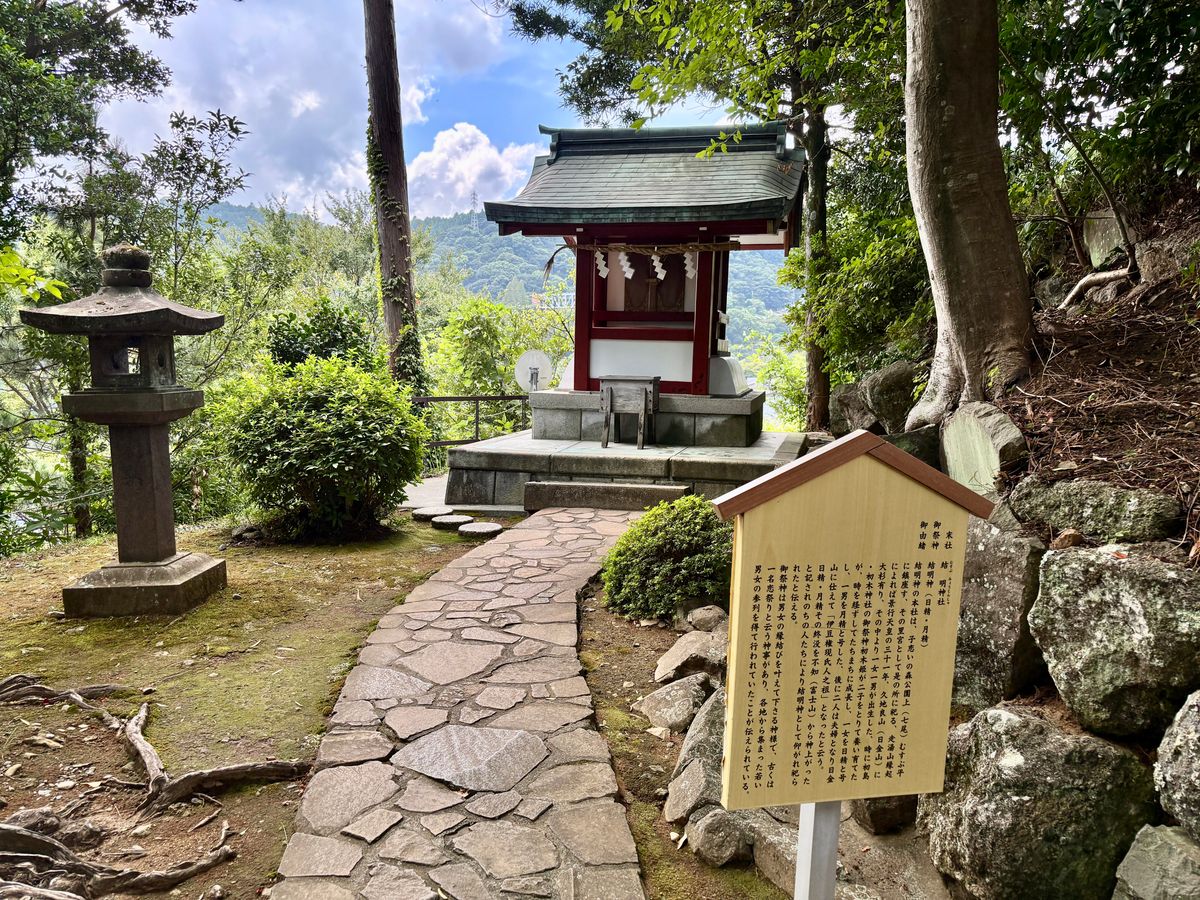
Since many parts of the path are unpaved, comfortable shoes like sneakers are essential. Don't forget water and a towel. The view from the top is exceptional, so if you're confident in your physical ability, definitely give it a try.
Access Information
Izusan Shrine is located a bit away from Atami Station in the mountains. It is convenient to reach by bus or taxi.

Bus (Recommended)
Exit JR Atami Station and take the bus from Bus Stop 4 heading towards "Nanao Danchi" or "Izusan Loop." It takes about 7 minutes to reach "Izusan Shrine Mae" bus stop. The fare is 230 yen. You can also use transportation IC cards (like Suica or PASMO).
Buses run 2 to 3 times an hour.

Taxi
It takes about 5 to 6 minutes by taxi from Atami Station, with a fare of around 900 yen. If you split the fare among 2 to 3 people, it’s not much different from taking the bus. Just tell the driver "to the upper parking lot," and you can get close to the main hall without climbing steps.
Car
There are two parking lots, both free of charge.
Upper Parking Lot: Right next to the main hall. About 30 cars. You can visit without climbing steps.
Lower Parking Lot: Next to the torii gate. About 8 cars. You need to climb 189 steps.
Things to Know Before Visiting
Wear Comfortable Shoes: There are many steps, so sneakers are recommended.
Bring Cash: Omikuji and omamori can only be purchased with cash (100 yen to 1,000 yen).
Estimated Time: 30 minutes to 1 hour: If you plan to explore the grounds leisurely. If going to Hongu Shrine, allow 2 to 3 hours.
Limited English Signage: While omikuji has English explanations, most signs on the grounds are in Japanese.
Basic Information
Address: 〒413-0002 Shizuoka Prefecture, Atami City, Izusan 708-1
Visiting Hours: Open 24 hours (Charms and goshuin available from 9:00 AM to around 4:00 PM)
Closed Days: None
Admission Fee: Free
Estimated Time: 30 minutes to 1 hour (2 to 3 hours if visiting Hongu Shrine)
Parking: Free (Upper parking lot for 30 cars, Lower parking lot for 8 cars)
For more tourist spots in Atami, check out this article.