Culture & History
What Is a Japanese Omamori? How to Choose One for Your Wish and How to Carry It
Updated 26 November 2026By Dynamic Japan Travel editorsEditorial policy
Contents
Key Takeaways
A guide for first-time omamori (charm) buyers at Japanese shrines and temples.
- Choose by wish Look for "travel safety" (旅行安全) for a safe journey, or "exam success" (合格祈願) as a gift for someone facing an exam.
- Keep it close Pouch-style charms should stay closed. Slip one into your everyday bag or attach it with its cord.
What Is an Omamori? Why Do People Carry One?
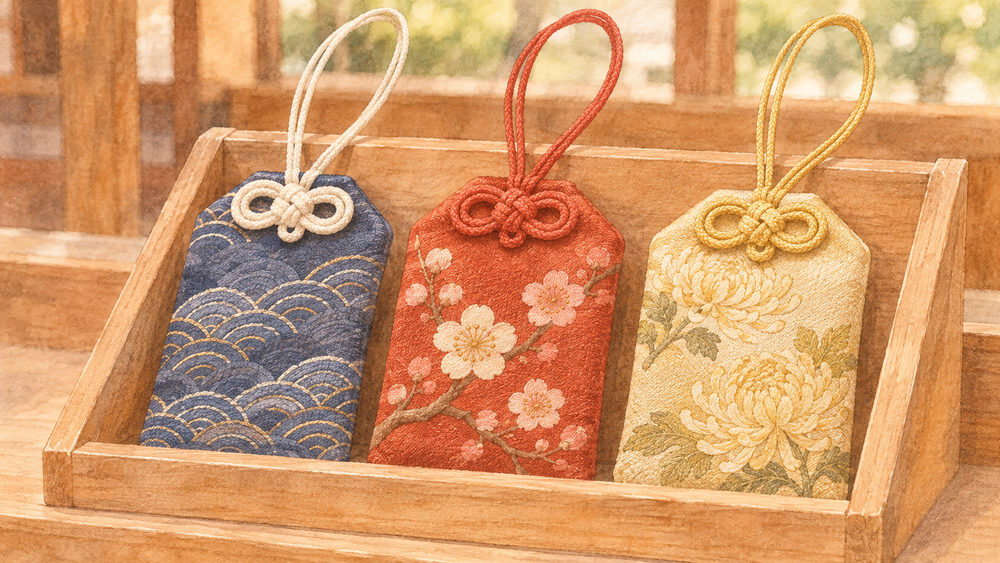
An omamori is a charm obtained at a Shinto shrine or Buddhist temple, usually with a wish for safe travels, good health, or similar blessings. It is kept close at hand so that the kami (Shinto deities) or Buddha may watch over the holder. A common type is a small cloth pouch with a cord attached. Inside, many contain a small paper or wooden tablet, and the pouch is carried carefully with the opening left closed.
When did people in the past carry amulets?
About a thousand years ago, in the Heian period, noblewomen traveling to distant temples and shrines wore an amulet called a "kakemamori" around their necks, praying for a safe journey. In the late Edo period of the 19th century, some people carried talismans from shrines and temples in drawstring pouches hung from the obi of their kimono.
What's the Difference Between Omamori, Ofuda, and Omikuji?
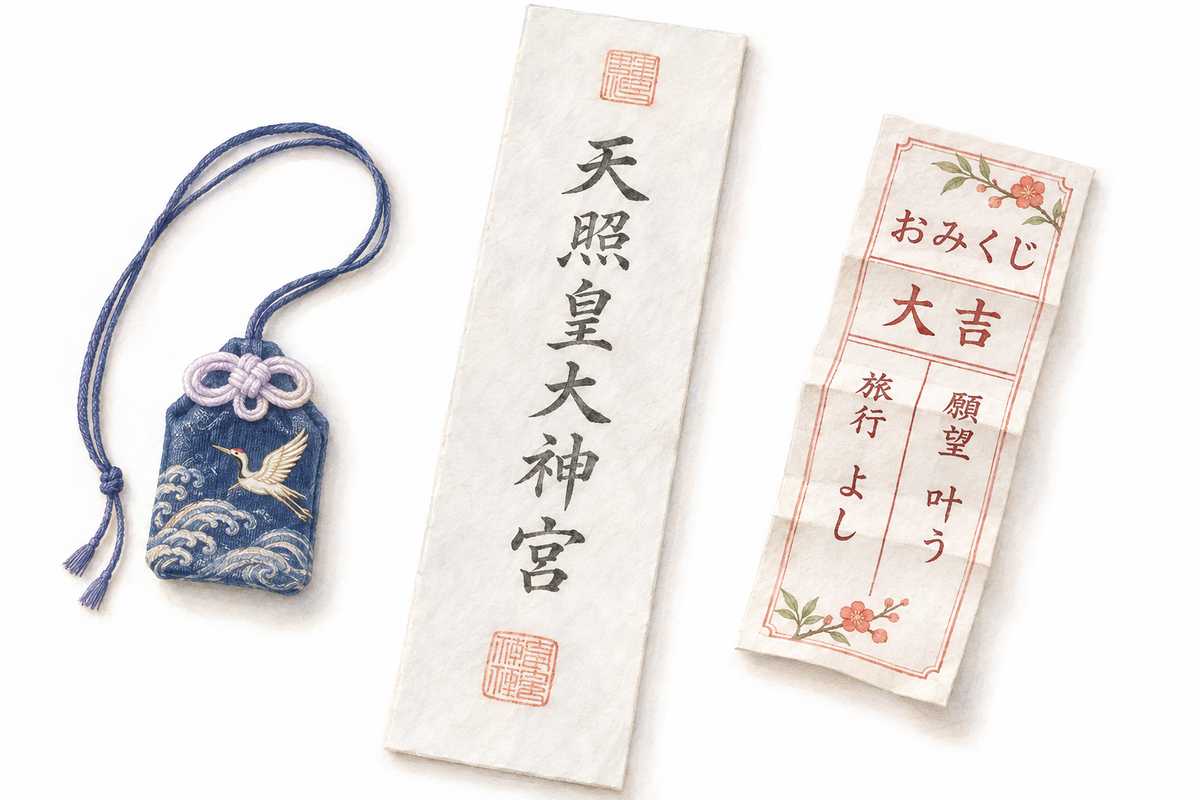
| Item | Wish / Role | How to Use |
|---|---|---|
| お守り (omamori, a personal charm) | Prayers for safe travels, good health, and more | Attach to a bag or similar item and carry it with you |
| 御札(おふだ) (ofuda, a talisman for the home) | Prayers for family safety and the fulfillment of wishes | Enshrine at home and pray with hands pressed together |
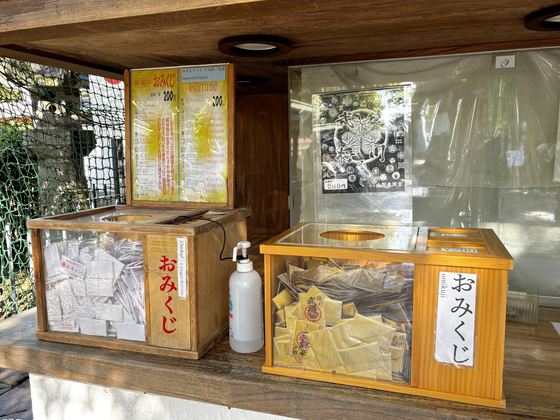
| おみくじ (omikuji, a fortune slip) | Reveals your fortune and daily advice | Draw a slip and read the words written on it |
Which Charm to Choose? Omamori Types by Wish
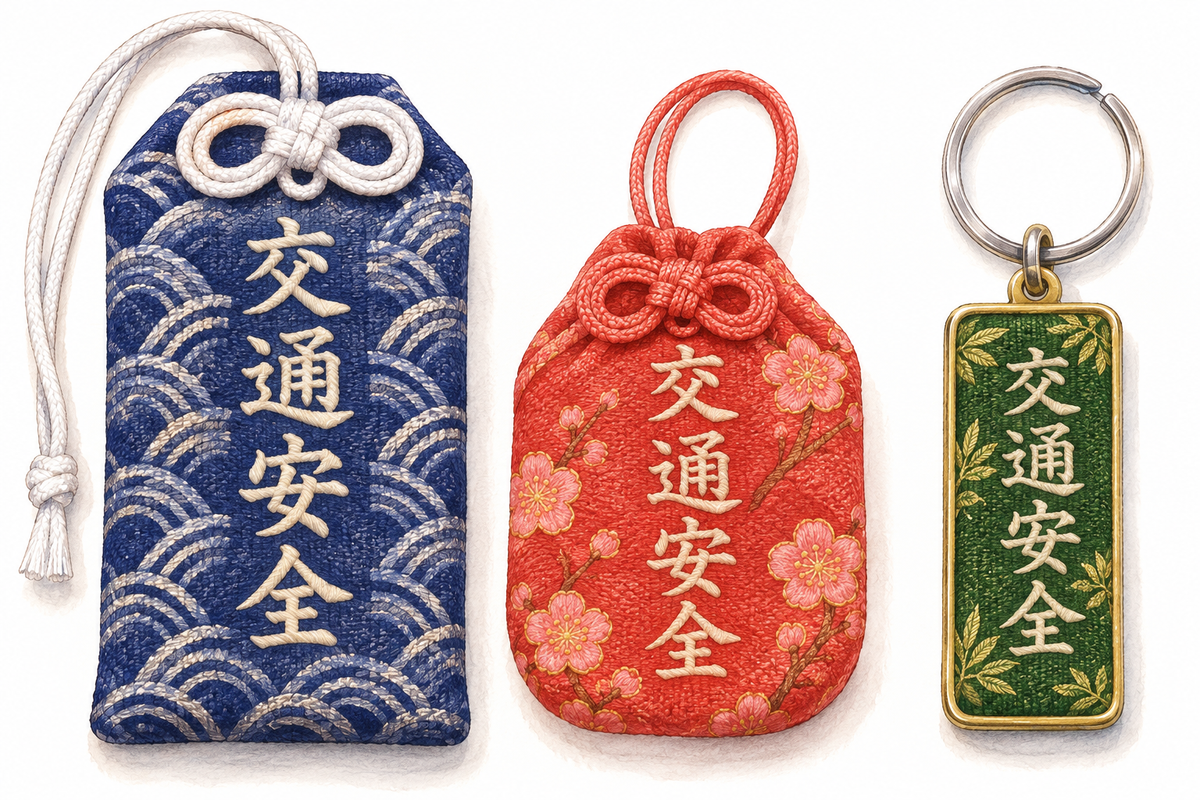
Charms for the same wish are sometimes displayed in different colors. Start by checking the names written beside the charms or samples. Knowing the following terms will help you find one that suits your own wish, or that of the person you're buying it for.
| When you want… | Look for this word |
|---|---|
| A safe, trouble-free trip | 旅行安全(りょこうあんぜん) (ryokō anzen) |
| To avoid accidents while driving or commuting to school | 交通安全(こうつうあんぜん) (kōtsū anzen) |
| Daily study to bear fruit | 学業成就(がくぎょうじょうじゅ) (gakugyō jōju) |
| To pass an entrance or qualification exam | 合格祈願(ごうかくきがん) (gōkaku kigan) |
| To stay healthy | 健康(けんこう) (kenkō) |
| To be blessed with good connections | 縁結び(えんむすび) (en-musubi) |
Names vary by temple or shrine, and amulets for passing exams may be labeled 合格守 (gōkaku-mamori, a charm for passing exams). Besides the pouch type, there are versions that attach to keys or stick onto cars.
Where to Buy an Omamori Charm and How to Carry One
Finding the Amulet Counter at Shrines and Temples
If you'd like an omamori (protective charm) from a shrine or temple you've visited, look for "お守り" (omamori) or 授与所(じゅよしょ) (juyosho, the charm counter) on the map of the grounds. The amulet office is the counter where you can receive charms and ofuda (talismans).
- At shrines
- The charm counter may be located in a building labeled 社務所(しゃむしょ) (shamusho, the shrine office).
- At temples
- Charms may be displayed inside the main hall or at a separate "授与品所" (juyohinjo, the amulet office).
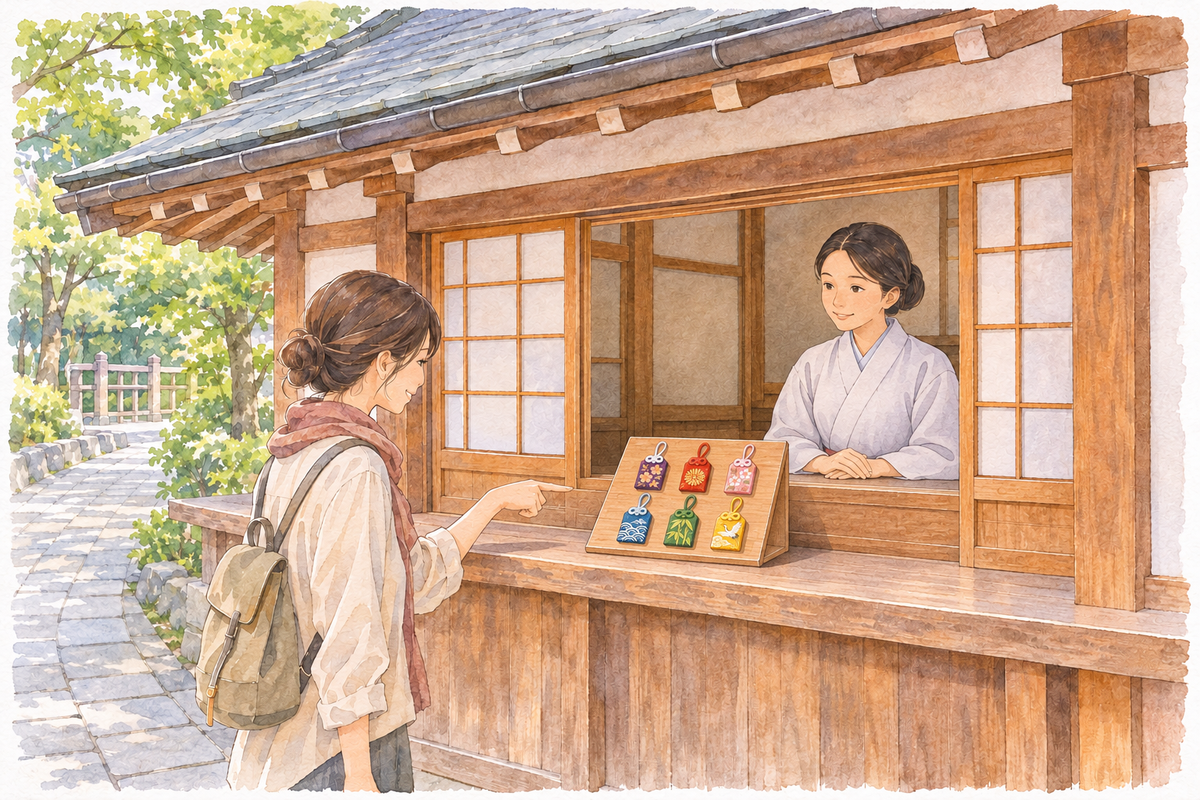
At some temples and shrines, you can also get the site's amulets at nearby shops. If you have a particular amulet in mind, check the official website for the counter location and hours. If visiting in person is difficult, some places also offer amulets by mail.
Tell the staff at the counter which charm you'd like
At shrines, the amount you pay for an omamori (charm) is sometimes labeled 初穂料(はつほりょう) (hatsuhoryō, an offering). Prices vary by charm. Some counters accept cash only, so it's wise to have Japanese yen on hand.
Point to the charm you want among the samples and say, このお守りを一つお願いします (Kono omamori o hitotsu onegaishimasu, “One of these charms, please”).
Omamori can be chosen for yourself or as a gift for family and friends. If you're unsure whether to carry one yourself, consider whether the prayer behind the charm fits your own faith and outlook. If you'd like to give one to someone of a different faith, ask first whether they would like to receive it.
Carry the bag unopened
If you have a long looped cord, you can also attach the charm to the outside of your bag. Pass the loop of cord through the loop on the bag, then pull the whole charm through it. You can attach it without untying the decorative knot at the mouth of the pouch.
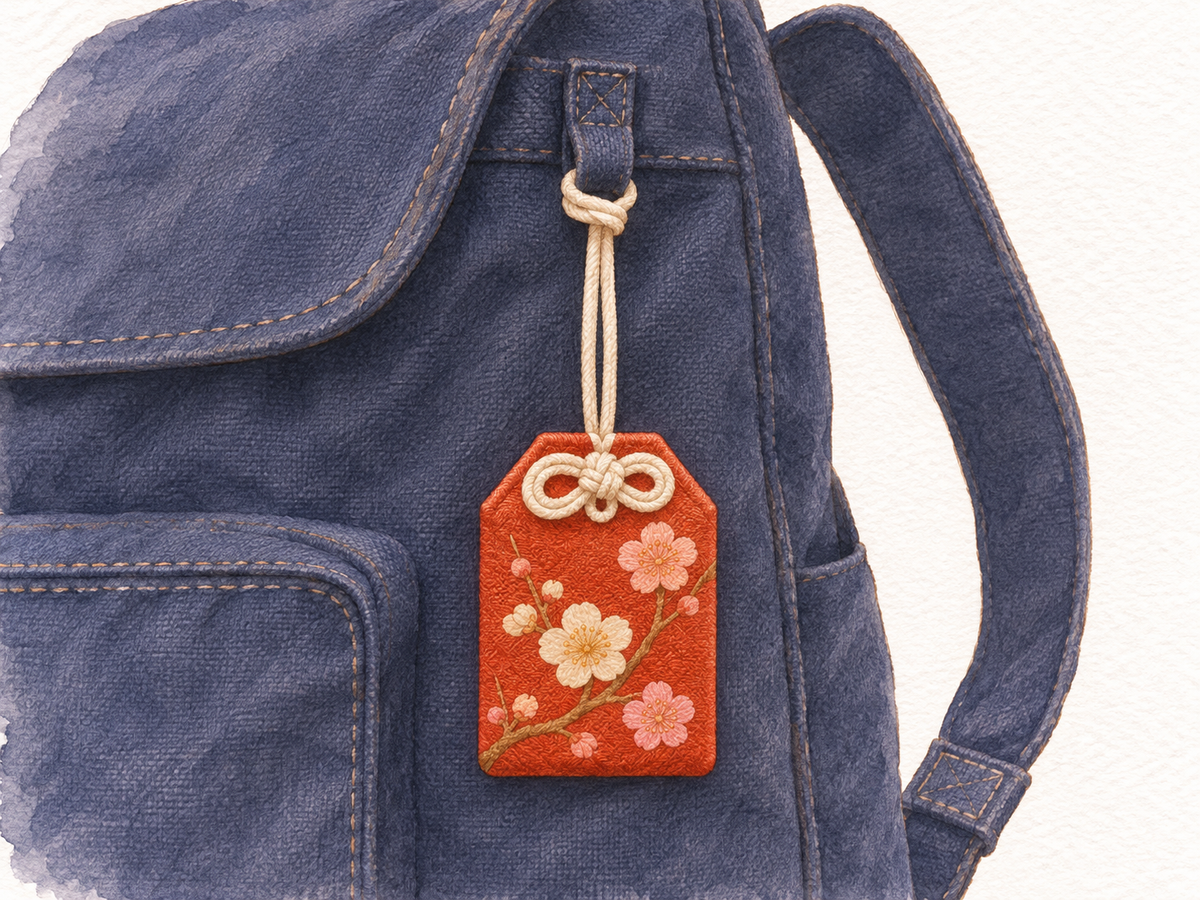
If you pick up omamori (amulets) from different shrines while traveling, it is perfectly fine to carry them together.
Can you keep it after returning home? What if you want to return it?
Q&A
A Charm to Take Home
- When you're not carrying it, where in the house should you keep it?
- Choose a clean spot where it can be kept with care, such as the top of a bookshelf. If you receive guidance on where to place it along with an omamori (protective charm), follow those instructions.
- Do I need to go back and return it after a year?
- Shrines have a custom of replacing omamori (protective charms) at the turn of the year. A charm received at a shrine may be kept until your wish comes true. For charms received at a temple, check the temple's guidance on when to return them.
- Your wish came true: how do you return an omamori charm?
- When you revisit the shrine or temple where you received your amulet, express your gratitude and ask where old amulets are accepted. If you live far away and want to send it by mail, or if you'd like to bring it to a different shrine or temple, check beforehand with the place where you plan to return it to confirm that they will accept it.