Kiso Valley Travel Guide: Historic Post Towns and Nakasendo trail
By Dynamic Japan Travel Editorial Team—Supervised by P-HAM Co., Ltd. (Licensed Travel Agency, Aichi No. 3-1590)
Contents
If you want to walk through old streets and historic roads from the days when samurai roamed Japan, Kiso Valley in Nagano Prefecture is the place to go!
With easy access from Tokyo and Kyoto, an authentic Edo-period atmosphere, beginner-friendly hiking, and scenery that has remained unchanged for centuries, Kiso Valley is a destination well worth recommending for your trip to Japan. Whether you spend two days or a full week, this area rewards a leisurely pace and thoughtful exploration.
Easy access, about 3 hours from Tokyo or Kyoto: Just three and a half hours from Shinjuku Station via the Limited Express Azusa, or from Tokyo Station via the Tokaido Shinkansen connecting to the Limited Express Shinano. From Kyoto, you can arrive in under three hours.
Well-preserved post towns: Kiso Valley is synonymous with hiking along the Nakasendo. The beginner-friendly Magome Pass hiking trail (8km, 3 hours) is well maintained, making it safe even for first-timers. A luggage forwarding service is also available, so you can walk the historic route without carrying heavy bags.
JR Pass coverage: All the routes to Kiso Valley are covered by JR lines, so you can make full use of your JR Pass. Both the Limited Express Azusa and the Limited Express Shinano can be used with the JR Pass at no extra charge (seat reservations required).
English-language support: Kiso Valley's major sightseeing spots feature multilingual signage, and the Nakasendo hike is popular enough with international visitors that foreign travelers often outnumber locals. Tourist information centers are also well equipped to help.
This article introduces the charms of Kiso Valley, along with how to get there and the main sightseeing spots around each station.
Planning Your Kiso Valley Trip
Here are some key points to keep in mind when planning your trip to Kiso Valley.
Best Time to Visit
Spring (March–May): Cherry blossoms and fresh greenery
Summer (June–October): Forest bathing, waterfalls, and hiking
Autumn (November–December): Fall foliage
Winter (December–February): Snowy scenery and hot springs
Kiso Valley can be enjoyed year-round, but the best times to visit are spring (late April to May) and autumn (mid-November to early December).
Autumn (especially from late November to early December) is the most beautiful season in Kiso Valley. Fall foliage colors the mountains, and the crisp air makes the mountain scenery look its very best. However, this is also the busiest time of year, so accommodations should be booked one to two months in advance.
Spring (late April to May) is also a wonderful choice, with beautiful cherry blossoms and fresh greenery, and fewer crowds than in autumn. Summer is ideal for forest bathing, with waterfalls at their fullest. Winter offers a magical snowy landscape, though some hiking trails close and bus services are reduced.
How Long to Stay
Some travelers choose to stay for a week or even two. Since a hike along the Nakasendo is a must once you've made it to Kiso Valley, we'd recommend at least three days and two nights.
Sample 3-Day, 2-Night Itinerary
Day 1:
Morning: Tokyo → Kiso-Fukushima (3 hours 10 minutes)
Afternoon: Explore Fukushima-juku, hike the Shiroyama Nature Trail (3.6km, 2 hours)
Evening: Stay overnight in Kiso-Fukushima
Day 2:
Morning: Travel to Magome-juku via Nakatsugawa Station (1 hour by train and bus)
Morning to afternoon: Hike from Magome-juku to Tsumago-juku (8km, 3 hours)
Afternoon: Explore Tsumago-juku
Evening: Return to Kiso-Fukushima
Day 3:
Morning: Head to Narai-juku (20 minutes by local train) for shopping and café hopping
Afternoon: Return to Tokyo via Shiojiri
Getting to and Around Kiso Valley
Here's how to get to the Kiso Valley in Nagano.
From Tokyo: Two Routes
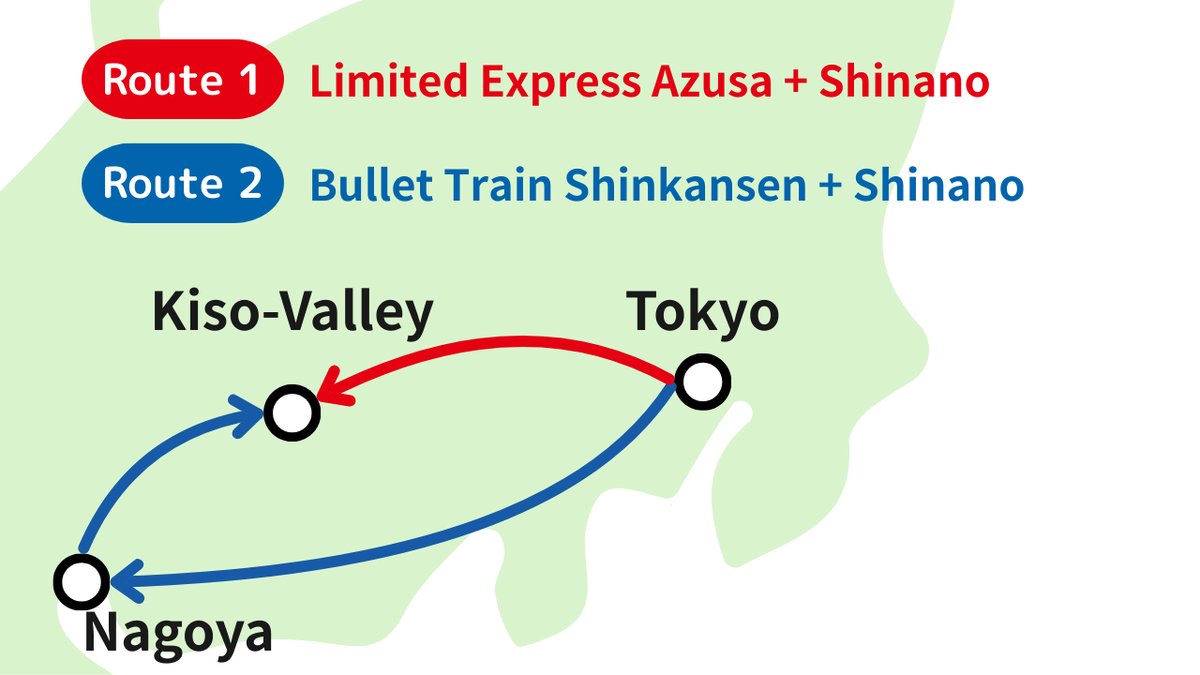
There are two routes from Tokyo to the Kiso Valley. Both take roughly the same amount of time (about 3 hours 20 minutes), but the Shinjuku route using the Limited Express Azusa is the more affordable option.
Shinjuku Route: Take the Limited Express Azusa from Shinjuku Station in Tokyo and get off at Shiojiri Station (about 2 hours 30 minutes). From there, take a local train or the Limited Express Shinano to Kiso-Fukushima Station (about 35 minutes). This route requires only one transfer, and the entire journey is covered by the JR Pass.
Nagoya Route: Take the Tokaido Shinkansen from Tokyo Station to Nagoya Station (about 1 hour 35 minutes). From there, take the Limited Express Shinano to Kiso-Fukushima Station (about 1 hour 20 minutes). This route is recommended for those who want to ride the Shinkansen, or who are coming from the Kansai region via Nagoya.
Both routes are convenient, so the choice comes down to personal preference. The Shinjuku route is slightly more convenient if Narai-juku is your main destination, while the Nagoya route is slightly more convenient if Tsumago-juku and Magome-juku are your main destinations.
Train Moving Between Stations
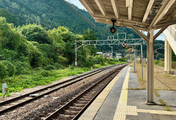
There are two options for train travel within the Kiso Valley. Since the Limited Express Shinano doesn't stop at every station, you'll need to use these two types of trains to get around the Kiso Valley.
It's efficient to use the Limited Express Shinano for long distances and the local line for short distances. For example, the local line is sufficient for the trip from Kiso-Fukushima to Narai (20 minutes), but the Limited Express Shinano is more comfortable for the trip from Kiso-Fukushima to Nakatsugawa (1 hour).
Local Line (Local Train):
Frequency: approximately once per hour
Seating: non-reserved
Travel time: about 10 minutes between stations
Usable with the JR Pass
For details on how to ride the local trains in the Kiso Valley, please see the article below.
Limited Express Shinano:
Fare: ¥1,000-2,000 (including limited express fee)
Faster, with reserved seating
Stops only at major stations
Usable with the JR Pass (seat reservation required)
For details on how to ride the "Limited Express Shinano" train, please see the article below.
Limited Express Shinano Guide: [links id=train-shinano]
Important Notes:
IC cards (Suica/Pasmo) cannot be used at most stations
Please bring cash
On one-man (driver-only) trains, you need to take a numbered ticket
Hiking the Nakasendo Trail
If you're visiting the Kiso Valley, we strongly recommend experiencing at least a short hike along the Nakasendo.
What is the Nakasendo? (About the Nakasendo)
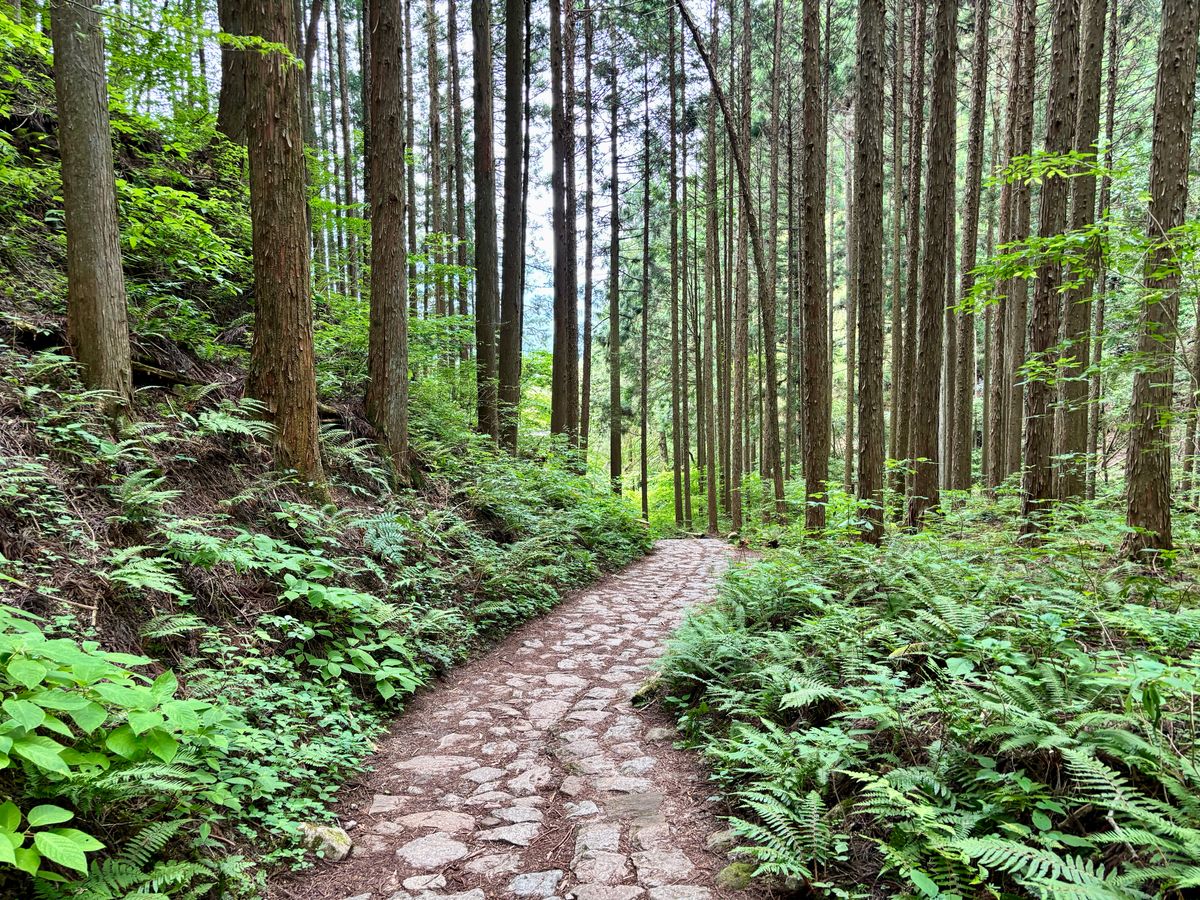
During the Edo period (1603-1868), the Nakasendo (meaning "central mountain road") was one of the five major highways connecting Edo (present-day Tokyo) and Kyoto. Unlike the coastal Tokaido, the Nakasendo followed a mountainous route — longer in distance, but safe from tsunamis and storms.
Even today, you can walk sections of the original stone-paved road as it winds through beautifully preserved post towns.
(Nakasendo)
Nakasendo trail Hiking Routes (Main Hiking Routes)
The Nakasendo has close to ten different hiking routes.
In this article, we'll introduce three of these routes.
Magome-Tsumago Route
A total distance of 8km, taking about 3 hours to complete.
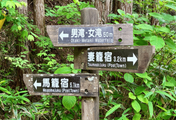
This is the most famous and popular route along the Nakasendo. It's well maintained, with excellent signage, a luggage forwarding service, and traditional teahouses along the way — the perfect introduction to Nakasendo hiking. If you're not confident in your fitness, walking from Magome toward Tsumago is easier, as it avoids the steep uphill climbs. The route passes through cedar forests, stone-paved paths, rest areas, and beautiful waterfalls (Odaki and Medaki, the "male falls" and "female falls") before arriving at the stunning post town of Tsumago-juku.
Nojiri-juku to Suhara-juku Route
This is a route I walked myself just recently. It's about 7km and takes roughly 2 hours and 30 minutes.
The path is fully paved and doesn't take you through the mountains. Even so, it's a very quiet route with plenty of rural charm — you'll walk past rice paddies and along the Kiso River, taking in classic Japanese countryside scenery.
Part of the route runs alongside the JR railway tracks, and local trains occasionally pass by. You can see local farmers at work and traditional farmhouses along the way.
Kiso-Fukushima's Shiroyama Nature Trail
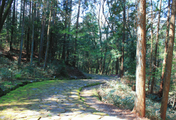
Although it's not part of the Nakasendo, we highly recommend the Shiroyama Nature Trail in Kiso-Fukushima. It's a 3.6 km course that takes about 2 hours to complete. Highlights include a lookout point, a 300-year-old cypress forest, and the beautiful Gongen Falls. It's a great way to test your stamina before tackling a longer hike.
Since the trail goes through the mountains, sneakers or trekking shoes are required.
Please see the article below for more details.
Exploring Kiso Valley by Station
This section is the heart of the article. It provides a detailed look at what you can do at each station along the JR Chuo Main Line through the Kiso Valley.
Shiojiri Station (塩尻駅) - Northern Gateway
Limited express trains "Azusa" and "Shinano" stop here
Border station between JR East and JR Central
Shiojiri Station is the border station between JR East and JR West, and serves as the northern gateway to the Kiso Valley. It's also a transfer point for travelers heading to Matsumoto or Nagano. Travelers arriving from Tokyo on the limited express Azusa transfer at Shiojiri Station to local trains bound for the Kiso Valley or to the limited express Shinano.
Narai Station (奈良井) - The Edo Period, Just 1 Minute from the Station
Limited express trains do not stop here (be sure to transfer to a local train)
Unstaffed station
IC cards such as Suica are not accepted
The post town begins right outside the station building
What you can reach from here: Narai-juku - about a 1-minute walk
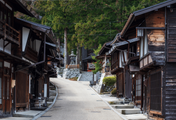
The longest post town on the Nakasendo, still retaining the prosperous atmosphere once known as "Narai Senken" (Narai's Thousand Houses). Edo-period townscapes continue for about 1km. Torii Pass Hike (6km, 3-3.5 hours) - enjoy a route that crosses the highest point on the Nakasendo (1,197m) and descends to Yabuhara. Recommended for experienced hikers.
Travel time:
About 20 minutes by local train from Kiso-Fukushima
About 20 minutes by local train from Shiojiri
From Nagoya: about 1 hour 40 minutes, transferring at Kiso-Fukushima
Yabuhara Station - Torii Pass Hike
Unstaffed station
IC cards such as Suica cannot be used
Only one-man (single-car) trains stop here
Places accessible from here: Torii Pass → Narai-juku Hike
A hiking course that crosses the highest point on the Nakasendo (elevation 1,197m). Walk through old-growth forest before descending into Narai-juku. Recommended for experienced hikers, but the sense of accomplishment is outstanding.
Travel time:
15 minutes by local train from Kiso-Fukushima
5 minutes by local train from Narai
Kiso-Fukushima Station - Heart of the Kiso Valley
The Limited Express "Shinano" stops here
Staffed station, but IC cards such as Suica cannot be used
Tourist information center, convenience store, and restaurants near the station
An ideal base for exploring the Kiso Valley and the Nakasendo
Places accessible from here: Shiroyama Nature Trail (3.6km, 2 hours), Fukushima-juku, Fukushima Checkpoint
Kiso-Fukushima is located literally in the center of the Kiso Valley. It's just 20 minutes by local train to Narai-juku in the north, and 25-40 minutes to the Tsumago-juku and Magome-juku area in the south. Thanks to this central location, getting anywhere is convenient, and you won't need to change accommodations every day. What's more, Kiso-Fukushima's sights are compactly clustered together, making Kiso-Fukushima itself an appealing destination in its own right.
What's more, every Limited Express Shinano (running between Nagoya and Nagano) stops at Kiso-Fukushima Station. This means that whether you're coming from Tokyo, Nagoya, or Nagano, you can arrive with no transfer or only a minimal one — a nice bonus.
Fukushima-juku
This is an important post town that was once home to one of the four major checkpoints (sekisho) of the Edo period. Unlike Tsumago-juku or Magome-juku, it hasn't been turned into a tourist attraction, and it remains an authentic post town where local residents actually live their daily lives. In the Kamino-dan district, the Edo-period streets remain intact, lined with traditional wooden buildings. There is also the site of the Fukushima Checkpoint, an Edo-era inspection post, where you can see the tegata (travel permits used during the Edo period, the origin of the modern passport) that were used at the time on display.
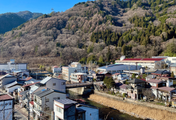
Shiroyama Nature Trail
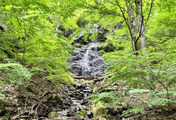
Personally, I'd recommend the Shiroyama Nature Trail even more than the Nakasendo.
Unlike the Nakasendo, this is a wonderful hiking course you can enjoy in half a day (3.6km, about 2 hours). It offers superb views of Fukushima-juku and the entire Kiso Valley, and along the way you'll find the beautiful Gongen Falls. It's perfect as a warm-up before a longer hike such as the Magome Pass.
Travel time:
1 hour 20 minutes from Nagoya on the Limited Express Shinano
1 hour 30 minutes from Nagano on the Limited Express Shinano
Agematsu Station - Akasawa and Nezame-no-Toko
Limited Express Shinano stops here
Staffed station
IC cards cannot be used
Places you can reach from here: Akasawa Natural Recreational Forest and Nezame-no-Toko
The Agematsu Station area is a haven for nature lovers, home to two must-visit spots that capture the beauty of the Kiso Valley: a stunning gorge and an ancient forest.
Akasawa Natural Recreational Forest
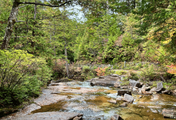
About 30 minutes by bus. An ancient forest of Kiso cypress trees over 300 years old, ranked as one of Japan's three great forests. It is also the birthplace of the concept of "shinrin-yoku" (forest bathing — walking through the woods for better health). Seven well-maintained hiking trails cater to everyone from beginners to advanced hikers.
For a special experience, you can ride the forest railway once used to haul timber. A small trolley train makes a 2.2km round trip (about 20 minutes), winding its way among 300-year-old giant trees.
Operating period: May to October only
A forest of 300-year-old Kiso cypress trees
"The birthplace of forest bathing"
Only about 2-3 buses run per day
Nezame-no-Toko
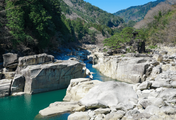
About a 20-minute walk. A scenic spot along the Kiso River famous for its massive boulders and beautiful rapids, and home to the legend of Urashima Taro. The breathtaking contrast between the white granite boulders — carved by the Kiso River over tens of thousands of years — and the emerald-green clear waters creates a landscape reminiscent of a Japanese garden shaped entirely by nature.
Travel time:
7 minutes by local train from Kiso-Fukushima
1 hour 30 minutes by Limited Express Shinano from Nagoya
Suhara & Nojiri Stations (須原・野尻駅) - Off the Beaten Path
Unstaffed station
IC cards such as Suica are not accepted
Only one-car (one-man operated) trains stop here
Places you can reach from here: Suhara-juku - about a 3-minute walk
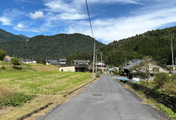
Unlike the popular post towns of Tsumago and Magome, these settlements remain untouched by tourism and retain their authentic character. You can see local residents going about their daily lives, rice paddies dotting the landscape, and traditional water troughs (mizubune) still in use today.
Suhara-juku
A small yet charming post town. Wooden water troughs (mizubune) line the old highway, still used by local residents today to cool and wash vegetables.
Josho-ji Temple is a National Important Cultural Property, its main gate, main hall, and priests' quarters preserved just as they were in the Edo period. Its quiet presence conveys the weight of history.
Nojiri-juku
Known for its "nanamagari" (seven bends), a defensive road layout dating from the Edo period. By bending the road seven times, the design was meant to slow enemy advances and block their line of sight.
A major fire in 1943 destroyed many of the buildings, but the layout of the streets remains unchanged from the Edo period. A mix of traditional wooden architecture and newer houses gives the town the feel of a "living post town."
The hike from Nojiri-juku to Suhara-juku (8km, 2.5-3 hours) is far quieter than the famous Magome Pass route, offering a more authentic Nakasendo experience. The trail passes rice paddies and follows the Kiso River, with a local train occasionally rolling by.
Atera Valley
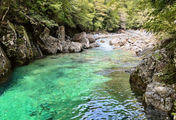
The best-kept scenic secret in the Kiso Valley. The emerald-blue water known as "Atera Blue" rivals the beauty of Croatia's Plitvice Lakes or Italy's Blue Grotto, yet the valley sees hardly any foreign visitors.
This 15km valley was carved by the Kiso River through white granite, leaving behind incredibly clear water. The riverbed is visible all the way down, and the water is at its most beautiful after a spell of fine weather.
It's within a 20-minute walk of Nojiri Station, and the hiking trail runs up to 6.3km one way (2-3 hours) at its longest.
Nagiso Station (南木曽駅) - Most Famous Post Towns
Some limited express trains stop here (many trains do not stop)
Staffed station
IC cards not accepted
Places you can reach from here: Tsumago-juku - about 7 minutes by bus
This is Kiso Valley's Most Popular Area.
The Nagiso Station area is the access point for two of Japan's most famous and well-preserved post towns. Unlike other areas, here you can expect international tourists and well-developed tourist infrastructure.
Tsumago-juku
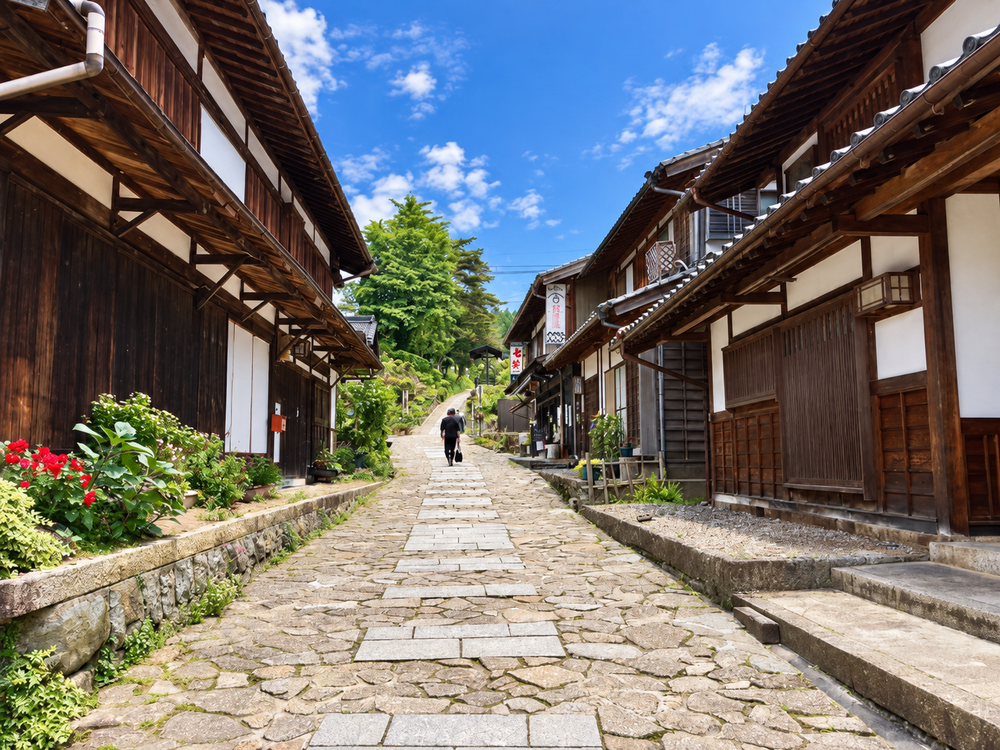
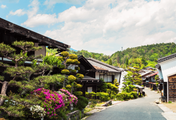
Tsumago-juku is a post town that has fully preserved the atmosphere of the Edo period. Walking through it feels like genuine time travel. From every angle, no modern elements come into view. Latticed windows, lanterns, stone-paved streets, the sound of water wheels—everything remains as it was in the Edo period.
Many of the buildings are still used today as inns or private residences. This is not a museum built for tourists, but a town where people actually live.
Travel time:
25 minutes from Kiso-Fukushima by Limited Express Shinano
20 minutes from Nakatsugawa by local train
Nakatsugawa Station - Gateway to Magome-juku
A well-used station where all Limited Express "Shinano" trains stop
Staffed station; IC cards can be used if getting off here
Places you can reach from here: Magome-juku - about 25 minutes by bus
Nakatsugawa Station is the southern gateway to the Kiso Valley, located in Gifu Prefecture (near the border with Nagano Prefecture). It's the main access point to Magome-juku.
All Limited Express Shinano trains stop here, providing direct access from Nagoya. The station has coin lockers, restaurants, and a convenience store, making it one of the best-equipped stations in the Kiso Valley.
Most travelers use this station solely for access to Magome-juku, then continue on to Tsumago-juku before heading to Nagiso Station.
Magome-juku
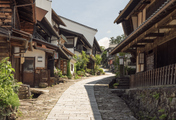
Magome-juku is a distinctive post town built on a steep mountain slope, with a stone-paved road climbing uphill. As you make your way up, you can enjoy sweeping views of the Kiso Valley. Buses to Magome-juku run every hour from Nakatsugawa Station.
The hiking trail from Magome-juku to Tsumago-juku is about 8km long and takes 2.5 to 3 hours to complete. It's the most popular hiking route along the Nakasendo. The trail is well-maintained and safe for beginners, and a luggage forwarding service is also available.
Travel time:
50 minutes from Nagoya by Limited Express Shinano
60 minutes from Kiso-Fukushima by local train (40 minutes by Limited Express)