Practical Travel
How to Get from Tokyo to Atami Shinkansen, Tokaido Line, and Odoriko Timetables and Fares
Updated 5 November 2026By Dynamic Japan Travel editorsEditorial policy
Contents
The fastest way from Tokyo to Atami is by Tokaido Shinkansen Hikari, taking about 40 minutes. The cheapest option is the JR Tokaido Line local train for 2,090 yen (about 1 hour 45 minutes to 1 hour 50 minutes). Note that the most frequent Shinkansen, "Nozomi," does not stop at Atami.
This article compares four travel options: Shinkansen, Tokaido Line local train, Limited Express Odoriko, and Saphir Odoriko, focusing on time, cost, reservation requirements, and JR Pass eligibility. It also covers ticket purchasing methods, reservation timing, the use of the JR Tokyo Wide Pass, and what to do upon arriving at Atami Station.
Comparison of Four Ways to Get There
Here are four ways to travel from Tokyo Station to Atami Station. The fares are estimates for one adult, one-way, as of November 2026.
| Train | Time | Fare | Reservation |
|---|---|---|---|
| Shinkansen (Hikari/Kodama) | About 40-50 minutes | 3,740 yen (non-reserved seat) | Not required for non-reserved seats |
| Tokaido Line (Local Train) | About 1 hour 50 minutes | 2,090 yen | Not required (can use Suica) |
| Limited Express Odoriko | About 1 hour 20 minutes | 3,670 yen (reserved seat in ordinary car) | Required (all seats reserved) |
| Saphir Odoriko | About 1 hour 20 minutes | 6,750 yen (Green Car) | Required (all seats reserved) |
The reserved seat on the Shinkansen is 4,270 yen (regular season). The Odoriko fare is the same year-round, but the Saphir Odoriko fare varies by 200-400 yen depending on the season. Whether the JR Pass can be used is explained below in "Can the JR Pass/JR Tokyo Wide Pass be used?"
If you're in a hurry, take the Shinkansen; for saving money, opt for the Tokaido Line's local trains; and if you want to enjoy ocean views, choose the Odoriko. For those with a JR Pass, the Shinkansen Hikari or Kodama, which incur no additional fees, are the fastest options.
Take the Shinkansen (fastest option, about 40 minutes)
The Tokaido Shinkansen has three types: Nozomi, Hikari, and Kodama. Only Hikari and Kodama stop at Atami. Nozomi passes through Atami, so look for "Hikari" or "Kodama" on the Tokyo Station information board. Some Hikari trains stop at Atami while others do not, so it's best to check the station display before boarding. The differences among the three types are explained in detail in the article on the differences between Nozomi, Hikari, and Kodama.
The journey from Tokyo to Atami is short, so a non-reserved seat is often sufficient on weekdays. You can buy a non-reserved ticket at the station ticket machine and board the next train. On weekends and holidays, it gets crowded, so it's advisable to reserve a seat if you want to sit. If you have a JR Pass, you can ride the regular cars of the Hikari and Kodama without additional charges (seat reservations can be made for free at the ticket counter or reserved seat ticket machines).

Route
From Tokyo Station to Atami Station (Shinkansen)
From the Shinkansen platform at Tokyo Station, take either the Hikari or Kodama. No transfers are needed.
About 40 minutes by Shinkansen Hikari
- Tokyo StationTokaido Shinkansen HikariAbout 40 minutes
- Atami Station
In the case of Kodama, it takes about 50 minutes.
Approximate fares are 3,740 yen for an ordinary car non-reserved seat, 4,270 yen for a reserved seat (regular season), and 6,540 yen for a Green Car seat.
The Hikari and Kodama trains also stop at Shinagawa and Shin-Yokohama stations, allowing you to board from there as well.
Take the Tokaido Line local train (cheapest option: 2,090 yen)
The cheapest option is the JR Tokaido Line's regular train. It takes about 1 hour and 45-50 minutes from Tokyo Station to Atami Station, with a fare of 2,090 yen. The Tokaido Line from Tokyo to Atami is a JR East line, so it is covered by the JR Pass and JR East Pass. On the route map, it is marked by an orange line. You can reach your destination without transfers by taking the "Atami-bound" or "Numazu-bound" trains. If you take the "Odawara-bound" train, you will need to transfer at Odawara Station, so check the destination display before boarding.
You can pass through the ticket gate with an IC card like Suica and board directly without buying a ticket. The same applies to Mobile Suica on smartphones. For those who prefer a more comfortable ride, there's a Green Car (double-decker) available for an additional fee. Green Car tickets can be purchased at ticket machines on the platform or with Suica. Regular trains are also used for commuting, so it's more comfortable to avoid rush hours on weekday mornings and evenings. If you have a large suitcase, it's easier to find a seat by boarding from the starting station, Tokyo Station.
It's useful to know that Atami Station is the boundary station between JR East and JR Central. The local line from Tokyo to Atami is operated by JR East, while the section beyond Atami (towards Mishima and Numazu) is operated by JR Central. If you're getting off at Atami, there's no need to worry, but this is why you can't travel beyond Atami with a JR East pass.

Travel by Limited Express Odoriko and Saphir Odoriko
The limited express trains "Odoriko" and "Saphir Odoriko," heading from Tokyo Station towards the Izu area, also stop at Atami. The journey takes about 1 hour and 20 minutes from Tokyo Station to Atami Station. It's slower than the Shinkansen but faster than regular trains, offering a middle-ground option. Both trains require reserved seating, so seat reservations are needed before boarding. After passing Odawara, the train runs along the coast, offering views of Sagami Bay from the window.
The Saphir Odoriko is a sightseeing express train with all seats being Green Car class or higher, featuring spacious seating and large windows on the sea side. The fare from Tokyo to Atami is 6,750 yen for Green Car and 8,250 yen for Premium Green Car (during regular periods). With a JR Pass, you can ride the reserved seats of the regular Odoriko without extra charges, but for the Saphir Odoriko, you need to pay the limited express and Green Car fees separately.

How to Buy and Reserve Tickets
There are four main ways to buy tickets.
- Ticket Vending Machine
- You can purchase tickets at the vending machines near the Shinkansen platforms at Tokyo Station. The screen language can be switched to English and other languages. Many machines accept credit cards, but it's reassuring to have cash on hand.
- Midori no Madoguchi (JR Ticket Office)
- Tell the staff your destination and the number of people to buy tickets. You can also reserve seats with a JR Pass here. It can be crowded, so allow extra time.
- Suica (Local Trains)
- You don't need a ticket for regular trains on the Tokaido Line if you have a Suica card. Make sure your card has enough balance.
- Online Reservation (Shinkansen)
- Use JR Tokai's online reservation service to book reserved seats from your smartphone. Overseas credit cards can also be registered.
When can you book? Reserved seats on the Tokaido Shinkansen can be purchased from 10 a.m. one month before the travel date. Will it sell out? Non-reserved seats do not sell out (though you might not get a seat). It's rare not to find a non-reserved seat between Tokyo and Atami on weekdays. However, on weekends, holidays, and during the New Year period, reserved seats may sell out, so if you have a specific date in mind, book early.
Which is cheaper, online or at the station? Regular tickets cost the same whether purchased online or at the station. The advantage of buying online is choosing your seat without waiting in line. Children's fares. Fares for children (ages 6-11) are about half the adult price. For detailed instructions on buying Shinkansen tickets, see How to Buy Shinkansen Tickets, and for the smartphone version of Suica, refer to How to Use Mobile Suica.
How to
Buying a non-reserved seat ticket for the Shinkansen at a ticket machine
Here's how to buy an unreserved seat ticket to Atami from the ticket machine near the Shinkansen platforms at Tokyo Station. On weekdays, this is often sufficient.
Switch languages on the ticket machine Switch to English or other languages using the language selection at the edge of the screen. Choose the ticket machine where you can buy Shinkansen tickets.
Choosing Unreserved Seats on the Tokaido Shinkansen From purchasing a Shinkansen ticket, choose the Tokaido Shinkansen and select a non-reserved seat.
Select your destination and number of people. Enter your destination as Atami and specify the number of adults and children. The approximate fare for unreserved seats is 3,740 yen.
Pay Payment can be made with cash or credit card. The ticket will be issued as either a single ticket combining both the basic fare and express fare, or as two separate tickets. Both need to be passed through the ticket gate.
Ride the Hikari or Kodama Pass through the Shinkansen ticket gate and look for a Hikari or Kodama train that stops at Atami on the information board. The unreserved seating cars are located towards the ends of the train, which can be confirmed by the platform signs.
Can JR Pass and JR Tokyo Wide Pass be used?
The Japan Rail Pass (JR Pass) is accepted. You can ride the Hikari and Kodama Shinkansen, regular trains on the Tokaido Line, and reserved ordinary seats on the Limited Express Odoriko without additional charges. Only the Limited Express Saphir Odoriko requires separate express and green car fees. Shinkansen reserved seats can be booked for free using the pass at the Midori no Madoguchi or reserved seat ticket machines. Details on how to use the JR Pass are summarized in the article How to Use the Japan Rail Pass.
The JR Tokyo Wide Pass is popular among those traveling around the Tokyo area. It covers regular trains and reserved seats on the Limited Express Odoriko between Tokyo and Atami on the Tokaido Line, but excludes the Tokaido Shinkansen and Saphir Odoriko. This is because the Tokaido Shinkansen is operated by JR Central and is not covered by JR East's pass. To reach Atami with this pass, take a regular train or the Odoriko on the Tokaido Line. Beyond Atami, the area is under JR Central, so the pass is not valid.
When you arrive at Atami Station
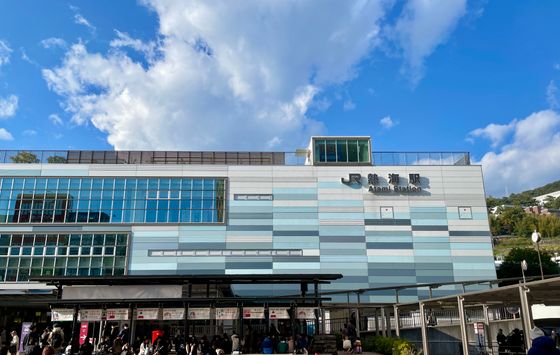
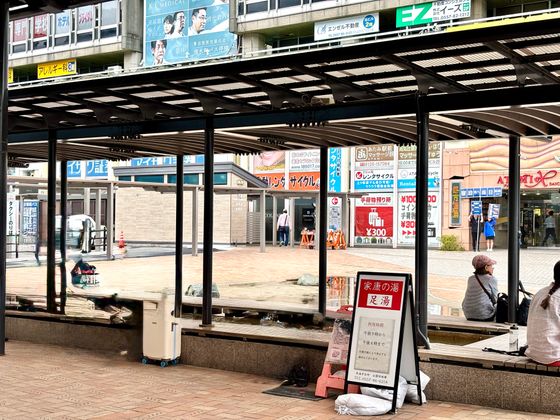
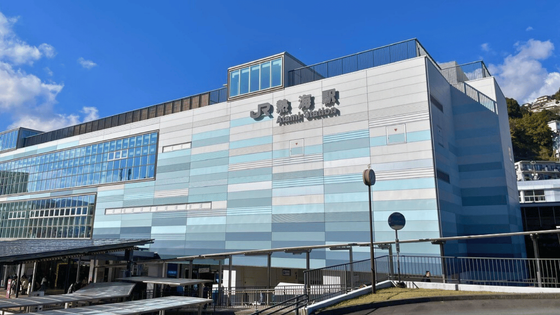
Atami Station is small, so you won't get lost. Right outside the ticket gate, there's a free foot bath called "Ieyasu no Yu" in the plaza. Warming your feet here upon arrival is a quintessential Atami experience. It's handy to have a towel with you. There's also a taxi stand in front of the station, which is helpful when you have a lot of luggage in hilly Atami.

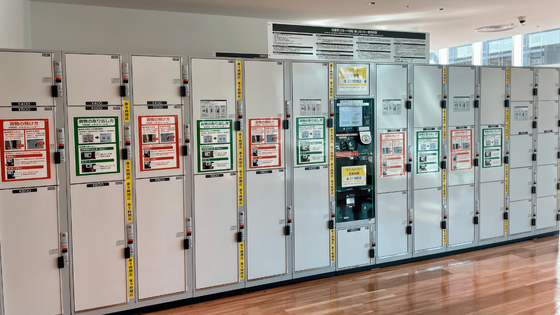
Store your suitcase in coin lockers outside the ticket gates or in the station building to travel light. Atami's tourist spots have many slopes, making it tiring to walk with luggage. Locker locations and sizes are detailed in the article below.
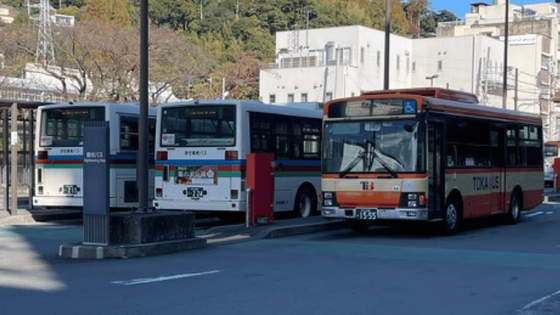
For travel from the station to the coast or tourist spots, the city buses departing from in front of the station are convenient. The article below explains how to ride and the main routes. If walking, remember that it's downhill from the station to the coast and uphill on the way back.
Is Atami Worth Visiting? Where to Stay
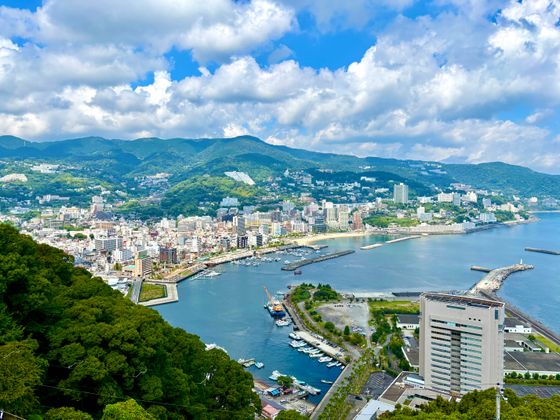
There aren't many towns with both the sea and onsen (hot spring) just about 40-50 minutes by Shinkansen from Tokyo. Even on a short visit, you can enjoy a foot bath near the station, a stroll along the coast, and sampling food in the shopping district, making it well worth a small trip from Tokyo. The main attractions are detailed in the Atami Attractions article, while information on how to enjoy the onsen and places for day visits is compiled in the "Atami Onsen Guide."
For accommodation options, refer to the article How to Choose Ryokan and Hotels in Atami. If you're traveling with family or a group and want a private onsen and sauna, consider the rental villa Atami's Vacation Villa Moon and Sun, located about 20 minutes by car from Atami Station on a hill. You can reach it by taking the Tokai Bus shuttle to Atami Shizenkyo (5 times a day, 570 yen one way for adults) or by taxi.
Frequently Asked Questions
Q&A
Q&A: How to Get from Tokyo to Atami
- Does the Shinkansen stop at Atami?
- Stops here. Only the Hikari and Kodama trains stop at Atami; the Nozomi passes through. Some Hikari trains also do not stop, so please check the information board before boarding.
- Is the Tokaido Line a JR line?
- Yes. The Tokaido Line from Tokyo to Atami is a JR East line, and you can use the JR Pass, JR Tokyo Wide Pass, or Suica to ride it.
- When can I book Shinkansen tickets? Do they sell out?
- Reserved seats can be purchased from 10 a.m. one month before the travel date. While they may sell out on weekends and holidays, non-reserved seats do not sell out.
- Is it cheaper to buy tickets online or at the station?
- The basic fare is the same. On weekdays, buying an unreserved seat ticket at the station ticket machine is the easiest option.
- Can you board from Shinagawa or Shin-Yokohama?
- You can board. The Hikari and Kodama trains that stop at Atami also stop at Shinagawa Station and Shin-Yokohama Station, and the regular Tokaido Line trains pass through Shinagawa Station and Yokohama Station.