Limited Express Azusa: Tickets, Seats & How to Ride from Tokyo
By Dynamic Japan Travel Editorial Team—Supervised by P-HAM Co., Ltd. (Licensed Travel Agency, Aichi No. 3-1590)
Contents
The Limited Express Azusa is a JR limited express train connecting Shinjuku Station in Tokyo and Matsumoto Station in Nagano Prefecture in about 2 hours and 30 minutes. It serves as the main means of transportation for visiting the Japanese Alps and the post towns of the Kiso Valley from Tokyo.
Having been born in Nagano Prefecture, the Azusa is the limited express train I've used most since childhood. Here, for tourists visiting Japan for the first time, I'll walk you through everything from buying tickets to boarding and the on-board facilities of the Limited Express Azusa.
Basic Information About the Limited Express Azusa
Here's a quick overview of the key points to know before using the Limited Express Azusa.
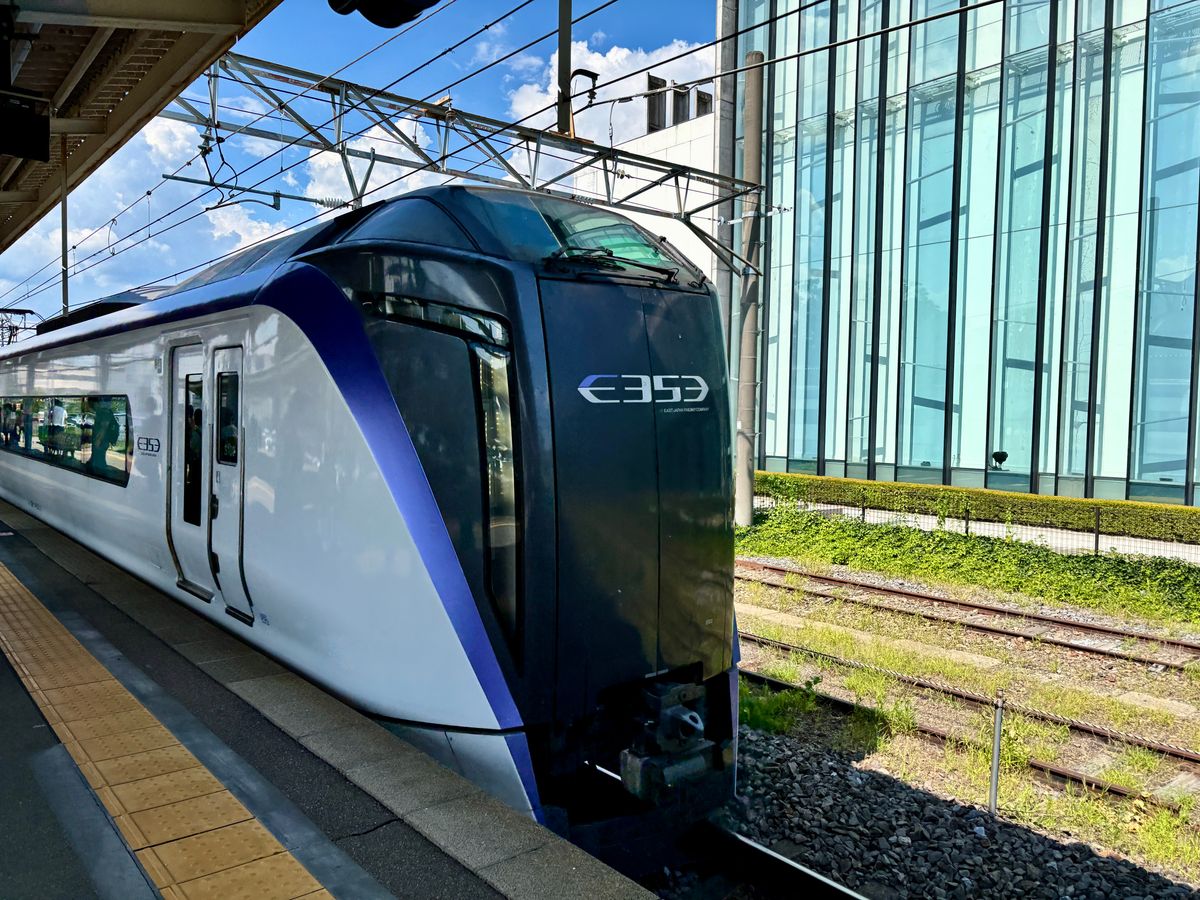
(Photo: Limited Express Azusa)
Route Map (Shinjuku to Matsumoto/Hakuba)
The Limited Express Azusa stops at the following major stations between Shinjuku and Matsumoto. Note that stops vary by train.
Main stops: Tokyo - Shinjuku - Tachikawa - Hachioji - Otsuki - Kofu - Kobuchizawa - Chino - Kami-Suwa - Okaya - Shiojiri - Matsumoto
Few trains start or end at Tokyo Station, so most passengers board at Shinjuku Station.
Shiojiri Station is the gateway to the Kiso Valley. Transferring here to the Limited Express Shinano gives you access to historic post towns such as Narai-juku, Kiso-Fukushima, and Tsumago-juku.
Travel Time and Service Frequency
Shinjuku → Matsumoto: approx. 2 hr 30 min
Shinjuku → Kofu: approx. 1 hr 30 min
Shinjuku → Kami-Suwa: approx. 2 hr 10 min
Shinjuku → Shiojiri: approx. 2 hr 20 min (transfer station for the Kiso Valley)
The Limited Express Azusa runs about once an hour. During some time slots it operates every 30 minutes, but missing a train can mean a long wait, so plan your schedule with some buffer time.
Two tickets required: a base fare ticket and a limited express ticket
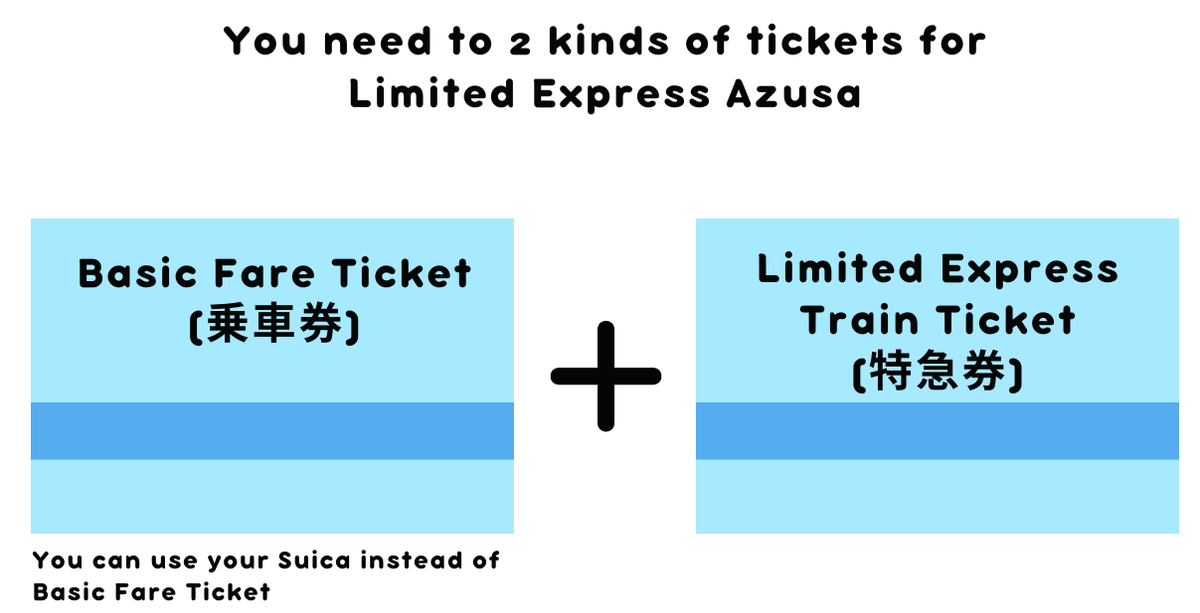
(The Limited Express Azusa requires two tickets: a base fare ticket and a limited express ticket)
To ride a limited express train in Japan, you need two types of tickets: a base fare ticket and a limited express ticket. Depending on how you purchase them at a ticket machine, they may sometimes be issued as a single combined ticket instead.
The most convenient method is to use an IC card such as Suica as your base fare ticket and purchase only the limited express ticket separately. Tap your Suica at the ticket gate, then show your limited express ticket on board.
The entire Shinjuku–Matsumoto route served by the Limited Express Azusa falls within the Suica coverage area. However, if you transfer from the Azusa to a local line, note that some stations do not accept IC cards.
All seats reserved (no non-reserved seating)
The Limited Express Azusa has no non-reserved seating. There are two types of tickets:
Reserved Seat Ticket (Shitei-seki Tokkyu-ken): Assigns you a specific train and seat number. Recommended, as trains tend to sell out on weekends and holidays.
Non-Reserved Seat Ticket (Zaseki Mishitei-ken): Specifies only the travel date. You may sit in any vacant seat. The price is the same as a reserved seat ticket.
A lamp above each seat indicates its status by color.
Red: Vacant
Yellow: Reserved from the next station
Green: Reserved as a designated seat
If you have a Non-Reserved Seat Ticket, sit in a seat with a red lamp.
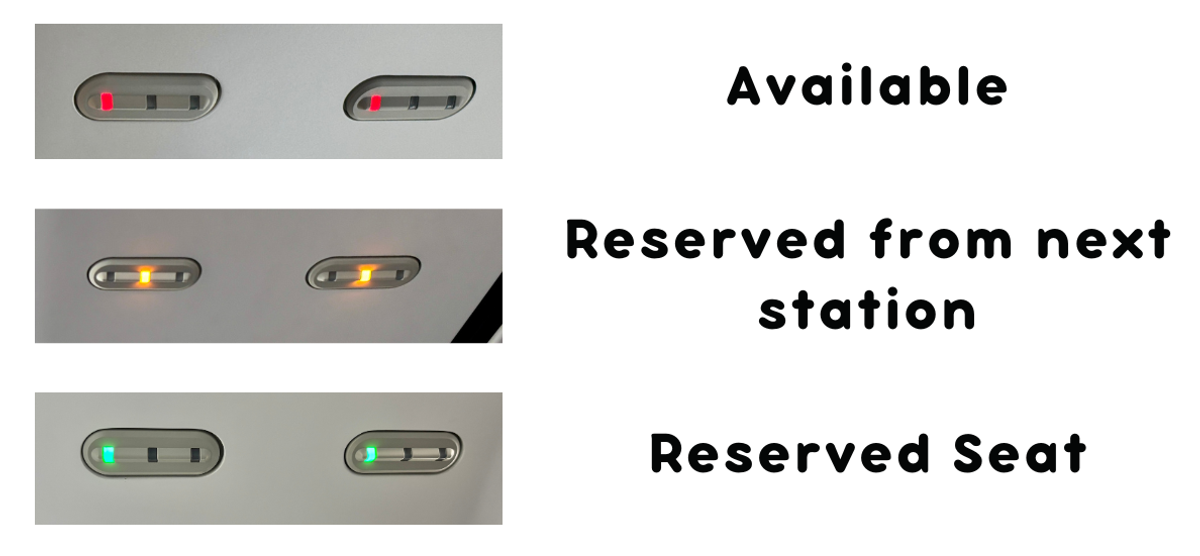
(Photo: Red indicates the seat is available.)
How to Use the Japan Rail Pass
The Japan Rail Pass (JR Pass) is an unlimited-ride pass for JR lines, available to foreign travelers. The Limited Express Azusa is covered by the Japan Rail Pass.
Boarding with the JR Pass
Since all seats on the Limited Express Azusa are reserved, we recommend getting a seat reservation ticket even when using the JR Pass. That said, it's also possible to board with just the JR Pass.
Reserved seating: Get a free reserved-seat ticket from a ticket machine (present your passport and JR Pass)
Non-reserved seat ticket: Board simply by showing your JR Pass — no ticket needed. Sit in a seat with a red light.
Please show your JR Pass when the conductor checks tickets on board.
How to Purchase Tickets for the Limited Express Azusa
Tickets for the Limited Express Azusa can be purchased online or at the station.
JR-EAST Train Reservation (Online Booking)
Foreign travelers can use the online booking site "JR-EAST Train Reservation."
English-language website
Accepts credit cards issued overseas
Reservations open one month before the travel date
Choose your preferred seat from a seating chart
For more details on JR-EAST Train Reservation, please visit the official website.
Purchase at a station ticket machine
Buying at the station is the most reliable method.
Look for the "green ticket machine" near the ticket gates, switch the display to English, and select "Limited Express." Follow the on-screen instructions to choose your departure and arrival stations, date and time, and seat type.
If you're using Suica as your base fare ticket, purchase only the limited express ticket. Payment can be made with cash, credit card, or an IC card.
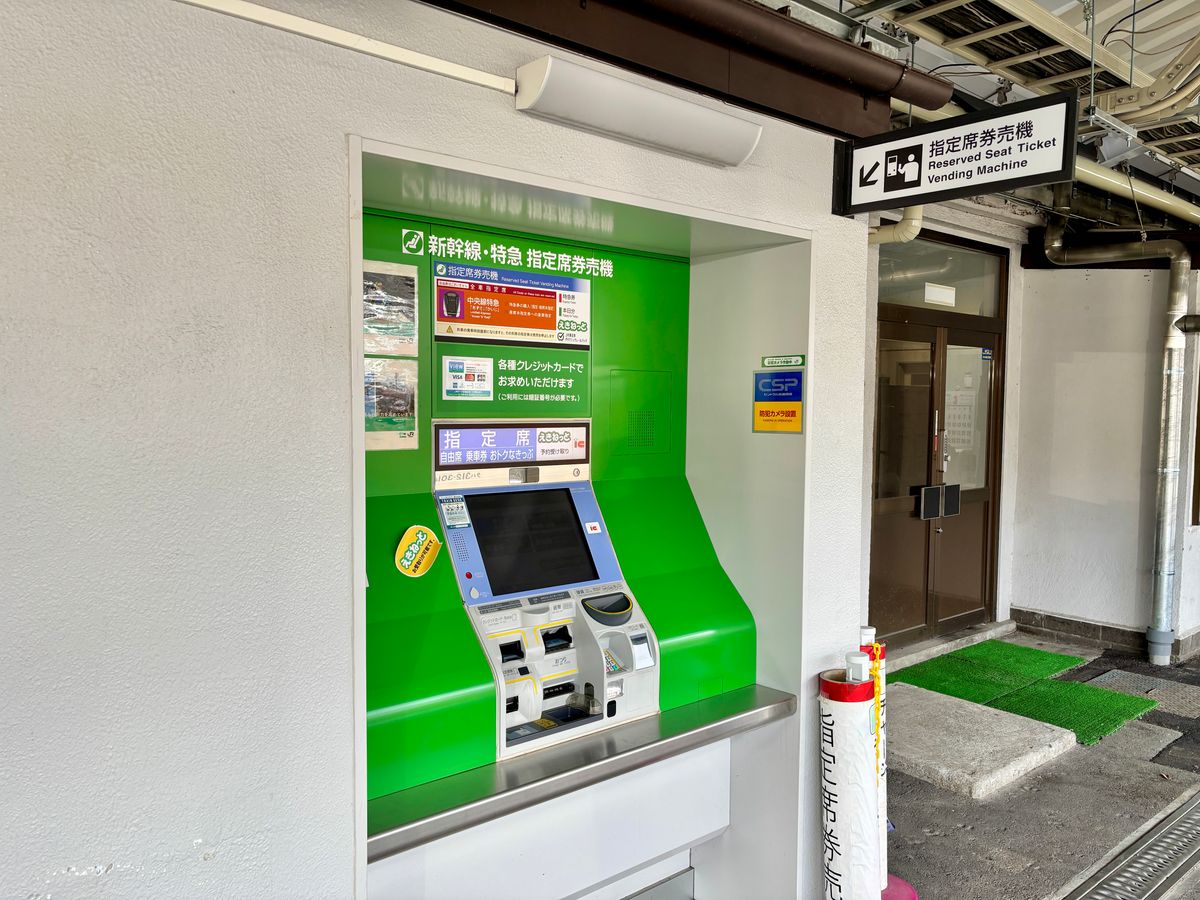
(Photo: Green ticket machine)
How to Board the Limited Express Azusa
Here we'll cover how to board the Limited Express Azusa and its onboard facilities.
Boarding at Shinjuku Station
The Limited Express Azusa departs from Platform 9 or 10 at Shinjuku Station (some trains use Platform 7). Look for the blue "JR Chuo Line" sign and follow the directional signs to the platform.
Shinjuku Station is large, so allow yourself plenty of time. A 10-15 minute transfer window should be enough.
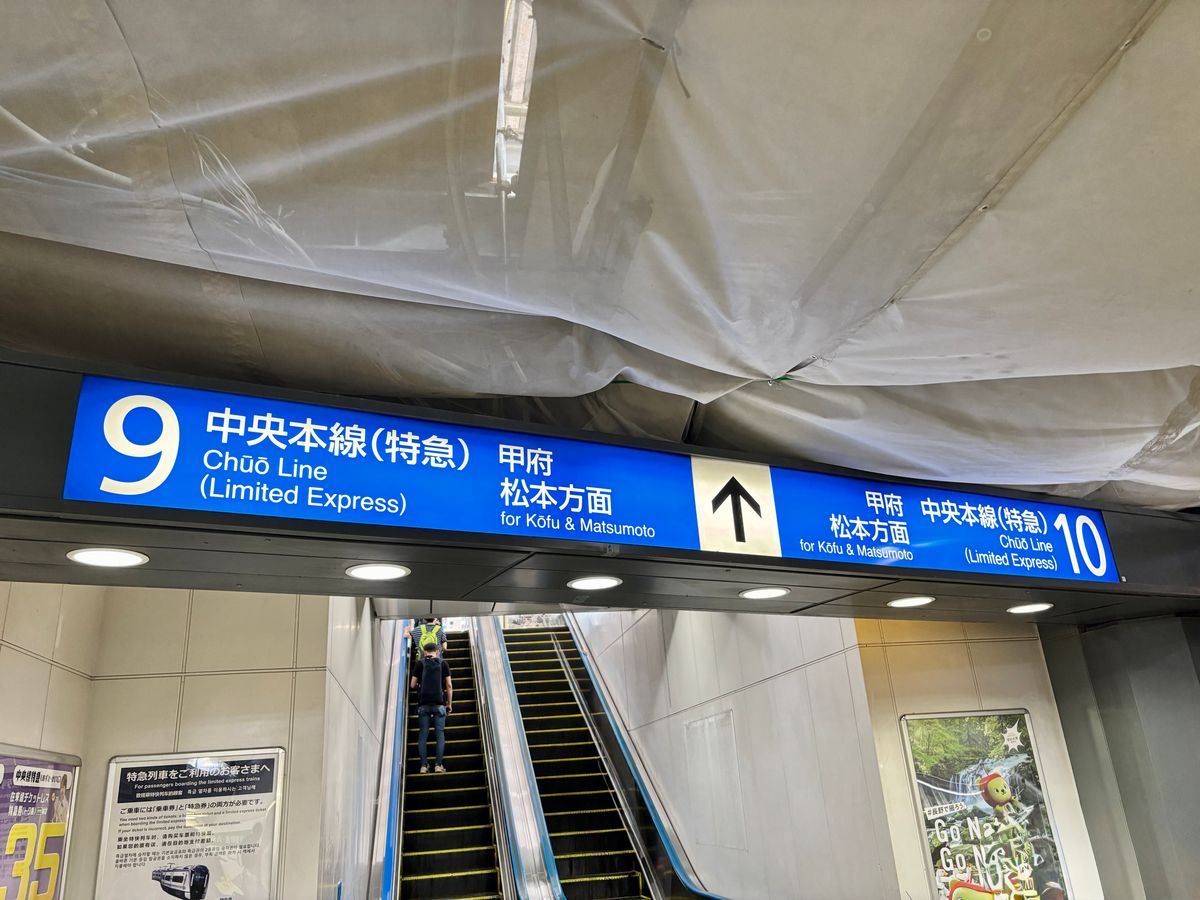
(Photo: Limited Express Azusa platform at Shinjuku Station)
Buy Food and Drinks in Advance
Onboard sales on the Limited Express Azusa are limited to drinks and snacks — no bento boxes are sold. We recommend buying your meal beforehand at a station convenience store or ekiben (station bento) counter.
Onboard Facilities
The Azusa Limited Express has a 2+2 seating layout with a center aisle.
A key feature of the Azusa Limited Express is that every seat has a power outlet. Free Wi-Fi is also available.
Seats and Views
Seat Layout:
Seats A and D: window side
Seats B and C: aisle side
For the best views:
Shinjuku → Matsumoto: The left side (Seats C and D) is recommended — you'll get views of Mt. Yatsugatake, the Southern Japan Alps (Minami Alps), and Lake Suwa
Matsumoto → Shinjuku: The right side (Seats A and B) is recommended
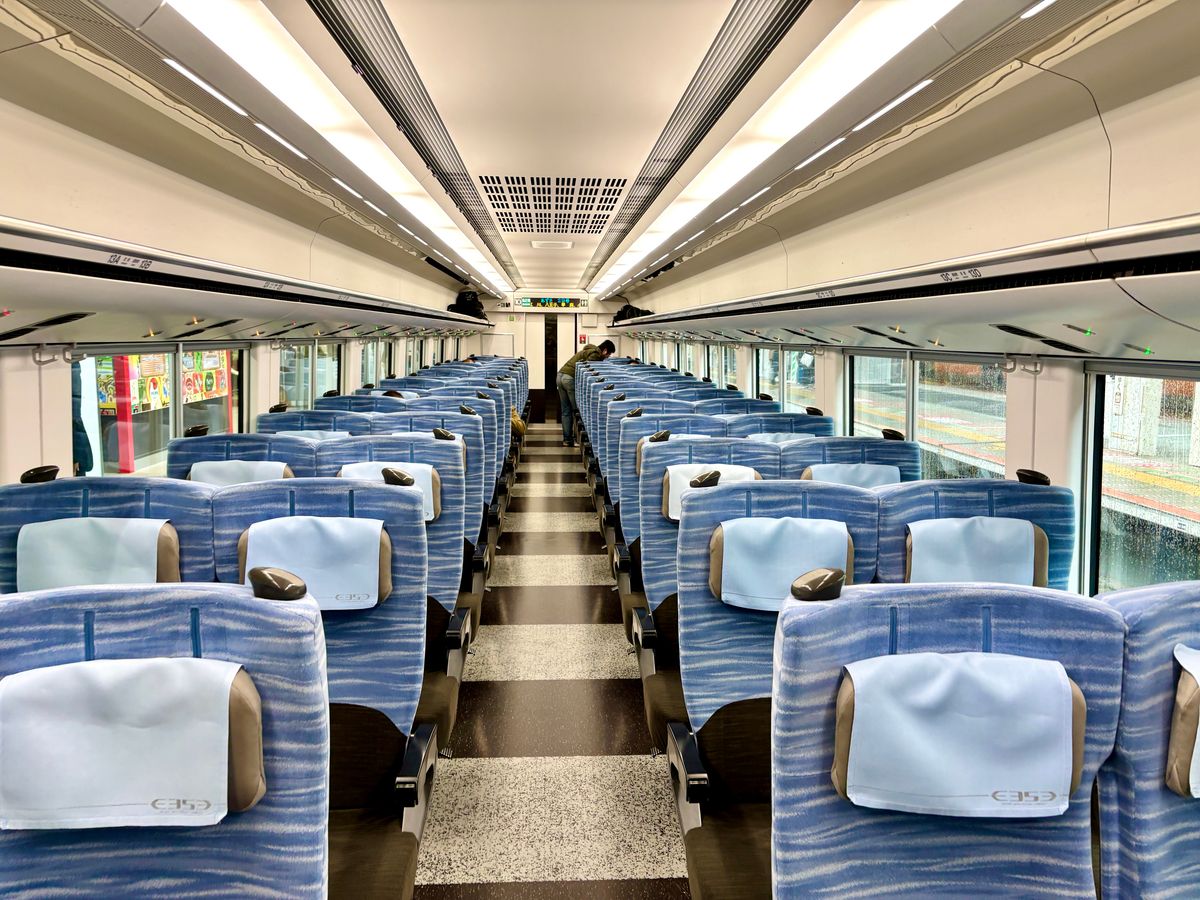
(Photo: Interior of the Azusa Limited Express)
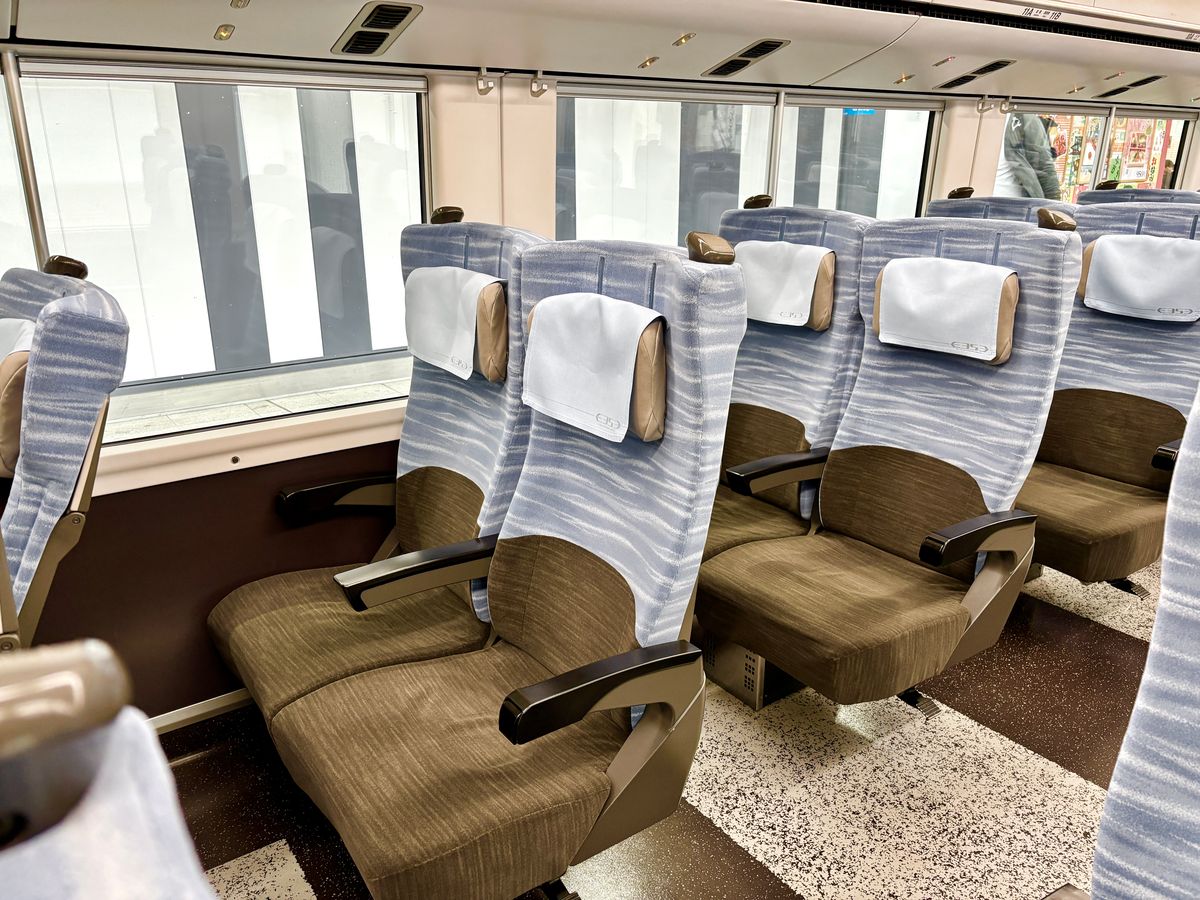
(Photo: Seats on the Azusa Limited Express)
Toilets
Toilets are located in every car, or at least once every two cars. You can check the facilities available in each car on the guide posted at every seat.
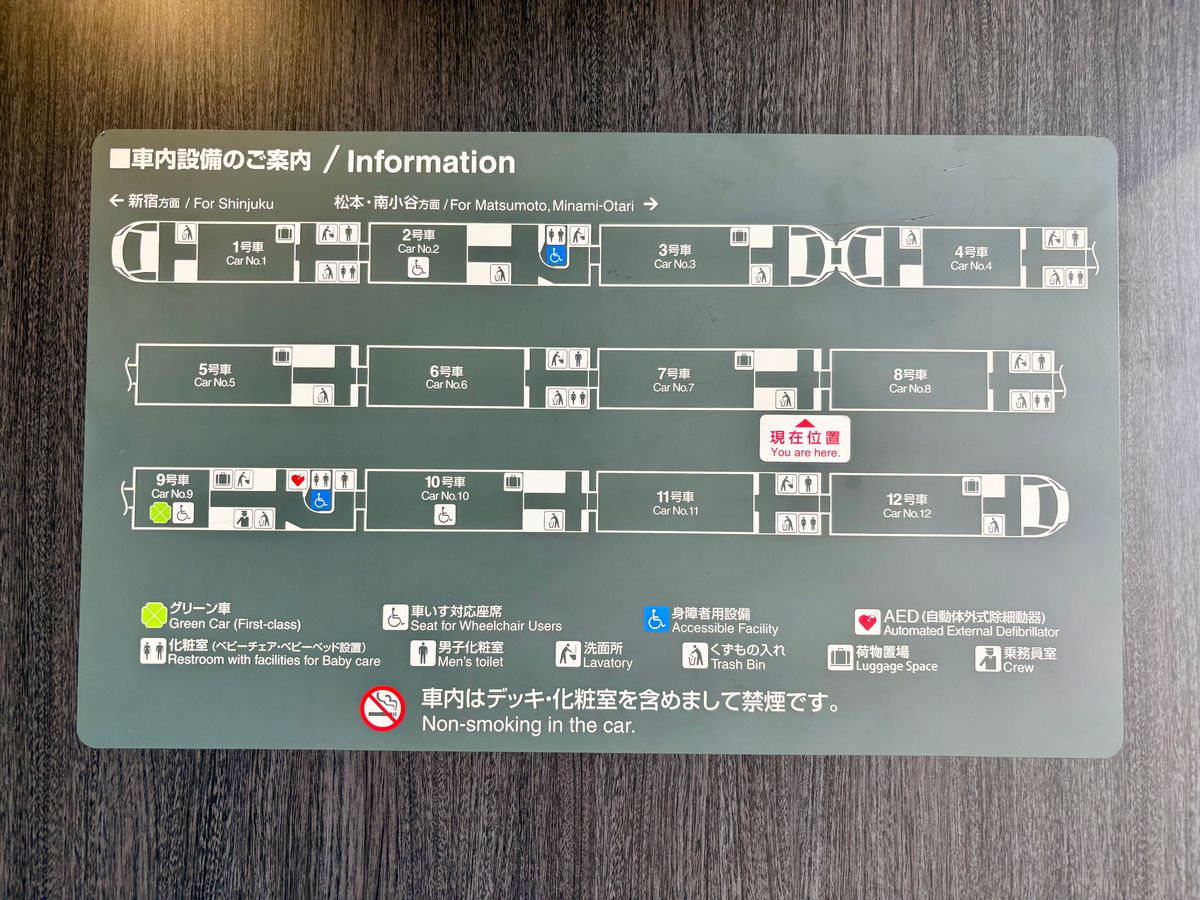
(Photo: Seat-side guide showing each car's facilities)
Luggage Space
This section covers luggage space — one of the most important considerations for tourists.
Overhead luggage shelf
Fits carry-on-sized suitcases (55cm x 40cm x 25cm). Even 60L-class hard-shell carry-ons will fit.
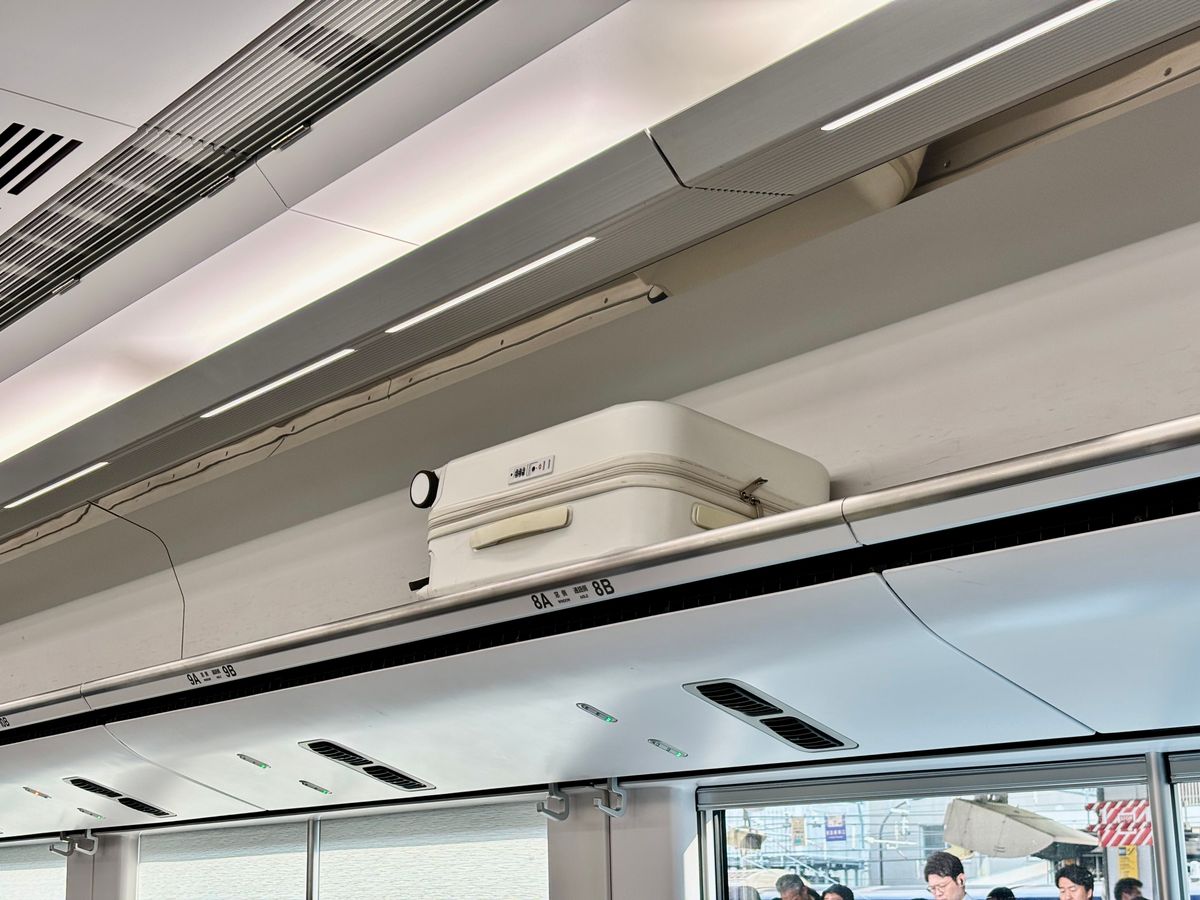
(Photo: overhead luggage shelf above the seats)
Large luggage racks at the rear of the car
Two-tier luggage racks are installed on the Matsumoto-side deck of cars 1, 3, 5, 7, 9, 10, and 12.
Top shelf: space for 2-3 carry-on-sized bags
Bottom shelf: fits large trunks with combined dimensions (length + width + height) over 160cm
Straps included to secure luggage
First-come, first-served — no reservation needed
If you're traveling with large luggage, it's convenient to reserve a seat near these cars. They offer more storage space than the Limited Express Shinano.
Transferring at Shiojiri Station (toward the Kiso Valley)
Transfer to the Limited Express Shinano at Shiojiri Station to reach the post towns of the Kiso Valley.
Narai-juku (Narai): about 25 minutes from Shiojiri
Kiso-Fukushima: about 40 minutes from Shiojiri
Nagiso Station (nearest to Tsumago-juku): about 1 hour 10 minutes from Shiojiri
The transfer takes about 10-15 minutes, and you can change trains without leaving the ticket gates. In some cases, a local line may be used instead.
For more details, see the articles below.