
How to Visit Atera Valley from Tokyo Without a Car
By Dynamic Japan Travel Editorial Team—Supervised by P-HAM Co., Ltd. (Licensed Travel Agency, Aichi No. 3-1590)
Contents
Can you believe the color of this water?
A place like this really exists deep in the mountains of Nagano Prefecture.
The first time I saw a photo, I thought, "This has to be edited, right?" The water is an unbelievable color—somewhere between emerald green and turquoise blue. It looks like a tropical beach. But this is Japan, and you can get here in about 3 to 4 hours from Tokyo.
Atera Valley (Atera Keikoku). This hidden-gem scenic spot sits in Nagano Prefecture, right in the heart of Japan. The water here is known as "Atera Blue," and once you see it, you'll never forget it.
What is "Atera Blue"? Why is the water this color?
The moment I arrived at the valley and first saw the water, I was struck by how clear it was.
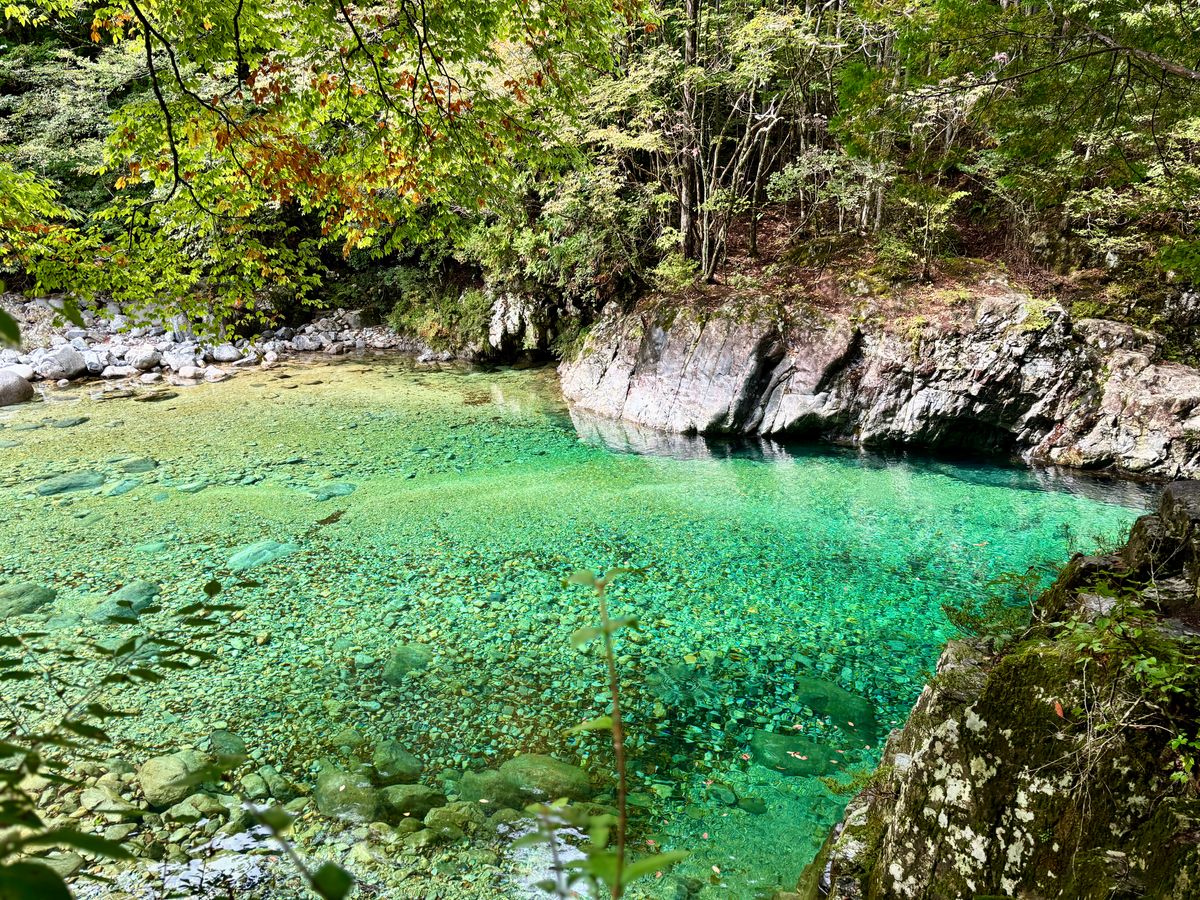
You can see straight down to the riverbed. And it's not just clear—the water shimmers in a blue-green hue. When sunlight hits it, it's as beautiful as molten gemstones.
Why does the water turn this color?
Long ago, there was a volcano in this area. The riverbed is scattered with white stones left behind by that volcano. When ultra-clear water flows down from the mountains over these stones, the light reflects in a curious way, giving the water its blue-green glow.
It holds its own against some of the world's most famous clear waters:
Plitvice Lakes, Croatia
Jiuzhaigou, China
Blue Grotto, Capri, Italy
But what makes Atera Valley truly special is that so few people visit. It's a place well worth seeing now, before it becomes too well known.
Highlights of Atera Valley!
Here are a few reasons why we recommend Atera Valley to visitors coming to Japan!
Enjoy forest bathing in rural Japan, away from the crowds
Tokyo, Kyoto, Osaka… the famous cities are wonderful, but this is the real Japan.
A small village of about 1,800 people
Surrounded by deep forests and mountains
Warm, friendly locals
No convenience stores, no Starbucks (and that's a good thing!)
For anyone tired of crowded tourist spots, this is the perfect refresh.
Visit alongside the Nakasendo, the historic trail once walked by samurai
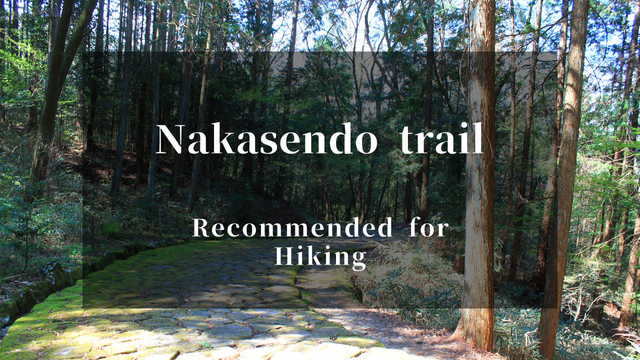
Atera Valley is close to the Nakasendo, a trail highly recommended for anyone who wants to enjoy hiking in Japan.
During the Edo period (1603–1868), samurai traveled between Tokyo (then called Edo) and Kyoto along a route known as the Nakasendo.
Atera Valley lies near this historic route. Many travelers combine their visit with Tsumago-juku and Magome-juku, post towns that still preserve their Edo-period streetscapes.
A perfect combination for anyone who enjoys forest bathing, nature, and strolling through historic towns!
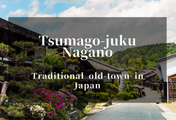
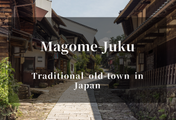
No car needed to get there!
Many rural areas in Japan are hard to reach without a car. But Atera Gorge (Atera Keikoku) can be reached by train and taxi alone.
This is a really important point for international travelers. As I'll explain in detail below, you can take the Shinkansen or the Super Azusa limited express from Tokyo to the nearest station, then easily reach the gorge by taxi or on foot.
My visit to Atera Gorge: a firsthand report
Here's my firsthand account of walking through Atera Gorge.
20-minute walk from Nojiri Station
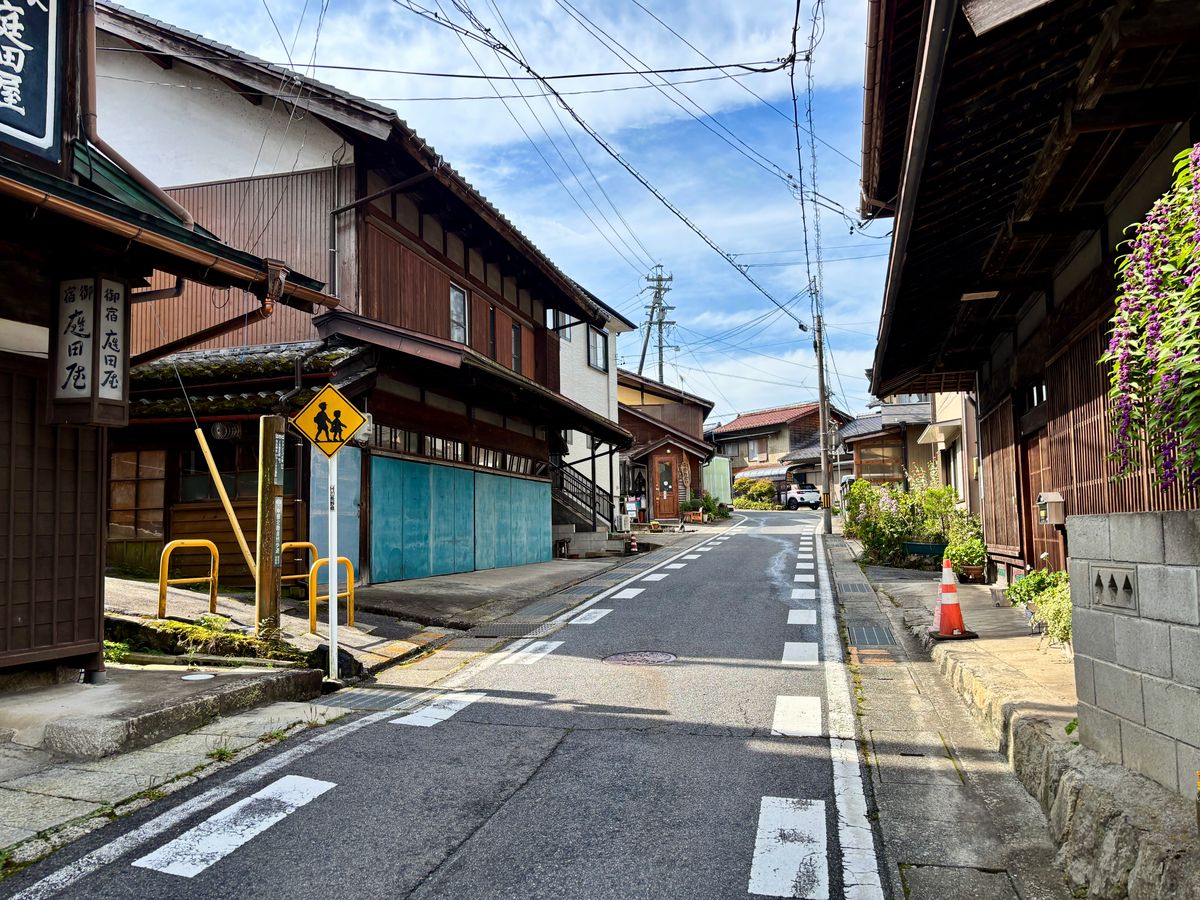
The nearest station to Atera Gorge is Nojiri Station, which is on a JR line and covered by the JR Pass. From Nojiri Station, it's about a 20-minute walk to the entrance of the gorge.
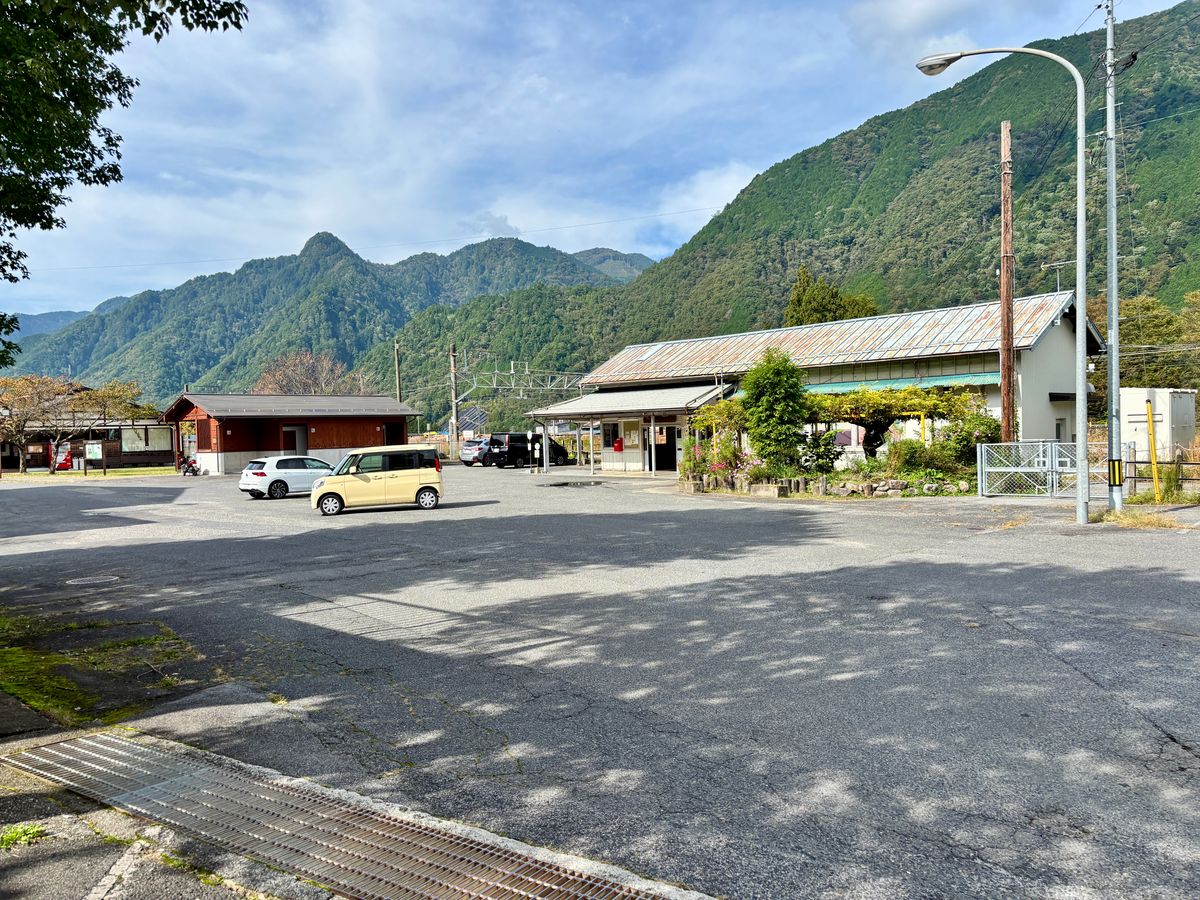
Just outside Nojiri Station lies Nojiri-juku, one of the old post towns along the Nakasendo highway, where many international visitors on hiking trips can often be seen walking. It's quieter than Tsumago-juku or Magome-juku, but there's a café, so it could be worth a stop if you have time.
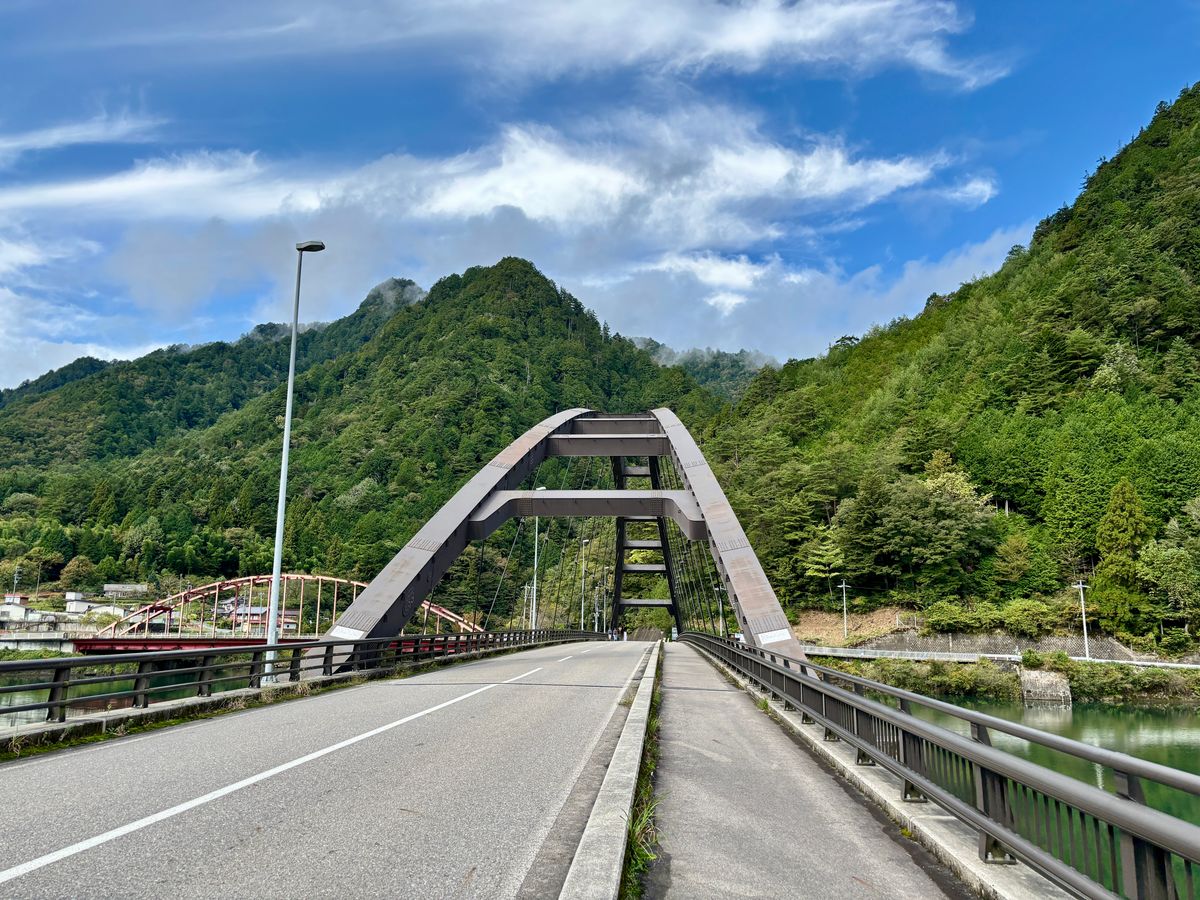
Beautiful views of the Kiso River from Atera Bridge
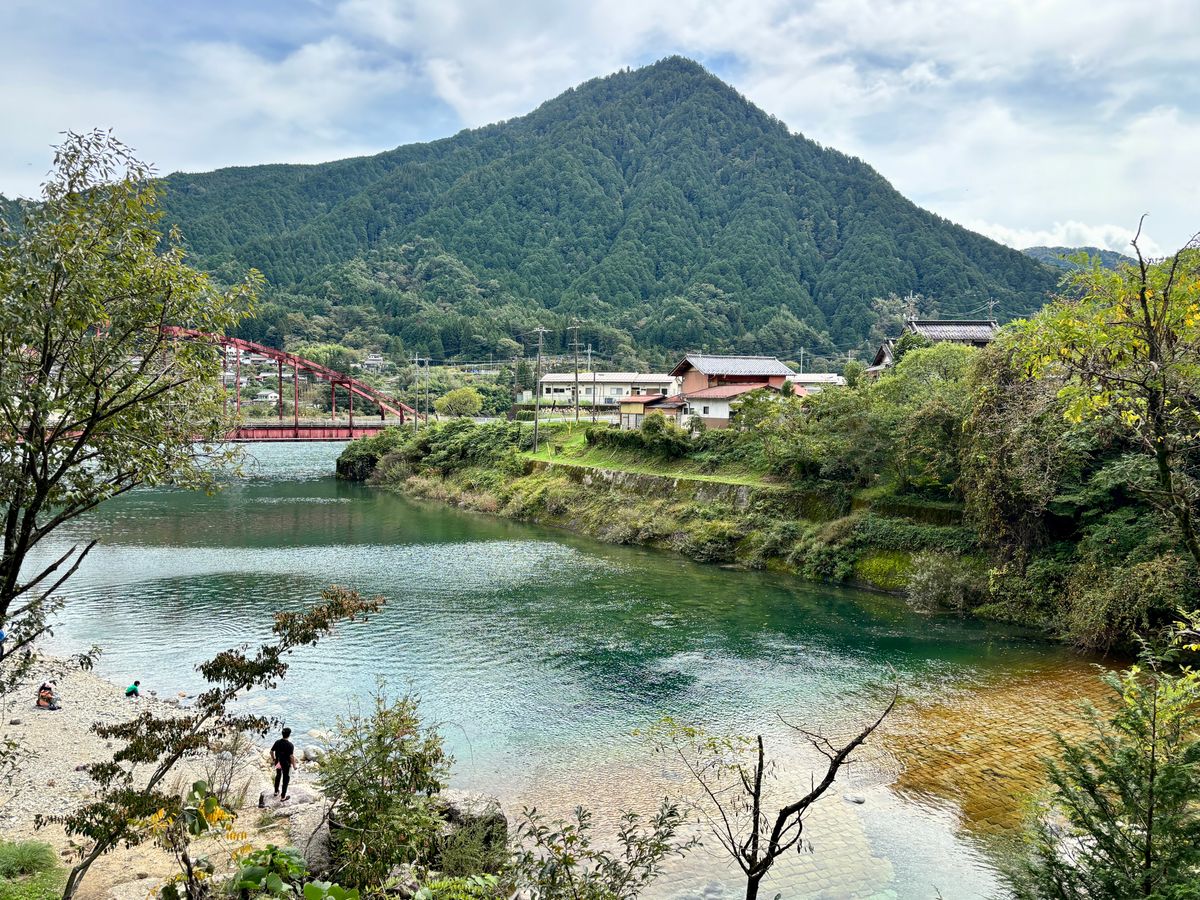
As you walk from Nojiri Station toward the entrance of Atera Valley (Atera Keikoku), you'll eventually see the Atera Bridge crossing the Kiso River.
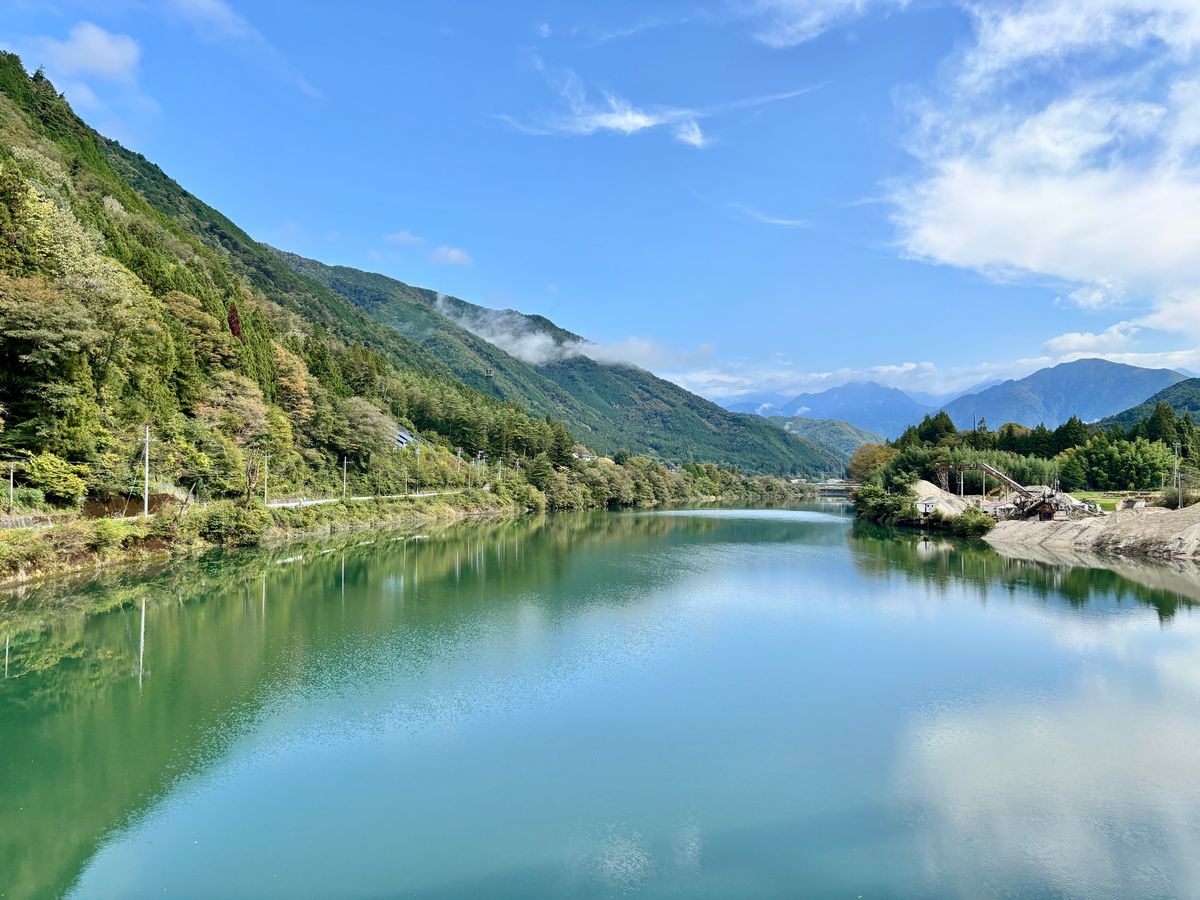
The view of the Kiso River from Atera Bridge was truly beautiful. It's such a quiet town that simply walking through it felt very soothing.
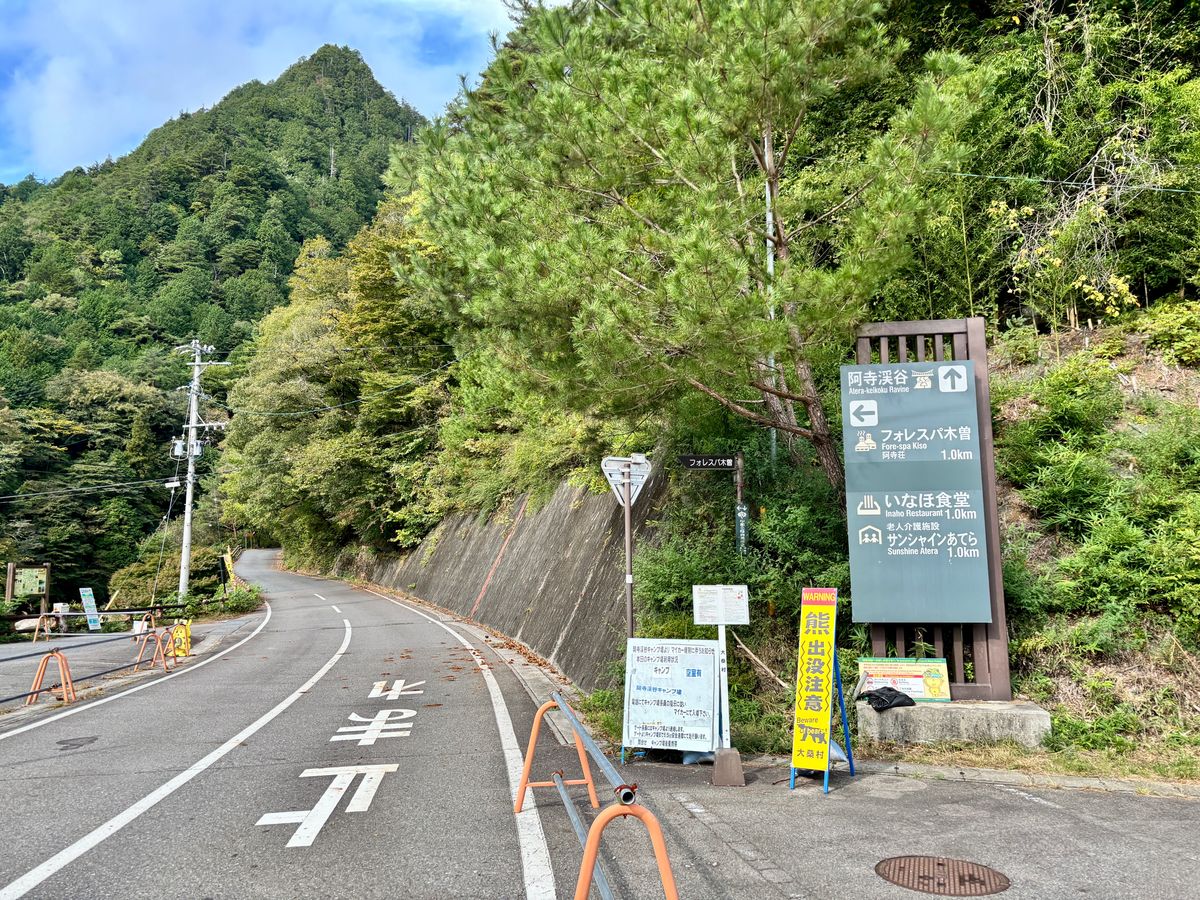
Crossing Atera Bridge to the Entrance of Atera Valley
Once you cross Atera Bridge, an uphill path continues toward Atera Valley. Climb a little further along the path shown in the photo below, and you'll see the sign marking the entrance to Atera Valley. This is where Atera Valley begins. Walking to the far end of the valley covers a distance of 6.3 km, taking about 2 hours on foot.
There's also a parking lot about midway through Atera Valley (roughly 3 km from the entrance), so you can drive there instead. About half of the visitors walked from the entrance, while the other half drove to the parking lot. We chose to walk from the entrance to enjoy some forest bathing in the beautiful weather.
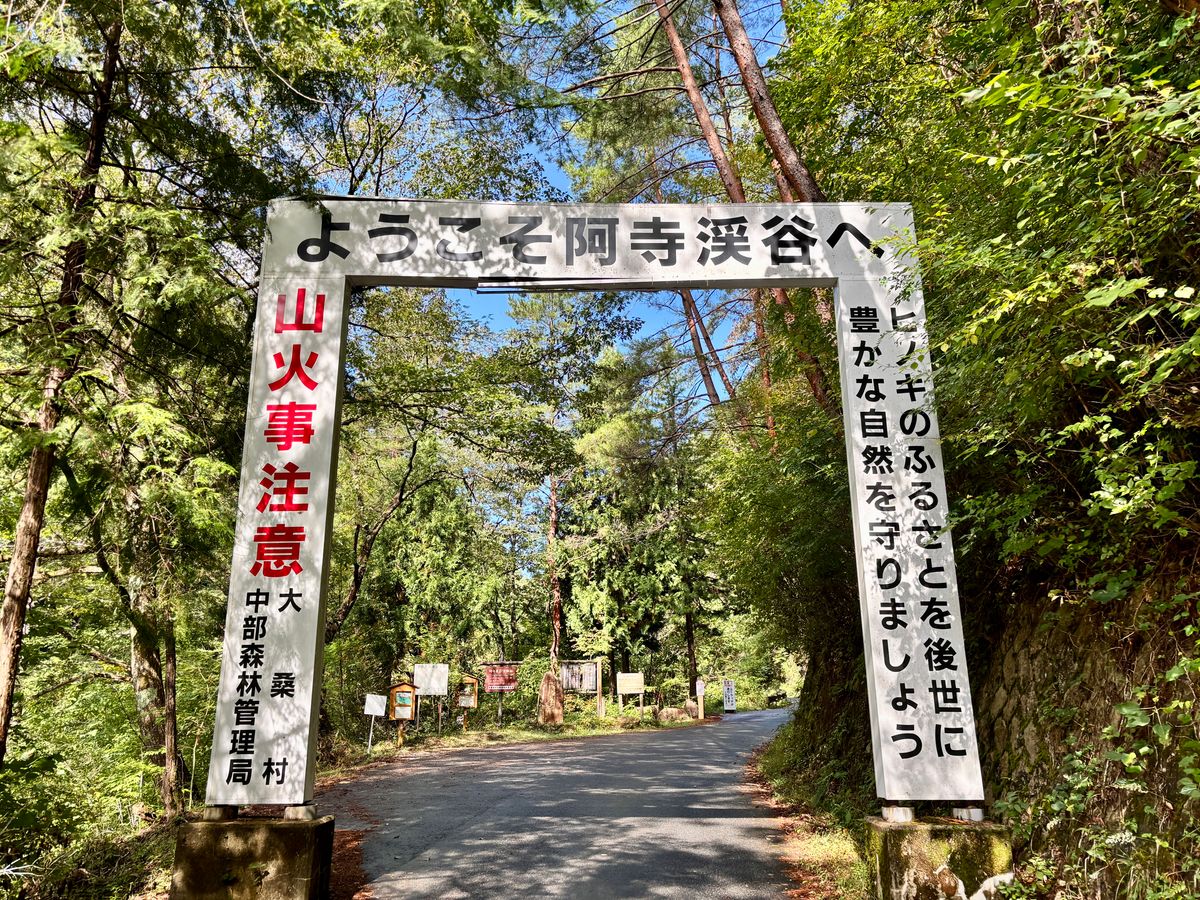
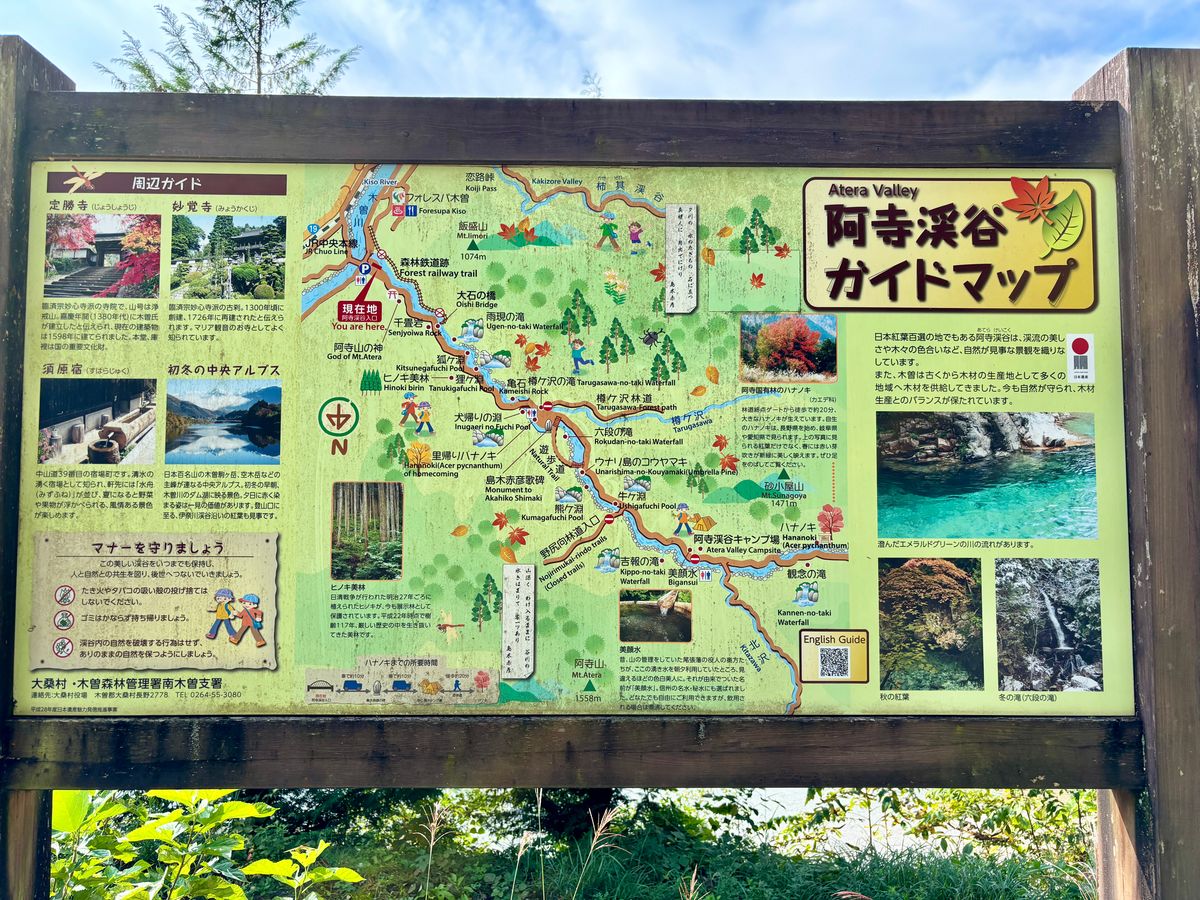
English Brochure for Atera Valley
You can view the English brochure for Atera Valley via the link below. Since mobile signal disappears partway through Atera Valley, we recommend downloading the English guidebook in advance.
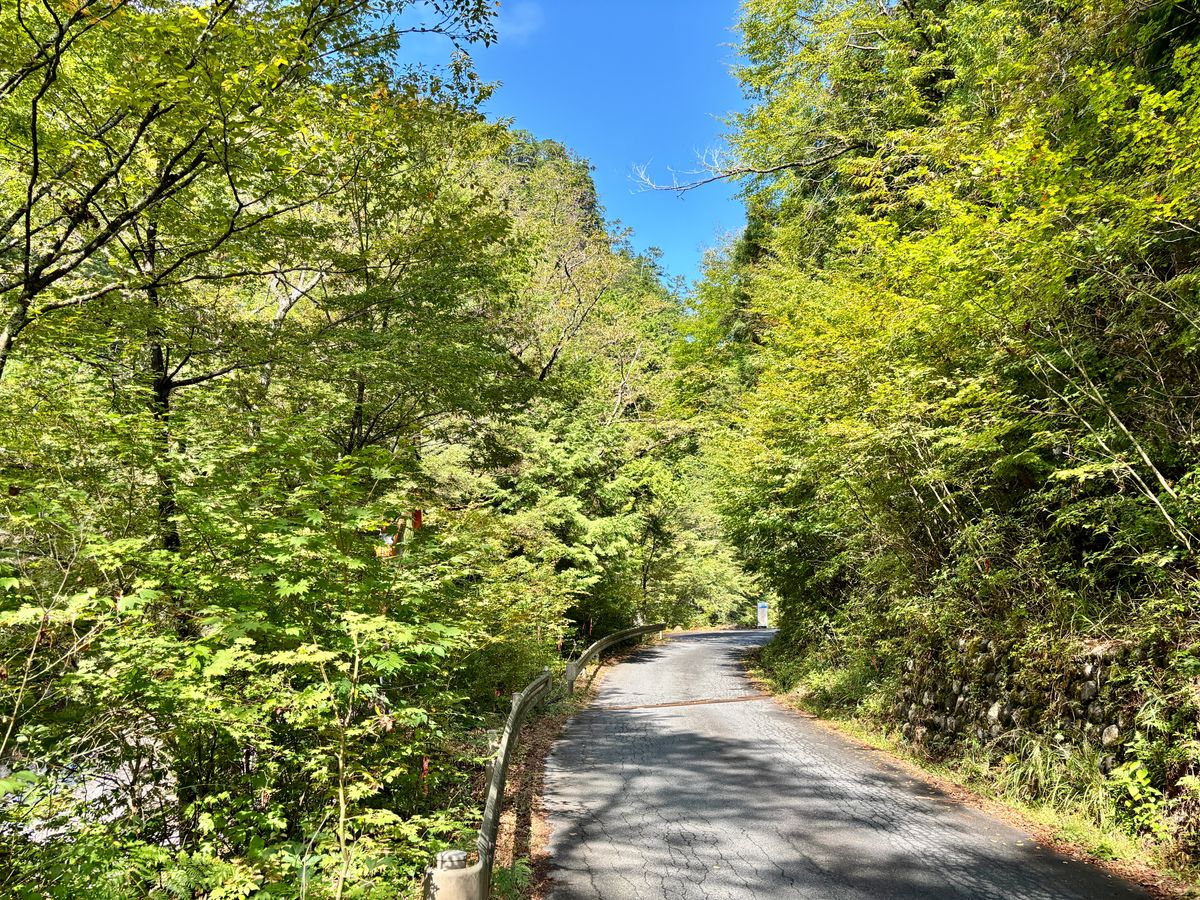
The Path Is Paved and Easy to Walk
The paths in Atera Valley are paved with concrete, except for the walking trail at the far end, making them easy to walk. We wore sneakers, but if you plan to go down to the river or walk the trail at the far end, trekking shoes are recommended.
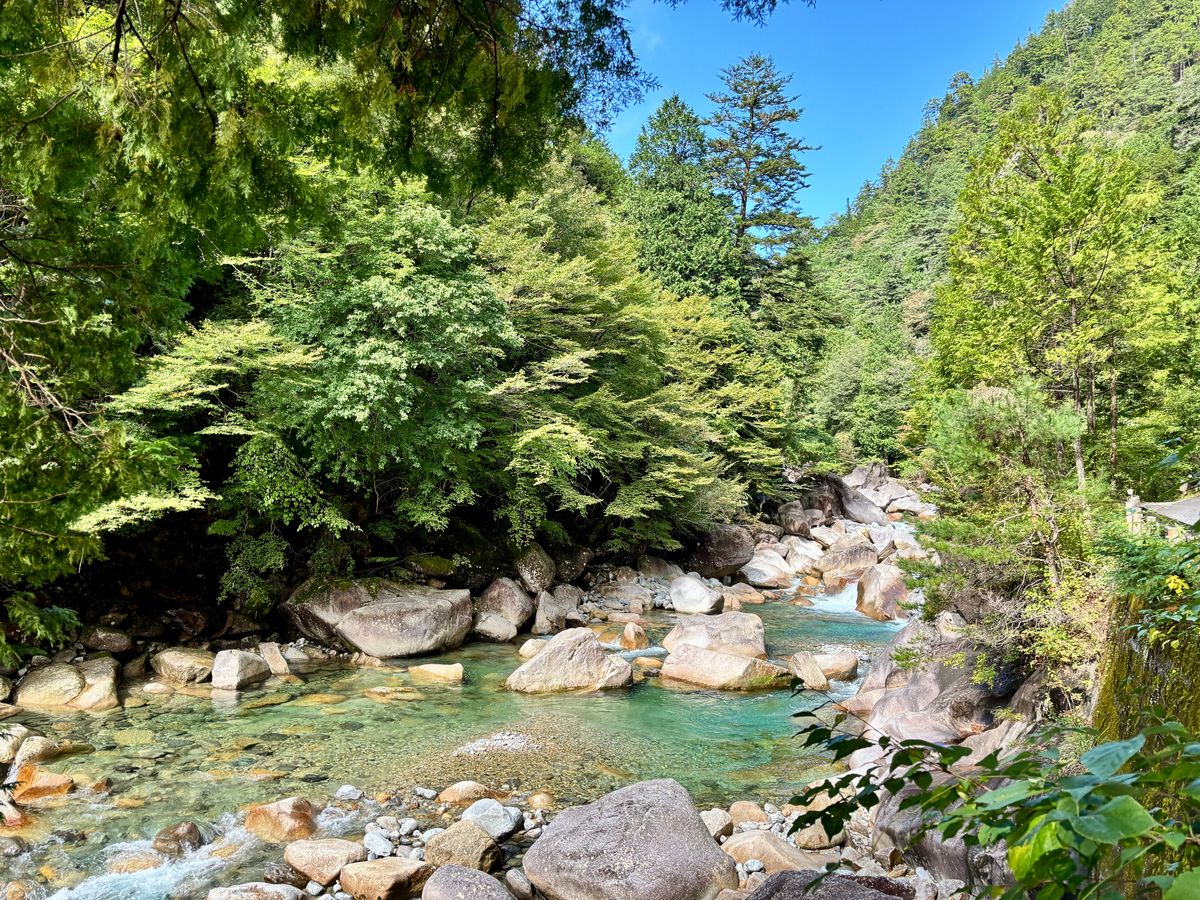
Looking down to the left from the road, you can catch glimpses of the strikingly beautiful Atera Gorge (Aterakeikoku) here and there. The clarity of the water is astonishing.
The First Highlight of Atera Gorge: Remains of the Forest Railway
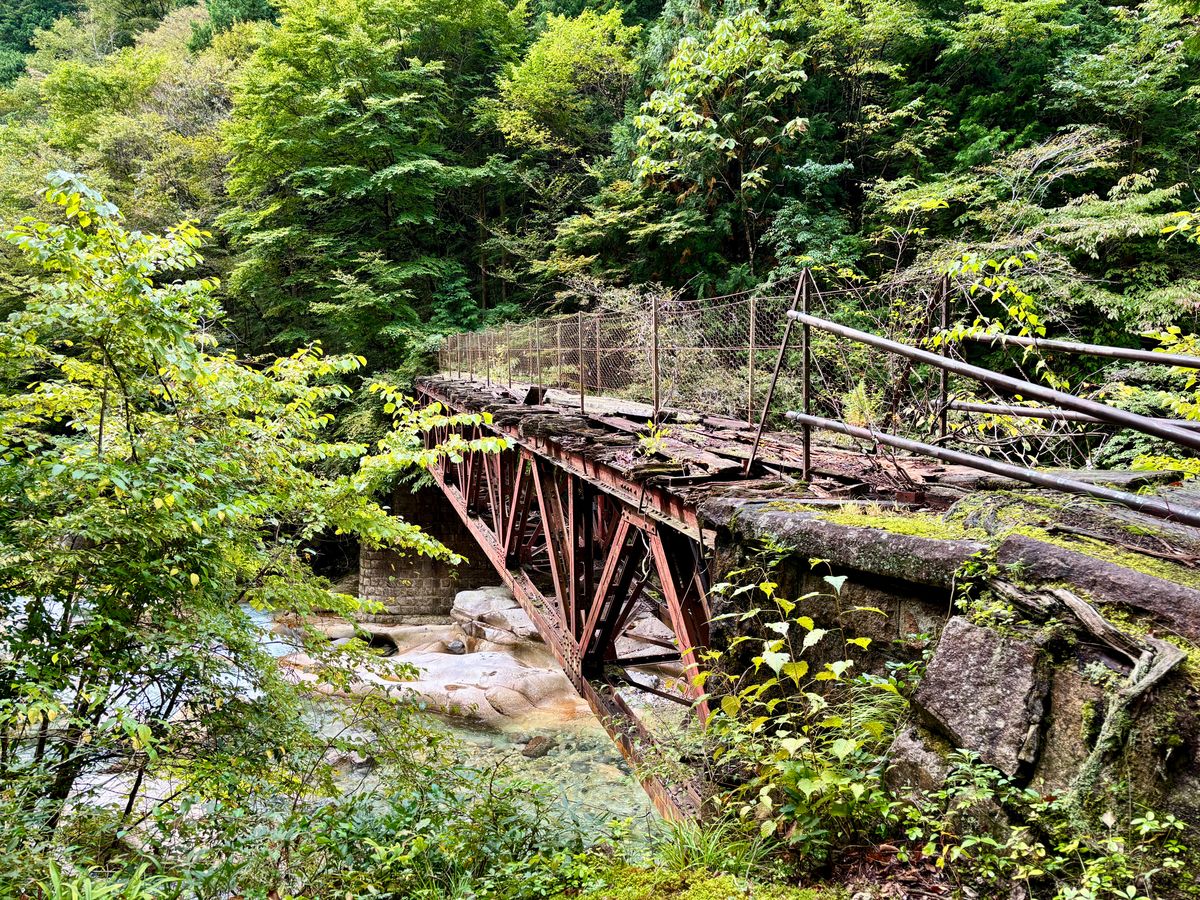
About 20 minutes' walk from the entrance to Atera Gorge, the first thing you'll come across is the remains of an old forest railway.
From 1915 to 1963, a small railway called the Atera Forest Railway operated here. It was built to transport hinoki (Japanese cypress), a special type of wood. Hinoki is Japan's most prized timber, used in the construction of shrines and temples.
This Kiso area was once a major center of hinoki logging, and Ise Grand Shrine (Ise Jingu), one of Japan's most important shrines, was built using timber from this very region. Even today, traces of the old railway can be found along the gorge trail—walking here feels like traveling back in time.
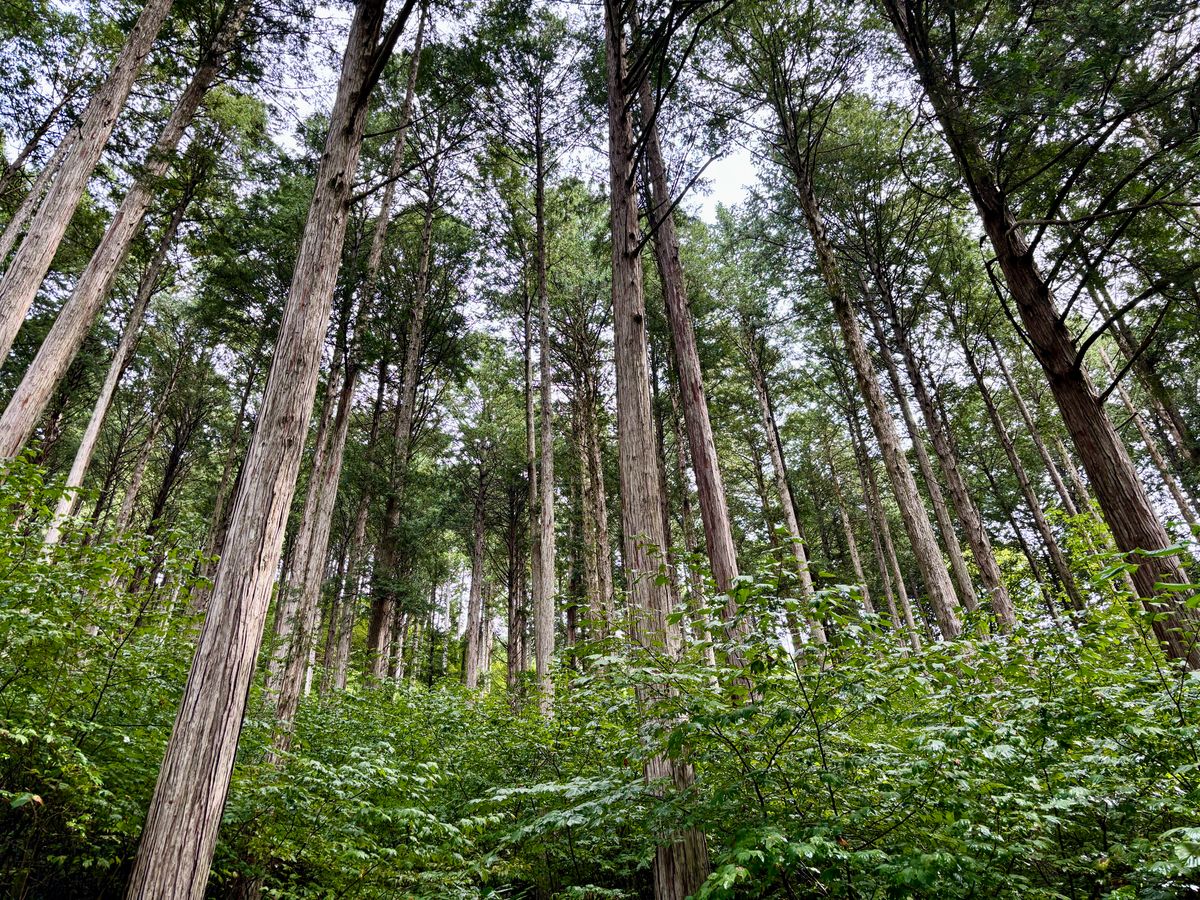
If you have time, Akasawa Natural Recreational Forest, also located in the Kiso area, is another great spot for forest bathing and trekking.
Tanukigafuchi/Kitsunegafuchi: A Guaranteed Instagram-Worthy Spot
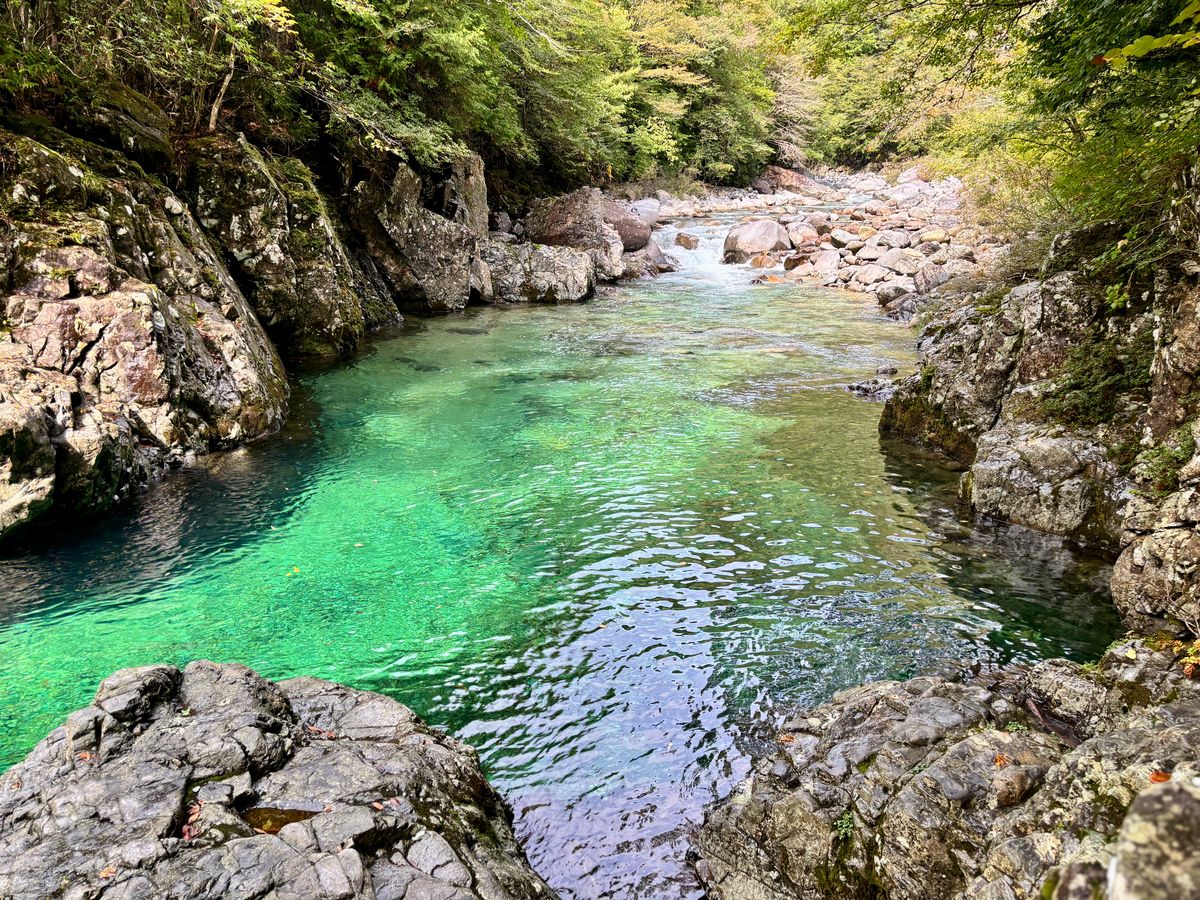
About 15 minutes past the old forest railway site, you'll come across Tanukigafuchi. Japan has long-held legends that tanuki (raccoon dogs) and foxes can shapeshift into humans. According to local lore, this is the spot where these shapeshifting creatures would check their reflection in the water to make sure they'd transformed properly before appearing as humans.
This spot draws gasps of admiration from many visitors. It's a pool-like area with deep, jewel-toned blue-green water and incredible clarity—you can clearly see the stones on the riverbed. You can walk down close to the water's edge, so be sure to take a closer look.
Some people occasionally swim here.
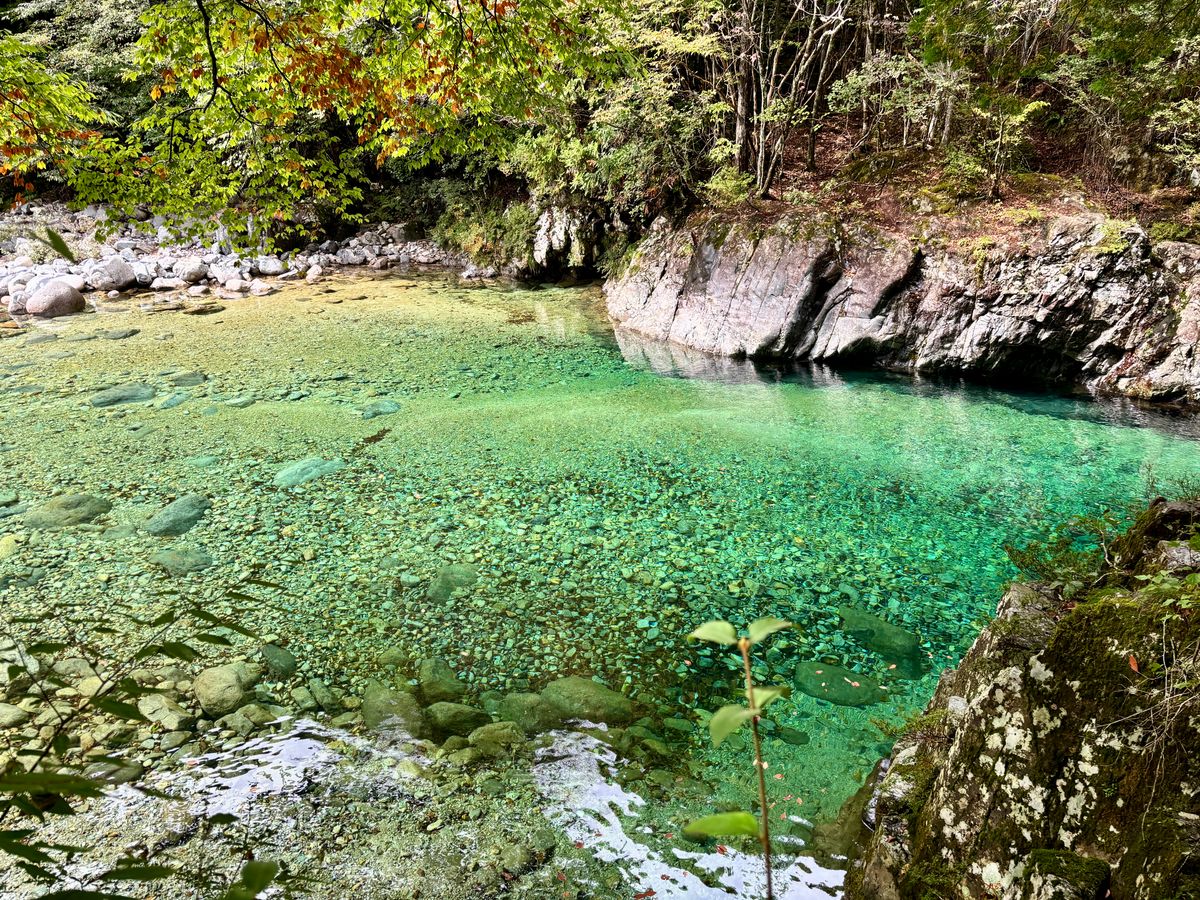
Continuing further upstream from here, you'll find a parking area, restrooms, and a suspension bridge, along with a walking path that resembles a mountain trail.
How to Get to Atera Gorge: An Easy Spot to Reach Without a Car!
Atera Gorge is an easy spot to reach even without your own car. Here, we'll mainly cover how to get there from Tokyo.
Step 1: From Tokyo/Shinjuku to Nojiri Station (About 3 Hours 20 Minutes)
The nearest station to Atera Gorge is Nojiri Station. There are two routes from Tokyo: taking the Tokaido Shinkansen to Nagoya Station and continuing from there, or taking the Limited Express Azusa from Shinjuku Station to Shiojiri Station and then continuing on to Nojiri Station.
The fastest option is to take the Tokaido Shinkansen all the way to Nagoya Station, though as a shinkansen it comes at a higher cost. If you don't mind an extra 30 minutes to an hour, we recommend the Limited Express Azusa from Shinjuku Station to Shiojiri Station instead.
For more details, see the article below.
Option A: Taking the Limited Express Azusa
Limited Express "Azusa" (Tokkyu Azusa): Shinjuku Station → Shiojiri Station (2 hours 30 minutes)
Limited Express "Shinano" (Tokkyu Shinano) + JR Chuo Main Line: Shiojiri Station → Nojiri Station (1 hour)
Option B: Using the Tokaido Shinkansen
Tokaido Shinkansen "Nozomi" (JR Bullet Train, Shinkansen): Tokyo Station → Nagoya Station (1 hr 40 min)
Limited Express "Shinano" + JR Chuo Main Line: Nagoya Station → Nojiri Station (1 hr 30 min)
How to Book Train Tickets
JR East ticket counter (Midori no Madoguchi)
Online booking: https://www.eki-net.com/en/jreast-train-reservation/Top/Index
Points to Note
JR Pass accepted (highly recommended for foreign travelers!)
Not all "Shinano" limited express trains stop at Nojiri Station
Please check the stops in advance
Suica/Pasmo cards cannot be used at Nojiri Station (a paper ticket is required)
Step 2: From Nojiri Station to Atera Valley (3 Options)
From Nojiri Station to Atera Valley, we recommend either a taxi or walking. It's only about a 20-minute walk, and the town is surrounded by beautiful mountain scenery, making the walk a great option too.
Taxis are often not waiting at the station, so you'll need to call one (Nagiso Kanko Taxi: +81-(0)264-55-4155).
Taxi: about 7 minutes, approx. ¥1,500–2,500
For this reason, walking is generally the easier option. If you're on foot, simply set the destination below on your phone and follow it. It's about 2 km and takes around 20 minutes.