Nature & Adventures
Kurobe Dam: Walking Across Japan's Tallest Arch Dam
By Dynamic Japan Travel Editorial Team—Supervised by P-HAM Co., Ltd. (Licensed Travel Agency, Aichi No. 3-1590)
Updated 28 August 2026Editorial policy
Contents
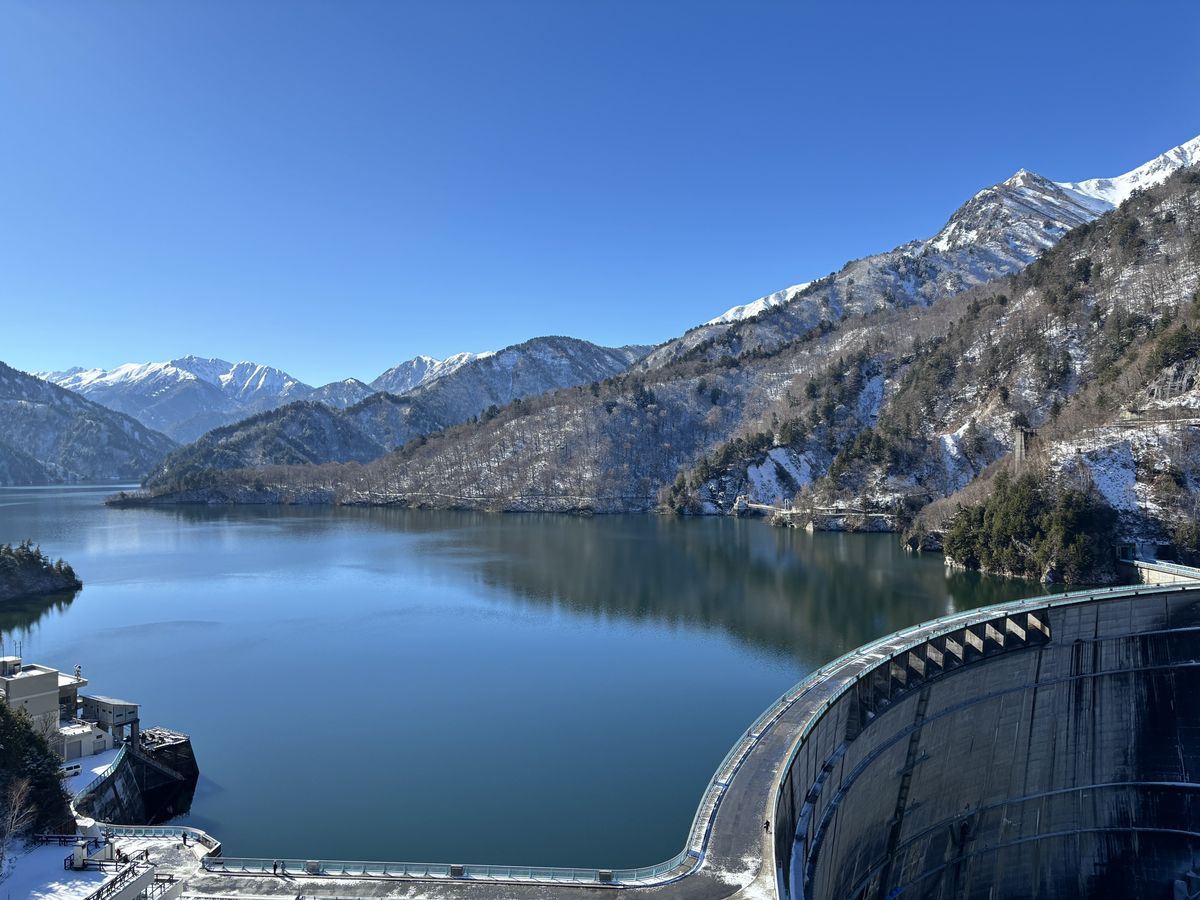
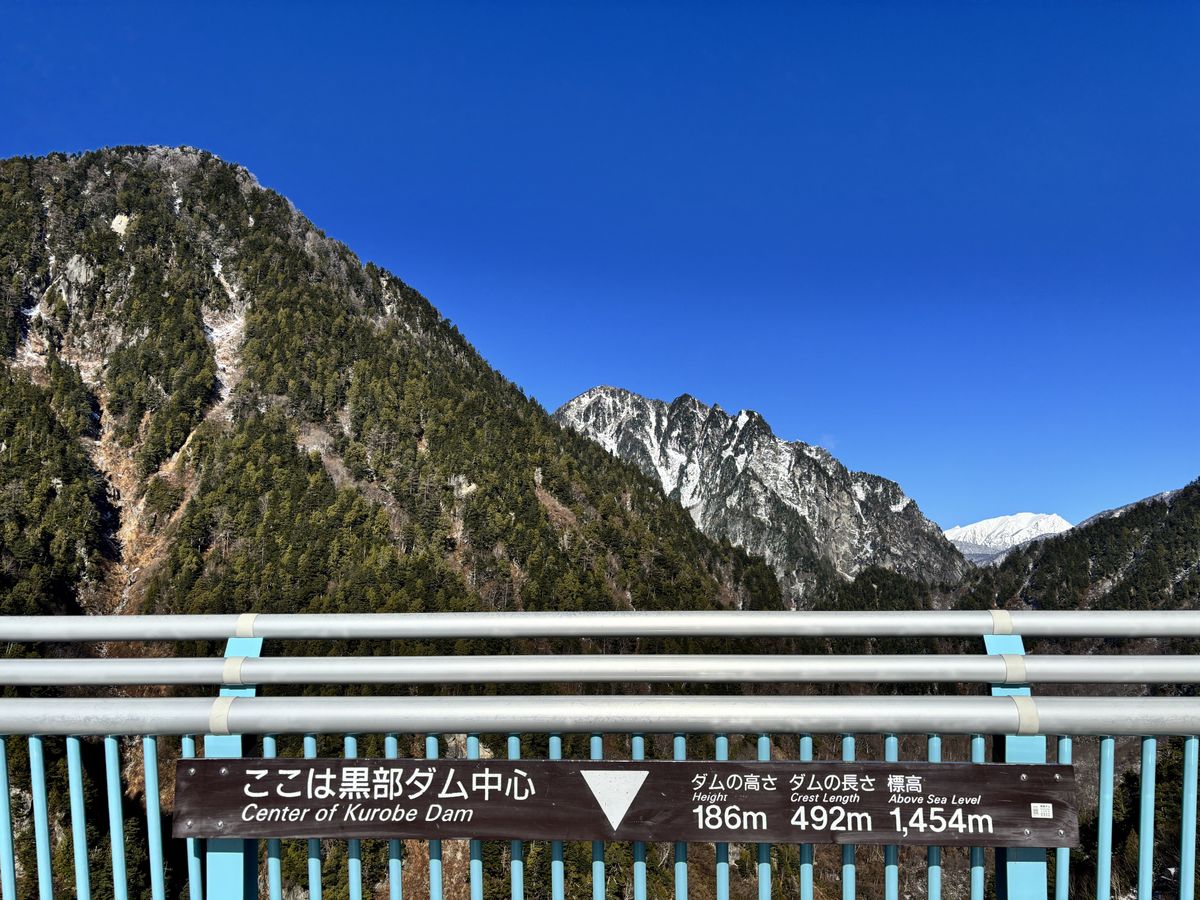
Deep in the mountains of Toyama Prefecture, in the Kurobe Gorge, stands Kurobe Dam — an arch dam and the tallest dam in Japan. Its wall rises 186m. It sits at the exact midpoint of the Tateyama Kurobe Alpine Route, so nearly every traveler crossing the route passes through here.
This article is a companion piece to our full crossing guide to the Alpine Route, digging into Kurobe Dam alone. I visited in late November 2025, at the very end of the operating season—after the famous sightseeing water discharge had finished for the year. The verdict first: even without the discharge, it was well worth the trip. Allow 30 minutes if you are simply passing through, or two hours if you want to walk up to the observation deck and down to the lakeshore. One caution: in late autumn the top of the dam is as cold as midwinter and the wind is strong, so bring gloves and a windproof jacket. And don't forget to check the date the Alpine Route closes for the season (usually around November 30).

One point of confusion worth clearing up: the Kurobe Gorge, famous for its sightseeing trolley train, lies on the same Kurobe River but is a different area entirely, entered from the Unazuki Onsen side in Toyama. To reach Kurobe Dam itself, you take the electric bus from Ogizawa, as described in this article.
The Story of "Kuroyon": The Project That Changed Postwar Japan
In Japan, Kurobe Dam goes by the nickname "Kuroyon." It is short for the Kurobegawa No. 4 Power Station, which generates electricity from the dam's water.
In the 1950s, with postwar reconstruction outstripping the country's power supply, Japan decided to build a massive dam in the Kurobe Gorge, where abundant water met steep, narrow valleys. But the site lay deep in the mountains, with not even a road leading to it. To bring materials in, the project had to begin by boring a tunnel straight through the mountain.
Partway through that tunnel work, the crews hit a geological layer known as the fracture zone — a stretch of shattered rock where huge volumes of ice-cold water poured endlessly out of the gaps. The more they dug, the more water welled up, and the work was stalled for a long stretch. Even so, the crews drained as they went, advancing bit by bit, and finally broke through the fracture zone. Many workers lost their lives on this punishing project, and a memorial to them stands near the dam.
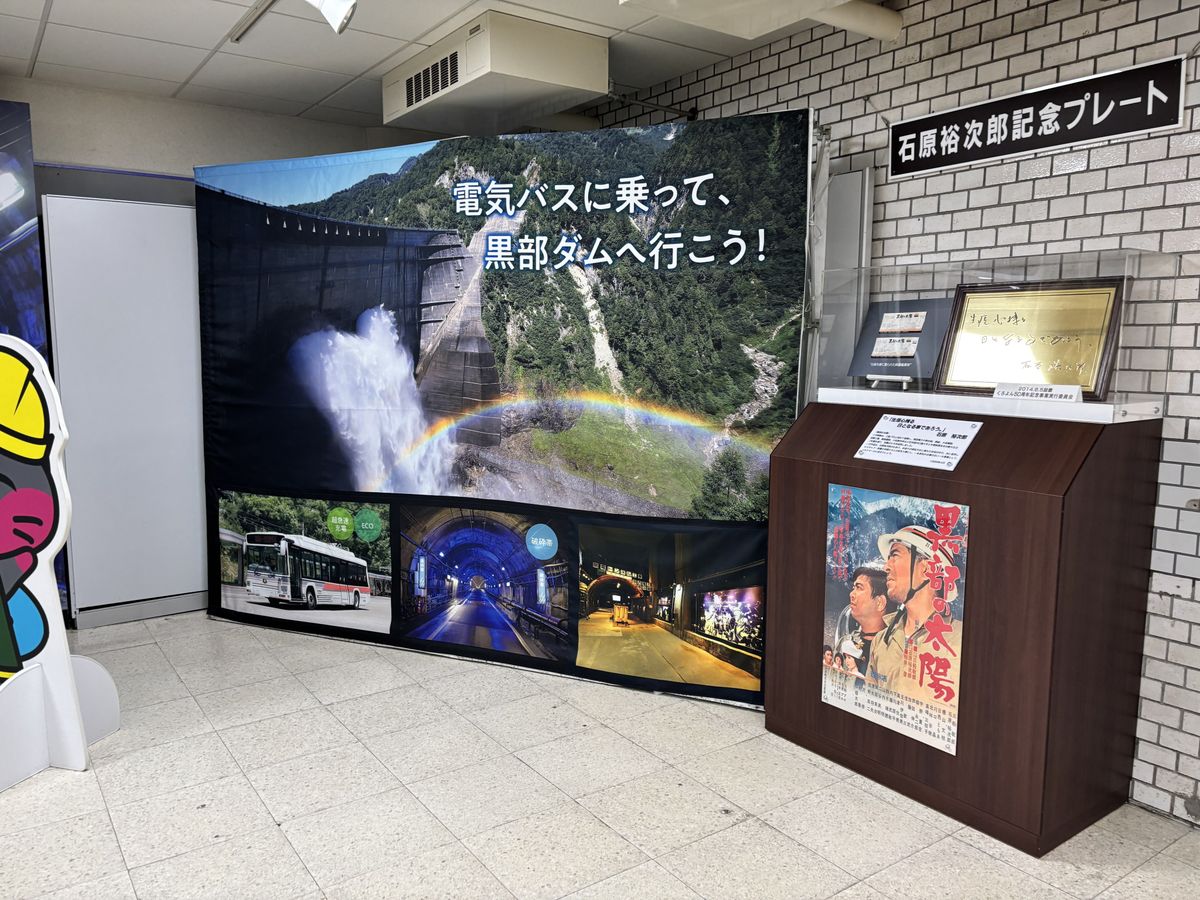
When you stand on top of the dam, try to hold that story in mind for a moment. The concrete wall in front of you stops being merely a sightseeing spot and becomes what it really is — a record of something achieved by human hands.
Highlights
The Crest Walk: Across the Top of the Dam, End to End
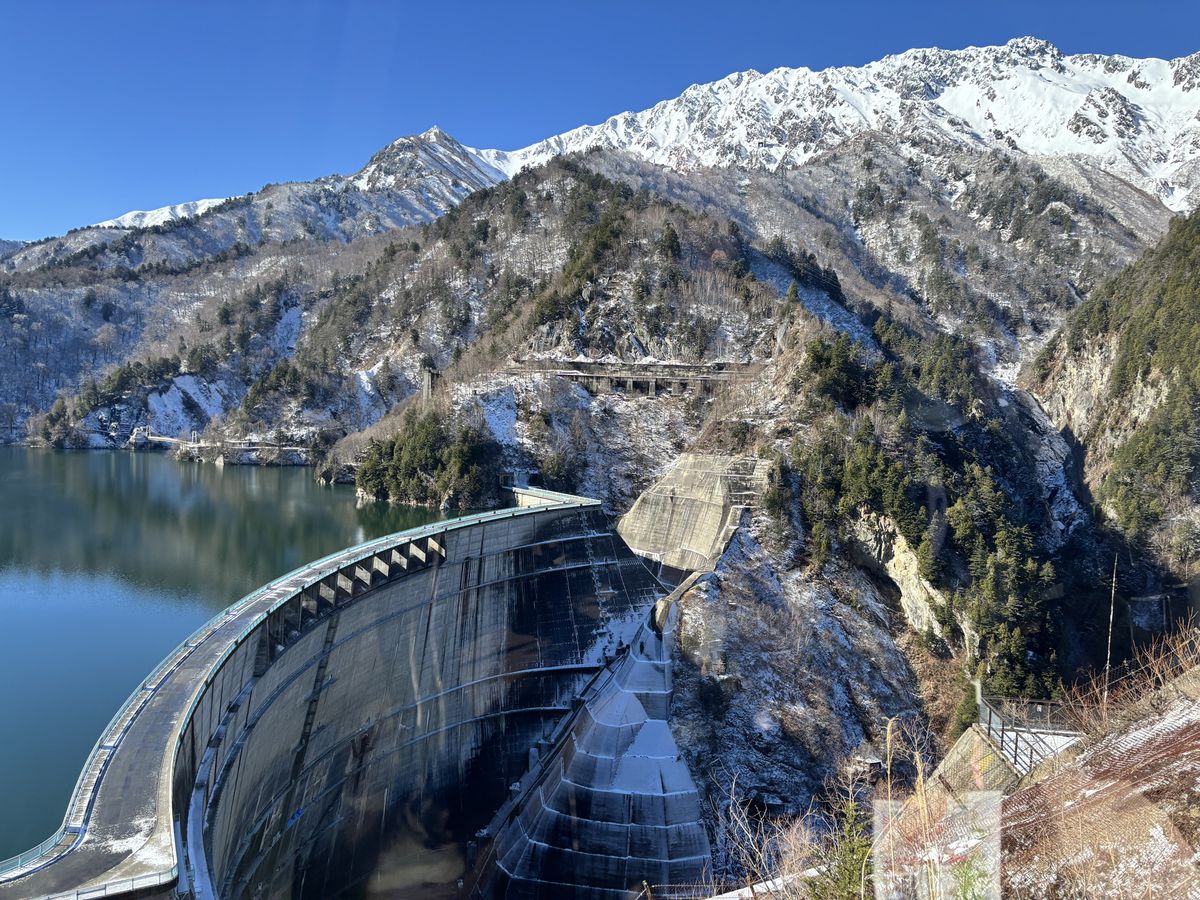
The single best thing about Kurobe Dam is that you can walk across the crest — the top of the dam wall itself. On one side lies the still surface of Lake Kurobe; on the other, a 186m drop to the valley floor. Look down over the railing and your legs may go weak. The crest doubles as part of the Alpine Route, so you will cross it at least once even if you are only passing through — but it is worth setting aside time to walk it slowly, out and back.
The Observation Deck: The Full View, 220 Steps Up
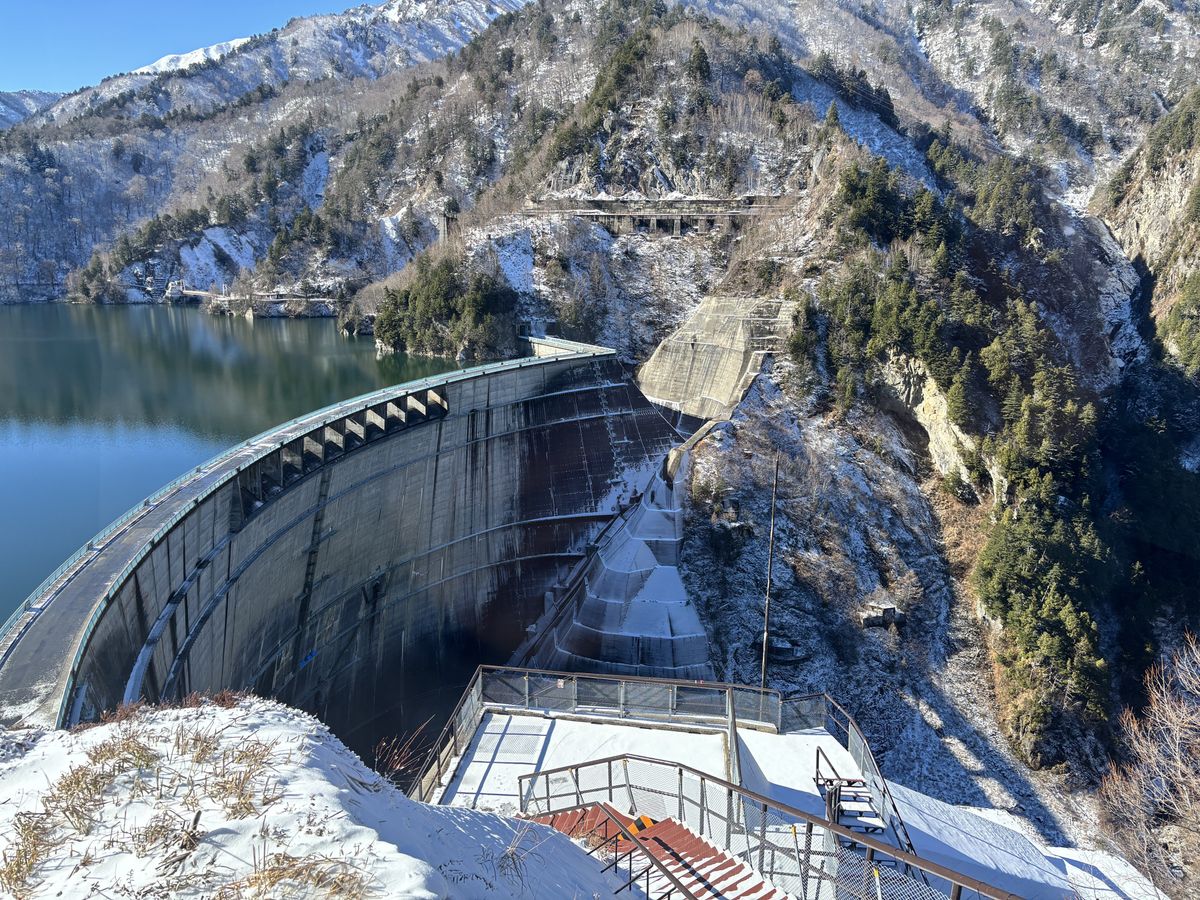
To reach the observation deck looking down on the dam, you climb 220 steps. It will leave you out of breath, but the whole scene is waiting at the top: the dam wall, the reservoir, and the snow-capped Tateyama mountain range beyond. Hauling large luggage up there is genuinely hard going, so use a coin locker and make the climb unburdened.
Lake Kurobe: A Mountain Lake Held Back by the Dam
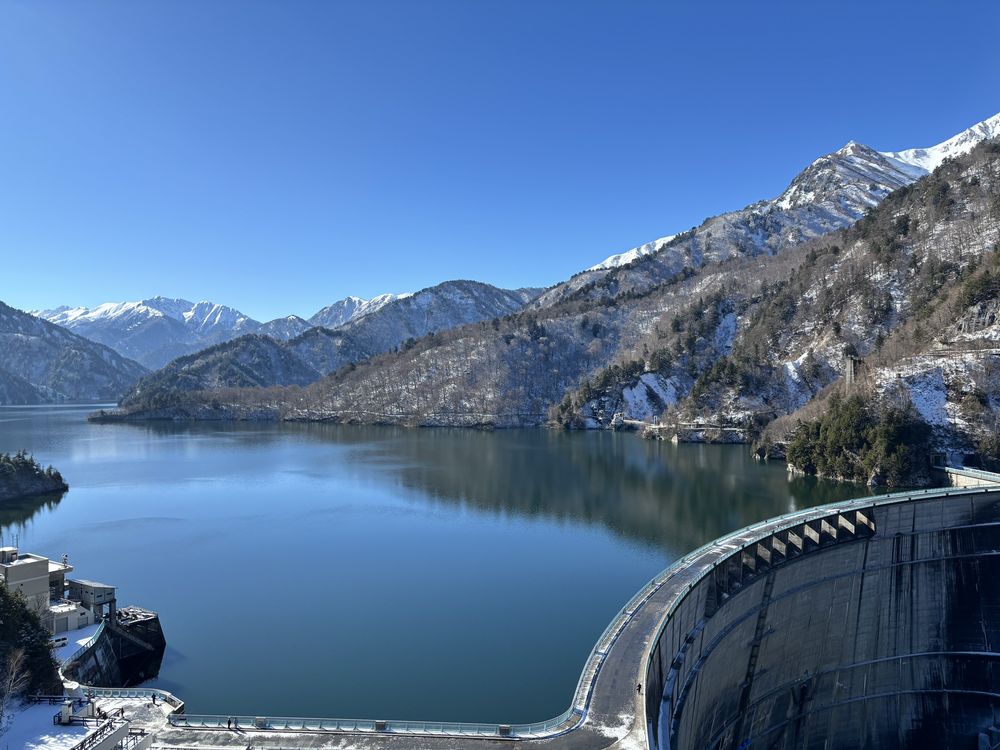
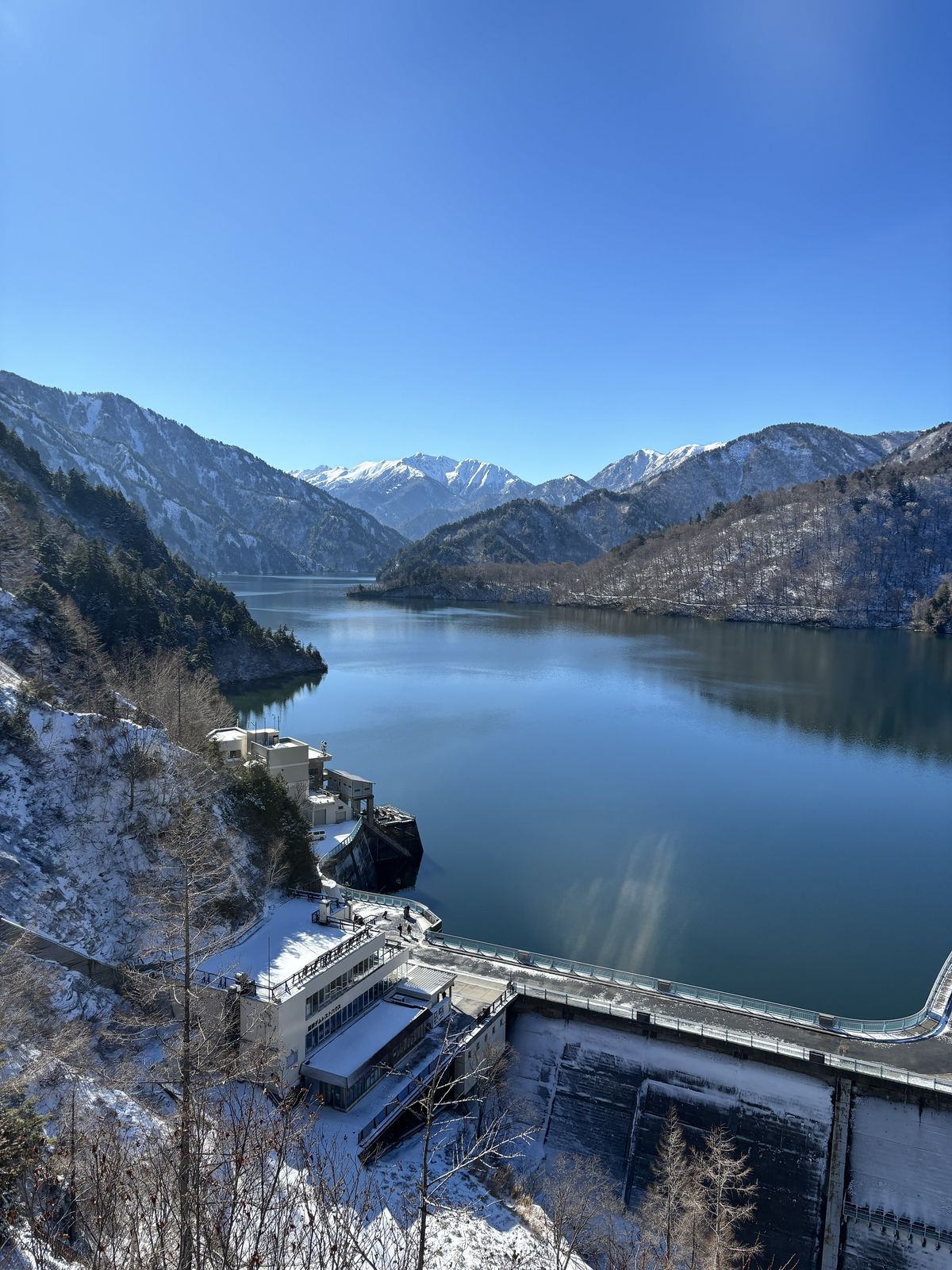
Spreading out on the upstream side of the dam is Lake Kurobe. Its emerald-tinged surface lies quietly among the mountains, filling one whole side of the view for the length of the crest walk. In late autumn the bustle of the tourist season had thinned out, and the shoreline was quiet.
Late Autumn: Snow-Capped Peaks Against a Dark Dam
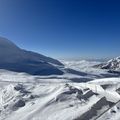
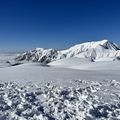
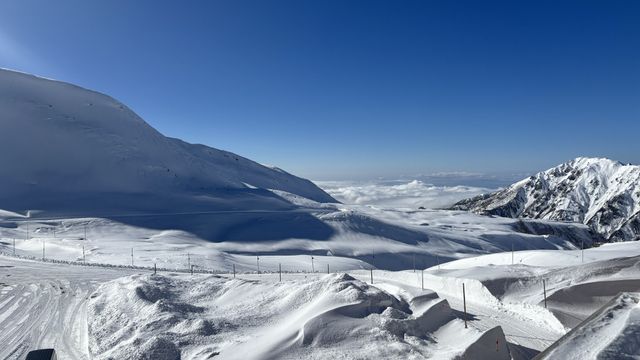
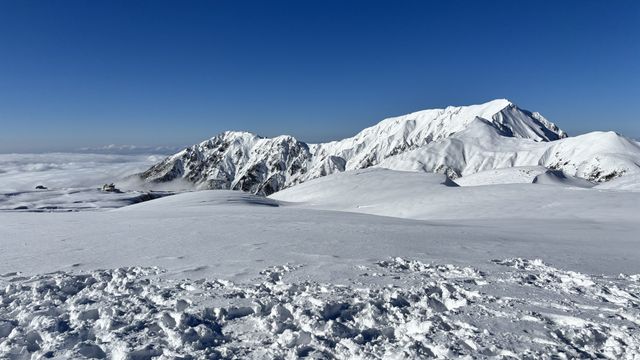
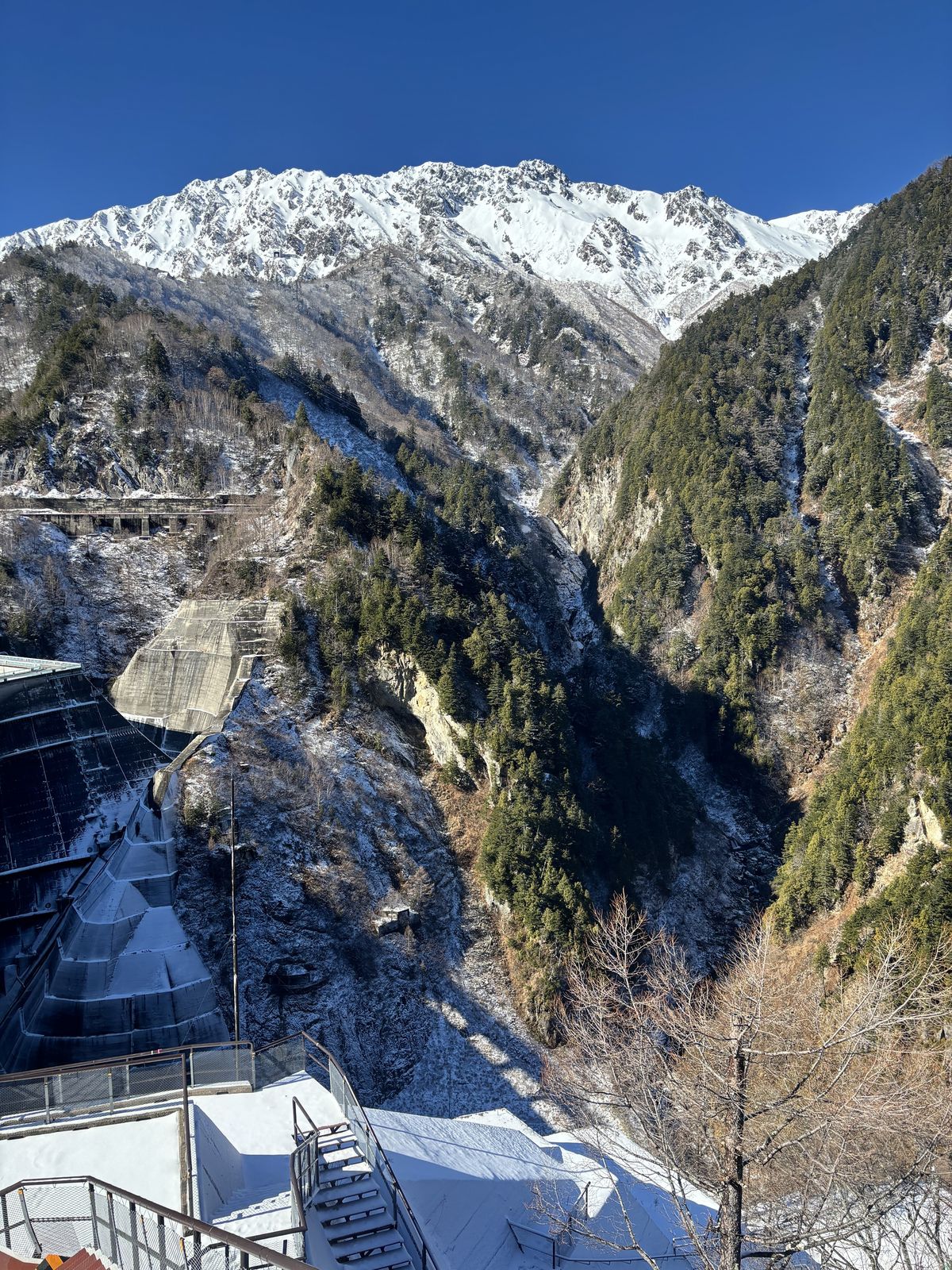
When I visited at the end of November, the surrounding peaks were already under snow. Dark concrete crest, deep gorge, white ridgelines. It is a taut, near-monochrome landscape, nothing like the seasons of autumn foliage or the water release. The air is clearer, too, so even distant mountains stand out sharply. Just be sure to dress warmly — there is nothing to block the wind up on the crest, and it blows hard and cold.
About the Scenic Water Release: The Window Is Limited
Say "Kurobe Dam" and most people picture the scenic water release, with more than 10 tons of water per second bursting out as a fine mist. Note, however, that the scenic water release runs only from late June to mid-October. Visit outside that window and you will not see it.
There was no release during my late-November visit either. To be honest, I had gone in half expecting it to feel like a letdown without one. In practice, though, the sheer sense of height on the crest walk combined with the snow-covered peaks was more than enough to hold my attention. The water release is one element of Kurobe Dam, not the whole of it. If seeing it is your top priority, go within the window; if you want quiet mountain scenery, go in late autumn. Pick one and plan around it.
Getting There from Ogizawa: Riding the Electric Bus, Step by Step
You reach Kurobe Dam from Ogizawa Station, the gateway on the Nagano Prefecture side, aboard the Kanden Tunnel Electric Bus. Ogizawa Station can be a little confusing to navigate the first time, so here is the order of operations, step by step.
1. Head for the ticket office first. Electric bus tickets are sold somewhere other than the boarding area. When you arrive at the station, do not go straight to the bus platform — find the ticket office with its counter and machines first. Follow the signs inside the building and you will get there.
2. Once you have your ticket, go to the gate. The electric bus works like a train: you pass through a ticket gate before boarding. The gate opens as departure time approaches, so wait in front of it.
3. Through the gate, board the bus. Follow the staff's directions as you get on. The bus runs through the tunnel and arrives at Kurobe Dam Station.
2. Once you have your ticket, go to the gate. The electric bus works like a train: you pass through a ticket gate before boarding. The gate opens as departure time approaches, so wait in front of it.
3. Through the gate, board the bus. Follow the staff's directions as you get on. The bus runs through the tunnel and arrives at Kurobe Dam Station.
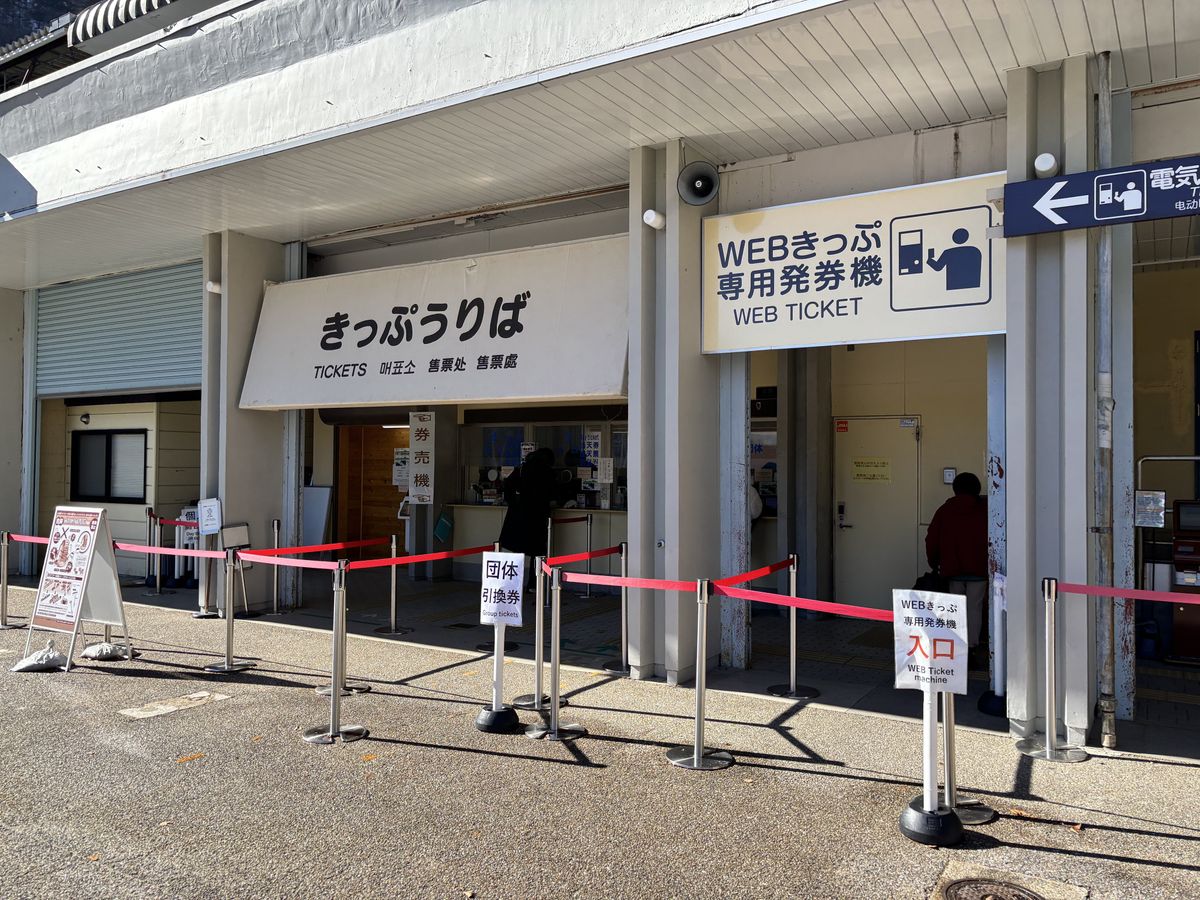
Inside the station there are posted rules on how backpacks and other hand luggage are handled. Large bags may come with specified rules on how they can be carried or stowed, so check the notices before boarding (the signs on site are the authority on the exact rules).
For access to the Alpine Route as a whole — which side to enter from, car relay services and so on — see our access guide, and for ticket types and how to buy them, see the ticket guide. Even if Kurobe Dam is your only goal, reading those two first makes planning far easier.