One of Japan’s Three Oldest Hot Springs: “Hashiriyu” in Atami
By Dynamic Japan Travel Editorial Team—Supervised by P-HAM Co., Ltd. (Licensed Travel Agency, Aichi No. 3-1590)
Contents
Hashiriyu is one of Atami's hidden gems, tucked away in this famous hot spring resort town. A round trip takes only about 10 minutes, making it an easy stop during a relaxing stay. Don't miss the chance to experience this rare natural phenomenon, often called the origin of hot springs itself.

What Is Atami's Hashiriyu? The Mystery of a Rare Horizontal Hot Spring
Atami is one of Japan's leading hot spring destinations, with a history spanning over 1,300 years. Among its attractions, Hashiriyu has long been known as an extremely rare "horizontal-cave hot spring." This spring offers a precious glimpse into the very origins of Japan's hot spring culture.
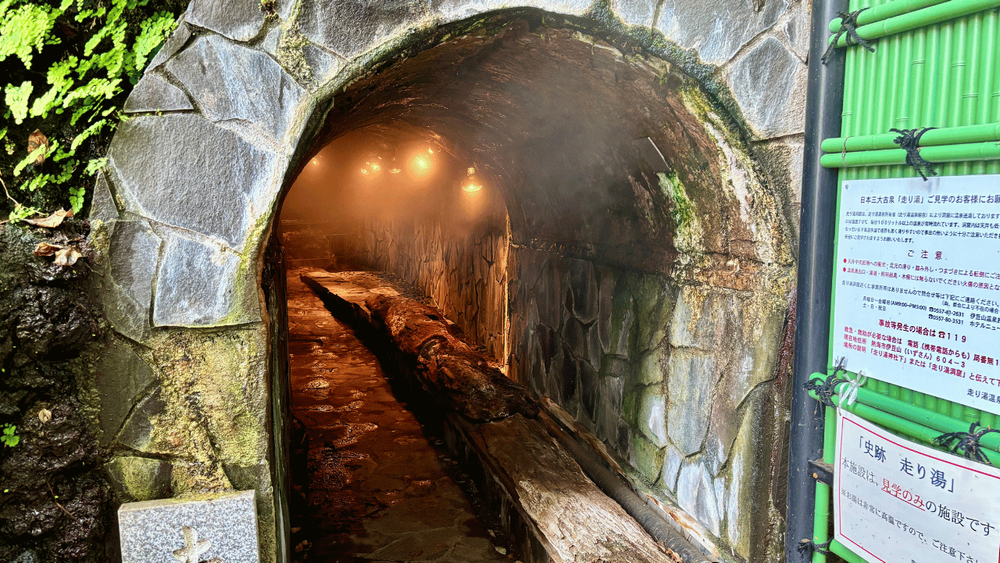
Hashiriyu is a rare hot spring that gushes forcefully sideways out of a cave. Although the cave is only a few meters deep, it discharges water at around 70°C at a rate of 170 liters per minute. In the past, the spring water flowed swiftly down the mountainside toward the coast, and it was this rushing, "running" motion that gave the spring its name — "hashiriyu," meaning "running hot water."
On the way to the entrance of Hashiriyu, you'll find several explanatory signs about the spring, all with English translations included. This thoughtful consideration for international visitors makes it a comfortable place to explore.


The Geological Mechanism Behind Hashiriyu
This hot spring is born from the natural forces of the earth. Seawater and rainwater seep underground, where they are heated by geothermal activity from the region's volcanoes, and eventually emerge here as a hot spring. The Izu Peninsula was formed through volcanic activity, and its abundant geothermal heat and water resources give rise to natural phenomena like Hashiriyu.
Unlike those, however, Hashiriyu is not a spring you can bathe in. Still, it lets you experience the raw, living power of a hot spring up close — truly the origin point of the hot spring experience.

The Charm of Atami: Where Hot Springs and Shrines Intertwine
Hashiriyu's appeal goes beyond the hot spring itself. Here, visitors can enjoy a fascinating cultural experience where Japan's ancient nature worship merges with its hot spring culture. It's a special place where you can feel both the powerful natural phenomenon of the spring and the reverence the Japanese have long held for it.
The Living Force of the Onsen
Stand at the mouth of the cave and thick white steam will fog your camera lens while a bubbling roar echoes off the rock walls. Hot gusts blast from what feels like arm's reach away, letting you feel the onsen's "living pulse" with all five senses. There's no bath to soak in, but the immediacy of this experience surpasses an actual dip.
The moment you actually get close to the cave's mouth, a wave of muggy heat hits you. Take one step inside and you're enveloped in steam thick enough to fog a camera (or smartphone) lens instantly. The heat feels just like a sauna. The gurgling sound of gushing water echoes off the walls, pulsing like a heartbeat — a moment where you truly feel that "the onsen is alive."
There's no bath here, so you can't actually get in the water. But watching hot spring water gush out from this close is an experience you won't find in an ordinary onsen town. Three minutes is plenty for the visit itself, yet in that short time you get a rare, firsthand glimpse of the very source of Japan's hot spring culture.


Hashiriyu Shrine — Where Onsen and Faith Meet
Directly above the spring's source stands Hashiriyu Shrine (also known as Yuzen Shrine), affiliated with Izusan Shrine. A single pilgrimage path actually connects Hashiriyu all the way to Izusan Shrine in Atami, revealing the deep bond between hot springs and faith that runs through the city.
Small as it is, this shrine has long been cherished as a place to purify body and spirit in the onsen's steam. In Japanese hot spring culture, an onsen is never just a place to bathe — it's regarded as sacred ground for cleansing both body and mind, and Hashiriyu Shrine stands as a symbol of that idea.
Climb a short way up from the cave and you'll find Hashiriyu Shrine (Yuzen Shrine) quietly watching over the spring. It's a modest shrine, but bathing in its steam and pressing your hands together in prayer brings a strange sense of calm.

The Pilgrimage Path to Izusan Shrine — 837 Stone Steps
If you have the stamina and time to spare, try tackling the 837 stone steps that lead from Hashiriyu Shrine up to Izusan Shrine. This historic path has been walked by pilgrims for centuries, offering a distinctly Japanese cultural landscape where hot springs and religious faith are joined by a single road.
Keep in mind that the stone steps climb all the way up to Izusan Shrine without a break. It takes considerable stamina, so plan around your time and physical condition before attempting it. See the Google Maps below for the shrine's location.
Getting to Hashiriyu from Atami Onsen Town
Hashiriyu is relatively close to Atami Station, and there are several ways to get there. Each option has its own pros and cons, so choose the one that best fits your travel style, physical stamina, and budget. Below is a detailed look at each access method.
The Most Convenient Option: By Taxi
From the taxi stand in front of JR Atami Station, simply tell the driver "Hashiriyu made" (to Hashiriyu) and you'll arrive in about 5 minutes, for a one-way fare of just under 1,000 yen. If you ask the driver to "wait 3 to 5 minutes," you can explore the cave and head straight back. Many taxi drivers know a lot about Hashiriyu and may even share some interesting stories along the way.
When I actually took a taxi from Atami Station, it took just 5 minutes to arrive. The driver gave a detailed account of Hashiriyu's history and shared fascinating stories while I waited. This kind of interaction with locals is one of the joys of visiting Hashiriyu.
By Bus
You can also get there by local bus within Atami City. The nearest bus stop to Hashiriyu is "Izusan Chuo" (伊豆山中央). See the Google Maps location below. From this bus stop, it's about a 5-minute walk to Hashiriyu.
On Foot (For the More Adventurous)
Walking from Atami Station takes about 25 minutes, but since Atami has many steep slopes, this route is only recommended for those confident in their physical stamina. That said, walking lets you fully soak in the atmosphere of Atami's hot spring town along the way.
Access by Car and Parking Information
You can also drive a rental car there, but there's no dedicated parking lot. That said, locals say short-term roadside parking is generally fine. When I visited by taxi, the driver parked on the street nearby and got out to give me a detailed explanation.

Basic information on Hashiriyu Hot Spring in Atami (as of July 2025)
Hours: Open for viewing 24 hours (no lighting; watch your step at night)
Admission: Free
Time needed: About 3-5 minutes to view the cave interior
Parking: No dedicated lot (taxis typically wait nearby, or a brief roadside stop is common)
Note: There's no bathing pool here — it's a "hot spring to look at," not to soak in. A towel comes in handy since the steam can fog up cameras and glasses