Kiku no Yu: Experience Yamanaka Onsen's Historic Public Bath
By Dynamic Japan Travel Editorial Team—Supervised by P-HAM Co., Ltd. (Licensed Travel Agency, Aichi No. 3-1590)
Contents
"What incredibly soft water!"
The moment I dipped my feet into the free foot bath in the plaza, I couldn't help but exclaim out loud. The ache melted from my tired feet as the warmth of the onsen seeped in, soothing and gentle. I knew right then I had to experience this water with my whole body!
This time, we're offering a complete guide to Kikuno-yu, the public bathhouse (sōyu) at Yamanaka Onsen, one of Ishikawa Prefecture's most celebrated hot spring towns — designed so even first-time visitors can enjoy it with ease.
By the way, Kikuno-yu welcomes visitors with tattoos!
Dive into Japan's Onsen Culture: The Kikuno-yu Experience
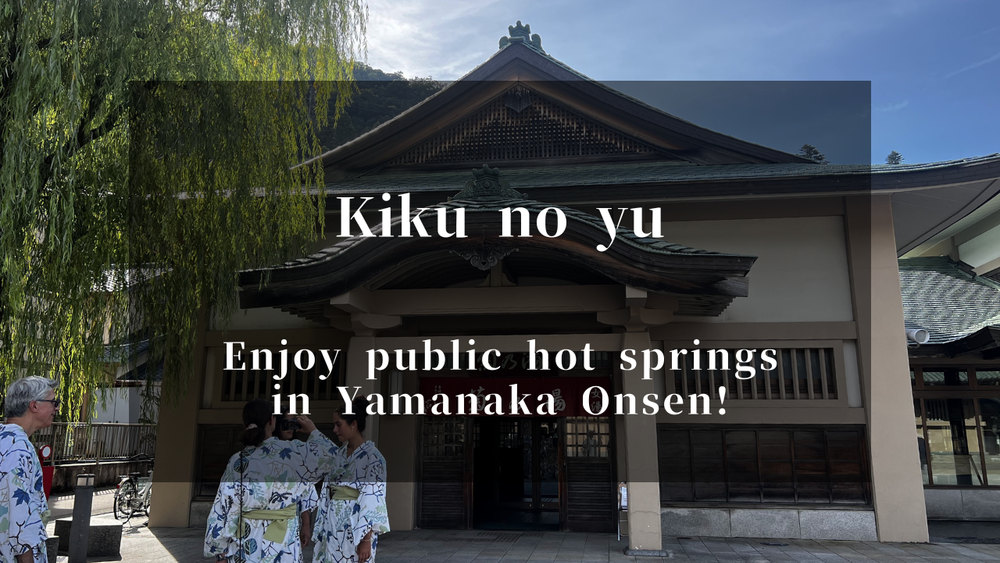
Walk along "Yuge Kaido," the main street of Yamanaka Onsen, and you'll find its beating heart: the public bathhouse Kikuno-yu.
This is no ordinary bath for tourists alone — it's a place where locals come daily and exchange greetings, letting you experience Japanese community life and culture firsthand. With 1,300 years of history behind it, this celebrated hot spring is well worth diving into.
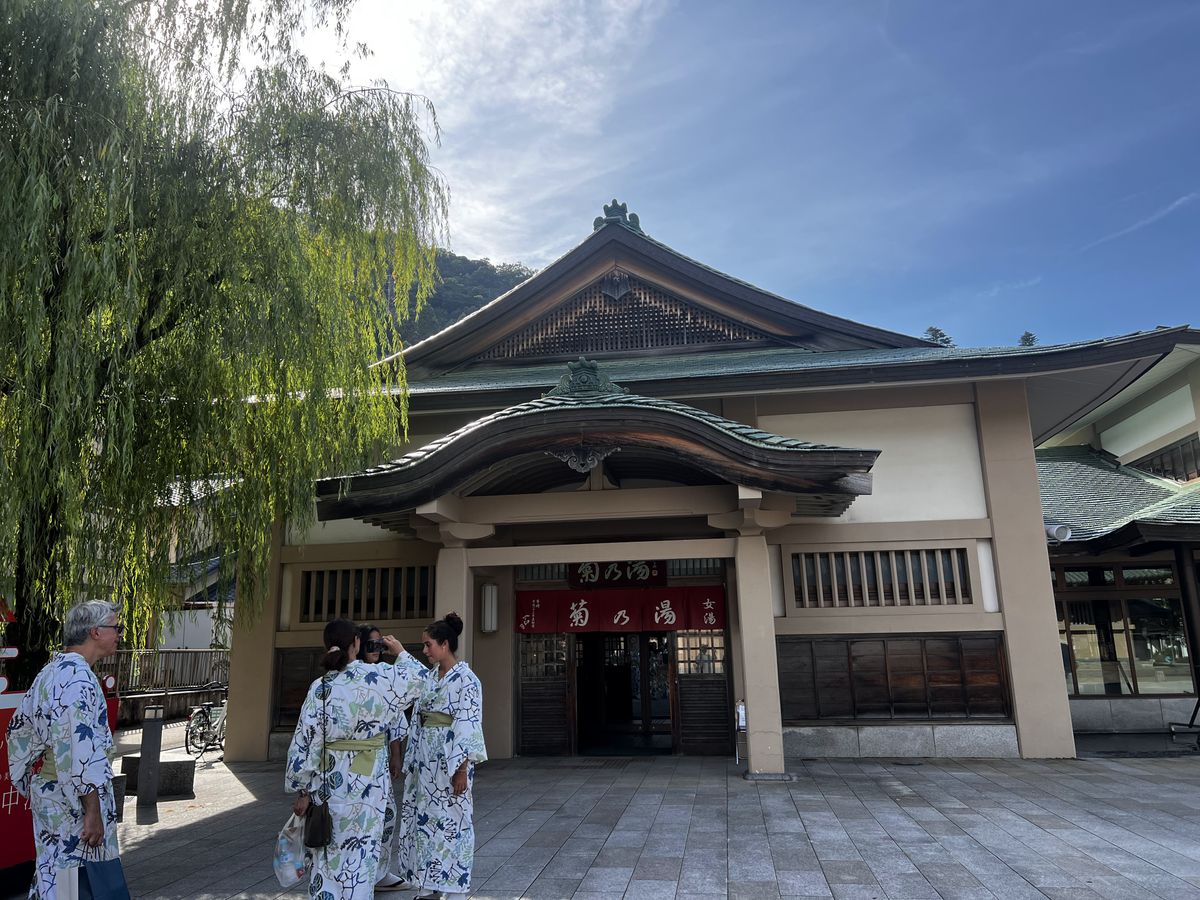
(Yamanaka Onsen: Kikuno-yu)
What Are the Waters of Yamanaka Onsen Like? A Unique "Dual Nature"
Japan is home to many wonderful hot springs, but what makes the waters of Yamanaka Onsen so memorable is their unique "dual nature." Here's a look at the characteristics that make this onsen one of a kind.
Texture Characteristics: Where "Silky Smooth" Meets "Refreshingly Crisp"
The "character" you notice when soaking in the waters of Yamanaka Onsen comes through most strongly in how they feel on your skin.
A "Silky-Smooth" Feel (Beautifying Waters)
The water here is mildly alkaline. Alkaline hot springs gently dissolve dead skin cells, leaving your skin feeling silky and smooth both during and after the bath.
A "Refreshingly Clean (Squeaky)" Feel (Purifying Waters)
At the same time, the water's main component—a "sulfate spring"—works to wash away excess oil from the skin. Some bathers notice a crisp, tightening sensation, or even a slightly "squeaky" texture.
Feeling this "skin-smoothing" effect and this "oil-clearing" effect at the same time is the first defining trait of Yamanaka Onsen.
Deep, Long-Lasting Warmth
The waters of Yamanaka Onsen are also known as the "warming waters." Though clear and light to the touch, they leave you glowing with warmth from the core long after bathing—a powerful thermal effect that forms the spring's second defining trait.
The "Scent of the Waters" (Yu no Nioi) Beloved by Matsuo Basho
Physically speaking, Yamanaka Onsen's water is colorless, tasteless, and odorless. Yet the spring's greatest character was captured by the haiku master Matsuo Basho in the following verse.
"At Yamanaka, no need to pluck the chrysanthemum—the fragrance of these waters is enough."
Basho was not describing a physical smell like sulfur. What he sensed as the "scent of the waters" was the vitality filling this spring—an energy that seems to permeate the body itself. It is a "fragrance of longevity," distilled from 1,300 years of history and culture. This, perhaps, is the greatest charm of Yamanaka Onsen's waters.
A Rarity Even in Japan? Separate Buildings for the Men's and Women's Baths
The most distinctive feature of Kiku no Yu's exterior is that the men's and women's bathhouses stand as completely separate buildings. If you're visiting as a couple, you can double the fun by comparing notes on each bath afterward.
Men's Bath (Otoko-Yu)
This stately building, constructed in the powerful "Tenpyo style," evokes the era of the samurai. Its signature feature is a 1-meter-deep bath meant for soaking while standing — a chance to experience Japan's traditional bathing style.
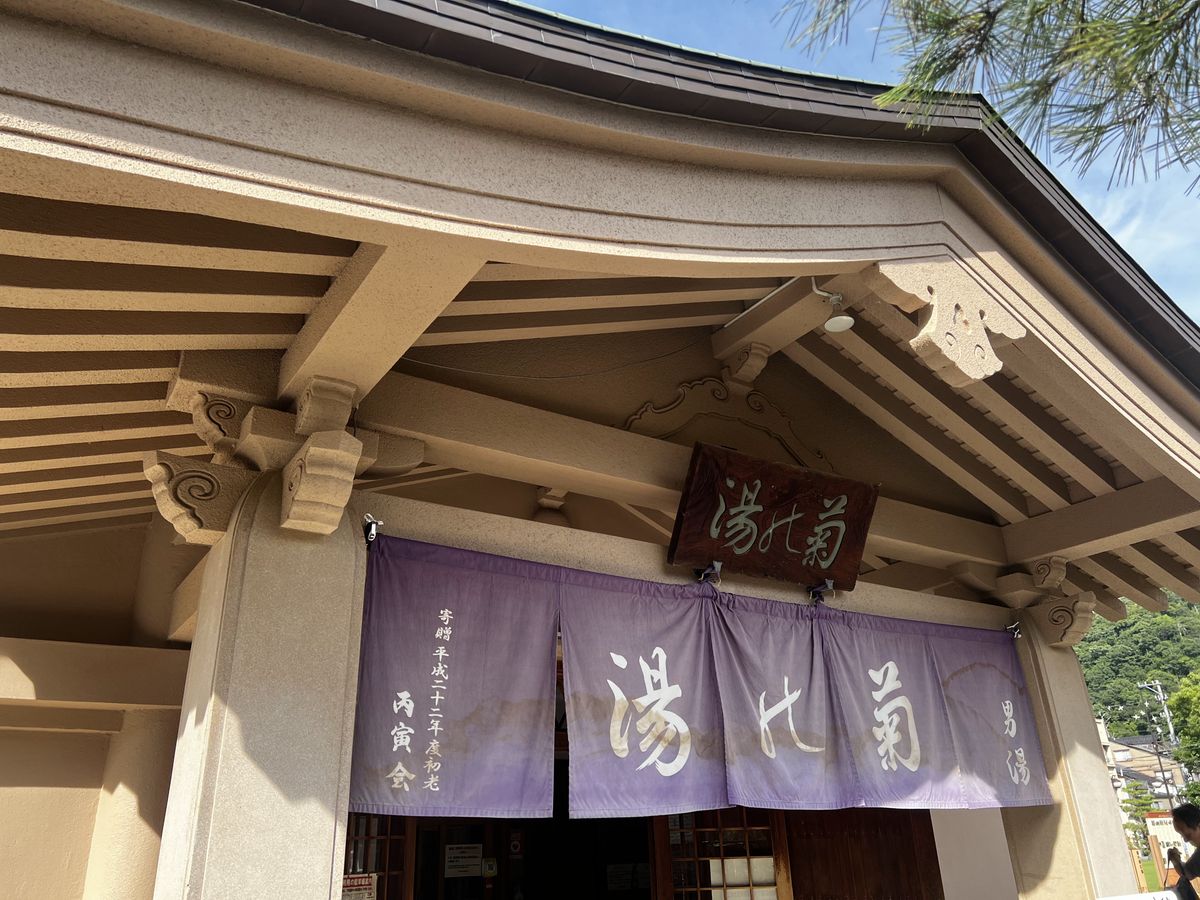
(Exterior of the Men's Bath at Kiku-no-yu)
Women's Bath (Onna-yu)
Located next to the traditional theater Yamanaka-za, this bath offers a spacious tub where you can stretch out and relax. The walls are adorned with beautiful Kutani-yaki tile art.
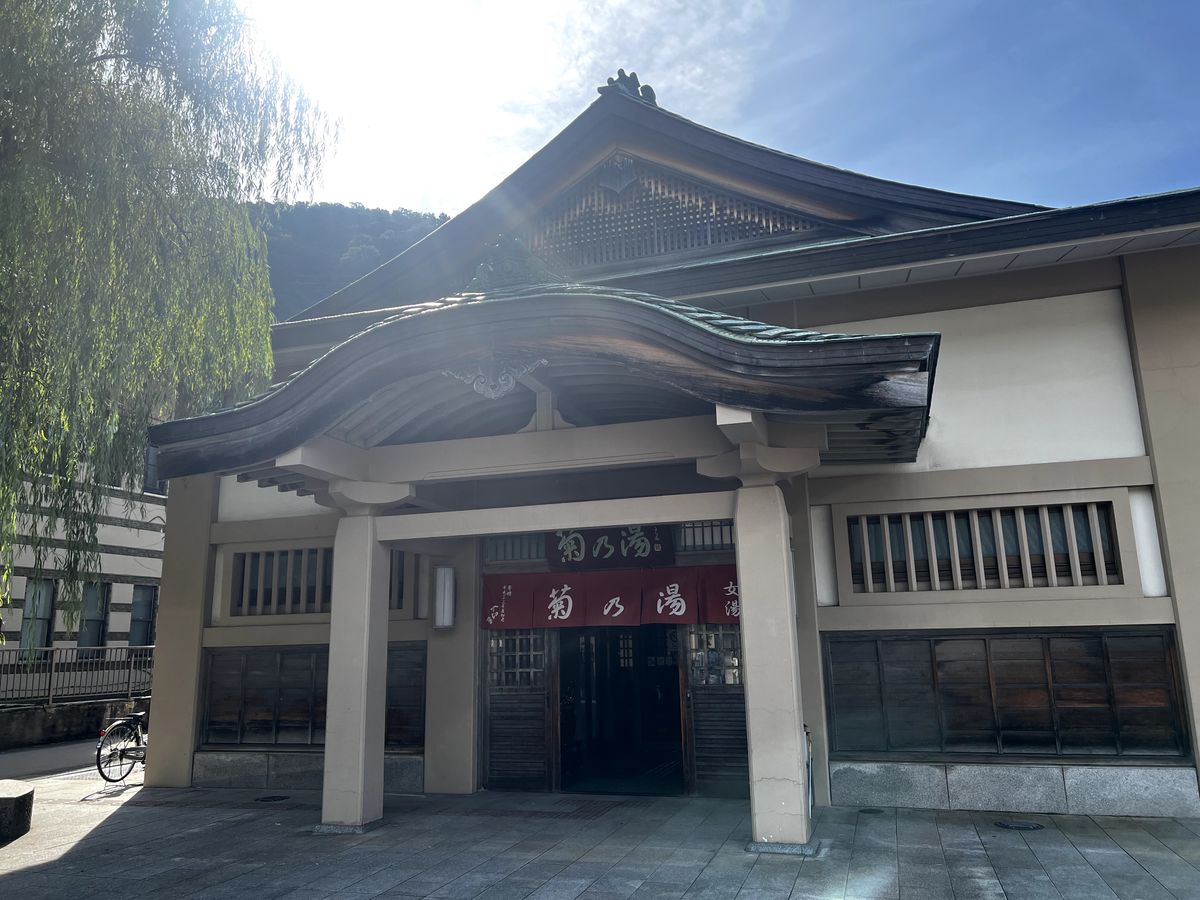
(Exterior of the Women's Bath at Kiku-no-yu)
[Try It Yourself!] Making Onsen Tamago (Hot Spring Eggs)
In front of the Men's Bath, you can try your hand at making "onsen tamago" — eggs slow-cooked using the heat of the hot spring. Just buy an egg at the reception desk and lower it into the hot spring pool yourself. After about 40 minutes, you'll have a silky, soft-set onsen egg. Tasting an egg you made yourself right after your bath makes for an unforgettable memory.
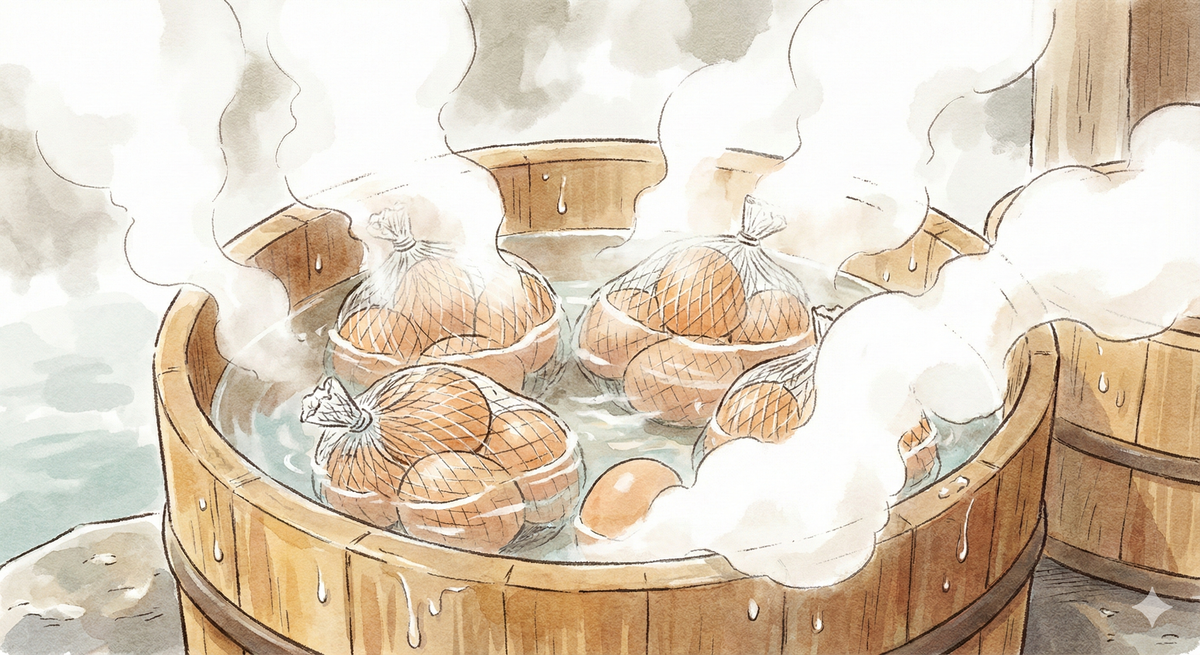
(Making onsen eggs using the heat of the hot spring)
First Time? No Worries! How to Use Kiku-no-yu and Bathing Etiquette
For those visiting a Japanese communal bathhouse for the first time, here's a guide to the bathing process and etiquette so you can enjoy your visit with confidence.
Bathing Steps
Take off your shoes: Remove your shoes at the building entrance and place them in the shoe locker.
Buy a ticket: Purchase a bathing ticket from the vending machine.
Go to the bandai: Hand your bathing ticket to the staff at the "bandai" (attendant's stand) near the changing room entrance, then head to the changing room.
Coin Lockers
At the entrance to the women's bath, located in a separate building from the men's bath, you'll find convenient coin lockers. Onsen lockers are usually just big enough for small personal items, which makes them handy.
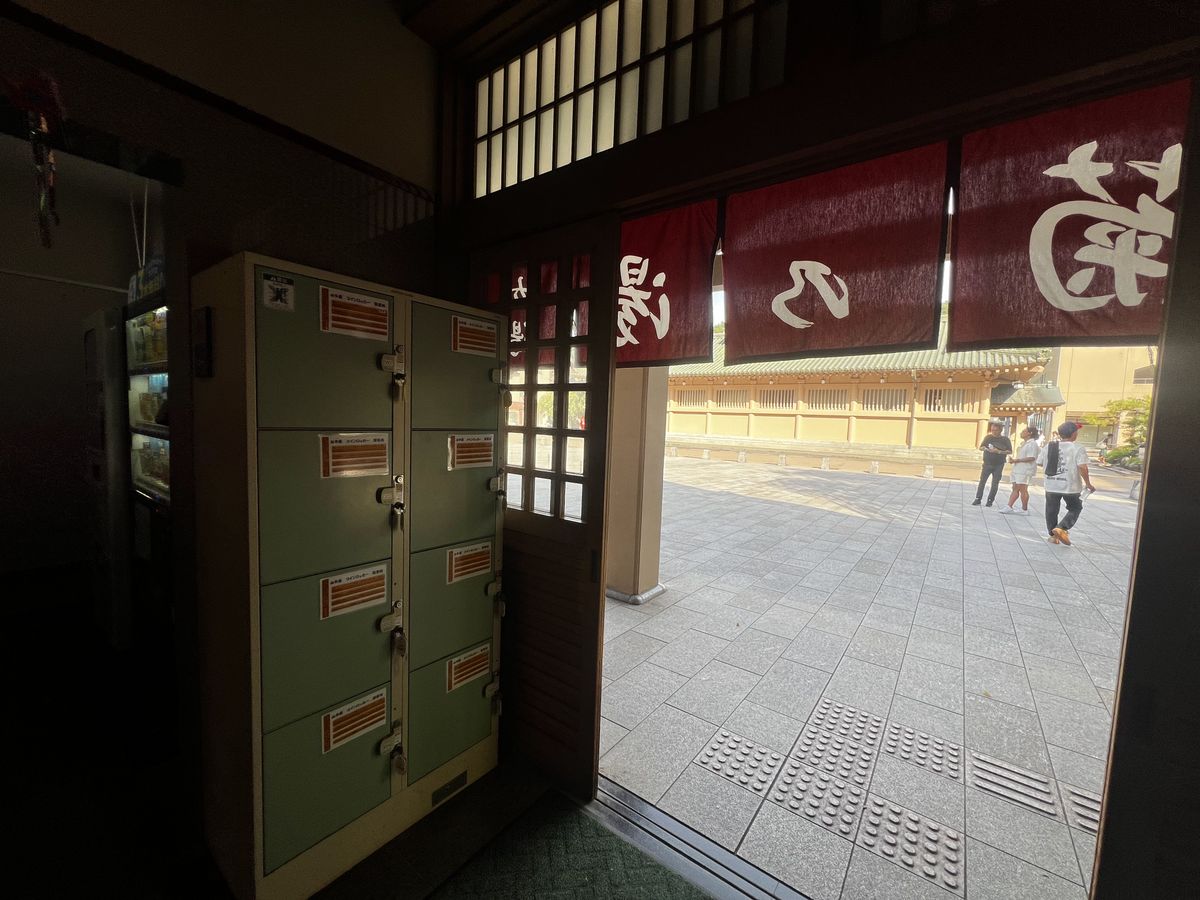
(Coin lockers at the entrance)
Do You Need a Towel? Amenity Info
One thing to keep in mind: bring your own towel. As this is a public bathhouse, towel rental is generally not available.
Don't worry if you forget one, though — you can buy an original towel at the bandai (attendant's stand). Just be sure to buy it before you undress!
Onsen Etiquette You Should Know
First time at a Japanese public bathhouse? Just remember a few simple rules.
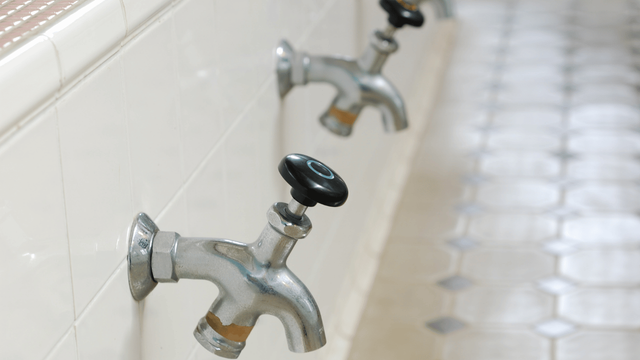
Wash your body thoroughly at the washing area before entering the bath.
Keep your towel out of the bathwater.
Bathe quietly and relax.
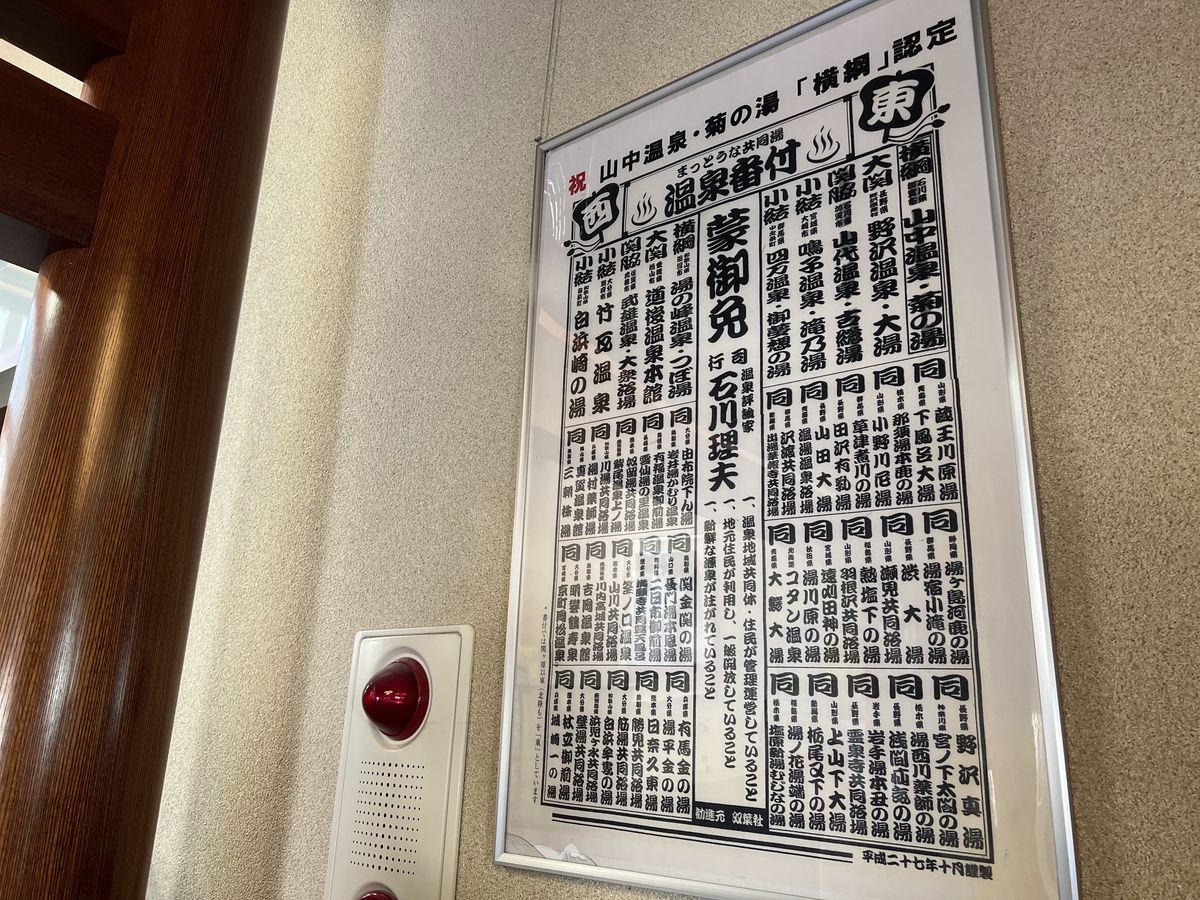
(Kiku-no-yu ranked No. 1 in Japan's onsen rankings)
Yamanaka Onsen was voted the best hot spring in eastern Japan.
Cultural experience at the adjoining “Yamanaka-za”
Along with Kiku-no-yu, Yamanaka-za is well worth a visit. It regularly hosts performances of Yamanaka-bushi songs and dances, and also houses a tourist information counter and a souvenir shop.
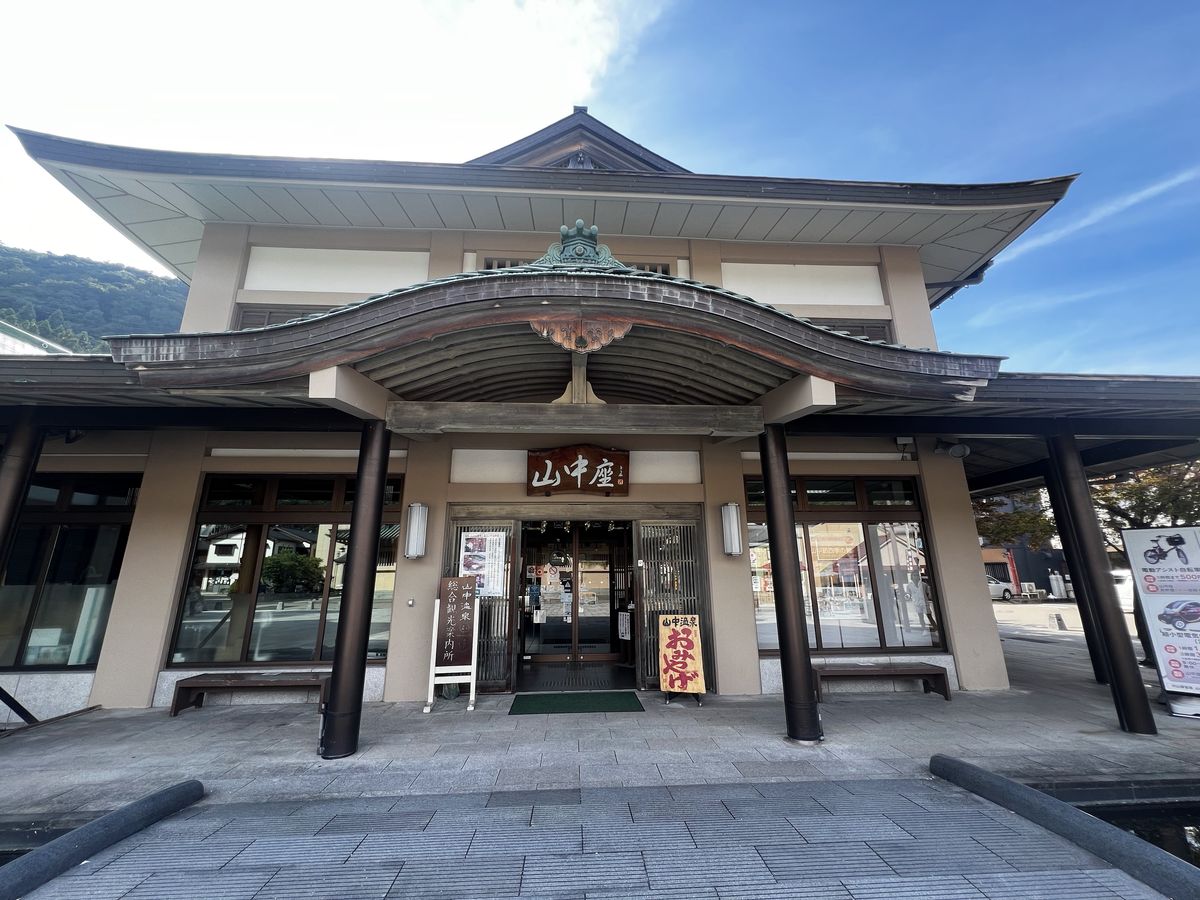
(Exterior of Yamanaka-za)
The lavish ceiling inside the building is a particular highlight — a beauty best appreciated in person. The staff can also help arrange bicycle rentals, making this a handy base for sightseeing.
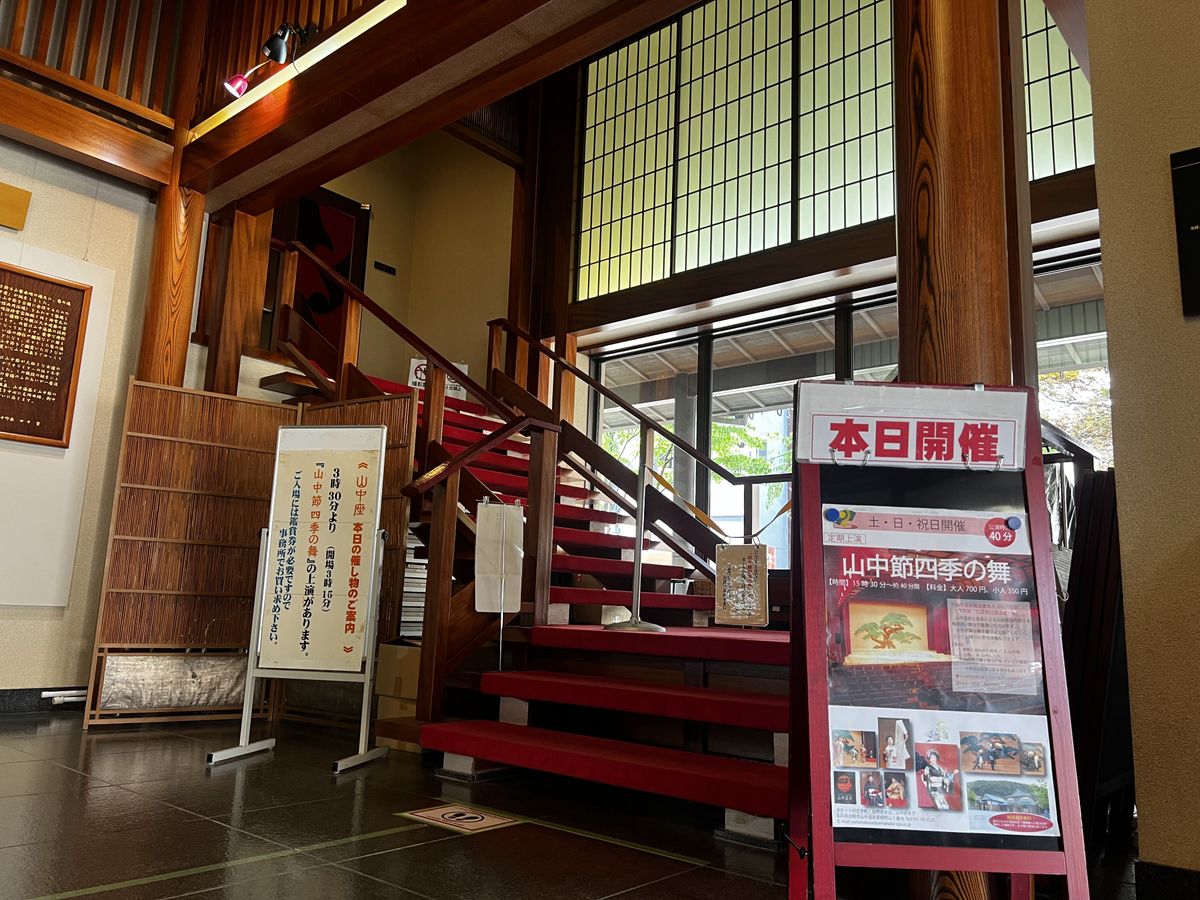
(Interior of the Yamanaka-za building)
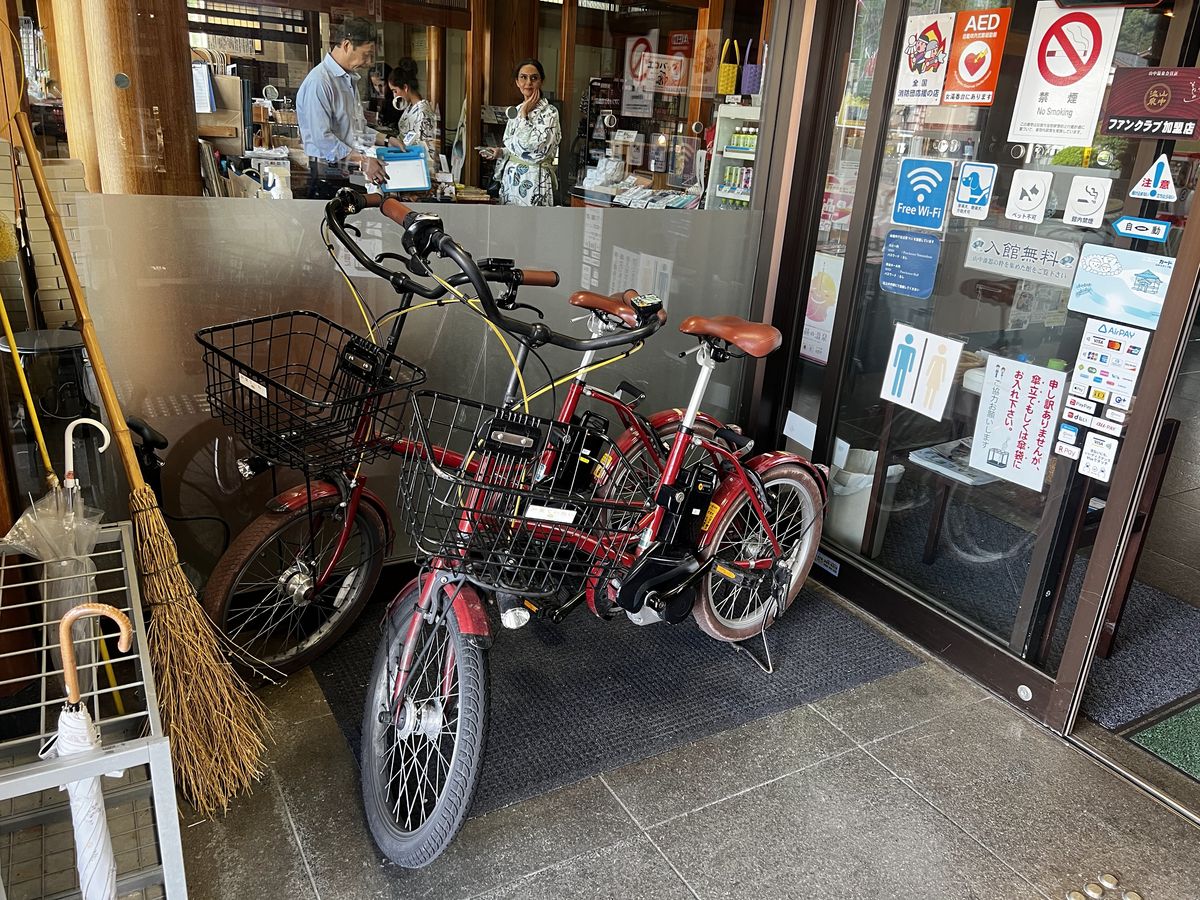
(Rental bicycles)
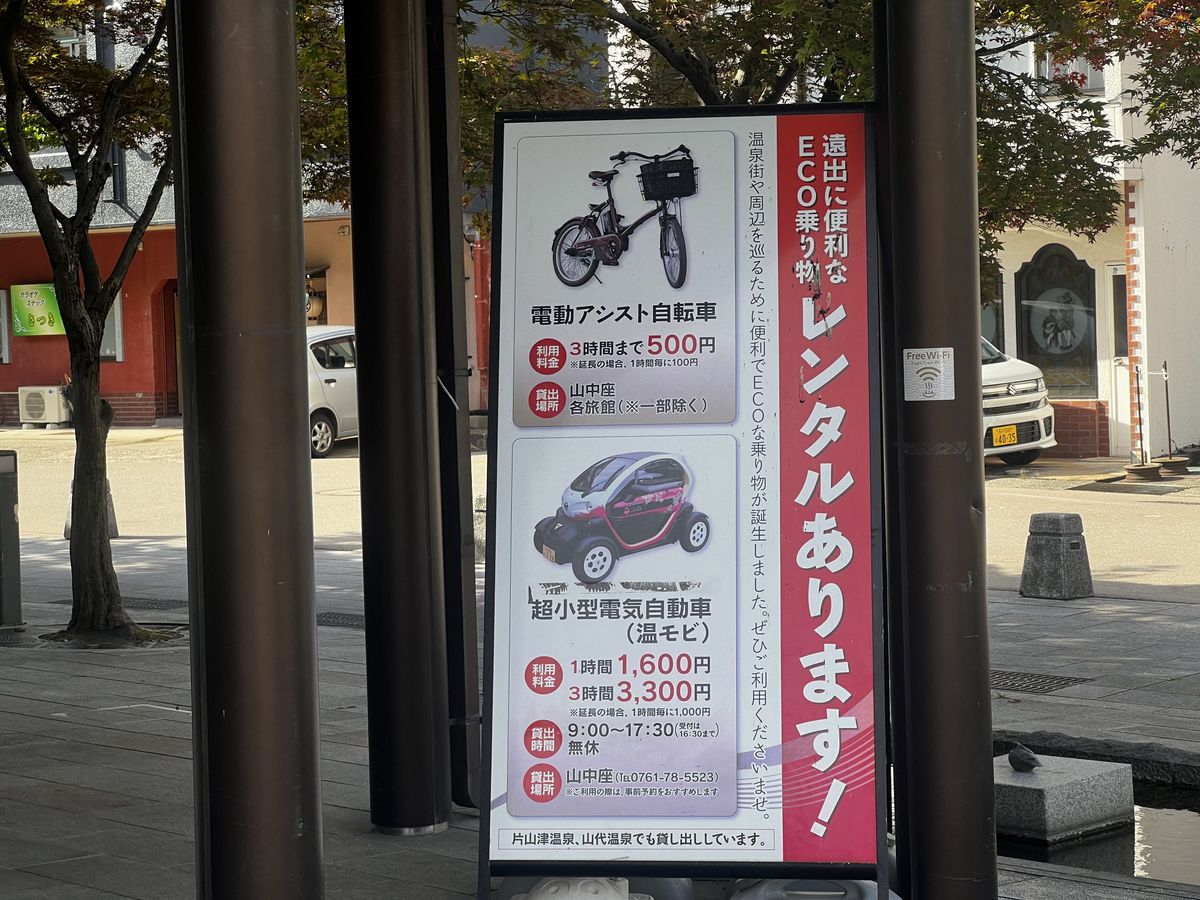
(Rental bicycles)
In front of the men's bath at Kiku-no-yu, you can try making onsen tamago (hot spring eggs) using the heat of the spring water. Raw eggs for the experience are sold at this souvenir shop — simply leave them soaking in the hot water by the men's bath, and after your bath you'll have a rich, silky-smooth onsen egg waiting for you. Be sure to give it a try as a treat after soaking.
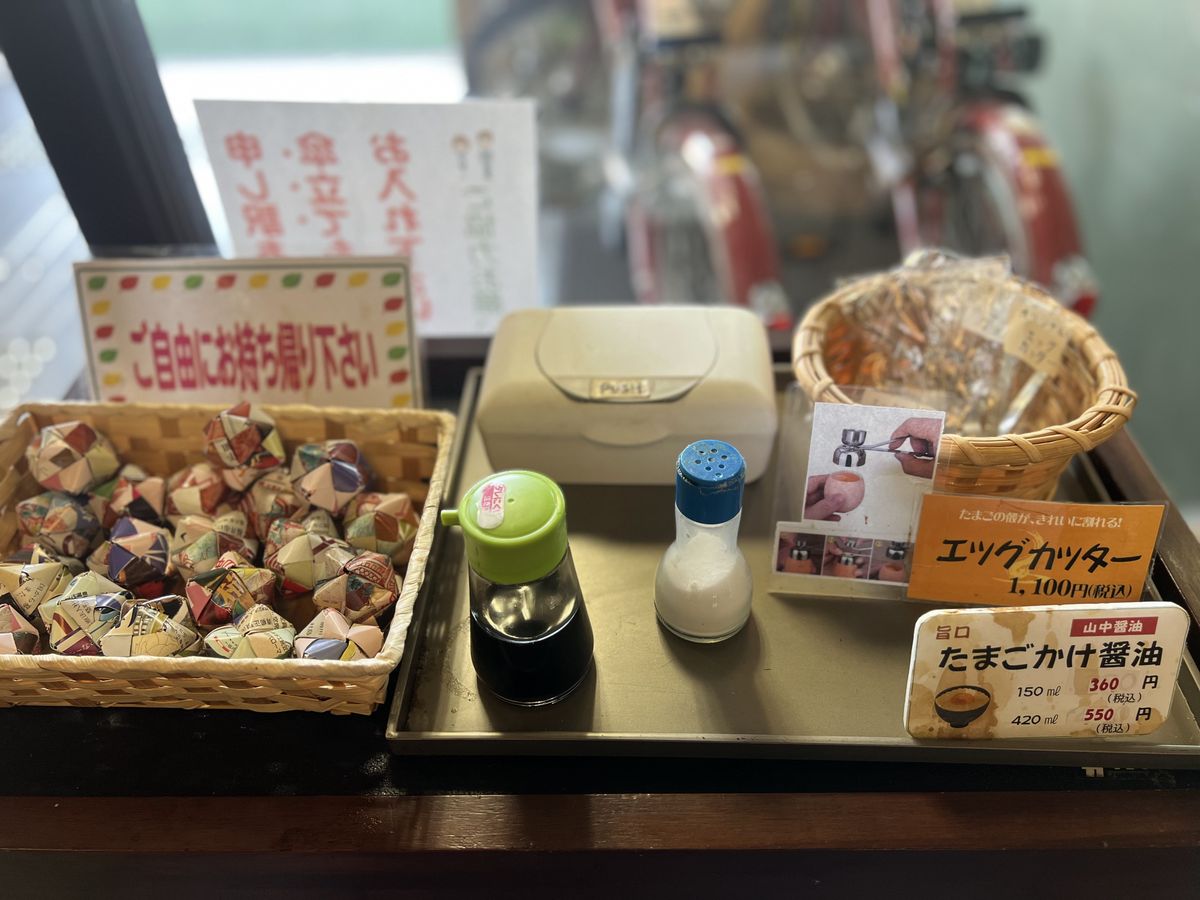
(Onsen egg-making supplies)
For those wanting to boost the skin-beautifying effects of Yamanaka Onsen even further, face masks made with the spring water are a great choice. Applied to freshly bathed skin, they let the mineral-rich water soak in all over the face. They also make a perfect treat for yourself or a souvenir for others.
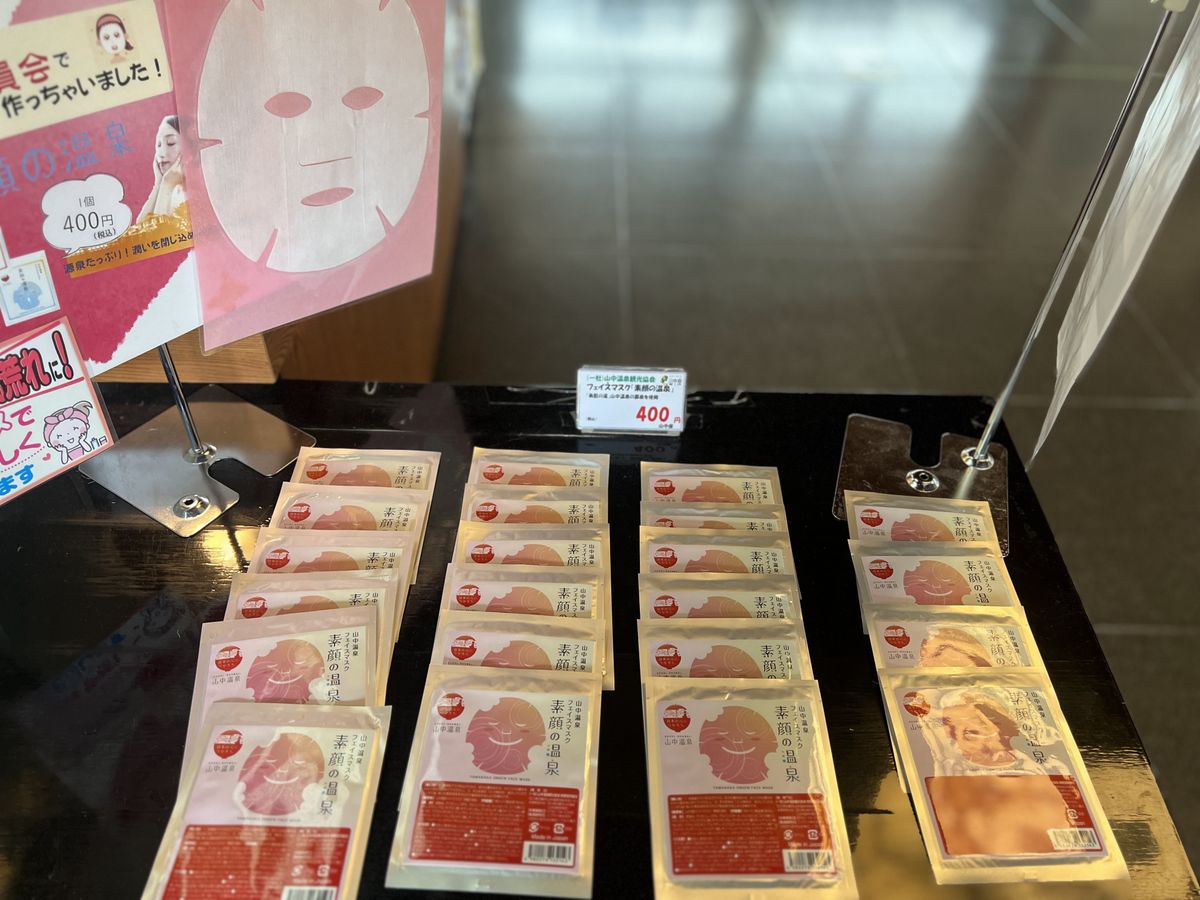
(Facial mask made with cosmetic ingredients derived from the hot spring's minerals)
[Basic Information: Kiku-no-yu]
Item | Details |
Hours | 6:45 AM–10:00 PM |
Closed | 2nd and 4th Tuesdays (following day if a public holiday) |
Bathing Fee | Adults: 500 yen |
Access | About 30 minutes by bus from JR Kaga-Onsen Station, get off at "Kiku-no-yu-mae" |