Kakusenkei Gorge: Japan's Hidden Riverside Terrace Cafe
Updated 22 October 2026Dynamic Japan Travel editors, checked by a licensed travel agency (Aichi No. 3‑1590)Editorial policy
Contents
Why not step away from the hustle and bustle of Tokyo and Kyoto to experience Japan's true, untamed nature—the very soul of the country?
Yamanaka Onsen, one of the hot spring towns in the Kaga Onsen area of Ishikawa Prefecture, is home to a wonderful spot where you can experience Japan's beautiful, untouched nature. That spot is Kakusenkei Gorge, which we'll introduce here.
The highlights of Kakusenkei Gorge are the riverside kawadoko terraces, open only from April to November, and a scenic walking trail across three uniquely designed bridges.
Stroll along a lush, green trail to the soothing murmur of the mountain stream, then relax with tea at a special café built right beside the river... A truly healing experience awaits you.
A Special Moment at the Kawadoko of Kakusenkei Gorge
First and foremost, don't miss the "Kakusenkei Kawadoko," open for a limited season each year from April to November.
What You Can Experience at the Kawadoko
Nature for All Five Senses: The clear murmur of the river, a cool breeze, the scent of the trees, birdsong—here you'll feel completely at one with nature. It's the ultimate retreat, offering something no city can provide.
Exquisite Sweets: The desserts served here are specially crafted by Rokusaburo Michiba, a celebrated "Iron Chef" of Japanese cuisine and Yamanaka Onsen native. Enjoy the delicately sweet "Kawadoko Roll" or the chilled matcha shiruko, paired with fragrant Kaga bocha or matcha.
An Unbeatable Location: The kawadoko sits right next to the uniquely S-shaped Ayatori Bridge, introduced later in this guide—making it the perfect rest stop along your walk.
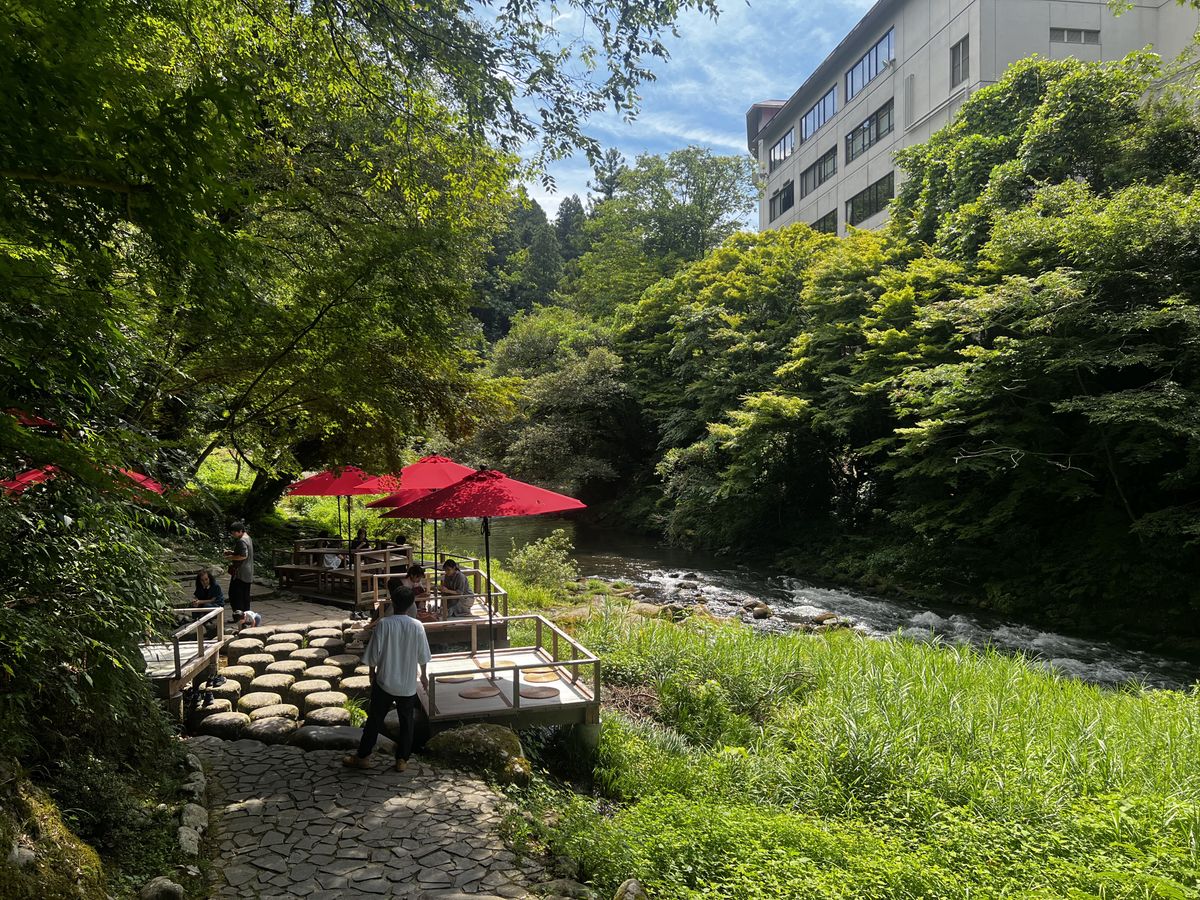
A "kawadoko" is an open-air seating platform built right along the flowing river. Every year from April to November, these seats—marked by striking red Japanese umbrellas—are set up amid beautiful natural surroundings.
It's a truly delightful spot to enjoy tea while listening to the murmur of the river—a special moment that lets you forget the busyness of daily life. This is the ultimate retreat, offering an experience no city can match.
Kawadoko: Basic Information
Here's what you need to know about the kawadoko's opening hours and pricing.
Operating Season & Hours
April 1 – October 31: 9:30 AM – 4:00 PM
November 1 – November 30: 10:00 AM – 3:00 PM
*Last order is 15 minutes before closing
*Closed in the event of rain or high river water levels
Rates
To fully enjoy the kawadoko (riverside dining platforms), we recommend the “Kawadoko Set,” which combines a sweet treat with the seating fee. Order this set and take your pick of any available platform.
Kawadoko Set: ¥700 for adults, ¥600 for elementary school students
*Choose your favorite sweet from chilled matcha shiruko, kawadoko roll, or a seasonal special menu, all supervised by chef Rokusaburo Michiba.Seating fee only: ¥400 for adults, ¥300 for elementary school students (includes Kaga bocha tea)
*Guests staying at inns belonging to the Yamanaka Onsen Ryokan Association receive a ¥100 discount on the seating fee.Summer drinks
Iced coffee and orange juice, ¥300 each (seating fee charged separately)Reservations are not accepted.
Travel Tips
Best Season: The fresh greenery in May and the autumn foliage in November are especially breathtaking. Summer is the perfect time to visit for a cool escape.
What to Wear: The walking trail is well-maintained, but comfortable walking shoes (such as sneakers) are recommended.
Access: JR Kaga-Onsen Station is the gateway to the area. From the station, take a Kaga Onsen Bus bound for Yamanaka Onsen and get off at “Yamanaka Onsen Bus Terminal.” The trail entrance is just a few minutes’ walk from there.
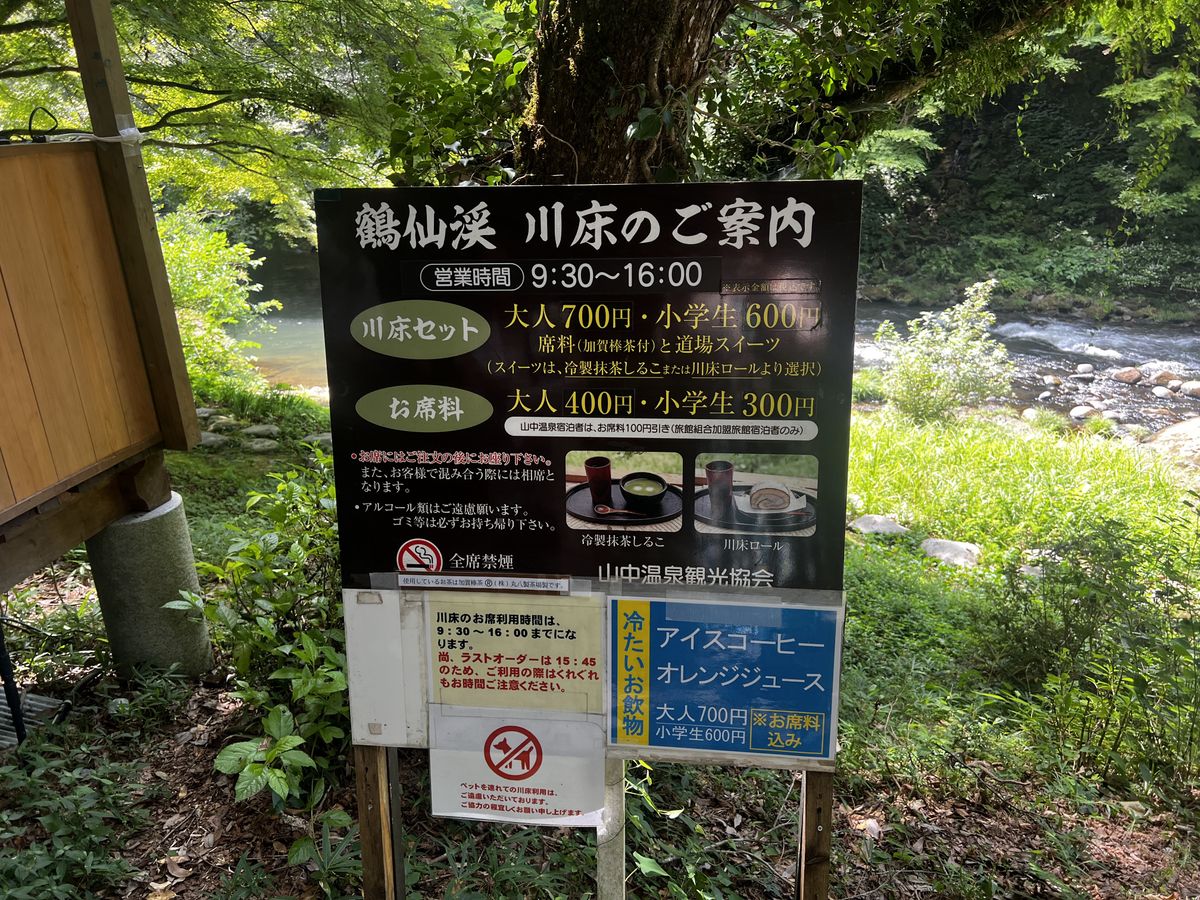
(Kakusenkei Kawadoko: Rates and Operating Hours)
3 Reasons the Kawadoko Is So Special
The gentle, soothing comfort of these spaces is no accident—it reflects a few wonderful traditions that Japanese people have cherished for generations.
Japanese Wisdom for Beating the Heat
The kawadoko tradition originated in Kyoto’s humid summers as a way to stay cool. The kawadoko of Kakusenkei carries on that same time-honored wisdom of finding coolness through the power of nature.
The cool breeze crossing the river, the vivid green of the trees, and the soothing murmur of the water. This gentle coolness, felt through all five senses rather than the chill of air conditioning, naturally relaxes both mind and body.
Beautiful "Shitsurae": The Decorative Touches That Color the Scenery
The special atmosphere of kawadoko (riverside dining platforms) comes not only from the surrounding nature but also from the "shitsurae"—thoughtful decorative touches that beautifully enhance the space.
Red paper parasol (nodate-gasa): A single red parasol set against vivid greenery. Traditionally used at Japanese tea ceremonies, it adds a striking accent to the scenery. Set against the deep green of nature, this touch of red sharpens the whole space and gives you the feeling of being somewhere truly special.
Platforms jutting out over the river Extending over the water lets you feel the cool breeze it generates and experience the murmur of the stream up close. This exquisite closeness to nature is the true pleasure of kawadoko.
Each item that looks as if it were placed there casually is, in fact, a subtle gesture of thoughtfulness designed to enrich our time there.
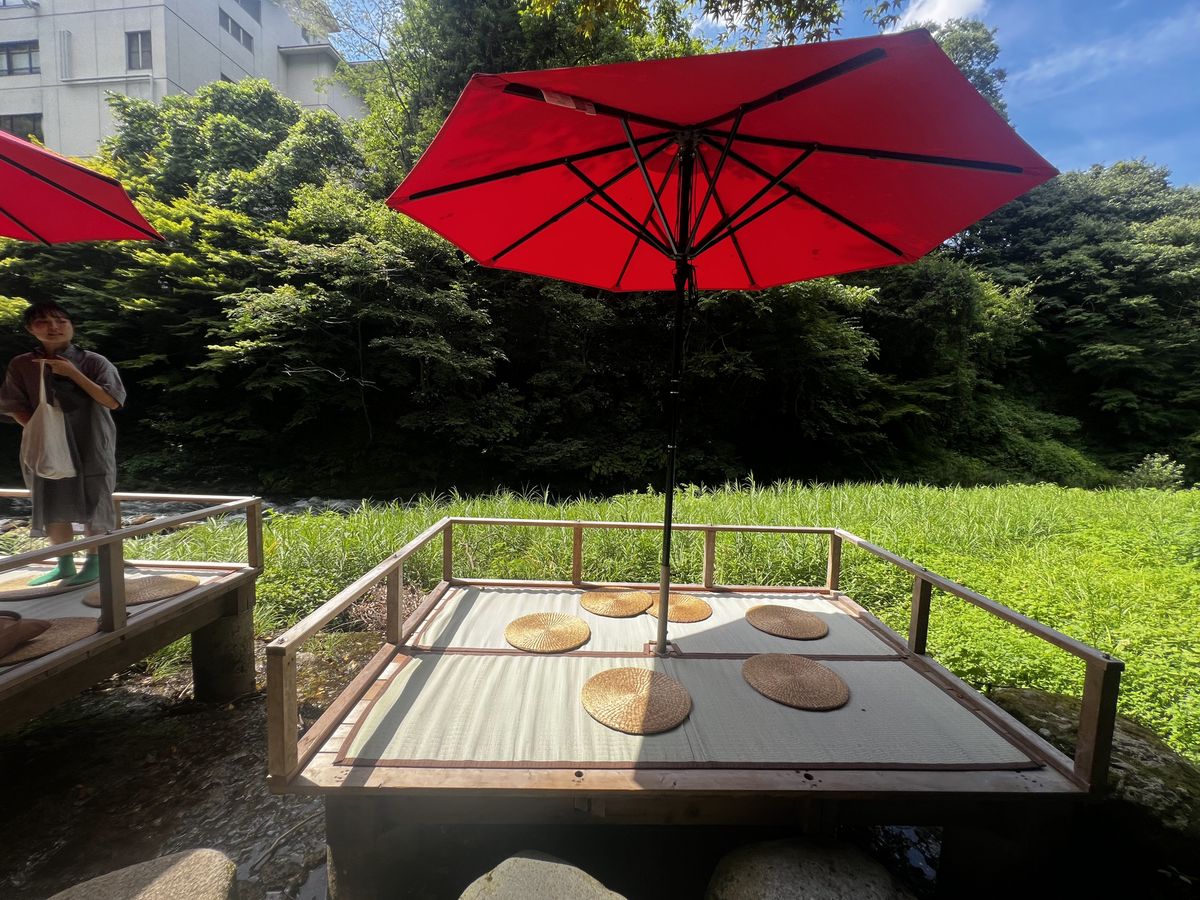
(The kawadoko's red paper parasol and the platform extending over the river)
Local "Omotenashi": Hospitality Rooted in the Land
The sweets served at kawadoko are one of its charms. Savoring local specialties in an unbeatable setting is one of the great joys of travel.
The "seat fee" included in the price isn't simply a charge for space—it carries the message, "please fully enjoy this wonderful setting and time." It may be a lovely, distinctly Japanese custom, rooted in the belief that the whole experience, scenery and atmosphere included, holds value in itself.
Try turning your mindful attention not only to the taste of the tea, but also to the scenery around you, the styling of the space, and the passage of time itself.
We're sure it will be a joyful experience—one so full of pleasant sensations that it leaves you with a genuine sense of gratitude.
No reservation is needed, so you can casually drop in mid-stroll, which is a real plus. Kawadoko is more than just a café—it's a cultural activity that lets you experience Japan's view of nature and sense of beauty firsthand.
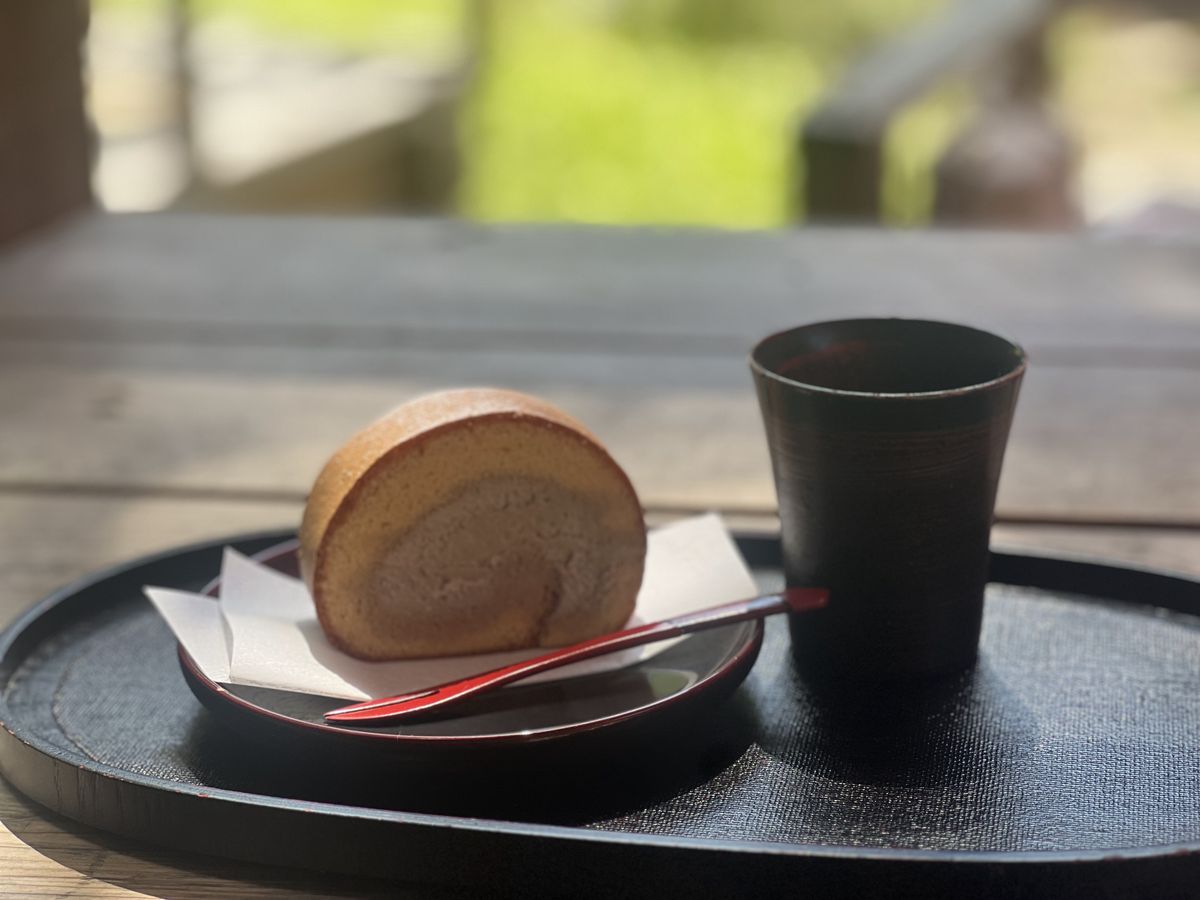
(Kawadoko sweets)
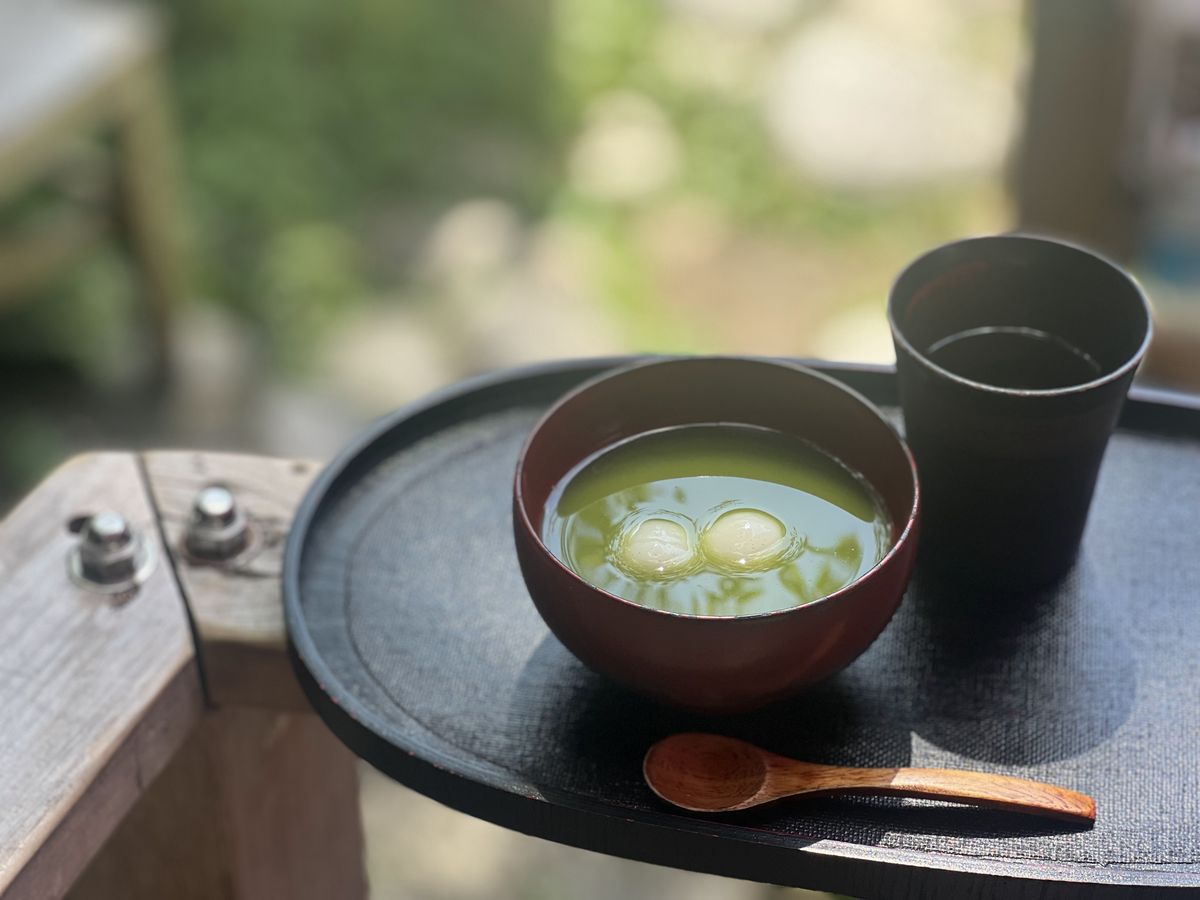
(Kawadoko sweets)
A Walk Along the Kakusenkei Gorge Trail, Past Its Three Bridges
Kakusenkei Gorge features a well-maintained walking trail about 1.3 km long, taking around 30 to 40 minutes even at a leisurely pace. Enjoy the gorge's natural beauty as you cross three bridges, each with its own distinct character.
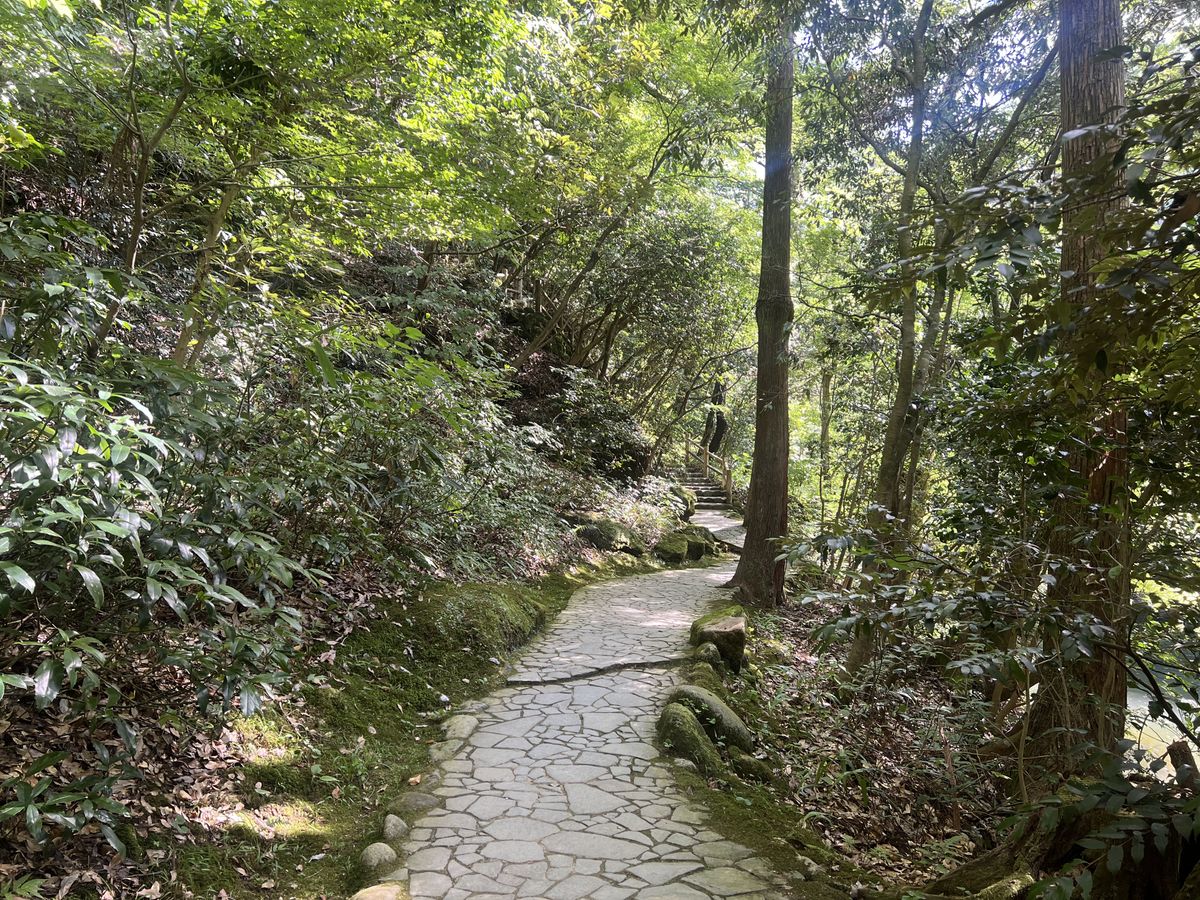
Touring the Three Bridges
Crossing the three bridges that symbolize Yamanaka Onsen is one of the highlights of walking the Kakusenkei Gorge trail. See the article below for details.
1. Start: Korogi Bridge – A Charming Bridge Built Entirely of Cypress
The picturesque Korogi Bridge is the ideal starting point for your walk. Built entirely of hinoki (Japanese cypress), it showcases the beauty of traditional Japanese wooden architecture. Set against the surrounding greenery, it looks like a scene from a painting, and the gorge view from here makes for a perfect start to your journey.
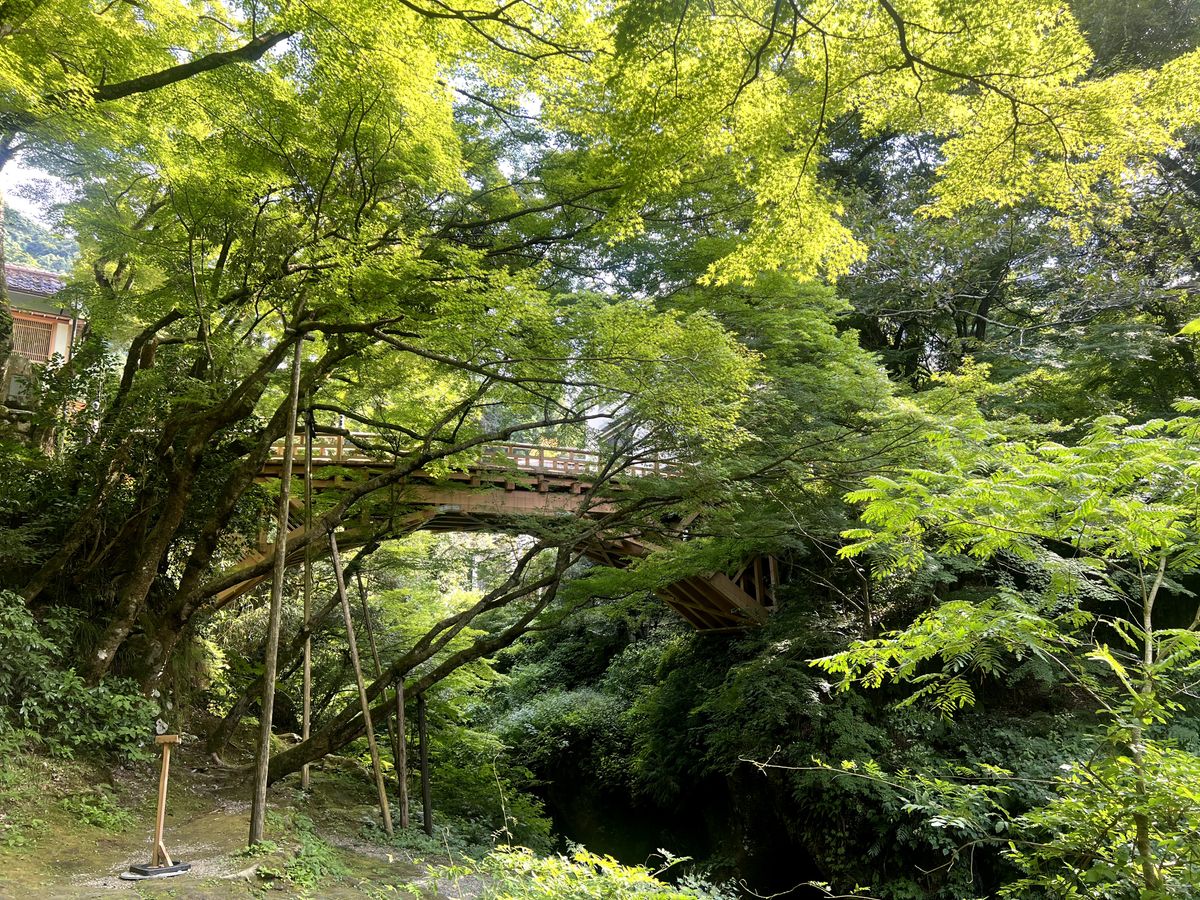
(Korogi Bridge)
2. Midpoint: Ayatori Bridge – A Modern Bridge with an Artistic S-Curve
Walking on from Kōrogi-bashi Bridge, you'll spot the striking wine-red Ayatori-bashi Bridge. Its design was inspired by ayatori, a traditional Japanese string game, making it a truly unique bridge. It's a photogenic spot where architecture and nature blend beautifully. The kawadoko (riverside dining platforms) sit right at the foot of this bridge.
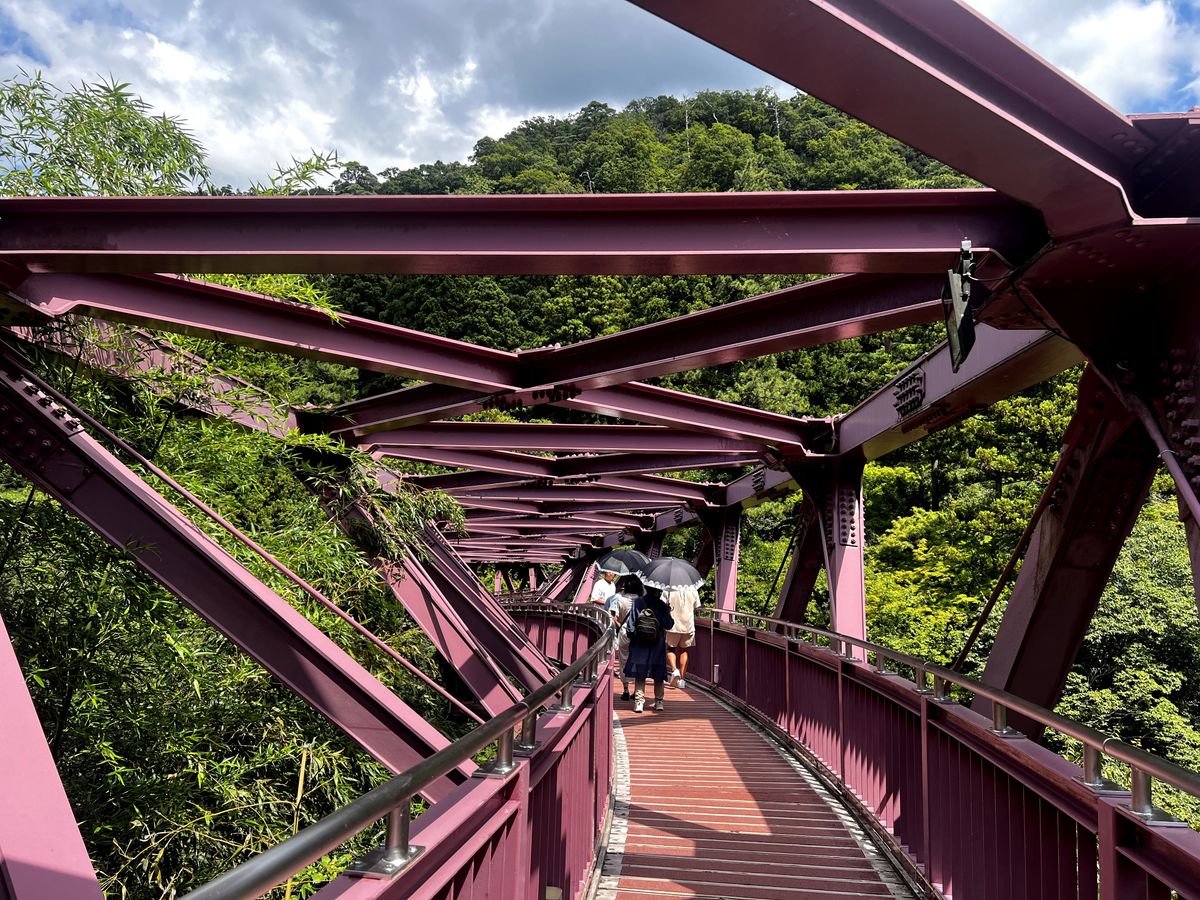
(Ayatori-bashi Bridge)
3. Goal: Kurotani-bashi Bridge – A Historic Stone Bridge
At the end of the walking trail stands the solid stone Kurotani-bashi Bridge. The view from here is said to have been praised by the famous haiku poet Matsuo Bashō. Nearby is a small hall dedicated to Bashō, offering a glimpse into Japanese history and literature.
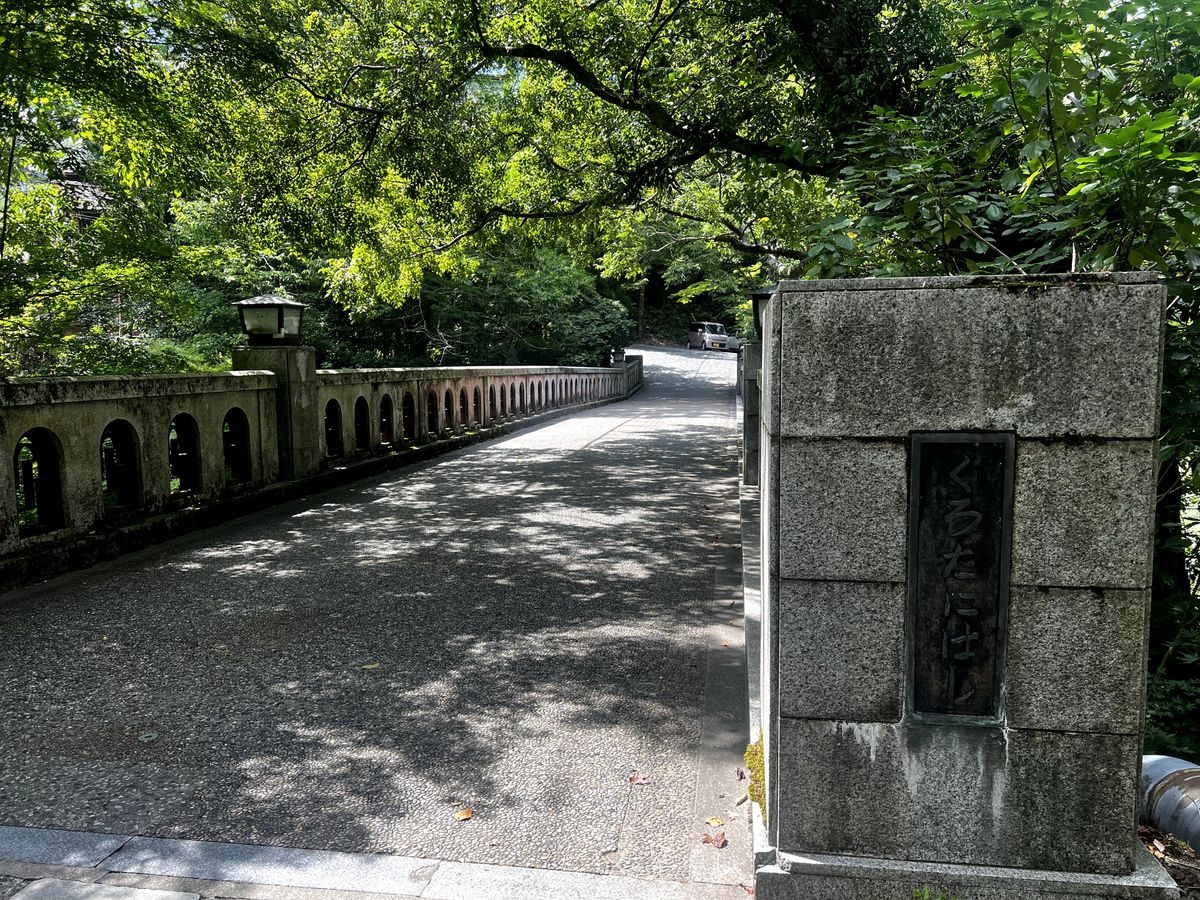
(Kurotani-bashi Bridge)
Still Want to Walk More? Visit the Kayano Ōsugi, a Power Spot
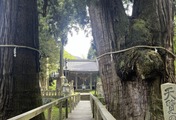
If the Kakusenkei Gorge walking trail isn't enough for you, head about 30 more minutes on foot to Sugawara Shrine to see the Kayano Ōsugi, a giant cedar tree over 2,300 years old and designated a National Natural Monument. Strolling through this quiet, untouristy village along the way is also a pleasure.
How to Get There by Bus and the Walking Route
Here we introduce how to get to Kakusenkei Gorge in Yamanaka Onsen and the walking route linking its three bridges. The kawadoko riverside platforms are located just below Ayatori-bashi Bridge.
How to Get There by Local Bus from JR Kaga-Onsen Station
From JR Kaga-Onsen Station, exit through the front entrance and head to bus stop No. 2, then take the local bus (Kaga Onsen Bus) for about 30 minutes; the fare is ¥430.
How to pay the bus fare
Cash: Take a numbered ticket when boarding, then put the fare together with the ticket into the fare box when you get off.
Credit cards such as Visa and Mastercard are accepted. If paying by card, tap the card reader both when boarding and when getting off (no numbered ticket needed).
Suica and other IC cards are not accepted.
Choosing where to get off the bus
Yamanaka Onsen Bus Terminal → Start your walk from Kurotani Bridge (a quiet bridge leading into the hot spring town)
Kikunoyu-mae or Kôrogi Bridge-mae → Start your walk from Kôrogi Bridge (closer to the hot spring town)
Walking route
The Kakusenkei Gorge walking path is 1.3 km long and takes about 30–40 minutes to walk. You can start from either end.
Route 1: Kurotani Bridge → Ayatori Bridge → Kôrogi Bridge (from the bus terminal)
Easy to stop at riverside cafés along the way, ending in the hot spring town.
Route 2: Kôrogi Bridge → Ayatori Bridge → Kurotani Bridge (from Kikunoyu-mae)
See the famous Kôrogi Bridge first. Easy to combine with strolling the hot spring town.