Three Bridges of Kakusenkei Gorge, Yamanaka Onsen - Walking Guide
By Dynamic Japan Travel Editorial Team—Supervised by P-HAM Co., Ltd. (Licensed Travel Agency, Aichi No. 3-1590)
Contents
A visit to Yamanaka Onsen isn't complete without a walk through Kakusenkei Gorge. Simply strolling along the river, listening to the water's gentle murmur, feels wonderful.
But did you know that the three bridges spanning Kakusenkei Gorge each have their own distinct character and story? Once you do, the scenery is sure to feel richer and far more fascinating.
This article introduces the highlights and stories behind the three bridges over Kakusenkei Gorge in Yamanaka Onsen: Kurotani Bridge, Ayatori Bridge, and Kohrogi Bridge.
Kurotani Bridge: A Bridge for Reflection, Steeped in History
The first landmark along the Kakusenkei Gorge walking trail in Yamanaka Onsen is Kurotani Bridge, a stately stone bridge with an imposing presence. It offers a quiet, calming charm distinct from the other two bridges.
The View Beloved by Japan's Famous Haiku Poet Matsuo Basho
The greatest appeal of Kurotani Bridge in Kakusenkei Gorge lies in its historical background. Matsuo Basho, a celebrated haiku poet in Japan some 300 years ago, is said to have visited this spot and praised the view from here. Standing on the bridge, you can experience the curious sensation of your gaze meeting Basho's across the centuries, both taking in the same scene.
The Contrast of Stone and Water
The solid stone bridge, unchanged for centuries, stands above water that constantly shifts and flows beneath it. This beautiful contrast between the unchanging and the ever-changing has a profound charm that invites quiet contemplation — you don't have to be Basho to feel it.
Travel Tip
Pause for a moment on Kurotani Bridge and close your eyes. Amid the sound of the river and the wind, you might just catch an echo of distant history. Looking down at the river from the bridge is especially recommended!
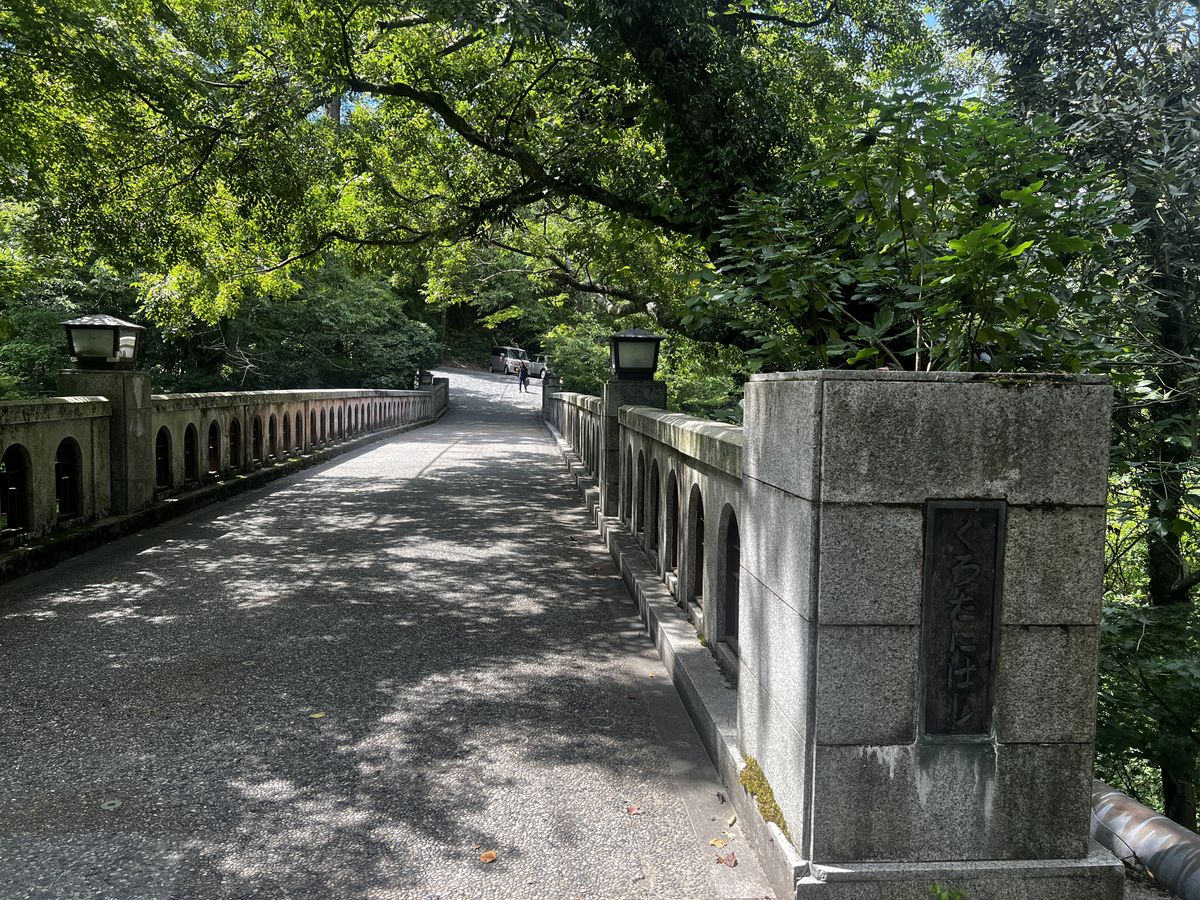
(The sturdy, striking Kurotani Bridge)
Ayatori Bridge: Where Playful Spirit Meets Valley Art
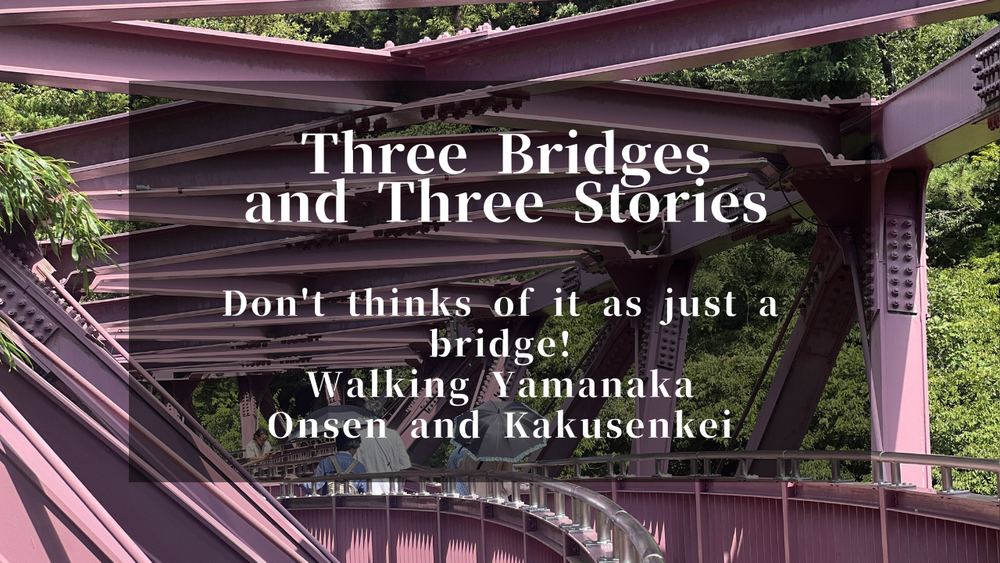
Continue past the traditional Kohrogi Bridge, and a striking wine-red bridge comes into view — Ayatori Bridge. Its unique form is a beautiful surprise amid the valley scenery.
Designed by a Renowned Film Director and Ikebana Master
The bridge was designed by Hiroshi Teshigahara, headmaster of the Sogetsu school of ikebana and a world-renowned film director. It took an artist unbound by convention to create such a bold, playful design. Here you'll find a new kind of beauty — not just harmony with nature, but a dialogue between nature and art.
The Bridge's Concept: "Ayatori" (Cat's Cradle)
The bridge's S-shaped curve is modeled on ayatori, a traditional Japanese string game in which a looped cord is stretched over the fingers to form various shapes. The slight sway you feel while crossing may even be a deliberate touch, evoking the sensation of walking along a string. Take your time on the bridge to enjoy the view and experience this unique design for yourself.
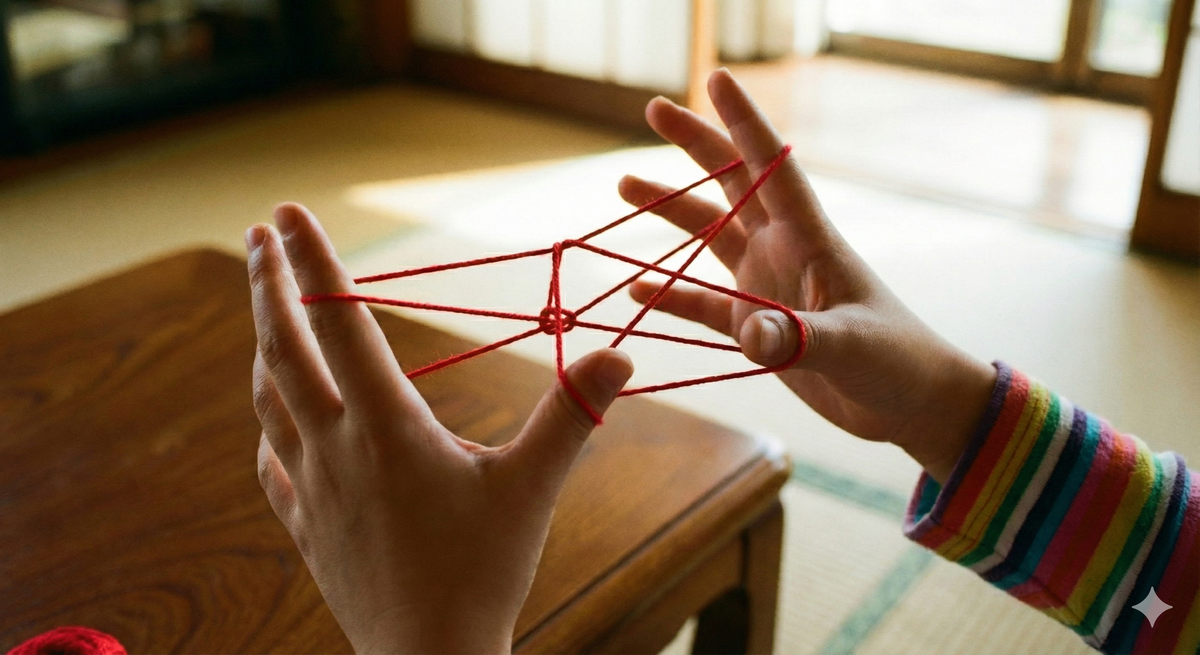
(Ayatori, a traditional Japanese string game)
Travel Tip
Ayatori Bridge is a must-see for photography lovers. The modern bridge stands out beautifully against the green valley, making for a picture-perfect shot from almost any angle. It's also well worth viewing from the nearby kawadoko riverside dining platforms.
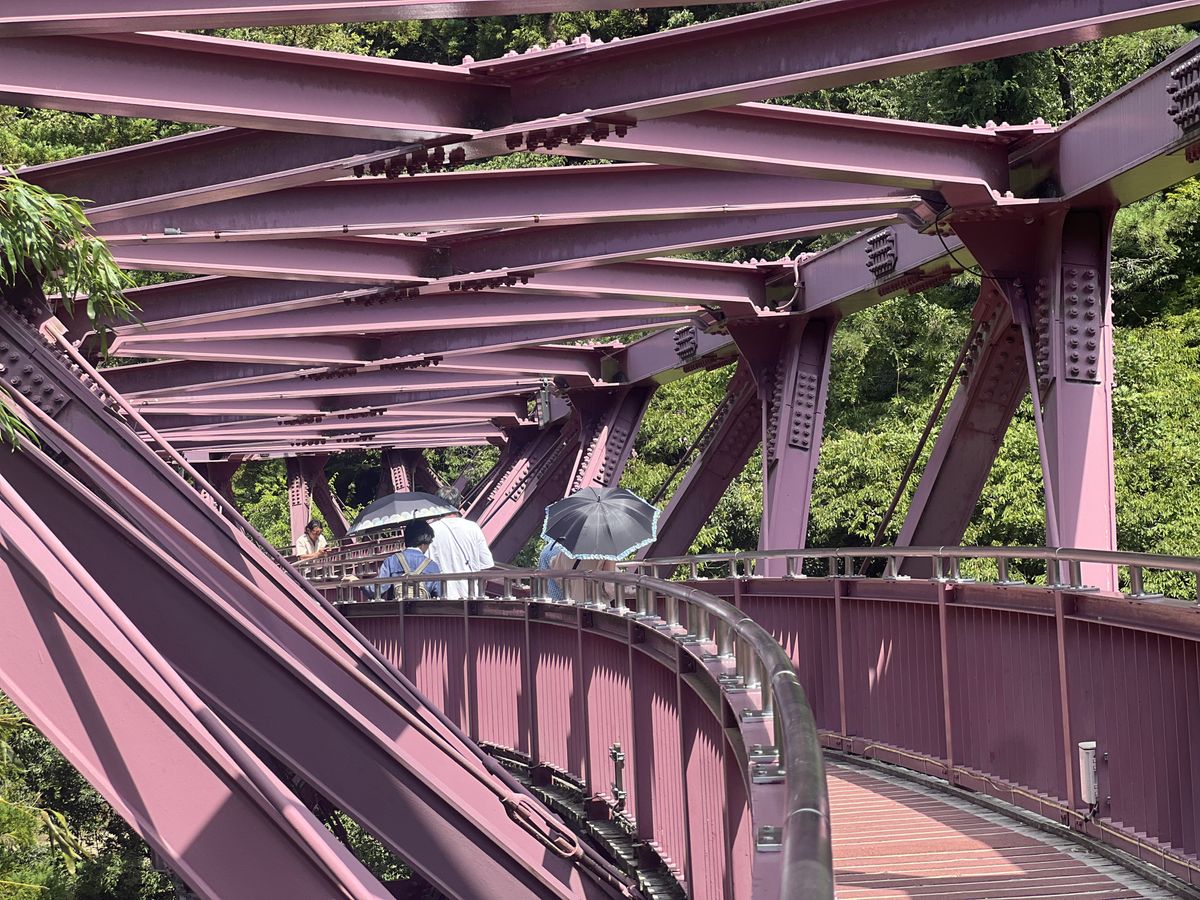
(The remarkably rare streamlined shape of Ayatori Bridge)
Kohrogi Bridge: Discover the Soul of Wood on This Bridge of Tradition and Charm
At the end of the stroll stands Kōrogi Bridge, the symbol of Yamanaka Onsen. Let's take a closer look at why so many visitors sense such special "fūzei," or old-world charm, here.
A Bridge Built Entirely of Hinoki Cypress
This bridge is built using a traditional Japanese technique that uses almost no nails, crafted entirely from hinoki cypress, one of Japan's finest woods. Much like a shrine or temple, it's this deep respect for and dedication to natural materials that gives the bridge its refined character. The pleasant creak of wood underfoot and the faint scent of hinoki that rises after the rain are proof of its authenticity.

(Hinoki, one of Japan's most prized woods)
The Story Behind the Name
The name Kōrogi Bridge is said to come either from the crickets (kōrogi) that chirp on autumn nights, or from an old expression describing the once-treacherous path here as "kōro ga abunai" (a dangerous route). It's a lovely name that hints at the history of people living alongside nature, hidden behind the bridge's beautiful atmosphere.
Travel Tip
As you cross the bridge, take a moment to notice the texture of the wood underfoot and look for traces of the craftsmen's handiwork. It's a wonderful way to experience the depth of Japan's wood culture.
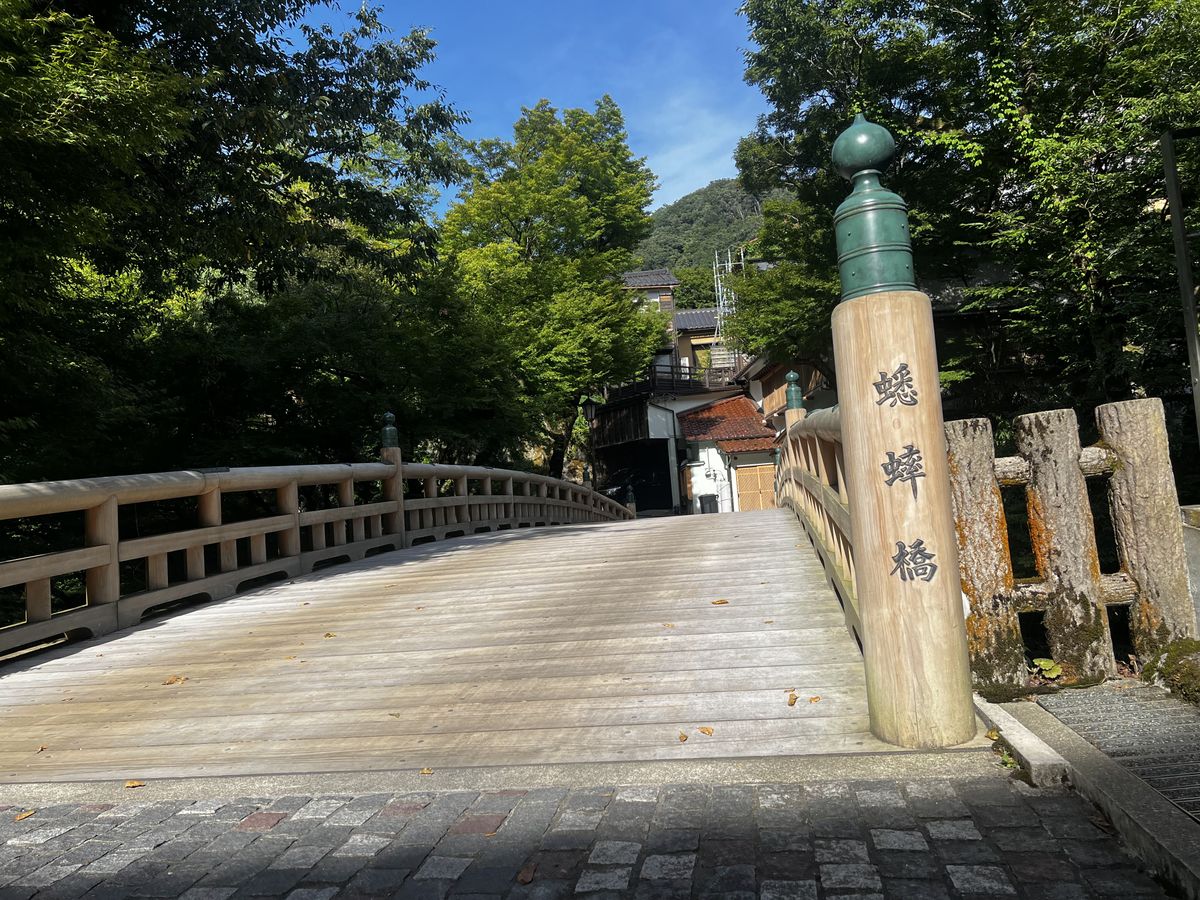
(All Hinoki! Kōrogi Bridge)